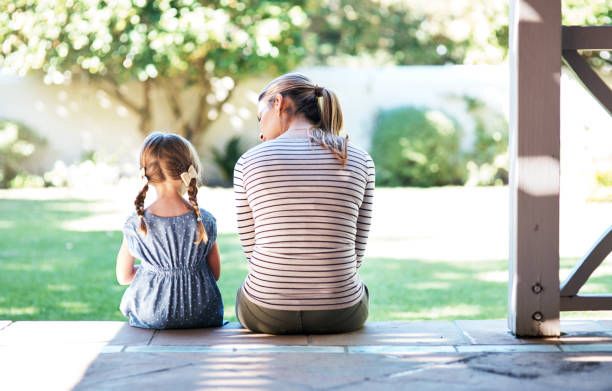
The Day I Took My Children Back
There are moments in life that rewrite everything that came before them — moments so quiet on the surface that you almost miss how loud they actually are. Mine arrived on a Thursday afternoon, in a text message from my ten-year-old daughter, while I was standing at a nursing station checking vitals I had already checked twice, trying to convince myself that the unease I’d been carrying for weeks was just exhaustion.
It wasn’t exhaustion. It was instinct. And instinct, I’ve learned, is never wrong — only ignored.
My name is Sarah. I’m thirty-five years old, a registered nurse with twelve years in cardiac care, a mother of twins, and a woman who spent the better part of two years believing that patience was the same thing as wisdom. I know now that they are not the same thing at all. Patience, practiced in the wrong direction, is just another word for surrender.
Two years ago, I packed up my children and drove to my parents’ house with everything we owned in the back of my car. The divorce had been finalized on a Tuesday — a gray, administrative Tuesday that felt nothing like the end of a marriage and everything like a form you fill out and mail in. My ex-husband, Derek, had been kind about it, which almost made it worse. There were no slammed doors, no screaming matches, no dramatic revelations. There was just a slow, years-long drift apart, like two boats that had been moored together until the rope finally frayed through on its own, quietly, in the dark.
I had Lily and Owen, my ten-year-old twins, in the backseat. Lily had her nose in a book — she always has her nose in a book — and Owen was pressing his forehead against the window, watching the highway blur past. Neither of them asked where we were going. They already knew. I had talked to them the way I believe in talking to children: honestly, without dramatics, with as much steadiness as I could manage while my own chest felt hollowed out.
“We’re going to stay with Grandma and Grandpa for a while,” I had told them. “While Mom gets things figured out.”
Owen had nodded like a small philosopher. Lily had looked up from her book and said, “Okay. Will we still go to the same school?”
“Yes,” I told her. “Same school. Same everything.”
That promise felt like the most important thing I had ever said.
My parents’ house sits on a cul-de-sac in a suburb that hasn’t changed much since I was a child. The same oak tree anchors the front yard. The same wind chimes hang on the porch — the ones my mother bought at a craft fair in 1998 and has never once considered taking down. The porch lights click on automatically at dusk, which always struck me as one of the small reliabilities of the world, the kind you don’t notice until you need them.
When we pulled into the driveway, my mother came out before I had even turned off the engine. She hugged the twins like she had been counting the minutes, which she probably had. My mother, Carol, is not a complicated woman. She loves intensely and visibly and without much reflection on whether her love is being distributed evenly. I have always known this about her. As a child, it felt like warmth. As an adult, watching it, I began to understand that it was also a kind of blindness.
My father, Gene, carried boxes from the car in his steady, methodical way, making two trips when one might have done, stopping to show Owen where the good basketball hoop was — the one mounted to the garage rather than the portable one in the backyard. “This one doesn’t wobble,” he told Owen with genuine gravity, as if this were important information that a ten-year-old needed to have.
For a while — for a good, long while — it felt steady.
I settled into their spare bedroom with Lily, and Owen took the smaller room at the end of the hall that had previously served as a home office. We rearranged things. I bought new bedding that made the rooms feel like ours. I drove the kids to school each morning and picked them up each afternoon, or arranged for them to take the bus when my shifts ran long. I kept a spiral notebook in my nightstand drawer and wrote down every dollar I saved, every number I ran, every month I crossed off the calendar as a promise kept to myself.
The plan was always to leave. That was never in question. I needed six months, maybe eight, to get enough saved for first and last month’s rent, a security deposit, and the particular kind of breathing room that comes from not starting over with nothing. I had a target. I had a timeline. I had told my parents this explicitly.
“Of course,” my mother said, when I explained it to her. “Take all the time you need.”
At the time, I believed she meant it.
I’d come home from 12-hour shifts with my badge still clipped to my scrubs, the particular exhaustion of cardiac nursing settling into my shoulders and lower back, and I would find Lily doing spelling words at the kitchen island, her handwriting careful and deliberate, and Owen on the patio dribbling against the concrete, working on a crossover move that he had watched on YouTube approximately four hundred times. Those were the good evenings. The evenings that felt like we were going to be okay.
I sat with them at dinner. I helped with homework. I read to them on weekends even though they were old enough not to need it, because they liked it and I liked it and it felt like something the divorce hadn’t managed to take. We watched nature documentaries on my laptop in the evenings. We started a tradition of Saturday morning pancakes, which became an elaborate affair as Owen discovered that he had an interest in cooking and began lobbying for increasingly complicated variations.
“Can we do the ones with the blueberries inside?” he would ask, his voice bright with the particular optimism of children who have not yet learned to expect disappointment.
“We can do the ones with the blueberries inside,” I would say.
My notebook filled slowly with numbers that were beginning to look possible. Not easy, not yet, but possible.
Then my brother Ryan called.
I was in the parking lot of the hospital, still in my scrubs, about to drive home, when my phone rang with his name on the screen. Ryan is thirty-two, three years younger than me, and has always occupied a different position in our family than I have. This is not a complaint — it is simply an observation, the kind you make when you have had enough therapy to see family dynamics clearly without needing them to be villains. Ryan graduated college without a detour, married Katie at twenty-eight in a wedding my parents still talk about, bought a house in a development twenty minutes away. His story followed the expected arc. Mine swerved.
“Hey,” he said, and I could hear something in his voice — a brightness, a barely-contained quality. “I need to tell you something.”
Katie was pregnant. Ten weeks.
I said all the right things, because I meant them. I was happy for them. Genuinely. A baby is a baby — it doesn’t carry the weight of family politics, doesn’t know anything about who got the easier road. I asked about the due date and the name ideas and whether they’d found out the sex. Ryan laughed the way people laugh when they’re full of good news, that unguarded, easy laugh.
When I got home, my mother’s voice had already gone bright. My father was pacing the kitchen with barely suppressed energy. The whole mood of the house had shifted in the way that weather shifts — not dramatically, but entirely. Everything had a new center of gravity.
I stood in the doorway of the kitchen and watched my parents light up in a way I recognized from a long time ago, and I felt something that was not quite jealousy and not quite grief, but lived in the neighborhood of both.
Ryan has always been their easy story. The one that went the way it was supposed to. I have always been the one they love but assume will “figure it out” — as if figuring it out were a lesser achievement, a consolation prize you get for surviving the mess.
I went to my room and wrote in my notebook for a while. Then I turned off the light.
Pregnancy turned my parents into different people — or maybe it revealed something that had always been there, waiting for the right occasion.
The den, which had been serving as a general sitting room and occasional overflow space, was designated “the baby room” before Katie had even begun to show. My mother began spending her weekends on Pinterest, printing out nursery color palettes and pressing them against the den wall to assess the light. The refrigerator grew a secondary ecosystem: appointment cards tucked under magnets, ultrasound photos held up by the strawberry magnet Lily had given her for Mother’s Day two years ago.
My parents attended every appointment they were invited to. My mother came home from a baby shower for Katie glowing with the particular happiness of grandparents-to-be, carrying a bag full of tiny onesies to show me as if I’d never seen baby clothes before. I admired each one. I meant the admiration.
What I noticed, but did not say, was that Lily and Owen had begun to exist slightly less in that house. Not dramatically — there were no scenes, no unkind words. But there were small recalibrations. The conversations at dinner began to turn more consistently toward Ryan and Katie and the baby. The grandparent energy that had once been distributed equally began to concentrate. It was the kind of shift you have to be looking for to see, and I was looking, because I am a nurse, which means I have spent years learning that the things that hurt you most often present quietly.
When Marcus was born — a healthy, loud, furious eight-pound boy — my parents treated every moment of his early life like a documentary that needed to be recorded and discussed. Which is, of course, what new grandparents do. I understood it. I held Marcus myself and felt the specific wonder of a newborn’s weight, that dense, impossible smallness. He was beautiful.
But I noticed how Lily and Owen started waiting for permission to speak at dinner. How Owen stopped dribbling on the patio because someone mentioned the noise traveled inside. How Lily asked me one evening, quietly, not with complaint but with genuine confusion: “Mom, are we still allowed to use the living room?”
I told her yes, of course, and went to find a reason to be alone for a few minutes.
The renovation happened in April.
Ryan and Katie’s house had sustained water damage from a burst pipe during a cold snap — the kind of damage that is both immediately obvious and indefinitely reparable, depending on the contractor and the insurance adjuster and the particular personality of the universe on any given week. The estimate was six to eight weeks. Maybe longer.
My parents said yes before anyone had a conversation with me.
I found out the way I had started to find a lot of things out in that house: after the decision had already been made. My mother mentioned it at breakfast, in the tone of someone sharing pleasant news. “Ryan and Katie are going to stay here for a bit,” she said. “Just until the house is done. It’ll be nice to have Marcus close.”
I asked where they planned to stay.
“The den,” she said. “We set it up for the baby already.”
“And Ryan and Katie?”
“The guest room.” She said it without hesitation, without any apparent awareness that the guest room was twenty feet from Owen’s room and directly adjacent to the main bathroom the kids and I shared.
“And us?” I asked.
She looked briefly puzzled, as if the question were unexpected. “You’ll work it out,” she said. “You’re flexible.”
I want to be careful here, because I have spent a lot of time with these events, turning them over, trying to understand them without the distortion of anger. My mother did not intend cruelty. I genuinely believe that. She operates from a place of strong love and weak awareness, and she has never quite understood that the absence of malice does not excuse the presence of harm. She assumed I would adapt, because I had always adapted, because adapting was the role I had been assigned in this family long before I was old enough to consent to it.
But I am also a mother. And my children are not flexible. My children are ten years old, and they live in that house, and they have not been asked about any of this.
Within days, the reorganization began.
Ryan and Katie arrived with Marcus and an amount of baby equipment that I had not anticipated — the bouncer, the swing, the enormous travel stroller, the coordinated diaper bag system, the sound machine, the nightlight, the special blackout curtains for the den that my mother helped hang with an enthusiasm that made my stomach turn slightly. The house filled with the particular density of a family with an infant, which is not a small density.
Our space shrank.
Lily’s toys — the ones she kept in the basket by the couch, because that was her place — were “put away for safety,” which meant they appeared in a bin in our bedroom where she would have to specifically retrieve them, which she stopped doing because retrieval felt too much like asking permission. The television in the main living room was “too loud for naps,” which turned out to be a rotating, indefinite restriction that covered most of the late afternoon and early evening hours. Lily’s piano practice — she had been working on a simplified version of a Chopin étude, working at it with the steady, earnest determination that is so particular to her — was “something we can pause for a little while.”
No one asked Lily how she felt about pausing.
The house began to run on Marcus’s sleep schedule. Voices were kept lower. Footsteps were heavier with self-consciousness. My children learned to move through a home they had been living in for nearly a year as if they were guests who had overstayed a welcome that had never been explicitly revoked.
I did not argue in front of the twins. I made a rule of that. Whatever I felt — and I felt a great deal — I kept it out of the shared spaces and out of the moments when Lily and Owen could see my face. I made lists instead. I compared rental listings on my phone during my breaks at work. I quietly filled out an application for a small duplex fifteen minutes from their school — a good school, the one they had already adjusted to, the one where Lily had found a best friend and Owen had made the junior basketball team. I was accepted, and I put down a holding deposit from my savings without telling anyone.
I told myself I had time to explain it calmly on a Saturday morning, over coffee, and leave without a scene.
I was wrong about having time.
On a Thursday afternoon, I was still on the unit — late in a twelve-hour shift, the specific tired that comes at hour ten when your second wind has come and gone and you are running on professionalism and the knowledge that four more patients need you. My phone buzzed in my pocket.
I checked it in the medication room, where I had a moment alone.
It was Lily. Her text was careful, organized, the way she writes everything: “Mom, when you get off work, Ryan and Katie are moving into our rooms. Grandma says it’s temporary. I’m not sure where we’re sleeping.”
The next text was Owen’s. It came ninety seconds later and was different in every way — the panicked, fragmented syntax of a boy who does not yet have words for what he is feeling but knows that something is wrong: “Mom they’re moving our stuff. Grandma says we have to sleep in the basement now. Please come home.”
I stared at those words for a moment that lasted longer than any moment should.
Then I called the house. The phone rang eight times and went to voicemail. I tried my mother’s cell. More ringing, more voicemail. I tried my father. He picked up on the fourth ring, sounding distracted, and said, “Hi, honey, can I call you back? We’re a little busy.”
I said: “Dad, what is happening with the kids’ rooms?”
There was a brief pause — the pause of a man who knows he is about to say something he should have said differently, earlier, in a conversation that should have happened before any of this. “We needed to reorganize a little,” he said. “Ryan and Katie need the upstairs. It’s temporary, Sarah. You know how to adapt.”
I left work early. I have never left a shift early in twelve years of nursing, but I signed out and walked to my car with the particular focused quiet of a woman who has made a decision and is no longer negotiating with herself about it.
I drove past the school carpool line without stopping, though I usually stop there on the days I can make it. I called Lily and told her to take Owen to the front steps and wait for me. She said “okay” in a voice that sounded so measured, so careful about not adding to my burden, that my throat tightened in a way I did not let myself process until later.
I turned onto our street just as Ryan’s truck came into view, parked at an angle in the driveway that blocked part of the street with the particular obliviousness of someone who has just arrived and not yet thought about anyone else’s access. My stomach dropped before I even pulled in.
Through the front window, I could see my father moving through the hallway. It took me a moment to understand what he was carrying. Then I did.
It was Lily’s dresser — the white one with the star-shaped knobs she had picked out herself, with her birthday money, from a furniture consignment shop the summer before the divorce. She had been so proud of those knobs.
He was carrying it toward the stairs.
I sat in the car for exactly the length of time it took me to understand what I was going to do. Then I got out.
The front door was unlocked. I opened it and the first thing I heard was the basement door, standing open at the end of the hall, the particular creak of the hinge that needed oil and had needed oil for years. And then, underneath the creak, a sound that will live in me for a long time: the slow, deliberate scrape of a bedframe being dragged across concrete.
My children’s bed, being moved into the basement.
My mother’s voice came from below, light and certain, the voice she uses when she has decided something is sensible and does not anticipate disagreement: “It’ll actually be cozy down here. You two can have your own little space.”
I walked to the top of the basement stairs.
My mother was at the bottom, her back to me, adjusting the angle of the bedframe. My father appeared behind me in the hallway, still holding something — I didn’t look to see what. The house smelled like fresh coffee and someone else’s baby lotion, and the sound machine from the den was running, that steady white noise that had become the background of our lives.
“Stop,” I said.
My mother turned around. She looked surprised, but not alarmed. She was still in the mode of someone who believes the situation is manageable, reasonable, under control. “Sarah,” she said, “we were going to call you. It’s temporary—”
“Stop,” I said again. “Don’t move anything else.”
What happened next was not a screaming match. I want to say that clearly, because the story is not about screaming. It is about the quieter thing — the harder thing — of saying what you mean to people who love you but have failed you, and not letting that love erase the failure.
I told my mother that she had put my children’s belongings in garbage bags. I said those words specifically, because I needed them in the air between us. I told her that she had moved my children’s bed into the basement without asking me, without asking them, without a conversation or a warning or the basic courtesy of a phone call. I told her that my children had texted me in distress from a home they were supposed to feel safe in, and that I had left work — a cardiac unit, where leaving work is not a casual act — because my daughter’s text message contained the word “please” in a way that no child’s text message should.
My mother cried. She said she didn’t think of it that way. She said it was temporary. She said the word “temporary” at least four times.
My father said nothing at first, and then said, “She has a point, Carol,” which I think was the most he could offer in that moment.
Ryan appeared in the kitchen doorway — he had been in the back of the house, I think, unaware of the immediate situation — and took in the scene with an expression that moved quickly through surprise and into something that looked like understanding. He said, “Sarah, we can figure this out.”
I told him, gently, that I was glad he thought so, and that I hoped he did. I told him that I was leaving, and that I was taking my children, and that I hoped he and Katie and Marcus would be comfortable, and that I wished his house a speedy recovery.
Then I went to the front steps where Lily and Owen were waiting.
Owen had his basketball under one arm and his backpack on his back. Lily had her own backpack and was holding, in addition, the small stuffed rabbit she has slept with since she was three years old — she is old enough to be slightly embarrassed about it and young enough to still need it. She was holding it with the particular deliberate casualness of someone trying not to look like they are holding something for comfort.
I looked at them for a moment. My two children, sitting on the steps of a house that had just finished being theirs.
“Okay,” I said. “Let’s go see our new place.”
Owen looked up. “We have a new place?”
“We do,” I said. “I signed the papers last week. I was going to tell you this weekend.”
Lily looked at me with an expression I will not easily describe — something between relief and the particular exhaustion of having been holding yourself together when you weren’t sure you could keep doing it. She stood up. She put her rabbit in her backpack.
“Does it have a patio?” Owen asked.
“It has a small backyard,” I said. “And a garage with a hoop.”
He nodded with the same philosophical gravity his grandfather had offered him, two years ago, about the wobble-free basketball hoop. “Okay,” he said.
We did not take everything that day. We took what we needed: clothes, school things, the spiral notebook from my nightstand, Lily’s star-knobbed dresser — which I went back inside to get, calmly, with my father’s help, because it was hers and she was not leaving without it. I called the duplex landlord and arranged to pick up the keys the following morning. We stayed that night in a hotel, in a room with a pull-out couch that Owen claimed immediately and enthusiastically.
Lily ordered room service waffles and ate them with the focused pleasure of someone who has earned a treat. Owen watched a movie he had already seen three times. I sat between them and pretended to watch and mostly just breathed.
We moved in that weekend.
The duplex is small, quiet, and lit differently in the mornings than any place I have lived before — there is an east-facing window in the kitchen that fills the whole room with a flat, clean light when the sun comes up, the kind of light that makes even a modest kitchen look like something in a painting. The backyard is a rectangle of unambitious grass, bounded by a wooden fence, with the aforementioned basketball hoop mounted to the back of the garage. Owen spent the first two hours of the first day out there. I watched him through the kitchen window while I unpacked dishes.
Lily arranged her room with great seriousness. She placed the dresser with the star knobs against the wall opposite the window so the morning light would catch the hardware. She made her bed with the particular precision of someone who cares about small things done right, and then stood back and looked at it, and then adjusted the pillow, and then stood back again. I watched from the doorway without announcing myself.
“Mom,” she said, without turning around. She always knows when I’m there. “I like it.”
“Me too,” I said.
My mother called three times in the first week. The first call was to tell me she was sorry, but the apology was organized around explaining her intentions, which is a particular kind of apology that I have learned, over time, is not quite one. The second call was to tell me that Ryan and Katie felt terrible. The third call was to ask if we would come for Sunday dinner.
I told her we needed some time.
I have thought a great deal, in the months since, about what I owe my parents — in gratitude, in relationship, in ongoing presence. They took us in when we needed to be taken in. That is not a small thing. My mother’s blindness to the ways her love reorders itself around whoever seems to need it most is not the same as a failure to love me. My father’s passivity is not the same as cruelty. These are people I love, doing what they know how to do, which is sometimes enough and sometimes is not.
But I also think about what I owe my children, and I think the answer to that question is much clearer. I owe them a home where they do not wait for permission to speak. I owe them a space where their bedframe does not get dragged across concrete while they text their mother in a panic. I owe them a Saturday morning pancake tradition that no one can pause. I owe them the clear, uncomplicated knowledge that where they live is theirs — that their dresser is where they put it, that their voices are welcome at the volume they naturally speak, that they are not guests.
I owe them that. I gave them that. I give them that still.
We went to Sunday dinner about a month later. Ryan and Katie’s house was mostly repaired by then — the damage had resolved faster than expected, as these things sometimes do when they are no longer serving a narrative purpose. Marcus was bigger, louder, more himself. He grabbed at Owen’s finger and Owen laughed with the sudden, uncomplicated delight of a ten-year-old who has not yet decided how he feels about babies and is discovering that the answer might be that he likes them.
My mother made the kind of dinner she makes when she wants to say something she cannot say directly — a full table, everyone’s favorites, a chocolate cake that she knows I particularly like. I ate it. I thanked her. We talked about school and Owen’s basketball and the Chopin étude that Lily has returned to, in our new kitchen, on our small keyboard, without anyone asking her to pause.
Things are not simple. Families are not simple. The story between my parents and me continues, and it is not a clean story — it does not resolve into easy understanding or uncomplicated warmth. My mother still reorders her love around the most compelling need in the room. I still have to decide, each time, what I can accommodate and what I cannot. Ryan and I are finding our way back to being siblings, which we are doing with the particular care of adults who have learned that relationship is not guaranteed by blood.
But every morning, I come downstairs in our duplex and the kitchen fills with that east-facing light, and I make coffee, and I hear Owen’s feet on the stairs — he walks with his whole foot, thunderously, cheerfully, as if each step is worth announcing — and Lily comes down after him with her book already open, reading standing up because she is constitutionally unable to wait for a seated moment.
We are not guests here. We are not temporary. We are not something anyone will put in garbage bags.
We live here. This is ours. These are our mornings, and they belong to no one but us.
I still keep a spiral notebook in my nightstand. These days the numbers in it are not deposits toward escape — they are the ordinary arithmetic of a life that is being built. School supplies. A new bookshelf for Lily. A proper outdoor basketball in place of the old one that’s starting to lose its grip. An emergency fund that grows slowly and steadily, the way good things do.
I write the numbers down and I feel something that took me a while to name. Not triumph — triumph implies an enemy, and I don’t think that is what this was. Not relief, exactly, though there is relief in it.
I think the word is: settled.
Not in the sense of having settled for something, of having accepted less than what I wanted. Settled in the older sense — rooted, grounded, in the right place. The way a house settles over time and becomes more itself, more solid, more sure of its foundation.
I drove us here. I found us here. I chose this, on a Thursday afternoon, when my daughter’s text message contained the word “please,” and I knew that the time for patience was over and the time for action had arrived.
And here is what I want to say to anyone who is reading this from the wrong side of their own version of that moment — anyone sitting in a space that has slowly, quietly, stopped belonging to them, wondering how much more they should absorb before they do something about it:
Your instincts are not nothing. The discomfort you keep dismissing is not weakness. The voice in you that knows something is wrong — the one you keep overriding with patience, with accommodation, with the assumption that you should be more flexible — that voice is not asking you to abandon the people you love.
It is asking you to remember that you are also a person who deserves to be loved correctly.
And sometimes the bravest thing in the world is to pick up your children’s things, and your own things, and drive to a place where the morning light is good, and make your home there.
Owen made it onto the school basketball team again this year, a higher division. Lily finished the Chopin étude and has started something new — something more complicated, something with a minor key and a little more feeling to it. She played it for me last week in the kitchen, and I stood in the doorway the same way I stood in the doorway of her room the first day, just listening, not announcing myself, watching my daughter fill a space that belongs to her.
The duplex still smells like the particular combination of coffee and whatever Owen is attempting to cook, and Lily’s star-knobbed dresser catches the morning light exactly the way she wanted it to.
And some mornings, when the light is especially good and both kids are downstairs and the coffee is right and the day hasn’t started yet — some mornings, I sit at the kitchen table and write in my notebook and feel the specific peace of a woman who knows where she is.
I am home.
And my children are home.
And nobody is going to drag our bedframe down the stairs.
THE END

Adrian Hawthorne is a celebrated author and dedicated archivist who finds inspiration in the hidden stories of the past. Educated at Oxford, he now works at the National Archives, where preserving history fuels his evocative writing. Balancing archival precision with creative storytelling, Adrian founded the Hawthorne Institute of Literary Arts to mentor emerging writers and honor the timeless art of narrative.