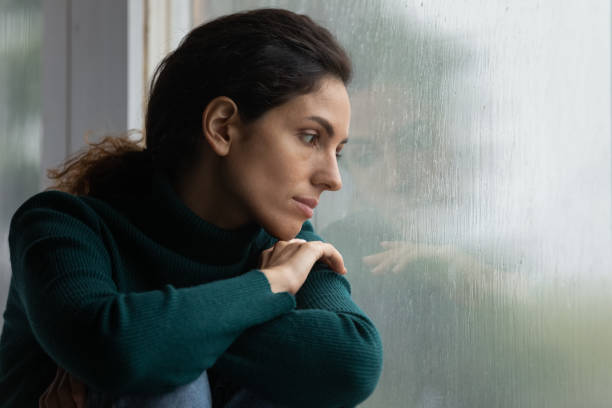
She Invited Me to Her Baby Shower to Announce My Dead Husband Was Her Baby’s Father — Then I Showed Her One Document
Life has a way of changing in an instant.
One minute you’re thirty-two, happily married, planning a future that feels solid and real. The next you’re a widow, sorting through cremation options because the accident was too severe for an open casket.
That’s what happened to me six months ago.
James died on a Tuesday in October. A wet road, a truck that ran a red light, and twelve years of marriage ended in the space of a second somewhere on the interstate between his office and home. The call came at 6:47 in the evening. I remember because I was stirring pasta and I let it boil over while I stood at the kitchen counter with my hand pressed to my mouth, listening to words I couldn’t make my brain accept.
The first weeks were a blur of funeral arrangements and casseroles from neighbors and phone calls that I answered on autopilot, saying yes thank you I’m okay to people I couldn’t see. If my parents hadn’t stepped in to handle most of the details, I don’t know how I would have managed. My mother coordinated with the funeral home. My father handled the legal paperwork. They sat with me in the evenings and didn’t try to fill the silence, which was the most useful thing anyone did.
“You just focus on yourself,” Mom told me, her voice softer than I’d heard it in years. “We’ve got the rest.”
I focused on survival. I went to a grief support group on Tuesday evenings and sat in a circle with people who understood the specific hollow that loss carves in you. I sold James’s car because I couldn’t look at it in the driveway. I kept his coffee mug in the cabinet because I couldn’t look at the empty space it would leave.
James had left me well provided for — our house in the suburbs, an apartment downtown, a substantial account. I could have quit my job, but the thought of sitting alone in all those rooms all day made my skin crawl. Instead I went part-time, just enough to keep my mind occupied.
The strangest thing that changed was my parents.
Growing up, I had always been the invisible one. My sister Sarah — three years younger, effortlessly charming, the kind of person who walked into rooms and rearranged them — had always commanded the center of my family’s attention without seeming to try. My parents never missed her recitals or her school plays. My academic achievements were acknowledged with brief, distracted congratulations and then the conversation moved on.
After James died, something shifted. They called more. They asked questions and waited for the answers. My father actually listened when I talked about my work.
When they asked if I could help them out with a monthly transfer — fifteen hundred dollars, just until they sorted out some financial things — I said yes without hesitating. It was the least I could do for the people who’d gotten me through the worst weeks of my life.
We started having weekly dinners. Mom made pot roast. Dad poured the wine. For the first time in my adult life, I felt like I was someone they were genuinely glad to see.
I was a fool, but I didn’t know it yet.
Sarah arrived at one of those dinners seven months pregnant.
I hadn’t seen her since James’s funeral, where she’d seemed distracted and kept checking her phone. She swept in carrying the kind of presence she’d always carried — slightly too much for any room she entered — and within sixty seconds my parents had rearranged themselves entirely around her.
“Sit here, sweetheart.” Mom practically nudged me aside to free up the better chair. “Do you need another pillow? Are your ankles swollen?”
I became invisible again. It happened so fast it almost took my breath away — the familiar switch flipping, all their warmth and attention redirecting like a spotlight being swung across a stage. I watched it happen and felt the old ache settle back into my chest like something returning home.
“Who’s the father?” I asked during dinner, because no one else was going to.
Sarah’s face darkened. “That’s my business.”
“Of course it is,” Mom said immediately, with a look in my direction that said stop prying.
This from the woman who had spent two years offering unsolicited opinions about my fertility treatments. But I let it go.
At another dinner, a few weeks later, I asked how she planned to manage on her own.
Sarah smiled — that specific smile she’d always had, the one that meant she knew something I didn’t. “Don’t worry about my baby,” she said, patting her belly. “I’ve got it all figured out. This time everything is going to work out exactly as planned.”
I should have paid more attention to that smile. I’d seen her launch a smoothie business that lasted two weeks, a life coaching certification she never finished, a cryptocurrency investment that cost her three months’ rent. Sarah’s plans had a history.
But I had my own grief to manage. I filed the smile away and went home.
The call came on a Tuesday morning.
I was at my desk reviewing marketing reports when my phone lit up with her name. I almost let it go to voicemail — our conversations were always brief and slightly uncomfortable, circling around the history of our relationship without ever touching it.
Something made me answer.
“Karen.” Her voice had that particular sweetness she only used when she wanted something. “I’m having my baby shower next weekend at Mom and Dad’s. I’d really love it if you could come.”
I was surprised. We weren’t close enough for her to want me there. We weren’t close enough for most things.
“Are you sure?” I asked.
“Of course,” she said, the sound slightly forced. “You’re my only sister. It wouldn’t be right without you.” A pause. “Plus, I have something special planned.”
Something in those words clenched in my stomach. I ignored it. Maybe this was her way of trying. Maybe the baby had changed something in her.
“I’ll be there,” I said.
I spent two evenings knitting a blanket. Cream-colored, soft, with a small pattern at the border that I’d found in a book. I bought a good baby monitor to go with it, wrapped everything carefully, and told myself that showing up with intention was the right thing to do.
My parents’ house looked like a celebration had detonated inside it.
Pink and blue balloons, streamers from every surface, a towering diaper cake as a centerpiece. Half the town seemed to have been invited — aunts and their daughters, Mom’s bridge club friends settled into the sofa, Sarah’s college roommates clustered around the punch bowl. The room smelled like too much perfume and baked goods and the specific anxious energy of people who don’t quite know each other.
Sarah moved through it all like she owned it, which she essentially did. She was glowing in a maternity dress that probably cost more than my monthly grocery bill. She ran the games with theatrical energy, laughing loudly, touching her belly, accepting compliments with gracious warmth.
But her eyes kept finding mine across the room.
Every few minutes, her gaze would land on me and hold just a beat too long. Not hostile exactly. More like the look of someone waiting for a particular moment to arrive.
I won the belly measuring game. It irritated her more than it should have.
After the gifts were opened — Sarah cooing over each onesie, making the guests feel their choices were inspired — she reached my packages. She held up the blanket, ran her fingers across the pattern, and then set it down and clinked her glass.
The room quieted.
My heart started going too fast for no reason I could name.
“I want to thank everyone for coming,” Sarah began, her hand resting on her belly. “But there’s something else I want to share. I think it’s time everyone knew the truth about who my baby’s father is.”
I knew before she said it.
I don’t know how I knew — some combination of the way she’d been watching me all afternoon, the mysterious confidence she’d carried for months, the smile that said she knew something I didn’t. My body understood before my mind caught up.
“The father,” she said, her voice carrying clearly across the silent room, “is James Wilson. Karen’s late husband.”
The world tilted.
I heard gasps from the edges of the room, whispered reactions, the sound of Aunt Margaret’s hand flying to her mouth. I heard all of it from a strange distance, because what occupied the center of my attention was my parents.
They weren’t surprised.
They didn’t gasp. They didn’t turn to each other with shock on their faces. They stood slightly apart from the crowd, and when my eyes found theirs, they had the careful, braced look of people who had known this moment was coming.
They had known.
Before I finished processing that, Sarah was already speaking again.
“As James’s child, my baby is his only heir. I’m entitled to half of everything he left you, Karen. The house, the apartment, the money. My child deserves their father’s inheritance.”
My father stepped forward. “Karen,” he said, in the voice he used for serious conversations, “you need to do the right thing here. Your nephew deserves his father’s legacy.”
The room was spinning. I held the back of a chair.
“You’re lying,” I said. My voice came out as a rasp. “James would never—”
“Then how do you explain these?” Sarah pulled out her phone.
And there they were, on that small bright screen: James and Sarah in what looked like a hotel room, arms around each other, unmistakably together. Another photo — a restaurant I didn’t recognize, their hands linked across a table.
“He loved me,” Sarah said, her voice dropping into something performatively wounded. “He was planning to leave you. We were going to tell everyone, but then the accident happened, and everything we’d planned—”
She let the sentence break. Let it trail off into implication.
I didn’t cry. I don’t know why I didn’t cry — perhaps because the grief had already used everything up, or perhaps because somewhere very deep, behind all the shock, a small cold part of me was starting to think.
I gathered my purse. I pushed past the guests, past the balloons and the streamers and the diaper cake centerpiece, and I walked out to my car.
My phone started buzzing before I was home.
Sarah’s messages came in dozens — screenshots of text conversations between her and James. Messages that spanned months. I don’t love her anymore. I haven’t for a long time. You’re the only one I want. Timestamps that placed them during his business trips, his late evenings at the office, the long stretches when I’d been going to fertility appointments alone because he said work was too demanding.
I spent that night moving through the house, touching his things.
The coffee mug. The books on his nightstand. The jacket hanging by the door that still smelled faintly like him.
Everything felt uncertain now. Every memory under question.
My parents called at seven in the morning. I let it ring four times, then answered.
“Karen, you need to be reasonable about this,” my father said, skipping any greeting. “The sooner you agree to split the inheritance, the easier this will be for everyone.”
I asked when they’d known.
A pause — the specific kind of pause that tells you everything before a word is said.
“We’ve known for a while,” my mother finally admitted. “James confided in us about six months before the accident.”
Six months. They had sat with me at the funeral. They had held my hands. They had accepted my monthly transfers and come to my weekly dinners and listened to me talk about my grief, and they had known all along what the shape of it really was.
“Traitors,” I said.
I hung up. I opened my banking app and canceled the transfer. Then I blocked their numbers.
Two weeks passed. Then Sarah’s email arrived: she would sue for half of everything if I didn’t split the inheritance voluntarily. The word voluntarily looked like a threat dressed up in legal clothing.
I found a lawyer named Richard Martinez, recommended for inheritance cases. He reviewed the photographs, the text messages, the witness list Sarah was building.
“Your sister has compelling evidence,” he told me carefully, adjusting his glasses. “In cases involving a biological child and proof of a long-term relationship, courts tend to be sympathetic. I want to be honest with you about where we stand.”
I drove home feeling hollowed out. Sat at my kitchen table. Made tea and let it go cold.
My phone rang at nine that evening. Unknown number.
I almost didn’t answer.
“Is this Karen Wilson?” A woman’s voice. Unfamiliar but oddly resonant — something in the cadence, the particular quality of it, made me sit straighter.
“Yes,” I said.
“My name is Elizabeth Parker. I’m James’s mother.”
I gripped the counter with my free hand. “That’s not possible. James was an orphan. His parents died when he was young. He grew up in foster care.”
A small, weighted silence. “Another of his lies, I’m afraid.” Her voice was bitter but not unkind. “I was at the funeral — back row, black dress and veil. I couldn’t bring myself to approach you then. James and I hadn’t spoken in years.” She paused. “I’ve heard what your sister is claiming. There are things you need to know. Things that might help you.”
We arranged to meet the following morning at a small café downtown. I arrived early and ordered coffee I couldn’t drink. When she walked in, the recognition hit me physically — she moved like him. Had his eyes, his particular way of carrying herself. The resemblance was so complete I had to look at the table for a moment.
I remembered her suddenly. The solitary figure in the back row who had slipped out before the service ended. I had been too lost in my own grief to wonder who she was.
She sat down across from me, reached into her bag, and placed a worn manila envelope on the table between us.
“I can’t let another woman suffer from my son’s lies,” she said quietly. Her fingers trembled slightly. “Whatever he became, whatever he did — you don’t deserve this.”
I opened the envelope.
Medical records. Boston General Hospital, dated ten years ago — about a year before James and I married. I read the clinical language twice, then a third time, my brain refusing to assemble the meaning on the first pass.
Complete azoospermia. Permanently sterile. No possibility of natural conception.
James had been tested at twenty-five. He’d known, going into our marriage, that he could not father children. He had watched me spend years in fertility clinics, submitting to treatments and hormone injections and endless appointments, believing I was the problem. He had watched me blame myself.
And he had said nothing.
Elizabeth reached across the table and covered my hands with hers.
She didn’t say anything. She just held on.
The courtroom was full the day of the hearing.
Sarah sat in the front row holding the baby, our parents flanking her like a protective formation. She’d dressed carefully — demure black, minimal makeup, the practiced expression of someone who has rehearsed their grief. When she took the stand, she was masterful. The tears came exactly when they should. Her voice broke at the right moments. All I want is what’s fair for my son. He deserves his father’s legacy.
I sat beside Mr. Martinez and watched the performance with a clarity that surprised me.
He waited until she finished before he stood.
“Your Honor, I’d like to submit evidence that proves the entire basis of this claim is fraudulent.”
He presented the medical records to the bench. The judge reviewed them without expression. Sarah’s lawyer leaped up with objections about chain of custody. Sarah’s composure fractured at the edges.
“Those documents are fake,” she said, her voice climbing. “She forged them. She’s trying to steal my baby’s inheritance.”
“Given these records establish that Mr. Wilson was sterile,” Mr. Martinez said calmly, “we’re requesting a DNA test to establish paternity.”
Sarah’s smile returned, triumphant. “James was an orphan, and his body was cremated. There’s no one to test against.”
“Actually,” Mr. Martinez said, turning toward the gallery, “I’d like to introduce Elizabeth Parker — James Wilson’s biological mother.”
Elizabeth stood.
The murmur that moved through the room was immediate. I didn’t look at Sarah right away. I was watching Elizabeth — her straight posture, the quiet dignity of someone who had driven a long way to do an uncomfortable thing because it was right.
Then I looked at Sarah.
She had gone the color of the courthouse walls.
“I’m willing to submit to a DNA test,” Elizabeth said clearly, “to determine whether this child is my grandson.”
The judge nodded. “DNA testing is ordered. We’ll reconvene when results are available.”
Sarah swayed in her seat. My mother rushed to steady her, shooting me a look full of venom. But for the first time since the baby shower, for the first time since standing in that pastel-decorated room while the world reorganized itself around me, I felt something that might have been hope.
The results came back in three weeks.
The judge opened the envelope in a silent courtroom. Sarah sat rigid, the baby asleep in her arms, unaware.
“The results conclusively show no genetic relationship between the minor child and Mrs. Elizabeth Parker.” The judge’s voice was clear and level. “Therefore, it can be concluded that James Wilson was not the father of this child.”
The sound that went through the room was collective — a held breath releasing all at once.
Sarah’s face crumpled. The performance dissolved entirely, mascara running, the carefully constructed grieving-almost-widow simply gone.
“Miss Thompson,” the judge said, her tone shifting, “would you care to explain why you perpetrated this fraud upon the court?”
Sarah’s voice came out barely above a whisper. “I was seeing several men at the time. When James died and was cremated, I thought no one could ever check. He had money and I needed—”
“So you attempted to defraud your own sister.” The judge didn’t frame it as a question. “Used your parents as accomplices in this scheme.”
“I just wanted security for my baby.” But the words had no power anymore. Even my parents — I could see them from where I sat — looked stunned in a different way now. The stunned look of people who realize they’ve been used.
The ruling was brief and complete.
All claims to James Wilson’s estate dismissed with prejudice. A pointed note from the judge that I had chosen not to press criminal fraud charges, the word chosen doing considerable work in that sentence.
Outside the courthouse steps, my parents approached.
My mother was crying. My father looked older than I had ever seen him — the expensive suit somehow not fitting right anymore, like something had gone out of him.
“Karen, sweetheart.” My mother reached for my hand. “We had no idea Sarah was lying about all of it. We can make this right. We’ve been struggling since you stopped the transfers—”
I looked at her hand reaching for mine.
I thought about the funeral. About the weekly dinners, the pot roast, my father actually listening when I talked about work. About how good it had felt, finally, to feel seen by my own family — and about the phone call where she admitted they’d known for six months.
They hadn’t loved me better after James died. They’d needed me. There’s a difference, and it had taken me this long to understand it.
“Don’t,” I said.
I took out my phone, blocked both their numbers right there on the courthouse steps, and walked to where Elizabeth was waiting by my car.
We’ve been having dinner together every Wednesday for three months now.
She told me things about James I didn’t know — the boy he’d been before the lies began. The kid who collected model trains, who could do math in his head faster than anyone at his school, who’d wanted to be an architect until something shifted in his late teens and he began to need things he didn’t have words for. These stories don’t erase what he did. They don’t make the fertility treatments feel less like a cruelty or the years of silence feel less like a theft.
But they make him human-sized again, instead of the monster I’d been building in my head during those weeks of pacing through the house.
“You know,” I told her one evening over pasta, “the downtown apartment. The one James left me. I never liked it. Too many associations.” I paused. “I want you to have it.”
She went very still. “Karen. No. Absolutely not.”
“You gave me back my life,” I said. “Those medical records, coming forward, standing up in that courtroom — you didn’t have to do any of that. Let me do this.”
She cried when I handed her the keys a week later. Pulled me into a hug and held on.
“I never thought I’d have a daughter,” she whispered.
I’ve thought about those words a lot since then.
Sarah wrote me a letter a few weeks ago. She’s sorry, she’s changed, she needs help with the baby. I threw it away without opening it past the first line. Not out of cruelty — I believe people can change, I genuinely do — but because changing is her work to do, not mine to witness.
My parents still try to reach me through cousins and old mutual friends. I’ve been cutting those threads one by one, gently but completely, the way you untangle something that’s been knotted for years.
I went back to work full-time. I joined a hiking club, which I would have laughed at six months ago. I’m planning a solo trip to Portugal in the spring, a thing James and I always talked about doing together and never did.
Some mornings I wake up and for a split second I forget, and then I remember. The grief counselor told me that gets better — not that it disappears, just that the gap between forgetting and remembering gets a little less sharp. I’m starting to think she’s right.
I packed up James’s things last week. Elizabeth helped me. We donated what made sense, stored what had meaning, and I kept the coffee mug because I decided I wanted to. Not out of denial but out of choice. He was a complicated man who did damage he had no right to do, and he also made me laugh for twelve years and knew how I took my tea without being told and cried at that one movie he pretended not to like.
Both things are true. I’m learning to hold them both.
The life I’m living now wasn’t the one I planned. The family I have now wasn’t the one I was born into.
But Elizabeth is coming for dinner on Wednesday. We’re trying a new recipe — something complicated with too many steps, her idea, already laughing about how it’s probably going to go wrong.
I bought good wine.
I set two places at the table.
And for the first time in a long time, I’m not dreading the evening. I’m looking forward to it — to the cooking and the laughing and the slow, real work of building something new from whatever the last year left behind.
Life has a way of surprising you.
I’m finally, cautiously, letting it.

Lila Hart is a dedicated Digital Archivist and Research Specialist with a keen eye for preserving and curating meaningful content. At TheArchivists, she specializes in organizing and managing digital archives, ensuring that valuable stories and historical moments are accessible for generations to come.
Lila earned her degree in History and Archival Studies from the University of Edinburgh, where she cultivated her passion for documenting the past and preserving cultural heritage. Her expertise lies in combining traditional archival techniques with modern digital tools, allowing her to create comprehensive and engaging collections that resonate with audiences worldwide.
At TheArchivists, Lila is known for her meticulous attention to detail and her ability to uncover hidden gems within extensive archives. Her work is praised for its depth, authenticity, and contribution to the preservation of knowledge in the digital age.
Driven by a commitment to preserving stories that matter, Lila is passionate about exploring the intersection of history and technology. Her goal is to ensure that every piece of content she handles reflects the richness of human experiences and remains a source of inspiration for years to come.