There are three things you need to know about me before anything else.
The first is that my mother died on a Tuesday in October when I was fourteen years old. The second is that Patricia Callahan — Patty — had been my mother’s closest friend since college, and at the funeral she crouched down in front of me in the back pew and took both my hands and said, “I promised your mother I’d always have your back.” The third is that I spent eleven years in real estate, and I read every document I ever signed.
These three things are the reason everything happened the way it did.
My name is Sierra Mercer. I am thirty-one years old, and this is the story of a house I bought for my brother, the wedding I was not invited to, and the decision I made on the evening of June fifteenth that cost my family nothing they hadn’t already thrown away themselves.
My mother, Linda, had been sick for two years before she died. Ovarian cancer. By the end she weighed less than I did, but she never stopped being the most substantial person in any room she entered. She was the only one in our family who treated us without hierarchy — Dalton got a new bike, I got a new bike; he got help with homework, I got the same help. She didn’t believe in favorites. She believed in fairness, and she practiced it with the kind of deliberate consistency that I only understood years later required real effort.
My father, Gerald, was a different kind of parent. Not cruel, not obviously unkind — simply selective in his attention in the way that some men are, almost without recognizing it as a choice. Gerald had decided early that Dalton was his, in some essential and irreducible way, and I was fine. I would be fine. I always seemed fine.
At the graveside, Gerald stood with his arm around my brother, who was sixteen and already taller than his father. I stood three feet away. Gerald pulled Dalton close and said, loudly enough that everyone present heard him: “You’re the man of the house now, son.”
Nobody said anything to me. Nobody reached for me. I stood with wet grass under my shoes and the smell of lilies and mud in the cold air, and I was fourteen years old, and I was already learning to be invisible.
Everyone filed out of the chapel eventually, and I was still sitting in the back pew when Patty found me. She came and sat beside me without asking whether I wanted company. Then she did something that no adult had done to me that entire day — she turned to face me directly and looked at me as though I were the only person in the building.
“Your mother asked me to make it official,” she said. “She signed paperwork. Legal. I’m your godmother, properly documented, and I meant what I said at the door.” She squeezed my hands. “I’m not going anywhere.”
What I didn’t know then, and would not fully understand until much later, was that my mother had spent part of her final weeks doing something more than signing sentimental paperwork. She had understood, with the clear-eyed practicality of a woman who was losing her ability to protect her daughter and knew it, exactly what her absence would mean. She had spoken to Patty at length, assigned her a role and made it binding, and then she had made one other arrangement — a college fund, equal to Dalton’s, set aside in my name.
Gerald transferred every dollar of that fund into Dalton’s account within the year. He didn’t wait long. He didn’t discuss it with anyone. He simply did it, quietly, the way people do things they know to be wrong but have already decided to do.
I would not learn about this for years.
After the funeral, our house divided into two worlds as cleanly as if someone had drawn a line through the center.
Dalton’s world had everything. A car on his sixteenth birthday — used, but a Mustang, which in our neighborhood meant something. Golf lessons at the club where Gerald’s friends played, chosen not for Dalton’s interest in golf but for the conversations it would access. Weekend trips to look at university campuses. A college fund Gerald topped up every month. His bedroom was repainted twice before he left home.
My world had what remained after his had been served.
I asked my father for textbook money in my sophomore year. He was watching television and didn’t look away from it when he answered. “Ask your brother,” he said. “I already gave him the budget.” As though there was a single pool of resources and Dalton had reached it first, and arriving second was simply a logistical problem and not a statement about value.
I started working at a coffee shop the week I turned sixteen. Four-thirty in the morning, before school. I bought my own notebooks, my own winter coat when the zipper on my old one broke, my own calculator for the math classes my father never asked about. I made myself largely self-sufficient without announcing it, because there was no point in announcing something no one was listening for.
The scholarship interview happened in the spring of my junior year. It was my clearest path to college, and the bus didn’t run early enough to get me there on time. I knocked on Dalton’s bedroom door and asked to borrow his car for two hours.
He didn’t look up from his phone. “I need it.”
“The bus doesn’t run at six in the morning, Dalton.”
“Not my problem.”
I walked two and a half miles in the dark. I arrived with damp shoes and arrived on time. I got the scholarship. I never told my father about the walk, and he never asked how the interview had gone.
I graduated high school the following June — summa cum laude, National Honor Society, a full scholarship to the state university. Gerald took Dalton to a basketball game that afternoon.
I walked across the stage, received my diploma, and scanned the bleachers the way you scan them when you’re hoping and bracing at the same time. I found one face: Patty, third row on the left, clapping so hard her whole body moved, a single sunflower in her lap.
That night I packed two suitcases. Gerald was in the living room with the television on. I walked past him with my bags and he glanced up.
“You leaving?”
“Yes.”
“Lock the door on your way out.”
No hug. No good luck. No call me when you get there. Just the door.
I rented a room above a laundromat in the college town and worked two jobs — coffee shop mornings, a restaurant at night — and studied in between and slept four hours when things were good and less when they weren’t. Patty offered to help me financially. She sat me down at her kitchen table with a checkbook and told me my mother had left something in her care and she wanted to use it.
“No,” I said. “I need to know I can do this without it. If I take your money now, I’ll never be certain I stood on my own.”
She put the checkbook away without argument. She looked at me for a moment with an expression I now recognize as the look of someone honoring something beyond themselves.
“You sound just like your mother,” she said.
I got my real estate license at twenty-two. My first sale at twenty-three. A six-figure year at twenty-six. By twenty-nine I had closed over forty deals in a single year, had a reputation in my market, and had built every piece of my professional life from the foundation up with no assistance from anyone in my family.
The call from Gerald came on a Wednesday. Three years of silence from him, no birthday acknowledgments, no holidays, not even the minimal maintenance contact of people who are trying to pretend they have a relationship.
He didn’t open with how are you. He said: “Sierra, your brother needs a place. He’s getting serious with a girl from a good family. He can’t be renting an apartment. Help him out.”
Not would you consider. Not if it’s something you’re able to do. Just help him out, the way you’d say it to someone whose job it is to fix things when they’re broken.
I sat with the phone against my ear and understood exactly what I was being offered. Not reconciliation. Not acknowledgment. Not apology. Just access to what I could provide, extended without ceremony, retracted the moment it was inconvenient.
And I said yes anyway.
I want to be honest about why, because the why matters as much as the what. Part of it was financial practicality. The larger part — the part I’m least proud of — was hope. The kind with no rational basis that persists regardless, the way a plant grows toward light even when the light is unreliable. I thought perhaps if I gave enough of the right thing, I would finally become enough.
I know what that sounds like now.
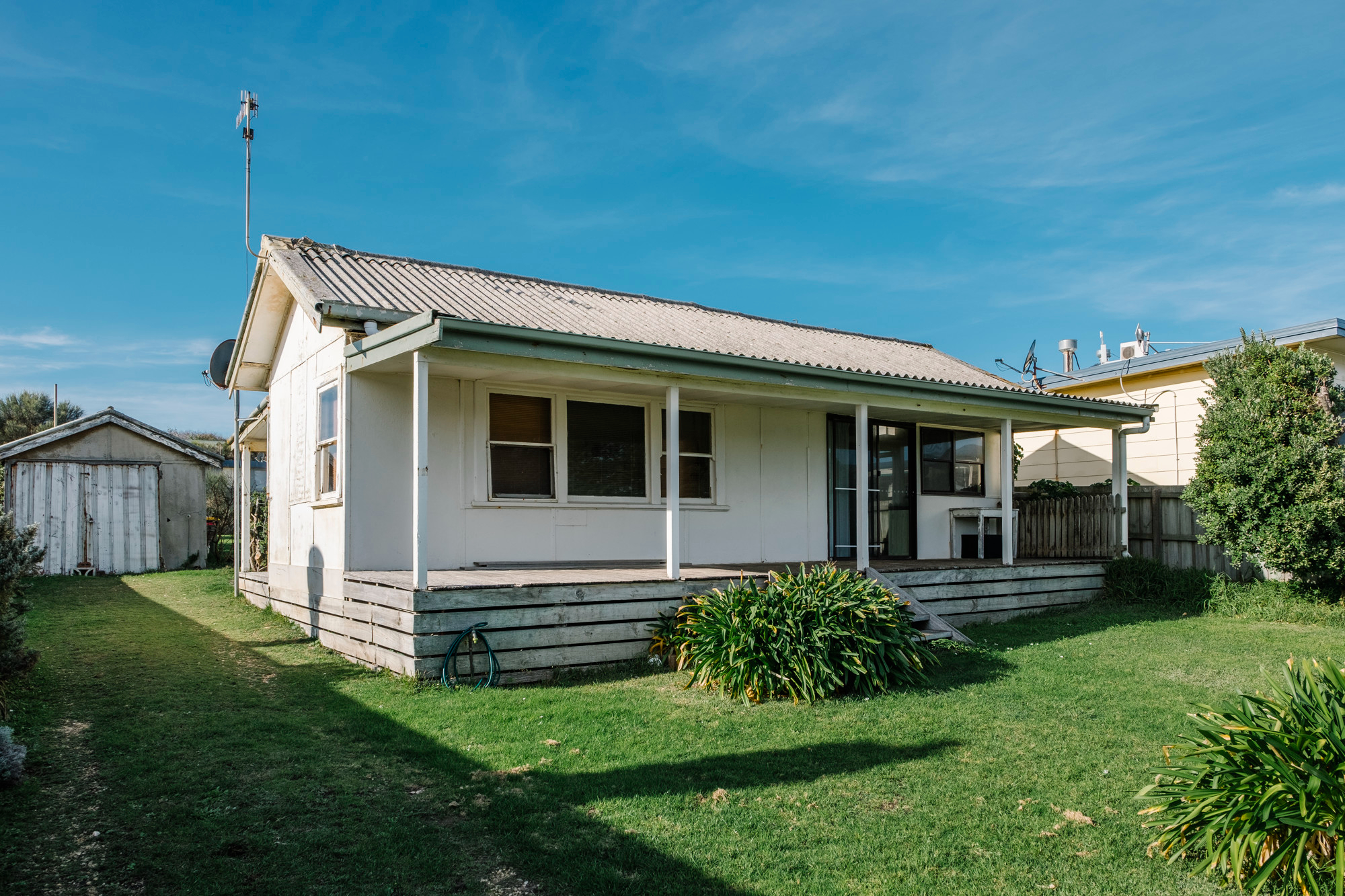
I bought the house. A four-bedroom colonial in a good suburb — new roof, generous yard, well-maintained, $770,000. I paid in full at closing. The deed was recorded in my name, and I kept it there, not because I was cunning, but because Patty had sat across from me the day I told her what I was doing and set her coffee down very deliberately and said, with the steady voice of someone delivering information they know will not be fully received: “Keep the deed in your name, Sierra. Promise me.”
I promised. It was the one thing I did exactly right.
Dalton moved in the following week. He never asked whose name was on the paperwork.
The erasure was gradual, which is how the most deliberate things are often done.
Thanksgiving that year: Nicole’s family was coming, not enough chairs, maybe next time. Christmas: the Ashfords had a larger house, you know how it is. Gerald’s birthday in February: just a small dinner, didn’t want to make a fuss. Every exclusion came wrapped in a reason just plausible enough that I could accept it if I chose not to look directly at the pattern.
I had started looking directly.
Dalton had been with Nicole Ashford for over a year by the time I understood the full scope of the editing. Her family was well established — country club, charitable boards, a wing of a local hospital bearing their name — and Dalton was performing a version of himself for her that required a particular backstory: close-knit, simple, untroubled. I didn’t fit it. So he began removing me from it.
I discovered how far he’d gone on a December evening, scrolling through Nicole’s Instagram. A photo at the dining table in my house — Christmas garland on the banister I’d chosen, candles on the mantle I’d paid for, Gerald with a wine glass raised. Caption: Family Christmas at our home. Just us, a small family, and that’s all we need.
I saved the screenshot. Something instinctive, the way you preserve anything that might one day need to serve as evidence.
The information about the adverse possession inquiry reached me through a colleague who called with the discomfort of someone delivering news they wish they didn’t have. Someone matching Dalton’s description had visited a competing firm asking about the legal principle by which a person occupying property openly, without objection from the owner, can eventually claim ownership. He was looking for a mechanism to take my house.
I called Patty. She confirmed it. “He’s not just comfortable,” she said. “He’s planning.”
“I want to see one more thing first.”
The wedding invitations went out in March. Two hundred of them. Thick cream card stock, gold embossing, a reception to follow at “the couple’s home.” None of the two hundred envelopes had my name on it.
I learned this from Karen Webb, my oldest friend, who called me on a Thursday afternoon with the cheerful assumption that I’d already received mine and wanted to coordinate.
“Sierra… you got an invite, right?”
Six seconds of silence was enough for her to understand.
She texted me a photograph of the invitation. I looked at it for a long time. Then I called Dalton. He let it go to voicemail twice. When I texted him, he took three hours to reply: We talked about this. Nicole’s family takes priority. Don’t make this about you.
We had never talked about this. We had not spoken at any meaningful length in two years.
I texted back: The wedding is at my house, Dalton.
His reply came immediately. It’s been my house for two years. Everyone knows that.
I read that sentence until I had finished being surprised by it. Then I called Gerald.
He picked up on the second ring, which told me he’d been expecting it.
“Dad, did you know I’m not invited?”
“His wedding, his rules.”
“It’s my house.”
“You gave it to him. That’s done.”
“I didn’t give it. I allowed him to live there.”
“Same thing.”
“It’s not the same thing, Dad.”
I could hear the television in the background. He hadn’t muted it. The small, persistent insolence of a person who has decided in advance that this conversation doesn’t require his full attention.
“Sierra, don’t start. Just let your brother be happy for once.”
For once. As though Dalton had ever in his life been denied a single thing he wanted.
“What about me?” I said.
The silence stretched long enough for the play-by-play in the background to become audible.
Then, quietly — almost gently, and somehow this was the worst version: “You’ll be fine. You always are.”
He hung up.
I sat on my kitchen floor with the phone in my lap and thought about that sentence for a long time. You’ll be fine. You always are. He said it as though my ability to survive everything they had done to me was a character trait he admired, when in reality it was a wound they had inflicted so many times that I had simply learned to close it faster. He said it as though my resilience were permission. As though “she will recover” meant “it is acceptable to harm her.”
That was the cruelest thing my father ever said to me. Not because it was angry. Because he believed it.
I wrote Dalton a long message. Not accusatory, not begging — just everything true, laid out plainly: every holiday I had not been included in, every call he had not returned, the college fund I had discovered years later, the house I had bought believing it would build something between us. I asked him one question: did he actually want me gone, or had he simply been too comfortable to notice I was still trying?
He read it. The check mark turned blue.
He didn’t reply.
Two days later I received a text from a number I didn’t recognize. Hi Sierra, this is Nicole. Dalton told me you’ve been pressuring him about the wedding. I understand you feel left out, but please respect our wishes. And don’t use the house as leverage.
Don’t use the house as leverage.
He had not just excluded me. He had constructed a narrative in which I was the aggressor — the difficult sister, the one who used money as control, the one who needed to be managed. He had given Nicole a version of events in which I was the problem, and she had arrived at the conversation already having decided to defend him.
I set the phone down on the kitchen counter. I looked at the ceiling.
I did not cry.
What happened in the place where tears would have been was something quieter and more decisive. It was the sensation of a door I had been holding open for seventeen years finally swinging shut of its own weight. Not slammed. Closed. With a sound that barely registered and a finality that registered entirely.
I opened my laptop. I found Russell Tate’s number — Patty’s former colleague, the kind of lawyer who speaks each word as though it will matter later, because in his experience it usually does.
I called Patty that evening.
She let me tell it all without interruption: the invitation, the texts, Gerald’s six words, Nicole’s message, the adverse possession inquiry, Dalton’s claim that the house had always been his, Gerald accepting a bow on the night of a man’s life that had been built on my money and my erasure.
When I finished, she was quiet for a moment. “The deed is in your name.”
“Yes.”
“Good. Then we know what’s possible. What do you want to do?”
“I want to sell it,” I said. “Before the wedding.”
She didn’t say I told you so. She didn’t say are you sure. She said: “Then let’s make sure it’s done properly.”
Russell reviewed the documents the following morning. Deed, property records, tax filings — all in my name, paid current, no co-signatories. No lease with Dalton, no rental agreement, no written arrangement of any kind establishing his tenancy in legal terms.
“He’s a guest,” Russell said, removing his reading glasses. “Legally speaking, nothing more.”
“Can he stop me from selling?”
“No.”
The buyer came within three weeks — a young family relocating from another state who loved the yard and the school district and made a clean offer at full asking price. Closing date: June fourteenth. One day before the wedding.
I signed the final papers on a Tuesday afternoon. The property transferred at 4:17 p.m. Russell prepared the notice to vacate — thirty days, entirely standard, legally sound. I chose the delivery date myself.
June fifteenth.
The morning of the wedding.
I did not go to the wedding. I want to be clear about that. I drove to the neighborhood on the evening of June fifteenth and parked at the end of the block under an oak tree, and I sat with the engine off and watched the lights strung along the fence of a house I had owned forty-eight hours earlier.
It was a beautiful evening. Warm, clear, the kind of June night that justifies every wedding planned for June. Through the open windows I could hear jazz and the clink of glasses and the confident murmur of two hundred people who believed they understood whose house they were standing in.
Karen texted from inside at intervals. She described the string quartet on the patio, Nicole in a gown that apparently warranted three separate adjectives, Dalton in a gray suit, Gerald holding court near the bar. She described the first dance and the toasts and the way the room caught the candlelight. Then she called.
“He gave his speech,” she said, keeping her voice low. “He thanked Gerald — I’m quoting — ‘for giving me everything, including this beautiful home.’ Gerald stood up. People clapped.”
I tightened my hands on the steering wheel.
“And Sierra — he said he wishes his mom could be here. He said she’s the only one missing tonight.”
The only one missing.
I was two hundred yards away, sitting in a parked car on a public street, listening to my brother erase me from a stage inside a house I had purchased. According to him, the only empty chair at his wedding belonged to a woman who had been dead for seventeen years.
I wasn’t missing. I had been removed.
I called Russell at 8:41 p.m. “Send it.”
“You’re certain?”
“Yes.”
Russell sent two things simultaneously. The first was the formal notice to vacate, delivered by courier to the property address with signature confirmation. Thirty days. Standard. Legal. The second was an email addressed to Dalton, Gerald, and Nicole — all three, one message, six lines I had written the night before and revised four times, each revision shorter than the last:
The property at 114 Maple Crest Drive has been sold. The transaction closed June fourteenth. You have thirty days to vacate. Enclosed: a copy of the deed in my name, the signed sale agreement, and the formal notice to vacate. I wish you both a happy marriage. — Sierra.
No exclamation marks. No accusations. No emotion. Just documents, facts, and a deadline.
I pressed send at 8:47 p.m.
The jazz was still audible from where I sat. Someone inside laughed — a full, generous laugh, the kind produced by champagne and the certainty that everything is going according to plan.
I turned the key in the ignition.
I drove home. I washed my face. I got into bed and slept more completely than I had in months.
Karen called the next morning. I made coffee before I answered.
The email had arrived twelve minutes into the toast from Nicole’s uncle. Dalton had felt his phone vibrate, excused himself from the table, and glanced at the screen. Karen said the color left his face the way water leaves a glass when it tips — all at once, total.
He found Gerald near the bar. She was close enough to hear Gerald say, “What do you mean, sold?” Dalton said something she couldn’t catch, and they moved to the hallway with the controlled urgency of men who cannot afford to make a scene in front of two hundred guests they have spent years impressing.
Nicole noticed within minutes. She crossed the room in her wedding dress, touched Dalton’s arm, and asked what was wrong. He told her it was nothing. She saw the phone in his hand and held out her own.
He gave it to her. Karen said he looked, in that moment, like someone who had run out of choices.
Nicole read the email. She opened the first attachment. She looked at the deed — the address of the house she was standing in, the property she had been told belonged to her husband’s father, and the name printed clearly in the owner field.
“Who is Sierra Mercer?” she said.
Dalton’s mouth opened. Three full seconds passed before anything came out of it.
“Nobody,” he said.
Margaret Ashford arrived at the end of the hallway with the efficient attention of a woman who has spent decades reading rooms at charity events. She took in her son-in-law’s expression, her daughter’s stillness, and the small crowd of guests near the doorway who were performing the social act of pretending not to watch. She held out her hand toward Nicole, who turned the phone screen toward her.
Margaret read it. She looked at Dalton. She looked at Gerald, who had appeared at the edge of the hallway. She said nothing for a moment.
Then: “My daughter asked you a simple question. Who is Sierra Mercer?”
Dalton attempted composure. He said she was a distant relative. The word came out wrong — too casual, too practiced. Margaret’s expression didn’t move.
Karen stepped forward. She told me later she hadn’t planned to. She had been standing there with two glasses of champagne in her history and seventeen years in her chest and something had simply become intolerable to hold.
“She’s his sister,” Karen said clearly. “His younger sister. She bought this house.”
The hallway went quiet with the specific silence of a large gathering that has suddenly stopped performing.
Margaret turned to look at Gerald.
“You have a daughter?”
Gerald straightened his shoulders, the reflex of a man reaching for an authority that was no longer operative. “This is a family matter.”
“It became my family’s matter,” Margaret said, “the moment my daughter married into it.”
Nicole was looking at Dalton with the focused attention of someone revising everything they thought they understood about a situation. “You told me you were an only child.”
“Nicole—”
“You told me your father bought this house.”
“I can explain—”
“What else?” she said. “What else did I not know?”
That question was not just about the house, and everyone in the hallway understood it. It was about the whole architecture of the person she had just married, and whether what she was standing in now was the real version or another surface.
Dalton moved through three stages that Karen described to me later with the observational precision of someone who had been watching him her whole life and finally had permission to name what she saw.
First, he tried denial. He pointed at Karen and told the room she was biased, that she was Sierra’s friend and didn’t know the full story. Karen looked at him with the steadiness of someone who has nothing to protect and said that she had been at his mother’s funeral, that she had sat at his family’s table for sixteen years, and that she knew exactly what the full story was.
Then he tried deflection. He turned to the assembled guests — people still standing with their champagne and their rearranged expressions — and spread his hands. Sierra was difficult, he said. She was jealous. She couldn’t let him be happy.
Margaret’s voice cut across the room without rising. “She didn’t come to your wedding, Dalton. Because you didn’t invite her.”
Then, finally, collapse. He looked at Gerald the way someone looks at the last person who might be able to reach into the water and pull them out.
Gerald stood at the edge of the hallway with his hands in his pockets and said nothing. His jaw was set. His eyes were somewhere to the left of his son’s face.
For the first time Karen had ever witnessed — and she had known this family for nearly two decades — Gerald Mercer had nothing. No speech, no redirection, no invocation of family loyalty or private business. Just the silence of a man whose story had run out of room to stand in.
Nicole walked outside. Two bridesmaids followed without being asked. Then her aunt, then her cousin, then Margaret, who paused at the door and looked back at Gerald one final time with an expression Karen described as the end of something long and carefully maintained.
The DJ had stopped the music. Nobody asked him to start it again. Guests filed through the foyer in quiet groups, collecting coats and purses, saying the abbreviated goodbyes of people who are leaving a place that has become uncomfortable to be in. The string quartet on the patio was already packing their instruments.
The last car left at eleven.
Dalton stood in the foyer of my house on the night of his wedding with no guests, no music, no bride, and a thirty-day notice to vacate on the kitchen counter.
Gerald called at seven the following morning. I let it ring twice, then answered.
His voice was shaking with the specific tremor of controlled rage — not grief, not regret, but the fury of a man who has been humiliated in public and needs somewhere to put it.
“What did you do?” he said.
“I sold my property.”
“You ruined your brother’s wedding.”
“I exercised a legal right regarding a house in my name. The sale closed the day before the wedding. I had no obligation to time it differently.”
“You need to undo this. Call the buyer. Get it back.”
“It’s done, Dad. It’s not reversible.”
“You did this to hurt him.”
“I did this because he told two hundred people I don’t exist. He told his wife I was nobody. He told his guests that the house I paid for was a gift from you.” I kept my voice level. Not cold, not loud. Just factual. “He tried to find out whether he could take it from me legally. He deleted me from family photos. He rewrote every story in which I appeared so that I was gone.”
Silence. I heard his breathing, heavy and uneven.
Then he pulled out the only thing he had left. The trump card. The invocation of a woman who could not correct him.
“Your mother would be ashamed of you.”
I sat with that for one breath.
“My mother,” I said quietly, “spent the last weeks of her life arranging protection for me because she knew what you would become without her here to balance you. She signed legal documents. She assigned Patty formally as my godmother. She left me a college fund that you transferred to Dalton within the year.” I paused. “Don’t tell me what my mother would think. She already told us both. She just told me in paperwork, and you in what she felt she had to protect me from.”
The silence was complete.
“Don’t call me again, Gerald.”
“Don’t call me again, Sierra.”
He hung up. So did I.
That was the last conversation I had with my father. Not the last time he attempted contact — there were later efforts, softer in tone, filtered through mutual acquaintances. But the last time I answered. Some doors close with a slam. This one made barely any sound at all.
Dalton called Monday afternoon. His voice was raw.
“You can’t do this. This is my home.”
“It was your home in the way that a hotel room is your home when you’re checked in. The property was mine. The taxes were in my name. The mortgage was paid by me at closing. There was no agreement of any kind that established your tenancy.”
“I’ll sue you.”
“Russell reviewed the complete file. You have no legal standing. No lease, no contract, no equitable interest. You were a guest in my house, Dalton. Nothing more.”
A silence. Then the shift I had been expecting — the modulation from confrontation to appeal, the way he had learned early to change instruments when the first one stopped working.
“Sierra. Come on. We’re family. We can fix this. I’ll talk to Nicole. We can have you over for dinner—”
“You told your wife I don’t exist.”
The sentence sat between us without requiring anything added to it.
“I can explain that.”
“I know you can explain it. You’re very good at explanations. What I’m asking is whether you can name what you actually did.”
He couldn’t. The apology he offered was the kind that contains no specific accounting — “I know I messed up,” “things weren’t perfect,” the language of regret in the abstract, which costs nothing and changes nothing.
“You have thirty days,” I said. “I’d use them.”
“Where are we supposed to go?”
“That’s not something I can help you with anymore.”
I ended the call. My hand was steady. My chest hurt. The second thing mattered more than the first.
Russell confirmed the following Wednesday that the title transfer was fully recorded and the funds deposited. The sale was clean, legal, and permanent. Dalton’s attorney reviewed the documents and, according to what Russell later heard from a colleague, delivered his verdict in approximately fifteen minutes: no lease, no rental agreement, no legal standing of any kind. He had lived in the house, hosted Christmas parties in it, planned his wedding in it, and told people it belonged to him for two years.
He left no paper trail because it never occurred to him to leave one. It never occurred to him that the sister he had been carefully erasing might one day need proof that she had ever been there at all.
Nicole did not file for divorce. I was relieved by that, not for Dalton’s sake but because I had not wanted to be the event that destroyed a marriage — I had wanted to be the event that put the truth on the table, and what they did with the truth afterward was their work to do. Through Karen I learned that Nicole had set terms: weekly couples’ therapy, full financial transparency, and a direct conversation with me whenever I decided I wanted one.
The offer was open. The timing was mine.
The story Dalton had spent two years constructing — only child, devoted son, house provided by his generous father — met two hundred witnesses on June fifteenth, and two hundred witnesses are difficult to contain.
Within a week it had traveled through the Ashford social circle, through Gerald’s golf club, through Nicole’s sorority network. The bones were always the same: the groom’s sister bought him the house, he erased her from the family, she sold it on the wedding day. Margaret told her book club. Gerald was asked questions by men he’d known for thirty years who were now revising their understanding of him. One of them, a retired judge, said it to his face over lunch: “You froze out your own daughter, Jerry. The one who bought the boy his house.” Gerald left before the check arrived. He had built his identity on being a respectable man, and the public reckoning cost him something he had no way to recover quickly.
Weeks after everything settled, Patty asked Gerald to meet her at a coffee shop downtown. He came, which surprised her. He looked, she said, as though the month had compressed itself into visible years on his face.
She didn’t ease into it. “Your wife asked me to watch over Sierra because she knew you wouldn’t. She knew what you would become without her there, and she was right.”
She told him that Linda had spoken honestly in those final weeks — about the choices Gerald had already made, about having decided Dalton first and Sierra second. That she hadn’t asked Patty to be Sierra’s godmother out of sentiment, but out of fear of what Gerald would do to that girl when she wasn’t there to prevent it.
“And she was right,” Patty said.
Gerald placed a twenty on the table and walked out without turning around. Patty called me that evening. “I said what your mother would have said. The rest is his.”
My mother had been dead for seventeen years and she was still protecting me. She had written it into legal documents and trusted them to the right person. Some people leave behind sentiment. My mother left behind a shield.
The sale proceeds felt, when they arrived, like a refund rather than a windfall. The first thing I did was pay off the student loans I had taken out because my college fund had been emptied before I ever knew it existed. That felt like closing a circle that had been open for seventeen years.
Then Patty and Russell and I built something. We called it the Linda Mercer Foundation — scholarships for young women who had lost their mothers early and were navigating self-sufficiency without a safety net. Not just tuition, but licensing fees, first-month rental deposits, the practical expenses that people forget to mention when they say work hard and everything will be fine. We funded it with a third of the proceeds. No press release, no gala. Just a legal structure, a bank account, and a mission named after the woman who had started protecting me from beyond her own death.
I bought a house with what remained. Small, two bedrooms, a porch that catches morning light, a kitchen window facing east. The deed is in my name. Only my name. I unpacked one box first — a photograph of my mother at thirty-one, holding me as an infant, smiling in a way that suggested she still believed the world made sense. I set it on the shelf by the front door, where it’s the first thing I see coming home.
“I bought a house for myself,” I said to the empty room. Nobody answered. I didn’t need anyone to.
Three months passed.
Dalton wrote me a letter — handwritten, two pages, the kind of handwriting produced by someone writing fast before they lose their nerve. He didn’t quite apologize. He said he knew he had messed up, that he didn’t know how to fix it, that Nicole kept asking about me and he didn’t know what to say because he didn’t know who I was anymore, and that this was his fault.
I read it twice. I placed it in the drawer of my nightstand.
I didn’t write back. Not because I was refusing to, but because I wasn’t ready. For the first time in my life, I let not ready be a complete sentence — one that required no justification and no timetable set by someone else’s need for resolution.
Gerald sent nothing. Just the silence he had always given me, now stripped of even the pretense that it was anything other than what it was.
I didn’t wait for it to mean something different.
Thursday evenings became the week’s anchor. Patty and I had dinner every Thursday — her kitchen, my kitchen, the Italian restaurant on Elm where the owner had known our orders for two years and set our table without being asked. Sometimes Karen joined us. Sometimes Russell brought his wife. We ate, and talked, and laughed about things that had nothing to do with deeds or weddings or the long taxonomy of what my family had done.
This was my family now. Not inherited. Chosen. Nobody at that table had ever made me prove I deserved a seat.
My mother had understood something that took me seventeen years and a $770,000 lesson to fully absorb: the people who are supposed to be yours by blood are not automatically the people who will actually show up. She had understood this about my father before she died, and she had done the only thing available to her — found the right person, given her the authority to act, and trusted it would be enough.
It was enough.
I am thirty-one years old. I have a house with the deed in my name and a porch that catches good morning light. I have a foundation built on my mother’s memory. I have people who chose me after weighing everything they knew, and I have the previously unfamiliar experience of choosing them back.
I don’t know what happens next with Dalton. Perhaps in a year or three I’ll be ready to sit across from him and hear what he has to say. Perhaps not. Both are allowed. The timeline belongs to me.
I know what I lost. I lost a version of my family that I spent seventeen years trying to construct through patience and sacrifice and a house I should never have given away. That version of the family never existed. What I lost was a hope with no foundation.
What I kept was everything that was actually mine.
On the shelf by my front door, my mother is thirty-one years old and holding me and smiling. Every time I leave the house, I look at her face and remember that she saw what was coming, and that she did everything in her power — even from the end of her life — to leave me the tools to meet it.
She gave me Patty. She gave me, indirectly, the habit of reading everything I signed.
The rest I built myself.
And nobody — not Gerald, not Dalton, not two hundred guests in a house that was never theirs to stand in — can take away what you built yourself. Not if you kept your name on the deed.

Sophia Rivers is an experienced News Content Editor with a sharp eye for detail and a passion for delivering accurate and engaging news stories. At TheArchivists, she specializes in curating, editing, and presenting news content that informs and resonates with a global audience.
Sophia holds a degree in Journalism from the University of Toronto, where she developed her skills in news reporting, media ethics, and digital journalism. Her expertise lies in identifying key stories, crafting compelling narratives, and ensuring journalistic integrity in every piece she edits.
Known for her precision and dedication to the truth, Sophia thrives in the fast-paced world of news editing. At TheArchivists, she focuses on producing high-quality news content that keeps readers informed while maintaining a balanced and insightful perspective.
With a commitment to delivering impactful journalism, Sophia is passionate about bringing clarity to complex issues and amplifying voices that matter. Her work reflects her belief in the power of news to shape conversations and inspire change.