My name is Alexandria Weisman, and for most of my life I have been described in relation to my sister — as the quieter one, the sensible one, the one who reads too many books and asks too little of a room. The night Isabella’s wedding collapsed in spectacular, ballroom-shaking fashion, I was standing near a column at the far end of the hall, as invisible as I had trained myself to be, watching the whole gilded structure come apart.
That evening would be the first time in memory that being invisible actually worked in my favor.
But I should start earlier than that.
Our mother, Elise, had wanted to be an actress. She mentioned it whenever the subject of dreams came up — how she had trained at a prestigious drama school, landed small stage roles, even appeared briefly in a television commercial before her father fell ill and she stepped back to manage things at home. She married well, redirected her ambitions, and decided that if she couldn’t hold the spotlight herself, she would build someone to hold it for her.
Isabella was born for the part.
My twin sister had been the kind of beautiful that stopped people mid-sentence. Platinum blonde hair that caught every available light. Pale blue eyes that sometimes read as silver. A smile she had spent years perfecting in front of mirrors — just the right amount of teeth, the right duration, enough warmth to seem natural without giving anything away. By the time social media became the new stage, Isabella had already learned every mark. She became an influencer with hundreds of thousands of followers, sponsored campaigns, brands competing for access to her image. Our mother managed her like a producer manages a star — adjusting posture, approving captions, holding the ring light and calling it love.
I arrived in the world at the same moment as my sister but spent the rest of my childhood as something of a footnote to her biography.
I had inherited my father’s brown hair and hazel eyes, a face my mother once described, with careful diplomacy, as “interesting.” Later, when she thought I was out of earshot, I heard her tell a friend on the phone: “Isabella is my little star, but Alexandria — well, every story needs a supporting character.” I was fourteen. The words embedded themselves in a place too deep to dislodge easily.
So I did what people do when they learn the shape of their ceiling early: I made myself comfortable beneath it. I gravitated toward books and quiet rooms and the kind of hobbies that don’t require an audience. I became good at occupying corners, at speaking softly enough not to interrupt, at being easy to overlook. I told myself it was modesty. It was actually the slow, steady work of someone who has been convinced, by reliable sources, that she takes up more space than she deserves.
Our father, Victor, was a kind man in the way that weak men often are — gentle by default because conflict required more energy than he typically had available. He followed our mother through rooms and conversations with the slight remove of a man who has long since ceded the floor and made his peace with it. I loved him for his quietness but understood, from an early age, that quietness was not the same as support.
By the time I was twenty-four, I had a job I was genuinely good at — copywriting and editorial work for a publishing firm, writing the words on the backs of books that made strangers pick them up and take them home. I found real satisfaction in it, the craft of persuasion, of compression, of making something irresistible in the space of a paragraph. My mother called it a hobby in the same tone she used for crossword puzzles.
I met Lucas at a bookstore, both of us reaching for the same novel on a clearance table. He laughed and gestured for me to take it and somehow that turned into coffee and dinner and eventually a first kiss on a rainy Wednesday that tasted like cinnamon and the specific relief of being seen.
Lucas Webb taught elementary school and wore sweaters with slightly frayed cuffs and kept a pen behind his ear with such consistency that his students sometimes asked if it was permanent. He loved his job the way people love things they chose freely — with a full-body enthusiasm that made his eyes light up when he described his students. He remembered that I liked my tea lukewarm and that loud restaurants made me anxious and that I always quietly located the exit in any crowded room, a habit I had developed so gradually I barely recognized it as anxiety anymore. With him, I didn’t feel like a supporting character. I felt like the person the story was actually about.
I waited two years to introduce him to my parents, which tells you everything you need to know about what I expected.
The dinner was arranged with my mother’s usual precision — polished table, crystal glasses, silk blouse the color of wine. Lucas arrived on time with white lilies for my mother and a carefully researched bottle of wine. She accepted the flowers with a tight smile and the word “teacher” in her mouth like something she was deciding whether to swallow.
“How noble,” she said.
Lucas smiled, unfazed, and told her he loved the work, that children were honest in a way adults rarely were. My mother laughed politely and returned her attention to her phone, where one of Isabella’s posts had just collected its ten thousandth like.
In the kitchen afterward, while we cleared plates, she pulled me aside and whispered: “You’re serious about him?” And when I said yes, she said, “He seems kind. But you could have aimed higher, Alexandria. Isabella has connections — there are men in finance, law, medicine—”
“I’m not Isabella,” I said, sharper than I intended.
Her expression cooled. “No,” she agreed, quite evenly. “You’re not.”
That was the last she said about it aloud. But the silence that replaced it said plenty.
Three years before the wedding, Isabella met Ethan Montgomery at a charity gala my parents treated like the Oscars. The Montgomery name carried the specific gravity of old money — discreet philanthropy, a country estate, the quiet confidence of someone for whom financial anxiety had never been a personal experience. He was composed and gracious, with dark hair and an easy smile, and when he shook my mother’s hand that first night at dinner, her eyes lit with a quality I had spent my childhood chasing and eventually stopped pursuing.
From that evening on, Ethan became the most frequently uttered name in our household. My mother planned her social calendar around his family’s events. She flipped through bridal magazines as though they were research materials. She sighed over descriptions of the Montgomery estate as though she had already mentally staged the ceremony.
Lucas proposed on a Sunday morning before either of us had changed out of pajamas, with slightly lopsided heart-shaped pancakes and syrup on his wrist when he reached into his pocket for the ring. He told me he didn’t have a trust fund, that his car made a funny noise when turning left, that his concept of fine dining involved extra pizza toppings. He told me he loved me and wanted to wake up next to me for the rest of his life.
I said yes before he finished the sentence. We danced barefoot in the kitchen in the pale morning light, and I felt, for those few minutes, genuinely wealthy in the only way that had ever meant anything to me.
When we told my parents at dinner a week later, my father raised his glass and said marriage was a big step. My mother looked at my ring — modest, carefully saved for, exactly what I wanted — and her eyes did the brief calculation I had watched them do my entire life.
“How sweet,” she said. Then: “Have you thought about what kind of ceremony you’ll have?”
We told her small. Intimate. A backyard, perhaps thirty people, close friends and family.
She stared at us as though we’d proposed holding it at a petrol station.
“A backyard wedding,” she repeated. Then she laughed — sudden and sharp — and said that people were already clearing their calendars for Isabella’s wedding, which was going to be the event of the season, and that resources couldn’t be spread too thin, and that these things were expensive, and that Ethan’s family was contributing over a hundred thousand, and that Isabella’s dress alone was twenty thousand, and that Alexandria had always been the practical one, which was a virtue really, not everyone needed the fuss and the spectacle.
Lucas’s jaw tightened beside me. He said nothing, which took considerable restraint that I noticed and appreciated.
I nodded and smiled and said I understood completely.
That night he found me on the edge of the bathtub with tears dripping onto my jeans. He knelt in front of me and said he was sorry they spoke to me like that. I said it was fine, that I was used to it. He shook his head and said very quietly that I shouldn’t have to be.
He was right. But being right about something doesn’t automatically teach you how to stop.
Isabella’s bridal shower occupied an entire rooftop ballroom with sweeping city views, blush peonies, a dessert table that looked magazine-ready, and my name pointedly absent from the printed place cards. “We assumed you’d be moving around so much,” my mother said when I mentioned it. “It didn’t seem necessary.” I spent the first hour directing caterers and straightening gift ribbons, serving as the kind of invisible infrastructure that keeps beautiful events beautiful.
At some point during the afternoon, I noticed Isabella checking her phone with a frequency that seemed excessive even for someone who tracked her follower count the way other people tracked their heartbeat. Each time, a small private smile would cross her face before she caught herself and put the phone away. Ethan was out of town that week. So who was she texting with such absorbed pleasure?
I filed the observation in the part of my mind reserved for things I didn’t want to examine too closely, and went back to rearranging the gift table.
The phone call came a few days later, from a number I didn’t recognize.
The caller identified himself as Ryan, Ethan’s best man, and asked if we could meet in person. His voice had the careful, measured quality of someone carrying something heavy they’ve decided not to put down until they reach the right place. We agreed to meet at a coffee shop that afternoon.
He arrived with sandy hair and tired eyes and the air of someone who had spent considerable time deciding whether to make this particular decision. He was a journalist by trade, I remembered, something Ethan had mentioned in passing at a dinner. He watched people for a living, noticed what others let slip.
He turned his phone around on the table and showed me a photograph.
The photo was from the engagement party — candid, slightly off-center, taken from the edge of the room. In it, Isabella stood with Jake, Ethan’s younger brother. I had met Jake at family events: a fitness model with a jawline that looked architectural and a restless energy that made him seem permanently on the verge of something reckless. He was everything Ethan wasn’t in temperament — sharp, impatient, hungry in an undefined way.
In the photo, Isabella’s hand rested on Jake’s arm and their faces were turned toward each other at a distance that had no innocent explanation.
I said it could be a strange angle.
Ryan swiped to the next photograph.
It left no room for angles.
Jake had Isabella pressed against a balcony railing, and the photograph made it perfectly clear that this was not a first occurrence, not an accident, not the kind of thing that could be described as a misunderstanding. Her hands were in his shirt. His face was buried in her neck.
Ryan showed me more. A folder of images taken across months: the two of them slipping into buildings late at night, leaving together before dawn, seated in dim bars with her hand on his thigh and her head tipped toward his shoulder. Then screenshots of messages between them, the kind that used the specific vocabulary of people who know they are doing something they shouldn’t and have decided not to care:
He has no idea. I wish it were you walking me down the aisle.
I set the phone down and looked at the surface of my coffee.
“I’m telling you this because I care about Ethan,” Ryan said. “He’s my closest friend. He’s a good man who’s about to marry someone who’s been lying to his face for months. I want him to know before the wedding. Your word, as his future sister-in-law, would matter to him. He doesn’t know you well, but he trusts your family connection. It would help him believe it.”
I sat with the weight of what he was asking.
If I helped him, the wedding would almost certainly be called off. My parents would be publicly humiliated. Isabella would consider it a betrayal she would never forgive. The six-figure event my mother had organized like a military campaign would collapse before the first dance.
But if I said nothing, Ethan walked into a marriage that was already a lie.
“You don’t understand what happens in my family when I bring bad news about Isabella,” I said. My voice was smaller than I intended. “I tried once, when we were teenagers. My father didn’t believe me. My mother decided I was jealous.” I looked at my hands. “I’m the other daughter. When I speak, they hear what they already think of me.”
“This isn’t about your family,” Ryan said quietly. “It’s about Ethan.”
“I know,” I said. “But I can’t be in the middle of this. I’m sorry. Do what you need to do.”
He nodded slowly, disappointment visible but controlled. We parted with a shared heaviness, and I spent the next week lying awake with the images cycling through my mind, telling myself I had made the only reasonable choice.
The truth was that I had made the safe one. And those are not always the same thing.
The day of the wedding arrived dressed in the specific perfection my mother had spent months manufacturing. White roses lining the ceremony aisle, silk on the chairs, Italian archwork, a string quartet playing something that suggested European money without being obvious about it. Three hundred guests settled into seats that cost more per head than most people spent on a month of groceries. The hotel was the most prestigious in the city, the kind of place where the doormen wore white gloves and the air itself seemed to know it was being observed.
I sat near the back, between a distant cousin I barely recognized and an empty chair. The two hundred and ninety-ninth guest, in a room that had not been designed with me in mind.
Lucas had driven me and kissed my forehead in the lobby before retreating outside. He hated events like this not for any social inadequacy but because he understood, with the accurate perception of someone who loved me, exactly what they cost me. “Text me if you need rescuing,” he’d said. “Or just scream. I’ll probably hear it from the car park.”
Isabella appeared at the top of the aisle in twenty thousand dollars of white lace and tulle, and the crowd drew a collective breath. She was luminous in the way she had always been — the kind of beautiful that seems almost unfair, that makes everyone in the room adjust their posture slightly. She moved toward Ethan with the practiced grace of someone who has walked toward cameras her entire life.
Ethan looked at her as though she were the answer to a question he had forgotten he was asking.
I watched them exchange vows about trust and loyalty and forever, and I thought about Ryan’s folder of photographs, and about the message that said he has no idea, and I held very still.
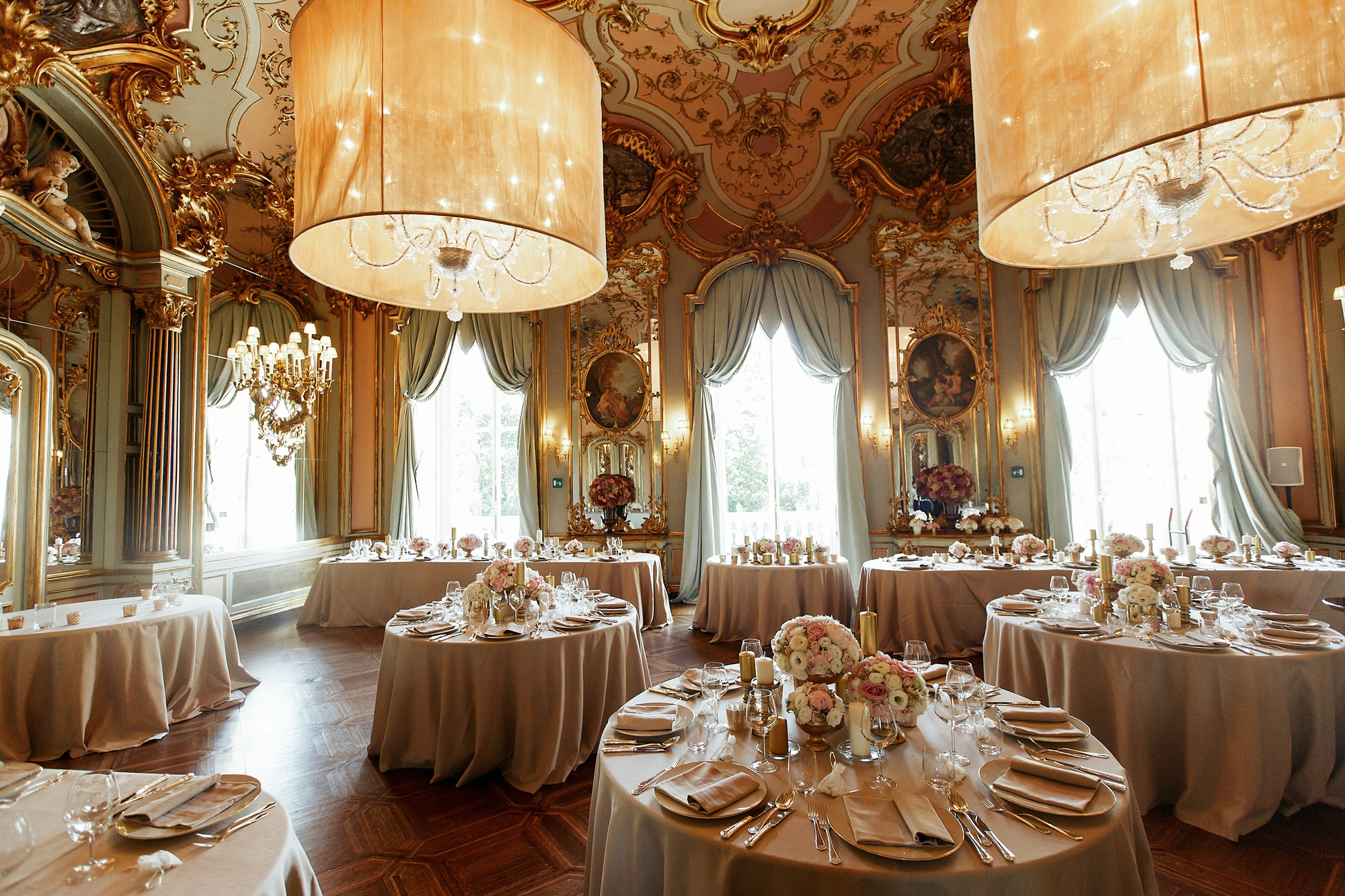
The reception ballroom made the ceremony garden look modest by comparison. Crystal chandeliers, gold place settings, a live band, three-tier floral arrangements on every table. My mother moved through the room with the specific glow of a woman who has successfully produced something magnificent and would like everyone to know it without having to say so directly.
I found my seat near the back of the room, as far from the head table as the floor plan allowed, and spent the cocktail hour nursing a glass of champagne I had no real appetite for.
The toasts arrived after dinner. Ethan’s father spoke with dignity about love and commitment. The maid of honor told a story about their college years that was carefully edited to remove anything that would disrupt the narrative. Then my mother took the microphone.
She glided to the center of the room in a floor-length gown, her hair immaculate, her smile the one she had practiced in every mirror in every social space for thirty years.
“Seeing everyone gathered to celebrate our beautiful Isabella and her wonderful Ethan fills my heart completely,” she began. She spoke about the kind of child Isabella had been — the room-lighter, the natural, the star she had always known her daughter would become. Applause and laughter moved through the crowd like approval, which was precisely what it was.
“Of course,” she continued, “we also have our other daughter.” She gestured vaguely toward the room without actually looking for me. “Our quieter one. Every family needs balance.”
Laughter rippled through the crowd — warm, comfortable, entirely at my expense.
I stared at the tablecloth. At the far end of the room, I could see Lucas starting to rise from his chair, and I caught his eye and gave the smallest shake of my head. I did not need rescuing. I had been absorbing this particular impact since I was fourteen years old, and I knew how to stay standing.
My mother raised her glass and the crowd followed, and then she returned the microphone to its stand with the satisfied grace of someone who has delivered a performance exactly as intended.
Ryan stood up.
I had barely noticed him during the evening — he had been seated at the head table, near Ethan, quiet and watchful. Now he adjusted his tie with the deliberate care of someone preparing for something specific, took the microphone, and walked to the center of the floor.
“Good evening,” he said. “For those I haven’t met, I’m Ryan, Ethan’s best man and one of his oldest friends.”
Polite acknowledgment from the crowd.
“I’ve thought carefully about what to say tonight,” he continued, his voice carrying the steadiness of someone who has practiced this and made his decision and is not going to change it now. “How to describe a man who always shows up, who always chooses honesty, who deserves — above anything else — to be treated with the same integrity he extends to everyone around him.”
Something in his tone had shifted on that last sentence. The room adjusted, the way a room does when it senses a change in weather.
“Ethan deserves the truth,” Ryan said.
Isabella’s smile held its shape for another second, then fractured at one corner, just slightly, just enough.
“I’ve struggled with whether to say this here,” Ryan went on. “And if there were another way, I would have taken it. But I’ve tried other ways and there are none.” He paused. “So.”
He looked toward the AV technician at the far wall and nodded once.
The slideshow that had been running on the enormous screen behind the head table — childhood photographs, engagement pictures, the visual biography of a perfect love story — flickered off.
The new footage replaced it without preamble.
It was the balcony photograph, but in video form this time — Isabella and Jake, unmistakable, with a clarity that left no room for misinterpretation or generous explanation. The balcony from the engagement party. The same evening clothes. The same absolute certainty in every frame.
The sound that moved through the room was not quite a gasp — it was more like the collective intake of breath before a gasp, the moment just before everyone understood what they were seeing.
Isabella was on her feet before the clip ended. “Turn it off.” Her voice came out high and cracked at the edges. “Turn it off right now.”
The video continued. It had been edited with a journalist’s precision — photographs in sequence, each one building on the last, and then the message screenshots enlarged on screen, white text on pale background, each word visible to three hundred people simultaneously:
You’re the only one who really gets me. He has no idea. I wish it were you I was walking down the aisle to.
The room erupted.
Some guests pushed back their chairs and moved toward the walls, as though distance from the head table might protect them from what was unfolding. Others sat frozen with their phones half-raised, caught between recording and the social instinct that said they should pretend not to. Voices rose and collided — shock, outrage, the particular excited horror of people who are witnessing something they will describe in detail for years.
Jake had stood abruptly, knocking his chair backward. “It’s out of context,” he said, loudly, to no one and everyone.
Ethan turned to look at his brother with the expression of a man who is trying very hard to find an explanation and cannot locate one. “Is it fake?” His voice was barely audible but the microphone near him caught it. “Did someone fabricate this?”
Jake’s mouth opened. No words came.
“Ethan,” Isabella said, grabbing his arm, mascara already tracking dark lines down her face. “Please. It was a mistake. It didn’t mean anything.”
He looked at her for a long moment. In that look was something I recognized — the specific, devastating adjustment that happens when you discover that your understanding of reality was built on false information. Not just hurt. Reconstruction. His entire frame of reference shifting on its axis.
“How long?” he said.
She hesitated, which was itself an answer.
“It was complicated,” she whispered. “The pressure, the expectations — I was confused—”
“How long, Isabella.”
Her silence stretched for three seconds, which in a ballroom of three hundred stunned people felt considerably longer.
My mother materialized between them, her composure cracked but her instincts still operating. “This is a fabrication,” she announced, turning to address the room as though it were a press conference. “A deliberate attack on our family. These things can be manipulated — any footage can be manipulated—”
“Nothing was manipulated,” Ryan said into the microphone, still holding it with both hands. “I gathered everything personally. I confronted them both two weeks ago. Neither denied it.”
My mother turned on him with the specific fury of someone whose production has been interrupted. “How dare you. How dare you do this here, tonight, in front of—”
“How dare they do it at all,” Ryan said, and his voice did not waver.
Ethan pulled his arm from Isabella’s grip with a gentleness that was somehow worse than force. He straightened. The room watched him with the collective held breath of people witnessing a decision being made in real time.
“I’m done,” he said.
The microphone caught that too. It moved through the speakers and across the ballroom and settled into every corner of the room like smoke.
“Ethan, please,” Isabella sobbed. “We can fix this. I’ll end it — I already ended it — please, we can—”
“The marriage is over,” he said quietly, and then, louder, because the crowd had leaned in and he was done pretending: “I’ll have my lawyer file for annulment first thing Monday.” He removed his boutonniere and set it on the table with a care that was somehow the most heartbreaking gesture of the whole evening. Then he turned and walked away from the head table, and when Jake reached for him, Ethan stepped sideways with a precision that avoided contact entirely.
The ballroom fractured completely after that. Candelabras tilted. A champagne flute went over and shattered on marble. Voices overlapped and broke apart. Isabella’s knees buckled and she grabbed the table and wept with the specific abandon of someone whose performance has ended and who no longer sees the point of composure. Jake stood alone near the far end of the head table, studying his own hands. The band, having received no instructions to the contrary, attempted a brief and entirely inappropriate musical segue before reading the room and stopping.
My mother’s gaze cut through the chaos and found me.
She pushed toward me through the crowd, her face stripped of everything rehearsed, and when she reached me she said, with the force of someone who needs to redirect blame immediately: “You knew. You knew about this and you said nothing.”
The column was cold against my back. I met her eyes.
“Yes,” I said. My voice was steady in a way that surprised me. “I knew.”
Several nearby guests turned.
“How could you let your sister walk into this?” she demanded. “How could you let this happen to this family?”
I held her gaze and asked the question I had been holding for weeks.
“If I had told you,” I said, “would you have believed me?”
She opened her mouth.
“Would you have called me jealous?” I continued. “Would you have told me I was trying to ruin Isabella’s happiness because I couldn’t manage my own? Would you have heard anything I said, or would you have heard the other daughter, the quiet one, the supporting character?”
Her mouth closed.
The silence between us held everything we had never said. All the dinners where her attention drifted to her phone when I was speaking. All the events where my name was an afterthought on the seating chart. Every “interesting” and “every family needs balance” and “you’re the practical one” stacked up in the space between us until neither of us could pretend it wasn’t there.
“I thought so,” I said. And then, because there was nothing left to add, I picked up my small clutch from the table beside me and walked toward the exit, my heels steady on the marble, past the shattered glass and the crushed roses and the tilted candelabra still trailing wax.
Nobody stopped me.
Lucas was outside in the cool night air, leaning against his slightly dented navy sedan with his tie loosened and his hands in his pockets, watching the hotel entrance with the patient attention of someone who knew things inside had not been going well for quite some time. When he saw me, he straightened.
“How bad?” he asked quietly.
I exhaled for what felt like the first time in hours.
“The whole thing,” I said.
He opened his arms and I walked into them, and for a long while we just stood there in the car park while the sounds of the ongoing chaos drifted through the hotel’s ornate doors in muffled waves. I could feel his heartbeat against my cheek, steady and reliable and entirely uninterested in performance.
We drove home with the city lights blurring past the windows and the radio playing something neither of us paid attention to.
The fallout moved through the city’s social circles like weather. Someone had recorded the moment the video played on the ballroom screen and shared it privately enough that it wasn’t technically public but specifically enough that everyone who needed to see it did. Isabella’s accounts went quiet, then silent. Brands deleted their partnerships without announcement. Her follower count eroded daily in numbers that, for someone whose sense of self was architecturally linked to public attention, must have felt like a kind of dismemberment.
Ethan’s annulment was processed with the efficient speed that significant legal resources make possible. He disappeared from view for a few months, then resurfaced, according to mutual acquaintances, calmer and considerably more private than before.
My parents retreated from their social calendar. My father went to the office earlier. My mother canceled engagements and cited health, which was not entirely untrue — the particular health of her public image was in critical condition.
Two weeks after the wedding, she called.
Her voice had lost its social sheen. She said she’d been thinking. About the wedding, about Isabella, about all of it. She said she hadn’t seen it, hadn’t seen who Isabella really was, and the admission cost her something audible.
“I’m sorry,” she said. “I’m sorry I didn’t see it sooner.”
I asked the harder question. “Are you sorry about how you treated me? All these years.”
The silence that followed told me more than her answer would.
“I’ve always done what I thought was best for this family,” she said carefully.
I closed my eyes.
“Thank you for calling,” I said.
I let her go before she could hear anything more in my voice than I intended to share.
Lucas and I set our date for early autumn, when the air would be cool and the leaves beginning to turn. We planned it the same way we planned everything — practically, with full attention to what actually mattered and cheerful disregard for what didn’t. Thirty people in Lucas’s parents’ backyard, fairy lights strung between old trees, mismatched chairs borrowed from neighbors. A cake his aunt was baking, which she promised would be delicious and freely admitted would probably be slightly lopsided. A potluck, because the people we loved were better cooks than any caterer we could afford.
I called my parents to invite them and told my mother, clearly and without anger, what I needed: for them to come as my parents. Not as Isabella’s parents who happened to have another daughter. Not out of obligation or comparison. For me. Just me.
“We’ll be there for you,” she said.
I took it for what it was — an intention, not a guarantee, but something to work with.
On the morning of our wedding, the sky opened and it rained with impressive commitment. A proper downpour, the kind that turns garden paths to mud and sends everyone scrambling for the backup plan. Lucas and his father secured the rented tent with extra cords while laughing at themselves. His mother moved through the gathering handing out towels and insisting everyone dry their hair before catching a chill, as though the weather were a minor inconvenience rather than a logistical emergency.
My parents arrived slightly flustered, my mother in a dress far simpler than her usual event attire, my father looking older and quieter and somehow more present than I had seen him in years. They hugged me at the entrance and my mother held on a moment longer than she normally did.
“You look beautiful,” my father said, his voice thick with something he wasn’t going to name.
My mother nodded, her eyes shining in a way that might, in another woman, have been the precursor to tears. “You really do,” she said.
I walked down the aisle between rows of folding chairs lined with mason jars of wildflowers and the warm breath of thirty people who actually knew me, to the sound of rain on the tent and Lucas waiting at the end looking at me in the way I had learned to need — like I was the whole story, not the supporting character.
We exchanged vows we had written ourselves, about choosing each other on ordinary Tuesdays, about patience and laughter and being willing to be the person who shows up with a blanket when the other one is sitting on a bathroom floor crying. The rain kept its own rhythm overhead, steady and unconcerned with our schedule.
When the officiant pronounced us married, there were no confetti cannons or drone cameras or professional photographers jostling for the definitive angle. Just applause — genuine, unpolished, the sound of people who were actually there.
Later, while the potluck spread itself across borrowed tables and children chased soap bubbles through the damp grass, I found my parents sitting quietly at a small table at the edge of the tent, watching Lucas dance with his young niece, her small feet balanced on top of his shoes as he turned in careful, clumsy circles.
“It’s a lovely wedding,” my father said, when I pulled up a chair.
My mother looked around the tent with the expression of someone recalibrating a long-held measurement. “It’s real,” she said, like she was testing the word. “No pretense. Just love.”
I told them I had received a small card of flowers from Isabella that morning. White lilies, and a note saying she hoped this was the beginning of my happily ever after, and that she hoped, someday, we might find our way to something healed between us.
My parents exchanged a look I couldn’t fully translate.
“Will you?” my mother asked.
“I don’t know,” I said honestly. “Healing isn’t something you can decide on a schedule. And forgiveness isn’t a transaction. You don’t hand it over to make someone else feel better.” I watched Lucas spin his niece into a dizzy, giggling stop. “For now, I’m building a life that actually feels like mine. That’s the work I’m doing.”
My mother’s hand moved across the table and rested on mine. It hovered for a fraction of a second before landing — a small hesitation, the particular awkwardness of a gesture that should have been automatic years ago and wasn’t.
“I see you,” she said quietly. “I know I’m late. But I see you.”
It wasn’t a resolution. It wasn’t an erasure of anything. It was a woman in her sixties saying something she should have said when I was fourteen, saying it into the specific atmosphere of a mismatched, rained-on, genuinely happy wedding in a borrowed backyard.
Sometimes something is where everything starts.
I had spent twenty-some years being the other daughter — the supporting character, the one who fades when the spotlight shifts toward someone brighter. I had performed that role so consistently that I occasionally forgot it was a performance at all.
Here is what the ballroom taught me: perfection is not a foundation. It is a veneer, and a thin one, and the truth moves through it eventually whether you invite it to or not. You can build something magnificent on appearances — three hundred guests, imported arches, a twenty-thousand-dollar dress — and it can still come apart in a single evening.
Real things are sturdier than that. They can survive rain on a wedding day and a lopsided cake and a car that makes a funny noise turning left. They can survive a late apology and the slow, imperfect work of two people trying to reach each other after years of practiced distance.
My name is Alexandria. For a long time I stood at the edge of every room waiting for someone to grant me permission to take up more space.
I’m not waiting anymore.

Adrian Hawthorne is a celebrated author and dedicated archivist who finds inspiration in the hidden stories of the past. Educated at Oxford, he now works at the National Archives, where preserving history fuels his evocative writing. Balancing archival precision with creative storytelling, Adrian founded the Hawthorne Institute of Literary Arts to mentor emerging writers and honor the timeless art of narrative.