The Folder I Never Travel Without
There is a particular kind of quiet that only exists at elevation. It is not the absence of sound so much as a different quality of it, thinner and more honest than the noise of the places where most of us spend our lives. When I turn off the main highway onto the forest road and the trees close in on both sides and the pavement gives way to gravel, I begin to breathe differently. My shoulders drop. The space between thoughts grows wider. The mountain does not care about any of the things that felt urgent an hour ago, and after enough visits you absorb that indifference like a medicine.
I had been driving for four hours. I needed the mountain the way you need water when you have gone too long without it, not dramatically, not in crisis, just in the simple biological way of a person whose reserves are low and who knows the one thing that will refill them. It had been a difficult few months. Nothing catastrophic, nothing that required announcement or sympathy, just the accumulated weight of too many decisions and too much noise and not enough of the particular silence that lets you hear your own thinking clearly. I had packed for five days. I had told no one I was coming because I did not need to tell anyone, because the house was mine and my schedule was mine and one of the specific pleasures of the mountain place was that I could arrive without explanation and leave the same way.
My name is Celeste Ward. I am sixty-four years old, a retired high school principal who spent thirty-one years managing the contained chaos of institutions and who discovered, somewhere in my fifties, that the version of me that made the best decisions and treated people most fairly was the version that had regular access to genuine solitude. I am not a hermit. I love people with full commitment, including my son, including most of the time my daughter-in-law, including grandchildren and friends and the entire complicated machinery of human relation. But I need the mountain the way some people need church, not as an escape from life but as the place where I can hear what life is actually asking of me.
The house had been mine for twelve years. I bought it with the proceeds from the sale of the family home after my husband Thomas passed, which was the single largest financial decision I had ever made alone, and I had made it with the specific intention of creating something that was entirely and unambiguously mine. Not ours. Mine. Thomas and I had built a life together that was genuinely good and genuinely shared, and I had no desire to erase it or replace it, but in the aftermath of losing him I understood something about the importance of having a place in the world that belonged only to you, that required no negotiation and no compromise and no explanation, where you did not have to account for your preferences or justify your habits or modulate yourself in any direction for anyone.
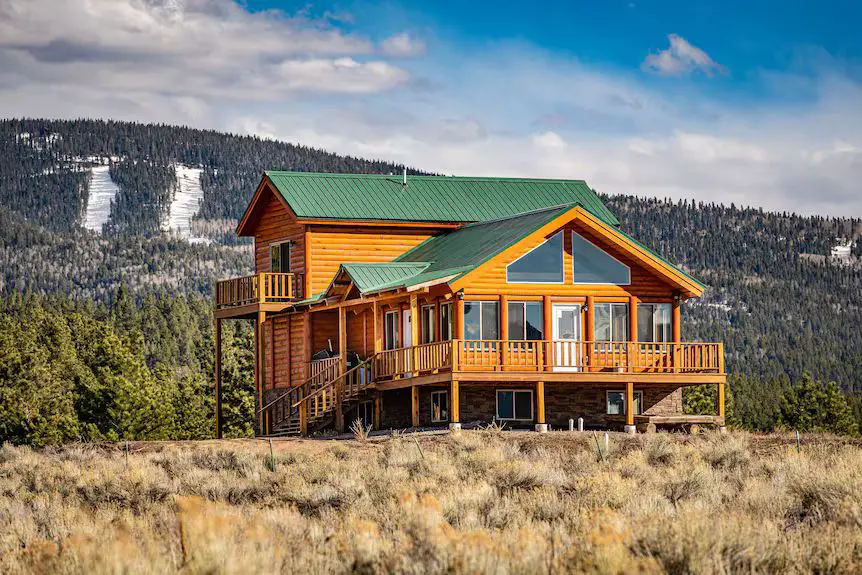
I had purchased the house on a Tuesday in October and I had driven up to it alone and walked through it room by room for the first time as its owner with a feeling I can only describe as the sensation of finally arriving somewhere I had been traveling toward without knowing it. The floors were pine. The main room had a stone fireplace and two windows that looked out at the tree line and the ridge beyond it. The kitchen was small and practical. The bedroom had one window that faced east so that the first thing you saw in the morning was the light arriving over the mountain.
I had hung photographs in the main room over the course of many visits: Thomas in the garden, the year before he got sick. My son Daniel at sixteen, standing beside the first car he had ever worked on, grease-streaked and proud. My mother and her sister at a church picnic, a photograph from 1962 that I had inherited and loved for the specific quality of light in it and the way both women were laughing without being aware of the camera. A print of a landscape painting by an artist whose work I had followed for years and whose rendering of winter light through bare trees seemed to me to capture something true about the season.
These photographs were the things I had put on the walls of the house to make it feel inhabited by me specifically, not just by whoever happened to be in it. They were the visual evidence of my presence in the place, the record of what I valued and who I had loved.
When I turned off the forest road and the driveway opened up before me in the early evening light, I saw three cars parked where no cars should have been.
I stopped my own car at the edge of the driveway and I sat for a moment, engine running, looking at the vehicles with the specific attention of a person trying to understand what she is seeing before she decides what to do about it. The truck I recognized immediately: it was Daniel’s, the dark green pickup he had owned for six years. The other two vehicles were unfamiliar, a silver sedan and a small crossover with a bumper sticker I could not read from my distance.
I turned off the engine.
I want to describe what I felt in that moment, which was not anger, not yet. It was closer to the feeling you get when you are reading a page and realize that the words are not adding up to the sentence you expected, a cognitive dissonance that requires a moment to resolve before the appropriate response becomes clear. I knew Daniel had a key. I had given him a key years ago with the explicit understanding that it was for genuine emergencies, for the kind of situation that could not wait for me to make the four-hour drive. I had given him the key as an act of trust and as a practical measure, not as an open invitation, and in twelve years he had used it twice, both times for things that qualified clearly as the emergencies I had in mind.
I walked to the door.
Through it I could hear voices before I touched the handle. Laughter. The particular sound of people in a room who have been there long enough to settle into it, who have arranged themselves and opened their bottles and found their comfort and stopped being visitors and started being residents. There is a quality to that kind of ease that is unmistakable and that told me, before I opened the door, that whatever was happening inside had been happening for some time.
I opened the door.
The room was familiar and wrong simultaneously, which is a disorienting combination. My furniture was in its usual positions. My rug was on the floor. My table was there. But where my photographs had been, on the wall above the fireplace and along the side wall beside the window, there were framed prints I had never seen: generic botanical illustrations in matching frames, the kind of art that is chosen because it matches a palette rather than because it means something. On the mantle, where I kept a small ceramic bowl that my mother had made and that I valued above almost every other object I owned, there were pillar candles in a decorative arrangement that someone had brought from somewhere else.
Wine glasses sat on my table. A bottle, already open, stood in the center. Someone had put a runner on the table that was not my runner.
There were four people in the room.
My daughter-in-law Priya noticed me first. She had been standing near the kitchen doorway with her glass in her hand, and when she saw me she went through the specific sequence of expressions that people go through when they are surprised by something they had counted on not happening: the first flash of something unguarded, then the recovery, then the construction of the posture she intended to present. She set her glass down with a deliberateness that was itself a statement, a slow and considered placement, the action of someone establishing calm authority.
Daniel looked up from the couch. His expression went through its own sequence, and what I saw there was more complicated than surprise, it was the expression of someone who had been hoping for a specific outcome and has just seen the possibility of it close. He did not stand up.
On my couch, in the seats Daniel and Priya usually occupied at Christmas, sat two people I recognized as Priya’s parents. Vikram and Sunita Mehta, whom I had met at the wedding and at two subsequent holiday gatherings and who had always been perfectly pleasant in the careful way of people navigating the neutral territory between two families. They were smiling now with the practiced pleasantness of people who have been told that a situation is uncomplicated and are waiting for that to be confirmed.
“What are you doing here?” Priya asked.
The question landed with the specific quality of a challenge disguised as an inquiry. She had not said “Celeste, we didn’t know you were coming” or “I’m so sorry, Daniel said you were away.” She had gone directly to the framing that established my presence as the irregularity requiring explanation.
“I came to my house,” I said.
I kept my voice at its ordinary register because my voice is not a tool I use for intimidation and because I had learned over three decades of working with teenagers and their parents and their teachers that the person who raises their voice in a conflict has generally already lost the argument and is compensating with volume. I was not going to compensate with volume. I had nothing to compensate for.
Priya looked at me with the appraisal I had felt before from her, that particular regard that calibrated my position relative to hers and found me slightly below the line. She gestured toward the door with a small, precise movement of her hand.
“You need to leave,” she said. “We have people staying here.”
I understood in that moment that she had been told, or had told herself, something that made this seem reasonable. That I had agreed to this in some way. That the house was available for this purpose. That my arriving was the problem and not the other way around. I understood that she was operating from a version of events that I had not been consulted about and had not consented to, and that the confidence with which she gestured toward the door was the confidence of someone who believes their version is the correct one.
Daniel said nothing.
This was its own communication. I looked at my son, who was thirty-one years old and whom I had raised to understand the difference between conflict avoidance and integrity, and I watched him not meet my eyes, and I registered this information and set it aside to be addressed later in a different setting.
Priya straightened. “If you don’t leave, we’ll call for assistance.”
I nodded once. “Go ahead.”
The room changed. Not dramatically, not loudly, but in the specific way a room changes when someone fails to produce the response that was anticipated, when the script that has been running hits a line that was not in it. Priya’s expression recalibrated. Vikram Mehta uncrossed his legs and leaned forward slightly. Sunita Mehta looked at her daughter with a question in her face.
Vikram spoke, with the gentle authority of a man accustomed to smoothing things over. He said he was sure there was some misunderstanding, that Daniel had told them everything was arranged, that I was traveling and perfectly fine with them using the property for the long weekend. He said it in the tone of someone who wants very much for the reasonable explanation to be the correct one.
I looked at Daniel.
“Did you tell them I agreed to this?”
He looked at the table. He picked up his wine glass. He set it down without drinking.
He did not answer.
The silence he produced in place of an answer was its own answer, and everyone in the room received it, including his in-laws, and I watched the quality of Vikram’s smoothing expression change as he absorbed what the silence meant.
“Daniel,” I said, still at the same register, “I’m asking you directly.”
“It was just,” he started, and stopped, and started again, “I thought you weren’t using it this month.”
“I see,” I said.
“We needed a place for Priya’s parents and the mountain house seemed—”
“You assumed,” I said.
He stopped.
“That’s different from agreeing,” I said. “You know that.”
Priya set her glass down again, a harder placement this time. “This is incredibly rude,” she said. “My parents have driven three hours. They can’t just—”
“Priya,” I said, and her name, said calmly and without elaboration, stopped her in a way that a louder word would not have. “I understand that your parents have driven a long way. I have no issue with your parents. My issue is with the fact that I am standing in my house, which has been occupied without my knowledge or permission, and I am being asked to leave it.”
“We can discuss this like adults,” she said, which is a phrase people use when they want to imply that you are not currently behaving like one.
“We are discussing it,” I said.
The headlights came through the window about fifteen minutes later, moving in the way headlights move when a vehicle is coming up the gravel drive, two slow sweeping arcs that lit the side wall and the botanical prints that someone had hung where my photographs used to be. I had made the call from the porch while Daniel and Priya spoke to each other in low voices inside and her parents sat with the careful stillness of people who understand they have arrived in the middle of something and are not sure which way it is going to resolve.
I had called the county sheriff’s non-emergency line, which was the appropriate call for the situation: not an emergency, not a crime in progress, but a property dispute that I thought would benefit from an official presence to establish the facts clearly. I had made this call calmly and factually, explaining who I was and the address and the nature of the situation, and the dispatcher had been efficient and unhurried.
Two local officials stepped onto the porch, the deputy and a second officer whose name I did not catch. They were both younger than I expected and had the professional composure of people who have navigated enough domestic situations to understand that composure is the first requirement of the job.
Priya moved to the door. The confidence had returned to her bearing, the confidence of someone who has decided that the arrival of authorities confirms that this is a dispute that will be resolved by official process, and who believes that the official process will confirm their position. She held the door open with the manner of someone welcoming help.
The deputy stepped in and looked around the room with the brief professional inventory of someone establishing the scene.
“Who is the registered owner of this property?” he asked. Not to anyone specifically. To the room.
I reached into my bag.
I travel with a folder. I have traveled with a folder for twelve years, since the first time I drove up to the mountain house alone and understood that being a woman who owns property and travels to it alone requires a certain kind of preparedness, not because I expected trouble but because the folder costs nothing and the absence of it could cost a great deal. The folder is not dramatic. It contains the property deed with my name as sole owner. It contains the most recent property tax statement, also in my name. It contains a copy of the title insurance documentation and a copy of the utility bills for the property showing my name and the address. It contains the purchase agreement from twelve years ago, signed by me and the previous owner and the closing attorney, dated and notarized.
I had organized this folder with the same methodical attention I had given, for thirty-one years, to the administrative life of institutions: clearly labeled, logically sequenced, immediately accessible. I had never needed it before tonight.
I put it on the table in front of the deputy.
He looked at the deed. He looked at the tax statement. He looked at me.
“You’re Celeste Ward?”
“I am.”
He looked at Daniel. “And you’re?”
“Her son,” Daniel said.
“Do you have documentation of permission to occupy this property?”
Daniel looked at Priya. Priya looked at the deputy with the expression of someone recalibrating in real time, understanding that the process she had been counting on to confirm her position was instead doing something quite different.
“He has a key,” she said.
“Having a key doesn’t establish occupancy rights,” the deputy said, with the patient tone of someone explaining something elementary. He looked at me. “Ms. Ward, do you want these people to leave the property?”
I looked at Daniel first.
I want to be honest about what I felt in that moment, which was not triumph and not satisfaction and not the specific pleasure of being vindicated. What I felt was something sadder and more complicated than any of those things. I was looking at my son, who was thirty-one years old and whom I had raised by myself for most of his childhood after Thomas got sick and who had learned to change a tire and cook a proper meal and apologize when he was wrong and stand up for things even when it was inconvenient to stand up for them. I had raised him to be a man with integrity. I was looking at him now in the house where I came to hear my own thinking, and he was looking at the floor, and I was about to answer a question that would determine the next several hours of all of our lives.
“I’d like my son and his wife to stay,” I said. “And I’d like her parents to stay tonight, because they’ve driven a long way and it would be unkind to send them back at this hour.” I paused. “But I would like my house back in the morning. And I would like my photographs back on the walls before anyone sleeps.”
The deputy nodded. He looked at Daniel. “That agreeable to you?”
Daniel finally looked up. He looked at me, and whatever he saw in my face, I do not know what it was, but something in him settled and something in him fell at the same time. He said yes.
Priya said nothing for a moment. Then she said, to no one in particular, “The photographs are in the closet.”
Vikram Mehta stood up. He was a tall man with a formal bearing and the specific dignity of someone who has understood that he has been placed in an embarrassing situation through someone else’s choices, and he addressed me directly and simply.
“Mrs. Ward,” he said, “I apologize. We were told this was arranged. We would not have come otherwise.”
“I believe you,” I said. “Truly.”
He nodded once, a slight bow of acknowledgment, and sat back down.
The officials left. The sound of their vehicle going back down the gravel drive was the sound of the situation having been resolved, at least in its official dimension. The room was quiet in a different way than it had been quiet before, the quiet of people who have just been through something and are still finding their footing in the aftermath.
Daniel got up and went to the closet and brought my photographs out in a stack and put them on the table. He did not look at me while he did this and I did not instruct him. He knew where they went. He had helped me hang them, years ago, on a weekend when he had driven up to help me with some repair work and we had spent a Saturday afternoon putting up shelves and arranging the pictures and eating takeout from the one restaurant in the nearest town.
He rehung them one by one while Priya sat on the couch watching and her parents maintained the careful stillness they had been maintaining since the officials left.
When he hung the last one, the photograph of my mother and her sister at the church picnic from 1962, and stepped back, the wall looked right again. It looked like my house.
“Thank you,” I said.
He sat back down. He did not speak.
I made tea because I needed something to do with my hands and because it was nearly nine o’clock and I had been driving for four hours and I was tired in a way that required the practical comfort of a familiar task. I did not offer the tea around the room, though I would have in any other circumstance, because this was not a circumstance in which hospitality was the primary thing required.
I took my tea to the bedroom and I closed the door and I sat in the chair by the east-facing window, the one that would show me the light arriving over the mountain in the morning, and I held my cup in both hands and I thought about my son.
We would need a conversation. Not tonight; tonight everyone needed sleep and distance from the electric charge of what had just happened, including me. But soon. A real conversation of the kind that families sometimes have to have when a thing that has been understood, or assumed to be understood, turns out not to have been understood at all. A conversation about the house and what it means to me and what it means that he had brought people into it without asking. A conversation about Priya and about the gradual, incremental way that certain dynamics can shift in a marriage until the person who loved you first is somehow assigned the position of least consideration. A conversation about what he owed me and what I owed him and how we were going to navigate the rest of our lives as people who loved each other.
I was not angry. I had been angry somewhere on the porch while I was making the call, a brief and clean anger, the kind that does its job and then recedes. What I had now was something more durable and more useful, a clear understanding of where things stood and what needed to change and the specific intention to see that they changed, not through confrontation or punishment but through the kind of honest and direct communication that I had practiced for thirty-one years as a person responsible for other people’s development and that I had not, apparently, applied with sufficient consistency to my own family.
In the morning I woke before anyone else. The east window showed me exactly what it had always shown me: the light arriving over the mountain, pale gold at first and then deepening, the tree line going from dark silhouette to individual shapes as the illumination increased, the ridge beyond revealing itself in layers. I made coffee and took it to the porch and I sat in the chair I had put there specifically for this purpose, the watching-the-morning chair, and I let the mountain do what the mountain does.
The pine air was exactly what I had driven four hours for.
Below me in the valley the world was full of noise and decisions and the accumulated weight of things that needed attending. Up here there was the light on the ridge and the sound of the trees and the coffee growing cool in my hands and the particular silence that is not the absence of sound but a different quality of it, thinner and more honest.
I heard the screen door behind me sometime later, and Daniel came out with his own coffee and stood at the porch railing looking at the view for a moment before he sat in the other chair.
We didn’t speak for a while. There is a kind of communication that happens in shared silence between people who know each other well, a re-establishment of the frequency between you, a tuning back to the register where understanding is possible.
“Mom,” he said eventually.
“I know,” I said.
“I handled it badly.”
“Yes.”
He turned his cup in his hands. “She wanted to do something nice for her parents and I couldn’t figure out how to say no.”
“That’s a problem you need to solve,” I said. “Between the two of you. It’s not a problem you solve by deciding that my house is available when it isn’t.”
“I know that.”
“Do you?”
He looked at me. “Yes.”
“Then we don’t need to have the argument,” I said. “We just need you to know that this doesn’t happen again. This place is mine. It’s the place I come to be alone and to think and to remember who I am without having to explain it to anyone. That’s not a small thing to me.”
“I know it isn’t.”
“Okay,” I said.
We sat for another while in the quiet. The light had moved up the ridge and was now in the trees on the upper slope, and below the ridge a hawk was working the thermal, circling in the patient way hawks circle when they are not hunting yet but getting ready to.
“She’s going to want to apologize,” Daniel said.
“She can,” I said. “I’ll receive it well.”
“She was wrong.”
“She was,” I said. “And so were you. And we’re going to be fine.”
He nodded. He looked like his father at certain angles and this was one of them, the quality of quiet that Thomas had when he was taking something seriously but had decided not to be dramatic about it. I loved my son with the complete and undiminished love of a mother who has known him since before he was a person and has watched him become one, with all the complications that entails.
The hawk folded and dove and the morning continued its usual business of becoming fully itself.
I sat in my mountain chair, in my mountain air, at my house, which was mine in the way that the deed and the tax statement and the folder confirmed, and mine also in the older and less documentable way of a place where you can hear your own thinking, where the silence has the right quality, where the east window shows you the light arriving over the ridge every morning as long as you are there to see it.
I finished my coffee.
The mountain did not care about any of the things that had felt urgent the day before.
It never did.
That was precisely the point.
THE END

Ethan Blake is a skilled Creative Content Specialist with a talent for crafting engaging and thought-provoking narratives. With a strong background in storytelling and digital content creation, Ethan brings a unique perspective to his role at TheArchivists, where he curates and produces captivating content for a global audience.
Ethan holds a degree in Communications from Zurich University, where he developed his expertise in storytelling, media strategy, and audience engagement. Known for his ability to blend creativity with analytical precision, he excels at creating content that not only entertains but also connects deeply with readers.
At TheArchivists, Ethan specializes in uncovering compelling stories that reflect a wide range of human experiences. His work is celebrated for its authenticity, creativity, and ability to spark meaningful conversations, earning him recognition among peers and readers alike.
Passionate about the art of storytelling, Ethan enjoys exploring themes of culture, history, and personal growth, aiming to inspire and inform with every piece he creates. Dedicated to making a lasting impact, Ethan continues to push boundaries in the ever-evolving world of digital content.