The Detail She Forgot
The jazz was the kind you don’t really hear so much as absorb, low and continuous, filling the room the way expensive cologne fills an elevator, pervasive and intentional and designed to communicate something about the kind of place you were in and the kind of people who belonged there. Whitmore Contemporary had been open for eleven years and I had never once stood inside it feeling like I did not belong, until tonight, when my daughter-in-law whispered four words into my ear with the precision of someone who had chosen the moment carefully.
My name is Barbara Whitmore.
Not Whitmore as in the gallery. Whitmore as in the family. As in the name Michael grew up with, the name that was on his school records and his little league uniforms and the birthday cards I signed for twenty-eight years before he married Sasha Chen-Whitmore, who had taken the name with the same graceful efficiency with which she took everything that seemed useful to her. The gallery’s name was a coincidence of the original owner’s surname, a man named Gerald Whitmore who had no relation to us whatsoever, which I had always found mildly amusing in the private way I found a lot of things mildly amusing.
I had arrived early because Michael had asked me to. He was nervous in the specific, lit-up way he got when something mattered enormously to him, his cheeks flushed and his hands moving when he talked, the same physical vocabulary of excitement he had had at eight years old when he won the school art fair and had not been able to stop moving his hands for an hour afterward. He had sold three pieces in the first hour, he told me, gripping my arm near the back wall with the suppressed joy of someone trying to be professional about a miracle. Three pieces in the first hour at prices that represented years of work finally being recognized at the level they deserved. He said it like he couldn’t quite believe it was real and needed me to confirm it by witnessing his telling of it.
I had held his face in my hands for a moment, the way I had when he was small and I needed him to look at me and understand something important. I told him I was proud. He hugged me with his whole body the way he had not hugged me in years, probably since his father died, and then someone called his name from across the room and he was gone back into the crowd, and I was left standing near the back wall with my champagne flute and my simple black dress and my sensible shoes and my full knowledge of exactly how much of this evening I had made possible.
The corridor between the side gallery and the back offices was the place I had retreated to because the main room had become very loud and I am sixty-eight years old and I do not always need to be in the center of noise to feel I am participating in something. I was watching the crowd through the doorway, watching strangers tilt their heads at my son’s paintings with the considered expressions of people performing appreciation, when Sasha appeared at my elbow with the silent efficiency she had always had, moving through spaces without announcing herself, arriving already positioned.
She smelled expensive. She always smelled expensive.
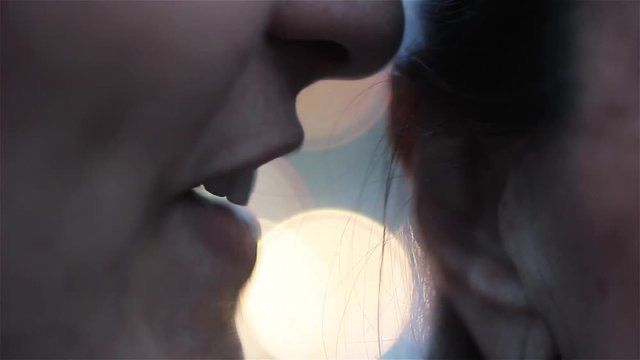
“You don’t belong here,” she said, and her voice was low and perfectly calibrated to the ambient noise of the room, landing only in my ear and no one else’s. She had chosen the moment well: a group of guests moving past us toward the main gallery provided the visual cover of normal social motion, and the jazz and the laughter and the clinking glass absorbed the sound into the general texture of the evening. It was a whisper engineered for deniability and maximum impact, and it had been delivered with the confidence of someone who had thought about it beforehand.
I knew she had thought about it beforehand because spontaneous cruelty has a different quality than this. Spontaneous cruelty is ragged at the edges, reactive, caught up in its own emotion. This was smooth. This was a tool used by someone who had decided in advance what they wanted to accomplish and had selected the right implement for the job.
I did not gasp. I did not step back. I did not do any of the things the whisper was designed to produce, the small physical performances of a woman who has been made to understand her position, who accepts the designation of out-of-place and begins the process of removing herself to confirm it.
I let the words settle. I let them find the bottom of me, which is where the cold clear things go when the surface of you has been struck.
What I found at the bottom was not primarily hurt, though hurt was present. What I found was a memory. Not a feeling, not an emotion, not an impulse toward either retreat or confrontation. A specific, detailed memory of a Tuesday afternoon three years ago, the smell of a lawyer’s office, the quality of light through venetian blinds, and the particular expression on Sasha’s face when she looked at a document and called it a formality.
I looked at her.
She was wearing a dress that had cost more than I used to spend on groceries in two months. She had the effortless composure of someone who has moved through beautiful rooms for so long that beauty has stopped requiring any effort from her, who takes up space with the easy authority of someone who has never had reason to doubt her right to it. She smiled at me with the specific warmth of someone offering charity, the smile of a person who has decided to be kind about a difficult situation rather than harsh, who wants credit for the gentleness of the delivery.
“This is press,” she murmured, her eyes doing the brief inventory of my dress and shoes that she believed I did not notice but that I noticed completely. “Collectors. Serious people. It’s awkward for the brand.”
The brand.
She said it with the fluency of someone for whom that word has replaced all the other words that used to apply to human beings and the things they make. Michael’s name was not a name to her in this moment, not the name of the boy I had driven to school and read to at night and held in the hospital when he had his appendix out at fourteen and wept with at his father’s funeral. It was an asset. It was a property to be managed and protected from elements that might complicate its market position, and I was one of those elements.
I thought about the argument I could make. I thought about the words I could say, right there in the corridor, that would shift the terms of the exchange and make her understand exactly what her position actually was. I had the words. I had been constructing them, in some peripheral part of my mind, since the afternoon three years ago when I sat at that mahogany desk and watched her skim pages.
I did not use them. Not because I lacked them or because I was afraid to, but because the corridor of a gallery opening with ambient jazz and circulating press was not the location where those words would do their best work. Some conversations need the right room. Some paperwork needs the right moment. My late husband Richard had understood this and had tried to teach it to me throughout our marriage, that patience is not passivity, that waiting for the correct moment is itself a form of action, and that people who mistake your stillness for surrender tend to do you the favor of continuing to talk.
“You’re right,” I said softly. “I’ll go.”
Her shoulders dropped half an inch with the involuntary relief of a person who has been braced for resistance and has not encountered it. The smile adjusted into something almost sympathetic, the expression of someone who wants you to know they do not enjoy being the one who had to say the hard thing. She had solved a problem. I was grateful for the clarity.
I went to find Michael.
He was in the middle of the main gallery with two men I did not recognize, talking with his hands in the animated way that meant the conversation was going well, leaning into it with his whole body. I waited at the edge of it until there was a natural pause and caught his eye, and he excused himself and came to me with the small concern of a son who can read his mother’s face.
“You okay?”
“I’m wonderful,” I said, and I meant most of it. “I’m tired. I’m going to head home.” I kissed his cheek. He smelled like he had when he was small, underneath the cologne, something familiar and specific that I associated with pure uncomplicated love. “Those three pieces,” I said. “That’s just the beginning.”
He smiled the smile of someone who is trying to be professional about a miracle and cannot quite manage it. “Come for lunch Sunday?”
“Sunday,” I confirmed, and I walked to the coat check and retrieved my coat and walked out through the front door of Whitmore Contemporary into the cool evening air.
My car was half a block up. I walked to it without hurrying and I got in and I sat for a moment in the quiet of it, which was the particular quiet of an interior after a loud space, the way silence has texture when you have been in noise for a while.
My hands were not shaking. I want to be specific about that because it matters. I have been in situations in my life where the adrenaline of something difficult makes my hands shake afterward, the physical evidence of what the event cost me. My hands were steady on the steering wheel, which told me something about where I actually was with this.
I opened my purse and took out the slim folder that had been in there for three years.
I keep it the way I keep important things: labeled clearly, maintained carefully, reviewed periodically to make sure I understand exactly what it contains and what it means. The label on the outside said, in my own handwriting in black ink, simply: Michael, March. March was the month three years ago when we had all sat in the attorney’s office and signed documents that Sasha had called a formality.
I want to explain what the folder contained, which requires explaining what happened three years before, which requires going back further than that, to the years when I understood what I was building and why.
Richard died eight years ago, in the spring, from the same deliberate, quiet efficiency with which he had lived: a diagnosis in February, a course of treatment that did not work, a clear-eyed assessment of the remaining time, and then the work of putting things in order with the care of a man who had spent forty years believing that the people you love should not have to clean up chaos when you are gone. He was an accountant by profession and a methodical person by nature, and in the fourteen months between diagnosis and death he organized our financial life with a thoroughness that I still find moving when I think about it.
He also organized Michael’s future.
Michael had been showing real promise as a painter for years, the kind of promise that is easy to recognize and very difficult to translate into sustainable income, and Richard understood this with the specific realism of an accountant who had also loved his son completely. He did not try to talk Michael into a more stable profession. He tried to build a foundation under the unstable one.
The instrument Richard used was a family trust. He established it in the last year of his life, funded it with a portion of our joint savings and the proceeds of a life insurance policy, and structured it with the specific intention of providing Michael with long-term support for his work while protecting the principal from decisions made in haste or under pressure. The trust had a trustee, which was me. It had provisions for distributions, which required my approval. And it had a clause that Richard’s attorney had recommended and that Richard had agreed to with the particular thoughtfulness of a man who had watched enough family money disappear through the frictions of marriage and divorce and bad timing to understand why the clause was there.
Any spouse of Michael’s, for the first seven years of the marriage, would need to sign an acknowledgment of the trust structure before Michael could access distributions above a certain threshold.
This was not a prenuptial agreement. It was not a condition of the marriage. It was simply an acknowledgment: you know this trust exists, you know how it is structured, you understand that the money in it is protected and that the protections are not negotiable, and you agree not to initiate legal action against the trust on behalf of or in the name of your marriage. It was, Richard’s attorney had explained, a standard protective mechanism for family trusts in situations where significant assets were involved.
Sasha had signed it.
She had sat across the mahogany desk from me on that Tuesday afternoon and she had looked at the document with the expression of someone reading a restaurant menu, a slight boredom, a slight impatience, the manner of a person who has already decided that the contents are not worth serious attention. She had signed. She had called it a formality. She had not asked what it contained.
She had not asked what it contained.
I had watched her sign and I had thought about saying something, about directing her attention to the specific clause on page four that described the conditions under which distributions to Michael could be modified and the conditions under which they could be suspended entirely. The condition that I had included on the advice of Richard’s attorney and that I had agreed to because I had understood, by the time Michael brought Sasha home to meet me, that there were things I needed to protect.
I had not said anything. I had simply made sure that Richard’s attorney, who was present, made a copy of every signed page and that Sasha received her own complete copy of the document and that the date and the witnesses were all properly recorded.
In my purse, for three years, I had kept my copy.
The folder in my lap in the car that evening contained the signed acknowledgment with Sasha’s signature on every required page. It contained my notes from that meeting, dated, with the specific language she had used when she called the document a formality. It contained a series of statements from the trust account showing distributions over the past three years, each one approved by me, each one going toward Michael’s studio rent and his materials and the operating costs of the body of work that had produced the three paintings sold in the first hour of his opening. It contained a letter from Richard’s attorney confirming the current status of the trust and the conditions under which I, as trustee, had authority to modify distributions.
And it contained, because I had added it six months earlier when certain things Sasha had said to Michael over the phone had reached me through the particular channels by which information reaches concerned mothers, a memo from a second attorney I had consulted about my options if it ever became necessary to exercise them.
I had not yet exercised them.
I had been waiting for the correct moment, which Richard would have recognized as the right approach, and which I had sometimes doubted in the small hours of the night when doubt is loudest. Had I been too patient? Had I been waiting so long for the right moment that I had allowed damage I could have prevented? These were the questions that kept me company on certain evenings.
I thought about them now, sitting in the car outside Whitmore Contemporary with the folder in my lap, and I thought about Sasha’s whisper in the corridor and the way her shoulders had loosened when I agreed to go.
I thought about Michael’s face when he told me about the three paintings.
I thought about what it had cost him to get to this room, the years of work and doubt and the specific courage required to keep making things when the world has not yet confirmed that the things you make are worth anything. I thought about the studio I had helped him keep, month after month, the distributions I had approved with the deliberate intention of giving him the time to become what he was becoming. I thought about his father, who had understood what it meant to build a foundation under the unstable thing you love.
I took out my phone and I called Richard’s attorney.
David Park had handled Richard’s estate and had established the trust and had been my advisor on trust matters for eight years, which meant he had known me through the worst year of my life and through the years that followed it, and he understood, without me having to explain the background, the kind of situation that might produce a call at nine-thirty on a Friday evening.
I told him what had happened. He listened in the careful, attentive way he always listened, without interrupting, without trying to reach ahead of the story to its conclusion.
When I finished he was quiet for a moment.
“Barbara,” he said, “I think it’s time.”
I asked him what he meant by time.
“The acknowledgment she signed has a provision you haven’t used yet,” he said. “The conduct clause. Do you remember it?”
I remembered it. Richard’s attorney had included it at my specific request, and I had not been certain at the time whether I was being overly cautious or appropriately protective. The clause stated that the trustee had authority to reclassify certain distributions as conditional if the trustee had documented evidence of conduct by a spouse that was materially adverse to the trust beneficiary’s professional or personal wellbeing. The language was precise in the way that legal language is precise, chosen for what it included and what it excluded, and what it included was a fairly broad definition of adverse conduct.
Whispering to your husband’s mother that she did not belong at her son’s gallery opening, in a room filled with the work that the trust had helped him make, at a moment specifically chosen to make the whisper undeniable and the harm invisible: I was not a lawyer, but I thought it was possible that a lawyer could make an argument.
I told David I would send him the memo I had drafted six months earlier.
“Send it tonight,” he said. “And Barbara, write down exactly what she said and the time and the circumstances. Do it now while it’s fresh.”
I took out the small notebook I keep in my purse and I wrote it down. I wrote the words exactly as she had said them and the time and where we were standing and the detail about the guests passing by, which was the detail that demonstrated the deliberateness of the timing. I wrote it in the even handwriting I had developed over decades of keeping records of things I needed to remember accurately.
Then I sat for a while longer in the car.
The gallery windows were lit from inside, warm and golden, the crowd visible through the glass as moving shapes, the whole animated scene of an opening night in progress. Michael was in there, selling his work, being recognized, receiving the confirmation that his father had spent the last year of his life trying to make possible. He did not know about the folder in my lap or the call I had just made or the conversation I had had in the corridor.
He would know some of it eventually. Not all of it, and not in a way designed to make him choose sides or to complicate his marriage beyond what it needed to be complicated. What I was doing was not an act of aggression. It was an act of custody, of the original thing Richard and I had built, the intention underneath the trust documents, the belief that Michael deserved the time and the space and the freedom from certain kinds of pressure that money, when it is properly protected, can provide.
Sasha had signed the acknowledgment.
She had called it a formality.
She had not asked what it contained.
I drove home through the lit streets of the city with the folder on the passenger seat and the notebook in my purse and my hands steady on the wheel. The jazz was still in my head, low and continuous, and somewhere in the gallery Michael was talking about his paintings with his whole body, the way he had always talked about things he loved, and the three sold pieces were already someone else’s and more would follow, I knew this with the certainty of someone who has watched a talent develop over a lifetime and knows what it looks like when it is fully arrived.
Sunday lunch, he had said.
Sunday I would come to their apartment and sit at their table and I would be, as I was always, his mother. Warm and present and without an agenda visible on the surface. And if Sasha poured my coffee and asked how I had enjoyed the opening, I would tell her truthfully that it had been a remarkable evening, one I expected to remember for a long time.
I would be telling the truth.
The paperwork would be moving by then, quietly, in the offices of David Park and the second attorney and the mechanisms of a trust that Richard had built with the careful love of a man who understood that the people you love should not have to navigate chaos when you are gone.
Sasha had called it a formality.
I thought about the detail she had forgotten, sitting in that lawyer’s office three years ago with her easy confidence and her expensive composure and her certainty that the important things were the things she already understood.
She had forgotten that formalities, when they are signed, become real.
She had forgotten, or had not bothered to notice, that the woman across the desk from her that afternoon was the trustee of everything that made her husband’s career possible.
She had forgotten, which was her first and most consequential error, that the woman she had whispered to in the corridor was not a guest who had slipped past the velvet rope.
She was the reason there was a gallery to open in the first place.
I turned into my street and parked in my usual space and sat for a moment before I went inside. The evening was cool and quiet and the kind of clear that follows a day when the air has had some weather in it and come out the other side clean. I looked at the folder on the passenger seat, which I had labeled three years ago and maintained carefully and carried tonight without knowing whether I would need it, which is the whole point of maintaining things carefully.
I picked it up and took it inside.
Some things do their best work by simply existing, by being prepared and present and available for the moment that requires them. Richard had understood this. I had learned it from him, over forty years of marriage, imperfectly and then better and then well enough to carry it forward without him.
The house was quiet when I came in. I put the folder on my desk in the study and I made a cup of tea and I sat in the reading chair by the window and I thought about Michael’s hands moving when he talked about the three paintings.
I thought about how proud I was.
I thought about how long that pride had been building, and what it had been built with, and who had helped me build it.
I thought about Sunday lunch.
I would bring the lemon cake Michael had liked since he was a child. I would sit at their table and be warm and present and without visible agenda. I would look at my daughter-in-law across the table and I would be entirely, genuinely, unhurriedly kind.
Because kindness was what I had. Kindness and patience and a slim folder in my study labeled in black ink.
And the full, certain knowledge that some formalities, once signed, do not remain silent forever.
THE END

Adrian Hawthorne is a celebrated author and dedicated archivist who finds inspiration in the hidden stories of the past. Educated at Oxford, he now works at the National Archives, where preserving history fuels his evocative writing. Balancing archival precision with creative storytelling, Adrian founded the Hawthorne Institute of Literary Arts to mentor emerging writers and honor the timeless art of narrative.