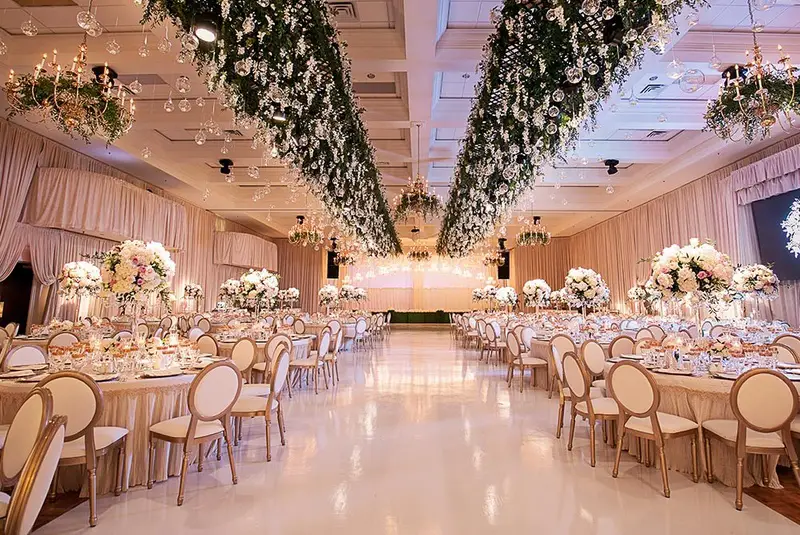
The microphone feedback screeched through the Willow Creek Barn like a tear in something that was supposed to be beautiful.
I was standing at the head table in the dress I’d dreamed about for two years, my hand gripping Marcus’s arm, two hundred faces turning toward us in the amber glow of string lights. The barn smelled like rosemary chicken and expensive perfume and the vanilla cake waiting in the corner. My best friend Tessa was already half out of her chair. Marcus’s brother Dane had gone completely still.
And my mother-in-law, Dolores Thompson, was standing at the DJ booth with the microphone in her hand.
She was fifty-eight, dressed in floor-length black — her first warning sign of the day, one I’d brushed aside in the blur of getting ready. She had the kind of smile that was armor, not warmth. She held that microphone the way people hold things they’ve decided belong to them.
“I’d like to say a few words about my son,” she announced.
I looked down at Ivy. My eight-year-old was coloring on her kids’ menu, curls bouncing, humming something to herself. Pink flower girl dress. Little white beaded purse she’d insisted on carrying all day. She had no idea what was about to happen.
Neither did I.
“Marcus is kind,” Dolores began, her voice honeyed and deliberate. “He is generous. Caring to a fault. Sometimes… too caring, if you ask me.”
The cold dread settled in my stomach where the butterflies had been.
“Marcus deserves the very best in life. A woman who can give him everything he needs. A fresh start.” She paused, letting the silence do its work. “He deserves a real woman. Not someone who comes with another man’s mistakes as luggage. A single mother will never be able to love him completely because she will always put that child first. My son deserves better than second place in his own marriage.”
The gasp moved through the room like a wave.
It felt like being punched. My throat tightened. I felt Marcus go rigid beside me, a tremor of fury running through his whole body. Tessa had her champagne glass raised like a weapon. I was about to crumble under the weight of two hundred staring eyes —
And then I heard the click of a crayon being set down.
Ivy put her coloring down. She reached into her little white purse. She stood up.
She didn’t look at me. She didn’t look at Marcus. She looked straight at the woman who had just called her baggage, and she started walking toward the microphone.
Before Marcus
My name is Serena Walsh. I’m thirty-two, a pediatric nurse, and for a long time I believed that fairy tales were stories we told children so they could sleep — not possibilities for women like me. Women with history. Women with scars.
Two years before that wedding, I was drowning.
My ex-husband had left when Ivy was three, deciding that the realities of fatherhood were getting in the way of his personal growth. He actually said that. I was left with a toddler, a mortgage I couldn’t make alone, and a sense of self-worth that had been quietly dismantled over years of small dismissals I hadn’t named until they were gone.
I worked twelve-hour shifts at Children’s Memorial, running on caffeine and guilt, terrified every day that I wasn’t giving Ivy enough. I hadn’t been on a real date in two years. I had stopped thinking of myself as someone worth choosing.
Then the fire department came to Ivy’s school for a safety demonstration.
I was late for pickup, still in my scrubs, smelling like antiseptic and a shift that had run long. I rushed into the gymnasium to find Ivy sitting cross-legged on the gym floor, completely transfixed by the largest man in the room, who was demonstrating stop, drop, and roll — not barking orders, but laughing, getting the kids to laugh with him.
“Mom!” Ivy screamed when she spotted me, launching off the floor. “I asked the smartest question about smoke detectors!”
I looked up, and there he was. Marcus. Walking toward us with his helmet under his arm, wiping soot from his cheek. When our eyes met, the gymnasium noise went soft.
He didn’t look at me the way I expected. He didn’t clock me as the harried single mom with the kid attached to her hip. He looked at me like I was a person.
Then he crouched down to Ivy’s level.
“You certainly did ask the smartest question,” he said. His voice was warm and unhurried. “Do you like reading, Ivy?”
She nodded like her whole head might fall off.
“Next time I’m here, I’ll bring you a book about the station dog.”
That was the difference. Every man I’d dated after my marriage had treated Ivy like a scheduling complication. Something to work around. Marcus treated her like she was the point.
Our first date wasn’t dinner. It was the Science and Industry Museum, because he said, “If we’re going to do this, I want to know both of you.”
I watched him spend three hours explaining torque to a six-year-old. He lifted her up to see exhibits she couldn’t reach. He never checked his watch, never sighed, never made me feel like I was asking too much just by existing with my daughter in the same space.
By the time we left, Ivy was holding his hand as naturally as she held mine.
Dolores
From the moment Marcus brought me home to meet his parents, I understood the shape of the obstacle.
The house smelled like lemon polish and judgment. Dolores looked me up and down the way you assess a piece of fruit you’re not sure about.
“How long were you married before… well, before?” she asked.
“My ex left when Ivy was three.”
She nodded, tight and grim. “That explains a lot about why you ended up alone. Some women just aren’t built to keep a home.”
I kept my voice steady. I had been keeping my voice steady for years.
Family dinners became endurance tests. Dolores would serve passive aggression alongside the roast beef. “Marcus has always been generous,” she’d say to the room. “Taking on charity cases. It’s just his nature, wanting to fix broken things.”
Marcus would set his fork down every time. “Mom. Drop it.”
She always had the same response, the smile of the plausibly innocent. “I’m just making conversation, darling. Don’t be so sensitive.”
The closer we got to the wedding, the worse it became. She cornered Tessa in the bathroom at the rehearsal dinner. She made remarks to Dane. Two weeks out, my anxiety was so bad I told Marcus: “She’s going to do something at the reception. I can feel it.”
“Let her try,” he said, pulling me in. “I’ve got you. We’ve got this.”
I thought that was just comfort. I didn’t know he was already planning.
The Sunday Afternoon I Didn’t Understand Yet
Two weeks before the wedding, I came home from an extra shift to find Marcus and Ivy on the couch together. TV off. Heads bent close. Whispering.
They jumped apart when I walked in, guilty as kids caught in the cookie jar.
“What are you two plotting?” I asked, dropping my bag.
“Grown-up stuff,” Marcus said, with a wink at Ivy.
Ivy zipped her lips and threw away the invisible key, eyes dancing with a secret she was very proud of keeping. I assumed it was a reception surprise. A dance they’d choreographed, or a gift they’d hidden.
I had no idea that Marcus, who knew his mother better than anyone, had spent that afternoon preparing my eight-year-old daughter for exactly what was about to happen.
He had written a letter. He had read it to her twice, slowly. He had told her: If anyone says anything mean about your mom today, I need you to read this out loud. Can you do that for me?
And Ivy, being Ivy, had said yes.
The Walk
Back in the barn, with Dolores’s words still ringing off the rafters, my daughter was walking toward the microphone.
The room had gone completely silent. Not the silence of awkwardness — the silence of held breath. The caterers had stopped moving. The cousins had stopped talking. Every person in that barn was watching an eight-year-old in a pink dress walk across the floor like she knew exactly where she was going.
Dolores looked down at her. For the first time all night, her mask slipped. She looked confused, then annoyed. She tried to radiate control, but she was losing it in real time.
Ivy stopped right in front of her.
“Excuse me, Grandma Dolores,” she said. Her voice was small but completely clear.
She held out her hand.
“May I please have the microphone?”
Dolores stood there, trapped. Refuse a child in front of two hundred guests and look like exactly the monster everyone was already suspecting she was. Or hand it over and lose the room she’d just tried to control.
Her hand was trembling when she passed it down.
Ivy took it with both hands. She turned to face the room. She didn’t look scared. She looked like she’d rehearsed this, because she had.
“Hi, everyone,” she said, her voice filling the vaulted ceiling. “My name is Ivy. I’m the flower girl.”
She reached into her little white purse. The Velcro made a small sound that the microphone picked up and sent through every speaker in the barn. She pulled out a folded piece of paper.
“My new daddy Marcus wrote me a letter,” she announced. “He told me that sometimes adults get scared and say mean things. He told me that if anyone said anything bad about my mom today, I should read this to you.”
I looked at Marcus.
He was already crying. Silent tears tracking through the stubble on his cheeks, watching Ivy with a look of fierce, total pride.
Ivy unfolded the paper. She took a breath the way she took breaths before reading at school — steady, focused. And she began.
The Letter
“Dear wedding guests.”
She read carefully, the way she’d been taught, hitting every syllable.
“If you are hearing this letter, it means someone at our celebration has questioned whether Serena deserves to be my wife. It means someone has suggested our family is broken. That Serena is less than, because she is a mother.”
She looked up briefly, scanning the room, then back down.
“Let me be absolutely clear. I did not settle when I married Serena. I hit the jackpot.”
From the table to my left, a sound broke loose. Tessa. Hand over her mouth, mascara streaming.
“Serena is not damaged goods,” Ivy continued, her voice finding strength. “She is not a consolation prize. She is not someone who comes with baggage. Serena is a woman who loved her daughter so fiercely that she found the courage to leave a marriage that wasn’t working. She worked night shifts to keep a roof over their heads. She built a life from nothing.”
I pressed my hands over my face. My shoulders were shaking. Marcus put his hand on my back, steady and warm.
“When I met Serena and Ivy, I didn’t see a woman with complications. I saw a family that already knew how to love unconditionally. Ivy didn’t come with Serena as a burden. She came as a gift.”
At the DJ booth, Dolores stood frozen. The color had left her face entirely. She looked like something being slowly turned to stone. She tried to take a step toward Ivy — whether to stop her or to leave, I couldn’t tell — but Dane stood up from the head table. He didn’t say a word. He just looked at his mother until she went still.
“I am not taking on someone else’s child,” Ivy read, working through the longer words carefully. “I am being welcomed into a family that is going to teach me what real love looks like.”
She turned slightly, finding me in the crowd, though she kept reading Marcus’s words.
“To anyone who thinks Serena should put me before Ivy — you don’t understand what kind of man I am. I fell in love with Serena because she puts Ivy first. That is not a flaw. That is the kind of mother I want for all our future children. Serena doesn’t love me less because she loves Ivy completely. She loves me more, because she has already proven she knows how to love with her whole heart.”
The silence that followed was different from anything that had come before it. Heavy and sacred. Not the silence of shock — the silence of two hundred people sitting inside something they would remember for the rest of their lives.
Ivy lowered the letter.
She looked out at the crowd, uncertain for the first time, perhaps wondering if she’d done it right.
Then she leaned back into the microphone.
“Also,” she added, completely off-script, in the matter-of-fact tone she reserved for important announcements, “my mom makes the best blueberry pancakes in the world. So Daddy Marcus is actually the lucky one.”
For one breath, nothing moved.
Then a single clap from the back of the room. Then another. Then the sound became a roar — two hundred people on their feet, firefighters in dress blues, nurses, cousins, strangers. Whooping. Cheering.
Ivy looked startled by the noise. She shoved the letter back in her purse and ran back to the head table as fast as her flower girl shoes would carry her. Marcus caught her and lifted her high, burying his face in her curls.
“You did it, baby,” he said. His voice was wrecked. “You protected us.”
I wrapped my arms around both of them and didn’t let go.
Dolores was gone. Somewhere in the swell of the standing ovation, she had slipped out, dissolving into the dark like a bad dream you can’t quite hold onto after waking.
Her chair stayed empty for the rest of the night. It felt more like a victory than a loss.
The Silence After
The adrenaline eventually fades. The guests go home. The string lights come down. You’re left with the quiet of the aftermath, and the question of what comes next.
For two months, Dolores didn’t call. No texts, no appearances, no emails. It was peaceful, the way the air is peaceful after a storm clears. But I knew Marcus was hurting. No matter how she’d behaved, she was still his mother. He had drawn a line at our wedding, and she had chosen the other side of it.
Then, three days before Thanksgiving, the phone rang.
Dolores was calling. She was crying.
“Can I come over?” she asked. “I need to say something. To all three of you.”
When she arrived, she didn’t look like herself. No jewelry. Gray slacks and a plain sweater. She stood in the entryway clutching her purse, looking like someone who had spent two months arriving at a very difficult decision.
We sat in the living room. Ivy sat between Marcus and me, the same position she’d held at the wedding. Guarding us.
“I was jealous,” Dolores said.
I blinked.
“I saw how much Marcus loved you,” she said, looking at me. “And how much he loved Ivy. And I convinced myself that if he had a ready-made family, there’d be nothing left for me. I thought if I humiliated you badly enough, you’d leave.” She let out a long, unsteady breath. “It was cruel. It backfired because it showed everyone exactly who I was — and exactly who you were.”
She turned to Ivy. And then she did something I hadn’t expected. She lowered herself off the sofa and knelt on the rug, so they were eye level.
“Ivy,” she said. “I called you baggage. I was wrong. You are not baggage.” Her voice broke. “You are a gift. Just like your daddy’s letter said.”
She held out one hand, open, waiting.
“I don’t expect you to like me,” she whispered. “But do you think — someday — you could give me a chance to be a better grandma?”
The room went completely still. Marcus didn’t speak. He was letting Ivy decide.
My daughter studied the woman who had tried to destroy her mother. She looked at her the way children look at things they’re genuinely considering, without the self-protection adults layer over everything.
“Okay,” Ivy said. “But you have to try my mom’s pancakes first. They really are the best.”
Dolores laughed — wet and choked and real. “I would love that.”
What Rebuilding Looks Like
It wasn’t fast. Trust is built drop by drop and lost all at once, and Dolores had emptied the bucket. But she started showing up. School plays. Saturday dinners. When her old nature flared up and she said something controlling, Marcus shut it down immediately — and surprisingly, she let him. She backed off. She was learning, slowly and imperfectly, that her place in our lives was a privilege she had to earn back.
Six months after the wedding, we gathered everyone for dinner.
“We have news,” Marcus said, grinning in the way he grins when he already knows the answer is good.
I pulled the ultrasound photo from my pocket.
Ivy screamed so loud the neighbors probably heard. She bounced on the sofa cushions and announced that she already had a list of names, none of which were negotiable.
I watched Dolores.
She put her hand over her mouth. Her eyes filled. She looked at Ivy, then at the picture, then at me.
“Another gift,” she whispered.
It wasn’t perfect. We still had awkward dinners and old habits surfacing and moments that required patience nobody had extra of. But we were a family — the real kind, the kind that has to be built deliberately and defended on purpose.
That night, after everyone left, I stood in the hallway looking at the framed letter. Marcus had printed it and framed it after the wedding — not as a weapon, but as a reminder of what we were.
I fell in love with Serena exactly because she puts Ivy first.
I stood there reading it in the quiet of our house, with the sound of my husband and daughter arguing cheerfully from the bedroom about baby names, and I understood what Marcus had understood before I did.
Love doesn’t divide. It multiplies. You don’t have to choose between loving one person and loving another. You just have to insist that the love be honest. That it be respectful. That it not be used as a weapon by people who are scared of being left behind.
Dolores had been terrified of becoming unnecessary. What she hadn’t understood yet — what she was learning, dinner by dinner and school play by school play — was that love doesn’t work on a fixed supply. The more of it you make room for, the more of it there is.
I turned off the hall light and walked toward the sound of my family.
I was Serena Walsh-Thompson. A nurse. A mother. A wife. A woman who had once believed that fairy tales weren’t for women like her.
I had learned something better than a fairy tale.
I had learned that the family worth having isn’t the one you’re born into.
It’s the one you fight for.
And that fight — every awkward dinner, every held breath, every Sunday morning with blueberry pancakes and an eight-year-old reading the truth into a microphone —
Every single bit of it was worth it.

Laura Bennett writes about complicated family dynamics, difficult conversations, and the quiet moments that change everything. Her stories focus on real-life tensions — inheritance disputes, strained marriages, loyalty tests — and the strength people find when they finally speak up. She believes the smallest decisions often carry the biggest consequences.