He walked out of the prison gates at 6:47 in the morning.
No one was waiting. He hadn’t expected anyone. The guard handed him a plastic bag — his wallet, his phone, dead for five years, and a watch with a cracked face that still showed the exact time he’d been arrested. He stood on the pavement for a moment, breathing air that didn’t smell like concrete and other men’s fear.
Then he called a taxi.
The driver asked where to. Marcus gave the only address he’d been thinking about for four years, eleven months, and sixteen days.
The cemetery gates were iron, tall, slightly rusted at the hinges. Marcus stood outside them for almost ten minutes. He knew he was stalling. He was a man who had survived five years in prison by learning to control fear, to press it down until it was small enough to ignore — but standing here, on the other side of these gates, with a gas station bouquet of white lilies in his hand, the fear was different. It wasn’t physical. It was the fear of a thing that couldn’t be undone.
He had never seen where they buried Elena.
He was arrested the morning of her funeral.
He had met her at twenty-three. She was behind the counter of a small bookshop on Elm Street, arguing cheerfully with an elderly customer about whether Hemingway was overrated. Marcus had walked in to buy a map — the bookshop was the only place nearby — and had stood in the doorway listening to the argument for four minutes before either of them noticed him.
Elena had dark eyes and a laugh that arrived before she was finished smiling. She remembered everything — every conversation, every name, every small detail people thought no one had caught. She read three books a week and had opinions about all of them.
They were engaged fourteen months after the day with the map.
Eight months after that, she was gone.
The official story: a car accident on the interstate, late at night, driving back from her mother’s house. She died at the scene. Marcus had been at work — he could prove that — but somehow, impossibly, he had still been blamed. Her family said he had tampered with the brakes. A mechanic testified to it. A lawyer he couldn’t afford told him it didn’t look good.
He had spent five years insisting he was innocent to people who were paid not to believe him.
Now he was standing at the gates of a cemetery, holding white lilies, and the fear in his chest was the fear of a man who still had no answers.
He pushed the gates open and went inside.
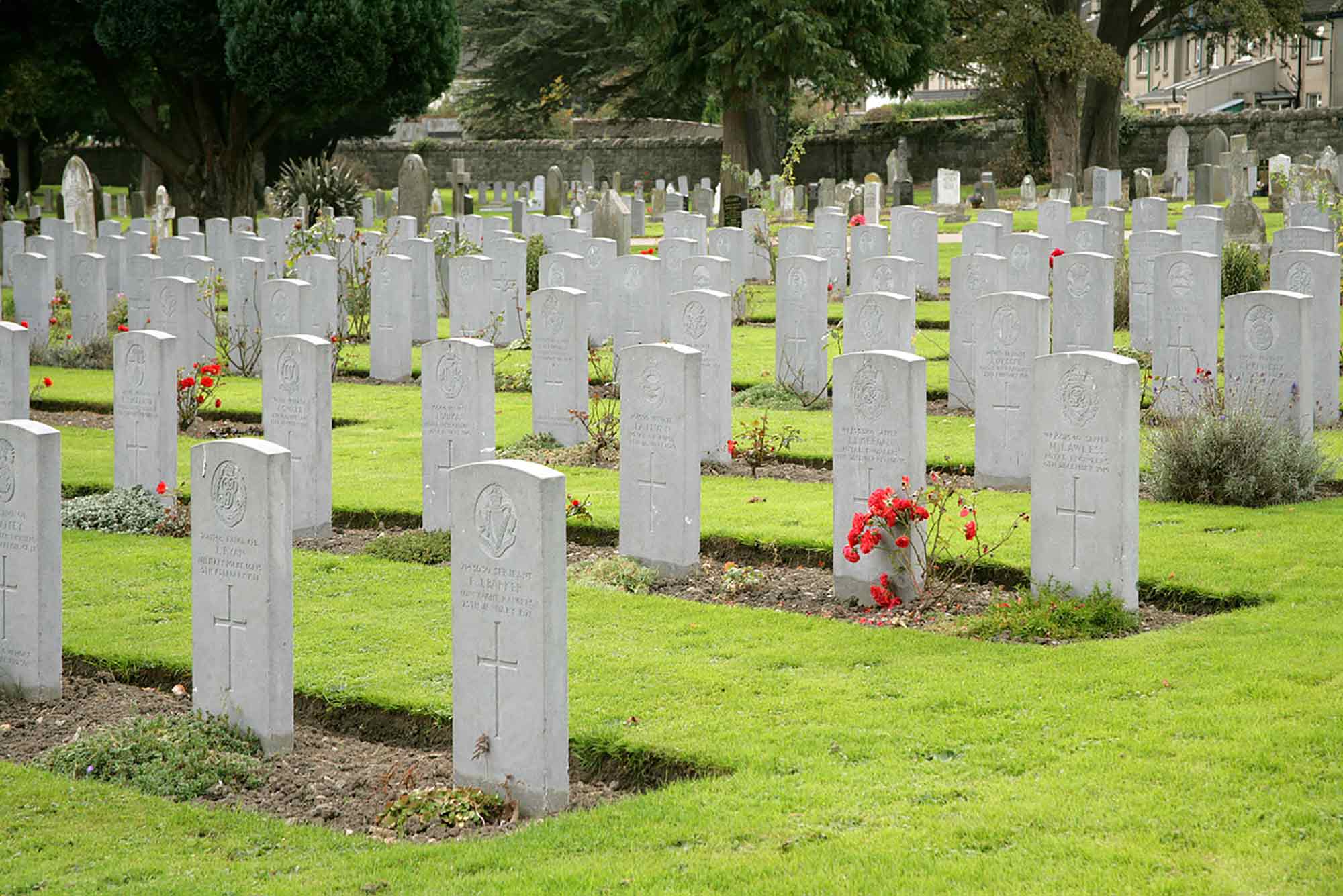
The cemetery was enormous. Rows of headstones stretched in every direction, sectioned by low hedges and gravel paths. Marcus pulled out the crumpled paper from his pocket — the burial information passed to him through his lawyer, written in rushed handwriting he’d never quite been able to fully decipher.
Section G. Row fourteen.
He found Section G after fifteen minutes of wandering. He walked row fourteen twice. Then three times.
Her name was not there.
He checked surrounding rows, thinking maybe the handwriting had been a seven, not a four. He checked both. Still nothing. Only unfamiliar surnames, unfamiliar dates, whole silent histories that weren’t his.
He was considering leaving — considering that maybe he had the wrong cemetery entirely, that maybe the lawyer had given him bad information — when he saw the groundskeeper. An elderly man in a canvas jacket and rubber boots, moving between the stones with a small rake.
“Excuse me.” Marcus’s voice came out rough. He cleared his throat. “I’m looking for a grave. I have a name. I have the burial location on paper, but I can’t find it.”
The old man took the crumpled paper and held it at arm’s length, squinting. He read it for a long moment. Something shifted in his face — not quite recognition, but something adjacent to it. A careful neutrality.
“I remember,” he said quietly. “Unusual name. Come with me.”
He led Marcus to a different section entirely — nowhere near the row on the paper. He stopped at a headstone, gestured toward it with one weathered hand, and then walked away without another word.
Marcus stood alone.
The headstone was large and black, heart-shaped, with her photograph laser-engraved in the center. Elena’s face looked back at him — the same dark eyes, the same particular way her expression held warmth even in stillness. Around the stone: fresh flowers, framed photographs, small mementos arranged with the care of someone who visited regularly.
He had not expected to feel this. He had thought he’d prepared himself.
He knelt down and placed the lilies at the base of the stone, pressing them gently into the earth. He bowed his head. He stayed like that for a while.
Then he looked up at the engraved dates.
And read them.
And read them again.
The birth year was wrong.
Not by a small margin — by four years. Elena had been born in 1991. This stone said 1987.
Marcus frowned, leaning closer. He told himself he was misreading it. The light was strange this morning, low and gray, the kind of November light that flattens everything. He tilted his head and looked again.
He looked at the death date. That was wrong too — not the year, but the month and day. According to the documents he’d received in prison, Elena had died on March 4th. The stone said March 19th. A two-week difference. Not a typo. Not a miscarving.
Something else.
He stood up slowly and took a step back, studying the stone the way he used to study things before prison taught him to keep his head down — really studying it, the way he’d studied technical drawings in the years when he worked construction and the difference between a measurement off by a centimeter and one off by ten was the difference between a wall that stood and one that fell.
The engraving wasn’t uniform.
Most of the stone was consistent — the photograph, her name, the decorative border. But the numerals in the dates were subtly different. Slightly deeper. A different shade against the black surface, as if carved by a different hand, or at a different time, or both.
He crouched down and ran his fingers across the dates.
He felt it immediately.
Beneath the polished surface — under the numbers that were engraved there now — were faint traces of older markings. Different numbers. Someone had ground down the original dates and re-engraved new ones in their place. Not professionally, not seamlessly — but well enough that you’d have to be looking for it, and looking closely, to find it.
Marcus sat back on his heels in the wet grass.
This isn’t her grave.
The thought arrived fully formed, the way the worst thoughts always do — not as a question, but as a statement his mind had already worked through while he was still catching up.
Someone else was buried here. Another woman, with different dates, different years, a different story. And Elena’s name, Elena’s photograph, Elena’s flowers had been placed on top of that grave.
But why?
If this wasn’t her grave, then where was she?
And if someone had gone to the considerable effort of constructing a false grave — of finding a real burial, altering the stone, maintaining it with fresh flowers, creating the impression of a genuine resting place — then that someone had done it deliberately. Carefully. With time and money and intent.
Marcus pressed his palm flat against the cold stone and tried to think.
He had spent five years in prison for causing Elena’s death in an accident she was not supposed to survive. A mechanic had testified that the brakes had been tampered with. That testimony had put him away.
He had always known something was wrong. He had known it the way you know a sound is wrong before you can name why — something off in the pitch, in the timing. He had told his lawyer. His lawyer had told him to stay quiet and hope for the best.
Now he was kneeling in front of a grave that might not be Elena’s grave, in a section that wasn’t where the documents said she was buried, and the groundskeeper who’d led him here had walked away the moment they arrived without offering a single explanation.
The wind moved through the grass around him.
Marcus looked at Elena’s photograph on the stone — her face, her eyes, that particular expression.
Five years ago, he had been arrested while she was being buried and had spent every day since then grieving someone he was told was gone. But a fake grave requires someone to be buried in it, and it also requires a reason to hide where the real person is.
People built false graves for two reasons.
The first was to hide a death that needed to be hidden.
The second was to hide a person who wasn’t dead.
He stood up.
His hands weren’t shaking, which surprised him. He felt very still — the way he felt when something became clear rather than more complicated, when the chaos resolved into a single line pointing in one direction.
He needed to find the groundskeeper.
The old man was at the far edge of the section, moving slowly between the stones, not looking up. Marcus walked toward him, and something about his pace or his expression must have communicated that this wasn’t an ordinary question, because the groundskeeper stopped before Marcus reached him and turned to face him with the expression of a man who has been waiting for something for a long time.
“The dates are wrong,” Marcus said.
The groundskeeper looked at him for a moment. Then he looked away, toward the far tree line.
“I know,” he said quietly.
The two words landed like a stone dropped into still water.
“Who visits that grave?” Marcus asked. “Who brings the flowers?”
A long pause. The old man’s jaw moved slightly, working through something internal.
“A woman,” he finally said. “She comes in the evenings. She wears a scarf. She never stays long.” He paused again. “She has dark eyes. I noticed because they are unusual — the way they hold warmth even when the face is still.”
Marcus felt the blood leave his face.
He had once used those exact words to describe Elena to his lawyer, in the early days of the case, when they were building his defense. He had said: she had dark eyes, the kind that hold warmth even when her face is still. He remembered the specific phrase because it was the most precisely true thing he’d said in that lawyer’s office, and the lawyer had written it down and then never used it.
“When does she come?” Marcus asked.
“Thursdays,” the groundskeeper said. “Late afternoon. Before it gets dark.”
He looked at Marcus one more time. Then he picked up his rake and walked away.
Marcus stood alone in the cold November air, with the fake grave behind him and his heart doing something complicated in his chest — something between grief and disbelief and a fury that needed more information before it knew where to land.
Today was Thursday.
He looked at his cracked watch.
It was 9:14 in the morning.
He had time.
He found a café two blocks from the cemetery gates, a small place with steamed-up windows and a counter that smelled of coffee and fried eggs. He sat at a corner table, ordered coffee he barely drank, and thought.
The mechanic who testified against him had been named Devin Rolle. Marcus had never met him before the trial. His lawyer had questioned this. The prosecution had explained it away — Rolle had done inspection work for Marcus’s company, had seen the vehicle, had noted the irregularities.
Marcus had never believed it. He knew that car. He had maintained it himself, the way he maintained everything — carefully, methodically, because he was a man who believed that the things worth keeping were worth keeping properly. The brakes were fine. He knew they were fine.
Someone had known the car. Someone had known Elena’s schedule. Someone had known when she would be driving and on which road.
And then someone had constructed a false grave and maintained it for five years.
This wasn’t an accident that had been pinned on the wrong man.
This was a plan. Multi-part, long-running, sustained across years. The kind of plan that requires resources, connections, and a very compelling reason.
He started from the beginning and worked forward.
Elena had not come from money, but her family had. Not the visible, showy kind — the kind that sat in trusts and estates and land deeds that didn’t come up in casual conversation. She’d mentioned it rarely and only sideways, and Marcus had never pressed because it hadn’t seemed to matter. They weren’t building their life on her family’s money. They were building it on their own.
But her family had money. And the man who’d stood to inherit the majority of it — Elena’s older brother, David — had never liked Marcus. Not from the beginning. He had looked at Marcus the way certain men look at people they consider beneath them: not with contempt exactly, but with a kind of dismissive assessment, like a number that had been calculated and found insufficient.
David had testified in the trial. He had not said anything false — not technically. He had simply confirmed that the brakes had been inspected recently, that Marcus had access to the vehicle, that Elena had expressed concerns about the car in the weeks before the accident.
Marcus had never been able to contradict that last point effectively. He hadn’t known she’d expressed concerns. He hadn’t known what she’d said or to whom.
But what if the concerns she’d expressed weren’t about the car?
What if she’d been trying to tell someone something else entirely?
He put down his coffee cup.
Elena had grown up in a family with money, a brother who didn’t like her choices, and a father who was ill in the months before her supposed death. An estate that would need to be settled. A fiancé who was — in David’s view — a liability.
If Elena died, the estate would eventually come to David.
If Elena disappeared — voluntarily or otherwise — and a false death was constructed, the same result could be achieved, while keeping certain options open.
Marcus sat very still.
He thought about the groundskeeper’s words. She has dark eyes. The way they hold warmth even when the face is still.
He thought about fresh flowers on a grave that wasn’t hers.
He thought about a woman in a scarf who came on Thursday evenings and never stayed long.
He had two possibilities in front of him. The first: Elena was dead, and someone had moved her grave and altered the stone for reasons he hadn’t yet untangled. The second: Elena was alive, and she had been alive for five years while he sat in prison, and the question of why was the most important question he had ever faced.
Both possibilities led to the same place.
He needed to be at that cemetery on Thursday evening.
He found a room in a cheap hotel four blocks away and paid for a week with the cash he’d saved from prison work and the small amount released with his belongings. He had very little money. He had no phone that worked. He borrowed a charger from the hotel desk and waited for his old phone to come back to life.
It did, eventually — blinking and confused, buzzing with notifications that were years old, messages from a world that had moved on without him.
There was one number he needed.
He called his old friend Gabe, the only person from his previous life who had written to him consistently through the years — not with false hope, but with news, practical updates, the kind of correspondence that treated him like a person who would eventually need to function in the world again. Gabe answered on the third ring.
“Marcus,” Gabe said, and his voice had the particular weight of someone who had been waiting for this call. “You’re out.”
“I’m out,” Marcus said. “I need help. I need information, and I need you to not ask too many questions yet.”
“Okay,” Gabe said simply. That was Gabe — he had always understood when to not ask too many questions.
“David Marris,” Marcus said. “Elena’s brother. I need to know what happened to him in the last five years. His finances. His movements. Whether anything changed for him after Elena died.”
A pause. “You think he had something to do with it.”
“I think a lot of things. I need you to tell me if any of them hold up.”
Gabe said he’d make calls. He’d have something by the next day.
Marcus put the phone down and sat on the edge of the narrow hotel bed in the gray light of a November afternoon and did the thing he’d trained himself not to do in prison — he let himself hope. Not fully. Not recklessly. But enough to feel the danger of it.
Because if Elena was alive, the hope was not the dangerous part.
The dangerous part was the question that came next: had she known? Had she chosen this? Was she the one who’d laid the flowers on a grave with her own name on it?
He didn’t let himself answer that question yet. He needed Thursday.
Thursday arrived after two of the longest days of Marcus’s life.
Gabe had called back Wednesday night. His voice was careful, measured — the voice of a man delivering information he understands will hurt.
David Marris had come into a substantial inheritance eight months after Elena’s death, upon the passing of their father. He had paid off significant debts — debts Marcus hadn’t known existed. He had sold the family home, relocated, and built a new life with considerable speed, as people sometimes do when a financial window opens unexpectedly.
He had also paid a man named Devin Rolle a sum of money, transferred through two intermediary accounts, six months after the trial concluded.
Marcus had held the phone very quietly after that.
“How did you get that?” he asked.
“Old friend in banking,” Gabe said. “Don’t ask more than that.”
“Is it solid?”
“Solid enough to take to a lawyer.”
“Get me a lawyer,” Marcus said. “A good one. Someone who works on wrongful conviction. I’ll explain everything when I have more.”
“Marcus—”
“Thursday,” Marcus said. “Give me until Thursday evening. Then I’ll know what I’m actually dealing with.”
He arrived at the cemetery at four in the afternoon and found a bench behind a stand of birch trees with a clear sight line to the headstone. He sat and waited.
The light changed slowly, the gray afternoon deepening toward evening. A few other visitors came and went. The groundskeeper passed once, at a distance, without looking in Marcus’s direction.
At 5:23, a woman appeared at the far entrance.
She wore a dark coat and a scarf pulled up around her jaw. She walked with her head slightly down, the posture of someone who has learned to move through spaces without drawing attention — but Marcus had spent five years watching people, reading the specific language of how bodies move when they’re carrying something, and this woman was carrying something enormous.
She stopped at the headstone.
She knelt down and placed flowers — white lilies, the same kind he had brought — and stayed there for a while, very still. Then she reached out and touched the photograph on the stone, pressing her fingers against it gently.
Marcus stood up.
He walked toward her slowly, not rushing, because he was afraid that if he moved too fast something would shatter — he wasn’t sure what, only that the moment felt fragile in a way he hadn’t felt since he was very young.
He stopped about ten feet away.
She heard him. Her shoulders went rigid.
She turned.
Under the scarf, under five years of whatever her life had been, her face was the same. The dark eyes. The particular way her expression held warmth even in stillness.
“Elena,” he said.
She stared at him. The color left her face completely. She made a sound that wasn’t a word — something between a gasp and his name.
“I was released Monday,” he said. His voice was steady, which surprised him. “I went looking for your grave.”
She stood up slowly, and he saw that her hands were shaking.
“Marcus—”
“Tell me,” he said. “Tell me what happened. All of it.”
She looked at him for a long moment. Then she looked at the grave — her name on a stone above someone else’s remains — and something in her face broke open, the way things break open when they’ve been held too long under too much pressure.
“I didn’t know,” she said. “At first. I didn’t know what David had done. By the time I found out—” Her voice fractured. “You were already convicted. And I was already—” She stopped.
“Already what?”
“Hidden,” she said quietly. “I was already hidden. David had arranged everything. He told me you had done it. He showed me evidence — evidence I now know was false — and I believed him. I believed my brother.” She closed her eyes. “I spent three years believing him.”
“And the last two years?” Marcus asked.
She opened her eyes. The warmth in them was still there, beneath everything else.
“I started asking questions,” she said. “I found the things that didn’t add up. And once I started pulling at the threads, the whole thing came apart.” She looked at him directly, and he saw the weight of what she’d been carrying. “I’ve been collecting evidence for eighteen months. I have everything, Marcus. Everything that David did. The payment to the mechanic. The false testimony. All of it.” She swallowed. “I was going to take it to a lawyer when you were released. I didn’t know you were out. I didn’t know the date.”
Marcus stood in the cold November air beside the grave with her name on it and thought about five years. Five years of a prison cell and a cracked watch and letters from Gabe and the specific silence of a man who refuses to stop believing in something even when everything around him insists he should.
“You have the evidence,” he said.
“Yes.”
“And you’re willing to come forward.”
“Yes,” she said. “I’ve been willing for a year. I’ve just been—” She stopped again.
“Afraid,” he said.
“Yes.”
He nodded slowly. He thought about what he’d said to Gabe: Give me until Thursday evening. Then I’ll know what I’m actually dealing with.
He knew now. He was dealing with a brother who had taken everything and a woman who had been used as a weapon and had spent eighteen months trying to put it right. He was dealing with a mechanic who had been paid to lie and two intermediary accounts and a lawyer Gabe was finding. He was dealing with a false grave and fresh lilies and five years of wrongful silence.
“There’s a lawyer,” Marcus said. “I have someone finding one now. Wrongful conviction. We go together.”
Elena looked at him. The question she was afraid to ask was visible in her face.
“You’re angry,” she said. Not a question.
“Yes,” he said honestly. “Not at you. At your brother. At the mechanic. At the people who let me stay in that cell for five years.” He paused. “At the situation. Not at you.”
“You should be angry at me,” she said. “I believed him.”
“He’s your brother,” Marcus said. “He had evidence he’d manufactured. He knew how to make you believe it.” He shook his head. “We can talk about what happened between us. There’s time for that. First, let’s do the thing that needs doing.”
She looked at him for a long moment — this man who had walked out of prison five days ago and followed a series of wrong dates to a false grave and had arrived, against all reasonable odds, here.
“How are you so calm?” she asked.
Marcus thought about it. He looked at the stone — her name, her photograph, the fresh lilies they had each independently brought.
“Because I knew something was wrong,” he said. “From the first day. I never stopped knowing it. Being right isn’t a comfort exactly — but it’s something to stand on.”
He reached out his hand.
She looked at it. Then she took it.
They stood together at the edge of the grave for another moment, both of them quiet, the November wind moving through the grass around them. Then they turned and walked toward the gate, toward the lawyer and the evidence and the long process of dismantling five years of constructed lies.
The stone lions at the entrance watched them go.
The groundskeeper, raking in the distance, did not look up.
But as they reached the gate, Marcus heard the old man’s voice behind them, low and directed at no one in particular:
“It’s about time.”
Marcus didn’t stop.
But he held on to her hand a little tighter, and they walked out of the cemetery together into the gray November light.

Specialty: Quiet Comebacks & Personal Justice
David Reynolds focuses on stories where underestimated individuals regain control of their lives. His writing centers on measured decisions rather than dramatic outbursts — emphasizing preparation, patience, and the long game. His characters don’t shout; they act.
Good story write the next chapter.