The Empty Box
I turned forty on a Saturday in October, and I want you to understand what that day meant to me before I tell you what happened in it.
Forty isn’t just a number. It’s a threshold. I’d been thinking about it for the better part of a year — not with dread, the way some people approach it, counting down like it’s a sentence, but with something that felt more like intention. I wanted to do it right. I wanted to stand at forty and feel like I’d arrived somewhere, not just survived to the next marker.
So I planned.
Two weeks out, I started making lists. The guest list first — about forty people, the ones who actually mattered, friends from different chapters of my life, family, neighbors I’d grown close to over the years. Then the menu, which I revised three times because I kept second-guessing whether the lamb was too ambitious for a party that size. Then the decorations, which I’d been quietly collecting ideas for in a folder on my phone for months.
That phone, as it turned out, wouldn’t make it to the party.
Two weeks before my birthday, my daughter — she’s five, and she helps with everything whether you want her to or not — was standing on a stool beside me at the kitchen sink helping wash vegetables. Somehow, in the orchestrated chaos of a five-year-old being helpful, my phone slipped off the counter and into six inches of standing water. I watched it go. There’s that particular second when you see something irreversible happening and your brain registers it too late to change the outcome.
I dried it off. I put it in rice for two days. It turned on once, showed me a scrambled version of my home screen, and then quietly died for good.
I’d been using a backup since then — an old phone I found in a drawer, slow and cracked, with a battery that lasted four hours and a tendency to drop calls mid-sentence. I hadn’t replaced it because money had been tight, and because my birthday was coming, and because I’d thought — in that quiet way you think things you haven’t quite said out loud — that maybe this was the kind of thing a husband notices. The kind of thing that, when a significant birthday arrives, becomes obvious.
I hadn’t pointed to a specific model. I hadn’t said the words. But I’d mentioned the phone dying at least four times in two weeks. He’d seen me squinting at the cracked screen. He’d watched me restart the thing twice in one evening when it froze. He knew.
The morning of my birthday, I was up before anyone else.
I put on music and made coffee and started setting up the living room the way I’d pictured it. The string lights I’d ordered online went up along the curtain rail — warm white, not the cold kind. I arranged flowers I’d bought the day before in three vases and placed them at different points around the room. I set the table with the good plates, the ones that usually live at the back of the cabinet and only come out when something is worth the extra washing up.
My daughter woke up and padded in and immediately wanted to help, so I gave her the job of placing the napkins, which she took extremely seriously. She folded each one into a shape that was somewhere between a swan and a rectangle and looked very pleased with herself.
My husband made eggs. He was in a good mood, cheerful in the slightly performative way of someone who knows something you don’t. I registered it without naming it — that particular brightness, that containment of something. I thought maybe he was excited about a gift. I told myself not to get my hopes up and then immediately got my hopes up.
By the time the first guests arrived at six, the apartment looked genuinely beautiful. I don’t say that often about my own work, but it did. The lights were warm, the food smelled right, the flowers were doing exactly what flowers do when you’ve put them in the right places. I had a glass of wine in my hand and my daughter on my hip and people I loved coming through the door, and for an hour or two I forgot that there was anything in the world to be anxious about.
People made toasts. My best friend Elena gave a speech that made half the room cry and the other half laugh, and somehow those two halves were perfectly balanced. An old colleague told a story about a work trip we took ten years ago that I’d half-forgotten, and hearing it through his version made it feel new. My daughter fell asleep on the couch around eight and I covered her with a blanket and stood there looking at her for a moment longer than I needed to.
This was the birthday I’d wanted.
And then it was time for gifts.
My husband had that brightness again — amplified now, lit up with something he was working hard to contain. He came toward me through the small crowd with his hands behind his back and a grin that was already a little too wide for what the moment called for.
I noticed my mother-in-law off to the side. She had her phone raised. Recording.
I noticed this. Filed it. Didn’t know yet what to do with it.
He brought the box out from behind his back with a small flourish.
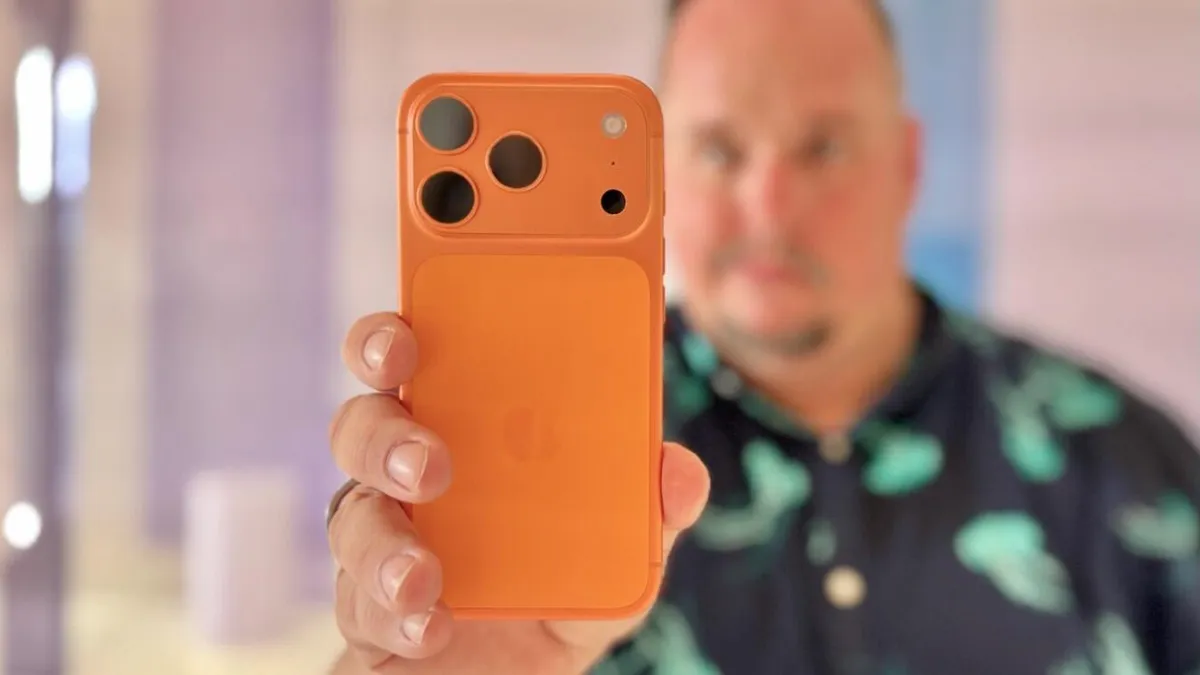
Orange. Logo I recognized immediately. The right dimensions, the right weight in the way he was holding it — or what I thought was the right weight, because I was already calculating, already feeling that complicated mix of hope and embarrassment at having hope.
The room gathered around the way rooms gather when something is about to happen.
“Well?” my husband said, and he was barely holding himself together. “Open it.”
My hands were actually trembling. I want you to sit with that for a moment — a grown woman, forty years old, hands trembling over a phone box at her own birthday party because she had allowed herself to want something and the wanting had made her vulnerable. That vulnerability is important. It’s the thing that makes what came next what it was.
I lifted the lid.
Empty.
Completely empty. No phone, no documentation, no charging cable, no packaging insert. The hollow interior of a box that had once held something meaningful and now held nothing, presented to me as a gift, in front of forty people, on my fortieth birthday.
My husband was laughing. Not chuckling, not a quiet smile — laughing hard, bent into it, the full-body laugh of someone who has been holding in a very good joke and can finally let it out.
And my mother-in-law, still recording, was laughing too.
With her brand-new iPhone.
The same model. The right color. The phone that should have been in the box.
The whole picture assembled itself in about two seconds. He hadn’t forgotten a gift. He hadn’t run out of ideas or time. He had gone to actual effort here — sourced the box, coordinated with his mother, arranged the filming. He had spent energy constructing a moment where I would be humiliated in front of everyone I’d invited to celebrate with me, and he would be the one who made them laugh.
“Funny, right?” he said. Still catching his breath.
The room had gone quiet.
Not the warm quiet of people paying attention. The uncomfortable quiet of people who don’t know if they’re allowed to react yet, who are waiting to see which direction the air moves before they commit to a response. Forty people and not a single one of them said anything. They just watched.
I felt the lump forming in my throat with the precision of something I recognized. I’d felt it before in smaller moments — the times over the years when something was done to me in public and crying would only make it worse, when the tears came anyway and I had to hold them back through sheer effort of will.
I was not going to cry at my own birthday party.
I arranged my face into a smile. It cost me something, that smile — I want to be honest about that. It wasn’t effortless composure. It was a decision I made under pressure, and it took everything I had in that moment to make it look easy.
“Creative,” I said. “Thank you for the creative gift.”
He looked slightly deflated. Not guilty — not yet — just deflated, the way a joke deflates when it doesn’t land the way you expected. He’d wanted more from me. A gasp, maybe. Visible distress. The spectacle of a woman undone at her own party, which would have given him the reaction shot his mother was filming and made the whole thing into the comedy he’d planned.
I gave him a single word that meant nothing.
The party resumed. People found their way back to conversation. I refilled glasses and hugged people and said all the things you say at the end of a birthday party — thank you for coming, it means so much, yes we’ll do it again soon. I was present and warm and I did not once let the smile drop in front of anyone.
Inside, I was very, very quiet.
Not the quiet of someone shutting down. The quiet of someone who has already decided something and is simply waiting for the right moment.
The last guests left around eleven.
My husband went downstairs with a group of them to say his long goodbyes — he always does this, he’s the kind of person who can extend a farewell for twenty minutes, standing in the cold saying the same three things in different orders. I knew I had a window.
I moved quickly but without panic.
His toothbrush. Two shirts. His phone charger — the good one, the fast one that he’s particular about. His razor. I put everything in a bag with the efficiency of someone who has made a decision and is executing it cleanly, without second-guessing. The bag went by the front door. I turned the deadbolt. I turned off the lights in the hallway and the entryway. Then I sat down on the couch in the quiet living room with the birthday decorations still up and the flowers still on the table and I waited.
My daughter was asleep.
The apartment was still.
I poured a glass of the champagne I’d opened for the party — good champagne, the kind I’d bought weeks ago specifically for this occasion because I’d wanted to mark the evening with something worth marking — and I sat with it and I breathed.
His knock came about four minutes later.
Light at first. Casual. The knock of a man who has forgotten his keys before and has never experienced a door that didn’t open.
“Open up. What are you doing? I forgot my keys.”
He still sounded amused. Still riding the momentum of the evening, of his joke, of whatever story he was already constructing in his head about what had happened.
I walked to the door. I stood on my side of it.
“You can stay at your mother’s tonight,” I said, and my voice was calm in a way I hadn’t entirely planned. “There’s an iPhone there and plenty of laughs and someone to film you. I need some time to decide whether I want a clown living in my house.”
Silence.
Long enough that I wondered for a moment if he’d walked away. Then his voice again, different now — the amusement gone, replaced with something between confusion and the beginning of alarm.
“Are you serious? It was a joke. It was just a joke, open the door.”
“I heard you,” I said. “I heard it was a joke while I was sitting at my own birthday table holding an empty box. I heard it while your mother was filming me on the phone that was supposed to be my gift. I understand it was a joke, Dmitri. I’m standing here asking you whether you understand what the joke actually was.”
Nothing from the other side.
“I’m not doing this,” he said finally. His voice had an edge now. “Open the door.”
“I’m not doing this either,” I said. “That’s rather the point.”
I walked back to the couch.
I sat down.
I picked up the champagne glass.
And for the first time all evening — the entire evening, through the decorating and the cooking and the guests and the toast and the empty box and the forty people watching — I smiled with my whole face.
He stayed at his mother’s.
I know he did because my sister-in-law texted me at midnight to say he’d arrived and that he seemed confused and she was staying out of it. I appreciated that. She has always been the sensible one.
I slept better than I expected to. My daughter climbed into bed with me around two in the morning the way she sometimes does, and I lay there with her warm and solid beside me and thought about the next conversation, because I knew it was coming and I wanted to be ready for it.
His first message arrived at seven-fifteen.
I’ve thought about how to describe it without being uncharitable, and the most accurate thing I can say is that it was an apology that had not yet fully become an apology. It contained the information that he hadn’t meant to hurt me, that he thought I would find it funny once the initial moment passed, and — most revealing — that his mother and he both felt I had overreacted.
I read it once. Put the phone down. Made coffee. Got my daughter breakfast. Helped her get dressed. Sat with a second cup of coffee and the specific quiet of a weekday morning when a child is occupied and you have a few minutes to think.
Then I wrote back.
Your mother filmed me on the phone that was supposed to be my gift. You planned this together. You thought the right way to mark my fortieth birthday was to make me the punchline in front of everyone I love. I’m not upset about an empty box, Dmitri. I’m upset about what the empty box was.
I put the phone face down on the table and went to take a shower.
He came home that evening.
He came home differently than he’d left — quieter, less certain of himself, with something in his posture that wasn’t quite contrition yet but was pointing in that direction. He sat down at the kitchen table. I sat across from him. My daughter was in her room with her building blocks.
I’m not going to tell you everything that was said because some conversations belong to the room they happened in. But I’ll tell you the shape of it.
He started with the familiar defenses — it was meant to be funny, other people found it funny, he didn’t realize I would take it this way. I let him say all of it without interrupting, because interrupting would have shifted the conversation from his responsibility to my reaction, and I wasn’t interested in that shift.
When he finished, I said: “You didn’t check whether I found it funny before you planned it. You didn’t ask whether this was how I wanted to be surprised on my fortieth birthday. You and your mother made a decision together about what my reaction would be, what it would look like on camera, and how the evening would go. And you made that decision without me. On my birthday. In my home.”
He was quiet.
“You used my feelings as material,” I said. “The joke only works if I’m visibly hurt. You needed my pain to be the punchline. That’s what I’m asking you to sit with.”
Something shifted in his face around that point. I’ve known this man for eleven years and I know the difference between the expressions he makes when he’s defending himself and the expressions he makes when something has actually landed. This was the second kind.
“I wanted to make people laugh,” he said.
“I know,” I said. “And I’m telling you that I was the material you chose to use.”
We sat with that for a while.
The conversation lasted nearly two hours and covered territory that had nothing to do with phones or boxes — things that had been accumulating, the way things do in a marriage when you keep choosing the shorter conversation over the necessary one. The birthday incident was the clearest version of a pattern, and once I’d named the pattern we had to talk about it properly.
I’m not going to tell you we resolved everything in one evening. We didn’t. But we started, which is the only way those conversations ever go anywhere.
What I will tell you is that he called his mother the next morning and told her — without me prompting, without me even suggesting it — that what they had done was unkind and that he regretted it. He told me about the call afterward, not to receive credit, but because he thought I should know.
She called me that afternoon.
Her voice had the particular stiffness of someone who has been asked to apologize and hasn’t quite worked out how to do it without it costing too much. She said she hoped I understood they hadn’t intended any harm.
“I believe you didn’t intend it,” I said. “But I want you to understand that harm happened anyway. When you raised your phone to film my reaction — with the phone that was supposed to be my gift — you were participating in something designed to hurt me in public. The intention and the impact were two different things, and the impact is real regardless of what was intended.”
She was quiet for a moment. Then she said, a little stiffly, that I was very direct.
“I turned forty,” I said. “I’ve run out of reasons not to be.”
She didn’t know what to do with that. We ended the call politely and I imagine she and my husband had another conversation later that I wasn’t part of. That was fine. Some things need to be worked out between people without me in the room.
I’ve thought about the party many times since then. Not the box, not the locked door — those are the dramatic moments, the ones that make for a story, but they’re not what I keep returning to.
What I keep returning to is the silence.
Forty people in my living room, and when my husband handed me an empty box and laughed, not one of them said anything. Not that’s not kind or are you alright or even the gentle murmur that signals discomfort. They simply waited, holding their glasses, watching to see how I would handle it.
I understand why. It requires a specific kind of courage to name something in a room full of people, especially when the person who did the thing is laughing and clearly expects everyone to follow. Naming it means stepping outside the group momentum, making yourself visible, risking being the person who can’t take a joke.
But I’ve thought about what it would have meant to me if even one person had said something. One voice. One hand on my arm.
We don’t often realize how much the people around us are asking of us when they’re in pain. Not for solutions — just for acknowledgment. For someone to say I see what’s happening here and I’m not going to pretend I don’t.
No one did that at my party.
I did it for myself, in the only way I knew how, with a locked door and a glass of champagne and the particular satisfaction of a woman who has finally stopped absorbing things quietly and started responding to them honestly.
The phone I eventually got, I bought myself.
Two weeks after the birthday, I walked into a shop and bought exactly the model I’d wanted, in the color I wanted, with a case I chose on my own. I paid for it myself. I carried the bag out of the shop and felt no complicated feelings about it at all.
My husband offered to pay for it. I told him I appreciated the offer and that I preferred to buy it myself this time.
He understood what I meant. That was progress.
My daughter asked if she could hold the new phone when I got home. I let her, for approximately forty-five seconds, before my protective instincts kicked in and I suggested we use hers instead.
I’ve thought about what I want to tell her, when she’s older, about what happened at that party. Not the story of the box or the consequences — those are too specific, too tied to a particular situation. What I want to tell her is simpler than that.
I want to tell her that how people treat you on your important days is information. Not absolute information — people have bad judgment, people make mistakes, people do thoughtless things and genuinely don’t understand why they were thoughtless. But information nonetheless. Worth paying attention to. Worth responding to clearly and without cruelty, but also without pretending you didn’t notice.
I want to tell her that the smile you perform so no one is uncomfortable and the smile you feel with your whole face are two different things, and you’ll always know the difference, and it’s worth knowing the difference because one of them is yours and the other is a gift you give to the room at your own expense.
I want to tell her that locking a door is sometimes the most honest thing you can say.
And that good champagne, alone in a quiet room, at the end of the worst part of a birthday, is still champagne.
And the birthday still happened.
And forty, it turns out, suits me quite well.

Laura Bennett writes about complicated family dynamics, difficult conversations, and the quiet moments that change everything. Her stories focus on real-life tensions — inheritance disputes, strained marriages, loyalty tests — and the strength people find when they finally speak up. She believes the smallest decisions often carry the biggest consequences.