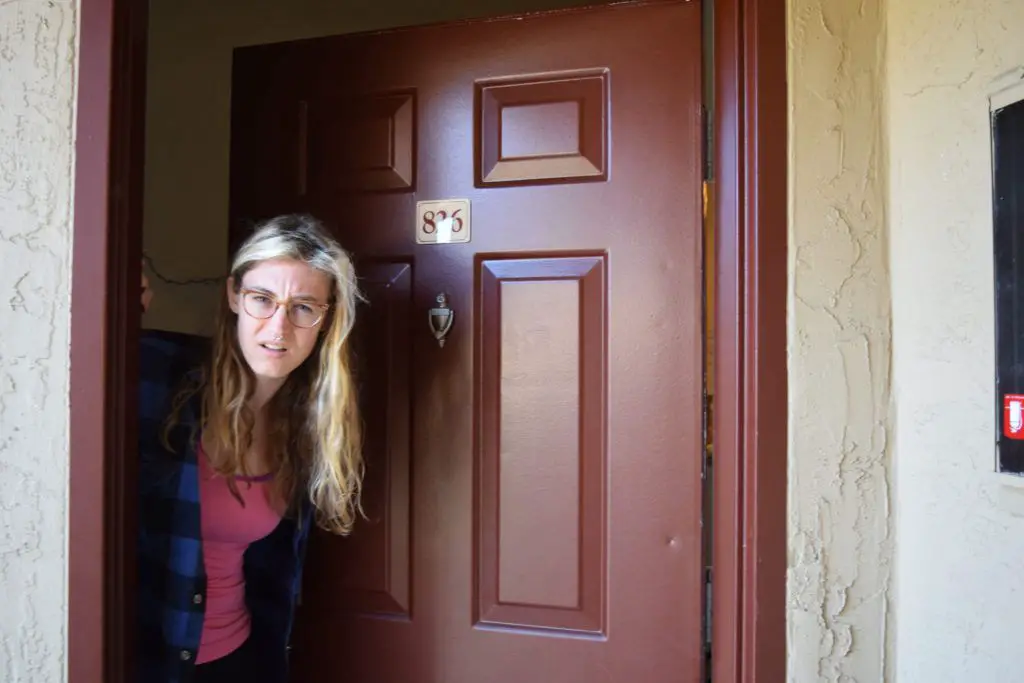
You’ll Get Your Wish
The steaks hissed and spat on the grill like they were trying to warn me.
Grease flared. Smoke curled up in that blue-gray ribbon that means summer and charcoal and cheap beer and all the visual vocabulary of a good afternoon in a backyard full of people who like each other. Someone had put music on through a speaker propped on the windowsill, something with a bass line that thudded just below the level of conversation. The neighbors on both sides had come over the fence when my father extended the invitation the way he extended all his invitations, with the easy generosity of a man who was certain the party would be good because it was his. He was that kind of man. The kind who could make strangers feel welcome in the first ten minutes while the people who lived with him had been walking carefully for years.
I had been walking carefully since I was seventeen.
That afternoon I was twenty-six, holding a paper plate stacked with plastic forks and folded napkins, standing at the edge of the patio. My job at the barbecue, the job that had been assigned without discussion the way all my jobs were assigned, was to carry things from the kitchen to the tables and back again. Drinks replenished. Condiments relocated. Ice replaced when the cooler got low. The labor of the party was mine in the way that most of the labor of the household had been mine for the past five years, not because anyone had asked me formally or offered anything in exchange, but because in families like ours the available person does the available work and I had been the most available person in every room for as long as I could remember.
My father lifted his tongs like a conductor calling for quiet.
“Hey, Madison!”
His voice landed the way it always landed when he wanted to be heard, not loud exactly but carrying, shaped to travel across a space and arrive in everyone’s ear simultaneously. The smirk was already in place. I knew that smirk. It was the one that preceded the small public diminishments he found entertaining, the jokes that had an edge to them that he could always reframe as jokes if you pushed back. That was the mechanism of it: say something that cuts, laugh while you say it, and then the person who objects is the one who can’t take a joke.
“You’re old enough to pay rent or get out,” he announced, as pleasantly as if he were commenting on the weather. “This isn’t a charity.”
Denise laughed immediately, high and sharp, the laugh she used when she wanted to demonstrate alignment. My half-brother Tyler, who was twenty and had never once been asked to contribute anything to the household, leaned back in his lawn chair and popped the tab on another beer with the satisfied sound of a man watching something amusing. He was looking at me with a half-smile that I understood as inheritance, the same entertainment my father found in my position being transmitted to the next generation.
The backyard hush that followed was the specific hush of people who have heard something uncomfortable and are deciding whether to acknowledge it. I felt their attention as a physical thing, the weight of being watched while being made smaller, the particular exposure of a public humiliation in a private space that everyone pretends is not public.
My fingers were pressing into the edges of the paper plate hard enough to bow it inward.
The old reflex rose up, the one I had been practicing since I was old enough to understand the rules of our house. Absorb it. Recalibrate your face. Laugh if you can manage it. Do not let them see you bleed because bleeding only encourages the behavior and also makes you look weak in front of the neighbors and your father genuinely cannot tell the difference between a wound and a character flaw.
I had been practicing that reflex for nine years.
What my father did not know, what he had built his entire performance around not knowing, was that I had spent the past fourteen months doing something else entirely. Quietly, methodically, without telling anyone, I had been building a way out of his house that did not depend on his permission or his opinion of my capabilities or his assessment of what I deserved. I had been doing this with the same careful invisibility with which I did everything in that house, because I had learned early that plans visible to my father became plans he could dismantle.
I set the plate down on the picnic table. Not abruptly. Carefully, the way you set something down when you are deciding to be finished with it.
“You’ve been taking half my paycheck for years,” I said. My voice was steadier than I expected. “I’ve been paying the bills.”
He turned toward me with the tongs still raised, the grin intact, the eyebrows lifting in the exaggerated innocence he deployed when he wanted to seem reasonable while being the opposite of it.
“That’s called life,” he said. “You don’t like it, find somewhere else to live.”
Tyler made a sound that was almost a word.
I looked at my father across the smoke from the grill and I thought about what I knew that he did not know. The folder I kept in the lockbox I had bought and stored at my workplace. The account he didn’t know existed, at a bank I had never mentioned, with a balance he would not have believed I had managed to accumulate given that he was taking half my paycheck and directing my automatic payments. He had believed that the money he didn’t take was being consumed by the automatic payments, and it had been, until fourteen months ago when I had quietly begun redirecting things one by one, so slowly and incrementally that the changes registered as nothing, as the ordinary fluctuation of household costs.
He had believed he was taking half my earnings.
He had been taking less than a quarter of them for fourteen months.
I stepped toward him.
“Fine,” I said. “You want me gone? You’ll get your wish.”
He laughed, the laugh that was supposed to communicate that he found this adorable and unthreatening, that my declarations were the declarations of a child who didn’t understand what the real world required. He waved the tongs at me.
“And where are you going? You’ve got no savings, Madison.”
Not just an insult. A statement of fact as he understood it. He had managed my money with the confidence of a man who believed his management of it was the only thing standing between me and catastrophe. He had taken the half he took not because he needed it, though he spent it, but because possession of it was the mechanism of control. As long as I had nothing saved, I had nowhere to go. As long as I had nowhere to go, I would stay. As long as I stayed, the household ran and the bills were paid and Denise’s credit cards were mysteriously serviced and Tyler’s car insurance was mysteriously current and the Wi-Fi that everyone in the house used was mysteriously never shut off.
I was the mystery.
I had been the mystery for five years.
I looked at him for one more moment, long enough to let the look communicate something I didn’t put into words, and then I went back inside to finish what I had been doing. He would remember that look later. I wanted to make sure it landed clearly.
That night I slept in my bedroom for the last time.
I had been packing in stages for six weeks, the way you do when you cannot let the packing be visible. A bag here, a box at work, books relocated to my car over three or four separate trips so that the shelf thinning happened gradually rather than all at once. The things I cared most about had already moved. What remained in my room was the furniture I hadn’t bought and the decorations I had and which I took down carefully from the walls in the dark at two in the morning, wrapping them in the shirts from my closet and filling the last two bags.
By three I was done. By three-fifteen I was sitting in my car in the driveway with everything that was mine.
I had been approved for the mortgage eleven months earlier, at a credit union in the next town over, on a small house in a neighborhood I had been watching for two years. The house was not impressive by anyone’s standard of impressive. It was twelve hundred square feet with a kitchen that needed new counters and a yard that had been neglected long enough to require serious work and a furnace that was old but functional, and it was mine in the specific, absolute, irrevocable way that a deed with your name on it is yours. I had closed four months ago. I had been preparing it quietly on weekends, letting myself in with my own key, painting the bedroom the color I chose, assembling furniture I ordered and had delivered to the new address, building the interior of my actual life in the hours between when I left my father’s house and when I was expected back.
I had told no one.
The drive was twenty minutes. I parked in my driveway, which was my driveway, and I carried my bags inside through the front door, which was my front door, and I stood in my kitchen at three-thirty in the morning and I let myself feel, for the first time in years, what it was like to be in a space where nothing was owed to anyone.
The next morning I opened my laptop and I switched the utilities.
This was the practical reckoning, the one I had been planning for months. My name was on everything at my father’s house: the electric, the gas, the internet, the water bill that the city ran through direct debit. I had set these up in my name years ago when my father’s credit had made it impossible for him to open accounts, a favor I had done without fully understanding what it meant to be the person of record on services consumed by people who did not pay for them. For years I had been paying them from the account he had access to, the account where my checks were deposited. He had understood this as an arrangement that served the household. I had come to understand it as something with a different name.
I transferred everything. Electric forwarded to the new address. Gas canceled at the old address and opened at the new. Internet service terminated. I did this methodically, account by account, over the course of two hours, with the same careful documentation I had applied to everything over the past fourteen months. Then I sent one text, to my father’s number.
“I’ve moved out. The bills are yours now.”
I put the phone face-down and made coffee.
The calls started within the hour. My father first, one ring, then silence, then another ring. Then Denise, who I had never had a real conversation with in five years, calling me as if we were close enough for me to want to answer. Then Tyler, which surprised me slightly, because Tyler generally operated under the assumption that effort was other people’s problem.
By afternoon they had called collectively eighteen times.
That evening, headlights swept across my living room windows. I heard a car door, then footsteps on the porch, then knocking that was slightly more aggressive than knocking needed to be. I stood in my hallway and I did not move.
My father’s voice came through the door. Not the barbecue voice, not the performance voice, not the voice shaped for an audience. The other voice, the one he used when the performance wasn’t working and he needed to negotiate.
He said they just needed a week. Just to transition. He said he wasn’t asking me to come back, just to turn things back on for a week while they sorted it out. He said the word please, which I had heard from him perhaps four times in my life.
I stood in my hallway and I looked at the front door and I thought about the years of carrying plates and managing automatic payments and explaining to the electric company why the bill was late when I was the one who paid it and everyone else in the house was the one who ran it up.
I did not open the door.
He came back twice more over the following two days. I documented each visit: time, duration, what I could hear him saying. I had been keeping records of everything since before I left because I understood, in the particular way you understand things when you have grown up in a household where the rules change depending on who needs them to change, that documentation is the difference between a story and evidence.
The bank email arrived on the third day.
Suspicious login attempts on my primary account, two of them, from a device associated with an IP address I did not recognize. I logged in from my own device and changed my password and enabled the two-factor authentication I had been meaning to enable for months, and then I spent two hours on the phone with the bank’s fraud department, which was two hours I had not planned to spend but which produced information I had not had before.
The second alert came the following morning: a new credit account opened in my name, at a department store I had not entered in three years, with a credit limit of three thousand dollars and a balance that had already been partially used. The opening date was four weeks ago. The address associated with the account was my father’s house.
I printed everything and put it in the folder.
Tyler texted me on Friday. Just four words: “Watch your mailbox.” No context. No explanation. The text of someone who wants you to know they know something without having to say what it is.
I did not respond to the text. I went to the post office and submitted a mail forwarding request and flagged my address for additional monitoring and called the three major credit bureaus to place fraud alerts on my accounts. I had learned, in the months of quiet preparation before I left, that there is a specific methodology for protecting yourself from people who have had access to your financial identity, and that methodology requires you to move faster than they expect and document more thoroughly than they think you will.
On Saturday morning an email arrived that I was not expecting.
The mortgage company sent it to my email address, the address I had used when I was a co-signer on a document I had been told was a refinancing form three years ago. At the time my father had said he needed my signature because his credit prevented him from refinancing alone, that my being on the document was a formality, that I would be removed from the loan once the refinancing was complete. I had signed because he was my father and because I was twenty-three and because the word formality had a way of smoothing over the details of things I should have read more carefully.
The email was a past-due notice. Ninety days past due. With a public auction date scheduled in thirty days.
I sat with that information for a long time. The coffee I had made went cold in the cup. Outside my window my neglected yard was doing what neglected yards do in the fall, going quietly dormant under the leaf cover, waiting for spring. I had plans for that yard. I had been looking at seed catalogs.
I called my attorney.
I had retained one four months before I moved out, a woman named Patricia Hollis who specialized in financial fraud and consumer protection and who had, in our first meeting, listened to my summary of the past five years and said, with the specific calm of someone who has heard variations of this story many times, that what I was describing had several names in law and that I had options I possibly did not know about. She had helped me establish the fraud alerts and the documentation protocol and had reviewed the documents my father had asked me to sign over the years with the attention of someone looking for what the documents actually said rather than what she had been told they said.
She was not surprised by the mortgage email.
She said it was time to file the reports I had been building toward: the credit fraud, the identity theft, the unauthorized account opening. She said the mortgage situation was more complicated but that being a co-signer on a loan that was now in default had implications I needed to address proactively. She said the documentation I had would be useful.
I spent that Saturday afternoon organizing everything I had. The bank statements showing the automatic payments redirected from my account. The printouts of the utility accounts in my name. The credit card opened in my name without my knowledge. The mortgage document with my signature on it. Tyler’s text. The login attempts. The records of the visits to my porch. I organized them chronologically and categorized them and labeled each folder clearly.
When my father and Denise appeared at my door that evening, for what I believe they had decided was their final attempt, I was ready.
I had printed the foreclosure notice. Not because I intended to help them, I had no intention of helping them, but because it was the clearest possible summary of the situation, a single document that stated plainly and officially what was about to happen to the house, and I thought it served a purpose to have them see it without being able to dismiss it as something I was exaggerating.
My father’s voice through the door this time had a quality it had never had before, a cracking at the edges of the performance, the specific sound of a man whose confidence in the arrangement has finally met the consequences of it. He said they needed me. He said I was the only one who could fix it. He said family, which was a word I thought about for a moment before I opened the door.
I opened the door.
He was already talking, the words coming faster than usual, the cadence of someone who has rehearsed a pitch and is delivering it with the knowledge that this is probably the last opportunity. Denise stood slightly behind him in the way she always stood when she wanted to appear less complicit than she was.
I held up the foreclosure notice.
“This is what happens,” I said, “when the person you’ve been draining finally stops bleeding for you.”
I dropped the paper at the threshold between us.
Then I closed the door.
The phone alert came while I was still standing in my hallway, the new notification tone I had set up for the fraud monitoring service that Patricia had recommended. I looked at the screen.
The alert was a summary. A comprehensive summary of account activity associated with my Social Security number going back further than the department store card, further than the past few months, back through years of small accounts and inquiry records and addresses and applications that I had not opened and had not authorized.
They had been using my identity for years.
Not just recently, not just since I left. Since before I understood what was happening. Since the period when I was young enough to believe that a father asking for your help with paperwork was a father who trusted you rather than a father who had found a useful instrument.
I stood in my hallway with the phone in my hand for a long time.
The anger I felt was not the hot kind. It was the cold kind, the kind that does not spike and recede but settles in and becomes a resource, something steady and usable. I thought about the years of careful invisibility, the fourteen months of quiet preparation, the folder in the lockbox, the account they didn’t know about, the house with my name on the deed and the key on my keyring and the yard that was going to need work in the spring.
I had known, when I started planning, that leaving might not be the end of it. That people who depend on you for their operational life do not let that dependency go without a period of escalation. I had prepared for the escalation. I had documentation and an attorney and fraud alerts and a methodology, and I had the specific advantage of someone who has been underestimated long enough to have moved several steps ahead of the people doing the underestimating.
I emailed Patricia that night with the full summary from the monitoring service.
She responded in the morning: time to file.
I filed everything that week. The identity theft reports, the fraud claims, the consumer protection complaints, all of it organized and submitted with the documentation that supported each one. Patricia managed the legal dimensions. I managed the records, which I was good at, which I had always been good at, which was perhaps the most ironic aspect of the whole situation: they had chosen as their instrument the one person in the household who documented things.
My father called one more time, two weeks later. Not the pleading voice and not the performance voice. A quieter version, one I had not heard before, that carried something I was not entirely sure how to identify, possibly the recognition of someone who has reached the end of a story they thought they were controlling and found it has a different ending than the one they wrote.
He said he wanted to talk.
I said I was sure he did.
I said I would be in touch through my attorney.
The winter came in early that year, cold and clean, and I put the garden to bed and bought a snow shovel for my own driveway and made a list of things I was going to plant in the spring: tomatoes along the south fence, herbs in the raised bed I was planning to build, something flowering along the front walk that would come back on its own year after year without requiring tending.
Perennials, I had been reading, are the most satisfying investments in a garden. You do the work once, establish the root system, and they return every season stronger than the year before.
I understood that completely.
THE END

Specialty: Quiet Comebacks & Personal Justice
David Reynolds focuses on stories where underestimated individuals regain control of their lives. His writing centers on measured decisions rather than dramatic outbursts — emphasizing preparation, patience, and the long game. His characters don’t shout; they act.
A motivating discussion is definitely worth comment. There’s no doubt that that you should write more on this topic, it may not be a taboo matter but typically people don’t speak about these topics. To the next! Many thanks!!