$19,400 lived in my head like a song stuck on one line.
It was there when I woke up at six in the morning. There when I collapsed into bed with my feet throbbing and the smell of lemon cleaner still sitting in my nose. It followed me across sticky bar mats and over chipped tile floors, whispered to me over the clinking of glasses and the laughter of people spending money without thinking about it.
Nineteen thousand, four hundred dollars.
Every double shift I picked up, I could almost see the number ticking higher in the corner of my vision. Every time my friends texted about a weekend trip and I typed “maybe next time,” that number sat in the silence I left behind.
It wasn’t just a price tag. It was three years of saying no.
No to new shoes when the old ones could last one more month. No to spontaneous dinners and last-minute flights and ordering delivery when there was pasta and canned tomatoes at home. No to ease, no to spontaneity, no to being twenty-two and living like it.
All for something that didn’t have my name on it.
It had theirs.
Mr. and Mrs. Thompson.
My grandparents had been married thirty-eight years when I first had the idea. Thirty-eight years of steady, un-romanticized effort — early alarms and late dinners, thrift store bargains and clipped coupons, “we can’t this month, maybe next time.” Thirty-eight years where luxury was something that belonged to people on other screens.
They talked about cruises the way some people talked about castles. Things you admired from a distance. Not options you clicked into a cart.
“Can you imagine?” Grandma would say, turning a glossy brochure over in her soft hands, the backs of them traced with faint veins. “You wake up and the ocean is just there. No dishes. No laundry. Just water.”
“Motion sickness,” Grandpa would grumble, reaching for his glasses. “You’d last half a day before demanding they turn the whole ship around.” But his eyes always stayed a beat too long on the photo of a balcony cabin, the rail gleaming gold in the sun.
Then Grandma would sigh and fold the brochure back up, smoothing the crease carefully, as if pressing the want out of it. She’d slide it into the kitchen drawer — the one that held rubber bands and recipe clippings and expired coupons. The drawer of someday.
“Maybe someday,” she’d say, almost joking. “When we win the lottery we never play.”
Grandpa would change the subject, already translating the tiny price numbers into grocery bills and pharmacy receipts. Someday sat in that drawer for years, yellowing at the edges, going soft under the weight of more necessary papers.
Someday was never going to crawl out on its own.
So I decided to drag it into the light.
Three Years of Saying No
I was twenty-two when I started saving. I knew exactly what we could and couldn’t afford in this family, because I had watched my grandparents give everything to everyone else for as long as I could remember.
When my mother chased careers or men or some blurry combination of both, depending on the year, it was my grandparents who showed up. They were the 6 a.m. rides to school and the 11 p.m. calls when a fever spiked and someone was scared. They were the steady background hum of “we’ll figure it out.”
They had taught me everything that basic survival manuals forget. How to braid bread dough and a budget at the same time. How to simmer soup and defuse an argument. How to check the oil in a car and check on your neighbors. They had made love look less like grand declarations and more like remembering which tea your partner needed when they were anxious.
No one had ever given them anything big.
So I decided I would.
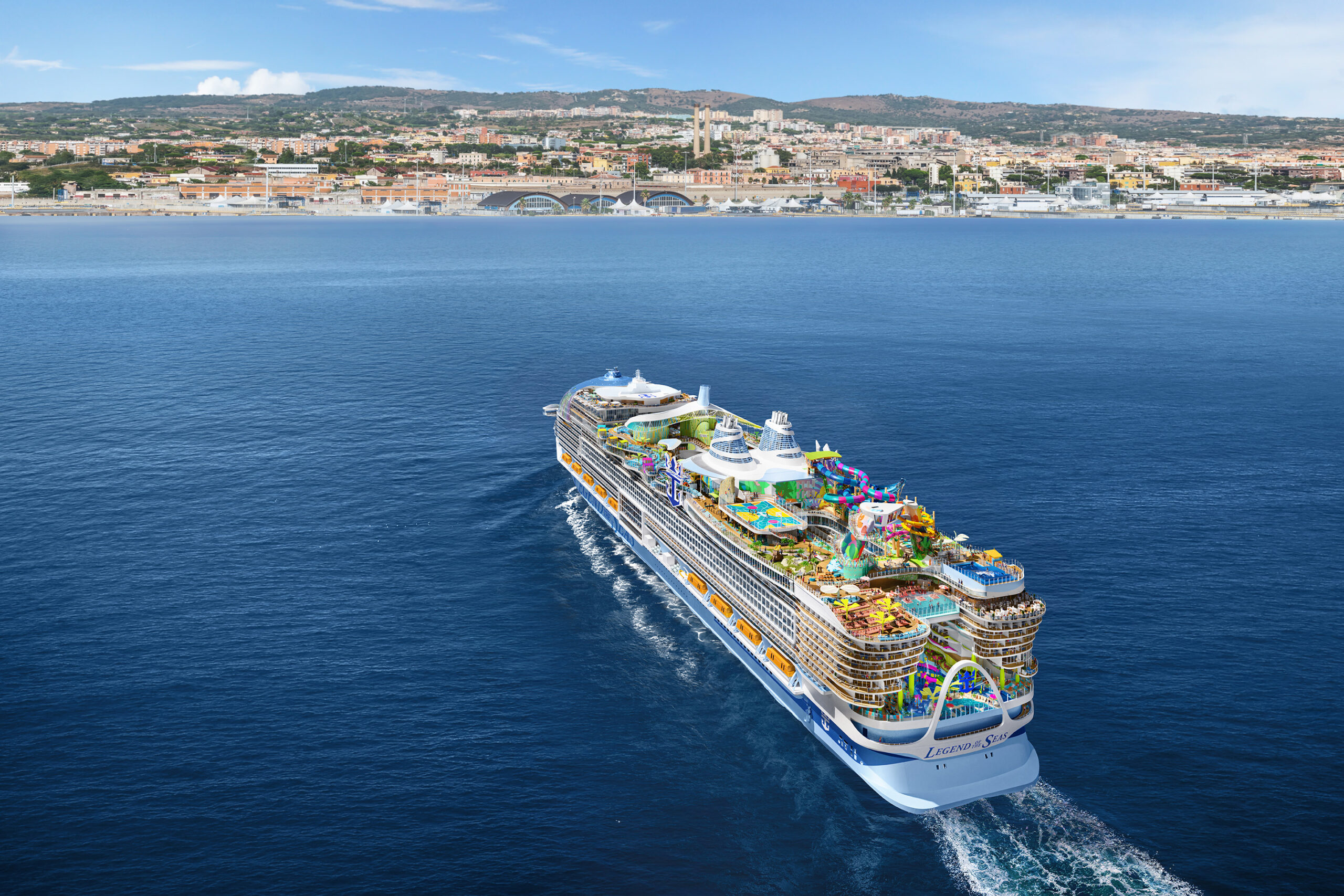
The first time I looked at cruise prices, the number made my stomach fold in on itself. Ten days in the Mediterranean. Barcelona. Naples. Santorini. A balcony suite with one of those little tables where couples drink coffee while the sky turns pink. When I added the travel insurance, the wheelchair assistance, the shore excursions slow enough for Grandpa’s knees — the total stared up at me from the screen.
$19,400.
I closed the laptop. I walked into the tiny bathroom of my studio apartment and looked at myself in the mirror the way you look at someone right before you both do something irreversible.
“Okay,” I said. “Let’s do this.”
The next day I picked up an extra shift. Then another. Then another. My friends’ invitations turned into Instagram stories I watched from the bus on the way home. After the first year they mostly stopped asking. It wasn’t personal — it was math. I always had the same answer. Can’t. Saving. Sorry.
It became easier when I started picturing the moment.
I could see it while I wiped down counters and smiled at people who snapped their fingers for refills. Grandma sitting at my kitchen table with flour on her hands, talking about the price of eggs. Grandpa pretending to read the paper, stealing glances over the edge. And me, sliding a thick envelope across the table. Her hand flying to her mouth. His eyes going wide behind his glasses.
Every time someone ordered one more round at five minutes to closing, I reminded myself I was buying that moment. Every time my feet ached badly enough that I thought about walking out mid-shift, I reminded myself that someday was taped somewhere inside my chest, and I was the only one who could make it real.
The Health Scare
I hit the number six months after Grandma had a health scare.
It wasn’t dramatic — no sirens, no waiting room pacing. A small episode, the doctor said. A warning, not a catastrophe. But when we sat back at the kitchen table afterward, Grandma didn’t speak for a long time. She just stared at her hands like they suddenly belonged to someone older.
“I thought we had more time,” she said quietly. Almost to herself.
That was the moment someday stopped feeling like a drawer and started feeling like a countdown.
I booked the cruise the following week.
Marco helped.
We’d survived college together — finals, breakups, and dorm fire alarms at 3 a.m. because someone tried to deep-fry chicken in an electric kettle. He’d been my co-conspirator in everything from rigged karaoke votes to covering an entire professor’s office in sticky notes as a protest against unfair grading. Now he was a cruise director on one of those gleaming ships Grandma only knew from brochures.
“I manage chaos on the ocean,” he had told me when we caught up after graduation. “But they call it hospitality.”
When I called him about the cruise, he listened without interrupting, the faint sound of clinking glassware somewhere behind his voice.
“You sure you want to do this?” he asked when I told him the number.
“Yes,” I said, even though my stomach dropped.
“Then I’ll make sure it’s perfect.” A pause. “And I still owe you for talking me out of that tattoo sophomore year.”
We spent hours on the phone over the details. I chose the balcony cabin that faced the side of the ship instead of the back, because Marco said that’s where sunsets hit first. I added a welcome package — champagne, chocolates, a playlist of love songs from the year they got married. I arranged wheelchair assistance in every port without mentioning it to anyone. I added a note to the booking explaining their anniversary, the thirty-eight years, the fact that they’d never had a honeymoon.
Everything was filed under their names.
Mr. and Mrs. Thompson.
Not mine. Never mine.
I paid the deposit, then the balance in jagged chunks as tips allowed. The day the final confirmation came through, I sat down on my unmade bed and laughed — not happy, not hysterical, just relieved. Like I’d been holding my breath for three years and had finally exhaled.
I didn’t tell them yet. I wanted the reveal to be right. Not a spectacle, but a real moment. The kind they could hold onto later, when nights got long and knees ached and the future felt blurry.
The universe gave me exactly two days.
“We’re Going Instead.”
Two days before the cruise — two days before the flights to Barcelona, before the carefully planned Sunday lunch surprise — I walked into my mother’s kitchen.
She was sitting at the table with her coffee, just like she’d sat at a thousand tables in a thousand kitchens for my entire life. Back straight, newspaper folded nearby, sunlight catching the rings on her fingers and turning them into little glittering performances. She touched those rings when she wanted attention. She twisted them when she wanted control.
That morning, she was twisting.
“We’re going instead,” she said.
No hello. No question. No buildup. Just those four words, delivered with the same casual certainty she used to announce what was for dinner.
I stood in the doorway. “What?”
“The cruise.” She set her mug down. “Your sister and I. It makes more sense. Your grandparents are getting older, the travel would be hard on them, all that walking in the ports—” She waved her hand like she was brushing away a fly. “We’d get more out of it.”
My sister, Dani, appeared in the doorway of the living room. She’d clearly heard everything. She was already nodding, already smiling the way she smiled when she’d decided something was funny. “I’ll tag Grandma and Grandpa in the stories,” she said. “They’ll love seeing the photos.”
I looked at the two of them. My mother, the woman my grandparents had bailed out a hundred times, sitting in a kitchen that wasn’t hers, wearing rings she hadn’t paid for, drinking coffee from a pot she didn’t fill. My sister, laughing.
“Those aren’t your tickets,” I said.
“They’re in the family,” Mom said. “It’s not a big deal. You can take them another time.”
“I saved for three years.”
“And it’s a very sweet gesture. But honestly, Lauren, your grandparents would want us to enjoy it.”
She said it like it was the most reasonable thing in the world. She said it the way she said everything — with total confidence that the world would simply rearrange itself around whatever she wanted.
I didn’t yell. I didn’t cry. I didn’t argue.
I said, “Okay,” and I walked back out to my car.
And then I made one call.
The Call
Marco answered on the second ring.
“I need to make a change to the booking,” I said.
He listened while I explained. When I finished, he was quiet for a moment.
“Lauren.” His voice was careful. “You sure?”
“They’re not going on that cruise, Marco. I need to make sure of that.”
Another pause. Then: “Okay. What do you need?”
The Willowbrook Travel booking was in my name. I had paid for it. Every cent. My mother had assumed — the way she assumed everything — that having access to the information meant having ownership of it. She had found the cruise documents on the table at my grandparents’ house weeks ago and simply decided, the way she decided things, that the details were interchangeable.
What she didn’t know was that the primary contact on the reservation was me. The payment method was my account. The booking confirmation had been sent to my email address, not hers.
And Marco, being Marco, knew exactly how cruise manifests worked.
We made the changes. It took about twenty minutes.
“Done,” he said. “They’re not on the manifest. They can show up to that port with those booking numbers and those passports and it won’t matter. The names won’t match.”
“Thank you.”
“Don’t thank me.” A beat. “Go get your grandparents.”
The Real Reveal
I drove to their house that same afternoon.
Grandma was in the kitchen, defrosting something for dinner and humming to herself the way she always did when she was in her own space and comfortable in it. Grandpa was in his chair by the window with the crossword. The house smelled like it always had — coffee and something baked, a faint trace of the lavender sachets Grandma tucked into the linen closet.
I sat down at the kitchen table.
“I have something for you,” I said. “Both of you.”
Grandpa set the crossword down. Grandma turned from the counter, drying her hands on a dish towel.
I slid the envelope across the table.
She picked it up slowly. Opened it the way she opened everything — carefully, like it might need to be used again. She unfolded the papers inside and read them once. Then she read them again.
“Lauren.” Her voice came out soft and strange.
“Barcelona,” I said. “Naples. Santorini. Ten nights. Balcony suite. The table faces the sunset.”
She put her hand over her mouth.
Grandpa reached over and took the papers from her gently. He put his glasses on. He read every word, the way he read everything, top to bottom, not skipping. When he was done, he looked up at me over the frames.
“How long?” he asked.
“Three years.”
He didn’t say anything for a moment. He just looked at me the way he looked at things he was making sure were real.
Then he said, “You should have spent it on yourself.”
“Grandpa.”
“I mean it. You’re young. You should be—”
“I wanted to do this,” I said. “I’ve wanted to do this for three years. Please just let me.”
Grandma was still holding her hand over her mouth. Her eyes were wet. She looked at the papers in Grandpa’s hands and then at me and then at her own hands resting on the table.
“The ocean,” she said. “We wake up and the ocean is just there.”
“Right there,” I said. “No dishes. No laundry.”
Grandpa made a sound that was almost a laugh. “Motion sickness,” he said, but his voice was different than when he used to say it.
“There’s medicine for that,” I told him. “I already packed it in the excursion bag.”
He looked at me again over his glasses. Then he folded the papers carefully, the same way Grandma had always folded the brochures, and held them in both hands.
“Okay,” he said quietly. “Okay, then.”
Barcelona
They flew out on a Thursday morning. I drove them to the airport, helped with the luggage, watched them move through the automatic doors and into the line for security.
Grandma looked back once and waved.
That was enough.
My mother called me that same afternoon.
“There’s a problem with the booking,” she said. Her voice was clipped. “The travel agent says there might be an issue with the names.”
“Really,” I said.
“Lauren, I need you to sort this out. I’ve already packed—”
“I know.”
“Then fix it.”
“I can’t fix it, Mom.”
A pause. “What do you mean you can’t fix it?”
“I mean that the reservation is in Grandma and Grandpa’s names. It was always in their names. I booked it for them three years ago. You were never on the manifest.”
Silence.
“You planned this,” she said.
“I planned a cruise for my grandparents. Yes.”
“Lauren—”
“I have to go,” I said. “I hope you and Dani find something fun to do this week.”
I hung up.
The Port in Barcelona
Marco told me what happened at the port. He was working a different ship that week but he had friends at the check-in counter, and news travels fast when something is good.
My mother and sister had driven to the port anyway.
They stood at the check-in desk with the booking numbers, the passports, the certainty of people who have never been told no in a way that actually held.
The clerk looked at the passports. Looked at the manifest. Looked up.
“I’m sorry,” she said. “You’re not on the manifest.”
My mother’s face went through several things quickly. Confusion first. Then the specific kind of disbelief that comes from a person who genuinely cannot process being on the wrong side of a situation.
“There must be a mistake,” she said.
“The names on the manifest are Mr. and Mrs. Thompson,” the clerk said. “These are not those names.”
“I’m their daughter—”
“I understand. But the reservation is in their names, and it’s a non-transferable booking. I can’t admit you to the ship.”
My mother turned around.
And across the terminal, just coming through the doors from the taxi drop-off, were my grandparents — Grandpa with his small carry-on, Grandma with her good cardigan already buttoned against the port breeze, both of them blinking in the Spanish morning light.
Grandma spotted my mother and stopped walking. Something passed across her face — surprise, understanding, then something more careful.
Grandpa looked between them. Put the pieces together the way he always did.
He picked up his bag again and walked toward the check-in counter without hurrying.
“Thompson,” he said to the clerk. “We have a reservation.”
The clerk smiled. “Yes, Mr. Thompson. Welcome aboard.”
What Happened After
My mother called me from the port. I didn’t answer.
She called three more times that afternoon. I let them all go to voicemail.
The fourth time, I picked up.
“You did this on purpose,” she said.
“I booked a cruise for Grandma and Grandpa,” I said. “That’s all I did.”
“You knew we were going—”
“You told me you were going. I never agreed to that.”
“It’s family money—”
“It’s my money,” I said. “My tips. My double shifts. My three years. You’re my mother and I love you, but that was never yours to take.”
She didn’t say anything for a moment.
“They’re old,” she finally said, quieter now. “They could have gotten sick on the ship. All that walking—”
“They’re fine, Mom.”
And they were.
Marco sent me a photo three days in. Not staged, not posed — just Grandpa and Grandma at a small table on their balcony, coffee cups in front of them, the blue water stretching out to the horizon behind them. Grandpa had his glasses on. Grandma’s hair was loose, which she almost never wore it. They were talking, leaning slightly toward each other the way people lean when they’ve been sharing the same space for decades and don’t have to try anymore.
The sky in the background was the specific pink-orange of early evening.
I stared at that photo for a long time.
Then I put my phone down and cried, the good kind, the kind that doesn’t ask for anything.
When They Came Home
They came back on a Sunday. I picked them up from the airport.
Grandma had a small paper bag from a shop in Naples — olive oil, a tiny ceramic tile painted with a lemon. She pressed it into my hands before she even said hello.
“For your kitchen,” she said. “Because you should have something from there too.”
Grandpa waited until we were in the car, pulling out of the parking structure, before he said anything.
“Naples,” he started. “The light there is different. Something about the angle, I don’t know. Everything looks like a painting.”
“Did it help with the motion sickness?”
“The medication you packed helped with the motion sickness.”
“Good.”
He was quiet for a moment.
“Santorini,” he said then. “We watched the sun go down from the deck. Your grandmother made me stay out there the whole time, even after my knees started complaining.”
“Worth it?”
“Worth it,” he said. He looked out the window. “Everything was worth it.”
I kept my eyes on the road.
“Lauren.” His voice was different when he said my name. Slower. “You didn’t have to do that.”
“I know.”
“Three years is a long time to say no to things.”
“I know that too.”
“What made you do it?”
I thought about Grandma staring at her hands at that kitchen table after the health scare. About the drawer full of someday, yellowing at the edges.
“You never had a someday,” I said. “I wanted to give you one.”
He didn’t respond right away.
Then he reached over and put his hand briefly on my shoulder, the way he’d done when I was small and needed to know things were going to be okay.
“It was a very good someday,” he said quietly.
One Year Later
My mother and I are not where we were. We’re not where we should be either. Some things, once you see them clearly, are hard to look at the way you used to.
But I’ve stopped trying to explain it to her. She made her calculation, and I made mine. I just happen to know who deserved what.
The ceramic tile from Naples is on my kitchen windowsill. The olive oil is long gone, used up on meals I made while learning to cook the way Grandma taught me — slow, with attention, no shortcuts worth taking.
Grandma still has the photo from the balcony, the one Marco sent me. She had it printed and framed. It hangs in their hallway, between the family photos and the cross-stitched thing from decades ago that says Home is where the heart is.
Every time I visit, I walk past it on the way to the kitchen.
Two people at a small table. Coffee cups. Pink sky. Water going all the way to the edge.
Grandpa told me once that before the cruise, he’d never really understood what it meant to have no obligations. No list, no errand, no one needing anything. Just one day opening into the next with nothing required of him.
“We just sat there,” he said. “And that was enough. Just sitting there was enough.”
Thirty-eight years. Some things you don’t know you needed until someone decides you deserve them.
$19,400.
Every single cent.

Lila Hart is a dedicated Digital Archivist and Research Specialist with a keen eye for preserving and curating meaningful content. At TheArchivists, she specializes in organizing and managing digital archives, ensuring that valuable stories and historical moments are accessible for generations to come.
Lila earned her degree in History and Archival Studies from the University of Edinburgh, where she cultivated her passion for documenting the past and preserving cultural heritage. Her expertise lies in combining traditional archival techniques with modern digital tools, allowing her to create comprehensive and engaging collections that resonate with audiences worldwide.
At TheArchivists, Lila is known for her meticulous attention to detail and her ability to uncover hidden gems within extensive archives. Her work is praised for its depth, authenticity, and contribution to the preservation of knowledge in the digital age.
Driven by a commitment to preserving stories that matter, Lila is passionate about exploring the intersection of history and technology. Her goal is to ensure that every piece of content she handles reflects the richness of human experiences and remains a source of inspiration for years to come.