I was still in my work boots when I poured the wine.
That’s the kind of detail that stays with you: the specific exhaustion of a job that asks everything from your body, the relief of coming home to a space that is entirely yours, the small ceremony of a good glass at the end of a day spent doing something real. I had spent nine hours on the Buchanan house that day, a 1908 Craftsman in Denver’s West Highland neighborhood that had been slowly surrendering to time, its original oak floors going soft in the corners, its horsehair plaster crumbling at the seams, its century-old staircase fighting me at every step as though it knew I was trying to save it and wasn’t sure it wanted saving. My hands were rough and my muscles were talking, and the Cabernet I poured caught the last light of the late afternoon sun in a way that was almost enough.
Then my phone buzzed.
I ignored it the first time, reaching instead for the glass, letting the warmth of the wine settle me the way it did on the better evenings. I am Debra Alvarez, 35 years old, restoration architect, the woman who brings broken things back without asking anyone’s permission to care about them. My apartment in Denver is spare and particular, filled with salvaged pieces I have repaired myself, and the view west toward the mountains on clear evenings is the closest thing I have to church.
The phone buzzed again, and again.
I set the glass down and picked it up with the mild irritation of someone who has learned that persistence from an electronic device is rarely good news.
My thumb stopped mid-scroll.
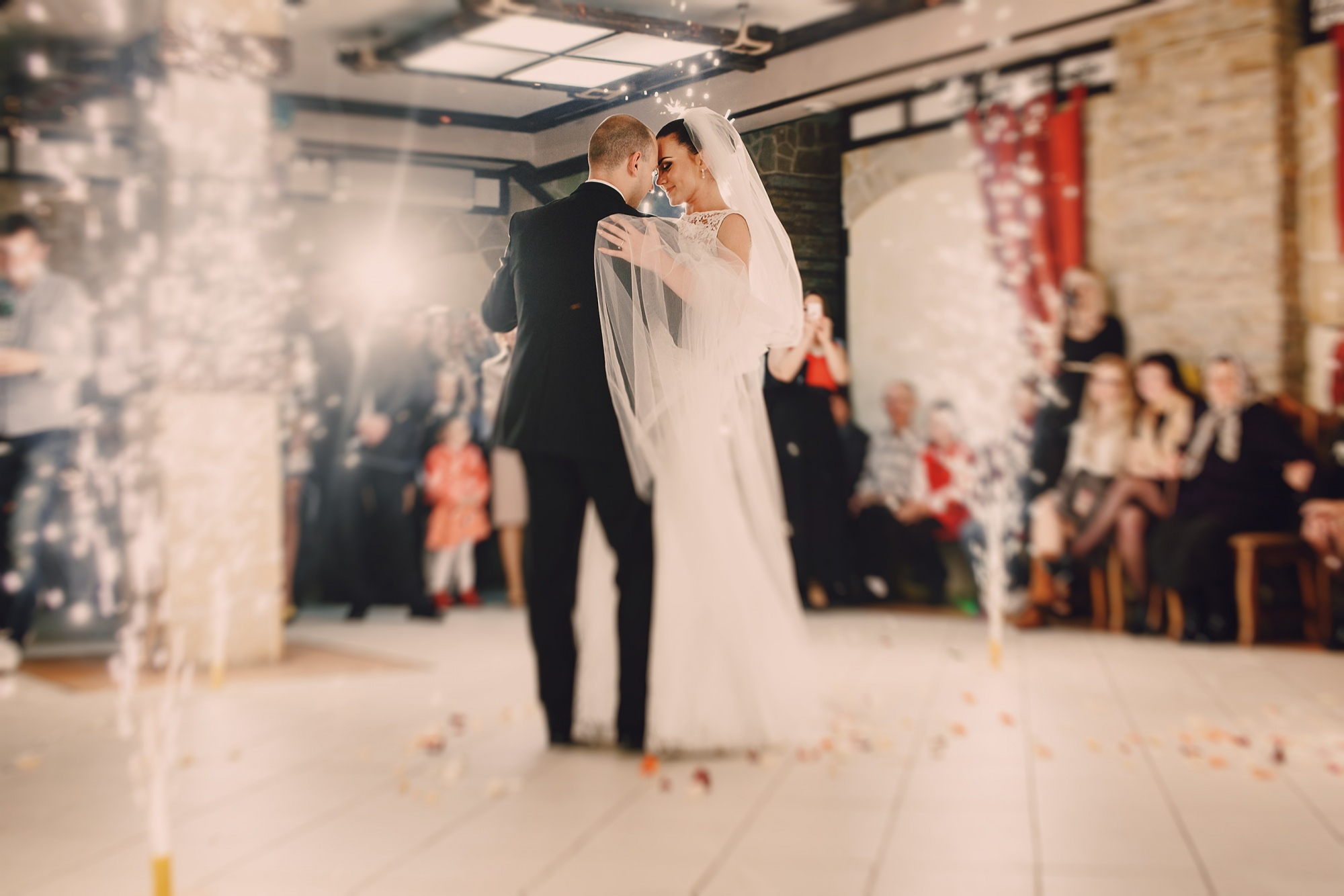
A photograph. My sister Nyla in white satin, her face glowing beneath a veil so fine it seemed to dissolve at its edges, her smile wide with the particular joy of someone on the verge of something enormous. The caption beneath it read: Final fitting for the big day. Nyla and Travis. Forever after.
I read it twice.
Then I scrolled. And kept scrolling. My cousin Marissa in a bridesmaid dress, laughing at something outside the frame. My Aunt Rosa’s hands holding flower samples, her approval visible even from that angle. My mother, captured from behind, examining embossed invitation samples at a table spread with options.
An invitation I had not received.
I went through every post methodically, the way I go through a building when I am assessing damage, room by room, without allowing myself to skip ahead to the conclusion before the evidence is complete. There were fifty-seven comments beneath one of the photos. Names I recognized from childhood, relatives I had not seen since my high school graduation, friends of my parents who had watched me and Nyla grow up in the Victorian house in Boulder. Everyone expressing excitement, everyone anticipating an event that was apparently happening in a month.
Everyone but me.
My mother called while I was still processing this, with the timing that had always characterized her management of difficult situations, the preemptive call that arrives just before you can fully understand what you are upset about, designed to shape the narrative before you have had time to form your own.
“Debra, honey,” she said, her voice carrying that particular calibration she used when she was being careful. “I was just thinking about you. How’s work?”
“Work is fine,” I said. “I just saw Nyla’s wedding dress on Instagram.”
The silence that followed lasted exactly as long as it took her to decide on an approach.
“Oh. I was going to call you about that.”
I stood up and moved to the window, because I needed to be looking at something that was not the room, not the phone, not the accumulated evidence of exclusion on my screen. The Denver skyline glittered in the falling dusk.
“My own sister’s wedding,” I said. “Was my invitation lost?”
She told me not to make it about me. She said Nyla was sensitive. She said I was always so busy with my career, that Nyla had assumed I would not make time. She said Travis thought family was important, as though this explained, rather than deepened, my exclusion from a family event.
I pressed my forehead against the cool glass.
“After you criticized her cafe?” My voice was quieter than I expected. “I co-signed her loan. Twenty-two thousand dollars. Which I paid back after she abandoned the business nine months in.”
“She had the children to think about,” my mother said, her voice hardening at the edges. “Single motherhood isn’t easy, Debra.”
Emma and Lucas. Eight and six, deployed as justification the way they always were, their existence made to do the moral work of explaining decisions that did not actually involve them.
“I need to go help Nyla with the seating charts,” my mother said, and ended the call.
I sat with the phone in my lap and watched new photographs appear in my feed. Nyla twirling for the camera, the dress catching and releasing the light. Travis and his groomsmen at a cake tasting, at ease with the pleasure of being celebrated. My parents standing beside the happy couple at some venue preview, beaming in the particular way that parents beam when they believe a child has landed well.
A family portrait, complete without me.
I turned the phone face down.
For thirty-five years I had been the responsible one. This was the language my family used, and I had accepted it so long that I had stopped examining what it actually meant. The responsible one paid back the failed cafe loan. The responsible one co-signed for things that did not work out and absorbed the cost without making it a thing. The responsible one babysat on short notice, listened to midnight phone calls about Eric, showed up when no one else did and made no demands about being thanked for showing up.
I had built an entire career around restoring things that had been neglected and damaged and left to deteriorate. It had never once occurred to me that I was doing the same thing in my own family, propping up structures that had stopped serving anyone but the people who benefited from my propping.
I opened Instagram and, with a steadiness that surprised me, unfollowed my sister. Then my mother. My father. My cousins one by one. Each tap felt not like violence but like the setting down of a weight I had been carrying for so long it had become indistinguishable from my own body.
The darkness settled into my apartment and I did not turn on the lights for a long time.
Three days later I drove to Boulder.
My father was in the garage doorway when I pulled up, his hands wrapped in a rag that had been used so many times for so many things it had ceased to have a particular color. He was working on the 1967 Mustang he had been restoring since I was in high school, the car that was always in progress, always nearly there, never quite finished. He spotted me and his eyes moved toward the house and then back to me, and he did not wave.
My mother was in the kitchen, the house smelling of cinnamon and fresh coffee, which was the combination she used when she was preparing for something difficult and needed the room to feel hospitable while she managed it.
I did not want coffee. I wanted an explanation.
She tried the career angle, the intimidating angle, the Travis thinks family is important angle. My father shuffled in from the garage and muttered something about not making things harder than they already were. My mother cried in the practiced way she had always cried, the tears arriving at exactly the right moment to redirect a conversation that was going somewhere she did not want it to go.
I had paid twenty-two thousand dollars in loan payments for a business my sister had abandoned. I had done this without complaint, without leverage, because I was the responsible one and it was what responsible ones did.
“And what do I deserve?” I asked. “After paying her debts. After babysitting every weekend she had a date. After listening to her cry about Eric for months.”
“You’re stronger,” my mother said. As if strength were the explanation for why strength should be exploited.
I left them in the kitchen doorway, looking confused in the way that people look confused when they have relied on a mechanism so long they have stopped seeing it as a mechanism and have started seeing it as a natural feature of the landscape.
Jenna was at the Copper Kettle when I arrived. She brought me a latte without asking and slid into the booth across from me, because Jenna has known me since college and recognizes the aftermath of a family confrontation the way a doctor recognizes symptoms.
“Worse than I thought,” I told her. “Travis apparently decided I don’t care about family. That’s why I wasn’t invited.”
Jenna made the sound she made when something was particularly absurd. Then she pulled out her phone and slid it across the table without preamble.
The photos showed Travis at Downtown Lounge, his arm around a woman who was not my sister. In the last image he was kissing her neck with the comfortable ease of someone who was not particularly worried about being seen.
“When was this?” I asked.
“Last night. Around eleven.”
I pushed the phone back toward her and sat with the information for a moment.
The old version of me would have been in the car already. Would have driven to Nyla’s apartment, would have knocked until she answered, would have shown her the photos and absorbed her rage at the messenger as the price of trying to protect her. I had done this before, in other configurations, other crises. I knew how it went. She would deny it initially, then accept it, then forgive him, and I would be the sister who could not let her be happy, the critical one, the one who was never satisfied with anything Nyla chose.
“No,” I said.
Jenna looked at me.
“I was not invited to the wedding,” I said. “This is not my problem to solve.”
I understood, sitting in that coffee shop with the untouched latte, that I had spent my entire life inserting myself into disasters that were not mine because no one else would, and that my reward for this had been to become so reliably available for the insertion that my family had stopped imagining any other option. I was the option. I was the safety net. I was the floor beneath the floor that everyone stood on without knowing it was there.
I was done being the floor.
“If she marries him,” I said, “she marries him.”
Three weeks later it was the wedding day. The Ridgewood Estate. White roses and gold accents and one hundred and fifty guests and, apparently, local press, because Travis Reed had a professional profile sufficient to attract that kind of coverage. I had poured a glass of Cabernet and opened a book about restoration ethics and was doing a reasonable job of being a person whose sister was getting married without her when my phone began buzzing with the particular insistence of something that could not wait.
Twenty-seven notifications in four minutes.
I watched the video in the stillness of my living room. The ballroom at Ridgewood, white roses everywhere, guests in formal wear pressed back against the walls. My sister’s mascara tracking down her face, her dress crushed in her fists. Travis towering over her, his voice cracking through the phone’s speaker: You knew I was seeing someone? You set me up?
And then his arm swinging out, the open palm connecting with her cheek, the sound of it audible even through my phone’s small speaker, and the gasps erupting from two hundred witnesses.
I turned the phone off and sat in the dark for a long time.
There was a sick vindication in it, smaller and uglier than I wanted to feel. Mostly there was just the image of my sister being struck on what was supposed to be the best day of her life, in front of everyone, in the dress she had stood in final fittings for, and the knowledge that I had seen this coming and had chosen not to prevent it because prevention was no longer my job.
That was the thing I had to sit with. Not pride, not satisfaction. Just the complicated weight of having correctly understood that it was not my responsibility to save someone from themselves, and the coexistence of that understanding with the grief of watching it play out.
My mother called at 11:47. I let it ring four times before I answered.
She was sobbing the way she sobbed when she needed something, the sound designed, over forty years of deployment, to produce a specific response in the people who heard it.
“Deborah. Your sister’s hurt. Please come.”
I had said I’ll be right there so many times in my life that the words were in my mouth before I had finished thinking. I held them there.
“I wasn’t invited, Mom,” I said. “Showing up now would only make it worse.”
The silence on her end lasted long enough to be real.
“She needs you,” Cynthia finally said. “She always needs you.”
“She needed Travis,” I said. “She needed security and status and a wedding at the Ridgewood Estate. What she needed from me was my absence. You all told me so.”
I said I was sorry about what had happened, genuinely, because no one deserves to be struck on their wedding day in front of two hundred people. And then I said I was not the solution this time.
The line went dead.
I waited to feel guilty. The guilt did not arrive in the form I expected, that urgent pulling sensation that had accompanied every family crisis for thirty-five years, demanding I put down whatever I was doing and rush toward whatever was breaking. What arrived instead was a quieter feeling, something I could only identify by its texture rather than its name. It felt like the moment a load shifts from your back to the ground.
I slept better that night than I could remember sleeping in years.
My father appeared on my porch nine days later, soaked from an unexpected downpour, looking ten years older than the last time I had seen him in the kitchen of my childhood home. He was holding a manila envelope inside his jacket, keeping it dry with his body heat, and when I opened the door he said two words that had not been in any script I had prepared for.
“Foreclosure,” he said. “The bank.”
I stepped back and let him in, telling him he had ten minutes and it had better not be about Nyla. He said it was worse than that. He sat at my dining room table dripping onto the chair and told me about the home equity line of credit.
One hundred and ninety-five thousand dollars.
I spread the documents across the table and read them with the careful attention I brought to historic survey reports: loan documents, bank statements, the notices of pending foreclosure. I found the co-signers: my mother, and Nyla, who had claimed to be living at the Boulder address at the time of the application.
I got a calculator from my desk and did the math I had not known I needed to do. Four years of monthly payments, each one of them deposited by my mother into the HELOC account rather than the mortgage I believed I was helping with.
Eighty-two thousand dollars.
My voice sounded like someone else’s when I said the number out loud.
“You’ve taken eighty-two thousand dollars from me under false pretenses.”
He told me where it had gone. Nyla’s debts after the cafe. Eric’s legal fees. The down payment on her house. Travis had had requirements about where they would live, and my money had met those requirements.
I got my camera and began photographing every document, every signature, every bank statement. My father watched in silence, and what I saw in his face as I worked was not defensiveness but a species of relief, the relief of a man who has been carrying something too heavy for too long and has finally set it down, even if setting it down meant showing someone else what it weighed.
“I couldn’t live with it anymore,” he said, after a long silence. “Not after you were excluded from the wedding. Not after everything.”
I kept photographing.
Two weeks later we met at a title company downtown. My Aunt Rosa had arranged it, quietly and efficiently, because Rosa was the only member of my family who had never required anything from me. A side lot adjacent to the Boulder property had been in the family for decades, undeveloped, worth enough to address a meaningful portion of what had been taken. A neighbor had been wanting it for years.
My parents signed first. My mother’s pen hovered for a moment before she wrote her name, and I watched her hand and thought about all the other documents she had signed over four years that bore her handwriting and her intention, the HELOC applications, the false residency claims, the monthly deposits of my checks into an account I did not know existed.
I did not say any of this. I signed where indicated and accepted my copies.
Outside on the sidewalk, my father touched my arm.
“I’m sorry, Debbie,” he said. His voice broke in the middle of it.
I nodded. There were things I wanted to say and things I could not find the language for, and I let the nod carry both.
Nyla approached after he stepped back. She stood in front of me in the thin October sunshine with the particular posture of someone who has recently been through something that removed a layer of protection she did not know she had been relying on. The wedding. The assault. The investigation that followed. The dissolution of the event and the man and the story she had been building toward.
“I’ll pay you back,” she said. “Every cent.”
“Take care of your kids,” I told her. “Stand on your own feet.”
She nodded, and the tears came, and I let her have them without rushing to absorb them or redirect them or manage them into something more comfortable for either of us. She was thirty-two years old. The tears were hers.
The certified check from the lot sale arrived three days later. I sat with it at my kitchen counter and did the calculation of what it covered and what it did not, which was not a comfortable calculation. Nothing about eighty-two thousand dollars is comfortable.
But I had already decided what to do with the money, and I did it without announcing it to anyone except the bank representative who helped me open two new accounts. College funds, structured and protected, one for Emma and one for Lucas. Their grandfather’s money, routed through a generation of theft and correction, arriving finally where it might actually do some good.
I was done rescuing adults. Children were a different matter.
Nyla came on a Saturday afternoon six weeks later, a soft rain coming down, her compact car in my driveway with a missing hubcap I noticed before she got out of it. She was carrying a small wooden box and her knuckles were white around it.
She was different in ways I catalogued without commenting on. Her hair was straight and its natural color, a thing I had not seen since she was twelve. She looked tired in the honest way rather than the performed way. She told me she had three jobs, that she was cleaning office buildings at night, that she had stopped having time for certain things she had previously considered necessary.
The wooden box contained my grandfather’s pocket watch, its gold case tarnished with age, the one heirloom I had mentioned wanting once when we were teenagers and had long since stopped expecting to receive. She had remembered.
I wound it carefully at my kitchen counter, and the mechanism clicked once and then began to tick with the steady reliability of something that had been kept wound for a long time and had not forgotten how.
“Maybe time doesn’t erase mistakes,” I said. “But it teaches you when to stop repeating them.”
We sat with our tea while the rain tapped the windows, and the silence between us was not the uncomfortable silence of two people performing connection. It was the ordinary silence of two people who had arrived, by different roads and at considerable cost, at a more honest place.
She asked what I had done with the money from the lot sale. I told her.
She stared at me for a long moment.
“After everything we did?”
“I’m done rescuing adults,” I said again. “But your kids deserve a chance that has nothing to do with what the rest of us did to each other.”
When she left an hour later we did not hug, and I did not suggest we plan something for the holidays, and she did not ask me to. What we did was stand on my porch in the rain for a moment and look at each other with the simple, unadorned recognition of two people who had finally stopped pretending the relationship was something other than what it was. That was enough. That was, in fact, more than I had expected.
That evening I sat on my porch with my journal and the mountains going gold in the late light and wrote four words that did not require any of the elaborate justification I had been rehearsing for weeks.
The softest revenge is peace.
I sat with that for a long time. The anger was still present, it would be for a while, but it had changed in quality. It was no longer the reactive, corrosive anger of someone who has been blindsided. It was the cleaner anger of someone who has looked at what happened with clear eyes and decided what to do about it and done that thing, and who no longer needs the anger to be a fire she tends.
My work has always been restoration, which means I have always understood that the goal is not to return a damaged thing to some imagined perfect original state. The goal is to understand what was there, to work with the actual material, and to bring it to the most honest and structurally sound version of itself that the current conditions allow.
I had applied this to buildings for fifteen years without applying it to my own life.
The Buchanan house was nearly done. The floorboards had been replaced with matching old-growth oak salvaged from a demolition site on the other side of the city. The plaster had been patched with the same horsehair mixture the original builders would have used. The century-old staircase, the one that had fought me with every splinter, had been stabilized and refinished and was now something that would outlast everyone who would ever use it.
I had not restored it to what it was.
I had restored it to what it deserved to be.
I closed the journal and watched the last light leave the mountains. The pocket watch was on the table beside me, ticking steadily in the cooling air, keeping time the way it had been built to keep time, the way it had been doing all along, waiting only for someone to wind it.
I was, for the first time in thirty-five years, the only person whose life I was responsible for.
It felt, more than anything, like beginning.

Sophia Rivers is an experienced News Content Editor with a sharp eye for detail and a passion for delivering accurate and engaging news stories. At TheArchivists, she specializes in curating, editing, and presenting news content that informs and resonates with a global audience.
Sophia holds a degree in Journalism from the University of Toronto, where she developed her skills in news reporting, media ethics, and digital journalism. Her expertise lies in identifying key stories, crafting compelling narratives, and ensuring journalistic integrity in every piece she edits.
Known for her precision and dedication to the truth, Sophia thrives in the fast-paced world of news editing. At TheArchivists, she focuses on producing high-quality news content that keeps readers informed while maintaining a balanced and insightful perspective.
With a commitment to delivering impactful journalism, Sophia is passionate about bringing clarity to complex issues and amplifying voices that matter. Her work reflects her belief in the power of news to shape conversations and inspire change.