My name is Olivia Parker. I am thirty-four years old, I work as a paralegal in Denver, and I know what it means to read documents carefully, to look for what is missing as much as what is present, to understand that the story people tell and the story the evidence tells are not always the same story.
I thought I knew how to read situations. I had been wrong about that in ways I was still discovering.
The call came on a Thursday afternoon while I was finishing a brief. Eric’s number on the screen, which was never good news on a weekday because Eric did not call during the week unless something had happened that he could not manage alone. I answered and he told me Liam had fallen off his scooter in the driveway, that his wrist was probably broken, that they were already at St. Andrews.
I drove to the hospital with the particular controlled urgency of a parent trying not to catastrophize in traffic. Liam was nine. Kids broke bones. It was survivable. I told myself this for fourteen minutes until I pulled into the emergency parking structure.
By the time I reached the pediatric wing, the cast was already on. Liam was in a bed with the paleness of a child who had been crying for a while and had run out of tears, wide-eyed and still, clinging to Eric’s arm with his good hand in the way that children cling when they have been frightened and want the nearest adult to stay exactly where they are.
He was clinging to Eric.
I noticed this and filed it somewhere I was not ready to examine.
The scooter story was plausible. Liam rode his scooter constantly, in the driveway, on the sidewalk, everywhere he was allowed and occasionally places he was not. A fall resulting in a fractured wrist was entirely within the range of things that happened to active nine-year-olds. I told myself this several times over the next few hours, standing at the side of his bed brushing hair off his forehead while Eric sat in the chair by the window, scrolling his phone.
The divorce had been eighteen months ago. It had been the kind of divorce where the legal process resolves the paperwork and nothing else, where every question you ask about your child’s welfare gets reframed as an accusation, where you learn to measure your words with the precision of someone testifying. Eric had the weekends. I had the weekdays. This was technically Eric’s night.
I stayed anyway. I told Eric I would nap in the chair.
He told me I should go home and get some sleep for work.
I told him I was fine.
We performed this exchange with the flat efficiency of two people who have had it before in different configurations and have learned that neither position will change.
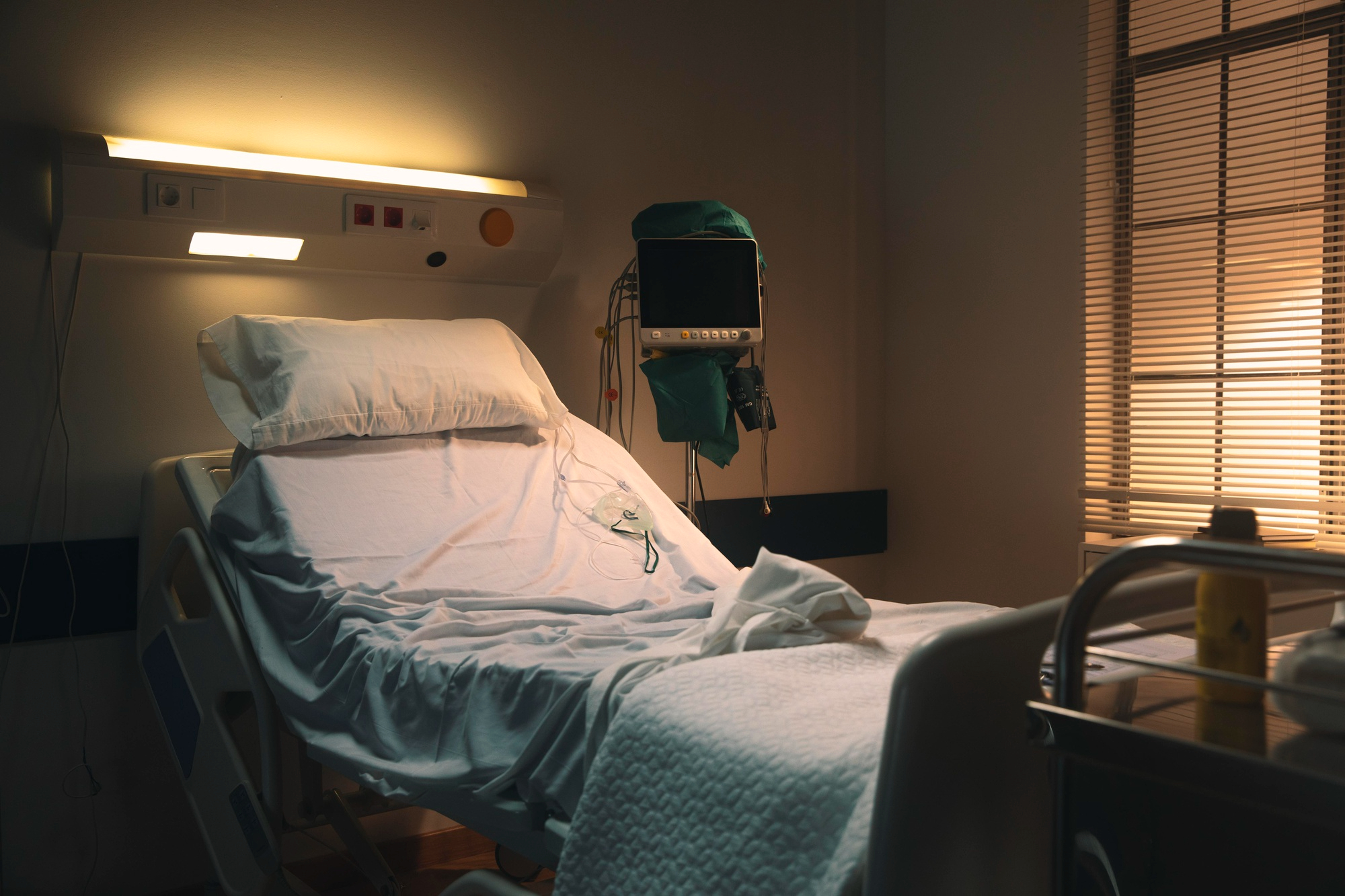
Around midnight, the pediatric wing arrived at the specific quiet of a hospital at that hour, monitors beeping in their steady rhythms, the fluorescent light in the hallway casting its particular institutional pallor. A woman in navy scrubs came in to check Liam’s vitals. Her badge read Patricia Hale, RN, Charge Nurse. She was in her early fifties, silver threading her dark hair, with the calm and deliberate manner of someone who had been in pediatric nursing long enough to have developed a finely calibrated sense of what a room contained beyond what the chart said.
She moved through the room efficiently, checking the monitor, noting the readings, updating the chart with the practiced automation of someone doing something for the ten thousandth time. But her eyes were not automated. They moved across the room with a quality of attention that I noticed without initially understanding.
She looked at Liam.
She looked at Eric’s hand on Liam’s shoulder.
Liam flinched when Eric adjusted the blanket.
It was small. The kind of thing you could explain away in a sentence. Kids flinch when they’re hurt and someone touches them unexpectedly. A child with a fractured wrist in a hospital bed is a child in pain, and pain makes you flinch.
Patricia Hale noted it. I saw her note it. Her expression did not change in any obvious way, but something in it did, something below the surface, in the specific way that experienced nurses absorb information they are not yet ready to name.
She finished the chart. She tucked her pen into her pocket. She walked past me toward the door, and as she did, she pressed something into my palm without looking down, without breaking stride, without any visible indication to anyone watching that she had done anything at all.
I opened my hand when the door had closed behind her.
A folded Post-it note, small enough to have been in her pocket, small enough to close my fingers around completely.
I read it under the glow of the monitor, angled so Eric could not see my face.
Don’t come again. He’s lying. Check the camera at 3 a.m.
My throat closed.
I stood very still for a moment, long enough that I needed to make it look like something other than standing very still. I adjusted the blanket near Liam’s feet. I checked his water cup. I did the ordinary physical business of being a mother at a bedside while my mind ran the note’s three sentences in a loop, parsing each one.
Don’t come again. As in: your return is expected and should not happen.
He’s lying. As in: someone in this room is presenting a version of events that is not true.
Check the camera at 3 a.m. As in: there is footage, and the footage will show something, and 3 a.m. is when that something will be visible.
I went into the hallway. Patricia was at the nurses’ station, writing something, and she looked up when she heard me come through the door.
“Ms. Parker,” she said quietly. Not whispering, just low, the voice someone uses when they are being precise about who hears them.
“Whose lying?” I asked, though I already knew which person she meant.
She did not answer that directly. What she told me was that St. Andrews had observation cameras in every pediatric room, audio and video both, hospital policy, security recording continuously. She told me to go to the security office at 2:55 in the morning, to tell them she had sent me, to sit down and watch Channel 12 at 3 a.m.
“For your own safety,” she said, “don’t walk back into that room until you’ve seen it.”
I looked at her. She was looking past me, toward Liam’s door.
“Just watch,” she said.
I went back into the room and sat in the chair and looked at my son sleeping and looked at Eric looking at his phone, and I did what I had trained myself to do in difficult professional situations, which was to keep my face arranged in an expression that revealed nothing about what I was actually thinking.
I told Eric I was going to find the cafeteria, that I needed coffee, that I would be back in a few minutes.
He did not look up from his phone.
The security office was on the ground floor, a small room with the smell of burnt coffee and the specific institutional warmth of a space that runs all night every night. A guard named Marcus was on duty, middle-aged, unhurried in the manner of someone experienced at waiting. I told him Patricia Hale had sent me. He pulled up Channel 12 without asking for clarification or explanation, positioned the monitor so I could see it from the chair beside his desk, and sat back.
The feed showed Liam’s room. My son under the thin hospital blanket, small in the bed, his casted arm resting on a pillow. The chair beside the bed was empty.
The clock in the corner of the screen read 2:59:43.
Marcus set a paper cup of coffee in front of me without comment.
At exactly 3:00:00, the door to Liam’s room opened.
Eric came in without turning on the light, moving carefully, checking the hallway behind him before he let the door close. He crossed to Liam’s bed and leaned over his sleeping son, and for a moment I thought he was simply checking on him, the ordinary parental compulsion to confirm that a sleeping child is breathing.
Then he spoke.
The camera’s microphone was better than I expected. Every word was clear.
“Wake up,” Eric said. Not loudly. The voice of someone who knows how to be quiet and be understood simultaneously.
Liam stirred.
“Wake up,” Eric said again. “I need you to remember what you’re going to tell your mother when she asks.”
Liam made the small sound of a child being pulled out of sleep.
“You fell off the scooter,” Eric said. “That’s all you say. You fell off the scooter and you hurt your wrist and that’s it. Do you understand me?”
A long pause.
“Say yes,” Eric said.
Liam said yes.
“If you say anything different, to your mother, to the doctors, to anyone, things are going to be very bad. Do you understand that?”
Another pause. Longer.
“Do you understand that?”
Liam said yes again. His voice was the voice of a nine-year-old who has learned, through some process I had not witnessed and had not allowed myself to imagine, that certain questions require a particular answer.
Eric straightened. He looked around the room in the way of someone checking whether they have been observed. He went back to his chair. He picked up his phone.
I sat in the security office with the paper cup of coffee untouched and watched the clock in the corner of the screen continue its indifferent count.
Marcus, beside me, was very still.
“I need a copy of that,” I said. My voice came out even, which surprised me.
“Yes, ma’am,” he said. He was already reaching for the controls.
What I did next I did not do in panic, which I want to be precise about because the temptation afterward was to frame what followed as a rush of protective maternal instinct, immediate and overwhelming. It was not that. It was the cold, methodical activation of every professional skill I had developed in ten years of paralegal work, applied to the situation in front of me with the full attention of someone who understands that what you do in the first hours after discovering evidence determines what the evidence can ultimately accomplish.
I called my attorney at 3:14 in the morning. She answered on the fourth ring with the alert voice of a professional who has conditioned herself to treat late-night calls from clients as what they usually are, which is urgent. I described what I had seen. I described the note. I described Patricia Hale and the security footage and the timestamp and Marcus’s name and badge number. My attorney told me not to go back to Liam’s room, to stay in or near the security office, to touch nothing and remove nothing, and that she would make several calls.
She made several calls.
By 4:30 in the morning there was a child protective services worker at the hospital. By 5:15, hospital administration had been notified of a potential issue in the pediatric wing. By 6:00, Eric had been asked to leave Liam’s room by hospital security with the carefully neutral language that institutions use when they are managing a situation they cannot yet fully describe.
He left. I watched him go from the hallway, far enough away that we did not have to speak.
I went in to Liam.
He was awake, sitting up in the bed, the casted arm in its sling, looking at the door with the expression of a child who has been in a situation for long enough that he has learned to monitor exits. When he saw me, something in his face changed in a way that I cannot describe without saying it broke something in me that has not entirely healed.
He started to cry before I reached the bed.
I sat on the edge and put my arms around him and held him while he cried, and I did not say anything for a long time because there was nothing to say that was more important than the holding.
Eventually he said: “I’m sorry I didn’t tell you.”
“You don’t have anything to be sorry for,” I said.
“He said you would be mad.”
“I’m not mad at you,” I said. “I promise.”
He cried for a little while longer. Then he told me.
The wrist had not happened on the scooter. It had happened three days earlier, at Eric’s apartment, during an argument about a video game that Liam had not been supposed to be playing. The argument had escalated in the way that arguments escalated around Eric, past the point where rational adults stopped and into territory that Liam had apparently learned to navigate by making himself very small and very quiet and hoping it passed. It had not passed. There had been a shove, and a fall, and a wrist that had been in pain for three days before it was finally brought to the emergency room with the scooter story attached.
Three days.
My son had been in pain for three days and had been told what to say about it.
The CPS investigation was opened that morning. My attorney filed for emergency modification of custody before the business day began. The court granted a temporary order that afternoon, based on the footage and Liam’s disclosure to the CPS worker, a woman named Denise who had the particular combination of gentle persistence and absolute professional steadiness that the work required.
I want to be accurate about what followed, because the story I am telling is not a story about quick justice or clean resolution. What followed was a process, lengthy and consuming and at times maddening, the way family court processes are when they involve a person who contests everything and has resources to do so. Eric hired an attorney. There were hearings. There were evaluations. There were supervised visitation arrangements and contested motions and documents I reviewed late at night at my kitchen table with the specific exhaustion of someone who is fighting a case that is also their life.
But there was the footage. Timestamped and authenticated, logged into evidence by Marcus before anything else had happened that morning. There was Patricia Hale’s note, photographed and preserved. There was Liam’s disclosure to Denise, made in a quiet room without either parent present, in the careful language of a child who had decided, finally, that it was safe to tell someone the truth.
There was the pattern that the investigation uncovered, not one incident but a series of them, smaller in isolation, larger in accumulation, the record of a child who had been managing an environment that required management skills no nine-year-old should have needed to develop.
The custody modification became permanent eight months later. Eric has supervised visitation, scheduled and documented, with a professional supervisor present. Liam goes. He comes home. We talk about it if he wants to and we don’t if he doesn’t, and I try to follow his lead on what he needs from me in the space after those visits.
He is doing better. That is not a small thing and I do not say it as though it is. He started seeing a child therapist named Dr. Wren two weeks after the hospital, and they have been working together since, and what I see in Liam at home is a gradual loosening of something that had been held tight for a long time. He laughs more easily. He argues with me about bedtime with the comfortable confidence of a child who has enough security to push against the edges of things. He has a friend from school named Marcus, which I noticed without mentioning, and they play video games online on Friday nights with the headsets and the running commentary and the sounds of a nine-year-old having a completely ordinary evening.
I have thought often about Patricia Hale.
I have thought about what it cost her to make that calculation, in the thirty seconds she spent in Liam’s room watching a child flinch when someone adjusted his blanket. She had no certainty. She had an observation and a suspicion and decades of experience calibrating the difference between a child in pain and a child who had learned to be afraid. She had the footage policy and the security office and a piece of paper small enough to close your hand around.
She made a choice that was not without risk to herself. Charge nurses who slip notes to parents in the middle of the night are making a judgment that departs from the neutral professional stance that institutions reward and require. She did it anyway.
I went back to the hospital three weeks after the custody hearing, not as a patient and not in crisis. I went to find her.
She was at the nurses’ station when I came through the pediatric wing, writing something in a chart, and she looked up when she heard me come in. Recognition moved across her face, and something else with it, a question she had not yet asked about how things had turned out.
I thanked her.
She said: “How is he?”
I told her.
She nodded, the slow nod of someone receiving information they had invested something in, letting it settle. Then she said something I have returned to many times since.
“I’ve been doing this for twenty-six years,” she said. “I’ve learned that the children who most need someone to say something are usually surrounded by people who have already decided not to.”
She went back to the chart.
I went home to my son.
Liam was at the kitchen table when I got there, doing homework with the laborious focus of a child who finds fractions personally offensive. He looked up when I came in.
“Where were you?” he asked.
“Hospital,” I said.
He made a face. “Why?”
“I wanted to say thank you to someone.”
He considered this. “For what?”
I thought about how to answer that in terms a nine-year-old could hold. “For paying attention when it mattered,” I said.
He thought about this for a moment and then returned to his fractions, which seemed to be more immediately pressing.
I made dinner. He complained about the fractions. We ate at the table and talked about his friend Marcus and the video game they were working through and the hamster in his classroom whose name I could never remember and that Liam corrected me about each time with patient exasperation.
It was ordinary. It was the ordinary that I had not known, until the night in the security office with the paper cup of coffee and the camera feed and the sound of my son’s voice saying yes, yes, I understand, that I had been slowly losing and had not understood I was losing until someone pressed a piece of paper into my hand and told me to look.
The ordinary is the whole thing.
I did not know that clearly enough before.
I know it now.

Specialty: Emotional Turning Points
Rachel Monroe writes character-driven stories about betrayal, second chances, and unexpected resilience. Her work highlights the emotional side of family conflict — the silences, the misunderstandings, and the moments when someone quietly decides they’ve had enough.