Every Item on the List
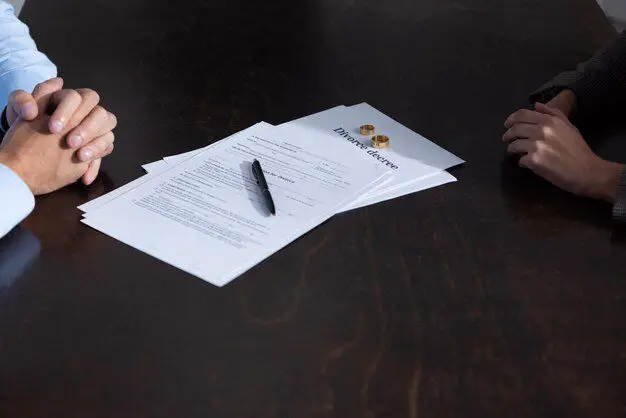
The coffee table made a sound when the papers hit it that I will probably hear for the rest of my life.
It was not a loud sound. In a room full of soft surfaces, sound travels differently; the wool rugs absorb it, the silk curtains hold it, the upholstered furniture drinks up the kind of noise that would bounce and amplify in a less considered space. What I heard was a specific thud, a flat declarative impact, the kind of sound that means something heavy has been dropped with intention. Brandon had aimed it to land hard, had put weight behind it, had wanted the sound of papers on stone to mean something.
What I was thinking, in the half second after the sound, was about the table.
I had sourced it from a workshop in Tuscany, a family operation that had been cutting stone for four generations, the kind of business that still has the original founder’s name above the door and that you find through the kind of referral network that takes years to build and will not return a cold call. The surface was Calacatta marble, book-matched, meaning the two slabs had been cut from the same block and laid to mirror each other, so the veining formed a pattern that was technically symmetrical but visually looked like something organic, like clouds or wings, the kind of surface that made people stop in the middle of conversations and touch it without quite intending to. It had taken eleven weeks to arrive. The shipping alone had cost more than most people’s dining room sets.
The table did not care about Brandon’s papers. It had been here longer than his certainty had, and it would be fine.
I folded my hands in my lap and looked at him.
He was in the tailored suit, the charcoal one he wore when he wanted to feel like he was running something. He was trying not to grin too wide, which he was not entirely succeeding at, the slight pull at the corner of his mouth that I had learned over six years to read as the expression he made when he thought he had won something. Standing beside him was Kelsey, who had come in with muddy boots and put them on the pale sofa without looking to see if that was something you were supposed to do, which it was not. She was on her phone. The boots were leaving marks on the upholstery, marks that I would have noted in any professional context as a category of damage requiring assessment.
“You get what you came in with,” Brandon said. “The house is mine. The papers are clear. You can take your personal belongings and go. Forty-eight hours.”
I heard every word. I hear it all now when I think back to that moment, the specific phrasing, the specific confidence of a man who had decided that knowing the mortgage gave him jurisdiction over everything the mortgage was attached to, who had never once looked up from the thing he thought he owned to notice what was inside it.
My name is Audrey. I’m thirty-four years old, and for the past five years I have made a very comfortable living as a high-end interiors specialist in the United States, which is a job title that covers a range of things and which I will describe precisely because precision matters to this story. I source luxury furniture and decorative pieces for private clients and developers who want their spaces to look like the kind of photographs that make people stop scrolling. I have relationships with ateliers and workshops and independent craftspeople across three continents. I understand the logistics of importing delicate, expensive, irreplaceable things and getting them into buildings without damage, which requires a level of organizational detail that most people in most professions will never need to operate at. I track everything. I photograph everything. I assign every piece a record in my catalog system with acquisition cost, insurance value, condition photographs, and location.
Brandon knew what I did. He knew I was good at it. He had, on many occasions, bragged to his colleagues about our house in the way of a man who understood he lived somewhere remarkable without understanding why.
He had never asked why.
Here is what he would have understood if he had asked: five years ago, when I was building the business and Brandon and I had just moved into the house, our accountant had made a suggestion during a quarterly review that was unremarkable in the way that suggestions from accountants are unremarkable when you are still grateful to have an accountant at all. She said that routing high-ticket pieces through the company account rather than personal funds would simplify the tax treatment, improve the portfolio documentation, and provide better insurance terms. She said it in the practical language of accounting, the language of long-term tidiness, and I had said yes because it made sense and because I had always been someone who did things the way that made sense rather than the way that was easiest in the immediate term.
So the pieces began coming in through the company. Not all of them; not the small things, not the everyday items. But the statement pieces, the ones I had sourced through my supplier network that were also the kind of pieces I could use in my portfolio, the ones that made the house look the way it looked: those were company assets. Logged and tagged and assigned numbers in my catalog system, each with its own record, photographs, and insurance value. The business bought them. The business owned them. I lived with them, which was not the same as owning them personally, a distinction that had never seemed important because Brandon had never been the kind of man who asked where the beautiful things in his life came from as long as they kept being there.
He thought my label maker was just me being organized. It was documentation. It was the foundation of the whole structure.
“Personal belongings,” I said, keeping my voice at the register I use with clients when they are proposing something I am not going to agree to but need to handle carefully. “So, just my wardrobe, or all movable things that belong to me?”
He rolled his eyes.
“Your personal junk,” he said. “Clothes. Shoes. Books. Your little decorations. Anything that fits in a suitcase. Furniture stays. Appliances stay. The décor stays. She”—he nodded at Kelsey on my sofa—”needs a complete home, not an empty shell.”
Kelsey looked up from her phone and smiled the smile of someone who has prepared for this conversation and is pleased with how it is going.
“Yeah, Audrey,” she said. “Just take your clothes and go. I don’t want your energy stuck in the curtains anyway.”
I looked at the curtains.
They were motorized silk, panels that had been custom-made to the exact dimensions of each window by a woman named Irene who ran a small workroom in West London and who had a seven-month waitlist for a reason. The fabric was a cream-ivory that I had matched to the plaster color of the walls in a series of reference samples that Brandon had watched me pin to the wall and labeled “obsessive” in the same tone he used to label my organization systems obsessive, which was the tone of a man who benefits from something he has decided to find slightly ridiculous.
The curtains were in my catalog. Every panel, tagged, photographed, insured, logged under the company account.
So were the glass sconces on either side of the fireplace, which were limited-edition pieces by a Czech studio that had stopped producing them two years ago, which meant what I currently had were the last examples of their kind in a private collection that I was aware of. So were the Italian kitchen cabinets, which were not fixed in the traditional sense but attached to a German-engineered rail system designed for exactly the kind of modular reconfiguration that high-end kitchen designers need when clients change their minds. I had installed that rail system myself, with my foreman Marco, on a Saturday in March three years ago, before Brandon and I had stopped spending Saturdays together and started spending them separately in different parts of the house.
So were the rugs. The lamps. The hardware on every door. The art. The decorative objects on the bookshelves. The hand-thrown ceramic pieces in the kitchen. The antique mirror in the entryway that I had found at an estate sale in Connecticut and restored with a specialist who did nothing but mirror restoration, whose phone number I had obtained through three degrees of professional connection and which had taken me two years to get.
All of it. Every beautiful thing in that house. My company bought it, which meant my company owned it, which meant my company could remove it.
“Got it,” I said. “Fixtures stay. Personal belongings go.”
Brandon relaxed.
He had the expression of a man who has just closed a deal: the slight settling of the shoulders, the adjustment of the jacket, the particular quality of ease that comes over people when they believe the difficult part is finished. He had come into this room expecting a fight, and I had not given him one, and he had interpreted the absence of a fight as agreement, which was his first mistake.
He had been making mistakes like this for years. Small ones, mostly: the assumption that my patience was the same as my indifference, that my organization was the same as my limitation, that keeping everything clean and labeled and documented was a kind of hobby rather than the infrastructure of something he had no complete picture of. I had watched him misread me for six years and had not corrected it, partly because it was useful for my work to be underestimated by the men in my life, and partly because some part of me had hoped he would figure it out eventually, and I had been wrong about that.
What I had not been wrong about was the marriage itself, or not entirely. We had been good for a while, genuinely good, in the way of two people who are well-matched in the areas they test and have not yet discovered the areas they haven’t. Brandon was smart, or smart in a certain way, the kind of lateral-thinking intelligence that does well in finance and that I had initially found attractive because it looked like the kind of intelligence that would appreciate what I did. I had been wrong about that too, or not entirely wrong but wrong about the depth of it. He appreciated the results. He had never quite understood the work.
I had been building a business in those six years. Not in the way people say they are building something when they mean they are doing a job; I mean I had been constructing something real, accumulating relationships and knowledge and documentation and reputation in the specific way that a thing gets built when the person building it understands what they are doing and has a plan that extends further than the next quarter. Brandon had been doing something too, his own version of building, in finance, where the building looked different. The difference was that what I was building had, in the last two years, begun to significantly outperform what he was building in terms of both income and asset value, and I do not think he had fully registered this, or if he had registered it he had processed it in the way of people who need to be the more successful person in the room and have not developed a comfortable alternative.
Kelsey, I suspected, offered a different kind of accounting.
That night, after they went upstairs and closed the door on what had been our bedroom, I lay on the sectional in the living room and opened my laptop.
The house inventory loaded slowly. It always did; there were thousands of line items, each one with its metadata and photographs and acquisition details. I scrolled through it in the dim light of the living room, the Calacatta table beside me, the silk curtains at the window, the Czech sconces casting their specific warm light on the wall plaster. I was not angry. This is worth saying because people expect anger in moments like this, expect the heat of it, but what I felt was something cooler and more precise, the particular focus of a person who has understood a situation completely and is now deciding what to do with the understanding.
The house had my address. Every item on the list had my name attached to it, or my company’s name, which for legal purposes was the same name. Thousands of items. The biggest things and the smallest things, the structural elements and the ornamental ones, the things that had made this house feel the way it felt, which was expensive and considered and specific and completely, in every particular detail that actually mattered, mine.
I found the scheduling function and clicked it.
“Full site pickup,” I typed. “Forty-eight hours.”
It was a satisfying click. Clean and quiet. The kind of action that looks like nothing from the outside and is everything on the inside.
I went to sleep on the sectional with the catalog open on my laptop and Carlton’s letters somewhere in the back of my mind, which was the ghost of another story I had been thinking about, and I corrected myself: with the house inventory open, which was its own kind of letter, its own kind of documentation.
Brandon left for work the next morning in his travel mug way, the particular efficient departure of a man who has decided that yesterday is yesterday and today is a new situation. He kissed Kelsey on the forehead with the specific tenderness of a person who is aware of being watched, who is performing tenderness for an audience that is not visible to him but which he assumes exists, because certain people cannot perform for an empty room. Then he was gone.
Kelsey had a spa appointment at ten. I know this because she had mentioned it the previous evening in the way of someone who wants the other person to understand that their departure is imminent and welcome and entirely their own choice. She left without looking at me directly, which is the social protocol of someone who has won and is trying to modulate the visibility of the winning.
The cul-de-sac went quiet.
I made coffee. I drank it at the kitchen counter, the one I had stood at every morning for six years, looking at the Italian cabinets that lined the wall in their quiet, orderly way, the ones that would require two people and approximately forty-five minutes to remove from the rail system and four padded blankets each to transport safely. I had stored the padded blankets in the back of the garage, as I stored all the things that might eventually be needed, because I had always been that kind of person: the one who keeps the padded blankets.
At nine forty-five, the trucks arrived.
Three of them, turning into the cul-de-sac from the main road with the low mechanical rumble of large vehicles operating on a narrow street, which produced, as I had anticipated, the effect of drawing attention in the neighborhood. I saw Mrs. Henley across the street go to her window. I saw her pick up her phone. The neighborhood chat was, I knew, going to have a productive morning; it always had a productive morning when anything happened on the cul-de-sac, and three large trucks with my company name on the side was a significant something.
My foreman Marco stepped out first, clipboard in hand, the same clipboard he had carried on every job for four years, battered at the corners and covered in a system of shorthand that only he could read but that represented an extraordinary organizational efficiency. He had been with me since the beginning, had helped me build the catalog system, understood exactly what the catalog represented and what a full site pickup meant.
He looked at me when I came out of the garage.
“Full?” he asked.
I had stood for a moment looking at the house. The front porch, which I had never quite gotten around to staging because there had always been other priorities. The front door, a custom solid oak piece I had found through a door manufacturer in Vermont that did not advertise and that you had to know about to find, hung on reclaimed iron hardware from a demolition company in Philadelphia. The windows, dressed in their silk, the glass behind them carrying the reflection of the morning.
Six years of my life in that building. Six years of bringing beautiful things into a space and arranging them and maintaining them and adjusting them seasonally and watching them fill a house that was supposed to be a home and had instead been a stage set for a performance I had eventually stopped being cast in.
“Full,” I said. “Every item on the list. Leave the walls. Take everything else.”
Marco turned to the crew. Drills started up, loud and mechanical in the quiet morning, the professional percussion of a job site that knows what it is doing.
What followed was seven hours of work executed with the efficiency of people who are very good at their jobs and have done them many times. The silk curtains came down panel by panel, each one rolled around an archival tube and sealed in a cotton bag before being carried to the truck. The Italian cabinets came off the rail system in forty-eight minutes, which was three minutes faster than I had estimated; Marco had found an improvement in the sequence that saved time on the corner joints. The Calacatta table was wrapped in three layers of moving blankets and required four people and a wheeled platform, because the slab was heavier than its elegance suggested, as stone usually is. The Czech sconces were packed in custom foam boxes that I kept for exactly this purpose, one of the several categories of storage that Brandon had called excessive and that were now paying their own dividend. The antique mirror from Connecticut was handled by two people only, neither of whom spoke while they moved it, which is the correct protocol for something irreplaceable.
The rugs came up. The lamps were disconnected. The art came off the walls in the order in which it appeared on the catalog, each piece confirmed against its inventory number before being moved. The kitchen hardware came off the cabinets, and the cabinet shells remained, plywood bones of something that had looked substantial but was entirely dependent on what had been attached to it. The decorative objects came off the shelves. The ceramic pieces from the kitchen came down from their perches. The motorized curtain tracks came out of their mounts, which left small rectangular marks in the wall plaster, which were the walls, which were staying.
The neighbors had gathered, in the way neighbors gather on cul-de-sacs: individually, with the pretense of purpose, some checking their mail, one walking a dog that had been walked already that morning. I saw Mrs. Henley take a photograph from her porch. The neighborhood chat was presumably very active. I did not check it. I had a job to run.
By four in the afternoon, the trucks were loaded.
I stood in the front doorway and looked at what remained.
The walls. The floors. The ceiling. The windows, bare now, the morning light coming through them directly for the first time since I had hung the silk. The plaster was good quality; I had specified it when we renovated, and it had held up. The hardwood floors were solid and had been correctly maintained. The door hardware holes were there where the fixtures had been removed, and the curtain track marks were there, and the wall plugs where the sconces had mounted, but these were minor things, the kind of minor things that a reasonable person would patch and repaint over a weekend.
The bones of the house were fine.
The house was simply empty.
Not in a neglected way. In a considered way, the way a page looks clean when you have removed everything from it, the particular kind of empty that is also a clarity. I had made it. I would make another one somewhere else. That was what I did.
I walked through each room once, not sentimentally, but in the professional way I walked through spaces at the end of jobs, doing a final check, making sure nothing had been missed. The living room. The dining room, where the table had stood and the chairs had stood and the sideboard had stood and the art had hung, all of it gone now, the walls showing the clean squares where frames had been and the small ceiling marks where the chandelier had been mounted. The kitchen, where the cabinets were absent from the rail system and the room had the particular echo of a space without surfaces to absorb sound. The hallway, the bedroom, the guest room where I had been sleeping for the last three months after Brandon and I had stopped pretending the arrangement upstairs was working.
The house was a good house without its contents. It had been a good house before I put anything in it. The proportions were right, the light was solid, the bones were honest. Someone would buy it eventually and put their things in it and it would become what it became, which had nothing to do with me anymore.
What it had been, for six years, had everything to do with me. Every surface, every light source, every considered decision about what went where and why: mine. Not in the bitter possessive way of someone who needs credit, but in the simple factual way of a person describing the work they did and who did it. I had made that house what it was. And I had taken what I made, which was my right and which had been, as it turned out, entirely within the parameters he himself had set.
I picked up the stack of divorce papers from where they had been left on the floor after the table was removed.
I took a piece of tape from Marco’s clipboard and taped them to the wall.
His name was on them. He could keep them.
I walked out to the truck, and Marco closed the back, and I got in my car and drove out of the cul-de-sac for the last time, and I did not look in the rearview mirror because I was already thinking about what came next, which was the way I had always thought, forward, toward the thing I was building, and there was a great deal to build.
Brandon called at six-fifteen. I was at the storage facility, supervising the unloading of the first truck, when my phone buzzed in my pocket with his name on the screen. I looked at it for a moment and then I put it back in my pocket, because I had clients and a business and a catalogue of beautiful things that needed to be accounted for, and his voice was not going to contribute to any of those things.
He called again at six-thirty. At six forty-five. At seven.
At seven-fifteen he sent a text. It was several sentences long and contained the word “crazy” twice and the phrase “what the hell” three times, which told me he had arrived home and was in the building and had understood that what he had authorized me to take was not what he had thought he had authorized me to take, and that the distinction between personal belongings and company property was, in retrospect, a distinction he wished he had understood better before deploying it.
I did not respond that evening.
I responded four days later, through my attorney, who was a woman named Patricia who had done real estate and property law for twenty years and who had reviewed the catalog documentation and the company records and the acquisition logs and said, with the particular calm precision of someone who has seen many things in twenty years of law but still enjoys the ones with clear documentation, that Brandon’s position was not a strong one.
Patricia’s letter to his attorney was three pages. It included a summary of the legal framework under which company-owned property operates, a reference to the catalog documentation with its timestamps and insurance records, and a brief note at the end that my company was in possession of all the items listed, that the items had been legally removed within the forty-eight-hour window he had specified, and that the definition of “personal belongings” that he had himself articulated during the initial conversation had been adhered to in its precise and exact meaning.
His attorney sent one response.
It was one page. It contained several assertions that Patricia and I reviewed together on a Tuesday morning over coffee in her office, assessments of their validity, and a general conclusion about the likelihood of any successful action. Patricia had a way of summarizing legal situations that cut directly to their essential geometry: what was solid, what was not, where the lines were.
“He doesn’t have a path,” she said.
“I know,” I said.
“The documentation is exceptional,” she said.
“I know that too,” I said.
She smiled over her coffee. “You do this for a living, don’t you.”
“I document everything,” I said. “I always have.”
The divorce settled in four months, which is faster than these things usually settle, and which was due in part to the fact that Brandon’s negotiating position had been significantly affected by the discovery that the house was not worth what he had thought it was worth, because the things that had made it worth what he thought it was worth were in a warehouse in my company’s name and were not part of the marital estate. His attorney made several arguments. Patricia addressed them with the calm efficiency of someone who has very good documentation and knows it.
I found an apartment. Not large, not in the way the house was large, but a space with good bones and good light that I looked at twice before signing the lease, once as a prospective tenant and once as a professional, walking through each room with the specific attention of someone who can see what a space can become when the right things are brought into it. The windows were generous. The walls were neutral and held good quality plaster. The floors were wide plank oak that had been poorly refinished at some point and would need attention before they would be what they could be.
I knew what they could be. I knew it the second I walked across them, the sound underfoot, the way the boards had been laid, the quality of the grain visible even through the bad finish. Someone had covered good oak with an opaque stain that belonged on cheaper wood, the way people make choices without understanding the material they are working with, without asking what the thing actually is before deciding what it should look like.
I refinished them myself over a long weekend in October, with Marco helping, the two of us working from one end of the apartment to the other with the methodical pace of people who have done careful work together and understand each other’s rhythms. We stripped the bad finish first, which was the unglamorous part of the job, the part that requires patience and does not look like progress while you are doing it, and then we sanded in three passes, each one finer than the last, until the wood was what it was underneath everything that had been done to it.
Then the stain, the right one, which I had mixed myself from two components in a ratio I had developed over years of working with similar wood in similar light conditions. Marco watched me mix it with the expression he got when he was paying attention to something technical and finding it interesting.
“You just know?” he said.
“I’ve done it enough times,” I said.
Which was not entirely the answer to his question. The full answer involved years of learning what different materials wanted to be and how light affected them and how much you could change something before it stopped being itself, and the specific practice of looking at a floor and understanding what its best version looked like before you had done anything to it. It was judgment built from experience, which is not the same as simply knowing, but from the outside the distinction is invisible.
They were beautiful when we finished.
I stood in the empty apartment on Sunday evening after Marco had gone, looking at the floors in the last of the afternoon light, which came through the western windows at an angle I had noted on my first viewing and had been looking forward to. The light did what I had expected it to do, which was to make the wood glow in the specific way of wood that has been properly treated, a warmth that is structural rather than decorative, the kind that comes from the material itself rather than from something applied to disguise the material.
I had a catalog with thousands of items, most of them in storage, some already allocated to client jobs, some available and waiting. I had particular things in mind for this space, ideas that had been forming since my first walk-through, the way plans for a space form when you understand what you are looking at and what it needs. The Calacatta table would go against the west wall in the living area, under the windows, where the morning light would hit the veining the way stone veining should be seen: directly, revealing its depth. The Czech sconces would go in the reading corner, creating the warm specific light they had always been designed to create. The antique mirror from Connecticut would go in the entry hall, where the proportions were right for it and where it would do what mirrors do in entry halls, which is to bring light into a space that would otherwise have too little of it.
The silk curtains would need adjustment; the windows here were different dimensions, which was fine. I would send the measurements to Irene’s workroom in West London and she would make the alterations, because that was what her workroom did and because I maintained those relationships specifically so that when they were needed they were there.
The apartment would take shape the way spaces take shape when someone who knows what they are doing brings the right things into them: gradually, and then all at once, and then you stand in it one afternoon in the particular light and you understand that it is finished in the way things are finished when every decision was made on purpose.
It would be mine in a different way than the house had been mine. Not a showroom, not a portfolio property, not a stage set for someone else’s narrative. A home that was mine in the specific, earned, complete way of something you built yourself from the beginning, with your own choices and your own catalog and your own understanding of what you were making and why.
I took out my phone and opened the catalog.
I scrolled to the top, to the first item on the list, which was the Calacatta table, which was currently in storage in Warehouse B, insured for the full replacement value, sitting in its padded wrappings waiting to be somewhere again.
There was something satisfying in that image that I did not try to resist. The table that his papers had slammed down on, that had outlasted him and his confidence and his forty-eight-hour deadline, sitting calmly in a warehouse with its documentation in order, belonging entirely to me.
I thought about what Brandon was doing in the house right now.
I had a clear picture of it, constructed from six years of knowing how he moved through a space when things were not the way he expected them to be, which was with a particular brand of agitated pacing, the kind of movement that is looking for somewhere to direct its frustration. He would have walked from room to room. He would have turned lights on and off. He would have stood in the kitchen and looked at the bare walls where the cabinets had been and at the plywood rail and at the floor where the rugs had been and at the walls where the art had hung, and he would have felt the specific echo of a space that has been emptied in an organized and thorough way, which is different from the echo of neglect. Neglect sounds like abandonment. What I had done sounded like intention.
He would have called Kelsey, and Kelsey would have come, and she would have stood in the empty house and for the first time in the process of whatever she and Brandon had decided they were building together, she would have understood that she had been making assumptions about what “the house” meant based on what the house had looked like when someone else was living in it, and that what she was inheriting was not the house she had walked through and put her boots on the sofa of.
She was inheriting the bones. The walls and the floor and the ceiling and the good plaster and the honest bones of a house that was a good house. Which was real. Which was not nothing.
It was just not what either of them had imagined.
I pressed the scheduling function.
“New installation,” I typed. “My address.”
Then I put my phone away and stood in the light a little longer, because the light was good and it was my apartment and there was no reason to rush anything that was going well. I had done this before, the building of a beautiful space from the beginning, the careful accumulation of right things in right places. I had done it in clients’ homes. I had done it in the house on the cul-de-sac for six years. I was going to do it here, in this apartment with the good oak floors and the generous western light and the walls that were waiting for what I was going to bring to them.
I would do it without documentation being defense. I would do it simply as the work I did and the life I led, the same way I had always done it, because it had always been who I was before it became necessary.
Knowing exactly what you own is not obsession.
It is the difference between standing in a room where someone drops papers on your coffee table and being devastated, and standing in that same room and thinking: I know exactly what that table is worth. I know exactly who owns it. I know exactly what I am going to do next, and it is going to be good.
I had done it before.
This time, everything in it would know exactly where it belonged.

Adrian Hawthorne is a celebrated author and dedicated archivist who finds inspiration in the hidden stories of the past. Educated at Oxford, he now works at the National Archives, where preserving history fuels his evocative writing. Balancing archival precision with creative storytelling, Adrian founded the Hawthorne Institute of Literary Arts to mentor emerging writers and honor the timeless art of narrative.