The Last Morning
My name is Eleanor Bishop. I am sixty-eight years old, and I have never once raised my voice to win an argument. I learned a long time ago that the people who raise their voices are usually the ones who don’t have anything else.
I was sitting on the patio of my Santa Barbara beach house at five in the morning when the alarm system screamed through the fog. Not the gentle indoor chime I use to remind myself about medication or the soft ping that signals the gardener arriving. The full alarm, the one that activates when the perimeter sensors at the gate detect something the system considers a threat. I had programmed it myself, years ago, after reading three books about home security and deciding that the company’s default settings were optimistic. My contractor had smiled patiently while I explained what I wanted. He’d done what I asked.
The sky was still the color of an old bruise, purple-gray and not yet committed to becoming day. The ocean was doing what it always does at that hour, moving in the dark with a steadiness that has nothing to prove, and the air smelled the way Santa Barbara air smells in October, like salt and wet stone and the particular sharpness of marine layer just before it burns off. I had my chamomile tea in both hands, the porcelain warm against my palms, and my terracotta blanket pulled up to my waist, and I was doing the thing I do most mornings at that house, which is simply sit and let the water remind me that most things are smaller than they feel.
Mike crossed the side garden in the dark, his flashlight cutting a low arc across the succulents. Mike has been my night watchman for eleven years. He is a compact, serious man in his early fifties who came to me from a firm in Los Angeles and who has never, in eleven years, been anything other than completely reliable. He looked rattled when he reached me. I noticed that before I noticed anything else.
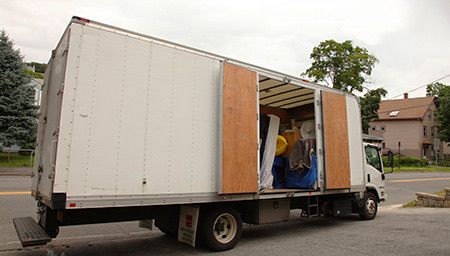
“Mrs. Bishop,” he said. “There’s a moving truck at the gate. Your daughter-in-law is with them. She says the property is hers.”
I took another sip of tea. I felt my pulse register the information and then, deliberately, let it stay where it was. I have spent forty years in financial management, the last twenty-two of them running my own firm, and I have sat across tables from people who were trying to take things from my clients while speaking very pleasantly about something else entirely. You learn, after enough of those conversations, to keep your body quiet while your mind does its work.
“How many people?” I asked.
“Her. Three movers. Big truck, professional company from the logo.”
I looked out at the water for a moment. The foam came up the rocks and dissolved and the next wave was already forming.
“Open the gate,” I said.
Mike went very still for a second, the way a person does when they think they’ve misheard something that matters. “Ma’am?”
“Open the gate. Let her in. Let her do whatever she believes she came here to do.”
He looked at me the way people sometimes look at me when I’m being quiet, like quiet must mean confusion or defeat. He has known me for eleven years and he still sometimes makes that mistake. I didn’t correct him. I just waited until he nodded and turned back toward the gate, and then I took the last of my tea and went upstairs.
From the second-floor window I watched my daughter-in-law step out of a black car into the gray dawn light and understood immediately that she had dressed for an occasion. Fitted dark jeans, a white silk blouse, sunglasses despite the fact that the sun was nowhere near the horizon yet, hair immaculate. She had the kind of posture that comes from being told for years that how you carry yourself determines how you’re perceived, and she believed it, I’ll grant her that. She believed most of the things she’d constructed about herself.
I watched her survey the front of the house with the quiet satisfaction of someone arriving somewhere they feel they’ve always deserved, and then she turned and gestured toward the truck without looking back.
“Patio set first,” she said clearly. “The teak. And the gray sofa in the main room, the marble console, the bar cabinet. Whatever of value you can identify, load it.”
One of the movers, a young man with a baseball cap worn backward and the careful posture of someone who has learned to listen to his instincts, shifted his weight and said, “Ma’am, do you have documentation proving ownership? It’s standard for us to ask.”
Samantha opened her designer bag and produced a folder the way a magician produces something from a sleeve, with the practiced ease of someone who has rehearsed the moment. She held it out without quite handing it over.
“Gift deed,” she said. “Fully executed. It’s all there.”
The young man glanced at the folder and then at the house and then nodded with the look of someone who has been paid to move things, not to interrogate the people directing him.
I turned from the window and went to my closet and took out the clothes I had already chosen the night before. Pressed cream trousers, a navy cardigan, pearl earrings that had belonged to my mother. I dressed slowly and with care, the way I always dress when I know a day is going to require me to be entirely myself. Then I went to the small bureau beside my bed and took out the folder I’d placed there three evenings ago, after my final conversation with my attorney. I held it for a moment, feeling the weight of it, which was not heavy in any physical sense but which represented two years and four months of careful, patient work. Then I went downstairs.
Let me tell you about Samantha, because you need to understand her before you can understand what happened that morning.
My son Daniel is forty-three years old. He is a civil engineer who designs infrastructure for municipalities and who has, throughout his adult life, been fundamentally decent in the way that some people are, not through effort but through constitution. He calls people back. He remembers details about their lives. He was raised to believe that other people’s feelings matter, and he believed it. His father, my late husband Robert, used to say that Daniel got all the warmth in the family and I got all the spine, and Robert meant it as a compliment to both of us, and I took it as one.
Samantha came into Daniel’s life five years ago. She arrived the way certain people do, as a complete and polished presentation rather than a person, which is not necessarily a character flaw but is always worth noting. She was educated, articulate, attractive, and skilled at making rooms feel like she was their natural center. At Daniel’s birthday party, the one where I first met her, she took my hands in both of hers and said, “Eleanor, Daniel talks about you constantly,” and looked at me with such direct, warm attention that I understand why most people in that room found her irresistible.
I noticed something else. I noticed that her attention, for all its warmth, was also assessing. She catalogued the room the way people do when they are very interested in what things are worth. And I noticed that when she described the townhouse she’d just sold, the restaurant she’d invested in, the charity gala she co-chaired, each story was positioned carefully so that its bottom line was her competence and her connections. She was building a case. I just didn’t know yet what the case was for.
The pattern that developed over the next two years was gradual, and I suspect that was by design. Daniel called less frequently. When he did call, there was a quality of distraction in his voice, a background hum that told me part of his attention was somewhere else. Dinners were canceled, first occasionally and then regularly, each time with a reason that was perfectly reasonable in isolation and only revealed its shape when you looked at all of them together. I found myself leaving messages that weren’t returned for days, then a week. When I mentioned this to Daniel, carefully and without accusation, he said a word I’d never heard him use about me before. He said I was being “invasive.”
That word came out of someone else’s vocabulary. I knew it immediately.
Then came the evening at the Pacific Club. It’s a private club in Newport Beach with high ceilings and discreet lighting and wine lists that are designed to communicate that price is beside the point. Daniel had said it was a small dinner, just the four of us and a couple of Samantha’s friends. The friends turned out to be a woman named Claire who was apparently a therapist in private practice and a man named Gordon who was a family law attorney. They were introduced casually, by first name only, and for the first hour of dinner the conversation was entirely unremarkable. Good wine, pleasant talk about travel and a film that had recently come out.
Then, over the second bottle, Samantha said she was “concerned” about me. She said it the way she said most things, with warmth and without preamble, as though her concern were simply a fact about the world that was being shared as a courtesy. She described certain things, a conversation we’d had in July where I’d apparently repeated myself, a time in August when she said I’d seemed disoriented at a family lunch, an incident with the gate code at my Pasadena house that she framed as alarming. The therapist, Claire, nodded in a way that suggested she had already been briefed. Gordon mentioned the word “conservatorship” with the smooth, practiced lightness of someone who has placed it in many conversations and knows exactly what it does when it lands.
I am a woman who has spent her professional life reading rooms. I understood, in that moment, with complete and clinical clarity, what I was sitting in the middle of. The dinner was not a dinner. It was a demonstration. A careful, social, deniable attempt to establish a narrative about my mental state in front of witnesses who could later be called upon to confirm what they had observed. Nothing was accusatory. Everything was framed as love. Samantha reached across the table at one point and covered my hand with hers and said she only wanted what was best for me.
I thanked her for her concern. I said I appreciated her care. I made appropriate conversation for the rest of the meal and let the evening end normally. I did not cry until I was in my car, and I let myself cry for exactly as long as it took to drive home, which was forty minutes, and then I stopped. I sat in my own driveway and breathed the Pasadena night air and let the quiet work on me, and by the time I went inside I had finished grieving what I needed to grieve and was ready to start doing what came next.
What came next began the following morning with a phone call to my attorney, a woman named Patricia Cho who has represented me for eighteen years and who, when I described what had happened at the Pacific Club, listened without interrupting and then said, “Tell me everything, in order, from the beginning.”
I told her everything, in order, from the beginning.
Over the next eight months I had Patricia review every document connected to my properties and financial accounts. I updated my will, my trust, my powers of attorney. I had a full cognitive evaluation conducted by a neuropsychologist at Cedars-Sinai, one of the best in his field, and the results were thorough and completely unambiguous. I kept a detailed written record of every interaction I had with Daniel and Samantha, times, dates, what was said, what the context was. I had conversations with three separate estate attorneys. I worked quietly and without announcing what I was working on, because I understood that what I was building needed to be complete before anyone knew it existed.
Sixteen months into this process, Patricia called me on a Thursday afternoon and said, “Eleanor, I think we have everything we need.”
I said, “Then let’s wait.”
She paused. “For what?”
“For her to show her hand,” I said. “Right now all we have is preparation. I want documentation of intent.”
Patricia was quiet for a moment. Then she said she understood.
That documentation came six weeks later in the form of a gift deed, apparently executed and notarized, transferring ownership of my Santa Barbara property to Samantha. The deed had my signature on it, or something that was meant to look like my signature. I had never signed it. Patricia, when I sent her the document, said three words: “This is forgery.”
We had the signature analyzed by a forensic document examiner, a man who testifies in federal cases and who prepared a twelve-page report comparing the signature on the deed to verified samples of my handwriting across forty years of documents. His conclusion was clear and extensively supported. We had the notary investigated and discovered she had, on at least two prior occasions, notarized documents for clients of a certain estate attorney in Beverly Hills under circumstances that raised questions the California Notary Public Administration was now very interested in. We had everything we needed and a great deal more besides.
I told Patricia to schedule the county recorder’s office for a Monday morning three weeks out, to file the challenge to the deed and the supporting documentation in a single organized submission. I told her to call the Santa Barbara Police Department’s financial crimes unit and schedule a meeting for the Thursday of the same week. And I told her to find out, through whatever means she could, how soon Samantha was planning to move on the property.
Patricia found out on a Wednesday. The answer was that Saturday.
I drove up to Santa Barbara on Thursday evening and spent two quiet days doing the things I do at that house when I need to be settled in myself. I walked the beach at sunset both evenings. I cooked simple dinners and ate them at the kitchen table looking out at the water. I reread the last fifty pages of a novel I’d been working through for a month and finished it on Friday afternoon sitting on the patio in the same chair where I’d be sitting two mornings later. I slept well both nights, which some people might find surprising and which I find entirely natural. I have learned, at sixty-eight, that the mind quiets when the preparation is complete.
Friday evening I called my daughter. Catherine is forty-one, lives in San Francisco, works in health law, and has the same quality of stillness that Robert used to say I had, though in her it runs alongside a quickness that is entirely her own. I told her what was happening and what was going to happen Saturday morning. There was a pause on the line, and then she said, “Do you want me there?”
“I want you there,” I said.
“I’ll drive down tonight.”
I also called my attorney one final time to confirm the arrangements. Patricia had spent the previous three days making calls of her own. The forensic examiner’s report was filed. The formal challenge to the deed was on record with the county. The financial crimes detective, a woman named Reyes, had reviewed the full documentation package and had confirmed she would be present Saturday morning. Patricia herself was coming. And Catherine would arrive before dawn.
There would be others too. That was Patricia’s arrangement, the one she’d made with quiet efficiency over forty-eight hours of phone calls. I didn’t know all the details yet. I had trusted her to manage them. That is what it means to have worked with someone for eighteen years.
I was on the patio at four-thirty Saturday morning, earlier than usual, the sky still fully dark, the ocean invisible except for the sound of it and the pale lines of foam that appeared and disappeared at the edge of perception. Catherine sat across from me with a coffee, saying very little, which is one of the things I love most about her. She has always understood that some mornings don’t need commentary.
The alarm went off at five.
Mike brought the news and I gave him his instructions and he went to open the gate, and Catherine looked at me across the patio table with her coffee mug halfway to her mouth.
“You’re letting her in,” Catherine said.
“I’m letting her in.”
Catherine set her mug down and looked at the water for a moment, and then said, with a small, precise smile, “Okay.”
We went upstairs and I changed and I took my folder from the bureau and we went down to the foyer and I opened the front door and stood inside my own house and waited.
Samantha saw me when she came through with the first of the movers’ directions, still cataloguing the living room, her voice brisk and proprietary, and she did what she always does when she’s caught slightly off-balance, she recalibrated instantly and came up with something gracious.
“Eleanor,” she said warmly. “I hoped you’d still be asleep. I didn’t want this to be difficult for you.”
“I’m sure,” I said.
She looked at Catherine then, and something moved behind her eyes, a small, quick reassessment. She hadn’t known Catherine would be here.
“Cath,” she said, with a smile that worked to be warm. “I didn’t know you were coming down.”
“I drove last night,” Catherine said, pleasantly.
Samantha looked between us and then seemed to decide the best approach was to proceed as planned. She turned back to the movers and said something about the kitchen and one of them moved toward it and I said, “I’d prefer no one go into the kitchen, please.”
The mover stopped.
Samantha turned to look at me with the expression she uses when I am being what she privately thinks of as difficult, patient and slightly indulgent.
“Eleanor,” she said. “I have documentation. The deed is registered. This is a legal matter and I’m handling it appropriately.”
“I have documentation too,” I said, and showed her my folder without opening it.
“I’m sure you do,” she said, in the tone of someone humoring a child. “But I’m afraid the courts have already established–”
The gate buzzer sounded. Once, twice, and then again.
Samantha’s sentence ended in the middle of itself.
Mike came through the side door with his particular expression, the focused, eyes-forward look he gets when he knows something significant is happening and he is being precise about his role.
“Mrs. Bishop,” he said. “Your other guests are here.”
I nodded and walked to the front door and opened it wide.
Patricia came first, in a dark suit, carrying a briefcase, her hair in the efficient low bun she wears to proceedings. Behind her came Detective Reyes of the Santa Barbara Police Department’s financial crimes division, in plainclothes but identifiable by the deliberate, observational quality of her walk and the badge that was visible when she moved. Behind her came a second officer, also plainclothes. And behind them, stepping out of a gray sedan with the unhurried confidence of someone who has driven long distances to say specific things, was the forensic document examiner, whose name is Dr. Bernard Alcott, and who has testified in forty-one federal cases and whose report was now part of the official record at the Santa Barbara County Recorder’s Office.
Samantha stood in the middle of my living room and watched these people file through my front door and I watched her understand, in real time, what was happening. It was not a dramatic moment. It didn’t look like anything in particular from the outside. Her posture remained composed, the silk blouse didn’t wrinkle, the sunglasses stayed on her head. But something left her face. Some quality of certainty, the deep, settled certainty of someone who has run through a scenario many times and is confident in how it ends, departed quietly, and what replaced it was something smaller and a great deal less sure of itself.
Patricia introduced herself and presented Samantha with a copy of the deed challenge filing and the forensic examiner’s report, flagged at the relevant sections. Detective Reyes introduced herself and said she had some questions she’d like to ask, if Samantha was willing. The young mover with the baseball cap had taken three steps backward and was standing very close to the front door with the expression of someone who would very much like to be somewhere else.
Samantha asked for a moment and took out her phone, presumably to call her attorney. Patricia told her that was entirely her right and that everyone was willing to wait. Samantha stepped out onto the front porch, and I watched her through the window having a conversation that appeared to be, even from a distance and without sound, very different from the conversation she had anticipated having this morning.
I sat down in my own living room on my own gray sofa and Catherine sat beside me and Patricia stood near the door and the ocean continued to move beyond the windows with its complete indifference to everything that was not itself.
The legal proceedings that followed took several months and were, in their particulars, not dramatic in the way that legal proceedings in stories usually are. There were filings and responses and depositions. The notary who had apparently executed the fraudulent deed retained her own attorney and moved quickly toward a cooperation agreement, which provided additional documentation. Samantha’s attorney, who was not Gordon from the Pacific Club dinner but a different person entirely, made several procedural arguments that went nowhere. The forensic evidence was, according to Patricia, about as solid as forensic evidence gets.
Daniel is a separate chapter of this story, and I will not compress it into something simpler than it was. He didn’t know about the deed. I believe that now because Patricia believes it and she is a careful reader of people and because the evidence, when it was assembled, didn’t point to him. He had known that Samantha was pursuing a conservatorship, had listened when she described me as declining, had not questioned what he was being told by a person he trusted. This is not blamelessness. But it is different from complicity in forgery, and I have had to sit with that distinction for a long time to understand what I feel about it.
He called me in November, about three weeks after that Saturday morning, on a Sunday when the light was coming through the Pasadena windows in long afternoon columns and I was reading at the kitchen table. He said he didn’t know how to begin and I told him to begin however he needed to. He said he was sorry. He said the word carefully, not as a formula but as something that had been prepared over a long time and was being offered with full awareness of what it was and wasn’t worth. He said he had been told things that he had not examined the way he should have. He said he had let someone he loved lead him away from someone he also loved, and that he understood if I wasn’t ready to forgive that.
I told him forgiveness was not the immediate issue. I told him that trust would take time and that I needed him to understand that I meant this not as punishment but as honest accounting. He said he understood. We talked for another hour, about other things gradually, moving toward something that felt like the early stages of a different kind of relationship with each other, one built on clearer ground.
We have had dinner three times since then. Just the two of us. He always chooses a restaurant and I always arrive first and we take our time over the meal and talk about things that have mattered and things that matter now. The conversations have a different quality from anything we managed in the years when Samantha was the central weather system of his life. Something is more direct in him now, more present. He asks me questions about my work, my history, who I was before I was his mother, with a genuine interest that moves me more than I usually let on.
I still have the beach house. I was there last weekend, alone, which is how I prefer it most mornings. I was on the patio at five, which is my natural hour for that place, with chamomile tea and the terracotta blanket and the ocean doing its work in the dark. There is a particular quality to that water at that hour, a depth of blackness that has texture, that moves and breathes, that is entirely indifferent to whether you are there or not and which, because of that indifference, is completely restful. I have earned these mornings. Not through suffering, exactly, though there has been some, but through the kind of patient, careful attention that takes years to become reflexive, the practice of noticing what’s happening before you react to it, the discipline of doing what needs to be done without requiring it to be dramatic.
I sat there on the patio in the dark and listened to the water and drank my tea slowly and felt the weight of the folder in my mind, not the folder I’d held in my hand that October morning, but the accumulated weight of everything it had represented. The years of work. The documents and the phone calls and the early mornings when I sat with the full knowledge of what was being attempted and let myself feel it and then kept going. The choice, repeated every day for two years, to be methodical rather than reactive, to build rather than confront, to arrive at the moment ready rather than wounded.
My mother used to tell me that the most powerful thing a woman can be is expected to be helpless and then not be. She said it in the context of her own life, which had given her plenty of opportunities to test the principle, and she said it without bitterness, as a simple statement of fact. I have thought about it throughout my career, in boardrooms and contract negotiations and difficult conversations with people who assumed that warmth meant softness and that sixty-eight meant diminished.
Samantha had assumed I would panic like a cornered old lady. She had assembled the narrative carefully, the concerned daughter-in-law, the declining matriarch, the inevitable transfer of stewardship from someone losing her grip to someone younger and more capable. She had told that story at a dinner table with a therapist and an attorney nodding along, and she had believed it completely enough to forge a deed and hire a moving truck and arrive at five in the morning to collect what she had decided was already hers.
She had not counted on the fact that I had been counting days. Not months, not in any general sense of biding my time, but specific days, one after another, each one bringing a document filed or a conversation recorded or a signature analyzed or a detective briefed. Each day a small thing completed so that when the day arrived that required everything, everything would be there.
When Mike opened the gate that morning and I told him to let her in, it wasn’t surrender. It was the last morning of a very long preparation. The gate opened and the truck came up the drive and Samantha walked into my house with her folder and her silk blouse and her complete certainty, and I stood in my own foyer and let her say what she had come to say, and I held my folder at my side, and I waited for the gate to buzz again.
That’s the whole story. I don’t raise my voice when someone tries to take what’s mine. I just make sure they can’t.

Ethan Blake is a skilled Creative Content Specialist with a talent for crafting engaging and thought-provoking narratives. With a strong background in storytelling and digital content creation, Ethan brings a unique perspective to his role at TheArchivists, where he curates and produces captivating content for a global audience.
Ethan holds a degree in Communications from Zurich University, where he developed his expertise in storytelling, media strategy, and audience engagement. Known for his ability to blend creativity with analytical precision, he excels at creating content that not only entertains but also connects deeply with readers.
At TheArchivists, Ethan specializes in uncovering compelling stories that reflect a wide range of human experiences. His work is celebrated for its authenticity, creativity, and ability to spark meaningful conversations, earning him recognition among peers and readers alike.
Passionate about the art of storytelling, Ethan enjoys exploring themes of culture, history, and personal growth, aiming to inspire and inform with every piece he creates. Dedicated to making a lasting impact, Ethan continues to push boundaries in the ever-evolving world of digital content.