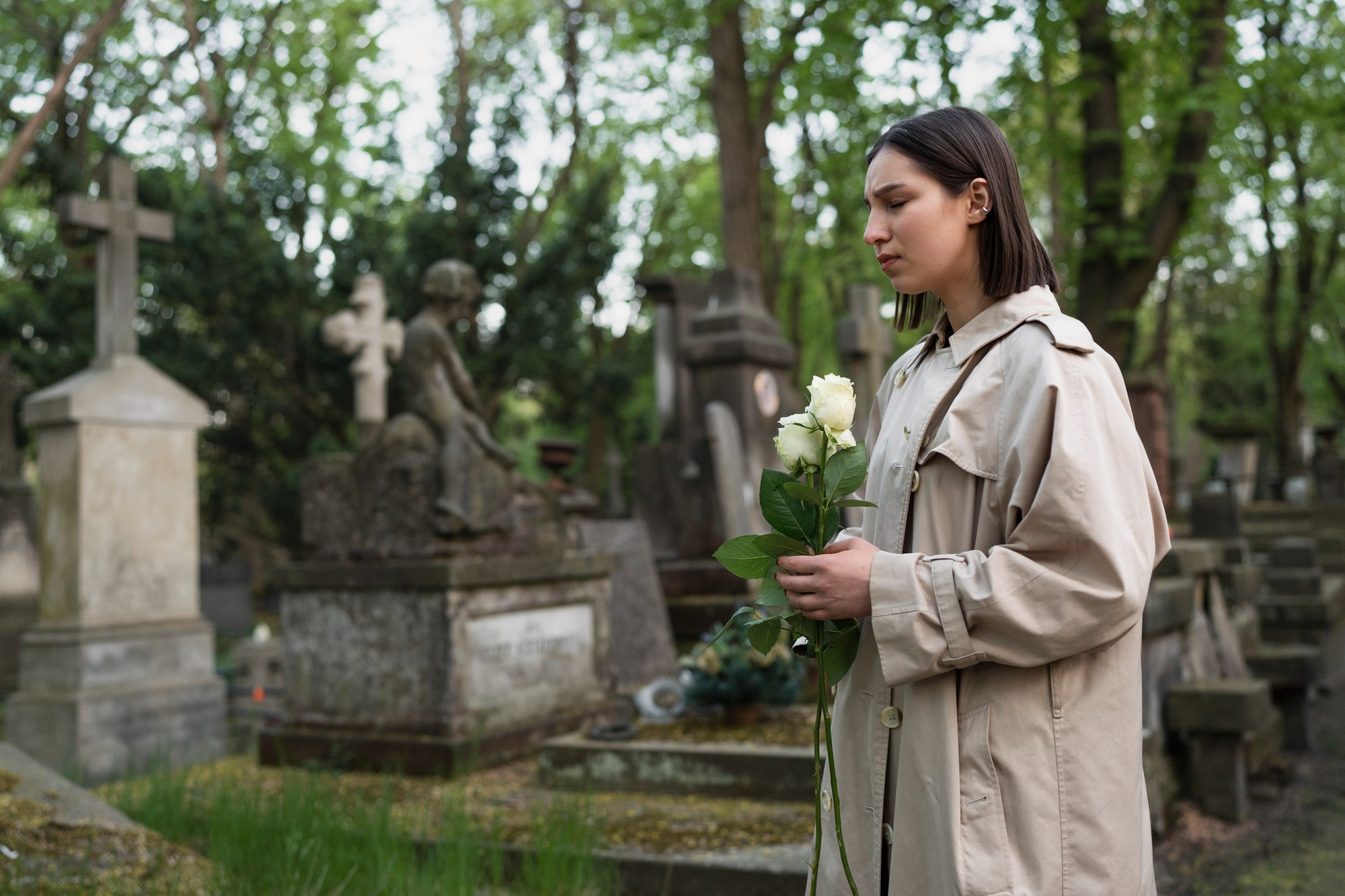
Margaret told me about the place near Tobermory about three years before she got sick. We were sitting at the kitchen table after supper, the kind of evening where the dishes are done and there’s no particular reason to move, and she said she’d found somewhere on the Bruce Peninsula where she could finally breathe. I remember nodding, the way you nod when someone says something pleasant that you don’t expect to come to anything. After forty-one years of marriage I knew Margaret’s patterns, or I believed I did. She had always talked about getting away from the city the way people talk about learning a second language or taking up the cello. A pleasant thought they carry around without any real intention of acting on.
I was wrong about that. As it turned out, I was wrong about several things.
Margaret Anne Kowalski was sixty-three years old when she died, and she was the most quietly capable person I have ever known. We met in 1982 at a dinner party in Kitchener where I was working as a site supervisor for a construction company and she was teaching grade four at the local public school. She had dark hair and a way of listening that made you feel like what you were saying actually mattered. I asked her to dance even though nobody else was dancing. She said yes anyway, which was the most Margaret thing she ever did, accommodating the slightly ridiculous gesture with complete sincerity.
We built everything together. The house in Oakville, the savings, the life. Our son Derek was born in 1986. My nephew Owen, my late brother Frank’s boy, came into our orbit a few years later when Frank passed and his mother was working nights, and Margaret treated Owen like he was hers without making any announcement about it. She packed his lunches. She drove him to hockey practice. She showed up to his university graduation even though she was already tired in ways she wasn’t fully acknowledging. Owen was thirty-two years old when Margaret died and still had her quality of being comfortable in silence, which I found unexpectedly moving in him.
Derek had moved to Calgary in 2014 with his wife Pamela. They called on birthdays, came back for holidays, and loved Margaret in the way that people love things they see from a comfortable distance. When she got her diagnosis in 2021, they called more. When she declined faster than any of us had expected, they visited more. After she passed, they stayed.
That last part is where things started to go wrong.
I’m standing in my own kitchen four days after Margaret’s funeral, holding a mug of coffee that has gone cold, listening to my son talk about square footage. He has his phone out and is showing Pamela something on the screen and neither of them is looking at me. The way they move through my house, her heels clicking on the hardwood floors Margaret refinished herself twelve years ago, him gesturing at the ceilings and the garage and the oversized lot, it has the quality of a walk-through. A professional assessment. The furniture is still arranged the way Margaret arranged it. Her reading glasses are still on the side table by the couch. Four days.
“The detached garage alone adds significant value,” Derek is saying to Pamela, tapping something into his phone with his thumb. “And the lot is oversized for this neighborhood. If we list in spring, we’re looking at strong numbers.”
I set the mug down.
“Derek,” I say.
He looks up, not quite meeting my eyes.
“Dad, we’ve been over this. The house is too big for one person. It’s a lot of upkeep.”
“You were managing it with Mom,” he adds, as if that settles something. As if Margaret’s absence has automatically transferred some authority to him.
Pamela is already walking through to the living room with a notepad, writing things down.
I don’t say anything else that evening. I let them finish their coffee and I walk them to the door and I stand on the porch in the November cold long after their car has turned the corner. The maple in the front yard has dropped all its leaves. Margaret planted it twenty-three years ago when it was barely a sapling, and I used to tease her that we’d never live to see it reach the eaves. It was well past the eaves now. She never once reminded me I’d been wrong about that.
The pattern established itself quickly. The week after the funeral, Pamela asked me if I had spoken to a financial adviser lately. The week after that, Derek sat me down with charts on his phone and explained that the house represented an underperforming asset and that there were beautiful communities for active seniors with everything you could need in one place. He showed me photos of a lobby. He had a brochure. He had apparently already done research.
I looked at the photos. I looked at my son. I said I was sixty-seven years old and perfectly healthy and had just lost my wife and was not moving anywhere.
He let it go for about a week.
Then Pamela started coming by on her own, on Thursdays when Derek had meetings. She brought casseroles, which I appreciated, and then she asked if she could look at the upstairs bathroom because the grout was going. I said sure. Owen, who had a talent for being present without being noticed, told me afterward that Pamela had photographed not just the bathroom but the master bedroom closet, the furnace room, and the entire backyard. She had stood on the back deck turning slowly with her phone held up, like she was producing a real estate tour.
When I asked her about it, she said she was trying to help me understand deferred maintenance from a buyer’s perspective.
The phrase buyer’s perspective. I heard it the way you hear a door close in another room.
Margaret and I had a joint account. Derek’s name was on it as a secondary holder, added years ago during a health scare when the doctors thought it might be her heart and we wanted him to be able to help manage bills. That precaution remained after she passed. The access remained. I hadn’t thought to change it because I was sixty-seven years old and grieving and the distance between a thing that was once reasonable and a thing that is now a vulnerability is invisible until someone decides to walk through it.
I noticed the first transfer in December. Three thousand dollars, moved from our joint account to an account I didn’t recognize. I called the bank. The transaction had been authorized from an IP address registered in Calgary.
I sat very still at the kitchen table for a long time. Then I called Owen.
He went quiet in that way he has when he is thinking carefully, and then he said, “How long do you want to wait before you do something?”
I said, “Long enough to know how much.”
Over the following six weeks I tracked it carefully. Small amounts, irregular intervals, always from the joint account, always from Calgary. By mid-January it had reached sixty-seven thousand dollars. He had been methodical about it, which told me he’d thought it through. That the thought had been deliberate made it harder to hold than anger alone could accommodate.
There was also a conversation I overheard. I wasn’t hiding, I had come back inside from the garage and simply moved quietly, the way you do when you’ve lived in a house for decades and know which boards don’t creak. Pamela was on her phone in the kitchen, voice low and businesslike, saying that once the house listed the timeline would take care of itself. She didn’t specify the timeline for what.
I called my lawyer on a Tuesday morning. Her name is Barbara Finch and I have worked with her since 2003 and she is not a warm woman but she is exceptionally thorough. I told her everything. She listened without interrupting, which is one of the things I value about her. Then she said, “Harold, I think it’s time you told me about the property your wife registered in her name in 2019.”
I went quiet.
“Margaret told you about that?” I asked.
“Margaret updated her estate planning with me last March,” Barbara said. “She was quite clear about what she wanted. I assumed you knew the specifics.”
I did and I didn’t.
Margaret had mentioned the property to me in the same offhand way she had mentioned it years earlier, the same tone she used for things she’d already arranged. She had used money from a small inheritance when her aunt passed in 2018, combined with savings she’d accumulated in an account whose full details I hadn’t paid enough attention to. She’d bought it outright. She’d registered it solely in her name so that it would pass solely to me.
Three-bedroom cedar log house, four acres of forested land, eight minutes from the harbor in Tobermory. Wood stove. Well. Screened porch facing north toward Georgian Bay.
Three hundred and forty thousand dollars, paid in full, September 2019.
Derek was not mentioned in the will. The beneficiary designations on Margaret’s life insurance, which I had insisted on when we were young and which she had maintained and updated, named me as primary and Owen as secondary. Derek was not named.
Barbara had helped Margaret draft everything. The will was airtight. Margaret had known something, not necessarily the full scale of what was coming, but enough. She had known her son well enough to plan around him. I sat with that understanding for a long time. Some acts of love are quiet in the way that deep water is quiet. You don’t know what’s there until you look straight down.
I didn’t tell Derek any of this.
What I did was call a locksmith on a Wednesday in January while Derek and Pamela were at lunch in Mississauga. I had the locks changed on every door. Then I contacted the bank and with Barbara’s help had Derek’s access to the joint account formally removed. The remaining funds, less a reserve I kept for current expenses, were transferred to an account in my name only. Then I started packing.
I was methodical about it, the way I had always been about anything that required getting right the first time. The things that mattered most went first. Margaret’s photographs. Her books. The cedar box she kept on her dresser where she stored the letters we’d written each other before email made letters feel unnecessary. Those went into the car wrapped in a fleece blanket. Then my tools, my files, the practical infrastructure of a life. I arranged a moving company through Owen, small and reliable and quiet. Over three weekends, while Derek and Pamela believed I was thinking things over, I moved the better part of my life four hours north.
The log house was empty when I arrived, naturally, and standing in the kitchen for the first time without Margaret felt like standing inside something she had imagined into existence. The windows looked out on birch trees and winter sky. The wood stove was cold but the kindling was stacked neatly beside it, and on the kitchen window frame, tucked into the corner where a person would only find it if they were looking carefully or if they knew where to look, was a folded piece of paper.
Margaret’s handwriting.
Three sentences. I won’t write them here. They are mine. But I will tell you that I sat on the screened porch for two hours after reading them, looking out at the February treeline with the note folded in my coat pocket, and understood for the first time in three months that I was going to be all right.
Derek called in late January to tell me about the spring listing window. He described it the way you describe a plan that has already been made, not a question, not a discussion, simply a report. Pamela’s cousin was the agent, he said, strong track record in the West End.
“And when were you planning to tell me the house was for sale?” I asked.
He said it was a lot of upkeep for one person and that I couldn’t stay there indefinitely and that it just wasn’t practical.
“You’re right,” I said. “I’m not in that house.”
Silence.
“I moved out three weeks ago. I’ve been in Tobermory since the second week of January.”
The silence that followed had a different quality. I could hear him breathing.
“What are you talking about?” he said, and it wasn’t quite a question.
I told him then about the property. About Margaret’s will. About Barbara. About the fact that none of what he had been planning had ever included any inheritance for him from his mother’s estate, because his mother had understood something about people and money and what pressure does to both of them.
“You’re telling me she bought a house and never told either of us?” he said.
“She told me,” I said, which was almost entirely true. “She didn’t tell you because it wasn’t yours to know about.”
His voice shifted, went smaller.
“She knew,” he said.
“Yes,” I said. “She did.”
“What are you going to do?” he asked.
I told him about the bank records and the transaction logs and the IP addresses and Barbara’s correspondence. I told him about Pamela’s voice on my porch discussing timelines for a sale she had no authority over. I told him I didn’t want to use any of it. I told him I wanted him to understand that I knew everything and I wanted him to make a choice about what kind of person he was going to be going forward. I told him the house in Oakville would sell on my timeline and the proceeds belonged to me, and that if I chose to give him anything it would be a gift, not an obligation.
Then I told him Tobermory was beautiful in July if he ever wanted to come up and see what his mother had built. I told him she would have liked showing it to him. I left the rest unsaid. Some things a person has to figure out on their own.
A week later, a letter arrived at the Oakville address, forwarded through Barbara. Registered mail, formal, signed. It outlined the full amount of the unauthorized transfers, sixty-seven thousand dollars, and gave Derek thirty days to return it or proceed with legal action through counsel. Barbara wrote it in the language she uses when she has decided that clarity matters more than comfort.
Derek called three days later, voice strained.
“I don’t have sixty-seven thousand dollars,” he admitted.
“That sounds like your problem,” I said quietly.
He was silent for a long moment. Then he said something that surprised me.
“She didn’t trust me,” he said, and it wasn’t angry. It was grief. The real kind, the kind that tells you something true about yourself that you didn’t want to know.
“She loved you,” I said. “Trust is different.”
He asked what I wanted him to do.
“I want you to become someone your mother would trust,” I said. “Start by returning what you took.”
He did. It took him twenty-nine days. He took out a loan, sold a vehicle, emptied a savings account. On the twenty-ninth day, sixty-seven thousand dollars arrived in my account in a single transfer. No note attached. Just the money.
It didn’t erase anything. It didn’t make us even in any way that could be measured. But it was accountability in the only language Derek had been willing to speak in, and I accepted it for what it was.
Barbara handled the Oakville house sale that spring. I didn’t go to the showings. The market did what the market does in a paid-off home in a good neighborhood, and the sale closed in April with numbers that settled my life into something stable and quiet.
I transferred fifty thousand dollars each to Derek and Owen from the proceeds.
Owen called me, startled, and I told him it was what Margaret would have wanted and I meant it. He was quiet for a moment and then said thank you in a way that told me he was crying, which is the kind of thing Frank would have done too.
Derek called after his transfer arrived. He didn’t sound triumphant or relieved. He sounded tired, the way people sound when they’ve been carrying something heavy for a long time and are only beginning to set it down.
“I don’t deserve this,” he said.
“No,” I said. “You don’t.”
“Then why?” he asked.
I stared out the window at the birch trees, their white trunks luminous in the late spring light.
“Because your mother loved you,” I said. “And because I’m still your father.”
Derek didn’t say anything for a moment.
“Thank you,” he said finally, and it sounded like the first time he had understood what that word actually requires.
July came warm and clear, as it does on the peninsula, smelling of pine and lake water and the particular quality of air that has traveled a long way over open water before reaching you. The screened porch became a room you could live in rather than simply sit in. The mornings arrived early and the Georgian Bay light at six in the morning had a quality I had not found anywhere else, something to do with the angle and the water and the way the birches at the edge of the property caught it and held it briefly before letting it go.
Derek arrived on a Friday afternoon in a rental car, stepping out slowly and standing for a moment at the edge of the driveway with his hands in his pockets, looking at the trees. He looked uncertain in a way I hadn’t seen from him since he was a boy. Not the manufactured uncertainty of someone waiting to be reassured, but the genuine kind. The kind that comes from arriving somewhere you understand you don’t entirely deserve.
He stood there looking at the cabin, the porch, the birches, and said quietly, “It’s beautiful.”
I said, “It is.”
He didn’t move toward the door right away. He stood there a while, absorbing it. I let him.
“Mom really did this,” he said finally.
“Yes,” I replied.
He swallowed. “And she didn’t tell me.”
I looked at him.
“She told you what you needed to know,” I said. “That she loved you.”
Derek’s eyes filled and he blinked quickly, embarrassed.
We went inside, and he moved through the cabin the way you move through a place that belongs to someone you are only now beginning to understand properly. He touched the wood stove. He stood at the kitchen window looking at the trees. He stopped in the hallway where I had hung four of Margaret’s watercolor paintings, small ones, painted in the last years when she had finally taken lessons and gotten genuinely good at it in the quiet, thorough way she got good at most things she decided to pursue.
He stared at them for a long time without speaking.
“She did these?” he asked, voice unsteady.
“Yes,” I said.
“She never showed me,” he whispered.
“She would have,” I said gently. “If you’d been around more.”
Derek flinched slightly, but he didn’t argue.
That night we sat on the porch with coffee and the sound of insects in the trees. Derek didn’t talk much and didn’t need to. Silence is honest when you’ve finally stopped performing. At one point he said, quietly, that Pamela hadn’t wanted him to come.
I asked why he came anyway.
He looked at the treeline for a moment before answering.
“I kept hearing her voice in my head,” he said. “Pamela’s. Talking about assets, about value, about what we could get. And I realized I couldn’t hear Mom anymore.”
I didn’t respond right away.
“And now?” I asked.
He was quiet for a moment.
“Now I can,” he said.
He stayed two days. He helped me check the fence line along the north side of the property. He hauled firewood without being asked. He fixed a loose board on the porch the same way I used to fix things when he was a boy and Margaret would watch from the kitchen window with that quiet expression of hers that I had never adequately described to anyone and that I missed with a constancy I was still learning to carry.
On Sunday morning before he left, Derek stood in the kitchen and apologized. Not the quick kind, not the defensive kind that is really a request to be let off the hook. The real kind, with pauses in it, with the difficulty visible on his face.
“I’m sorry,” he said. “For the money. For the house. For treating you like you were just the thing that held everything up instead of a person who was grieving.”
I looked at him for a long moment.
“I accept that you’re sorry,” I said. “I don’t know yet what that changes. But I accept that you said it.”
Derek nodded.
“That’s fair,” he said quietly.
He drove away on a Sunday morning and the cabin went quiet and I stood on the porch and drank my coffee before it could go cold, which is a skill I had recently acquired. Small things. The accumulation of small things is what a life is made of, and I was learning, in the second half of mine, to pay closer attention to them.
Owen came up in August with a friend from Hamilton, a young woman who worked in environmental assessment and had a particular interest in watershed ecology. She walked the creek line with a notebook and a reverence I recognized in people who care about land, the quality of not moving through it loudly, of listening instead. Owen watched her with the careful attention of a young man trying not to be obvious, which he was not succeeding at, and which Margaret would have found quietly delightful.
I sat on the porch and listened to them talk about water quality and the proposed development further up the peninsula. The creek ecosystem here was unusually healthy, the young woman said, and the land held its water well. There was a word she used, integrity, that struck me as right for more than one reason.
In September, Mara, the outfitter on the neighboring property, asked me to come to a town council meeting about the development proposal. She ran a small operation, kayak rentals and guided hikes, and she knew the peninsula the way people know places they’ve chosen instead of inherited. She was practical and plainspoken and reminded me, in no way I could precisely articulate, of the version of Margaret that had existed before forty-one years of managing a household and a son and a husband who didn’t always pay close enough attention.
I sat in the back of the meeting hall and listened to developers speak about growth and opportunity in that glossy tone that treats the existing landscape as an inconvenience to be managed. When it was my turn to speak, I stood up and said what I knew.
“I’ve built things for a living,” I said. “I know what it costs to put something up. I also know what it costs to lose something that cannot be rebuilt. You can replace a structure. You cannot replace water quality. You cannot replace the quiet. You cannot replace land that has been holding itself together for a long time and doing it without any help from you. If you build without respect for what’s already there, you are not creating value. You are taking it.”
The room was quiet when I sat down.
Mara nudged my arm. “Margaret would’ve liked that,” she said.
My throat tightened. I didn’t respond, but I thought she was right.
That’s how it is now. Small moments. Honest ones. Choices that accumulate into something that can hold together over time, which is the only thing I ever understood about building anything worth building.
I talk to Margaret on the long walks, along the creek or through the birches or down the road toward the harbor where the water turns a color in the morning that I have not seen anywhere else. I don’t believe she can hear me, I am not a man who holds strong opinions about what happens after, and I distrust certainty in both directions. But the practice of talking to her helps me organize what I think. She always did that for me, helped me think clearly by simply being present and attentive. You get used to having someone who knows you well enough to hold a mirror steady. When that is gone, you learn to hold still differently.
Margaret bought this place quietly and without asking anyone’s permission. She did it because she understood, with the clear eyes of someone who has been watching a thing develop slowly for a long time, that there might come a moment when I would need somewhere to land. She built it into the architecture of her will and she tucked a note into the kitchen window frame and she trusted me to show up and do something useful with what she left behind.
I try to be worthy of that trust. I don’t always know if I am succeeding. But I try to live the way she lived, with attention, with patience, with a steady regard for what is actually here rather than what would be convenient to believe.
The cabin sits on its four acres in the mornings with that particular northern silence that is not absence but fullness, birdsong and creek sound and the distant water and the wind moving through trees that have been here longer than any of us. Margaret found it and she chose it and she left it for me, and every morning when I come out onto the screened porch with my coffee I understand something about love that I could not have understood from a distance.
Love is not just feeling. It is provision. It is the long, patient work of arranging things so that someone you care about will be protected, even after you are gone, even from things they haven’t fully faced yet, even from the vulnerabilities they don’t quite see in themselves. Margaret saw all of it. She planned around it without saying a word, without making anyone feel managed or anticipated, with a grace that I recognized completely only after she was gone.
Some people spend their whole lives waiting to inherit something. The ones who end up with anything real usually discover somewhere along the way that the thing worth having was never the money, never the square footage, never the assessed value on a listing sheet. It was always the care behind it. The thought placed into it by someone who understood that building something worthwhile means thinking past yourself and past the moment you’re standing in.
I didn’t understand that until my wife died and my son tried to take apart everything she’d built, and I had to stand in a cold kitchen on a November evening and decide what kind of man I was going to be about it.
I decided to be the kind she believed I was.
That turns out to be enough. More than enough. It turns out to be exactly sufficient for the life I am living now, on four acres of land near Tobermory where the water is clean and the mornings are clear and the screened porch faces north, and where a woman I loved for forty-one years left me a note in a kitchen window frame that I have read so many times I could recite it in my sleep.
I don’t recite it. I keep it folded in the cedar box on my dresser, next to the letters, next to the small accumulated evidence of a life that was, in the end, very well built.

Adrian Hawthorne is a celebrated author and dedicated archivist who finds inspiration in the hidden stories of the past. Educated at Oxford, he now works at the National Archives, where preserving history fuels his evocative writing. Balancing archival precision with creative storytelling, Adrian founded the Hawthorne Institute of Literary Arts to mentor emerging writers and honor the timeless art of narrative.