What the House Became
My name is Olivia Holloway. I am twenty-eight years old, and I make a living with wood and tools and the kind of patience that most people admire in theory and find tedious in practice. I know how to read a room for what it used to be and what it could become, how to strip a surface back to its honest material and then bring it forward again into something better. I have been doing this work for six years, first as an apprentice to a contractor who retired last spring and left me his client list and his blessing and not much else, and then on my own, which is harder and also the only way I’ve ever wanted to do it.
I tell you this because it matters. Not as context for my skills, though that matters too, but as context for what I brought to an empty, broken house on Route 9 when my father slid an envelope across the mahogany dining table and said it needed some work. I brought the particular vision of someone who has spent six years understanding what buildings are made of and what they want to be. That vision was not accidental. It was not a gift. It was the result of six years of work, and what I built with it was mine in every sense that the word can hold.
Let me tell you about the Thursday with the envelopes.
My parents’ dining table is a piece of furniture I have sat at my entire life, and it has the quality of furniture that has absorbed decades of family occasions, solid and slightly scarred and carrying a kind of authority that comes from long use. My father sat at the head of it with two envelopes in front of him, and my twin sister Meredith sat across from me, and my mother was at my father’s right with the particular smile she wears when she already knows how something will go and has decided she is glad about it.
Meredith and I are twins, but I want to be careful about what that word implies, because it implies similarity that has not been our experience. We are the same age and we share certain features and we grew up in the same house, and beyond that the comparison frays quickly into two distinct people with distinct histories. Meredith is the kind of person for whom things arrive, and I mean this not as a criticism but as an observation, she moves through the world with a quality of expectation that the world has generally confirmed, and the confirmation has reinforced the expectation, and so on, the self-fulfilling architecture of a life in which things tend to work out. I am the other kind of person, the kind who assumes that the thing will need doing and gets up and does it, and has found that this is both more reliable and less acknowledged than Meredith’s method.
My father slid the envelopes across the table. Meredith opened hers with the easy speed of someone who has no reason to approach a gift with caution. A brass key, bright and new, the kind cut for a new lock. A lease document for a two-bedroom apartment in Lakeview, the part of the city where the restaurants have outdoor seating and the grocery stores carry twelve varieties of olive oil and the buildings are maintained by property management companies who respond to maintenance requests within forty-eight hours.
My mother’s smile was quick and practiced and proud in the way of someone presenting something they are satisfied with.
I opened mine.
The key was brown with rust, the kind of rust that means years of exposure and no particular care. The document with it was not a lease but something else, a property record of some kind, an address on Route 9, forty minutes from the city, past the last gas station, the kind of address that appears on maps as a thin line in a mostly green area.
“It needs some work,” my father said.
That was the complete explanation. He said it in the tone of someone stating a minor incidental fact, the way you mention that a car needs gas or a plant needs water. He did not elaborate. My mother’s smile did not change. Meredith looked at her new key and then at mine with an expression that I could not entirely read but that contained, I thought, the very faintest suggestion of relief that the distribution had gone as it had.
I did not argue. I did not cry or perform surprise or deliver the speech that was available to me if I had wanted to give it, the one about fairness and equity and the specific quality of a message delivered through the medium of a rusted key versus a brass one. I had been having that speech in my head in various forms since I was old enough to understand that my family had a particular way of distributing things, and I had never given it because I had understood, over time, that it would not change anything and would cost me the dignity of having stayed quiet.
I drove out to Route 9 the following weekend.
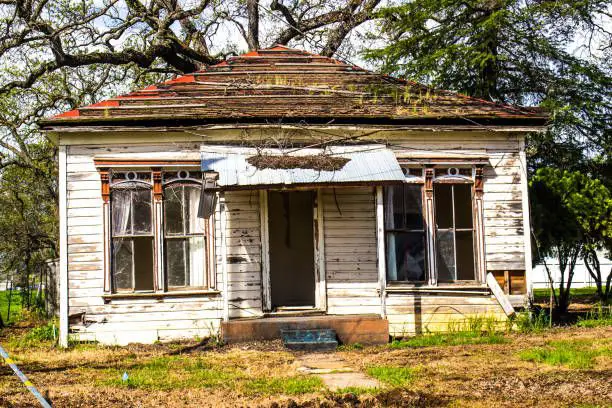
The house was a 1940s craftsman, and I want to be precise about what it was, because the word fixer-upper carries a casualness that doesn’t honor the reality of what I found. The porch boards were soft in three places, soft in the way that means rot has reached the substructure. Two of the four windows on the front elevation were covered with plastic sheeting stapled over the frames, which told me either the glass was broken or the frames had warped past the point of holding them. The exterior paint was not peeling so much as it had departed, leaving behind the gray of weathered wood that hasn’t been protected in years. Inside: plaster walls with water stains that mapped old leaks. Kitchen cabinets that had delaminated from the wall on one side and were being held in approximate position by their own inertia. Floors that creaked with the specific sound of boards that have separated from their joists and flex independently underfoot. A bathroom with a tile situation that I assessed and then did not assess further until I was ready to deal with it.
The heating system was original. I will leave it at that.
I stood in the middle of what would become my living room and I did the thing I do in every space I assess professionally, which is see it for what it is and then see it for what it wants to be, the two images overlaid like architectural drawings. And what this house wanted to be was clear to me in the way that some things are clear before you have the language for them, a structural instinct, the knowledge that under the rot and the plastic sheeting and the delaminated cabinets was a house with good bones, a roofline with genuine character, proportions that had been right when they were built and that a competent restoration would restore.
I drove back to the city. I called a plumber I’d worked with on several jobs. I called an electrician. I started making a list.
I want to tell you about the next three months with the thoroughness they deserve, but I also understand that the details of a renovation, board by board and hour by hour, are something you have to experience rather than read about to fully know. So I will tell you the shape of it. Every night after my regular work ended I drove forty minutes out to Route 9and worked until the light was gone or until I had reached a stopping point I could leave safely. Weekends I started at six in the morning and worked until I couldn’t anymore. I stripped the porch boards and sistered the joists where they needed it and relaid the deck in treated pine that I sealed twice against the weather. I replaced the plastic sheeting with windows I found at an architectural salvage yard, period-appropriate double-pane replacements that fit the frames better than what I suspected the originals had. I pulled the kitchen cabinets and I built new ones in white oak, which is a material I love for its grain and its durability and the way it responds to a smooth plane, and I built them in the style of the house rather than against it. I chased every creak out of the floors, which meant pulling boards in four rooms and re-securing the joists and re-nailing with ring-shank nails that don’t work loose the way finish nails do.
The bathroom I rebuilt from the studs out.
I heated the space with a new heat pump system that a client recommended, efficient and well-sized for the square footage. I repainted the interior in a palette of warm whites and one room in a deep green that I had been thinking about for years without a place to use it. I refinished the floors in a matte oil finish that shows the age of the wood honestly rather than covering it in plastic gloss.
Every receipt was in my name. Every material purchased, every contractor paid, every permit pulled through the county building office. My address on the permit applications. My license number. My work.
By the end of three months, I had spent money I had saved and money I had borrowed from myself, from the operating account of my business which I would pay back with the next few jobs, and I had spent more hours than I was going to count because counting them would have made the number feel like a complaint and I was not complaining. I was building something. That is a different relationship to hours.
I had also, quietly and without telling my parents or my sister, consulted a real estate attorney.
I had done this in the second week, after I’d had time to look at the documentation my father had given me with the rusted key. The document was not a lease. It was a quitclaim deed, transferring the property from my parents’ joint ownership to me, with a recording date from the county assessor’s office. I was, in the legal sense and in every other sense, the owner of the property on Route 9. The attorney confirmed this, and she confirmed some other things as well, which I kept in the back of my mind as useful information for a situation that I thought was probably coming.
The situation came on a Thursday evening in month three, when my parents let themselves in with a key I had not given them and for which I had not changed the lock, an oversight I noted and marked for correction.
My mother ran her hand over the countertop I’d sanded smooth, the white oak surface that had taken two days to get right. She ran her hand over it in the way you touch something you’re appraising, not something you’re appreciating. My father stood in the center of the living room with his weight distributed in the way of a man who is measuring a space rather than inhabiting it.
“We’ve been talking,” he said.
Three words that have never, in my experience, preceded something I wanted to hear.
“Meredith needs this house,” he said.
I looked at him and then at my mother, whose smile was in place and had the same practiced quality it had worn on the Thursday of the envelopes.
“Meredith has an apartment,” I said.
“There were changes,” my mother said. “Circumstances. She needs something more stable. We need the house back.” A small pause, calibrated for gentleness. “It belongs to your sister now. You have forty-eight hours.”
Forty-eight hours. I looked at the white oak countertop my mother had just touched. I looked at the floors I had chased every creak out of. I thought about the windows from the salvage yard and the heat pump system and the bathroom rebuilt from the studs and the deep green room that I had been thinking about for years. I thought about three months of nights and weekends and every receipt with my name on it.
“I need to make a phone call,” I said.
This is, I have noticed, a more useful sentence than most of the sentences available in moments like this one. It does not argue, which argument would not have changed. It does not plead, which would have confirmed the premise that I had something to lose by refusing. It states a fact, that a phone call is going to happen, and it declines to continue the current conversation, and it leaves the room before the current conversation can continue without my participation.
I went to the porch, which was solid under my feet because I had made it solid, and I called my attorney.
Her name is Diane, and she had told me in month two that she would like to be contacted early if any of the things we’d discussed appeared to be materializing, specifically because early contact means more options. I told her what my parents had just said, and I told her about the forty-eight-hour notice.
She was quiet for a moment and then she said, “They gave you a quitclaim deed.”
“Yes.”
“Recorded with the county.”
“Yes.”
“Olivia,” she said, “a quitclaim deed transfers ownership. They don’t have a house to ask for back.”
I knew this. I had known it since the second week when I’d first consulted her. But I needed to hear it said clearly by someone whose professional obligation was to be accurate, so that the knowing was solid and confirmed before I needed to act on it.
“What they’re attempting,” Diane said, “is to pressure you into voluntarily transferring property you own. They have no legal mechanism to compel that transfer. The forty-eight hours is not a legal deadline. It’s a social one.”
“What do I do?”
“You let me send a letter,” she said, “and you change your locks tonight.”
I changed the locks that evening, after my parents left, with a deadbolt set I bought at the hardware store on the way home, installed in forty minutes with tools I keep in my truck. I am a person who can install a deadbolt in forty minutes. This is a practical fact that turned out to be relevant.
Diane’s letter went out by email and certified mail that night, and it said what letters from attorneys say when they are stating facts that the recipients would prefer were not facts. It documented the quitclaim deed and its recording date. It documented the renovation expenditures in my name. It noted that the property was legally mine and had been since the date of transfer. It noted that any attempt to enter the property without my consent would constitute trespass. And it noted, calmly and in the language of someone who has written many such letters and knows the register exactly, that I had retained counsel and intended to protect my interests.
I did not call my parents after the letter went out. I did not call Meredith. I did not post anything or send anything or do any of the things available to someone who wants an audience for their grievance. I went back to the house on Route 9 and I cooked dinner in my kitchen with the white oak cabinets and I slept in my bedroom with the windows that fit the frames correctly and the floors that didn’t creak.
The forty-eight hours passed. Nothing happened, legally, because nothing could happen, legally. The social deadline they had set had no mechanism behind it, and without a mechanism, a deadline is just a number.
On the second day, Meredith called. She told me she was coming over the following morning and that she was bringing a van. She said this with the confidence of someone who has been told that a thing is arranged and believes it is arranged. I said, in the level voice I use when I want to be understood precisely, that she was welcome to come over, but that she should come alone and without a van, and that I would appreciate it if she would call when she was on the way.
She paused. “Mom said”
“I know what Mom said,” I said. “Come over. See the house. Come alone.”
She pulled up the following morning in the van anyway, because Meredith approaches instruction as a set of suggestions she’ll evaluate against her own preferences. She had boxes in the back and the expression of someone arriving at an administrative task they find mildly inconvenient. She stepped out and walked up the porch steps and stopped.
The porch was solid. The door had a new deadbolt, brushed nickel, properly aligned in the frame. The front windows were real glass, salvage-yard period pieces that fit the style of the house. The paint was clean and even and the color was considered rather than chosen by default. She stopped on the porch because the house she was standing in front of was not the house she had been told she was coming to collect.
I opened the door.
She came in, and I watched her move through the space with the experience of someone reading a face that I know well, though I have not always understood it. She went slowly. She touched the countertop, as my mother had, but differently, less appraisal and more trying to understand what she was looking at. She looked at the floors and the windows and the cabinets and the deep green room, which stopped her in the doorway for a moment before she went in.
“You built this,” she said.
“Yes.”
“In three months.”
“Mostly evenings and weekends.”
She stood in the green room and she was quiet in a way I hadn’t expected, a genuine quiet rather than a strategic one. Meredith is not often genuinely quiet. She operates at a level of social confidence that fills rooms rather than leaving space in them, and the quiet was its own kind of information.
“Mom said it needed work,” she said.
“It did.”
“She didn’t say you’d done all this.”
“No,” I said. “She probably hadn’t seen it.”
Meredith looked at the windows, the period glass that catches light at an angle that modern glass doesn’t. She looked at the floor, the matte oil finish that shows the wood’s age honestly.
“She said you’d be reasonable,” Meredith said. “That you’d understand she needs this for me.”
“I know she said that.”
“And?”
“And I’d like you to see what Diane sent,” I said.
I showed her the letter. Not to win an argument, because the argument was already won in the legal sense. I showed it to her because she was standing in my house with boxes in her van and she deserved to know the actual situation before she unloaded them. She read it with the focused attention of someone encountering information that is reorganizing something, and she was quiet again when she finished.
“The deed is in your name,” she said.
“It has been since Dad transferred it.”
“They can’t”
“No,” I said. “They can’t.”
She sat down on the sofa I’d bought second-hand and reupholstered in a heavy linen, and she looked at the room around her, and I sat across from her in the chair I’d found at an estate sale, and we were in my house together in a way we had never been anywhere together before, which was on equal footing without the architecture of our parents’ preferences arranging the space between us.
I do not want to make Meredith into a villain, because she is not one. She is a person who has received things and trusted that the receiving was appropriate, and she had been told this house was available, and she had come to collect it in good faith, the good faith of someone who has not been given reason to examine the assumptions underneath their expectations. She had not asked for the arrangement any more than I had asked for the rusted key. She had simply accepted it, as she had accepted other arrangements, because acceptance had always been the correct response to the things offered to her.
The difference between us, I thought, sitting in the linen chair in my house, was not that she was worse than me or that I was better than her. The difference was that I had been handed the thing that required making and she had been handed the thing that was already made, and the making had been the most important thing, the thing that could not be transferred or claimed or given a forty-eight-hour deadline.
“What happens now?” she said.
“To the house?”
“To us. The family.”
I thought about this honestly. “There will be a conversation with Mom and Dad,” I said. “Diane will be part of that, at least initially, to make sure everyone understands the legal facts. After that I don’t know.”
“They’re not going to take this well.”
“I know.”
She looked at her hands, which were in her lap, the position of someone who is sitting with something uncomfortable and not trying to make it smaller than it is. “I didn’t know you could do all this,” she said, and I understood she meant the house, the work, the specific capability that had been apparent in every surface and joint and restored window.
“I’ve been doing it professionally for six years,” I said.
“I know. I just didn’t know what it looked like.”
This is a true thing and also a sad thing, and I held both qualities of it without trying to resolve either.
The conversation with my parents happened with Diane present, which had been her strong recommendation and which I had accepted without reservations. They were not, as Meredith had predicted, easy about it. My mother went through several phases, the first being disbelief that the legal facts were what Diane said they were, the second being an argument that their intention at the time of transfer had not been permanent, which Diane addressed by explaining what a recorded quitclaim deed means in the context of intent, and the third being an appeal to family loyalty that I let pass in silence because I did not have an answer that would satisfy her and did not feel obligated to find one.
My father was quieter than my mother, which is not unusual for him, and at some point in the middle of the conversation he looked at me with an expression I had not seen before, which was something in the vicinity of seeing me clearly, and I do not know what to do with that expression yet. It may lead somewhere, or it may have been a passing thing. I am watching.
The house on Route 9 is mine. It will remain mine, and I will continue to live in it, and in the spring I intend to build a small outbuilding in the back yard where I can do woodworking with the convenience of proximity, because driving to the shop forty minutes away every time I want to work on a project for my own house is an inefficiency I have been tolerating temporarily.
Meredith and I have spoken twice since the morning she came with the van. The conversations have been short and slightly careful, the conversations of two people who have moved into new territory and are still finding where to put their feet. I think there is something possible in those conversations that has not been possible in the ones we had before, which were always held in the arranged space of our parents’ preferences. I am not certain what it is yet. I am leaving room for it.
The house knows what it is. That is the thing about buildings, when you do the work of honest restoration, when you strip them back to what they are and bring them forward into what they want to be. They hold it. The white oak countertop and the floors without creaks and the windows that fit their frames correctly and the deep green room I had been thinking about for years, they hold it all, the three months of evenings and the receipts in my name and the specific vision of someone who knows what a building is made of and what it can become.
I stand on my porch in the mornings sometimes, the solid porch, and I think about what my father said when he slid the envelope across the mahogany table.
It needs some work.
Yes, I think. It did.

Lila Hart is a dedicated Digital Archivist and Research Specialist with a keen eye for preserving and curating meaningful content. At TheArchivists, she specializes in organizing and managing digital archives, ensuring that valuable stories and historical moments are accessible for generations to come.
Lila earned her degree in History and Archival Studies from the University of Edinburgh, where she cultivated her passion for documenting the past and preserving cultural heritage. Her expertise lies in combining traditional archival techniques with modern digital tools, allowing her to create comprehensive and engaging collections that resonate with audiences worldwide.
At TheArchivists, Lila is known for her meticulous attention to detail and her ability to uncover hidden gems within extensive archives. Her work is praised for its depth, authenticity, and contribution to the preservation of knowledge in the digital age.
Driven by a commitment to preserving stories that matter, Lila is passionate about exploring the intersection of history and technology. Her goal is to ensure that every piece of content she handles reflects the richness of human experiences and remains a source of inspiration for years to come.