Family Property
The call came on a Tuesday afternoon in October, while I was sitting in a site trailer outside Colorado Springs with coffee going cold on my desk and a stack of structural notes I hadn’t finished reviewing. My neighbor, Mrs. Rowan, doesn’t call often. She’s in her seventies, lives a quarter mile down the road through the pines, and tends to communicate by leaving garden vegetables on my porch when she knows I’m coming up for a weekend. So when her name lit up my phone, I answered without hesitation.
Her voice was tight and low, the way people talk when they’re trying not to be overheard. She said there was a large moving truck in my driveway. She said my mother was out front directing men in gray t-shirts toward my door. She said my sister’s children were already running through the trees, laughing the specific way kids do when they’ve been promised something wonderful. And then she repeated the line she’d heard my mother give the movers, said it carefully, like she wanted to make sure I heard every word: “It’s family property.”
I sat there for a moment with the phone against my ear and the structural notes blurring in front of me.
“Mara?” Mrs. Rowan said softly. “I thought you should know.”
“Thank you,” I told her. “I’m coming.”
I closed my laptop before it had fully processed what was happening, stacked the notes into a folder I wouldn’t look at again that day, and drove the forty-five minutes up into the mountains on autopilot, the road narrowing and the air getting thinner and colder as the elevation climbed. I know that drive well enough that my hands do most of the work. Usually I use it to decompress, to let the week’s pressure dissolve somewhere between the last stoplight in town and the first real stretch of ponderosa. That afternoon I couldn’t decompress. I just drove.
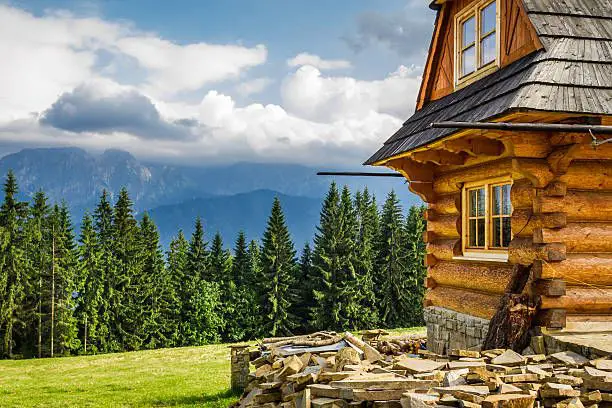
The cabin sits at eight thousand feet in a small clearing carved into the hillside, surrounded by pine trees that were old when I was born and will be standing long after I’m gone. I found it six years ago when I was thirty-one, still shaking off the last remnants of a relationship that had cost me two years of my life and most of my confidence. I’d driven up into the mountains alone on a whim, following a real estate listing I’d bookmarked and half-forgotten, and when I turned the last curve and saw the place sitting there in the late afternoon light with snow on the roof and smoke still rising faintly from where the previous owners had left that morning, I understood something I hadn’t been able to articulate before. I understood that I wanted a life that was genuinely mine. Not borrowed, not shared by obligation, not maintained by the fragile goodwill of people who had complicated ideas about what I owed them.
I spent three years saving for the down payment. I ate lunches I packed from home. I canceled subscriptions. I picked up contract work on weekends. My parents offered to help at one point, early on, and I said yes to what they offered, which was a thousand dollars on a purchase price of four hundred thousand. I thanked them sincerely. It covered roughly one-third of the inspection fees. The rest was mine, earned slowly and carefully and with the particular satisfaction that comes from building something through sustained effort rather than luck or inheritance.
The deed has my name on it. Only my name.
When I turned the last curve that October afternoon, I sat with that knowledge for exactly as long as it took me to absorb the scene in front of me. The moving truck was enormous, a full twenty-six footer, its rear ramp down and resting on my gravel driveway with the casual permanence of something that expected to stay a while. My mother stood near the front of the truck with one hand resting on her hip, the other gesturing toward my front porch, giving directions to two movers who nodded without expression. My father leaned against the side of the truck with his arms crossed and his ankles loosely crossed too, the posture of a man who has already decided that the situation is settled and is simply waiting for everyone else to catch up. My sister Lydia came around the side of the truck carrying a cardboard box with her chin tucked over the top flap to keep it closed, moving with the purposeful efficiency of someone contributing to a project they believe in. And Owen and little Piper, who are seven and five respectively, chased each other through the pine trees with pure, uncomplicated joy, their laughter bouncing off the trunks and into the cold mountain air.
My mother saw me the moment I stepped out of the car. Her face opened into a wide, warm smile, the kind that says everything is proceeding exactly as expected.
“There she is,” she called out, raising one arm in greeting. “Perfect timing, sweetheart. Come help us with the heavy stuff first.”
I stood beside my car and felt the elevation in my lungs and didn’t move.
“What is happening?” I said.
My mother’s smile softened into something patient and slightly exasperated, the expression she has used on me since I was a child whenever she believes I am creating an obstacle where there is none.
“Mara, don’t start. We talked about this.”
We had not talked about this. We had not talked about anything remotely resembling this. There had been a conversation in August, over dinner, where my mother had mentioned offhandedly that Lydia’s living situation was becoming difficult. Her lease was ending. The kids needed more space. Wouldn’t it be nice, my mother had said, if families could be closer together. I had listened, said something noncommittal about hoping things worked out, and changed the subject. I had understood that as a conversation. Apparently my mother had understood it as an agreement.
Lydia set her box down on my porch with a dull thud and straightened up, rolling her neck.
“You barely use it,” she said, not unkindly, but not apologetically either. “We’ll turn it into an actual home. It’ll be good for the kids to have the outdoor space.”
My father pushed off from the truck and came toward me with his hands in his jacket pockets, head tilted slightly the way he does when he’s about to explain something he considers self-evident.
“We helped with the down payment,” he said. “That makes this a shared investment. Legally, we have standing.”
I looked at him for a long moment.
“You gave me a thousand dollars,” I said. “The property cost four hundred thousand dollars. I have the mortgage statements if you’d like to see them.”
Something shifted in his expression, just slightly, a small recalibration.
“Money is money,” my mother said smoothly, stepping in the way she always does when my father’s logic starts showing its edges. “Family doesn’t keep score. That’s not who we are.”
Behind her, the movers continued moving. Boxes came off the truck in a steady, indifferent stream, stacking up on my porch, filling the space around my front door with the physical weight of a plan I had never agreed to. One of the movers angled a large framed mirror through my doorway. Another carried a laundry hamper inside like he’d done it a hundred times, because he had, just not here, not in my house.
Then Owen came running up to me, breathless and bright-eyed, grabbing my sleeve with both hands.
“Aunt Mara, Grandma said I get the room upstairs with the big window! She said I can see the whole mountain from up there!”
Piper appeared a step behind him and added with serene confidence, “Grandma said we won’t have to leave this time.”
I looked at their faces. They were so happy. Not performatively happy, not trying to convince me of anything, just genuinely, completely happy, the way children are when the adults in their lives have made them a promise they have no reason to doubt.
They had told the children. They had built an entire narrative around this move, had explained it to Owen and Piper in terms of permanence and home and “this time,” which meant there was a “last time,” which meant the children had already experienced the particular disruption of having to leave a place they thought was theirs. My parents and sister had constructed this story so completely that I was the last person in it who hadn’t been informed. Not consulted. Not even informed.
I told the kids it was good to see them and that I loved them and that I needed to talk to the adults for a minute. Then I walked past my mother and into my house.
It was worse inside. The refrigerator door was hanging open and someone had already stocked the top two shelves with food that wasn’t mine, a casserole dish covered in foil, containers of orange juice and milk, a gallon bag of grapes that Piper likes. Boxes of dry goods lined my kitchen counter. A rocking chair I’d never seen before sat in the corner of my living room at an angle that suggested it had been placed there by someone who considered themselves its owner. A pile of children’s shoes sat by my front door, small and bright-colored and completely at home.
I stood in my kitchen and let it settle over me, all of it, the full weight of what had been done and the full clarity of what I needed to do next.
Then I went back to the doorway.
“Everyone stop,” I said.
The movers looked up. My mother sighed the way she does when she thinks I’m being theatrical.
“Mara, please. Don’t make a scene. You always do this when things don’t go exactly the way you planned.”
“Move-in day is Saturday,” Lydia said, checking her phone with the distracted efficiency of someone managing a timeline. “We’re just getting a head start so it’s not so crazy all at once.”
Move-in day. Saturday. A head start. A schedule. I was supposed to be the last piece of this arrangement to fall into place, the holdout who just needed a little time before she adjusted to a new reality. I had been written into their plan in the role of someone who would eventually come around.
“I’m going inside,” I said. “When I come back out, I expect all of this to be gone. The boxes, the furniture, the food, all of it. The movers can reload the truck.”
My mother laughed, a short, gentle sound that managed to be dismissive without being cruel.
“Oh, honey. You’ll feel differently once you settle into it. Families share. That’s what families do.”
I didn’t answer her. I went inside, closed the door, and locked it.
Then I sat at my kitchen table for approximately ninety seconds, breathing steadily, feeling the quiet of the house settle around me. The rocking chair sat in the corner. The food sat in my refrigerator. The children’s shoes sat by the door. Outside I could hear my mother’s voice, still giving directions, still operating on the assumption that this was a minor delay in a plan that would proceed.
I picked up my phone and called a locksmith.
The woman who answered sounded young and efficient. I told her I needed every lock in my house rekeyed that afternoon, every exterior door, and asked if that was possible.
“We’re pretty booked,” she said, “but I can probably get someone up there in two hours. Is everything okay?”
“Not entirely,” I said. “But it will be.”
While I waited I pulled my file of property documents from the drawer where I keep them, organized in a red accordion folder I bought specifically for this purpose. Deed. Title insurance. Mortgage statements. Property tax records. Homeowner’s insurance. Every document that existed to confirm what I already knew, which was that this house belonged to me in every legal, financial, and moral sense of the word. I arranged them in a neat stack on the kitchen table not because I planned to wave them at anyone but because looking at them helped me feel grounded. The documents didn’t have opinions. They didn’t guilt-trip or sigh or tell me I was making a scene. They just stated the facts.
I also called the county sheriff’s office.
The deputy I spoke with was calm and practical, the way people get when they’ve had this exact conversation many times before. I explained the situation. Unauthorized entry to my home, family members claiming ownership, a scheduled “move-in day” on Saturday. He asked clarifying questions. I answered them. He said the property rights were clear and that what I was describing could constitute trespassing and possibly unlawful entry depending on what they’d already moved inside and whether I’d explicitly told them to leave.
“I told them to leave,” I said.
“Good,” he said. “Document everything. Take photos. And call us Saturday when they come back. Don’t try to manage it alone if it gets complicated.”
I thanked him and hung up.
The locksmith arrived two hours later, as promised, a quiet man named Dale who smelled like machine oil and didn’t ask unnecessary questions. He worked methodically through the front door, the back door, the door to the mudroom, and the exterior door to the garage. New hardware on each one, new deadbolts, new keys. I tipped him generously and stood on my porch with the new keys in my hand after he left, holding them in a way I hadn’t held keys before, with a specific kind of attention, the way you hold something after nearly losing it.
My family had gone. At some point during the locksmith’s visit they’d left, taking the movers with them. Most of the boxes on the porch were gone. A few had been left behind, a slow kind of protest, a suggestion that they weren’t really leaving so much as pausing. I moved those boxes off the porch myself, stacking them beside the driveway. I brought the rocking chair out of my living room and set it next to the boxes. I took the food out of my refrigerator and put it in a grocery bag on the porch. I removed the dry goods from my counter and added them to the pile. Then I took photographs of everything, the boxes, the rocking chair, the food, my cleared kitchen, my clean living room, the new hardware on the door. Documentation, like the deputy said.
When I went back inside that evening, the house was mine again.
I made dinner from things I already had, pasta with olive oil and garlic and whatever cheese was left in the back of the fridge, and I ate it at my kitchen table with the property documents still spread in front of me and the pine trees going dark outside the window. The wind picked up around sunset and moved through the upper branches in that particular way it does at elevation, a low, continuous sound like distant water. I had bought this house partly because of that sound. I had worked for three years partly for that sound. And now I sat with it, alone and completely present in a way I hadn’t been in hours, and understood that I had made the right decision.
Over the next few days my mother called seven times. I let all seven go to voicemail and listened to each one in sequence on Thursday evening. The first two were injured and confused, the voice of someone who genuinely couldn’t understand why I was being difficult. The third was sharper, my mother telling me that I was being selfish and that family meant sacrifice and that she hadn’t expected this from me. The fourth brought my father in briefly, his voice in the background saying something I couldn’t quite make out, followed by my mother saying “she’ll come around” before hanging up. The fifth was from Lydia, shorter and more direct, telling me that the kids were devastated and that whatever point I was trying to make, I was making it on the backs of two children who had done nothing wrong. The sixth was my mother again, quieter, saying she hoped I would think about what really mattered. The seventh came on Friday morning and contained only this: “We’re leaving early Saturday. Have the door unlocked.”
I didn’t reply to any of them.
I drove back up to the cabin on Friday night and spent the evening in the specific peace of someone who knows what the next morning will bring and has accepted it. I built a small fire in the woodstove, not because I was cold but because I wanted to. I made tea. I read for a while and then didn’t read, just sat with the fire and listened to the pines. At some point I went to bed and slept without difficulty, which surprised me slightly but perhaps shouldn’t have. I had done what needed to be done. There was nothing left to lie awake about.
I’d confirmed the deputy’s availability that week. He’d been thoughtful about it, offering to have two cars present rather than one, given the number of people involved and the logistics of a moving truck. I’d said yes. He said they’d be there by seven-thirty. I said I’d be on the porch.
Saturday morning broke clear and cold, the kind of Colorado October morning that looks like it was painted by someone who wanted to make a point about beauty. The sky above the pines was a saturated blue that seems to exist only at altitude, and the light came sideways through the trees in long thin strips and lit up the frost on the grass. I made coffee in the French press I keep at the cabin, poured it into a thick ceramic mug, and stood on my porch in my jacket and watched the light change.
The patrol cars arrived at seven-fifteen, two of them, parking quietly at the far end of the driveway. The deputy got out and nodded at me across the gravel and I nodded back. A second officer stood near the other car. Nobody said much. There wasn’t much to say. We were waiting for the same thing.
At seven fifty-two my phone buzzed with a message from my mother: “We’re at the bottom of the mountain. Be there soon.”
I slipped the phone back into my pocket and wrapped both hands around my coffee mug and waited.
I heard them before I saw them, the low diesel rumble of the moving truck coming up through the switchbacks, slow and deliberate, the sound of it bouncing off the hillside and arriving in pieces. Then the truck came around the final bend and behind it came my parents’ SUV and behind that came Lydia’s minivan, the three of them pulling into my driveway in a neat, confident procession, like a small parade that had been rehearsed.
They stopped when they saw the patrol cars. The procession just stopped, all three vehicles at uneven angles in the driveway, engines running, nobody getting out.
Then my mother’s door opened and she stepped out, and I could see from fifty feet away the moment her confidence encountered something it hadn’t planned for. Her step slowed. Her smile, which had been there reflexively, the baseline expression of someone who has already decided this is going to go her way, went uncertain and then still. My father came around from the passenger side and stood beside her with his hands in his pockets, looking at the patrol cars with the expression of a man trying to construct a new version of events in real time. Lydia got out of the minivan and left the door open and just stood there.
The deputy walked toward them across the gravel. I stayed on the porch with my coffee and my folder of documents, not moving, not rushing anything.
He introduced himself. He was polite and direct. He asked who owned the property, and I said I did, and I held up the deed. He asked my family if they had any documentation supporting a claim to the property. My father started to speak about the thousand-dollar contribution and the deputy listened without expression and then explained, patiently and precisely, that a gift of one thousand dollars toward a four-hundred-thousand-dollar purchase did not constitute shared ownership. He explained that my name was the only name on the deed. He explained that they had entered my home without my permission earlier in the week and that this constituted trespassing. He explained that if they attempted to enter the property today without my invitation, they would be subject to arrest. He said all of this without drama and without condescension, the way someone states facts that are simply true.
My mother said, “She’s our daughter.”
The deputy said, “That doesn’t change property law, ma’am.”
Owen and Piper were in the backseat of the minivan. I could see Owen’s face through the window, his nose close to the glass, watching. My heart did something complicated at the sight of him. They were innocent in all of this, completely and utterly innocent, and the fact that they were here at all, that they had been brought to this moment by adults who should have known better, was maybe the part of the whole situation that made me the angriest, quietly and underneath everything else.
My mother tried several more approaches with the deputy over the next few minutes. She cited family obligation. She cited the emotional toll of what I was doing. She said I was humiliating her in front of her grandchildren. She said she had only been trying to keep the family together. The deputy acknowledged each thing she said and returned, each time, to the same simple facts. This was my property. I had not consented to their moving in. They needed to leave.
My father didn’t say much during this. At one point he looked at me across the driveway, a long steady look, and I held it without difficulty. I didn’t feel triumphant or vindictive. I didn’t feel any of the things I might have imagined feeling in the weeks before, if I’d imagined this scene, which I hadn’t entirely. I mostly felt tired and clear-eyed, which is sometimes what being right feels like.
Lydia came toward me eventually, alone, walking across the gravel while the deputy continued a separate conversation with my parents near the truck. She stopped a few feet away and looked at me and I could tell she’d been crying, or was close to it, the particular redness around her eyes that she gets.
“The kids asked me on the drive up if they were going to get to see their room,” she said.
“I know,” I said.
“They’re going to be upset.”
“I know that too.”
She was quiet for a moment. “This wasn’t just Mom’s idea,” she said finally. “I wanted it too. I wanted them to have somewhere stable. I thought if we just got here, got it set up, you’d see it was actually fine.”
“Lydia,” I said carefully. “You can’t make things fine by deciding they are. You came into my home without asking me. You told my nephew and niece they were getting rooms. You planned a move-in day. At no point did anyone ask me if this was okay.”
“Would you have said yes?”
“No,” I said. “But you should have asked.”
She pressed her lips together and looked away at the trees. A crow moved through the upper branches of the tallest pine and called once, sharp and clear, and flew.
“Where are we supposed to go?” she said.
It was a genuine question, not a manipulation, I could tell the difference. Lydia’s lease had ended. She had two kids and was raising them alone since her divorce. The situation she was in was real and difficult and not of her own choosing, at least not entirely. None of that changed what she’d done, but it existed alongside it.
“I don’t know,” I said honestly. “But that’s a problem we could have tried to solve together, if you’d come to me honestly. Instead you tried to solve it by taking something that wasn’t yours to take.”
She didn’t answer that. After a moment she went back to the minivan and got in and I watched her sit there for a while, not starting the engine, just sitting.
My parents eventually got back into their SUV. The movers, who had sat in the truck cab through the entire exchange with the particular detachment of people who have learned not to get involved in other people’s situations, reversed the truck down the driveway and out onto the road. My parents followed. The minivan followed last, and I saw Owen’s face turn toward me through the back window as the van reached the road, and I raised my hand, and after a moment he raised his hand back.
Then they were gone and the driveway was empty except for the two patrol cars and me on my porch with my cold coffee.
The deputy came over and I thanked him. He asked if I expected further trouble and I said I didn’t think so, not the same kind anyway. He gave me his card and told me to call if anything changed and I said I would.
After the patrol cars left I stood alone on my porch for a long time, not quite ready to go inside. The mountain was very quiet. The frost had burned off the grass while everything was happening and now the clearing smelled like cold earth and pine and the faint mineral smell of the rocks. A woodpecker started up somewhere in the trees, steady and focused on its own work, indifferent to the morning’s proceedings.
I won’t pretend it felt uncomplicated. It didn’t. It felt like several things at once, necessary and painful and clarifying and sad, the particular sadness that comes not from doing the wrong thing but from being in a situation where doing the right thing has costs. I thought about Owen’s face through the minivan window and felt the ache of it cleanly, without trying to argue myself out of it. I thought about my mother standing in the driveway with her confidence slowly leaving her face and felt something that wasn’t quite pity but was adjacent to it.
But I also thought about what it had cost me to build this place in my life. I thought about the three years of packed lunches and canceled plans and weekend work hours. I thought about the particular feeling of signing the mortgage documents alone at a conference table and understanding that the responsibility was entirely mine and finding that clarifying rather than frightening. I thought about the first night I slept here, the way the silence had texture and weight, the way it felt specific to this place and earned by the work I’d done to get here.
Nobody got to take that from me. Not even people I loved.
In the weeks that followed, the family dynamics sorted themselves into something new and not yet stable. My mother sent a long text the following Tuesday that oscillated between apology and accusation, and I read it once and didn’t respond immediately. I waited until I could do so without heat, which took about a week. I wrote back briefly and said that I loved her and that I was not angry, but that what had happened was not acceptable and that any future relationship between us needed to be built on the understanding that my home was my home. She didn’t respond for several days and then said she supposed she understood, which was not quite an apology but was, I recognized, about as close as she was going to get for a while.
My father called once, on a Sunday morning, and we had a short and unusually honest conversation. He said he thought they’d handled it wrong. I said I agreed. He said he was sorry. I said thank you. We talked for a few more minutes about other things, normal things, and hung up, and something between us felt quietly reset, not fixed exactly, but different in a way that might become fixed eventually.
Lydia took longer. She found a rental in December, a small house in a town about an hour south, and sent me a photo of Owen and Piper in the backyard with a pile of leaves they’d jumped into. I texted back that they looked happy and she said they were adjusting. We haven’t talked on the phone yet. I think we will, when she’s ready, or when I am, or maybe at the same time. Whatever she did, whatever she was willing to let happen, she is still my sister and Owen and Piper are still themselves, still the children who chased pinecones through my pine trees on a clear fall morning with no idea that anything was complicated.
I went back up to the cabin the weekend after everything happened and spent two days there alone. I split firewood that didn’t need splitting, walked the lower trail twice, cooked elaborate meals I ate at my own table in my own good time. On Sunday morning I woke before dawn and sat on the porch wrapped in a blanket and watched the darkness become light by degrees, the way it does at altitude, the sky softening from black to deep blue to a gray that held the last stars and then releasing them one by one until only the brightest were left and then those too were gone and the sun came over the ridge and hit the frost and the clearing went gold.
I held my coffee in both hands and sat with it. The pines were absolutely still in the early morning. Somewhere down the hill a creek moved over rocks with the same sound it had made the morning I first saw this place and understood something about the kind of life I wanted.
It was mine. Earned and documented and defended and mine.
The quiet felt like it always had, earned. I sat inside it and let it be exactly what it was.

Adrian Hawthorne is a celebrated author and dedicated archivist who finds inspiration in the hidden stories of the past. Educated at Oxford, he now works at the National Archives, where preserving history fuels his evocative writing. Balancing archival precision with creative storytelling, Adrian founded the Hawthorne Institute of Literary Arts to mentor emerging writers and honor the timeless art of narrative.