My Own House
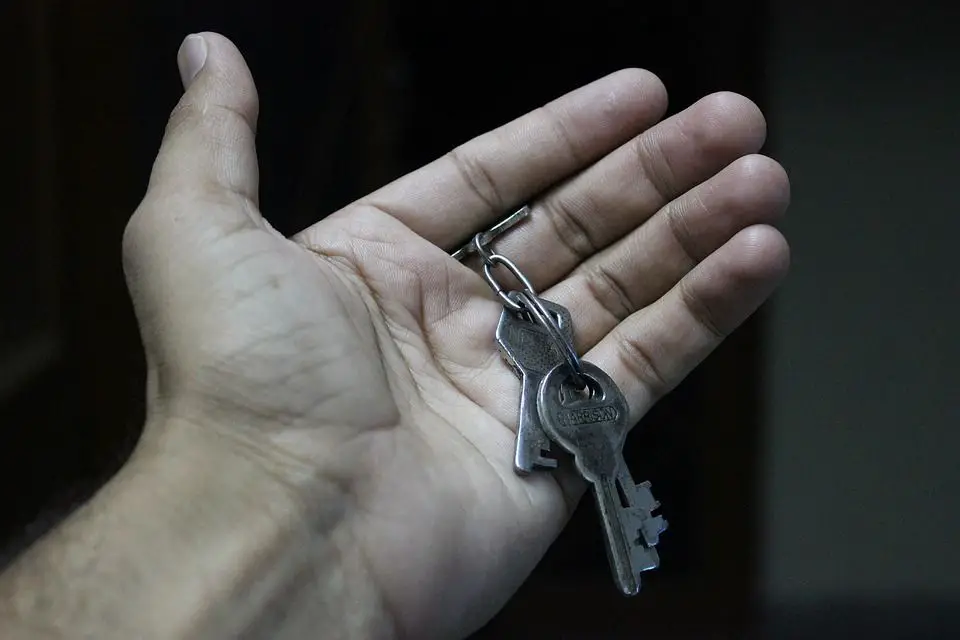
The keys were heavier than I expected. That sounds like the kind of thing people say for effect, but I mean it literally: the realtor handed me a ring with two brass keys and the little laminated tag with the address on it, and when I closed my fist around them at the closing table on a Thursday afternoon in April, the weight of them surprised me. Not because they were heavy in any objective sense. Because of what they meant. Two brass keys to a door that was mine, a house that was mine, a space in the world that I had earned and bought and that no one had any claim to except me.
I drove to the bungalow alone after the closing and sat in the driveway for a few minutes before I went inside. It’s a small house, three bedrooms though one is barely large enough for a desk, a living room with old hardwood floors that creak in two specific spots near the kitchen doorway, a bathroom with original tile that I’ve come to love for its refusal to be anything other than what it is. The neighborhood is modest and quiet and has the particular quality of a place where people have lived for a long time and settled into comfortable invisibility. The previous owners had put in a small porch along the front with room for two chairs, and there’s a Japanese maple in the front yard that someone planted decades ago and that is, in autumn, one of the more beautiful things I’ve seen.
I’m Max Morgan. I’m twenty-eight years old and I write software for a financial technology company, which is as dry as it sounds and also pays well enough that, after four years of careful saving and a great deal of deferred pleasure, I was able to put enough down on a house that my monthly payment was roughly what I’d been paying in rent. The math worked. The timing worked. And when I sat in that driveway and looked at the front of my house in the afternoon light, what I felt was not excitement exactly, though excitement was part of it. What I felt, primarily, was the specific relief of a person who has been waiting a long time for something they weren’t entirely sure would arrive.
I should explain what I was relieved about, because it matters for understanding everything that comes after.
I grew up in a house where privacy was treated as a kind of insult. Not maliciously, or at least not consciously. My parents, Gerald and Susan Morgan, are people who love their children in ways that are completely entangled with the need to know everything about them, and they have never fully distinguished between those two things. My father is a man who monitors because he worries and who worries because he monitors, a closed loop that has been running at full power for as long as I can remember. My mother expresses love through access: she reads, she searches, she opens and examines and reorganizes, and she calls all of it caring. When I was twelve and she read my journal, she told me that a mother’s concern didn’t have the same borders as a stranger’s curiosity. When I was sixteen and she went through my email, she said she was protecting me. When I was twenty-two and she let herself into my apartment with the key she’d made without asking, she said family didn’t need permission for things like that.
My younger sister Cara navigated this differently than I did. She became very good at the performance of openness: she shared things voluntarily and constantly, which satisfied my parents’ appetite for information and left no obvious surface for them to excavate. It worked for her. I couldn’t do it. I am someone who needs closed doors the way other people need sleep, not as a luxury but as a biological requirement, and growing up in a house where closed doors were understood as either an invitation or an offense produced in me a specific kind of low-grade chronic anxiety that I didn’t have a name for until I was in my mid-twenties and started reading about enmeshment.
By the time I was in college I had learned to manage my parents the way you manage a difficult weather system: by tracking it carefully, giving it what it needed to pass without escalating, and building my actual life in the spaces it couldn’t reach. Dorm rooms helped. Apartments helped more, though my mother’s habit of having a key made and my father’s habit of calling it sensible and my own habit of not confronting either of them directly meant that even those spaces were never entirely mine. I had the theory of a private life without the consistent practice of one.
The bungalow was supposed to change that.
For sixty-three days, it did.
I know it was sixty-three days because I kept a small record in the notes app on my phone, not of events but of mornings: brief entries about coffee and the porch and what I’d worked on the night before and what I was planning to do after work. It was a habit I’d developed to track my own sense of peace, a way of noticing when I had it. Sixty-three consecutive mornings of entries. Coffee in the blue mug I’d bought at a street market. Paint on my hands from the guest room I was slowly making over. Friends in the kitchen on weekends, real friends, the kind who come over to eat rather than to assess your life choices. The Japanese maple going gold in the front yard. Two specific spots in the floor that I’d memorized and stepped around, and then, gradually, just stepped on without thinking.
I became careless, which is what sixty-three days of peace will do to you if you’re not careful.
The Tuesday that ended my sixty-third morning note started normally and became a twelve-hour emergency involving a deployment that had gone wrong in a way that required the full attention of everyone on my team and that was, by the time it was resolved, the kind of work day that makes you feel physically wrung out. I drove home at nearly ten at night running on stale coffee and the fraying end of my concentration, and I was not paying the kind of attention I normally paid to my own street as I turned onto it.
Which is why it took me a moment to register that my living room lights were on.
I knew they shouldn’t be. I turn lights off with the automatic habit of someone who spent years in apartments where the electricity bill was their problem. I had not left those lights on. I was certain of it with the clarity that surfaces when something is wrong, the particular, sharp-edged certainty that cuts through fatigue.
I parked across the street instead of in the driveway, an instinct I didn’t consciously make. I walked up slowly. I looked through the front window.
My mother was curled on my sofa, shoes off, settled in the specific way she settles in at home, which is the posture of someone who has decided they are already where they belong. My father was in the armchair I’d bought at an estate sale and re-covered in a dark green fabric, and he had a bottle in his hand: a bottle of Scotch I’d received as a gift and set on the shelf for a specific occasion I hadn’t yet identified. He held it with the relaxed propriety of a man handling his own things. They were talking, laughing about something, completely at ease, and their ease in my living room created in my chest a sensation I can only describe as the physical opposite of the feeling I’d had in the driveway on the day I got my keys.
I stood on my own front porch for a moment. I breathed. I thought about the person I had been for twenty-six years, the one who absorbed intrusions like this by deflecting, accommodating, finding the least conflicted path through, and I thought about the person I was trying to become in this house, the one who had sixty-three morning entries in his phone and a porch he drank coffee on and floors he’d learned to walk across without apology.
Then I opened the door.
They looked up with the unhurried expressions of people who had been expecting me. My mother smiled, and the smile was the particular one she wears when she believes a situation is charming rather than problematic.
“There he is,” she said. “We were starting to wonder about you. Late night?”
My father raised the bottle slightly, not quite a toast, more of an acknowledgment. “Good Scotch,” he said. “What’s the occasion?”
I looked at them both. I looked at my living room, which had a quality I’d never quite noticed before and which I noticed now very clearly: it was mine. My furniture arrangement, my books on the shelf in the order I kept them, my coat on the hook by the door, my mail on the small table I used as an entry console. Every detail of it was mine in the way that spaces become yours through the accumulation of ordinary days, and seeing my parents inhabiting it with such complete comfort produced in me a clarity that had always, in my previous life, been muddied by the need to manage their feelings.
“How did you get in?” I asked.
My mother reached into her bag and produced a key: brass, freshly cut, a little shinier than mine. She held it up with a small, performative gesture, like a magician revealing a coin.
“I had one made,” she said. “Honestly, Max, it was just responsible. What if something happened to you? What if there was an emergency? You can’t expect us to just—”
“Mom,” I said. “I need you to give me that key.”
She blinked. Her smile didn’t entirely go away but changed its character. “We’re family,” she said. “This isn’t something you need to make a fuss about.”
“I’m not making a fuss,” I said. I walked across the room and held my hand out. “I’m asking you to give me the key.”
There was a pause. My father set the Scotch down on the side table, which he did without using a coaster, which is such a small thing and which I noticed with an attention that surprised me. My mother looked at my hand and then at my face, searching for the version of me she was accustomed to, the one who would eventually soften this, who would find the conciliatory angle and let the evening settle into something manageable.
That version wasn’t there.
She put the key in my hand.
“This is very hurtful,” she said quietly.
“I know you feel that way,” I said. “And I’m sorry you feel that way. But I’d like you both to go home now.”
My father stood with the slow deliberateness of a man who is registering a protest through his body language. He said nothing, which is its own kind of statement in the Morgan family, the silence that means the conversation is not over even though it’s technically ending. My mother gathered her things with the careful movements of someone performing the act of being wounded, every gesture slightly enlarged for an audience. They left, and I closed the door behind them, and I stood in my own living room for a long moment listening to my own breathing and to the sound of their car leaving the street.
Then I sat down on my sofa and stayed there for about twenty minutes in the dark, not thinking about anything specific, just letting the adrenaline finish its work.
I should have known that the key was not the end of the story. I should have known because I have known these people for twenty-eight years, and in twenty-eight years I have never seen them experience a limit as a limit. I have seen them experience limits as temporary misunderstandings, as wounds inflicted by an ungrateful child, as problems to be solved through the application of sustained pressure and the mobilization of allied forces. I had taken the key. That was a tactical setback. The campaign would continue.
It continued, over the next few weeks, in the following ways.
My mother began appearing at my office building at lunch, not always, but with enough regularity that the woman at the front desk started giving me a particular look when she called up to tell me Susan Morgan was in the lobby. The appearances were framed as spontaneous: she’d been nearby, she’d thought of me, wasn’t this nice. Each one required me to give thirty minutes of my lunch hour to a conversation that was ostensibly casual and was actually a calibration, my mother checking the temperature of my position, looking for softening.
My father began leaving things on my porch. Groceries, usually. Sometimes a baked item from my mother, presented without a note as though the gesture was its own sufficient communication. Once, a small tool set in a case, because he had heard me mention on a call months earlier that I needed a better screwdriver. The gifts were not hostile. They were designed to make refusal of them feel like cruelty, and they were successful at this, which is why they kept coming.
Then the neighbors became involved. The Delgados two doors down, an older couple I’d developed a friendly relationship with, began mentioning my parents in conversation with a frequency that suggested they were being cultivated. Mrs. Delgado said one afternoon that my mother had stopped by to introduce herself and what a lovely woman, so concerned about how I was adjusting to the neighborhood. Mr. Delgado mentioned my father had chatted with him over the fence about the maple tree and what a nice young man I was. My parents were building a social infrastructure around my house, a network of witnesses and validators who would naturally take their side if the question of what was normal and reasonable ever came up in a communal context.
Relatives began calling. My Aunt Patricia, who lives in Phoenix and whom I speak to perhaps three times a year, called to say she hoped everything was all right between me and my parents because they seemed very worried and wasn’t there something I could do to ease their minds. My cousin Derek, with whom I am friendly but not close, sent a text that said only, “Bro, you should call your mom. She’s stressed.” My grandmother, my father’s mother, who is eighty-one and lives in a retirement community in Tampa and who has not initiated a phone call to me in my adult memory, somehow called on a Sunday morning to mention that family was important.
Each individual thing was deniable. Lunches are lunches. Groceries are groceries. Neighbors talk. Family checks in. But I am someone who writes code for a living, which means I am someone who looks at systems, and I was looking at a system. The system was designed to normalize the erosion of my boundaries by ensuring that as many people around me as possible considered those boundaries unreasonable.
The week I reached my breaking point started on a Wednesday.
I came home to find my kitchen cabinet doors open. Not all of them, but several, and in a pattern that felt intentional, or at least purposeful: the cabinets where I kept my medications, my files, my laptop charger and the various documents that live in the catch-all drawer every home has. My home office, a small room I use for evening work and where I keep a secondary monitor and a careful system of organization, had been adjusted in ways that were subtle but detectable: my chair moved, a stack of notebooks reordered, the angle of the monitor slightly different from what I keep it at for my particular eyeline. Nothing taken. Nothing obviously disturbed. Just touched, the way things get touched when someone is studying them.
I had installed a simple security camera at the front door six weeks earlier, initially because the neighborhood has occasional package theft and later because I had begun to feel that documentation was wise. I reviewed the footage from the previous forty-eight hours and found what I was looking for and also what I had been hoping not to find.
My parents had a second key. Not the one my mother had shown me and surrendered. A second key, which meant that when my mother had produced that brass key with her magician’s flourish, she had produced it specifically, had chosen that key to show me, because she had known I would ask for it and had already prepared for that. She had given up the key she expected to give up.
The second key, I could see on the camera footage, was kept in a small magnetic case stuck to the underside of a potted plant on my porch. I had put a similar case there myself, in a different location, for genuine emergencies. My parents had found mine and, apparently, added their own. On the camera footage I could see my mother bending to retrieve it on a Tuesday afternoon while I was at work, entering with the efficiency of someone familiar with the space, and leaving forty-seven minutes later. The footage had a timestamp.
I sat with that footage for a long time.
What I felt was not primarily anger, though anger was present. What I felt, more accurately, was a kind of resolution, the settling that happens when ambiguity is removed and the thing you’d been uncertain about becomes certain. I had been telling myself, in the gentle way we tell ourselves things we want to believe, that my parents were acting out of anxiety rather than intention, that their inability to respect my space was a compulsion rather than a choice, that they loved me in a way that was simply poorly calibrated rather than a way that was fundamentally about control. The footage made all of that harder to maintain. The second key was not anxiety. The second key was a plan.
The next morning I did three things before I went to work.
The first was that I called a therapist. I’d been thinking about it for months and had been finding reasons to delay, the way you delay things that require you to admit the size of what you’re dealing with. I called a practice I’d researched, got a receptionist who was efficient and kind, and made an appointment for the following Monday. I told her it was about family boundaries and that I wasn’t in crisis but that I needed help thinking clearly about a situation that had been running too long.
The second was that I called my friend Dominic, who had gone to law school and practices civil law in the city. Dominic and I have been friends since college and have the kind of friendship where you can call before eight in the morning and say you need to talk about something serious and the response is, “Give me twenty minutes, I’ll call you back.” He called back in seventeen. I told him the situation, the entry without permission, the duplicate key, the camera footage, the ongoing campaign, and asked him what my actual options were. He listened without interrupting, which is one of the things that makes him a good lawyer and also a good friend. Then he told me clearly and specifically: what I was experiencing constituted a pattern of harassment and unlawful entry under state law, that the camera footage was significant documentation, that a cease and desist letter from an attorney would carry substantially more weight than anything I said directly to my parents, and that if I wanted, he would draft one for me that day.
I said yes. He said he’d have something to me by end of day.
The third thing I did was text my parents and invite them to dinner at my house that Friday.
The response from my mother came within four minutes: a string of enthusiastic affirmatives, an offer to bring something, a suggestion about what time worked best, all of it delivered with an energy that told me she understood the invitation as surrender. She was already interpreting it as the softening she’d been working toward, the inevitable return to the previous arrangement where I accepted their terms because the alternative was more exhausting than the cost.
I let her interpret it that way. I didn’t correct the interpretation. I confirmed the time and said I’d make dinner and that there was something I wanted to talk about.
On Friday I made a simple roast chicken with vegetables, something I’d gotten reasonably good at during my sixty-three days of peace. I set the table properly, with the plates I liked and the good water glasses and candles, not because I was trying to create a mood but because I believe that difficult conversations are easier when the setting signals that you have taken the trouble to treat them with respect. I changed the locks that afternoon, which I had already arranged earlier in the week: a locksmith came at two and put new hardware on the front door, back door, and side gate. I had also retrieved the magnetic key case from under the porch plant and placed it in a bag along with the camera still image of my mother retrieving the key, printed clearly on a sheet of paper.
Dominic’s cease and desist letter had arrived Thursday morning. It was two pages, clear and precise, describing the pattern of unauthorized entry, citing the relevant statutes, and informing Gerald and Susan Morgan that any further entry into the property at my address without explicit prior invitation would be pursued as criminal trespass. It was not aggressive in tone. It was simply, as Dominic had designed it, completely unambiguous.
I put the letter in a slim folder. I put the folder in my jacket pocket. I finished the chicken and let it rest and put out the vegetables and poured water and waited.
They arrived seven minutes early, which is their habit, a small assertion of control over the terms of a visit. My mother had brought a dessert, a fruit tart from the bakery I’d grown up going to on birthdays, a choice that was almost certainly deliberate. My father wore the expression he wears to events he wants to demonstrate he is attending in good faith: present, composed, mildly magnanimous.
We sat down. I served the food. The first twenty minutes of the meal were almost entirely normal, the kind of surface conversation that families conduct when everyone is aware something is coming and no one has yet acknowledged it. My mother commented on what I’d done with the living room. My father asked about work with what seemed like genuine interest. We talked about my grandmother’s health and about Cara’s new job and about a movie my father had recently seen.
I waited until we’d finished eating and I’d cleared the main dishes. Then I took the folder from my jacket and set it on the table, and I put the bag with the magnetic key case and the printed camera image beside it.
My mother’s eyes went to the folder immediately.
I explained, without preamble and without heat, what was in it. I described the camera footage. I took the printed image out of the bag and set it on the table without commentary, just placed it there where they could both see it. My mother’s expression did something I hadn’t seen it do before, or not often: it went uncertain, and underneath the uncertainty was something that might have been, if I was reading it correctly, a small amount of genuine shame.
My father looked at the printed image for a long moment. He did not offer an explanation.
I took the cease and desist letter from the folder and placed it in front of them. I gave them time to read it.
“I didn’t write this to threaten you,” I said, when I judged they’d had enough time with it. “I wrote it because I’ve tried to say these things directly and they haven’t been heard. I need you to understand that this is the line. Not a soft line. Not a line that moves if you’re persistent enough. This is the legal boundary of this space, and it is the boundary I’m asking you to respect.”
My mother said, after a silence that was longer than her usual silences, “We were worried about you.”
“I know,” I said. “But worry doesn’t give you the right to enter my home without my permission. It doesn’t give you the right to go through my things. It doesn’t give you the right to make duplicate keys to my house and use them when I’m not here.”
My father said, “We’re your parents.”
“Yes,” I said. “And I’m your son, and I’m twenty-eight years old, and this is my house, and both of those things are true at the same time.”
Another silence. The candles had burned down to a low, wavering light. The fruit tart sat untouched in its box.
My mother said, “I don’t know how we got here.”
It was the most honest thing she had said to me in years, possibly the most honest thing she’d said to me as an adult, and I let it sit in the room for a moment before I answered.
“I think,” I said carefully, “that we got here because the way we’ve always done things has always worked well enough that we never had to examine it. And now I have a house, and the way we’ve always done things doesn’t work in a house that’s mine.”
She looked at the table. My father looked at the window. Neither of them said anything.
“I want a relationship with you,” I said. “I want to have dinner like this. I want you to be part of my life. But I need it to be a relationship that has honest terms, and the most basic term is that this is my home and you come to it when I invite you and not otherwise.”
My mother looked up. Her eyes were wet, which I had expected, and I held the sight of that with as much steadiness as I could, because it is not easy to hold firm against someone you love who is crying, even when you know that firmness is what the situation requires.
“Is there anything I can say?” she asked.
“You can say you understand,” I said.
She was quiet for a moment. Then she said, “I understand.”
My father said, “We’ll respect it.” He said it the way he says things he means: briefly, without elaboration, as if extra words would dilute it.
We had the fruit tart after that. It was very good, as it always was, and we ate it with a quality of quiet between us that was different from the earlier quiet, less suspended, less braced against something. My mother asked about the guest room I’d been painting and I told her about the color I’d chosen, a muted sage green, and she said it sounded nice, and the conversation moved forward with the careful, tentative quality of something beginning rather than something ending.
They left at nine-thirty. I stood on my porch and watched their car go down the street and turn at the corner, and I stood there a while longer after, in the night air, with the Japanese maple making its bare winter shapes against the streetlight.
The months that have followed have not been without difficulty. Old patterns don’t dissolve because a conversation happened, even a significant one. There were moments of slippage, my mother calling too frequently, my father offering help in ways that felt like monitoring in a lighter coat. Each time I said something about it directly, and each time it was harder than the time before but also more natural, the difficulty of the thing and the practice of doing it moving in opposite directions. The cease and desist letter was never invoked. It didn’t need to be. It existed, and its existence was sufficient.
My therapist, whom I began seeing weekly and have continued to see bimonthly, told me in our third session that the boundary I was drawing was not a punishment, that I should understand this clearly and return to it when the work got hard. She said that a limit placed on someone’s behavior is not the same as a limit placed on your love for them, and that confusing those two things is what allows the behavior to continue for so long. I have thought about that distinction many times in the months since. I have found it useful in ways I didn’t fully anticipate.
This morning I woke up early and made coffee in the blue mug and took it out to the porch. The Japanese maple is coming back now, the first small leaves opening, and the morning was cool enough that I kept my jacket on but warm enough that it was comfortable to sit. The neighborhood was quiet. Someone a few houses down was starting their car. A bird I haven’t identified was making a sound in the maple, very regular, very patient.
I opened the notes app on my phone and wrote a brief entry. Coffee. Morning. Leaves coming back on the maple.
I don’t know what number morning this is. I stopped counting at sixty-three and then lost track entirely, which I think means something, though I’m not entirely sure what. Maybe it means the peace stopped feeling like a streak I was maintaining and started feeling like just the way things are. Maybe it means I stopped waiting for it to be interrupted.
The door is mine. The lock is mine. The key is mine, and there is only one of them, hanging on the hook inside, going nowhere.
I finished my coffee and went inside to make breakfast, and the morning continued the way mornings do when nothing is wrong with them, quietly and without incident, one ordinary moment at a time.

Lila Hart is a dedicated Digital Archivist and Research Specialist with a keen eye for preserving and curating meaningful content. At TheArchivists, she specializes in organizing and managing digital archives, ensuring that valuable stories and historical moments are accessible for generations to come.
Lila earned her degree in History and Archival Studies from the University of Edinburgh, where she cultivated her passion for documenting the past and preserving cultural heritage. Her expertise lies in combining traditional archival techniques with modern digital tools, allowing her to create comprehensive and engaging collections that resonate with audiences worldwide.
At TheArchivists, Lila is known for her meticulous attention to detail and her ability to uncover hidden gems within extensive archives. Her work is praised for its depth, authenticity, and contribution to the preservation of knowledge in the digital age.
Driven by a commitment to preserving stories that matter, Lila is passionate about exploring the intersection of history and technology. Her goal is to ensure that every piece of content she handles reflects the richness of human experiences and remains a source of inspiration for years to come.