I was halfway down the mountain road when Mrs. Rowan called, and the way her voice sounded before she even finished her first sentence told me everything I needed to know about what I was driving back to.
“Mara, honey,” she said, speaking in that careful, lowered register people use when they are delivering news they did not choose. “There’s a moving truck in your driveway. Your parents are here. And your sister. And the kids.”
She hesitated. “They said you knew.”
I pulled the car to the gravel shoulder and sat there with the engine running and the phone against my ear, and I did not say anything for a long moment because the part of my brain responsible for language was temporarily occupied with trying to process what my ears had just delivered.
“Your mama told the movers it’s family property,” Mrs. Rowan continued, almost apologetic. “They’re carrying boxes inside.”
I put the car back in drive.
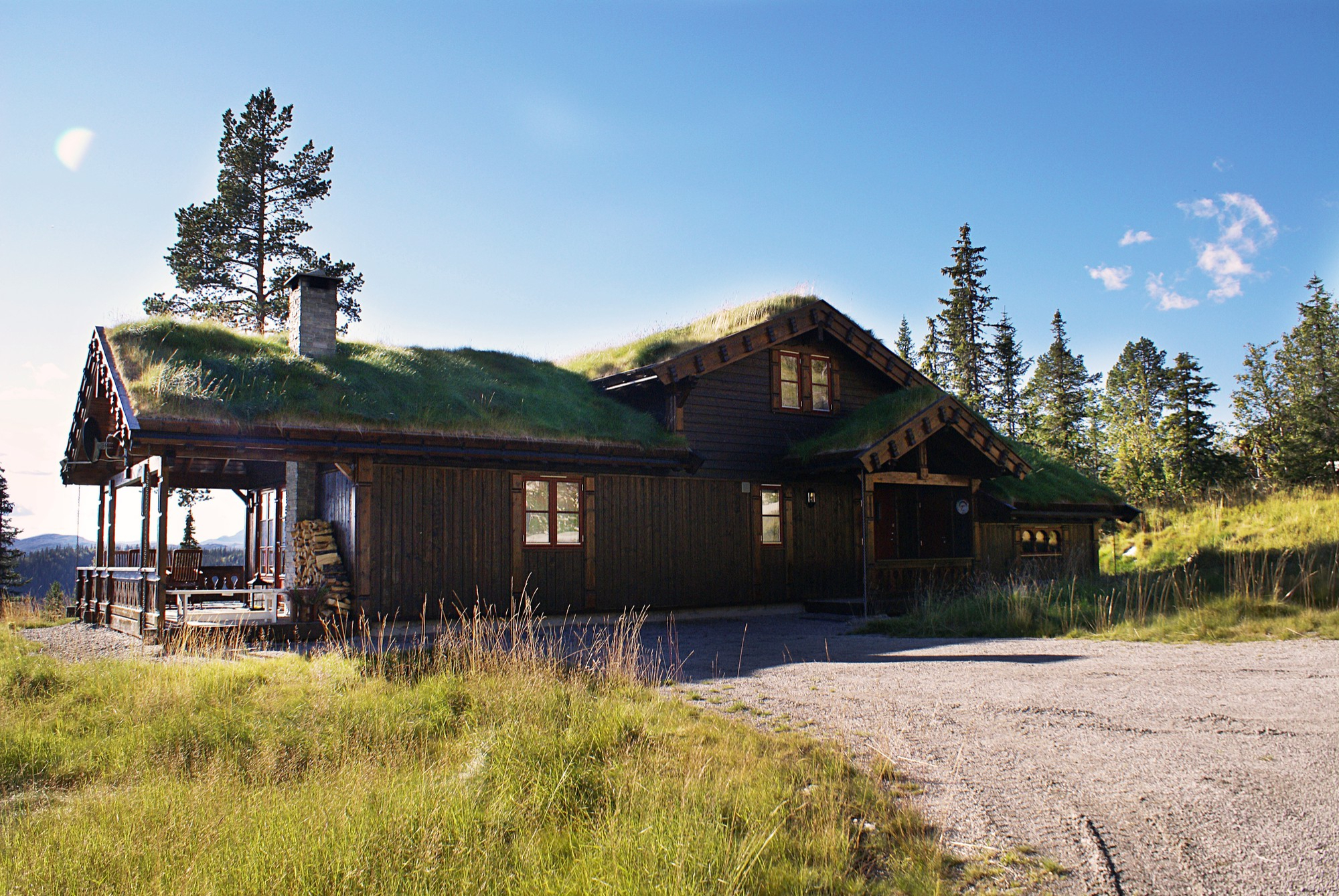
The cabin came into view over the last rise, framed by the sharp silhouettes of the Colorado pines, and the first thing I saw was the truck, white and enormous, its rear door rolled up, a metal ramp angled down to the gravel. Then the people. My mother directing the movers with her hand on her hip, her posture the posture of a woman who has made a decision and is now in the administrative phase of it. My father leaning against the truck with his arms crossed as if supervising a renovation. My older sister Lydia carrying a cardboard box while her kids, Owen and Piper, darted around the yard, kicking pinecones and laughing the easy laugh of children who have been told this is an adventure.
They all looked entirely at home.
I got out of the car.
My mother saw me and smiled the way you smile when someone shows up right on time.
“There she is! Perfect timing. We need to get the heavy stuff in first.”
I had been on the road for four hours and I had not slept well the night before and I was still carrying the particular fatigue of a work week that had ended with too many unresolved problems, and I stood in my own driveway looking at my family arranged across my property like furniture and I tried to find words that were accurate without being inflammatory.
“What are you doing here?” I asked.
My mother waved her hand, the gesture she used when she thought I was being unnecessarily complicated about something obvious.
“We’re moving in. You live alone up here, and your sister and the kids need space.” She said it with a bright, reasonable confidence, as if she were solving a logistics problem rather than announcing the seizure of someone else’s home. “This is family property.”
I looked at the driveway. I looked at the truck. I looked at my sister setting a box down on my porch and wiping her hands on her jeans.
“No,” I said. “It’s not.”
Lydia rolled her eyes. “God, you’re so uptight. You barely use this place. We’ll make it a real home.”
That phrase, a real home, landed strangely. My cabin had been a real home since the day I moved in. I had chosen the site myself, spent two years saving the down payment, managed the mortgage alone for three years, and driven that mountain road in every season and every weather until I knew every curve of it. I had hung my grandmother’s quilt on the spare room wall and planted lavender along the front path and built a life in those rooms that was quiet and specific and entirely mine.
“I didn’t invite you here,” I said.
My father pushed himself off the truck, brushing imaginary dust from his hands with the unhurried confidence of a man making an obvious point.
“You don’t need to invite us,” he said. “We helped with the down payment, remember? That makes this shared.”
“You gave me a thousand dollars. The house cost four hundred thousand.”
“Money is money,” my mother snapped. “Don’t be petty. Family doesn’t nickel and dime each other.”
Owen came running toward me then, sandy hair flying, eyes bright with excitement.
“Mommy said I get the room upstairs with the big window! Grandma said you won’t mind!”
I looked down at him, this child who was seven years old and had no part in any of this, and felt a complicated grief move through me.
“Grandma said this is our new home,” Piper added from behind her brother, clutching a pinecone, pleased with the information. “We won’t have to leave.”
They had told the children.
Not as speculation, not as a possibility, but as a settled fact. They had prepared the children for a life in my house before they had said a single word to me about it.
I walked past my family and went inside.
The cabin door was wide open. A mover I had never seen before was carrying an unfamiliar dresser through my living room. A recliner I did not own sat tilted near the entrance. My pantry had been opened, their food stacked on my shelves. My refrigerator door hung ajar, filled with things they had brought from home, crowded against my groceries as if I were not a separate person with a separate life.
I stood in the center of my living room and took a careful inventory of every surface. The side table where I kept my books had been cleared to make room for my mother’s reading glasses and a magazine she had brought. My throw blanket had been moved from the couch to a chair to make room for one of their coats. A pair of small rubber boots, children’s size, sat just inside the front door.
They had been in my house for hours. They had arranged it around themselves as if my presence in it were an inconvenience to be accommodated.
“Stop,” I said. “Everyone stop.”
My mother sighed. “Mara, please don’t make a scene. You always get like this.”
I turned to look at her. She was standing in my kitchen with the expression she wore when she thought I was being difficult about something she had already decided.
“You need to leave,” I said.
“We’re not leaving,” Lydia said flatly from the doorway. “Move-in day is Saturday, but we figured we’d start early. The kids were excited.”
Move-in day.
They had a date. A schedule. A plan that had been made in detail, over time, without me.
Something inside me that had been under pressure for a long time reached the end of its tolerance.
For as long as I could remember, I had been the reliable one. The one who covered birthday party costs when funds ran short. The one who drove four hours to babysit when Lydia was overwhelmed. The one who transferred money without a formal request and never mentioned it again. I had been telling myself for years that this was love, that family required sacrifice, that the discomfort I felt when I said yes to things I did not want to do was simply the cost of being a good daughter and a good sister. And some of it had been love, genuinely. Some of it had been freely given and I did not resent giving it.
But some of it had been extracted. Taken because I did not know how to refuse, or because refusing came with consequences I was not yet equipped to absorb. I had learned, early and thoroughly, that the path of least resistance in my family ran directly through my own willingness to make myself smaller. I had followed that path for thirty years.
What I understood, standing in my kitchen watching my mother direct a stranger to carry furniture into my home, was that I had confused compliance with love for a very long time, and that the difference between the two was something I could no longer afford to ignore.
“I’m going inside,” I said. “When I come back out, I expect all of this gone.”
My mother laughed. “Oh, sweetheart. You’ll adjust. Families share.”
I went into my home office, closed the door, and called a locksmith.
Walter’s Lock and Key. A gruff voice, unhurried, the kind of calm that belongs to people who work with their hands and do not have patience for drama.
“I need every lock on my house changed today,” I said.
He asked if everything was all right.
I said no, but it would be.
After I hung up, I called the Cedar County Sheriff’s Office.
Deputy Hartman listened to the entire situation without interrupting. At the end of it he asked his questions with the methodical patience of someone who has handled versions of this situation before. Was the mortgage in my name. Were they on the deed. Had they previously lived there. Did they receive mail at my address.
The answer to each was no.
“Legally,” he said, “they have no standing to occupy your residence. If they attempt to enter after you’ve revoked permission, you can treat it as trespassing and call us immediately.” He paused. “But if they establish themselves inside, if they bring beds and personal items and begin residing there, it becomes more complicated. Colorado law requires an eviction process if someone is considered an occupant.”
I sat with that for a moment.
That was why they had mattresses. That was why they had dressers and food and the children’s toys. They were not moving carelessly. They had planned this with a specific understanding of how residency law worked. They were trying to get inside and stay long enough that removing them would require a legal process.
I told him I was having the locks changed immediately and asked what I should do when they returned.
“Don’t let them in,” he said. “And call us.”
For the next hour I sat in my office listening to the sounds of my family outside, the muffled instructions, the scrape of boxes, the children laughing. The knocking started when they realized I was not opening the door. My mother’s voice, alternately cajoling and commanding. Lydia’s voice, sharp with the specific frustration of someone who expected to have won by now. My father’s voice, quieter and heavier, telling me not to do something we would all regret.
I did not open the door.
Walter arrived the following morning. He was a broad-shouldered man in his early fifties with the unhurried efficiency of someone who has been doing this work for a long time and no longer needs to perform it. He worked through every door in sequence, his drill making clean, declarative sounds against the morning quiet.
“You picked a beautiful place up here,” he said while he worked.
“It was a dream of mine,” I said.
He glanced at me briefly, and his voice stayed entirely neutral. “Always someone trying to take the things we work hardest for.”
When he handed me the new keys on their metal ring, I held them for a moment before putting them in my pocket. They felt heavier than keys usually feel.
The day after the locks were changed, my phone rang from before sunrise until well into the afternoon. My mother, my father, Lydia, aunts and cousins who had heard a version of events I had not been present to correct. Every call carried some variation of the same two messages: that I had humiliated my family, and that I owed it to them to fix what I had broken.
I listened to the voicemails once, then deleted them.
What struck me, reading through the text messages before I blocked each number, was how completely absent from all of it was any acknowledgment that they had done something to me. Every message treated my calling the locksmith and alerting the sheriff as the originating act of aggression. In their account of events, I had arrived and begun a conflict for reasons no one could adequately explain. The moving truck, the food in my refrigerator, the children promised a room in my house, the move-in date scheduled without my knowledge: none of it appeared in their version of what had happened.
I blocked numbers until the list of blocks was longer than my contacts list.
My father came alone three days later, just before dark, parking at the end of the drive and walking up with his hands in his jacket pockets. I stepped onto the porch and kept the door behind me.
He looked tired. Not the theatrical tiredness of someone making a point, but the genuine tiredness of a man who had been holding a heavy thing and was beginning to understand that no one was going to take it from him.
“Your mother hasn’t stopped crying,” he said.
“I’m sorry she’s hurting,” I said. “That doesn’t change what happened.”
He said they had been trying to help me. That I lived alone up here and they worried. That the kids needed space and he didn’t know how else to handle it.
“You could have asked me,” I said.
He rubbed the back of his neck. “I don’t know how we got here.”
“I do,” I said. “It’s been like this my whole life. You just never noticed because I always absorbed it.”
He stood there for a moment without answering. Then he told me they were not backing down, that my mother intended to file a lawsuit, that I should think carefully before I made this any uglier.
“I’ve been thinking carefully,” I said. “For years. That’s over.”
He got in his truck and drove away.
A week later, a letter arrived from an attorney’s office. My mother was suing me for one thousand dollars, the amount she had contributed to my down payment three years earlier, plus interest, plus damages.
I sat with the letter on the kitchen table and let myself feel the full shape of what it was. Not a lawsuit with any realistic chance of success. A weapon designed to cost me time and energy and to send the message that refusal had a price.
I called Gregory Hayes that afternoon.
He was a calm, precise man who listened to the entire situation without interrupting and then said, in the same even tone throughout: bring everything. The deed, the mortgage, the police reports, the CPS complaint that Lydia had apparently filed claiming I had made the children homeless, the trespassing documentation, every text message.
I had kept all of it.
Months of careful, methodical documentation, partly out of instinct and partly out of the knowledge, absorbed somewhere along the way, that the only thing that stood between me and their version of events was paper. I had screenshot messages before blocking numbers. I had asked the sheriff’s office for copies of every report. I had kept the original demand letter from my mother’s attorney in the fireproof safe alongside the deed. Every time something new had happened, I had made a record of it, dated and specific, and filed it in the folder that now held the most complete account of my family’s behavior toward me that anyone had ever assembled.
Gregory reviewed the file and told me they had no case. What they had was pressure, applied with the hope that I would negotiate rather than fight. He would file for dismissal and propose a mutual no-contact agreement. If they refused the agreement, we would file for a restraining order on the grounds of harassment.
“Will that work?” I asked.
“With what you’ve documented?” he said. “Yes.”
There are things I could not have done without that documentation. I could not have walked into that courtroom carrying the weight of months of incidents without the ability to present them as a coherent, specific, dated record rather than a personal account that could be dismissed as the grievances of a difficult daughter. Gregory had said it plainly: the documentation was what made the case. I had built it piece by piece during months when I was frightened and exhausted and not at all certain that any of it would amount to anything, and it had turned out to matter more than almost anything else I had done.
The hearing was held on a gray March morning. The courtroom was small and the light inside it was flat and institutional, and my family sat across the room looking like a version of themselves I had never quite seen before. My mother in a gray sweater dress, shoulders set, already composing herself into someone who had been wronged. My father beside her, staring at the table. Lydia in the corner, arms crossed.
None of them looked at me.
My mother spoke first, describing the move-in attempt as a family arrangement that had been miscommunicated, the break-in attempt as an allegation with no basis, the whole pattern as the product of my emotional instability and her sincere desire to help her isolated daughter.
Gregory presented the timeline.
The unannounced arrival with a moving truck. The police-verified trespass. The changed locks. The text messages, several of which he read aloud in the level voice of someone reading a grocery list. The CPS complaint filed in bad faith. The attempted forced entry at the back door, which Gloria had witnessed and reported. The lawsuit filed after all of the above.
Then the audio from one text message, read into the record: If you think locks will stop us, you’re delusional.
My mother’s jaw tightened.
My father looked at the table.
The judge was a woman in her late fifties who had been taking notes throughout and now folded her hands in front of her.
“This is not a misunderstanding,” she said to my mother. “This is a documented pattern of harassment.”
My mother opened her mouth.
The judge raised one hand and my mother closed it.
The judge looked at me.
“Ms. Monroe, the court grants your request. Effective immediately, the respondents are ordered to cease all contact. They may not approach your residence, your workplace, or communicate with you through any means. Violation of this order will result in fines or arrest.”
My mother made a sound I had not heard from her before, something between outrage and grief.
Lydia said my name once, sharply, as if the restraining order were something I had done to her.
I looked at the judge and said thank you.
Outside the courthouse, the air was cold and clear. Gregory handed me the copy of the order and asked how I felt.
I thought about the question seriously.
“Free,” I said. “I didn’t expect that.”
“You built this,” he said. “Every piece of documentation, every call to the sheriff, every blocked number. You built the case.”
I drove home with the windows cracked, the mountain air moving through the car in clean, cold currents. When the cabin came over the last rise, its windows catching the late afternoon light, I felt something loosen in my chest that had been tight for a very long time.
Inside, the house was quiet. Not the tense quiet of a place under threat, but the ordinary quiet of a home at rest. I walked through each room slowly, touching things, the banister, the kitchen table, the doorframe of the spare room with its soft green walls and my grandmother’s quilt folded at the foot of the bed.
Mine.
All of it mine in the way that things are yours when you have fought for them rather than simply received them.
I stood in the spare room for a long time. This was the room Owen had been promised. The room my mother had pointed toward when she told the movers where to put the linens. The room where Piper might have slept if things had gone differently, if I had not made the calls I made and changed the locks I changed and documented everything I documented. I had kept this room by a series of specific, deliberate decisions made under considerable pressure, and standing in it now I felt that history as a physical thing, layered into the walls the way old sounds are sometimes said to linger in old buildings.
It was a guest room. My guest room. A room I could invite people into, when I chose to invite them.
The distinction between offering and defending felt like the most important thing I had learned in a very long time.
I made dinner slowly, without urgency, and ate at the table by the window. The mountains went from gold to purple to the deep, specific darkness that is only possible when you are far from city light. Stars appeared, more of them than most people ever see in their lives.
I thought about my parents, not with the complicated grief I had carried for years, but with something simpler and clearer. They were people who had made choices. They had chosen to treat my home as communal property and my boundaries as obstacles. They had chosen to involve the children in their plans before involving me. They had chosen to file a lawsuit and then, when that failed, to accept the order that removed them from my life.
Their choices had consequences. The consequences were now in motion and I was not responsible for managing them.
I had been the pressure valve in my family system for thirty years, absorbing what should have had nowhere to go so that everyone else could avoid the full weight of their decisions. Removing myself from that role had not caused the instability. It had revealed the instability that had always been there, running underneath everything, kept invisible by my willingness to contain it.
I washed my plate and went to bed and slept through the night without waking once.
In the weeks that followed, I did the small, deliberate work of reclaiming a life that had been in defensive posture for too long. I painted the spare room, hung pictures that had been leaning against walls for months, planted the lavender seedlings along the front path and knelt in the cold soil to do it, hands dirty, nose pink from the wind, feeling the particular satisfaction of physical work that will still be there tomorrow. I had coffee with Mrs. Rowan on her porch and accepted her preserves and her straightforward, uncomplicated kindness without the guilt that used to accompany being cared for.
I called Jess, who drove up one weekend with wine and no questions, and we sat on the deck watching the sky go through its colors and talked about nothing important for hours. At one point she said I seemed different, more solid, like I finally belonged to myself, and I thought about that phrase for several days afterward. Belonging to yourself. It had not occurred to me until I was thirty years old that this was a thing you could do, that selfhood was not something that had to be negotiated with everyone around you before you were allowed to inhabit it.
I stopped checking my locks out of fear and started checking them out of habit, which is a different thing entirely.
Some weeks after the hearing, Mrs. Rowan mentioned she had seen my parents in town. They had not looked well. My mother had been crying in the car. My father had looked older than she remembered.
I listened to this information and felt the old pull toward guilt, the old instinct to find a way to fix what was broken in them, to smooth this over, to be the person who made everyone feel better at the cost of making myself smaller.
The pull was fainter than it used to be. Not gone, but fainter, and growing fainter.
“They’re dealing with the consequences of their choices,” Mrs. Rowan said simply.
“I know,” I said.
She put her hand on my arm and left it there for a moment.
“You’re allowed to be at peace, Mara. You don’t owe them your peace.”
I drove home through the pines with the windows down and the cold air filling the car and thought about that sentence. You don’t owe them your peace. I had spent so many years assuming that my peace was something I borrowed from the goodwill of the people around me, something that could be revoked at any time by anyone who needed something from me. It had never occurred to me that peace could simply be something I was entitled to. That it could belong to me the way the deed to this house belonged to me: clearly, legally, without condition.
That evening I sat on the porch with tea until the stars came out, and I did not think about my family. I thought about the garden, and the way the lavender was already beginning to establish itself in the rocky soil, stubborn and fragrant and entirely indifferent to the difficulty of its circumstances.
In the morning I would drive into town for supplies. I would work on the new project proposal that was due at the end of the week. I would call Jess. I would check the cameras I had installed on the cabin’s exterior, not from anxiety but as a routine, the way you check anything you have built and maintained with care.
My life was mine now in a way it had not been for as long as I could remember.
I had not taken it back by accident. I had taken it back by keeping records and calling the sheriff and hiring an attorney and blocking numbers and standing at the edge of my porch and saying no, and then saying it again, and then finding out what was available to me legally when no simply saying it was not enough.
I had taken it back by understanding, finally and completely, that love does not require you to hand over your home to prove it. That family is not a legal claim on another person’s property or labor or boundaries. That the people who raised you do not own you when you are grown, no matter how loudly they insist otherwise.
I went to bed with the windows cracked slightly, cold mountain air moving through the room, the forest settling into its nighttime sounds. The locks were checked. The cameras blinked their small red confirmation from the corners of the eaves. The paperwork was in the fireproof safe.
My name was on the deed.
The deed was mine.
The home was mine.
And the life I was building inside it, slowly and deliberately and entirely on my own terms, was mine.
I fell asleep to the sound of the wind in the pines and did not wake until morning.

Laura Bennett writes about complicated family dynamics, difficult conversations, and the quiet moments that change everything. Her stories focus on real-life tensions — inheritance disputes, strained marriages, loyalty tests — and the strength people find when they finally speak up. She believes the smallest decisions often carry the biggest consequences.