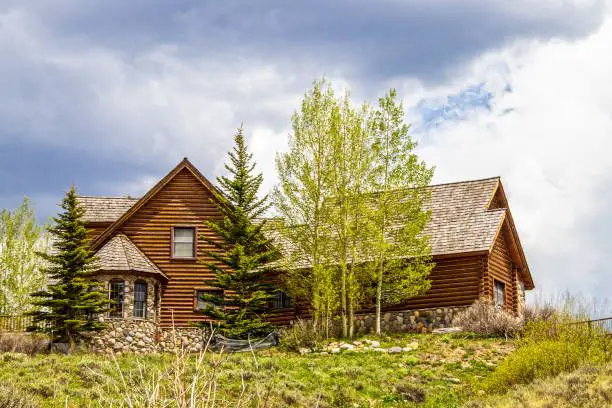
They gave me a ruin and called it a gift.
They handed my sister a palace. Then they tried to take the palace I built from the ruin.
What they didn’t know — what they never once considered — was that the only thing I’d built stronger than the walls was the contract protecting them.
It started on a humid Tuesday afternoon three years ago. My parents, Robert and Linda, called a family meeting at a high-end bistro downtown. My younger sister Emily — the golden child, the miracle baby, the one who could do no wrong — sat across from me sipping an iced latte, looking mildly bored.
“We’ve decided to help you girls get started in life,” my father announced, sliding two envelopes across the white tablecloth.
Emily opened hers first. Inside was a set of heavy magnetic key cards. “The penthouse at the Meridian,” my mother beamed, clutching Emily’s hand. “Two bedrooms, floor-to-ceiling windows, city views. We put down the full payment. It’s a million-dollar property, sweetheart. It’s yours.”
Emily squealed and hugged them both. I felt a tight knot form in my stomach, but I forced a smile and reached for my envelope.
Inside was a single rusted brass key.
“And for you, Sarah,” my father said, his voice dropping half a register, the enthusiasm draining out of it. “We bought that old foreclosure on Elm Street. It’s got good bones. A real investment opportunity.”
I knew the house on Elm Street. Everyone in town knew it. A rotting Victorian corpse that had been sitting empty for a decade.
When I drove there that afternoon, reality hit me like something physical. The front porch sagged so badly it looked like a frown. The roof had more holes than shingles. When I unlocked the door, the smell reached me before anything else — mildew, wet rot, rodent droppings. The floorboards were hollowed out by termites. No heating. The plumbing had been stripped by copper thieves years ago. The electrical wiring was a fire hazard waiting for its moment.
“It’s a fixer-upper,” my father said over the phone when I called, trying not to cry. “Don’t be ungrateful, Sarah. The deed is in my name for tax purposes for now, but it’s your home.”
I didn’t cry. I didn’t beg for the penthouse.
Instead, something cold and steady settled in my chest. I stood in the middle of that rotting living room and made a decision. I wouldn’t just fix it. I would transform it into something they couldn’t look away from.
For the next three years, I stopped having a social life.
I worked my corporate job from eight to five. From six until two in the morning, I was a general contractor. I watched thousands of hours of tutorials. I learned to mud drywall until my shoulders screamed. I learned plumbing, HVAC installation, smart-home wiring. Every paycheck went into the house.
A hundred and fifty thousand dollars of my own money. Scraped together since college, dollar by dollar.
I imported Italian marble for the kitchen island. I hand-laid white oak hardwood floors in a herringbone pattern. I built a master bath that could compete with a five-star hotel — rainfall shower, heated floors, glass enclosures that fogged in winter mornings like something from a magazine.
My parents never visited. Not once. When I invited them, they were always busy helping Emily pick out curtains, or tired from dinner at the club. They assumed I was living in patched-up squalor, holding the ceiling together with duct tape and optimism.
They had no idea what was coming.
The morning of the housewarming party, I stood in the center of my open-concept living room. Afternoon sun streamed through the new energy-efficient windows and bounced off the crystal chandelier I’d installed myself. The house didn’t smell like rot anymore. It smelled of vanilla candles, fresh lilies, and three years of work that had nearly broken me and made me instead.
The doorbell rang.
My mother’s jaw dropped before she’d fully cleared the doorway. My father pushed past her, eyes scanning the custom crown molding, the state-of-the-art kitchen, widening as he moved from room to room. Emily followed behind them, and I watched the confusion on her face shift into something sharper. Jealousy. The quick, clean kind.
“My God,” my mother whispered, running her hand across the quartz countertop. She wasn’t looking at me with pride. She was looking at the counter with hunger.
“I did,” I said, handing her a glass of champagne. “Welcome home.”
I didn’t know it yet, but I hadn’t welcomed family. I’d invited vampires.
The party filled up quickly. About thirty relatives — aunts, uncles, cousins — moved through the space marveling. Uncle Mike was crouched over the smart-home panel, fascinated. Aunt Carol hadn’t stopped talking about the hand-tiled fireplace for twenty minutes. For the first time in my life, I felt seen by the people who’d spent years looking past me.
Then came the clinking.
My mother was standing by the fireplace, tapping a silver spoon against her wine glass. The room went quiet. She beckoned Emily to stand beside her, and Emily moved over with her fiancé Chad, already smiling the way you smile when you know the punchline.
“Everyone, thank you for coming!” My mother’s voice climbed to that particular pitch she used when performing for an audience. “We are so proud of this house. It’s truly a testament to the Henderson family vision.”
I frowned. The Henderson family vision. I was the one with calluses on my hands and sawdust permanently in my hair.
“And,” my mother continued, smile widening past warmth into something predatory, “Emily and Chad have decided to take the next step. They’re getting a puppy! A Golden Retriever!”
Polite applause rippled through the room. People looked mildly confused about why this warranted a toast.
“But,” my mother sighed theatrically, turning her eyes directly toward me, “as you know, the penthouse we bought Emily is in the city center. No yard. A dog needs space to run. A dog needs a home.”
She paused for exactly the right amount of dramatic effect.
“So, after discussing it as a family, your father and I have made a decision. We are going to transfer ownership of this beautiful house to Emily and Chad.”
The silence that followed was suffocating.
My heart stopped for a full second. I looked around the room, waiting for someone to laugh, for a punchline that wasn’t coming.
“What?” My voice was quiet, but in that silence, it carried like a gunshot.
“It just makes sense, Sarah.” My father stepped forward with the booming false warmth he used when he wanted something. He walked over and clapped a heavy hand on my shoulder. “You’re single. You work all the time. You don’t need four bedrooms and a quarter-acre yard. The penthouse is much better suited for a career woman like you. We’ll swap.”
I stepped out from under his hand. “I don’t want the penthouse. I want my house. I spent three years and $150,000 of my own money on this place. It was a ruin when you gave it to me.”
His smile faltered, replaced by the impatient sneer I’d grown up watching. “Don’t be petty. It’s unbecoming. And let’s be clear about the facts — the deed is in my name. Legally, this is my property. I allowed you to live here rent-free to fix it up. That was the arrangement.”
“That wasn’t the arrangement. You said it was a gift.”
“Well, things change,” Emily said, glancing around the living room like she was already measuring for drapes. “Chad really likes the kitchen. We’ll need you to clear your things out quickly. My interior designer is coming Monday to see what we’re keeping.” She paused, as if remembering something. “Oh, and leave the sofa. It matches the walls.”
“You want me out in 48 hours.”
“Monday morning,” my father said sharply. “Hand over the keys.”
I looked at thirty faces staring at me. Some looked pitying. Some looked deeply uncomfortable. Nobody said a word.
“Just let them have it, Sarah,” Aunt Carol whispered, studying the floor. “Don’t cause a scene.”
I looked at my mother, sipping her wine with the calm satisfaction of someone who’d just won. I looked at Emily already discussing paint colors with Chad. They genuinely believed that because a piece of paper said Robert Henderson, my blood and sweat and $150,000 belonged to them too.
They thought I was weak. They thought I’d cry, pack my clothes, and quietly disappear to the city.
A strange calm settled over me. Not the peaceful kind. The kind that comes when you stop negotiating and start executing.
“Okay,” I said softly, and forced the corners of my mouth into a smile that didn’t reach my eyes. “You’re right, Dad. The deed is in your name. You own the structure. I’ll be out by Monday morning. You’ll get exactly the house you gifted me.”
The moment the last car pulled out of the driveway, I locked the front door and dialed a number I knew by heart.
“Mike?” I said when the foreman who’d taught me to frame a wall answered, groggy with sleep. “It’s Sarah. I need the crew. All of them. And bring the big truck. No — bring three trucks.”
“Sarah? It’s Saturday night. What’s going on?”
“I’m paying triple time, cash. We have 48 hours to strip the Elm Street house. And when I say strip, Mike, I mean everything. If I bought it, it leaves with me.”
A pause. He knew how much I loved that house. “Did they try to screw you?”
“They’re giving it to Emily.”
“I’ll be there in twenty minutes,” he said. “And I’m bringing the pry bars.”
What followed was forty-eight hours of controlled, precise, deeply satisfying work.
The furniture went first. Then the curtains, the art, everything loose. But we were just getting started.
“The deed covers the land and the existing structure,” I told the crew, holding up my folder of receipts. “Everything else is a fixture I installed. If it can be unscrewed, unbolted, or unglued — it comes with me.”
The kitchen went first. The custom German cabinetry, gone. The quartz island went onto dollies and rolled out the door. The high-end appliances were loaded onto the first truck. Then the floors — white oak herringbone planks, lifted one by one in the dark. Heartbreaking work. The thought of Emily’s dog scratching them gave me what I needed to keep going.
We moved through the bathrooms. Toilets. Vanities. Rainfall showerheads. Glass enclosures. All removed. The plumber capped the pipes behind us, leaving just rough-ins sticking out of the wall like severed arteries.
“What about the lights?” Mike asked Sunday afternoon, pointing up at the chandeliers.
“Take them. I paid for the wiring too. Pull the copper.”
We stripped the outlet covers. Took the smart thermostat. Took the interior doors off their hinges because I’d replaced the hollow originals with solid wood. We took the baseboards. We took the crown molding.
I went into the backyard and dug up the Japanese maples I’d planted myself. I rolled up the sod. I pulled the paving stones from the patio one by one.
By three in the morning on Monday, the house was unrecognizable.
It wasn’t just empty. It was gutted. The walls were scarred where cabinets had been. The floor was bare, dusty subfloor plywood and cracked concrete. Wires dangled from the ceiling holes like dead vines. When I stood in the center of what had been my living room, the space echoed with a hollow, ghostly sound.
It looked almost exactly like the ruin they’d given me three years ago.
I taped a note to the inside of the front door — the original rotting one I’d refinished, though I’d scraped the new varnish off it just to be thorough — and walked out for the last time.
I drove my convoy of trucks to a storage warehouse I’d rented that morning, unloaded everything, and waited.
At nine o’clock sharp, my father’s black Mercedes turned into the driveway. Emily’s convertible followed, and behind it, a van marked Luxe Interior Design.
I was parked across the street in my sedan, watching through tinted windows.
They stepped out beaming. Emily was holding a bottle of champagne. My mother was pointing at the porch, gesturing for the interior designer, probably talking about planters.
Then Emily opened the front door.
I heard the scream from across the street.
Not fear. Pure, undiluted horror.
“My house! My house!”
I stepped out of my car and walked slowly across the street. By the time I reached the driveway, my father had run inside and run back out, his face a dangerous shade of purple.
“You!” He came down the porch steps with his fists clenched. “What did you do to my property?”
I stopped at the bottom of the steps and looked up at him. “I didn’t do anything to your property, Dad. Your property is the frame, the roof, and the foundation. That’s what you bought. That’s what the deed covers.”
“You gutted it!”
“I vacated it. You gave me 48 hours to remove my belongings. I complied.”
I reached into my bag and pulled out the thick binder I’d spent months preparing. I tossed it onto the hood of his Mercedes with a loud, satisfying thud.
“That’s an itemized list of every screw, board, wire, and appliance I purchased. With receipts. I didn’t destroy your house. I took my house back. What you see in there? That’s the gift you gave me three years ago. Enjoy.”
Emily ran out onto the porch, mascara running. “You’re a monster! Where am I supposed to live? I can’t live in this dump!”
“The penthouse has nice views,” I said. “Oh wait.”
“I’m calling the police!” my mother shrieked, fumbling with her phone. “This is vandalism! This is theft!”
“Go ahead. Tell them your daughter stole her own property. But before you do — look at page one of the binder.”
My father’s hand hovered over it. Then he opened it.
The interior designer stepped carefully over a piece of loose drywall. “Mr. Henderson,” he said, with the awkward professionalism of someone realizing there was no commission here today, “to make this habitable — you’re looking at a full remodel. Plumbing, electrical, flooring, cabinetry. Easily $200,000. Probably more with current labor rates.”
My father looked from the designer to the gutted house to the binder to me. His arrogance was cracking, replaced by the dawning comprehension of financial catastrophe.
“You remember this, don’t you?” I stepped closer. “Three years ago, I needed a small bridge loan to buy lumber before my bonus check cleared. You lent me $5,000. And because you’re a businessman who loves paperwork, you made me sign a loan agreement.”
He stayed silent, hands shaking.
“You didn’t read the addendum I added. The one stating that if the property ownership was transferred, or if I was evicted without cause before the property was sold, all capital improvements made by me would be considered a high-interest loan to the deed holder — payable immediately upon eviction.”
“This isn’t legal,” he said, but his voice had lost its edge.
“It’s notarized. And since you publicly evicted me in front of thirty witnesses on Saturday, the clause is triggered.” I looked him in the eye. “You owe me $150,000 for the labor and structural materials I couldn’t physically remove — the drywall, the paint, the repairs that became part of your building. Since I was generous enough to take the cabinets and floors, I won’t bill you for those. But the structural labor? That’s yours.”
“We don’t have $150,000 in cash!” my mother cried. “We put everything into the penthouse!”
“Then I guess you have a problem. Because that contract puts a mechanic’s lien on this property. You can’t give it to Emily. You can’t sell it. You can’t refinance it until you pay me.”
The silence on the lawn was complete. Birds singing. Sun shining. My family’s world quietly coming apart at the seams.
My mother’s face crumbled. She rushed down the steps and grabbed my arm, the aggression vanishing, replaced by a desperate, clinging plea. “Sarah, baby, please. We were stressed. We didn’t mean it. You can move back in! Bring everything back! We’ll let you stay, Emily can keep the condo, we’ll fix this—”
I looked down at her hand on my arm.
“You think I’d put my floors back down for you to walk on?” I pulled free. “No. The bridge is burned. You lit the match.”
“You’re ruining us!” Emily wailed from the porch.
“I’m not doing anything to you,” I said. “I’m letting you live with the consequences of your own choices. You wanted a house — you have the house. You wanted the deed — you have the deed. You wanted me gone — I’m gone.”
I walked back toward my car.
“Where are you going?” My father’s voice came out old and hollowed out.
I opened the car door. “I bought a plot of land in the next town over this morning. I have three truckloads of high-end materials and a crew ready to start Monday. I’m going to build my own home from the ground up.” I looked back at him one last time. “And this time, only my name will be on the door.”
Six months later, autumn was settling in around my new place.
I sat on the front porch — reclaimed composite decking, wide and solid — with a cup of hot cider, watching the leaves come down through the pines. The new house was smaller. A cozy A-frame tucked against a tree line, exactly the size I needed, with no empty rooms built to impress anyone.
Inside, the white oak herringbone floors gleamed. The German cabinetry fit perfectly in the new kitchen. The chandelier caught the afternoon light the same way it had on Elm Street, except now, nothing in this house could be taken from me.
I picked up my phone and scrolled through local listings. There it was — a foreclosure auction notice. The Elm Street house.
My parents hadn’t been able to pay the lien. They’d tried to fight the contract in court, but my documentation was airtight, and the legal fees drained what was left of their savings. To settle the debt and avoid bankruptcy, they’d been forced to sell Emily’s penthouse at a loss — the market had dipped at exactly the wrong moment for them.
Emily was renting a studio apartment now, posting vague statuses on social media about betrayal and karma, apparently unaware of the irony.
My parents were in a small condo on the edge of town, their retirement fund badly damaged. The Elm Street house sat empty — a gutted shell, rotting again. No buyers wanted a property that needed $200,000 in work just to be livable. It had gone back to exactly what it was before I ever touched it.
A ruin.
They’d called a few times. Voicemails cycling between screaming rage and tearful apologies, sometimes within the same message. I never listened past the first few seconds. I blocked their numbers last week without ceremony.
I set my cider down and breathed in the crisp air. Pine needles and woodsmoke. The smell of a place that was entirely, irreversibly mine.
They had spent three years assuming the value of that house was in the location, or the structure, or the name on the deed. They thought they could transfer the luxury I’d built straight into their favorite daughter’s hands like passing a wrapped gift. They never understood — not once, not even at the end — that the value was never in the wood or the stone.
The value was me. My labor, my taste, my refusal to quit.
You can steal a house. You cannot steal the hands that built it.
I went inside, locked the solid oak door behind me, and stood for a moment in the quiet. No voices. No obligations. No one measuring how much of my life they were owed.
Safe. Independent.
For the first time in my life, completely home.

Lila Hart is a dedicated Digital Archivist and Research Specialist with a keen eye for preserving and curating meaningful content. At TheArchivists, she specializes in organizing and managing digital archives, ensuring that valuable stories and historical moments are accessible for generations to come.
Lila earned her degree in History and Archival Studies from the University of Edinburgh, where she cultivated her passion for documenting the past and preserving cultural heritage. Her expertise lies in combining traditional archival techniques with modern digital tools, allowing her to create comprehensive and engaging collections that resonate with audiences worldwide.
At TheArchivists, Lila is known for her meticulous attention to detail and her ability to uncover hidden gems within extensive archives. Her work is praised for its depth, authenticity, and contribution to the preservation of knowledge in the digital age.
Driven by a commitment to preserving stories that matter, Lila is passionate about exploring the intersection of history and technology. Her goal is to ensure that every piece of content she handles reflects the richness of human experiences and remains a source of inspiration for years to come.