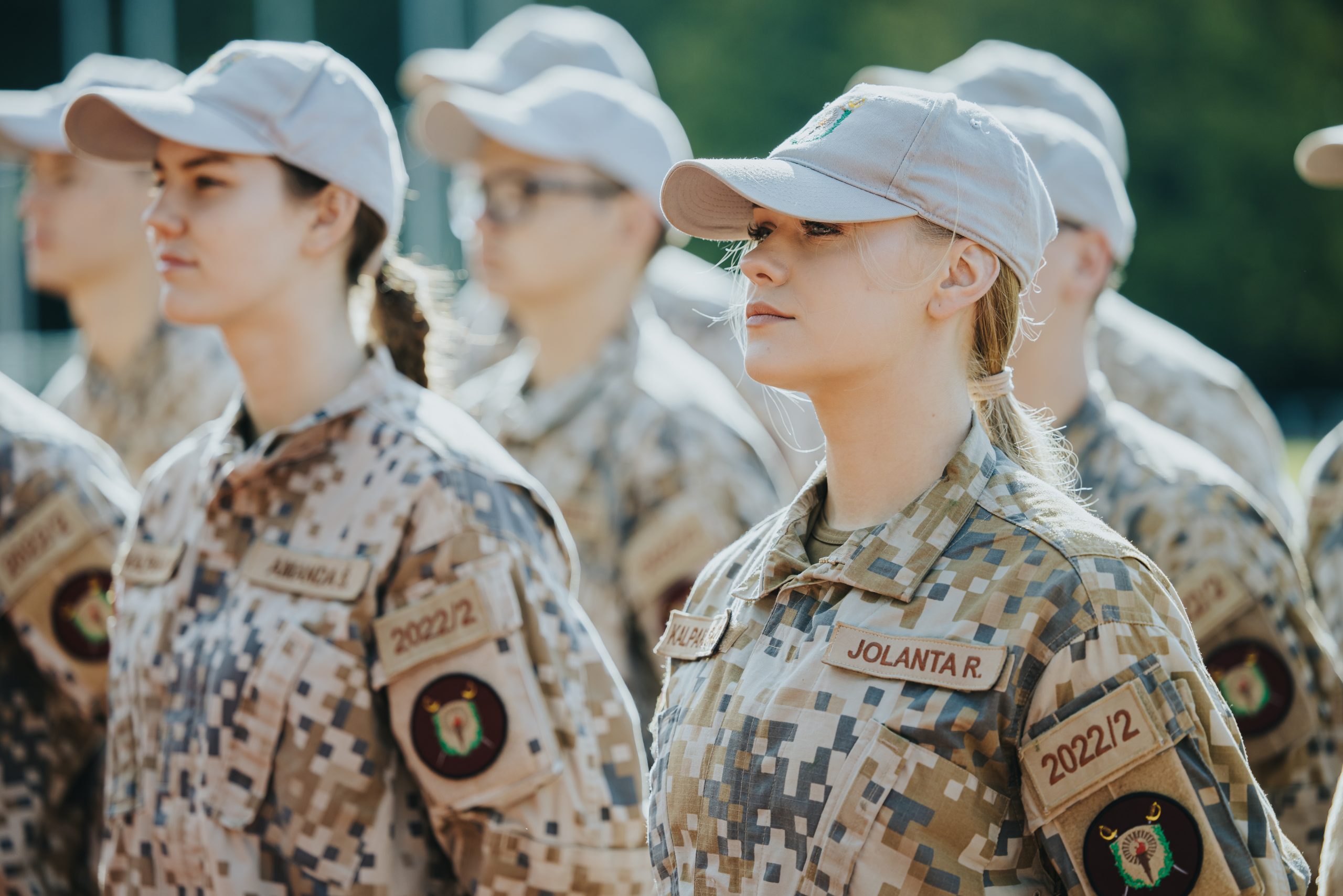
The parking lot was empty except for me.
I sat in my car with the engine off, hands resting on the steering wheel at ten and two out of pure muscle memory. The sodium-orange glow of the streetlamps pressed against the windshield. I was still in my dress blues. The fabric was stiff, unyielding, the kind that holds your posture whether you want it to or not.
I stared at nothing. Just dust motes drifting through a passing headlight.
My phone buzzed against the center console. Then again. A rapid staccato that felt urgent in the silence.
Miles away, my family was at dinner. I could picture it without trying — the clink of silverware, the warm hum of a crowded restaurant, my sister Rachel performing joy the way she always did, effortlessly, for an audience. I wasn’t there. I wasn’t missed.
I picked up the phone. A Facebook notification. A distant cousin had tagged Rachel in a comment under a video.
“Isn’t this your sister?”
That’s how it started. Not with applause. Not with a phone call. Just a link, a pause, and the slow realization spreading across a restaurant table that the thing they’d spent years dismissing was glowing on a five-inch screen, impossible to ignore.
My name is Staff Sergeant Emily Carter. I serve in the United States Air Force.
That sentence still carries more weight than it sounds. Not because of the uniform or the title — but because of how many times it’s been brushed aside by the people who share my blood.
I grew up in Ohio, in a house where I learned early how to make myself smaller.
Rachel was three years older, louder, and effortlessly magnetic. She took up space without apologizing for it. My parents, Richard and Linda, built their world around her momentum. Her school plays were treated like Broadway openings. Her sports banquets were coronations. When she succeeded, it was announced. When she failed, it was discussed at length — a tragic setback on an otherwise brilliant trajectory.
I was the reliable one. The low-maintenance model.
When I was eleven, I won a state-level academic competition. I held the certificate carefully all the way home, smoothing the edges with my thumbs, imagining where my parents might hang it. The hallway, maybe. Above the fireplace.
My father was at the kitchen counter reviewing bills when I walked in.
“Look,” I said, holding it out.
He glanced at it. “Good job, Em.” Already turning back to the electric bill.
My mother smiled vaguely and asked if I was hungry. Rachel asked if she could borrow the car.
That night, I watched from the hallway shadows as my father carried the certificate to the console table near the front door. He opened the bottom drawer — the one full of expired warranties, spare batteries, and takeout menus for restaurants we no longer ordered from. He slid my achievement in between a flashlight and a folded instruction manual.
Click.
I didn’t say a word. I just memorized the sound.
Rachel’s things went on walls. Mine went in the drawer. Over and over, year after year, until the pattern was as familiar as the layout of the house.
When I told them I wanted to join the Air Force, we were sitting at the dinner table pushing lasagna around our plates.
My father didn’t look up. “Why?”
“I want structure,” I said. “I want to serve.”
Rachel laughed, sharp and bright. “That’s what people say when they don’t know what else to do with their lives.”
My mother frowned at her fork. “It’s dangerous, Emily. And the uniforms are so masculine.”
My father finally looked at me, expression flat. “It’s not a career. You’re not officer material. You’ll be scrubbing floors or filing papers. It’s beneath us.”
I joined anyway.
Basic training stripped me down and rebuilt me in ways my family never saw. It taught me that loud doesn’t mean strong, and that attention to detail saves lives. In the Air Force, outcomes were the only currency that mattered. You either met the standard or you didn’t. No guessing. No reading between the lines. No one sliding your achievements into a junk drawer.
I found my lane in Knowledge Operations Management. Not glamorous work. I wasn’t flying F-16s or kicking down doors. I was the person commanders called when they needed a complex problem solved immediately. I managed classified information flow. I made sure the right people had the right data to make decisions that involved actual lives.
When things worked, no one noticed. When they didn’t, the mission failed.
I liked being the invisible gear that turned the wheel.
But at home, during my rare visits, it always compressed into one sentence.
“So — paperwork,” my father would say, leaning back in his chair. “You’re basically a glorified secretary for the guys doing the real work.”
I stopped correcting him years ago. There’s a point where explaining becomes a form of begging, and I had crossed that line and made a quiet vow never to return.
The email arrived on a Wednesday afternoon under the flicker of fluorescent lights. The subject line looked like dozens of others I’d skimmed that week. I almost deleted it.
I didn’t.
My supervisor, Technical Sergeant Miller, had submitted an awards package for me weeks earlier without saying much about it. Packages go up the chain all the time in the military. Most stall at the squadron level. Some come back with red ink. A few disappear quietly into the administrative void.
This one had made it to the Wing Commander. Colonel Vance had approved it personally. I was being recognized with an Air Force Achievement Medal at the quarterly awards banquet — a formal Commander’s Call ceremony, families invited, video recorded and posted to the Wing’s official social media pages as they always were.
I sat back in my chair and let that settle.
There was no rush of adrenaline. No urge to stand up. Just a deep, steady feeling in the center of my chest — like an anchor finding the seabed. Not exactly pride. Confirmation. The quiet kind of validation that comes when something you’ve carried alone for a long time is finally acknowledged by people who understand the weight of it.
I picked up my phone to text the family group chat. My thumb hovered over the screen longer than I want to admit. Inviting them felt like reopening a door I’d spent years locking and barricading. But some smaller, older version of me — the eleven-year-old who just wanted her father to look at her — wanted them to see it.
I typed slowly.
Hey, I wanted to let you know I’m being recognized at a formal Air Force Awards Banquet next Friday. It’s a Commander’s Call and families are invited. I’d really like it if you could come.
I reread it three times. No embellishment. No hidden plea. Just the facts.
Rachel replied within seconds.
Isn’t that just an internal thing? Like an admin work party? She added the crying-laughing emoji. We already have dinner plans that night at Trattoria Rossi. Don’t be mad!
My father followed.
Awards banquet for what? You’re not an officer, Emily. Sounds like a participation trophy. A secretary award. Don’t worry about it.
I felt the familiar tightening behind my ribs. Not sharp — an old ache, like a fracture that never healed correctly. Then my mother reacted to Rachel’s message. She didn’t type anything. She tapped the little thumbs-up icon and left it there.
I stared at the screen until the backlight timed out and went black.
I could have explained. I could have told them about the nights I’d stayed late coordinating critical deployment timelines, managing information flow that kept pilots in the air and supplies moving on the ground. I could have said Achievement Medal instead of award and watched them pretend it sounded more impressive.
I didn’t.
I typed one line: It’s okay. I understand.
Rachel sent a wine glass emoji. My father didn’t respond. My mother’s thumbs-up sat there like a small digital tombstone.
I set the phone face down and went back to work. But I knew something they didn’t. The ceremony wasn’t just a dinner. It was public record. And the internet has a way of correcting narratives, whether you’re ready for it or not.
The morning of the banquet arrived quietly, the way important days usually do.
Alarm at 0500. The world outside still draped in blue-black darkness. I moved through my morning on autopilot — shower, coffee, the methodical process of dressing in blues. I checked my ribbon rack. Good Conduct. National Defense. Global War on Terrorism. And soon, the Achievement Medal.
I aligned my name tag. I polished my shoes until I could see my own face in the leather.
When you spend years in the military, preparation becomes a language. It’s how you say I take this seriously without opening your mouth.
I checked my phone one last time before I left. No new messages in the group chat. No last-minute change of plans. No good luck.
Just silence. Complete and settled.
I put the phone down, grabbed my keys, and walked out.
The banquet was held at the Base Club ballroom — white linens on round tables, Service Flags standing at attention along the stage, gold tassels catching the light. Families filled the room. Young wives adjusting their husbands’ ties. Parents holding up phones with that particular mix of pride and bewilderment civilians get when they step into our world.
I walked to my assigned table. My unit was there — Miller, Captain Evans, a few of the younger Airmen I’d been mentoring. There was an empty chair beside me.
I had requested it. Just in case.
“Family couldn’t make it?” Miller asked, voice low, no judgment in it.
“Busy night for them,” I said, smoothing the napkin on my lap.
He nodded once and let it go. “Their loss, Carter. You earned this.”
The National Anthem played and we stood at attention, a sea of blue suits frozen in respect. Then Colonel Vance took the podium. He spoke about excellence. He spoke about the quiet professionals who kept the wing airborne.
When my name was called, it rang out clearly over the speakers.
“Staff Sergeant Emily Carter. Attention to orders.”
I stood. I marched to the stage, heels clicking against the hardwood. I didn’t look at the empty chair. I looked at the Colonel. I climbed the stairs, executed a sharp left face, and stood tall.
The citation was read aloud — the data migration and security overhaul I’d led, thousands of man-hours saved, critical vulnerabilities secured. Technical language, dry to outsiders. To the people in that room, it sounded like victory.
Colonel Vance stepped forward. Pinned the medal to my lapel. Shook my hand and looked me in the eye.
“Outstanding work, Sergeant. We’re lucky to have you.”
“Thank you, Sir.”
The photographer snapped the photo. Flash.
I walked back to my seat. The metal settled cool and heavy against my chest. I looked at the empty chair and realized, for the first time, that I didn’t need it filled to feel whole. The ceremony was complete. I was complete.
I left before the social hour swung into full gear. Sat in my car for a moment in the quiet parking lot, the medal catching the overhead light.
The next morning, Base Public Affairs posted the video. They always did — a short caption, high-resolution photos, a link to the full recording. Wing recognizes quarterly award winners for outstanding service.
I didn’t share it. Didn’t tag my family. I let it exist in the digital world, a truth waiting to be discovered on its own terms.
It took less than twenty-four hours.
I was at the gym on Saturday, working through deadlifts, when my phone lit up on the bench. Then again. Then again.
I wiped my hands and picked it up. Facebook notifications, coming in fast.
A user named Mike Carter — my second cousin from Dayton — had commented under the Wing’s video.
Wait, is this Emily? I thought she was just doing admin stuff? This looks serious. Congrats cuz!
Then he tagged my sister. @RachelCarter — Isn’t this your sister? She looks different in uniform. Did you guys go to this?
I stood completely still, holding the phone.
I could picture the exact scene. Lunchtime. My family probably together, maybe recovering from their late night at the Italian place. Rachel lived on her phone. She’d have seen the notification immediately. She would have clicked the link.
I imagined the restaurant noise fading as the screen filled with everything she’d chosen to skip. My father leaning over her shoulder, squinting. My mother doing that careful thing with her face she did when she realized she’d missed the plot.
They would see the flags. They would hear the Colonel’s voice — authoritative, measured. They would hear the words Achievement Medal and meritorious service. They would see me marching with a precision they’d never witnessed, accepting an honor my father had called a secretary award.
No music cue. No dramatic moment. Just the slow, undeniable clarity of seeing me as I actually was. Presented plainly, without my commentary or apology.
Ten minutes later, the first text arrived. Not from my mother. From Rachel.
Why didn’t you tell us it was a MEDAL?
Not congratulations. Not I’m proud of you. Just confusion wrapped in accusation.
I typed back: I told you exactly what it was. I said Awards Banquet. I said formal.
Three dots appeared. Disappeared. Came back.
Yeah but you didn’t say it was a big deal. We thought it was like a certificate for perfect attendance. Dad feels like an idiot. People are seeing that comment.
Then my father.
Emily. Someone tagged Rachel. People are asking why we weren’t in the photos. We look foolish.
There it was.
Not I’m sorry. Not I was wrong. Just the thing that mattered most to Richard Carter — the optics. How this reflected on him.
I sat on the gym bench with the rubber smell of the mats around me and felt something surge hot in my chest. The urge to type out every single thing. Every junk drawer moment. Every dismissal. Every time they’d handed me a thumbs-up emoji instead of showing up.
Then I read his text again. We look foolish.
They were scrambling. For the first time in my life, I wasn’t the one trying to explain myself to them. They were the ones trying to reconcile their version of reality with the truth.
I exhaled slowly.
I didn’t write a paragraph. I wrote two sentences.
I didn’t do anything to make you look foolish. I invited you, and you chose not to come.
I put the phone in my gym bag, zipped it shut, loaded another plate onto the bar, and lifted.
My mother called that evening. Her voice was brittle and careful.
“We watched the video,” she said.
“Okay.”
“It looked very… official. The Colonel spoke very highly of you. I didn’t know you managed all of those systems.”
“It’s my job, Mom.”
A pause. The intake of breath I recognized as the prelude to a redirect. “Why didn’t you explain it better? If you had just said Medal, we would have cancelled dinner.”
I closed my eyes. “Mom, I sent you the invitation. I told you it was a Commander’s Call. I can’t force you to take me seriously.”
“We do take you seriously!”
I let that sit for a moment without arguing it.
“I have to go,” I said gently. “Early shift tomorrow.”
“Wait,” she said. “Your father — he sent the link to your Uncle Bob. He didn’t say anything. Just sent the link.”
I went quiet.
My father. The man who put my state competition certificate in a junk drawer without a second thought. Sending the video to family without explanation, without fanfare — but sending it.
He couldn’t say the words. Maybe he never would. But he could no longer pretend the truth didn’t exist. He couldn’t hide it, so he did the only thing left — he claimed it.
That, from Richard Carter, was a sonnet.
The weeks after settled into something I hadn’t felt before — unfamiliar, but not unwelcome.
Nothing dramatic happened. No explosive argument. No tearful reconciliation in the rain. Just space. Real space, with an actual shape to it.
My mother started asking different questions. Not the ones with hidden agendas attached.
How long are your shifts this week? Do you like your new supervisor? Are you getting enough sleep?
The questions came haltingly, like someone learning a new language word by word.
My father stayed distant, but the dismissal was gone. That alone felt like the ground shifting beneath my feet. About a month after the ceremony, he texted me out of nowhere. No greeting. No preamble. Just a link to a news article about the Air Force upgrading its cyber defense systems.
Saw this. Thought of you.
Four words. In the vocabulary of Richard Carter, that was everything.
Rachel stayed silent. At first I braced for it — the sarcastic message, the reframing of events that put her back at the center. It never came. And without her commentary running in the background, I realized how much quieter my own head had gotten. I’d spent so long measuring myself against her volume that I hadn’t noticed how peaceful it was to simply exist at my own.
One afternoon Miller caught up with me in the hallway at work, file folder tucked under his arm.
“Family ever see that video?”
“Yeah,” I said. “They saw it.”
“And?”
“They’re adjusting.”
He smiled, that knowing crooked grin. “That’s usually how it goes. Sometimes you gotta show ’em the hardware before they believe the work.” He handed me the file. “Next quarter’s coming up. I’m putting you in for NCO of the Quarter. Don’t tell me you’re too busy.”
I took the file. “I’m never too busy, Sergeant.”
I walked back to my desk, the file under my arm, thinking about the medal sitting in my apartment. Not in a junk drawer. In a dedicated space. A velvet box.
If I could go back and talk to the eleven-year-old girl who smoothed the edges of her certificate all the way home — who picked out a spot above the fireplace, who listened to the sound of a drawer closing — I wouldn’t tell her to try harder. I wouldn’t tell her to be louder.
I’d tell her to stop translating.
Because here’s what I know now: you cannot force people to value what they’ve already decided to minimize. You can explain until your voice gives out. You can leave evidence everywhere. You can win medals, get cited by Colonels, be recorded and posted and shared.
And they still might only come around when a cousin tags them on Facebook and strangers start asking questions in the comments.
That’s not your failure. That’s theirs.
What you can do — what I learned to do — is live in a way that no longer requires their agreement. Build something real. Show up for yourself with the same precision and care you’d give anything that actually mattered. Let the work be its own answer.
My mother asked for a copy of the photo last week. Said she wanted to frame it for the living room.
I sent it.
Whether she actually hung it there — I don’t know. And I realized, somewhere quiet and certain inside myself, that I don’t need to check.
Honor isn’t something your family hands you. It’s not won in a lottery of their affection. It’s the weight you carry when you keep showing up anyway. The late nights. The invisible work. The steady refusal to be anything less than who you are, even when the chairs beside you are empty.
If you’re waiting for someone to finally clap for you — stop waiting.
Clap for yourself. Then get back to work.

Adrian Hawthorne is a celebrated author and dedicated archivist who finds inspiration in the hidden stories of the past. Educated at Oxford, he now works at the National Archives, where preserving history fuels his evocative writing. Balancing archival precision with creative storytelling, Adrian founded the Hawthorne Institute of Literary Arts to mentor emerging writers and honor the timeless art of narrative.