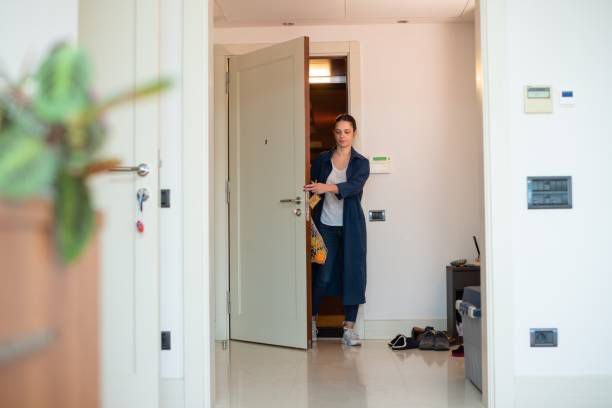
I have spent eleven years becoming someone my hometown would not recognize, and I worked at that transformation with the focused energy of a person who understands that distance is sometimes the only medicine available. I built a life in Seattle that fit me in a way Ohio never had, a career in financial consulting that rewarded the particular kind of careful analytical thinking I had always possessed but had learned early to hide, an apartment with good light and plants that grew, friends who knew me as a complete person rather than as a collection of things to be corrected. I did not go back. I did not call often. I sent cards at Christmas and answered my mother’s texts with brief warmth and kept the whole tangled geography of where I came from at the comfortable remove of two thousand miles.
The promise I had made myself when I left was not dramatic in the way promises sometimes are, not spoken aloud or sworn over anything. It was simply a private understanding, clear and complete. I had grown up in a house where silence was the expected response to almost everything, where expressing a need or a feeling or a disagreement was treated as a kind of aggression, where the safest version of me was the smallest version of me. I had spent eighteen years perfecting that smallness, and then a full scholarship to a university on the other side of the country had handed me an exit, and I had taken it with both hands and not looked back more than I could help.
That was not indifference to my family. It was survival, which is a different thing, and I spent a long time learning to understand the difference without apology.
Then my grandmother called on a Wednesday night in October, and the voice on the line was thin but composed in the way her voice was always composed, a woman who had weathered enough decades to understand that certain things had to be said plainly and received plainly and that sentiment could come later.
“Your grandfather passed yesterday morning,” she said. “It was peaceful. He went in his sleep.” A pause. “The memorial is Saturday. You need to come home, sweetheart. And there is something else. Something you need to see with your own eyes.”
I asked her what she meant.
“I will show you when you get here,” she said. “Just come. And bring anything important you might have kept. Any paperwork from when the house changed hands.”
I understood her meaning well enough to make the phone call that night. My lawyer’s name is Patricia Chen, and she has been my attorney for six years, handling contracts and the occasional complicated situation with the calm thoroughness of someone who finds complexity interesting rather than burdensome. I called her at ten o’clock at night, which she accepted without complaint because she knew I did not call at ten o’clock unless it mattered.
“I need to fly to Ohio on Friday,” I told her. “I think I need you to come too. I’ll explain everything on the way.”
She asked one question: “Should I bring the property research files?”
“Yes,” I said. “All of them.”
I packed my carry-on that night. It held two changes of clothes, my toiletry bag, the black dress I would need for the memorial, and a secure document folder containing more paper than fabric. The original purchase agreement from 1987, when my grandfather and father had bought the house on Maple Street together, co-signed and witnessed and notarized with the meticulous care of men who understood that paper was the only language that held. The co-signing paperwork from 2004, when my father had transferred his portion of ownership and the documentation had been handled by a small-town attorney who had done his job competently enough but perhaps not with complete attention to every clause. And one additional document that I had discovered three years earlier during a routine review of family estate materials, a document that I had read carefully and then placed in a secure folder and said nothing about to anyone except Patricia, because I had not yet understood what I was going to need it for.
I understood now.
The flight from Seattle to Columbus takes four and a half hours. Patricia sat beside me with her reading glasses on and the property file open on the tray table, and we talked through everything I knew and some things she had researched independently in the hours since my call. By the time we landed she had a complete picture and I had a clear plan, and whatever grief I was carrying for my grandfather sat alongside it, present and real and separate from everything else, belonging to a different part of me.
We picked up a rental car and I drove the familiar roads toward the town I had grown up in, and the landscape did what it always does when you return to a place after a long absence, it looked simultaneously smaller than memory and sharper, the particular clarity of things seen again after they have had time to become symbolic. The flat farmland. The water towers. The highway exits I had taken hundreds of times before I stopped taking them.
The house on Maple Street came into view at the end of the long block, and I slowed without meaning to, the way your body responds to things before your mind has caught up.
It looked like the same house. The white siding, the dark green shutters, the wide porch where my grandfather had sat every summer evening for as long as I could remember, in a wooden chair that rocked, watching the street with the unhurried attention of a man at peace with the pace of his own life. The maple tree in the front yard had grown taller. The flower beds my grandmother had kept were still there, though they had gone to a late-season scruffiness, undercared-for in a way she would not have allowed if she had been in a position to tend them.
But the mailbox at the end of the walk did not carry our family’s name. And there was a truck in the driveway I did not recognize, a large dark pickup with a custom bumper and a sticker on the rear window that told me several things about the person who drove it that I could have done without knowing.
Patricia said nothing. She looked at the house and then looked at me and her expression was professionally neutral, which I had learned over six years of working with her meant she was paying very close attention.
I walked up the porch steps that I had walked up ten thousand times as a child and knocked on a door that had once been simply mine to open.
My mother answered. She looked older than the photographs she occasionally sent, and smaller, and there was something about the way she held herself at the door, slightly angled, not quite filling the space, that was familiar from childhood and worse to see now than it had been then because I could read it better. Her eyes filled when she saw me. She reached out and pulled me in with both arms in a hug that started like relief and shifted partway through into the particular quality of someone fulfilling an obligation they had not been sure they could.
“I’m so glad you came,” she said, into my shoulder. “I’m so glad.”
She stepped back and looked at my face and whatever she saw there made her look away first, and in that glance away I saw the other thing I recognized from childhood, the deliberate not-quite-seeing that had always been her particular form of self-protection.
Then her husband walked in from the hallway.
I had seen one photograph. A wedding picture my mother had sent three years ago, to which I had sent a congratulations card with a gift card inside and a careful note that said all the expected things. In the photograph he had been dressed formally and holding a glass and smiling at the camera with the smile of a man who had won something. In the hallway of my grandfather’s house he was wearing a flannel shirt with the sleeves rolled up and holding a beer bottle by the neck at eleven in the morning, and he was looking at me with an expression I recognized immediately and had not missed.
The expression of a man who has decided in advance that you are a problem.
“Well,” he said. “The prodigal returns.” His voice had the particular texture of someone performing a joke for an audience he assumed was on his side. “Welcome home.”
He held out a hand, and I reached to shake it, and what happened next was fast in the way that things which have been building for a long time are fast when they finally arrive. His grip closed over my fingers and he squeezed once, hard, with the specific deliberate pressure of someone communicating something that they want to be able to later deny was intentional. I did not make a sound. I looked at his face and he smiled and released my hand and took a drink from his bottle.
That was the first part.
I have thought about whether to include the second part and I have decided that I will, plainly and without performance, because leaving it out would be a kind of false tidiness that the truth does not deserve. He said something about the house. About how things worked around here. About guests and their place and how he ran things under his roof. I said, calmly and without raising my voice, that I did not consider myself a guest in my grandfather’s house. And he swung.
It was not a full swing. I think, looking back, that some functioning part of him understood the line he was crossing and pulled the blow partway, which made it a slap rather than a punch, which left a sting along my cheekbone and a soreness in my wrist from where I had raised my arm to deflect. It still landed. It was still real. And my mother, standing four feet away, turned her face toward the kitchen window and found something to look at there.
That look away was the thing that landed deepest, and I am honest enough with myself to say that it was not a surprise, which made it worse.
Patricia, who had been standing slightly behind me in the doorway, said nothing. She wrote one thing in the small notebook she carried and capped her pen and put it away. Later she would tell me that she had been taking a mental inventory of witnesses, sight lines, and the specific legal significance of what she had just observed. That is the kind of lawyer she is, and I had never been more grateful for it.
I said nothing else. I went to the guest room, which had been my grandfather’s study before whoever had rearranged this house had turned it into a room for visitors, and I closed the door and sat on the edge of the bed and held my wrist and let myself feel what I was feeling for exactly five minutes because I had learned years ago that I could not prevent the feeling, I could only choose the duration.
The room itself told a story. The bookshelves that had held my grandfather’s history books were still there but held different things now, sports memorabilia, hunting catalogs, items belonging entirely to a different person. His reading chair, the one he had bought in 1971 and repaired twice and kept in this room for fifty years, was gone. In its place was a recliner in camouflage fabric that probably cost less and announced more.
My grandfather’s name was Robert, and he had been a quiet man who communicated primarily through action and presence rather than words. He had taught me to balance a checkbook at age ten. He had driven me to the library every Saturday for three years when I was in middle school and waited in the car, reading the newspaper, while I took out too many books. When I had called him from Seattle to tell him I had passed my certification exams, he had said “I know you would” with a certainty so complete that it had rearranged something in me. He had been my clearest evidence, for a long time, that the family I came from was not only the version I had grown up inside.
He had also, I now understood from my grandmother’s careful phone call, spent the last two years trying to fix something before he died.
That evening, in the kitchen that no longer looked like a kitchen I recognized, her husband held court at the dinner table about the house. His house, he called it, more than once, with the repetition of someone who wants to ensure the designation sticks. His rules. His property. Bought and paid for, he said, looking at me directly when he said it, as if the words were meant to close something down.
I ate quietly and listened and kept my face in the professional neutral I had spent years developing, the expression I wore in rooms where I was assessing a situation before acting on it. Patricia ate beside me with the same composure, and I saw him look at her once with a brief uncertainty, trying to assess who she was and why she was there, and I let him wonder.
That night I sat on the bed in the guest room with my phone and the document folder and went through everything again. The original purchase agreement, 1987. My grandfather Robert and my father Daniel, co-owners, names on the deed, properly recorded with the county. The transfer paperwork from 2004, when my father had been in the process of leaving, a complicated and painful year that I had been fifteen years old for and had understood imperfectly and understood better now. The transfer had moved my father’s share to my mother. It had been executed by a local attorney named Warren Gibbs who had since retired, and it had been done competently, with one exception.
The exception was a clause in the original 1987 purchase agreement, a clause that Warren Gibbs had apparently not flagged and that the attorney handling the 2004 transfer had not caught either, which stated in language that was dense but unambiguous that in the event of any transfer of ownership interest by either party, the transfer required acknowledgment by all individuals named in the secondary beneficiary designation established at closing. The secondary beneficiary designation from 1987, established by my grandfather with the particular thoroughness of a man who had grown up during the Depression and did not take property lightly, named three people. My grandfather. My father. And me, listed by name, as a minor child with a contingent interest in the property that would mature upon reaching adulthood.
I had been seven years old in 1987. I had not been consulted about the 2004 transfer. I had not acknowledged it or signed off on it or been informed of my interest in any formal legal capacity. The transfer had proceeded without me, which had been an oversight, or possibly something less innocent than an oversight, but which was, in either case, a legal problem that had sat quietly in the county records for twenty years, waiting.
Patricia had confirmed all of this during the flight. She had also confirmed that the subsequent sale of a portion of the property three years ago, when my mother had sold the back parcel to a neighbor, had the same problem multiplied, because any sale of property carrying a contested ownership interest was a sale that could be challenged.
I was not seven years old anymore. I was thirty-three, and I held a law school education and a folder of documents and a clarity of purpose that had been sharpening since my grandmother’s phone call and was now as precise as anything I had ever brought to a professional problem.
The memorial service for my grandfather was held Saturday morning at the church he had attended for forty years, a modest building on the edge of town with a congregation that had known him since he was a middle-aged man and knew him now as one of the people who had shaped what that community looked and felt like. The pews were nearly full. People I had not seen since childhood came to pay their respects and some of them recognized me and hugged me and said how much I had grown into myself, which is what people say when they are trying to compliment the distance between who you were and who you are.
I wore the black dress and the concealer and I sat with my grandmother and held her hand and looked at the photograph of my grandfather on the table at the front of the church, the one from his seventieth birthday where he was laughing at something someone had just said, his whole face open with it, and I let myself grieve him properly and completely, separate from everything else, because he deserved that. He deserved every uncomplicated minute of it.
He had left something for me, my grandmother told me after the service, when we were sitting in her kitchen at the small house she had moved into two years ago when things at Maple Street had become, as she put it carefully, no longer comfortable. He had left me a letter, handwritten, three pages, in the careful block printing he had used his whole life because his cursive, he always said, was an embarrassment to penmanship. I read it at her kitchen table while she made tea, and I will not repeat its contents because they belong to me, but I will say that he had understood more than I knew, had seen more than I thought he could see from the distance of two thousand miles, and that the last paragraph contained an instruction that I had already been in the process of following.
He had also left me, formalized in a document his own attorney had prepared eight months before his death, an explicit written assertion of the interest he believed I held in the original property, along with his own statement of the 1987 agreement and his understanding of what it required. He had known. He had seen, in his final years, what was happening in that house and he had done, with the tools available to him, the thing he could do. He had made a record. He had made it formal. He had made sure I had what I needed.
That was who he was.
Patricia filed the initial paperwork on Monday morning, working from the small desk in our rented room with the documents laid out and her laptop open and the efficient speed of someone who has been waiting to begin. The filing established my claim to an ownership interest in the property at Maple Street, based on the 1987 agreement and the unacknowledged transfer of 2004 and the subsequent actions taken without the consent of a party with a legal interest. It was not a simple filing. It was the beginning of a process that would take months and require a response and could go in more than one direction depending on how the other parties chose to proceed.
Her husband’s response, relayed through an attorney he hired in some haste, was that my claim was baseless and that I was a troubled individual attempting to exploit a family tragedy. This was, Patricia noted, not a legal argument, and she replied to it accordingly.
My mother called me two days after the filing. It was the most direct conversation we had ever had, which is a thing I feel the complexity of without being able to resolve it entirely. She cried. She said she had not known, which I believed only partially and only in the specific sense that she may not have known the legal details, though she had known enough of the rest. She said she was sorry, and I listened to the apology and did not tell her it was enough because it was not, and I did not tell her it was nothing because it was not that either. I told her that I hoped she would make choices that were better for her. I told her I loved her in the careful, bounded way that I had learned to love her, which was real even at its boundaries. And then I told her that what happened next would depend largely on decisions that were hers to make.
She made, in the end, the decision that was most practical, which is often the best decision available when the better ones are no longer accessible. Her husband did not contest the claim beyond the initial response. I think Patricia’s reputation, established through two decades of property litigation, may have influenced that calculation. The outcome was a negotiated settlement that acknowledged my interest, compensated it financially at a fair assessed value, and resolved the questions around the earlier parcel sale in a manner that protected all relevant parties without requiring a prolonged legal battle that no one in the situation could have enjoyed.
I did not get the house on Maple Street. I did not want the house on Maple Street. I wanted what the house represented, which was the acknowledgment that my grandfather had put my name on something on purpose, that it had meant something, that the quiet careful love of a man who communicated through action rather than words had been real and had weight and could not be simply overwritten by someone else’s rules in someone else’s flannel shirt.
That acknowledgment was what I got.
I flew back to Seattle on a Wednesday, ten days after I had left it, and Patricia flew back to her own city with the settlement documents in her briefcase and a fee that I paid gladly as a percentage of the outcome. I went back to my apartment with the good light and the plants, and I stood in my kitchen for a while doing nothing in particular, just standing in a space that fit me, and I thought about my grandfather in his reading chair in the study that was no longer a study, the chair that was gone now, the books replaced by someone else’s things.
I thought about him waiting in the car outside the library every Saturday for three years.
I thought about the letter.
I ordered his biography from the library system, the one about the architect he had always been interested in, the one he had mentioned wanting to read and never quite gotten around to. I donated it to the library branch in his town in his name, with a small card that explained who he was and what he had meant to that community. The librarian emailed me to say they would put a nameplate in it. I printed the email and put it on my refrigerator with a magnet.
My grandmother called me on a Friday evening, which I am now understanding is the time for calls that matter. She sounded better than she had during the memorial week, more herself, the composed steadiness that had always been her particular register.
“He would have been glad you came,” she said.
“I know,” I told her. “I should have come sooner. Under different circumstances.”
“You came when you could,” she said, which was her way of saying what needed to be said without assigning fault to anyone who did not deserve it, which had always been her particular grace.
We talked for an hour. She told me about her garden and her Tuesday card group and the novel she was reading, a thick historical one she had been meaning to get to for two years. I told her about Seattle and work and the project I was in the middle of and the friend who had just gotten engaged. At the end of the call she told me she loved me, and I told her I loved her, and it was simple and complete and held nothing back and required no negotiation.
That simplicity, I have come to understand, is not a small thing. It is, in fact, the thing. It is what my grandfather spent fifty years building and what I spent eleven years traveling far enough to find, and what I am now, with some care and some effort and a very good lawyer on retainer, in the process of protecting.
I keep the document folder in the filing cabinet in my home office, behind the hanging folder labeled Property. I have not opened it since the settlement. I do not need to. But I know it is there, and knowing it is there is its own kind of answer to the question of whether the quiet things, the careful things, the things written down in 1987 by a man who understood that paper holds what memory cannot always carry, whether those things matter in the end.
They do.
They held. And so did I.

Lila Hart is a dedicated Digital Archivist and Research Specialist with a keen eye for preserving and curating meaningful content. At TheArchivists, she specializes in organizing and managing digital archives, ensuring that valuable stories and historical moments are accessible for generations to come.
Lila earned her degree in History and Archival Studies from the University of Edinburgh, where she cultivated her passion for documenting the past and preserving cultural heritage. Her expertise lies in combining traditional archival techniques with modern digital tools, allowing her to create comprehensive and engaging collections that resonate with audiences worldwide.
At TheArchivists, Lila is known for her meticulous attention to detail and her ability to uncover hidden gems within extensive archives. Her work is praised for its depth, authenticity, and contribution to the preservation of knowledge in the digital age.
Driven by a commitment to preserving stories that matter, Lila is passionate about exploring the intersection of history and technology. Her goal is to ensure that every piece of content she handles reflects the richness of human experiences and remains a source of inspiration for years to come.