The Quiet Ones
My name is Dalia Carrian. I’m thirty-six years old, and I’m a federal judge.
Until that morning, my family thought I was a paralegal somewhere in Oregon.
They never asked what firm I worked for, what kind of cases I touched, or whether I liked the rain. They never asked because asking would have required them to notice me. And noticing me would have interrupted the story they’d been telling themselves for years: that Sloan was the one who mattered, and I was the quiet afterthought who stayed small so her shine looked brighter.
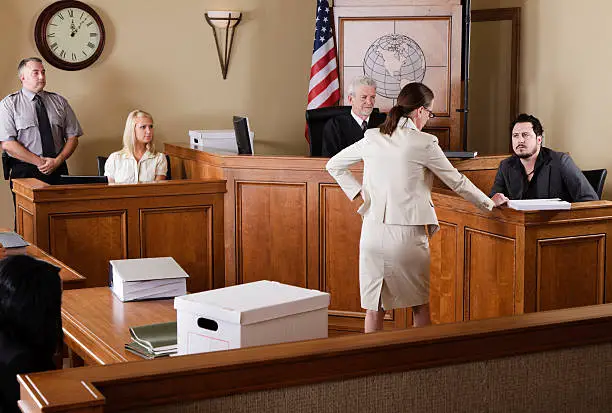
The courtroom in Raleigh smelled like varnished oak and stale coffee. It was a high-ceilinged room that amplified everything: heels on tile, paper shuffling, the bailiff’s murmured instructions, until the air itself felt weighted with consequence. I sat in the back gallery beneath the brass rail, hands folded in my lap, plain charcoal suit, hair pinned back, no robe, no entourage, nothing that announced who I was unless you knew exactly what to look for.
Most people didn’t.
That was the point.
I had been instructed to observe only. Standby consulting judge, pre-cleared for the circuit, the kind of role you receive when your docket is sensitive, your assignments cross state lines, and the court prefers your presence to remain invisible unless necessity changes the calculation. It was rare to be invoked. It was rarer still to be invoked with cameras rolling and a crowd gathering the way crowds gather when blood has hit water.
But Sloan had always drawn attention the way lightning draws air.
She sat at the defense table in a fitted cream blazer, a necklace that caught the overhead lights, her hair curled as if she’d stepped out of a magazine rather than into a fraud trial. Two attorneys flanked her in expensive suits, their posture the particular blend of confidence and calculation that comes with a large retainer. At first glance Sloan looked composed: chin lifted, shoulders squared. But I knew her tell. A tight twitch at the corner of her mouth. Fingers tapping once, twice, then stilled by will.
My parents were in the front row directly behind her. My mother wore pearls that didn’t quite match her blouse, like she’d dressed for church and told herself the courtroom was close enough. My father sat rigid, hands clasped, scanning the room as if he expected someone to recognize them and offer condolences for the inconvenience of their daughter being accused of federal crimes.
They whispered confidently to each other, as if the entire proceeding were a technical misunderstanding, as if Sloan’s talent could charm facts into rearranging themselves.
“She’ll beat this,” my mother said, voice low but certain.
“Of course she will,” my father answered. “Sloan always does.”
They hadn’t seen me walk through security. They hadn’t noticed me slip in behind a cluster of junior reporters, head slightly lowered, badge tucked away. They didn’t look back because there was nothing behind them worth looking at. That was how it had always been.
The prosecution began laying out their case with a precision that would have impressed my old constitutional law professor. False financial reports. Inflated revenue metrics. Internal emails that read like a template for deception. Recorded calls where Sloan promised returns that no ethical model could deliver. The courtroom’s mood shifted from curiosity to something more uncomfortable; you could feel the jurors adjusting in their seats as if the evidence was a draft under their collars.
Sloan’s attorneys objected often. Sometimes the objections held legal merit. Sometimes they were noise. The presiding judge, Judge Callaway, handled them with practiced patience.
Then the prosecution introduced a new series of exhibits: wire transfers crossing state lines, routed through shell entities in two different jurisdictions, amounts large enough to trigger federal statutes automatically. The prosecutor said the phrase interstate wire fraud and I watched Judge Callaway’s eyes sharpen. His posture changed, not dramatically, but in the particular way of someone realizing the ground beneath him isn’t what he thought it was.
He called a recess.
People stood, stretched, checked phones. Reporters huddled in the aisle whispering about federal implications. Sloan leaned toward her attorneys, lips moving quickly, frustration rising behind her polished surface. My parents remained seated, still convinced they were watching a temporary stumble rather than a structural collapse.
Judge Callaway didn’t leave through the public door. He stepped behind the bench and into chambers. A clerk followed with papers and a tight expression.
I stayed seated. Still. Hands folded. I looked like what my family had always assumed I was: a quiet woman watching someone else’s story happen.
My phone buzzed once. A message from the court clerk assigned to coordinate my standby: Be ready.
When the bailiff called the court back to order, the room was taut.
Judge Callaway cleared his throat. His voice, usually crisp with authority, carried an unfamiliar restraint. “This court is no longer able to proceed under current jurisdiction. Federal implications have been introduced that exceed the authority of this bench under state parameters. We are requesting immediate assistance to ensure proper jurisdictional continuity.”
My mother leaned forward. My father’s eyes narrowed. Sloan’s attorneys exchanged the look I recognized: scramble.
Judge Callaway paused, then looked toward the back gallery.
His gaze moved through the room and found mine like a straight line drawn through noise.
“Judge Carrian,” he said. “Would you please take the bench?”
For one heartbeat the room forgot to breathe.
Then sound returned all at once: gasps, a whisper that turned into a ripple, chairs scraping as heads turned.
I stood.
My heels clicked against the floor in an unhurried rhythm that sounded louder than it should have in that particular silence. Every step forward felt like walking through a hallway built from old assumptions: my family’s, Sloan’s, the world’s. Assumptions I had spent years deciding not to require their permission to dismantle.
My mother’s hand flew to her mouth. Her eyes widened and then narrowed, as if she was trying to focus a lens that kept resisting. My father blinked hard, the specific blink of a man who has seen a ghost and is calculating whether it can be argued out of existence.
Sloan’s mouth opened. No sound came out. Her face, usually so controlled, went pale at the edges, and for the first time in my life I watched her struggle to process something she could not charm into submission.
I reached the front, nodded once to Judge Callaway, and stepped behind the elevated bench as the bailiff announced, “All rise.”
The courtroom rose.
For me.
I took my seat, the bench solid beneath my hands, the file already waiting where it belonged. I looked out over the room: the prosecutors, the defense, the jury, the reporters, my parents, my sister. I felt something settle into place inside me with a calm I had spent twenty years earning.
“Yes, Your Honor,” I said, voice level.
And the daughter they once called invisible took her rightful seat in full view of everyone who had refused to see her.
To understand how I got to that bench, you have to go back further. Because the moment I stood wasn’t the beginning of anything. It was the consequence of every moment that came before it.
I was twelve the first time I understood with full clarity that I was invisible.
It was spring, Sloan’s senior year of high school. She’d just won the Governor’s Scholar Award, the kind of honor that arrives with headlines and handshakes and people deploying the word extraordinary like confetti. My parents threw her a backyard celebration as if she’d achieved something medical. Balloons in school colors, catering trays on folding tables, string lights through the trees, a rented white tent in case it rained.
That same week, I won a regional speech competition for middle school debate.
It wasn’t nothing. I had worked for it. I’d practiced in front of my bedroom mirror until my voice stopped shaking. I’d learned how to build an argument, anticipate objections, stay calm while adults stared at me like they expected me to collapse.
When I got home I printed the certificate myself and taped it to the refrigerator above the grocery list.
The next morning it was gone.
My mother had replaced it with a glossy brunch invitation for Sloan’s celebration. When I asked about my certificate, she didn’t look up from her phone.
“Oh, honey,” she said, in the tone you use on toddlers. “That’s lovely, but Sloan’s achievement is state-level. Let’s not confuse things.”
Let’s not confuse things.
That phrase became a running boundary line around Sloan’s shine, designed to keep my quieter accomplishments from cluttering the narrative.
Sloan was louder, shinier, easier to understand. She made friends fast. She collected attention like it was oxygen. She had the kind of natural confidence people mistake for destiny, the kind that fills rooms before you’ve said anything worth filling them with.
I was the opposite. I read books about constitutional law before bed. I made flowcharts to relax. I was drawn to logic that clicked into place the way a lock clicks.
At dinner one night in eighth grade I tried explaining judicial precedent, because I had discovered it and felt like I’d found a hidden language that explained the world. I got halfway through a Supreme Court example when my father laughed.
“Are you going to start charging for unsolicited lectures?” he asked.
Sloan giggled. “God, Dalia, can you even hear yourself?”
My cheeks burned. I stared at my plate. I didn’t cry, because crying would have been a bid for attention, and attention was allocated to Sloan. I just stopped talking at the dinner table for a long time afterward.
My sanctuary was Room 214, Mr. Shepherd’s government class. He taught constitutional law with a reverence that made every clause feel alive rather than historical. One afternoon after mock trial practice I stayed to erase the whiteboard. He watched me for a moment.
“You think like a litigator, Dalia,” he said. “Not because you’re loud. Because you notice everything no one else does.”
That sentence landed like a hand placed steadily on my shoulder.
He handed me a dog-eared copy of Gideon’s Trumpet. “Tell me what you think justice looks like when you’re done.”
I read it in two nights. I didn’t just dream after that. I planned.
I earned a full scholarship to Chapel Hill. When the acceptance letter came, my mother hugged Sloan first, because Sloan was already talking about how cute Chapel Hill was, as if it were a boutique rather than a turning point. I didn’t tell my parents I was applying to Yale Law. Not because I thought they’d stop me. But because telling them would have made their silence about it more painful than silence itself.
When the Yale letter came I folded it into my journal and went for a walk in the rain, wanting to call someone and say I did it. There was no one to tell.
Except Mariah.
She was my roommate, a politics major with a laugh that filled rooms and a kindness that didn’t need performance. She walked in to find my desk covered in case summaries and picked up the Yale letter without asking.
“You’re brilliant,” she said. “It’s terrifying, but also kind of beautiful.”
No one had said it like that before. Not as a comparison to Sloan. Not as a reluctant compliment. Just as a fact, the way you state something that’s simply true.
Mariah became the first person I trusted with the full shape of my family: the parties I wasn’t invited to, the certificates that disappeared, the way silence can feel like being slowly edited out of your own life. She listened like it mattered. And in that listening, something shifted in me. I stopped waiting for my family to see me.
I started building anyway.
Law school was different. At Yale nobody cared whether my sister had been on a magazine cover. In seminar rooms the only currency was what you could argue, prove, defend under pressure. My professors wrote comments like incisive and unusually precise in the margins of my papers. During moot court I didn’t command attention with charisma or volume. But I dismantled arguments methodically, and judges leaned forward because they could feel the logic tightening.
Clerkships followed. A federal district judge who taught me the law is a human tool, not an abstract game. A circuit clerkship where I learned to write opinions that held. A federal internship that led to a discreet appointment in a specialized interstate fraud division where the work was sealed and the cases were consequential and my name existed in certain circles the way a key exists: not as decoration but as function.
I became a federal judge at thirty-four. There were no photographs. No press release. No proud family dinner. The bench was real regardless.
Back in Charlotte my family still thought I was a legal researcher. My mother had once described my work to a church friend as helping attorneys file things, offered with a polite smile, as if I were a pleasant but inconsequential cousin who’d become a librarian.
I didn’t correct her.
Part of it was professional discretion. Part of it was self-protection. But if I’m honest, part of it was also a quiet experiment: I wanted to see if they would ever ask. Just once. What do you do, Dalia? How is your work? Are you happy?
They never did. They were too busy tracking Sloan.
Two years before Raleigh, Sloan called me out of the blue. First time I’d heard her voice in over a year. I was reviewing a sealed file when my phone lit up with her name. I stared at it for ten seconds, because even after everything I still had that reflex: hope, pressing itself up like a bruise you keep touching.
She needed a quick look at some legal documents. “You’ve always been good at that stuff,” she said, with the particular ease of someone who considers expertise a trait rather than a discipline.
I didn’t tell her I was a sitting federal judge. I agreed because I was curious and because some part of me still wanted to be seen as something other than background.
She emailed contracts riddled with problems: compliance gaps, reporting language that could be weaponized, risk disclosures that were vague in precisely the ways that attract regulatory attention. I spent three weekends on them. Cross-referenced federal codes. Drafted a fifteen-page memo explaining clearly what would happen if anyone looked closely.
I sent it.
Sloan didn’t reply.
A week later, Mariah texted me a clip from Sloan’s board presentation. Sloan stood before investors and said, “I flagged a few structural issues in the contracts. My instincts kicked in.”
Applause.
I didn’t expect a slide credit. I didn’t need my name spoken aloud. But I expected a text. Something that acknowledged I existed beyond my utility.
Instead, Sloan posted: Trust your gut, especially when the stakes are high.
My parents flooded the comments with fire emojis and so proud of you. My father emailed me a link the next day with the subject line: See what your sister’s doing? No message. No how are you. Just a hyperlink to her shine.
Then the whispers moved through judicial channels.
Sloan’s company was under investigation. SEC flags. Inflated earnings. Misleading investor reports. The ethical startup was a house of cards in clean branding.
I recused myself the moment her name appeared on a sealed preliminary file. Filed the conflict form immediately. Sent a private note to my chief judge. I expected to be removed from the case entirely.
Instead, I was placed on standby. Standard procedure, the clerk said. If federal oversight became necessary, if jurisdiction collapsed, they might need me.
I didn’t tell my family.
They had never cared who I was until they needed something. I wasn’t volunteering my life as a stage prop.
But when the clerk called and said you may need to step in, I felt the old ache rise anyway. Not because I wanted revenge on anyone. Because I understood, clearly and without drama, what was coming.
My family was about to learn who I was.
And I didn’t owe them a single word of preparation.
The prosecution’s case was methodical and, ultimately, airtight. When the cross-state wire transfers triggered federal jurisdiction and Judge Callaway’s authority hit its limit, I walked to the bench. The room rose. My parents turned and finally looked at me, really looked, with the particular expression of people confronting a fact they have spent years refusing to file.
I presided the way I had presided a thousand times before. Evidence admitted. Objections ruled on with precision. No theatrics. No anger. Just the law, applied calmly and correctly.
During a recess Sloan found me in the hallway. Her heels came fast, anger trying to outpace fear.
“Dalia,” she hissed. “How could you do this to me?”
I looked at her steadily. “I’m not doing anything to you. You built the lie. The law is noticing.”
Her nostrils flared. “You’re supposed to be my sister.”
The words landed in a place that had been numb for years. Not because they were accurate, but because of how convenient their timing was. She wanted sisterhood now, as a shield.
I stepped closer, voice low enough for only her. “No,” I said. “You were supposed to be mine.”
Sloan’s face moved through confusion, then something like panic. For once she had no line.
My mother appeared behind her, breath coming fast. “Dalia, please. You don’t understand what this will do to our family.”
I met her eyes with a calm that felt, in some way, like mercy. “You were never worried about the family when you erased me,” I said.
Her mouth opened. No sound came out.
My father stood a few feet away, silent for once, looking at me the way you look at something you’ve been walking past for years without seeing it.
The bailiff called us back.
I returned to the bench and felt, as I sat, that I was no longer angry. Anger requires the belief that someone will change if you argue hard enough. I was past that. I was simply present, fully, in the place I had earned.
The verdict took six hours.
Guilty on securities fraud. Guilty on wire fraud. Guilty on conspiracy to defraud investors.
My mother made a small sound and pressed her hand to her chest. Sloan didn’t flinch visibly, but I watched her throat move once, swallowing the last of something she’d been holding onto.
Sentencing followed statute. I spoke with measured neutrality, as judges must. Not merciless. Not personal. Personal belongs to relationships. Sloan had never offered me one of those.
When I adjourned and the room erupted into motion, I walked to chambers and closed the door. The quiet hit like a wave. I stood by the window, listening to my own breathing, looking at the courthouse courtyard below.
Five minutes later, a voicemail from my mother: Dalia, we didn’t know. We didn’t realize. We’re sorry.
I deleted it before she finished.
Not cruelty. Clarity.
They had decades to ask who I was and what I was building. They never cared to know until I was sitting above them. That choice had been theirs, made freely, in the years when the information was available and cost them nothing to seek.
That evening, I met Mariah at a small jazz bar off South Street. She raised her glass before I’d even sat down.
“To Judge Carrian,” she said, grinning. “You broke the whole illusion in one move.”
“It wasn’t about breaking,” I said. “It was about stepping out of the shadow they put me in.”
Mariah nodded. “So what now?”
I looked around the bar. Strangers talking and laughing, living in the ordinary momentum of their ordinary lives. A world that didn’t require my family’s approval to continue.
“Now I build something better,” I said.
The ethics complaint arrived three months after my appellate confirmation.
My clerk set it on my desk with the careful neutrality people use when they don’t want to add emotion to a situation already full of it. The seal read Judicial Council of the Fourth Circuit.
The complaint alleged that I had failed to disclose familial bias in the Thatcher case and that my intervention had been motivated by personal grievance. The language was polished and procedural. That’s how institutions accuse you: with paperwork that sounds routine until you understand it’s a blade.
I opened my own file. Recusal forms. The email chain to my chief judge. The standby designation memo. The jurisdictional trigger notes. The clerk’s request. Judge Callaway’s written acknowledgment of his authority limit.
It was all documented. Every step, in order, timestamped.
Procedure doesn’t care about gossip. It cares about the record.
The judicial council hearing was in a conference room with beige walls and quiet voices. A three-judge panel. The silver-haired judge at the center asked whether I believed I could preside impartially given my familial connection.
“I didn’t preside by choice,” I said. “I presided by necessity. My appointment as standby consulting judge was filed and approved prior to trial. My recusal was submitted the moment I received the sealed file. I was placed on standby. I stepped in when jurisdiction collapsed. Every step is documented.”
The questions continued for an hour. Each one was designed for a woman who needed to defend her emotions. I defended facts.
The council dismissed the complaint as unsupported by the record.
No apology from anyone who’d called me a vengeful sister. No correction from the legal blogs that had made my name trend for three days. I didn’t need any of it. Vindication is only satisfying if you required it. What mattered was simpler: the lever didn’t move me.
The call from Charlotte came at six in the morning on a Sunday. A nurse. My father had had a stroke. Stable. Conscious. My mother had listed me as next of kin.
I drove two hours without music, hands at ten and two, processing the particular collapse of distance between who you’ve become and where you started.
My mother was in the hallway outside his room. She froze when she saw me, as if she didn’t trust her eyes.
My father was thinner. Paler. When his eyes found mine, his expression wasn’t anger or pride or shame. It was recognition, the specific recognition of seeing someone you have ignored and understanding that ignoring them didn’t make them smaller. It only made you less informed.
“I saw you,” he said. “The courtroom. Raleigh. On the bench.”
“Yes,” I said.
He was quiet for a moment, looking for a sentence that would hold. “I didn’t know,” he said finally.
“You didn’t ask,” I replied. Not cruelly. Just accurately.
“No,” he admitted. “I didn’t.”
Then, after a long silence: “I used to think Sloan was the one who would carry this family. I thought she was the story. And you were—” He stopped.
“A footnote,” I supplied.
He flinched. “Yes.”
“You don’t need to rewrite the past,” I said. “You just need to stop denying it.”
“I’m sorry,” he said. And this time there was no but attached to it. No qualifier, no hedge, no plea. Just the two words, sitting there without support.
“I’m not here for apologies,” I said softly. “I’m here because you had a stroke and I’m still your daughter.”
His eyes filled. “I don’t deserve you,” he whispered.
“You don’t get to decide what I give,” I said. “That’s mine to decide.”
I stayed two days, handling logistics with the same efficiency I brought to chambers. Doctors, rehab plans, paperwork. My mother watched me with the expression of someone seeing a person clearly for the first time after years of looking at a projection.
In the cafeteria on the third day, she said: “I thought you hated us.”
“I don’t hate you,” I said. “Hate is still attachment. I stopped attaching.”
“I didn’t know how to love you both,” she admitted, quietly, without defense. “I thought love was cheering. And Sloan always needed cheering.”
“And I needed seeing,” I said.
“Yes,” she said. “You did.”
When I left Charlotte I gave my mother a document. Not an ultimatum: a list of terms. How to contact me. What topics were off-limits. What I would do if Sloan tried to use her as a conduit again.
My mother read it twice, hands unsteady. “Okay,” she said.
Not reconciliation. But the first time my family had accepted terms I had set.
Six months later, a letter from Sloan arrived through official channels.
I read it after hours in empty chambers, the city lights soft outside the window.
Dalia, I’m writing because I ran out of people who will tell me the truth.
The first honest line I had ever seen from her.
She wrote that she had used my memo. That she’d told herself I didn’t need credit because I liked being invisible. Then: I built my whole life on the idea that I could take what I needed and people would still love me. Until they didn’t.
Then: I don’t know how to be a person without an audience.
And finally: Did you ever want to be my sister?
I sat back and felt the question arrive late, like someone showing up to a burned house and asking if you’d ever wanted to live there.
I opened a document and typed a response.
Sloan, I wanted a sister when I was twelve and my certificate disappeared from the fridge. I wanted a sister when Dad laughed at my lectures and you joined in. I wanted a sister when I won mock trial and nobody asked. I wanted a sister when I got into Yale and celebrated alone in the rain. I wanted a sister for years. Then I stopped wanting what you weren’t capable of giving. But yes. I did.
I routed it through counsel, personal correspondence, no legal content, no obligations. Two weeks later her reply arrived.
Thank you for answering. That’s more than I deserved.
Not warmth. Not closure with a score. Something quieter: a door easing shut instead of slamming.
That spring, my mentoring group held a mock appellate argument in Courtroom 2. Seven young women in their twenties, notebooks open, faces alert. They’d heard about the ethics complaint. They didn’t mention it, waiting for permission.
Leena cleared her throat. “When people say things about you,” she said, “how do you not let it get inside?”
I considered the question. “I let it touch the outside,” I said. “You can’t stop people from talking. But you can decide whether their words become furniture in your mind. Evidence matters. Work matters. Integrity matters. Everything else is noise.”
After they filed out I stood in the empty courtroom for a while. Sunlight came through the high windows at an angle that turned the dust in the air to slow snow.
I had spent years believing the end of my story would be my family finally seeing me.
It wasn’t.
The end was simpler.
I saw myself.
And then I spent the rest of my time building rooms where other quiet women wouldn’t have to wait decades for a room to rise when they walked in.
When you’ve spent years not being heard, you learn to speak only when it counts.
And when you do, rooms rise.
Even when your family never taught you how.

Ethan Blake is a skilled Creative Content Specialist with a talent for crafting engaging and thought-provoking narratives. With a strong background in storytelling and digital content creation, Ethan brings a unique perspective to his role at TheArchivists, where he curates and produces captivating content for a global audience.
Ethan holds a degree in Communications from Zurich University, where he developed his expertise in storytelling, media strategy, and audience engagement. Known for his ability to blend creativity with analytical precision, he excels at creating content that not only entertains but also connects deeply with readers.
At TheArchivists, Ethan specializes in uncovering compelling stories that reflect a wide range of human experiences. His work is celebrated for its authenticity, creativity, and ability to spark meaningful conversations, earning him recognition among peers and readers alike.
Passionate about the art of storytelling, Ethan enjoys exploring themes of culture, history, and personal growth, aiming to inspire and inform with every piece he creates. Dedicated to making a lasting impact, Ethan continues to push boundaries in the ever-evolving world of digital content.