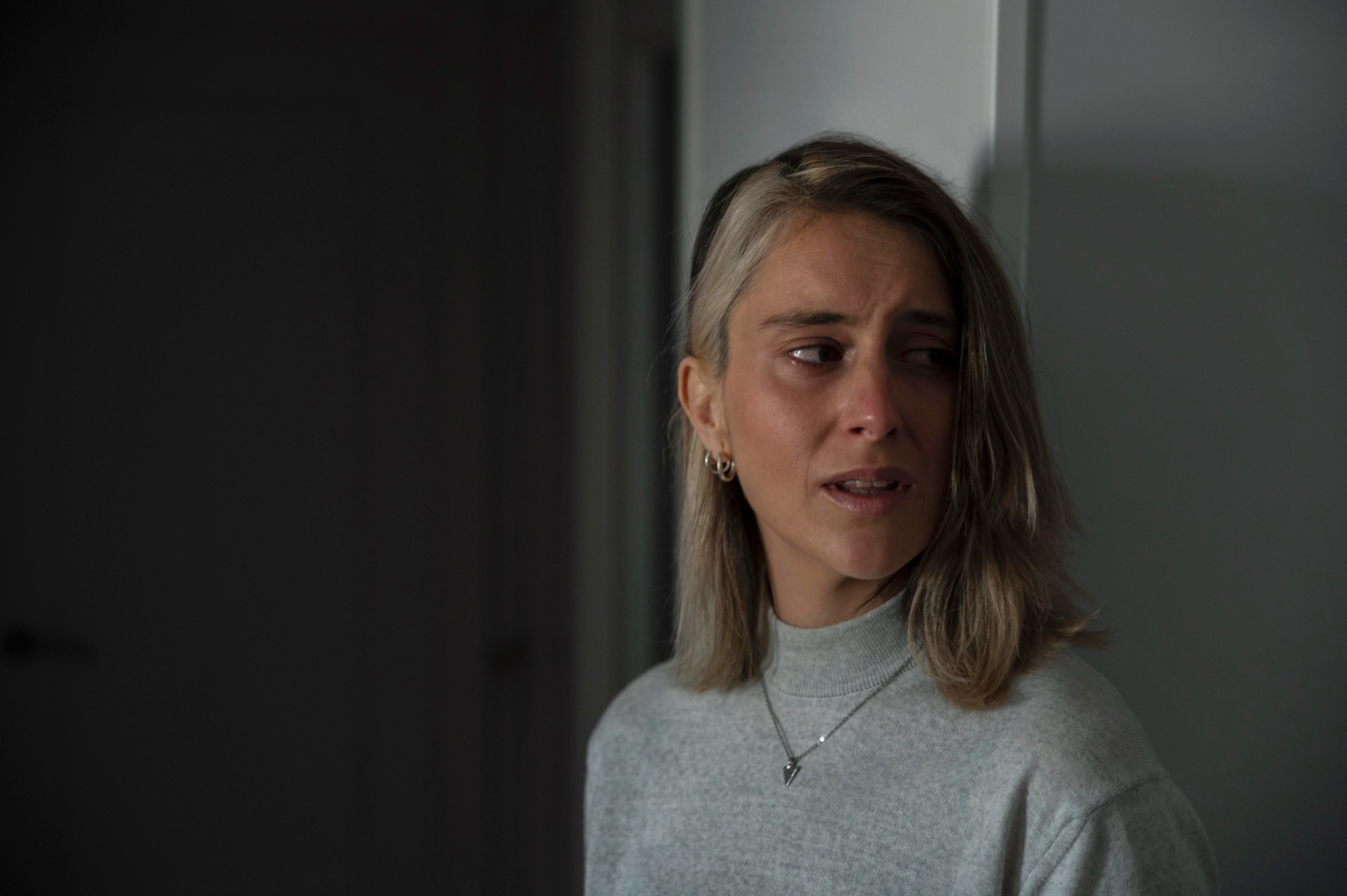
My name is Myra, and I am twenty-eight years old, and for six years I handed my parents two thousand dollars a month on the understanding that every dollar was being saved for my future. One hundred and forty-four thousand dollars, delivered in monthly installments with the trust of a daughter who believed her family was building something on her behalf. When I finally asked for it back, my father laughed and told me it had always been rent.
He said it the way you’d say something obvious to someone who should have known better. No anger, no discomfort. Just a grin and a shrug, like the whole arrangement had been perfectly clear from the beginning and the misunderstanding was entirely mine.
I said nothing. I reached into my bag and placed a folder on the kitchen table.
But I should start at the beginning, because the beginning matters more than the ending, and because the beginning is where you can see how something like this becomes possible, how a person with a good head for numbers and a genuine belief in her family can spend six years being quietly and systematically robbed by the people who were supposed to love her most.
The week I graduated college, I moved back to my parents’ house in Augusta County, Virginia. I was twenty-two. I had a degree in applied sciences and a job lined up at a dental laboratory fourteen minutes from my childhood home, starting salary forty-two thousand dollars a year before taxes. Not a fortune, but real money, earned money, the kind of number you look at and feel something solid and possible in your chest.
The morning after I arrived with my last boxes, my parents were waiting at the kitchen table. Not casually, the way people sit when they’re just having coffee. Positioned. My father Dale at the head, my mother Connie to his right, a third mug steaming at the empty chair they’d left for me. I should have noticed that they didn’t usually pour coffee for me. I didn’t notice.
Dad cleared his throat and laid out the arrangement in the direct manner of a man who has already decided the answer and is presenting the question as a formality. I would live at home, save money, and pay them two thousand dollars a month. Every payment would go into a savings account in my name. In three or four years I’d have a down payment. I’d be buying a house before any of my friends.
I did the math in seconds. Two thousand a month, twenty-four thousand a year. My friends from college were signing apartment leases for twelve hundred a month and getting nothing back. This was different. This was an investment.
My mother reached across the table and squeezed my hand. We’re doing this for you, honey.
I said yes before I finished my coffee.
That night I was unpacking in my childhood bedroom when I heard their voices through the wall. The house was old and the walls were thin, and I heard my mother say, her voice low and satisfied, that this solved everything. I smiled in the dark and assumed she meant having me home. I didn’t yet understand what everything referred to. I wouldn’t understand for another three years, and by the time I did, I would have paid seventy-two thousand dollars into a lie.
Here is what two thousand dollars a month looks like when you bring home roughly fifty-four hundred dollars a month after taxes. Half of every paycheck goes directly to your parents. What remains covers gas, car insurance, your phone bill, and the groceries you buy to cook family dinners because your mother mentions, reasonably enough, that it’s the least you can do since you’re living at home. You drive a 2014 Civic with a cracked dashboard. You bring leftovers in a Tupperware container to eat at your desk while your colleagues walk to the sandwich place on Route 9. When someone asks why you don’t just get your own apartment, you tell them you have a plan and you’ll be glad you stuck to it.
And you believe this completely. That’s the part that matters. You are not a naive person. You are not someone who fails to read the details. You are investing, systematically and patiently, in a future you can see clearly, and you feel the particular quiet satisfaction of someone doing the smart thing when easier options are available.
Around month twelve I asked my mother to send me the account balance, nothing elaborate, just a screenshot to add to my budget spreadsheet. She said of course and sent it that evening. White background. One line. Twenty-four thousand dollars. No bank logo, no account number, no header or footer. Just the number, clean and precise, the exact product of twelve months times two thousand. The math was perfect. I saved the screenshot because I was proud of myself, not because I was suspicious. I want to be clear about that. There was no suspicion yet, only the quiet pleasure of a plan proceeding exactly as intended.
My brother Travis was three years older than me. He’d worked as an electrician since his early twenties, married his high school girlfriend Jenna at twenty-four, and had a daughter named Lily with red curls who laughed at everything. Travis had lived in our parents’ house until he was twenty-five and had never paid a dollar toward rent. When I raised this at dinner one evening, not with anger but with the genuine curiosity of someone trying to understand the logic of a system, my father set his fork down as if I’d said something offensive. Travis had different circumstances. He’d been saving for a wedding.
I’m saving for a house, I said. My mother cut in before he could answer. Don’t compare yourself to your brother. This is about your future. I let it go. I had learned to let things go in that house.
Two months later Travis and Jenna closed on a three-bedroom property in the new subdivision off Miller Road. Two hundred and sixty thousand dollars, with a fifty-two thousand dollar down payment. At Sunday dinner, my father stood up and clapped Travis on the shoulder with the proud expansiveness of a man celebrating his own success. That’s my boy. A real homeowner.
I smiled and said the right things. But driving to the pharmacy that evening, a thought settled into me like a low persistent hum. Travis was an electrician. Jenna had been part-time at a daycare. They had a baby and a wedding to pay off. Fifty-two thousand dollars for a down payment. Where had that come from?
I rolled the window down as far as it would go, which was three-quarters of the way, and let the cold air hit my face. I didn’t have an answer. But the question had taken up residence in me in a way that didn’t feel like it was going to leave on its own.
At year three I asked my mother for the account number rather than just the balance. I wanted to set up my own online access. She was wiping down the kitchen counter and didn’t look up when she told me it was a joint account under my father’s name and I couldn’t access it separately. When I asked for statements instead, she promised to send them and then didn’t. I waited a week and texted a reminder. She apologized, said she’d been swamped, promised the weekend. The weekend came and went. Three weeks later she sent a new screenshot.
I looked at it more carefully this time. Same white background, same plain font. The balance was seventy-two thousand dollars, exactly right for three years of payments. But there was no bank name. No routing number. No header, no footer, no institution watermark of any kind. Just a number on a screen. I zoomed in. The font spacing was slightly uneven in a way that bothered me at a level below conscious articulation.
I sat on my bed and stared at it for eleven minutes. I know because I checked the time when I started and again when I stopped. Then I told myself it was probably just a cropped screenshot, that my mother had simply removed the surrounding information for privacy or simplicity, that I was looking for problems in something that didn’t have any. I put my phone on the nightstand and lay in the dark for a long time before I slept. The hum I’d felt about Travis’s down payment got a little louder.
The afternoon I came home early because the clinic had a plumbing problem changed everything.
I was back by two o’clock. My father’s truck was gone but my mother’s car was in the driveway, and the sliding glass door to the backyard was open a few inches. I heard her voice before I saw her. She was on the patio with her phone pressed to her ear, facing the garden.
“Covered most of Travis’s down payment,” she said. “She doesn’t know. And Dale thinks we can keep this going another two years, pay off the rest of the business loans.”
I stood behind the kitchen island with my hand flat on the granite and felt my heartbeat in my fingertips.
A voice on the other end said something I couldn’t make out clearly. Then my mother again: “Ruth, relax. She’ll get her money eventually when Dale’s business picks up.”
Aunt Ruth. My mother’s younger sister, the retired accountant. I heard Ruth’s voice rise slightly in response, and then my mother again: “It will be eventually. Just don’t say anything.”
I didn’t move. I didn’t let my breathing change. I stood in my parents’ kitchen and added together everything I now knew. Travis’s fifty-two thousand dollar down payment, paid for with my money. My father’s plumbing company, the one he’d described as doing fine for years, apparently carrying debts that my monthly checks were servicing. Two more years of payments wanted, which would bring the total to one hundred and twenty thousand dollars, all of it described as savings, none of it set aside anywhere with my name on it.
I went to my room without making a sound. I closed the door. I sat on the edge of my bed and looked at my hands. Then I opened my phone and took a screenshot of the date and time. Sunday, October fifteenth, two-oh-seven in the afternoon.
I didn’t cry. I didn’t scream. I opened a new folder in Google Drive and named it Home Fund Docs. Then I went back through every text message, every email, every exchange in which my mother or father had referenced the savings account, the fund, your money, your future. Screenshot after screenshot, each one uploaded, dated, organized. I had fourteen items by midnight.
The decision I made that night was the most important one of the whole six years, and it was also the quietest. I could confront them immediately, but confrontation without documentation would be my word against theirs, and I already understood exactly how that particular arithmetic worked in my family. I could leave, cut my losses and go, but that meant walking away from seventy-two thousand dollars I had earned and given in good faith with nothing to show for it but bitterness. Or I could stay. I could keep paying. I could let them keep talking, keep texting, keep putting their lies into the record. Every message they sent me about the savings account was another line in a ledger they didn’t know I was keeping.
The next morning I handed my mother the check the way I always did. She smiled and thanked me. She had no idea it was the first payment in a different kind of account entirely.
I became very deliberate about how I asked questions. Never in person, where the answers dissolved into air. Always by text or email, always in a format that created a record. I asked about the savings account periodically and casually, just enough to keep getting responses, never enough to raise alarm. My mother told me, via text, that everything was growing nicely. My father replied to an email asking about access timelines that the interest was good and I shouldn’t rush it. My mother sent a message with a heart emoji that said my future home fund was looking great. Five words from her phone, timestamped and uploaded before she’d finished her coffee.
I drove to Aunt Ruth’s house on a Saturday morning, thirty minutes through back roads past the old rail bridge and the feed store. She lived in a small brick rancher with window boxes full of pansies and she opened the door before I knocked, which told me she had been thinking about this moment too.
We sat at her kitchen table. She was fifty-two, retired early, a career county accountant who knew what money looked like when it had been moved to places it wasn’t supposed to be. I didn’t ease into it.
Aunt Ruth, I need to ask you something, and I need the truth.
She looked at me for a long moment. Then she said: you heard us on the phone that Sunday, didn’t you.
It wasn’t a question. I nodded.
She closed her eyes and opened them and set her mug down. Your mother told me directly. Her exact words were that Myra’s rent money covered most of Travis’s down payment. I told her it wasn’t right. She said you’d get it back when Dale’s business picked up.
I asked if she would be willing to say that out loud to someone who mattered.
Ruth was quiet for a long time. I watched her working through it, loyalty to her sister against something older and more foundational, the basic sense of what is right that her thirty years as an accountant had apparently not worn down. Then she reached across the table and put her hand over mine. She’s my sister, she said. But you’re my niece, and what they did is wrong.
I drove home with both hands on the wheel and a witness.
At year five I found the county legal aid clinic through a late-night search with shaking fingers. I went on a Thursday evening still in my scrubs, sat in a waiting room that smelled of floor wax, and after forty minutes was called in to see a paralegal named Greg Novak who wore his reading glasses on a cord and rolled his sleeves to the elbow and had the unhurried attention of someone who had heard many hard stories and understood the value of listening to all of them.
I talked for thirty minutes without crying. I laid it out in facts and dates and dollar amounts, the way I’d been rehearsing in my car. Then I showed him the folder on my phone.
He scrolled slowly. His face didn’t change, but his scrolling slowed down the deeper he got into it.
How many pieces of evidence do you have?
Twenty-two, I told him. Texts, emails, one voicemail, and a witness.
He took his glasses off. In Virginia, he said, this could qualify as promissory estoppel. They made a clear promise. You relied on it. You suffered financially because of that reliance. And they knew you were relying on it.
I told him I wanted to wait until I’d paid the full six years. I wanted the number to be final.
He studied me for a moment and nodded. Smart, he said. Keep saving every piece.
I walked out into the parking lot with the sun going down behind the courthouse and sat in my Civic and felt, for the first time in years, something other than the low-level hum of anger and endurance. I felt ready.
October of year six, the final payment cleared. Seventy-two months, one hundred and forty-four thousand dollars. That same week my mother sent a group text to the extended family. Thanksgiving at our place. Everyone’s coming. Thirty people confirmed. I’m so excited.
I read the text in my car outside the clinic. I read it again. Then I opened the calendar and counted the days. Five weeks. I called Greg, who connected me to Pamela Harding, a contract disputes attorney taking pro bono cases through the legal aid program. She was brisk on the phone, no small talk, and when I brought her the printed folder, two inches thick, she went through it at her desk while I sat across from her with my hands folded and watched her read my six years in timestamped increments.
After twenty minutes she set it down. You have one of the strongest promissory estoppel cases I’ve seen at this dollar amount. We file the day after the holiday.
I asked what happened if they denied everything in front of everyone.
She looked at me over her glasses. Do you think they will?
Yes, I said.
Good, she replied. Denial in front of thirty witnesses helps, not hurts. Every person in that room becomes a potential deposition.
I want to be clear that I did not plan a scene. I planned a question. I planned to ask, one final time, in front of people who could hear the answer, whether my parents intended to return what they had taken. If they told the truth, we would handle it as a family. If they lied, I would handle it in court. The distinction mattered to me. I was not there to humiliate anyone. I was there to give them one last opportunity to do the right thing, and I intended to honor that opportunity fully before I moved to the next step.
The week before Thanksgiving I went to the office supply store on Route 9 and bought a manila folder. I printed every screenshot, every email, every voicemail transcript. I slid them in and closed the clasp. The folder weighed almost nothing. It held everything.
Thanksgiving Day. Two o’clock. The house smelled like roasting turkey and cinnamon, my mother’s Spotify playlist threading soft country music through the downstairs rooms. Thirty people filled the space, aunts and uncles in the kitchen, cousins in the den, children running through the hallway with the focused energy of children who have been cooped up in cars and are now free. My mother pulled me into a hug at the door that lasted two seconds longer than it should have. My brother Travis nodded from across the living room with his beer in one hand and his daughter Lily on his hip. My father was out back standing over the grill turning something that didn’t need turning.
I hugged Aunt Ruth. She squeezed my arm once, just slightly, and I understood she knew today was the day. I helped set the long table. I folded napkins and carried the sweet potato casserole from the oven and bounced Lily on my knee and made her laugh. Nobody looked at me twice. Nobody suspected anything. I was the youngest daughter doing what she always did, showing up, helping out, keeping quiet. My bag sat on the floor by the coat rack. The folder was inside, and both the folder and I were patient.
After the main course my father stood and tapped his glass of sweet tea. He was wearing his good flannel, the one without paint stains. He looked proud. He looked like a man who had told his own story to himself so many times that the story had replaced the memory.
He thanked everyone for being there, thanked God for the food and the family, and then turned to Travis with the particular warmth of a man publicly celebrating something he is privately invested in. Travis was thirty-one, a homeowner, a husband, a father. He’d figured it out. That’s my boy, my father said, and the room applauded and Travis grinned and Jenna squeezed his arm.
Then my father turned to me. Myra, he said, with the generous condescension of someone managing expectations. You’ll get there someday. Don’t worry. Some people just take a little longer.
There was soft, good-natured laughter. An aunt leaned toward me to ask if I was still renting. My mother answered before I could, telling her I was saving up, that I had a plan.
A plan, I repeated.
She smiled at me without any visible awareness of what she had just done.
I set my fork down quietly. I looked at my plate. Turkey and stuffing and cranberry sauce, the same meal I had eaten at this table every November for twenty-eight years. My father had just told thirty people that my brother had figured it out, had toasted my brother’s success in the house my payments had helped buy, while I sat at the table as the cautionary example of someone who hadn’t quite gotten there yet.
I waited for the applause to settle. I waited for forks to resume and attention to scatter. Then I spoke, not loudly, just clearly enough for the table to hear.
Dad. Since we’re all together. I’ve found a house I want to buy. I’d like to start the process of withdrawing from the savings account. The one you and Mom have been managing for me. Six years, one hundred and forty-four thousand dollars.
The room shifted. Not dramatically. A few forks paused mid-air. A few heads turned. My father looked at my mother and my mother looked at her plate.
What savings account? he said.
The one I’ve been paying two thousand dollars a month into for six years.
He stared at me for a moment. Then he laughed. Not nervously. Genuinely, the way a person laughs at a joke they actually find funny. Myra, that was rent. You lived in our house. That was rent.
The word landed in the center of the table with a weight disproportionate to its size. Around us, the room had gone very still.
You told me it was going into savings, I said.
I don’t know what you’re talking about, my mother said, her voice small, her spoon beginning its circular motion in her iced tea. Clink, clink, clink. The same sound from the kitchen table six years before, the first morning, the poured coffee and the folded hands.
Thirty people sat in a silence that had its own particular texture. Uncle Frank’s wife set her napkin down. My grandmother’s eyes moved slowly from me to my mother to my father with the careful attention of a woman who has been watching this family for eighty years and recognizes what she is seeing. Travis, from the far end of the table, said in the weary tone of someone trying to redirect a situation: come on, Myra. Don’t do this here. Think about the family.
Think about the family. The family that had spent my money. The family that had just watched my father toast my brother’s house and suggest I hadn’t quite figured things out yet.
I didn’t answer Travis. I reached into my bag, took out the manila folder, and placed it on the table between the gravy boat and the cranberry sauce. I placed it carefully, the way you set something down when you want it to stay exactly where you put it.
I didn’t want to do this here, I said. But you just denied everything in front of our entire family, so let me show everyone what I have.
I opened the folder. The first page was a printed text message from my mother’s number, dated March of year two. I held it up so the table could see it. I asked about the savings account. She had replied: everything’s growing nicely. My mother’s lips parted and no sound came out.
The second page was an email from my father. October, year three. I had asked when I could access the savings. He had replied: give it another year or two, the interest is good, you’ll thank us later. My father’s grin was gone. His face had gone a color I’d never seen on it before, not red and not quite white but something between, the color of a man watching a locked door swing open without warning.
The third page was a transcript of a voicemail, and I had the audio on my phone if anyone wanted to hear it. My mother’s voice, recorded and time-stamped: I moved some of your savings into a different fund. A better rate. I’ll explain when you get home.
The room had gone completely still. The Spotify playlist continued playing something soft and entirely inappropriate. Uncle Frank leaned forward in his chair. Cousin Mike set his beer down. My grandmother’s hands lay flat on the table, very still.
My mother was staring at the folder. The color had gone from her face the way it goes from a face when the body is managing something the mind hasn’t finished processing. Where did you get that, she whispered.
From you, I said. All of it from you. You just didn’t think I was paying attention.
The room fractured then, not explosively but in the way of something that has been holding a shape it was not meant to hold and finally settles into what it actually is. My mother’s hands went to her mouth and her eyes filled precisely on schedule. You’re tearing this family apart, she said. On Thanksgiving. How could you do this.
Before I could answer, my grandmother’s voice came from the end of the table. Low, steady, carrying eighty years of authority in four words: Connie. Let the girl talk.
My father stood, his chair scraping the hardwood. He told me two thousand dollars a month was fair rent anywhere. I had lived in his house. I had eaten their food.
Uncle Frank didn’t look up from his plate. Dale, he said mildly, two thousand a month for a bedroom in this town is more than my mortgage.
Aunt Linda nodded. Cousin Mike crossed his arms. The room was choosing, not with speeches but with the small repositioning of bodies and expressions, the silent accounting that happens in a family when the thing that has been unsaid is finally said.
Then Aunt Ruth spoke from the kitchen doorway where she had been standing with her arms folded and her expression flat as a tax return. She used your money for Travis’s house. Connie told me herself. Down to the dollar.
My mother turned toward her sister with a sound that was beginning as a protest and unraveling into something else. Ruth ignored it. I told you two years ago it wasn’t right, she said.
At the far end of the table, Jenna had turned to Travis. I could see the calculation happening in her face, the slow addition of a sum she hadn’t been asked to add before. Your down payment, she said. The fifty-two thousand. That was Myra’s money.
Travis looked at the ceiling. He picked up his beer and put it down and picked it up again. It’s complicated, he said.
Jenna’s jaw tightened. She stood up from the table.
I closed the folder and stood. The room watched me the way a room watches someone who is about to say the last true thing.
I didn’t come here to fight, I said. I came to give you one last chance to do the right thing. I looked at my father, then my mother. A repayment plan. A real one, in writing, with dates and amounts, and we handle this as a family. No lawyers, no courts.
My father’s neck was red. His hands were flat on the tablecloth. He was breathing steadily through his nose in the deliberate way of a man who is deciding what version of himself to show a room full of witnesses.
You’re not getting a dime, he said. You want to sue your own parents? Go ahead, sue me.
I looked at him for a moment. Then I nodded once.
Okay, I said.
I turned to address the room. I told them I was sorry they had spent their Thanksgiving this way. I told them they hadn’t deserved it. But I had spent six years being lied to and I was not going to spend another minute. I picked up the folder and my bag and walked toward the door.
My grandmother’s voice reached me before I got there. Myra, honey.
I stopped. I turned.
She was still sitting with her hands flat on the table. Her eyes were wet but her jaw was set, and she looked at me with the expression of a woman who has been deciding something for a long time and has finally decided it.
I believe you, she said.
Three words from the woman who had held that family together for fifty years.
I nodded, because I didn’t trust my voice, and I walked out the front door.
The November air hit my face and I noticed my cheeks were dry. I had not cried. Not once through any of it.
In my rearview mirror, pulling away, I could see my mother on the porch. And behind her, Aunt Ruth bending down to gather the pages my father had apparently thrown after I left.
Monday morning I called Pamela Harding from the dental lab parking lot before clocking in. He told me to sue him, I said. In front of thirty people.
A brief silence. Then something that might have been a laugh. Let’s not disappoint him, she said. We file Thursday.
Promissory estoppel. Unjust enrichment. Plaintiff Myra J. Morrison, Defendants Dale R. Morrison and Constance L. Morrison. Amount sought: one hundred and forty-four thousand dollars. Filed in the Circuit Court of Augusta County, Virginia. I signed the documents at Pamela’s desk with a cheap ballpoint pen from a mug on her desk and thought about how that pen was worth more than every lie they had ever told me.
The courtroom was smaller than I expected. Wood paneling, fluorescent lights, an American flag slightly crooked behind the bench. My parents sat on the left with their attorney. My mother wore the blue dress I had seen at every family funeral for a decade. My father’s sport coat did not quite fit.
Pamela presented the evidence with the methodical calm of someone who trusts the material. The texts, printed and highlighted. The emails. The voicemail played through a small speaker while thirty people’s voices from my parents’ kitchen table existed in that quiet courtroom as though the dinner table had followed us here. Aunt Ruth’s sworn affidavit was entered into the record. My grandmother’s written statement confirmed that she had heard my father refer to the payments as savings at multiple family dinners over multiple years.
My father’s attorney argued that two thousand dollars a month was reasonable compensation for room and board. The judge asked my father directly whether he had ever used the words savings account when referring to his daughter’s payments. My father said he might have, but it was just a figure of speech. The judge turned to my mother and asked whether she had sent a screenshot purporting to show a savings account balance. Mom’s voice was barely above a whisper. She said she was just trying to encourage me.
You fabricated a financial document to encourage your daughter to continue paying you two thousand dollars a month, the judge said. It was not a question. My mother nodded slowly, the nod of someone who has just understood that the trap door was always there, always under her feet.
We won. Full amount. Repayment ordered in monthly installments of three thousand dollars over forty-eight months, more than I had ever paid them, with wage garnishment and property lien available to the court if payments were missed.
I sat in my car in the parking lot afterward, engine off, watching a sparrow move across the pavement. Full amount. One hundred and forty-four thousand dollars. Then I cried, not in triumph, not in relief, but in the strange heavy way that comes when something is finally over and you realize how long you have been holding your breath.
Six years. One hundred and forty-four thousand dollars. Twenty-two pieces of evidence. One folder. One ruling.
I called Aunt Ruth. She picked up on the first ring. We won, I told her.
You didn’t need me, she said. You had yourself.
I needed you too, I said.
Well, she said. I’m glad I picked up the phone.
The first payment arrived on the fifteenth of the month. Three thousand dollars from Dale R. Morrison, direct deposit. I was eating cereal at my kitchen table in the one-bedroom apartment I had moved into two weeks before the ruling, a place on Elm Street with pale blue walls I had painted myself that caught the morning light at an angle I had not anticipated and loved immediately. Nine hundred dollars a month. My name on the lease. A deadbolt I had chosen myself. I stared at the bank notification for a moment, then set the phone down and finished my cereal. I washed the bowl. I dried it. I put it away. Then I picked up the phone and looked at the number one more time.
This was the first honest money my parents had ever sent me.
I did not spend it. I put every dollar into a savings account at a real bank with my name on it and a routing number I could verify and a balance I could check at three in the morning if I wanted to, which sometimes I did, just to confirm that it was real and mine and going nowhere without my authorization.
Two months after the ruling, an envelope arrived in my mailbox. White, handwritten, no return address. But I recognized the handwriting, the careful slightly shaky cursive of a woman who had learned penmanship in a one-room schoolhouse.
I carried it inside and sat on my couch and opened it the way you open something you already know you are going to keep.
My grandmother wrote that she had known about the favoritism longer than I had. She had seen it when I was twelve and my mother forgot my piano recital because Travis had a baseball game the same afternoon. She had seen it at my graduation, where the celebration was an afterthought. She had stayed silent because she told herself it was a phase that would even out. She wrote that she had been wrong, and that what I had done at Thanksgiving had taken more courage than anything she had witnessed in that family in eighty years. She was sorry she had not spoken sooner. That was on her. And she wrote that my grandfather had always said I was the tough one, not because I fought, but because I knew when to.
I read the letter three times. The third time the words blurred because my eyes would not stay dry.
She had known. She had always known, and had stayed quiet to keep the peace, and the peace she had been keeping had cost me one hundred and forty-four thousand dollars and six years of my life and a particular quality of trust in my own family that I was still in the process of understanding how to rebuild elsewhere. But this letter was not just love. It was the one apology from the one person in the family who owed me nothing, offered by the only one brave enough to give it.
I tucked it into the manila folder beside the evidence. The folder now had two sections. Proof and grace.
Four months after the ruling, on a Thursday evening, my phone lit up with my father’s name. I let it ring twice. Then I answered.
His voice sounded different. Not smaller, but older, like the months since Thanksgiving had aged him in a way the previous fifty-seven years had not managed. He said he wasn’t calling to argue. He said he just wanted to hear my voice. He said my mother missed me. He said he didn’t know how to fix things.
I closed the book I had been reading and set it on the arm of the couch.
Fixing it starts with one word, I told him. You know which one.
A long silence. Long enough that I checked to make sure the call hadn’t dropped. It hadn’t.
I’m sorry, he said. His voice cracked on the second word, a small hairline fracture, nothing dramatic. I don’t even know when I started lying to myself about it.
I let the words sit. I didn’t rush to accept them and I didn’t throw them back. I told him I appreciated him saying it. I told him the payments would continue, and that I needed him to understand that I would never again trust him with my money, and that this was a boundary that was not subject to revision.
I know, he said. I know.
We sat on the line for a few seconds without speaking. Then he said good night. I said good night. We hung up.
It was not a reconciliation. It was not a resolution. It was a fifty-seven-year-old man calling his daughter because her absence hurt more than his pride, and a twenty-eight-year-old woman letting him speak without letting him off the hook. It was what family looks like when you strip away the performance and see what remains. Sometimes what remains is not much. But it is honest.
Here is where I am now.
I live in my apartment on Elm Street. Every month three thousand dollars arrives in a real account that I control. I am saving for a house, my house, on my timeline, in my name. My relationship with my parents exists thinly. I call once a month. We discuss the weather and my grandmother’s health and nothing that matters. We do not discuss the money. We do not discuss Thanksgiving. Travis and I do not speak, though Jenna sends me photographs of Lily sometimes, a small girl in a tutu eating spaghetti with both hands, and she always captions them with Lily asking about Aunt Myra. I see Aunt Ruth every Sunday. We eat lunch at her kitchen table, soup she makes and bread I bring, and we do not always talk about what happened. Sometimes we just sit, and the sitting is enough.
The manila folder lives in my closet. The evidence, my grandmother’s letter, the court ruling. I don’t look at it often. But knowing it is there is its own kind of peace.
I want to say one thing about the six years before I close this, about what it means to move through a long and slow betrayal when the people doing the betraying are the people who are supposed to love you most.
I was not naive. I want to be clear about this because the story could be read that way, as the story of a young woman who was too trusting and paid the price. But trust, when it is placed in parents by a child who has no particular reason not to trust them, is not naivety. It is the reasonable extension of a lifetime of accumulated evidence. My parents had loved me adequately for twenty-two years. They had no history of stealing from me. I had no framework for this particular possibility, and so I did not see it until the afternoon I came home early to a house that smelled of roasting chicken and overheard my mother on the patio describing exactly what they had done.
What I did with that knowledge was the part I am proud of. I did not react. I planned. I was patient in a way that I did not know I was capable of being patient, steady in a way that I had not previously been asked to be steady, and I kept my own counsel for three years while handing over money I knew I would never see in the account they described because I had calculated exactly what proof I needed and I was not leaving until I had all of it.
The folder was not revenge. It was documentation. The distinction matters. Revenge is about making someone feel what you felt. Documentation is about establishing what actually happened, which is a different and more durable project.
My grandmother wrote that I knew when to fight. What she meant, I think, is that I knew the difference between a fight worth having and a fight worth winning. A fight worth having is loud and immediate and satisfying in the moment. A fight worth winning is quiet and patient and organized, and when it is over the outcome does not depend on anyone’s memory or good intentions or willingness to be decent. It is written down, time-stamped, and filed in court.
I am saving for a house. When I buy it, the deed will have my name on it and no one else’s, and the money in the account I’m drawing from will have arrived there honestly, through work I did and a judgment the court enforced. No screenshots with uneven fonts. No accounts I cannot verify. No one else’s hand on the balance.
The foundation of that house will be built on ground that I poured myself, and nobody will be able to tell me what it was really for.

Laura Bennett writes about complicated family dynamics, difficult conversations, and the quiet moments that change everything. Her stories focus on real-life tensions — inheritance disputes, strained marriages, loyalty tests — and the strength people find when they finally speak up. She believes the smallest decisions often carry the biggest consequences.