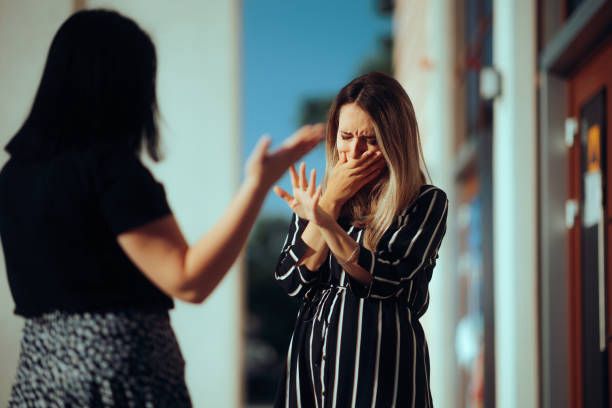
What Vanessa Saw From the Street
The house sits at the end of a private lane in Weston, Massachusetts, behind a gate that swings open on a timer I set myself because I liked the idea of something in my life that opened on my own terms and no one else’s. The property is three acres, mostly mature oak and maple that were there long before we were, trees that have been standing through decades of other people’s decisions and will stand through decades more of ours. The house itself is white with dark trim, a colonial that John and I spent eight months renovating before we moved in, doing some of the work ourselves on weekends because we are people who have always understood that putting your own hands on something changes your relationship to it in a way that writing a check alone cannot.
It is worth approximately two million dollars in the current market. This number is real and I am not embarrassed by it, because I know exactly where every dollar of it came from and what it cost in work and risk and the particular discipline of people who understood early that no one was going to hand them anything and who arranged their lives around that understanding.
My name is Sarah. I am twenty-eight years old and I grew up in Boston in a family that looked, from the outside, like the kind of family you would be grateful to belong to. My father is a respected physician. My mother has a faculty position at a university and has published work in her field that her colleagues cite and her students admire. The house I grew up in was large and well-furnished and located in a neighborhood where the school district was good and the neighbors were educated and the general atmosphere communicated stability and success.
From the inside, the family had a different topology. Not a circle, as families are sometimes described, with everyone equidistant from the center. More like a solar system, with my sister Vanessa occupying the position closest to the warmth and receiving the most of it, and me occupying a more distant orbit where the light was adequate but thin.
I have thought about whether this was deliberate, whether my parents made a conscious decision to favor Vanessa or whether it was simply the accumulated result of a thousand small choices, each one individually defensible, that added up over years into something that was not defensible when you looked at it whole. I have concluded that the distinction does not matter as much as I once thought it did. Deliberate or not, the effect was the same. Vanessa was the daughter they celebrated. I was the daughter they expected to manage.
Vanessa went to private school. I went to the public school two miles away, which was a good school and I am not complaining about the education I received there, but it was a different school in ways that extended beyond academic quality, ways that had to do with the investment my parents made in their respective daughters’ futures and what that investment communicated about whose future they were more committed to.
Vanessa got a car at sixteen. I got a congratulations when I passed my driver’s test and a reminder that car insurance was expensive. Vanessa traveled to Europe after high school graduation, a three-week trip through France and Italy that my parents funded and that Vanessa posted about with the easy pleasure of someone who has never had to think about where the money comes from. I worked at a coffee shop the summer after graduation to save for my first semester’s textbooks.
Vanessa’s college tuition was paid in full. Mine came in the form of loans I took out in my own name and have been paying down since graduation with the focused attention of someone who understands that debt is a weight and weights must be managed.
None of this was presented to me as inequality. It was presented as suitability. Vanessa’s needs were addressed because Vanessa needed what she needed. My needs were addressed through the expectation of my independence, which my parents framed as a compliment. They believed, or said they believed, that I was capable of managing on my own, which is a lovely thing to say about a person if you mean it as recognition and a convenient thing to say if you mean it as permission to withdraw.
I chose a career in technology, specifically in data science and analytics, which is a field my parents never quite understood and therefore never quite respected. My father would have preferred medicine or law, the careers that fit within his framework of what counted as success. My mother was more open but had the academic’s slight condescension toward work that was practical rather than theoretical. John was a software engineer who had built his skills through bootcamps and self-study and relentless learning rather than through the conventional academic path, and my parents’ inability to assess his intelligence through the usual signals meant they defaulted to skepticism.
We were not flashy people. John and I had agreed, early in our relationship, that we were building something for ourselves rather than for an audience, and that the patience required to build something real meant resisting the impulse to spend money on the performance of having money before we actually had it. We drove used cars. We lived in a small apartment in Cambridge for the first two years and split every cost and tracked every dollar not out of anxiety but out of the discipline of people who understood that the future they wanted required the choices they made in the present.
Vanessa got engaged in the spring of the year I turned twenty-five.
Her engagement was, from the moment it was announced, a production. My parents threw an engagement party that involved champagne and speeches and the specific glowing attention of people celebrating something they had been waiting for, something that confirmed their investment and their hopes and their understanding of how a life should go. Her fiancé, a man named Griffin from a family my parents described as a good family in the tone people use when they mean well-positioned rather than kind, was received at the dinner table with a warmth I recognized as the warmth of approval, the particular temperature of my parents when something met their standards.
My father gave a toast. He spoke about Vanessa and Griffin and the life they were building together, and at the end of it he announced that he and my mother would be contributing one hundred thousand dollars toward the wedding.
One hundred thousand dollars. The number was not presented as a gift exactly, or at least not a gift to Vanessa from her parents. It was presented as an investment in a future, as the natural extension of the support my parents had always given her, as the appropriate response to a daughter who had made the right choices and built the kind of life they could celebrate.
I sat at that dinner table and I looked at the number and thought about my student loan balance, which at that point was still significant, and about the down payment John and I had been saving toward for two years, and about the wedding we had been quietly planning, modest and intimate and exactly what we wanted, that we were trying to figure out how to afford alongside everything else we were trying to afford.
Two weeks later, John and I had dinner with my parents.
I had not planned to ask for money. I want to be clear about this because the shape of the conversation is sometimes misremembered when I tell it, and I need the accurate version. I had not come to that dinner to match what my parents had given Vanessa. I came to tell them about our wedding plans, to include them in something I still, at that point, wanted them to be part of. When the conversation moved to finances, as it naturally did when talking about a wedding with tight parameters, I mentioned honestly where we stood. Not as a request. As information. As the kind of thing you share with your parents when you have not yet stopped hoping that they will respond to information about your life with the interest of people who care about your life.
What happened instead is what finally, completely, and permanently clarified things.
My father looked at me with the expression I am describing as cold and calculating because those are the most accurate words I have for it, the expression of a man who has made a decision that he is comfortable with and is prepared to explain it rather than apologize for it. My mother sat beside him with the specific composure of a woman who has agreed to let her husband speak for both of them on a subject she has already decided not to feel too much about.
He said Vanessa deserved their support because she had made the right choices.
He said she had followed the path they respected and married into a family they considered important and built the kind of life that reflected well on the family as a whole.
He said I had made different choices and those choices were mine to live with.
He said, using the exact phrase I still hear sometimes in the particular quietness just before sleep: I didn’t deserve any help.
My mother did not contradict him. She made a small sound that I recognized as agreement expressed minimally, the sound of a woman who had made the same decision as her husband and was letting him carry it while she maintained the ability to later claim she had said nothing.
I sat with those words for the rest of the dinner, which I completed because I did not know how to leave, and then I went home to John and sat in our small Cambridge apartment and told him what had been said, and John listened with the complete and undramatic attention he had always given to the things I said that mattered, and when I was done he said, “What do you want to do?”
I said I wanted to stop.
He said, “Okay.”
That was the conversation. It was not dramatic. It was not a scene. It was two people who had decided that life was short and the people who had just demonstrated clearly what they thought of us were not people we were required to continue auditioning for.
I sent one message. To both my parents and to Vanessa. It said that I had heard them clearly at dinner and that I wished them all well and that I was going to be building my life with the people who wanted to be part of it. That I hoped someday things would be different but that I was not going to continue in a relationship that was structured the way ours was structured. That I was stepping back.
Then I stepped back.
The first year was, as I described it to a friend recently, the kind of painful that is also clean. There is a grief in removing yourself from even a painful family, the grief of finally accepting the thing you have been managing not to accept, the grief of the family you wanted rather than the one you had. I felt it clearly and John let me feel it without either minimizing it or amplifying it, and gradually it settled into something I could live with, a quiet and specific sadness that I carried without being carried by it.
What happened in the space the family had occupied was that other things grew into it. John and I got married in November of that year, a small ceremony at a restaurant in Cambridge with forty people we actually loved and a dinner that was exactly what we wanted and cost what we could afford without stress and was, by every measure that matters to me, the best day of my life to that point. His parents were there and they were warm in the uncomplicated way of people who were simply glad their son was happy, and their warmth toward me was the warmth of inclusion rather than assessment, and it was different from what I had grown up with in a way that I still sometimes have to sit with to fully receive.
The professional trajectory of those three years is the part of the story that sounds like a narrative device, the reversal of fortune, the proof that the people who underestimated you were wrong. I want to be careful about how I tell it because it was not primarily about proving anyone wrong. We were not working toward the house in order to show my parents something. We were working toward it because we had a plan and we believed in the plan and we executed it with the focused discipline of people for whom the plan was the point.
John’s company, which he had co-founded three years earlier with a former colleague, was acquired in the second year. The acquisition was successful in the specific financial sense of that word, the kind of outcome that, when you have been building toward it carefully and have not let yourself think about it too concretely because thinking about it too concretely creates a fragility in the execution, takes your breath for a moment when it actually arrives.
My own career had been building in parallel, a director-level position at a firm in Boston that worked with financial services clients, a role that recognized the skills I had been developing since my first job out of college and paid for them accordingly. I am not going to enumerate the numbers because the numbers are private and because they are not the point. The point is that two people who were told they were making the wrong choices made choices that produced outcomes their critics had not anticipated.
We bought the land in Weston in a period when prices had softened and we had the liquidity to move on it. The construction was managed by John, who has the project management capacity of someone who spent years building complex software systems and understands that the difference between a project that goes right and one that goes wrong is usually the quality of the planning and the rigor of the execution. We made decisions about the house the way we made all our decisions, together, with attention to what we actually wanted rather than what we thought we were supposed to want.
The gate at the end of the lane was my idea. I wanted something that opened on a timer, that swung open for the people we expected and stayed closed for the people we didn’t. It is a practical feature and it is also, I will admit, something that means more to me than the practical explanation covers.
I was sitting in the kitchen on a Saturday morning in early September when my phone buzzed with a text from our neighbor Caroline, who lives two streets over and who had become a genuine friend in the way of neighbors who share a dog park and a school district and, over time, enough real conversation to constitute an actual relationship. She said she thought she had just seen a woman park across from our gate and sit in her car looking at the house.
She described the car. I knew the car. It was Vanessa’s.
I set my phone down and looked out the kitchen window at the back garden, where the oak tree we have been meaning to put a bench under is standing in the September morning light, and I thought about what Vanessa was seeing from the street.
She was seeing the gate and the lane and the house at the end of it. She was seeing the evidence of a life that had proceeded without her family’s assessment of its value, a life that had flourished in the gap their withdrawal had created, a life that was, by any of the metrics her parents had always used to evaluate such things, successful in ways that were difficult to argue with.
She was seeing something that did not fit the story.
My mother’s name appeared on my phone six minutes after Caroline’s text.
I looked at it for a long time.
The call had nothing to do with love or regret or missing me or any of the things that should motivate a mother to call a daughter after three years of silence. I knew this not from bitterness but from the clarity that three years of distance had given me, the ability to read my family’s motivations without the distortion that proximity and hope had once introduced. My mother was calling because Vanessa had seen the house and called her, and because the information required a response, and the response required a call.
I answered.
I said hello in the neutral way I had practiced for the version of this moment I knew was coming eventually.
My mother’s voice had the quality of a person who has been caught without a prepared script and is improvising, which she was not naturally good at, having always preferred the managed conversation to the spontaneous one. She said my name with the warmth she could produce when warmth was strategically useful, a warmth that was real in the sense that the emotion was genuine but performed in the sense that its timing was calculated.
She said she had heard I was doing well.
I said I was.
She said Vanessa had mentioned she had driven through Weston.
I said I knew.
There was a pause in which she was deciding how to proceed.
She said she and my father thought it might be time to reconnect, that a lot had changed, that they had been thinking about me.
I listened to all of it.
Then I said, “Mom, I need to ask you something, and I need you to hear it as a real question rather than a challenge.”
She said of course.
I said, “Three years ago, Dad told me I didn’t deserve any help. Not because you didn’t have the means. Because you had decided I hadn’t made the right choices. You sat there while he said it and you didn’t disagree. So when you tell me you’ve been thinking about me, what is it exactly that changed?”
The pause this time was longer.
She said that people grew. That families went through difficult periods. That she hoped we could move past what had happened.
I said, “Moving past something requires understanding what it was. What was it, Mom?”
She didn’t answer this directly. She talked about family and time and Vanessa asking about me, which was the confirmation I had not needed but now had, that the call had originated with Vanessa’s drive down my street.
I said, “I’ll tell you what I’m willing to do. I’m willing to have a real conversation, the kind where we actually say what happened and why. Not the kind where we agree to call it water under the bridge and pretend it didn’t shape the last three years of my life in ways that were significant. If you’re willing to have that conversation, call me.”
She said she would think about it.
I said I would be here.
We hung up.
I put the phone on the kitchen counter and looked at it for a moment and then I went to the back door and walked out to the garden and stood under the oak tree in the September morning light. The air had the quality it gets in early September in Massachusetts, the first cool edge of it, the summer softening into something more considered.
I have not heard from my mother since that call. This has been, in the weeks since, its own kind of information. The conversation she is willing to have is one in which the discomfort is distributed unevenly, in which I absorb the past and she receives the reconnection. The conversation I am willing to have requires something more equal than that, and apparently that requirement remains, for now, an obstacle.
I am not waiting for the call. I have a life that does not have a waiting quality to it, a life built by people who understand that the future is made from what you do rather than from what you are given or what you are told about yourself.
Vanessa has not called. I have thought about what I would say if she did, and I have not arrived at a conclusion, which tells me I am still working out what I want from that relationship, which is the honest position rather than the performed one.
What I know is this. I am twenty-eight years old. I live in a house at the end of a lane behind a gate that swings open on my own terms. My husband is a person who answered “What do you want to do?” with “Okay” when I said I wanted to stop, and who has built something alongside me with the same values and the same patience and the same understanding that the work is the point.
I was told I had not made the right choices. I was told I did not deserve any help. I was told, in the particular language of exclusion that my family spoke fluently, that my life was not the kind of life they were invested in.
I built it anyway.
Not for them. Not to prove something to them. For myself, for John, for the future we were going to inhabit regardless of whether anyone in my family of origin approved of it.
Vanessa sat in her car on a Saturday morning and looked at the gate and the lane and the house at the end of it, and then she called my mother.
And my mother called me.
And I picked up.
Because I am a person who answers her phone, who is willing to have real conversations, who has not closed the door on the possibility that the people who failed her might eventually be willing to understand what they did.
I simply no longer need them to.
That is the difference. It is not a small difference. It is the difference between a life spent in the orbit of people who determine your worth and a life spent determining it yourself.
The gate at the end of the lane swings open for the people we expect.
I know exactly who those people are.
They are not defined by blood. They are defined by the choices they have made about how to treat me, the way I have been defined by the choices I made about how to build my life.
We made our choices.
Here we are.
I want to tell you about the years between the dinner and the phone call, because the story as I have told it so far moves quickly through those three years in the way that summaries do, and the summary misses the texture of it, the actual experience of building something from scratch when no one who was supposed to believe in you does.
The first year, the one I described as more painful than I can describe, was painful in two distinct registers. There was the grief of the family, which I have mentioned. And there was the practical reality of two people in their mid-twenties trying to execute an ambitious professional and financial plan without the safety net that many of their peers took for granted.
John and I had peers whose parents had paid their graduate school tuition. Peers whose security deposits and first month’s rent had come from a call home. Peers who, when a deal went sideways or a job ended, had a cushion behind them that was not of their own making. We were not resentful of this. It was simply the landscape, and understanding the landscape accurately is the first requirement of navigating it well.
What we had instead of the safety net was a clarity of purpose that I think the safety net sometimes works against. When there is no cushion, every decision carries its full weight. You cannot take a flyer on something because you can afford to lose. You cannot let a bad month slide because there is always another month behind it. You must be precise, which is a pressure but also a discipline, and the discipline, over time, produces a kind of confidence that is different from the confidence of someone who has always known they had somewhere to fall.
I started in my company’s data science team and moved into senior individual contributor work in the second year, and into a director position in the third, and I want to be honest that the trajectory was not smooth, that there were quarters when my performance was evaluated in meetings I found painful and I had to go home and reckon with the gap between where I was and where I was trying to go. There were projects that did not go right, conclusions I drew from data that were wrong in ways I had to own, situations I handled poorly in the early parts of my management role because managing people is a skill that is learned by doing it badly enough times to understand what doing it well actually requires.
None of this is in the version of the story that can be driven past on a Saturday morning.
John’s company had a specific kind of trajectory that I watched from close up and which I think is worth describing accurately because the compressed version, the company was acquired and things worked out, flattens several years of difficult work into an outcome that can look like luck if you don’t know what went into producing it.
He had co-founded the company with a colleague named Marcus who was technically excellent and organizationally chaotic, which is a combination that is common in early stage tech companies and which creates specific problems at specific stages of growth. The eighteen months between founding and the point where the company had enough customers to be taken seriously required John to simultaneously be the technical lead, the de facto operations manager, and the person who kept Marcus’s excellent ideas from being undermined by Marcus’s inability to execute them in a sequence that investors and customers could understand. He was doing this while I was doing my own job and we were living in the Cambridge apartment and tracking every dollar and having the conversations that couples who are building something together under real pressure have to have, the honest conversations about fear and doubt and whether the plan was right and whether we were right and whether we had it in us to keep going.
We did. But the having it in us was not a given. It was a daily choice, and some days the choice was harder than others.
The acquisition, when it came, was the result of three years of specific work toward a specific outcome, and the outcome was better than the base case we had planned for and somewhat less than the optimistic case we had sometimes let ourselves imagine, and it was exactly right, meaning it was real and it was ours and it was enough to change the parameters of everything that came next.
We did not spend it immediately. This is the thing that people who have not been through a significant liquidity event sometimes do not understand about people who have not grown up with money. The getting is not the ending, it’s the beginning of a different kind of work. We sat with it. We made a plan. We talked to people we trusted who had navigated similar situations, and we made the decisions that needed to be made with care rather than speed, because the care was the thing that had gotten us there and abandoning it at the moment of the outcome seemed like exactly the wrong time to do so.
The Weston property came to our attention through a contact of John’s who worked in real estate and knew we had been thinking about the next phase. We drove out to look at it on a Sunday afternoon, parked at the end of the lane before the gate was there, walked the three acres in the late afternoon light. The oak trees were already turning at their edges, the particular red-orange of a Massachusetts October, and John stood in the middle of the property and turned slowly, taking it in, and he looked at me and I looked at him and we both knew without saying it.
We didn’t say much on the drive back. Some things don’t need the words immediately. Sometimes the words come later, when the decision has settled and you’re ready to talk about what it means rather than just what it is.
What it meant, I understood over the weeks that followed, was a different chapter. Not a different life. The same life, with the same values and the same two people who had decided four years earlier to build something together without anyone’s help, moved into a space that was larger than what we had had before and still, in all the ways that mattered, exactly ours.
I thought about my parents when we signed the papers. I would be lying if I said otherwise. I thought about the dinner table and my father’s expression and the words I didn’t deserve any help, and I thought about what those words had done, which was not break me but clarify me, strip away the hope that had been distorting my vision and leave me with a clear sense of what I was working with and what I was working for.
I was not working for their acknowledgment. But I was aware that the work was happening in a space their words had helped define, and that awareness had a texture to it that I was still working out.
The renovation took eight months. John managed the contractors and the timeline and the budget with the same methodical attention he brought to every complex project, the same checklists and the same daily check-ins and the same refusal to let a small problem become a large one by ignoring it until it had to be addressed. I made the design decisions, mostly, with John’s input on the things he cared about, which were the kitchen and the home office and the configuration of the garage, because he is a person who knows what he needs and is direct about it.
The gate was last. We had been discussing it throughout the renovation, whether we needed it and what kind and whether it sent a message we wanted to send. I said I wanted it. I said I wanted something that opened for the people we expected and not for others. John said that was exactly right and let me pick it out, which is the kind of partnership I have that I do not take for granted.
The morning Caroline texted me about Vanessa’s car was not a morning I had been bracing for. I was drinking coffee and reading something on my laptop and the day was ordinary in the specific way of Saturday mornings that have nothing planned, the kind of morning I had worked for years to be able to have without guilt. The text interrupted the ordinary in the way of something real landing in a planned space.
I read the description of the car and I put my coffee cup down.
I thought about Vanessa sitting in her car looking at the gate and the lane and the house at the end of it. I thought about what she was seeing, which was not just a house but a fact, a material reality that contradicted the story. The story had been that I had made the wrong choices. That I hadn’t earned support. That my path was not the kind of path that led to anything worth celebrating.
The house at the end of the lane was an argument made in the language of concrete and oak trees and a gate that swings open on its own terms, and the argument was legible from the street.
I do not know what Vanessa said to my mother when she called. I know she called because the timing of my mother’s call told me, and because I know my family well enough to understand the sequence of events that produces a call from my mother after three years of silence.
What I know about Vanessa is more complicated than the flat version of her that the story as I’ve told it might suggest. She is not a villain. She is a person who received more than her share of parental investment and attention and did not examine this closely enough to understand what it meant, which is a failure of awareness rather than of character, and character and awareness are different things that can exist in different proportions in the same person.
She had a good wedding. I assume the hundred thousand dollars produced something beautiful. I was not invited, which is its own statement, though at the time I had already withdrawn and the invitation or its absence was less significant than it might have been in a different context.
What I wonder about, when I let myself think about her honestly, is whether the life the money helped build is the life she wanted or the life she was helped toward, and whether at thirty-one she is happy in the way of someone who has arrived somewhere they chose or happy in the way of someone who is performing an outcome that was designed for them by people whose approval they valued more than their own compass.
I don’t know the answer. I might someday. If she calls.
The call I am waiting for, the one that would be worth having, is the one that begins not with what Vanessa saw from the street but with something Vanessa had been thinking before she drove down that street, some internal conversation she had been having about what happened and what it meant and what she was responsible for.
If that call comes, I will pick up.
Until then, the gate swings open for the people we expect, and the oak trees in the back are turning their October colors, and the coffee is good in the morning kitchen of a house I built myself, and my life is mine.
All of it.
Mine.

Specialty: Quiet Comebacks & Personal Justice
David Reynolds focuses on stories where underestimated individuals regain control of their lives. His writing centers on measured decisions rather than dramatic outbursts — emphasizing preparation, patience, and the long game. His characters don’t shout; they act.