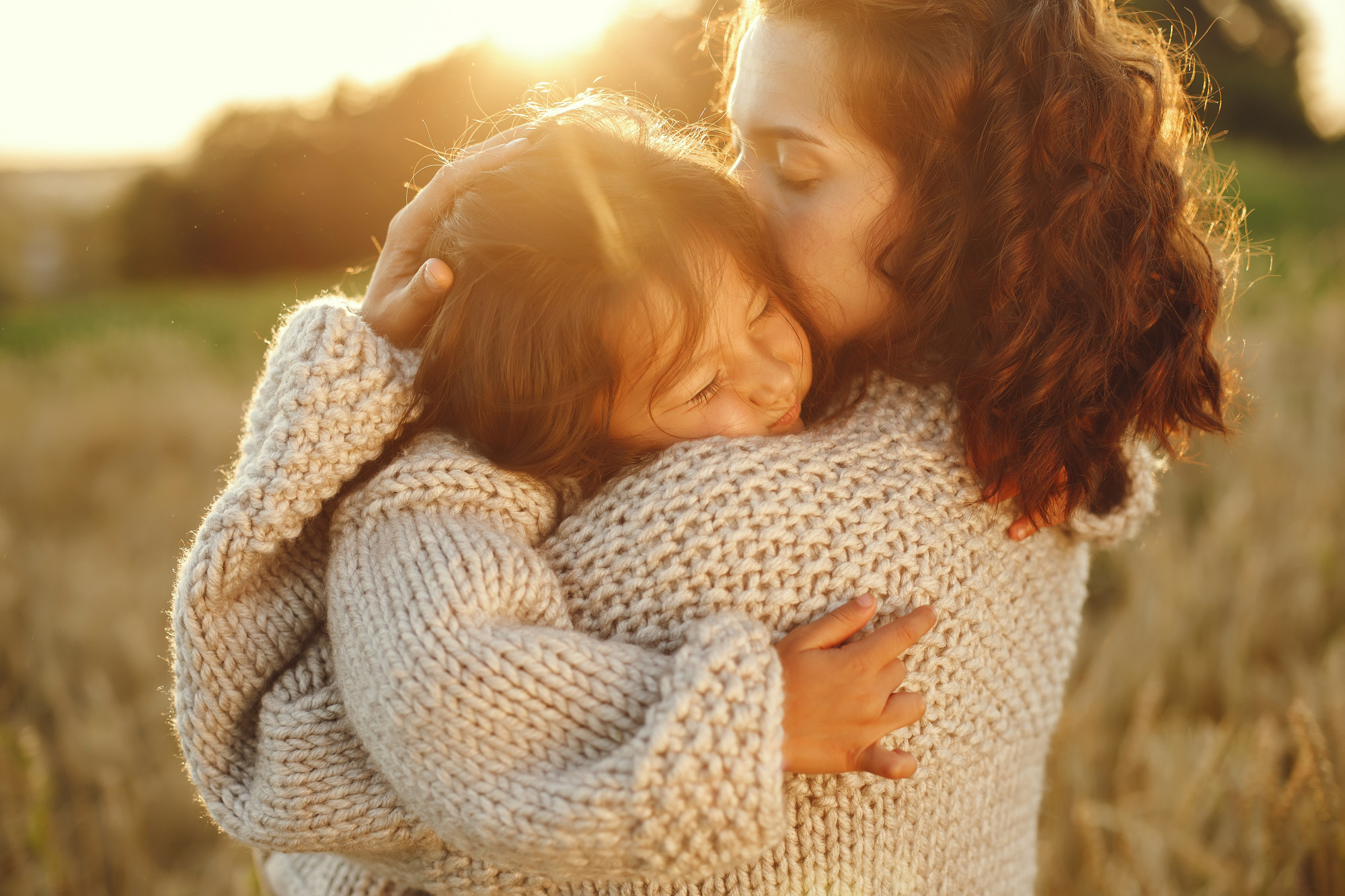
The afternoon started the way those afternoons always started, with the particular dread I had learned to carry in my chest like a stone on the drive over. Haley sat in the back seat watching telephone poles pass outside the window, her small fingers folded in her lap, her eyes doing that thing they did before family gatherings where she went very still and very inward, bracing herself for whatever the day intended to deliver. She was eight years old and she had already learned to brace.
“It’s just a barbecue,” I said, more to myself than to her.
She didn’t answer. She knew better than that.
The backyard was already running at full volume when we came through the sliding door. My father stood at the grill with a spatula in one hand and a beer balanced on the ledge beside him, wearing the comfortable authority of a man who has never doubted his right to take up space. Uncles sprawled in patio chairs with their feet extended, voices already amplified by early afternoon drinks, laughter spilling out with the loose, careless quality of people who were not thinking carefully about anything. The air held the particular smell of those gatherings: lighter fluid and charcoal and meat that had been on the heat a little too long, all of it overlaid with something else, something I could never fully name but always recognized, the smell of a yard where certain rules applied and the most important one was that no one would say out loud what was actually happening.
Haley tucked herself close to my side. I felt the warmth of her arm against mine.
Then Rachel came through the other slider.
She timed her entrances. I had watched her do it for thirty years and she still did it with the same practiced quality, that pause in the threshold before committing to the space, the quick scan of the yard to locate her audience. She was wearing a designer romper that fit her like something chosen for its effect, hair falling in waves that were too deliberate to be casual, nails fresh, lips glossed. She moved like someone performing a version of herself she had rehearsed and considered satisfactory.
Her eyes found Haley immediately.
They traveled from the hoodie to the jeans to the scuffed sneakers, and her mouth arranged itself into the smirk I had known my entire life, the one that had been directed at me for decades before it found a smaller target.
“Wow,” she said, loud enough to carry. “Still can’t dress her like a girl who matters.”
Haley’s shoulders folded inward. Her chin dropped. I watched the small light in her face flicker, that particular dimming that happened when the world confirmed something she was already afraid might be true about herself.
The heat that moved through me was immediate and complete. I felt it in my hands first, that readiness that lives in the body before the mind has caught up. I had a catalog of responses to Rachel, assembled over years of these afternoons, and part of me wanted to open it, wanted to select something precise and final and say it clearly in front of everyone. I had rehearsed versions of those words on the drive over before I learned not to.
My therapist had helped me understand the architecture of what these gatherings were. Not chaos. Design. They were constructed to produce a specific result, which was my visible loss of control, and once I understood that, I could see how each provocation was calculated toward that outcome. The point was never the insult itself. The point was my reaction to it, which could then be held up as evidence of my instability, my oversensitivity, my inability to handle normal family dynamics. I had spent years giving them exactly what they needed. I had decided to stop.
I said nothing.
Rachel drifted closer in the way she did, occupying my space with her presence the way a person occupies territory. Her perfume was expensive and thick and used like a tool. She dropped her voice to the register she reserved for things she wanted to say without witnesses.
“You honestly think that child is going to be anything special?” she murmured. “You’re raising a smaller version of yourself. I didn’t think that was possible to make it worse, but here we are.”
My mother appeared from inside carrying her drink, catching the tail end of something, and offered the laugh she reserved for moments when cruelty needed an audience to make it feel legitimate. “That’s what happens when you don’t choose the right people,” she said, clinking her glass against Rachel’s. “Trash breeds trash.”
Haley’s fingers tightened around mine. I squeezed back without looking down at her, keeping my face neutral, sending the only message I could send in that moment through the pressure of my hand: I see you. I have you. They are wrong.
My father wandered over from the grill with the unhurried confidence of a man who owned everything within his line of sight. He looked me over the way he always did, the slow appraisal that started at my shoes and moved upward, pausing on the faded jeans and plain shirt and the ponytail I had pulled back without ceremony.
“You look miserable, Danny,” he said, taking a long pull from his beer. “Maybe if you’d tried harder when you were younger, you wouldn’t have ended up a single mother. But you made your choices.”
My therapist had given me a phrase for what these moments were. Psychological hunting, she had called it, and I had laughed when she said it because it sounded clinical and dramatic for what I had been calling Sunday dinner. But standing there with three people I shared blood with looking at me the way predators look at something they are testing for weaknesses, I understood precisely what she had meant. They circled, they prodded, they waited for the wound to open so they could blame me for bleeding.
“I’m going to make us some plates,” I told Haley softly. “Do you want to sit by the pool and watch the water?”
Her face lifted. “Can I dip my feet?”
“Not yet,” I said. “You don’t have a swimsuit. Just sit close and watch. I’ll be right there, five seconds.”
She trusted me completely. That was the thing about Haley that I carried with me like both a gift and a responsibility, the absolute unguarded trust she offered. “Okay, Mom,” she said, and she walked to the pool’s edge and settled herself down on the concrete with her knees pulled close, sneakers near the coping but not touching, the sunlight coming off the water throwing bright shifting patterns across her face.
I turned to the food table. Burger patties, hot dog buns, plastic tubs of potato salad, a bowl of chips going soft in the heat. I grabbed a plate and started building Haley’s the way she liked it, cheese on the burger, ketchup, no onions.
Behind me the yard hummed with its usual sounds: bottles clinking, laughter peaking, the steady breath of the grill.
Five seconds.
When I turned back, my world split open.
Rachel was standing directly behind Haley. Too close, the way she was always too close to things that didn’t belong to her. Haley had not heard her approach. My daughter was still watching the water with the uncomplicated attention of a child who had been told she was safe for five seconds and believed it.
My sister looked down at her with the same expression she had worn her whole life for the moment right before something was broken, and then she put both hands flat on my daughter’s back and shoved.
It was fast and it was deliberate and it was unmistakable.
Haley pitched forward with a small startled sound that was swallowed by the impact of the water. The splash was wrong, too heavy for a child’s body, and I understood why immediately: fully dressed, denim and cotton soaking through in an instant, the fabric becoming weight, becoming drag. She was eight years old and small and the deep end was the deep end for a reason.
The plate left my hands. I heard it crack on the concrete. I was already running.
“HALEY.”
The sound that came out of me was not something I had chosen. It was prior to choice, prior to language, something that lives deeper than both.
I was three steps from the edge when something hit me from behind with a force that lifted my feet briefly from the ground. An arm hooked around my neck. A forearm drove into my throat. The concrete skidded under my shoes as I was pulled backward, and the blue of the pool disappeared from my sight as I was wrenched sideways.
My father’s breath was hot and sour against my ear.
“Stop,” he said, low and furious. “She needs to learn. If she can’t survive water, she doesn’t deserve life.”
I heard the words and my brain refused them for a full second, the way the mind refuses things too monstrous to process at normal speed. Then he repeated them, slower, and tightened his grip.
I cannot tell you what it felt like to hear a man say that about his eight-year-old granddaughter while that granddaughter was underwater in jeans and a hoodie. I cannot find the language for it. What I can tell you is that something inside me that had been afraid of him my entire life simply stopped being afraid, not gradually, not partially, but all at once, in the way a circuit breaks.
My hands went to his arm. I drove my nails in. I twisted, I kicked, I clawed at the forearm pressed against my windpipe while my vision narrowed and the edges of my sight went strange. He was still bigger than me. He had always been bigger than me. But behind him, through the blurring, I could see the water churning.
I could see Haley’s arm come up and go back down.
I drove my heel into his instep with everything I had, the way they had taught in the self-defense class I had taken after one too many family holidays that ended with bruises I made excuses for. He swore and the grip loosened, just enough, just for the second I needed.
I ripped free and dove.
The cold hit like a flat hand across the whole body. My own clothes went heavy immediately but adrenaline does not negotiate with physics. I could see her under the surface, her eyes wide and white with the specific terror of a child whose body is not doing what she needs it to do, her arms moving in the uncoordinated way that is not swimming, not playing, not learning. She was drowning.
I grabbed her arm and pulled and kicked and we broke the surface together and she seized onto me the way people seize onto things when they have been very close to not existing anymore, with every bit of strength she had, her fingers digging into my shoulders, her face pressed against my neck, coughing and gasping and making sounds that I could not distinguish from crying because they were both at once.
I got her to the edge. I got her onto the concrete. I got my body between her and the world and I held her while she shook, the water pouring off both of us, her jeans plastered to her legs, her hoodie a soaked dead weight that I pulled over her head and threw aside.
“I’ve got you,” I kept saying. “I’ve got you. I’ve got you.”
She coughed up pool water onto the concrete. Her whole small body convulsed with it.
“Oh my God,” Rachel said behind me, her voice shaped into exasperation rather than alarm. “Relax. It was one dunk. Kids need to toughen up.”
My mother made a sound that was almost a laugh. “She’s fine. It’s just one dunk.”
I looked up at them.
Not with rage, though the rage was there. I looked at them with something that had just arrived and that I recognized immediately as clarity, the kind that comes rarely and stays permanently. Rachel smoothing her hair back into place like she was recovering from a minor social awkwardness. My mother rolling her eyes, glass still in hand. My father behind them flexing the hand I had clawed at, his expression not horrified, not ashamed, but irritated, the look of a man whose authority had been challenged.
I understood something in that moment that I had been circling for years without being able to land on it. They were not people who had made a mistake. They were not people having a bad day. They were people who had wanted a different outcome, and the outcome they had wanted was my daughter not coming up.
I said nothing. I wrapped Haley in a towel someone’s cousin had handed over with shaking hands. I walked to my car. They called after me in the voices they used for this particular performance: unhinged, dramatic, overreacting, as if the labels they applied to me were capable of rewriting what had just happened.
I did not turn around.
That night Haley slept in my bed. Every small movement she made pulled me out of whatever thin layer of sleep I had managed to find. Every cough, which she did several times through the night, stopped my heart before it started again. I lay in the dark listening to her breathe and thought with a precision I had not had in years.
By morning I had three things clearly in front of me.
The bruising on my neck where my father’s forearm had pressed. The pediatrician’s report documenting water inhalation, obtained at the walk-in clinic before we went home, where the doctor had looked at Haley and then looked at me and asked careful questions that I answered carefully and completely. And Haley’s own words, given to me in the parking lot while I buckled her seat belt, in the small trembling voice of a child who had decided to tell the truth: “Aunt Rachel pushed me. And Grandpa wouldn’t let you help me.”
I did not call my family that night or the next morning. I did not post anything. I did not warn anyone or telegraph my intentions or give anyone the opportunity to align their stories. I photographed the marks on my neck with the bathroom mirror and the overhead light. I wrote down everything I remembered in the order I remembered it, time stamps where I had them, witness names where I knew them. I wrote down what my father had said to me with his arm across my throat, both times he said it, the exact words. I called our pediatrician and scheduled a follow-up for Haley’s lungs. I sat at my kitchen table at two in the morning with a legal pad and documented the event with the same flat precision I would bring to a work report, because the feelings were real but the documentation needed to be something other than feelings.
Then I called CPS.
And I called the police.
A week passed. I did not contact my family during it. I went to work. I took Haley to school and picked her up and made her dinners and watched her move through the ordinary rhythms of her days with the heightened attention of someone who has recently been reminded how quickly ordinary can stop. She was quieter than usual. She sat closer to me on the couch in the evenings than she had before. At the pediatrician’s follow-up there was no lasting damage to her lungs, which the doctor said with a directness that told me he understood how close the margin had been.
“She was lucky,” he said.
“I know,” I said.
On the seventh day, I drove to my parents’ house in the afternoon.
This time I was not alone.
A CPS caseworker walked to my left. A uniformed police officer walked to my right. I had spent the previous week answering their questions and providing my documentation and letting the process build itself the way processes build when the evidence is sufficient and clear, and now I was walking through the same sliding glass door I had walked through my entire life, in the same backyard, in the same afternoon light.
They were set up for another Sunday performance. Beer on the side table, grill fired up, the same cousins in the same chairs, laughter running at the same volume. My father had his spatula. My mother had her drink. Rachel was there too, in a different outfit but the same posture, the same quality of certainty about her right to be exactly as she was in any room she entered.
The silence that fell when they saw the officer’s badge was total and immediate. It collapsed the afternoon noise like something structural had given way.
My father’s face drained. He had a particular color when all the blood left it, and I had seen it before, but not like this.
Rachel laughed first. It was a short, high sound, the laugh of someone who has decided this must be a mistake and is waiting for someone to confirm it. “Is this a joke?”
The officer did not smile. His voice was conversational and entirely without accommodation. “We’re here regarding a report of child endangerment and assault.”
My mother stood so fast her chair scraped the concrete. “This is ridiculous. She’s vindictive. She has always been unstable.”
The CPS caseworker turned to me. “Is this the child involved?”
Haley’s hand found mine. She was standing very still at my side with the look she got when she had decided to be brave about something.
“Yes,” I said.
The officer addressed Rachel. “Did you push this child into the pool?”
Rachel’s composure adjusted itself toward indignation. “She was sitting too close to the edge. I barely touched her.”
“With both hands?” I said, quietly.
The words were not aggressive. They were not theatrical. They were just accurate, and they landed in the precise spot where accuracy lands when a person has been operating under the assumption that their version of events is the version that will prevail.
Her eyes came to mine and held there for a moment, and I saw it move through her face, the thing she had never had to feel before in all the years of these Sundays, in all the years of provocation and spectacle and the reliable absence of consequences. Fear. Not of me, specifically, but of the situation she was now inside, a situation that did not rearrange itself around her needs, that did not have people in it who would quietly cover her.
The officer moved through the yard taking statements, and neighbors who had heard the shouting the previous week had already been interviewed prior to this visit, something I learned in the quiet exchange between the officer and the caseworker that I was not meant to hear but did.
My father tried to reassert his authority in the way he always had, with volume and the physical presence he had spent his whole life using as a substitute for being right. “This is family business,” he said, his voice carrying across the yard the way it always carried.
“No,” the officer replied. “It’s criminal.”
The officer looked at the marks still visible on my neck, faint now but documentable, and asked my father about them.
“She attacked me,” my father said. “I was restraining her for her own good.”
The officer looked at my five-foot-three frame. He looked at my father’s six-foot build. The officer’s expression did not change in any dramatic way. He made a note.
The caseworker crouched to Haley’s level with the particular gentleness of someone trained for exactly this kind of moment, the posture of a person who understands that what they say next will live in this child’s memory for a long time.
“Can you tell me what happened?” she asked.
Haley swallowed. I could feel her hand tighten around mine and then, deliberately, relax. She had decided something.
“Aunt Rachel pushed me,” she said. “And Grandpa held my mom so she couldn’t help me.”
My mother made a sharp protest sound.
The caseworker did not look at her. She wrote everything down.
Then she stood and used the words that finally, after years and years of Sunday afternoons and faded bruises and a vocabulary I had built around surviving what I could not stop, did what those words were intended to do.
“Effective immediately,” she said, “unsupervised contact with this child is suspended pending investigation.”
Rachel’s mouth opened. Nothing came out. For a moment she looked exactly like what she was, a person who has never genuinely reckoned with the fact that the rules apply to her, encountering them for the first time.
My father started yelling about overreach and betrayal and what family meant, his voice filling the backyard the way it had always filled every room he occupied, that practiced bellow of a man who had learned early that volume could function as authority.
The officer’s voice cut through it cleanly. “Sir, if you continue, you will be removed from this property.”
He stopped.
I stood there watching the control evaporate, not from any single dramatic moment but from the accumulated weight of documentation and process and the particular authority of institutions that do not reorganize themselves around someone’s personality. I did not feel victorious. Victory implies a game with opponents who were playing by the same rules, and this had never been a game. What I felt, standing in that backyard with the afternoon sun on my face and Haley’s hand in mine, was something closer to the feeling of setting down a weight you have carried so long you had stopped noticing it was there.
Done. I felt done.
The investigation moved through its processes over the following months, and the processes were not pleasant. There were multiple interviews. Home visits. Court dates that required me to sit in rooms with my family and a stenographer and lawyers while my father’s attorney suggested I had a history of instability and Rachel’s attorney implied that my daughter had been playing near the pool edge in a way that invited the incident. I sat through all of it and I answered every question with the same flat precision I had used on the legal pad at two in the morning, because I had learned something over the years that I had not always known: the truth does not need to be performed. It just needs to be present.
Rachel was charged with misdemeanor assault and reckless endangerment. She cried in the courtroom, and the crying was well executed, the practiced grief of someone who has used emotional display as a management strategy for so long it has become their default. She said she was only joking. She said it had been blown completely out of proportion. She said she had not understood the depth of the pool and had not considered the clothing Haley was wearing and had not intended anything serious.
The judge was a woman with a face that did not offer much, no warmth and no hostility, just the specific attentiveness of someone who is paid to assess the accuracy of what people tell her.
“You pushed a fully clothed eight-year-old into the deep end of a pool,” the judge said. “That is not a joke.”
My father faced charges for unlawful restraint. His attorney argued that his actions constituted protective intervention, that he had been preventing an irrational reaction on my part, that his intentions had been to de-escalate the situation. The attorney was good. The marks on my neck were better.
They hired lawyers. They called me dramatic to anyone who would listen. They told extended family I was trying to destroy the family, which was interesting phrasing, because it implied there was a family left to destroy rather than a structure of harm I had simply stopped agreeing to participate in. People I had known my whole life called or sent messages that ranged from gentle concern to outright accusation, and I answered the ones that came from genuine care and ignored the rest.
The court ordered anger management for my father. Parenting education and probation for Rachel. It was not the totality of what had happened to my daughter. It was not commensurate with what my father had said while he held my throat closed and my child was drowning. But it was the record. It existed. It would always have existed, and the people who had spent thirty years counting on the absence of a record now had one.
Something unlocked in my chest when the gavel came down. I sat in that courtroom and felt it, not triumph and not vindication and not the satisfaction of watching someone suffer consequences, though they were suffering them. What I felt was the particular release that comes when something that has been held at pressure for a very long time is finally allowed to equalize. I felt like I could breathe at a depth I hadn’t been breathing at in years.
Haley started therapy with a woman who had a small office with plants on every surface and a way of speaking that suggested she had met many children carrying things they should not have had to carry. Haley called her the plant lady for the first three weeks and then started calling her by her name, which I took as a sign that some trust had established itself.
I started therapy too, with a different person, continuing work I had begun years earlier and set aside and returned to and set aside again. I brought the full weight of what had happened and also the full weight of everything that had preceded it, the decades of those Sundays, the way I had learned to manage myself within that family system as though my own comfort and my daughter’s safety were things I had to earn through careful behavior. My therapist asked me once, early on, why I had kept going back.
I had to think about that for a long time.
“Because I thought I could eventually get it right,” I said. “I thought if I was patient enough, or careful enough, or if I found exactly the right way to be, the dynamic would change.”
She looked at me steadily. “That’s a lot of work to do in service of a system that wasn’t designed to change.”
The first time Haley got near water again, she was at a friend’s birthday party, several months after the hospital. The party had a small inflatable pool in the backyard, not deep, nothing close to what had happened, and she stood at the edge of it for a long time before she would put her feet in. When she finally sat down at the edge and let the water run over her feet, she looked over at me across the yard and I nodded, and she turned back to the water and something in her shoulders released.
She held my hand very tightly on the drive home.
“Was it okay?” I asked.
“Yeah,” she said. “It was okay.”
“We can go as slow as you need,” I said. “We have all the time there is.”
She thought about that. “I know,” she said, which was all she needed to say.
We moved the following spring. I had been thinking about it for longer than I admitted to myself, that particular distance I had never been willing to put between myself and the family I had been trying, unsuccessfully, to be enough for. The new house was in a different part of the city, a quiet neighborhood with old trees and a school within walking distance and neighbors who waved but did not intrude. No pool. No Sunday barbecues. No weekly recalibration of my sense of my own worth through the narrow eyes of people who had decided long ago what I was.
Just quiet. Just ordinary days. Just the specific, undramatic peace of a life that does not require you to brace for it.
People ask me sometimes whether I regret what I did. Whether I regret involving the authorities, or making it official, or what they describe with a particular emphasis as breaking the family. The phrasing interests me every time. Breaking implies something that was intact. The family I grew up in had not been intact; it had been a structure maintained by the agreement of everyone inside it not to name what it actually was. I had named it. The structure did not break because of the naming; it broke because it had never been sound.
Do I regret it? No. I do not regret a single documented fact or a single phone call or a single morning spent at a kitchen table with a legal pad organizing the truth into something that could be handed to a caseworker and an officer.
What I regret is the years. The years of managing myself carefully inside a system designed to require exactly that management. The years of practicing responses in the car on the way to Sunday dinners and leaving without having used them. The years of protecting Haley from them imperfectly, because I was still trying to protect the relationship at the same time, and you cannot do both things when the relationship is the source of the harm.
What I do not regret is the moment I drove my heel down on my father’s instep and ripped free and dove.
Or the week I spent documenting.
Or the afternoon I walked back through that sliding door with two people who could not be shouted into a different understanding of the situation.
Or the look on my daughter’s face when she gave her statement to the caseworker in that backyard, small and frightened and entirely steady, her hand tight around mine, the voice of a child who has decided to tell the truth because she has been shown, once, that telling it matters.
I think about what Rachel expected that afternoon at the pool. She expected a reaction she could weaponize. She expected me to come apart visibly, to give her something she could point to and say: look how unstable she is, look how she overreacts, look at what we have to deal with. She had been engineering that specific outcome for thirty years, in ways large and small, and it had always worked because I had always delivered what was required of me.
She did not expect paperwork. She did not expect a week of silence followed by an officer’s badge. She did not expect that I had stopped caring about managing her perception of me and had started caring only about the truth and what the truth required.
She did not expect consequences, because in the world she had always occupied, consequences were things that happened to other people.
But more than any of that, more than the court date or the charges or the probation order, I think about what she could not have anticipated, which was what my daughter would carry forward. Not the trauma, though the trauma was real and took its time and required work. But the other thing, the thing that sits beneath the trauma and will still be there long after the trauma has done what therapy and time do to trauma.
Haley knows that when she was in danger, her mother came. Not after the danger had passed. Not when it was convenient. Into the water, in her own clothes, with her father’s arm across her throat, without hesitating.
She knows that what happened was taken seriously by every person whose job it was to take it seriously, and that the people who harmed her faced the consequences of having done so, and that her own voice, her own small and trembling account of what had occurred, was written down by a person whose job was to write it down and act on it.
She knows she was not left in that pool to prove a point about survival.
She knows she was chosen. Over comfort, over family mythology, over the particular cowardice of people who know that something is wrong and decide that the cost of addressing it is too high.
She is not alone.
That is the thing I gave her. Not the litigation, not the moving, not the clean new house with the trees outside and no pool in sight. Those were the logistics. The real thing, the thing that will live in her body long after she has stopped consciously thinking about that afternoon in the backyard, is the knowledge that her existence matters enough to someone that the someone will do the hard thing without being asked.
I gave her that.
And she gave me the thing I had not known I was still capable of feeling, standing in that backyard the second time, with the badge beside me and the documentation behind me and her hand in mine: the quiet, solid, ordinary feeling of having done exactly what I was supposed to do.
It was enough.
It was everything.

Adrian Hawthorne is a celebrated author and dedicated archivist who finds inspiration in the hidden stories of the past. Educated at Oxford, he now works at the National Archives, where preserving history fuels his evocative writing. Balancing archival precision with creative storytelling, Adrian founded the Hawthorne Institute of Literary Arts to mentor emerging writers and honor the timeless art of narrative.