The phone rang close to midnight.
It was the kind of hour when phones should not ring, when the sound cuts through sleep and darkness with a particular violence, pulling you out of whatever peace you had managed to find and dropping you into something else entirely. The father reached for it in the dark, squinting at the screen.
An unknown number.
He answered anyway, because parents of soldiers always answer unknown numbers. They have to.
“Good evening.” The voice on the other end was formal, careful, the voice of someone who had rehearsed what they were about to say. “I apologize for calling so late. I need to inform you of something.”
The father sat up slowly. In the bed beside him, his wife stirred.
“Who is this?” he said.
She lifted her head from the pillow. Even in the dark, even half-asleep, something in his voice had reached her. “Who’s calling?”
He pressed his hand over the receiver. “Someone from the military.”
“Sir,” the voice continued. “I am your son’s commanding officer. Or rather — I was.”
The father went very still. “What do you mean, was? Where is my son? Put him on the phone.”
A short pause on the other end. The kind of pause that has weight.
“Sir, I’m afraid I cannot do that. Please accept my deepest condolences.”
The father’s face went white. “What are you talking about?”
His wife sat up completely. She could hear something in his silence now, something that was worse than anything he might have said. “What did he say? What’s happening?”
“You must have made a mistake,” the father said into the phone, his voice rising. “We spoke to our son yesterday. He was at the barracks. He was not on any assignment.”
“That’s correct, sir. He was not on a combat assignment.”
“Then what happened?”
A pause. Then, carefully: “His life was not taken by enemy fire. He was taken by a serious infection. It developed very rapidly.”
“An infection?” The father was nearly shouting now. “He was a perfectly healthy young man!”
His wife was out of bed, standing beside him, reaching for his arm.
“The body will be returned to you within two days,” the voice said. “He will be transported in a sealed zinc coffin. The infection may still be contagious. For safety reasons, the coffin must not be opened under any circumstances. Please follow the protocols.”
The father gripped the phone so hard his fingers went white.
“You’re lying to me.”
“Sir—”
“Don’t call me sir. I want to speak to my son.”
“That is not possible.”
“Then I will come to the base myself and find him.”
His wife was crying now, pulling at his sleeve, asking him to tell her, to say something, to say anything.
“I’m very sorry,” the voice said.
The father hung up. The room went quiet. His wife stared at him with wide, terrified eyes, waiting.
He stood there for a long moment in the dark. Then he said it.
“They’re saying our son is dead.”
She put her hand over her mouth and sat down on the edge of the bed. “No,” she whispered. “That’s not possible. No.”
They stood in the morgue two days later.
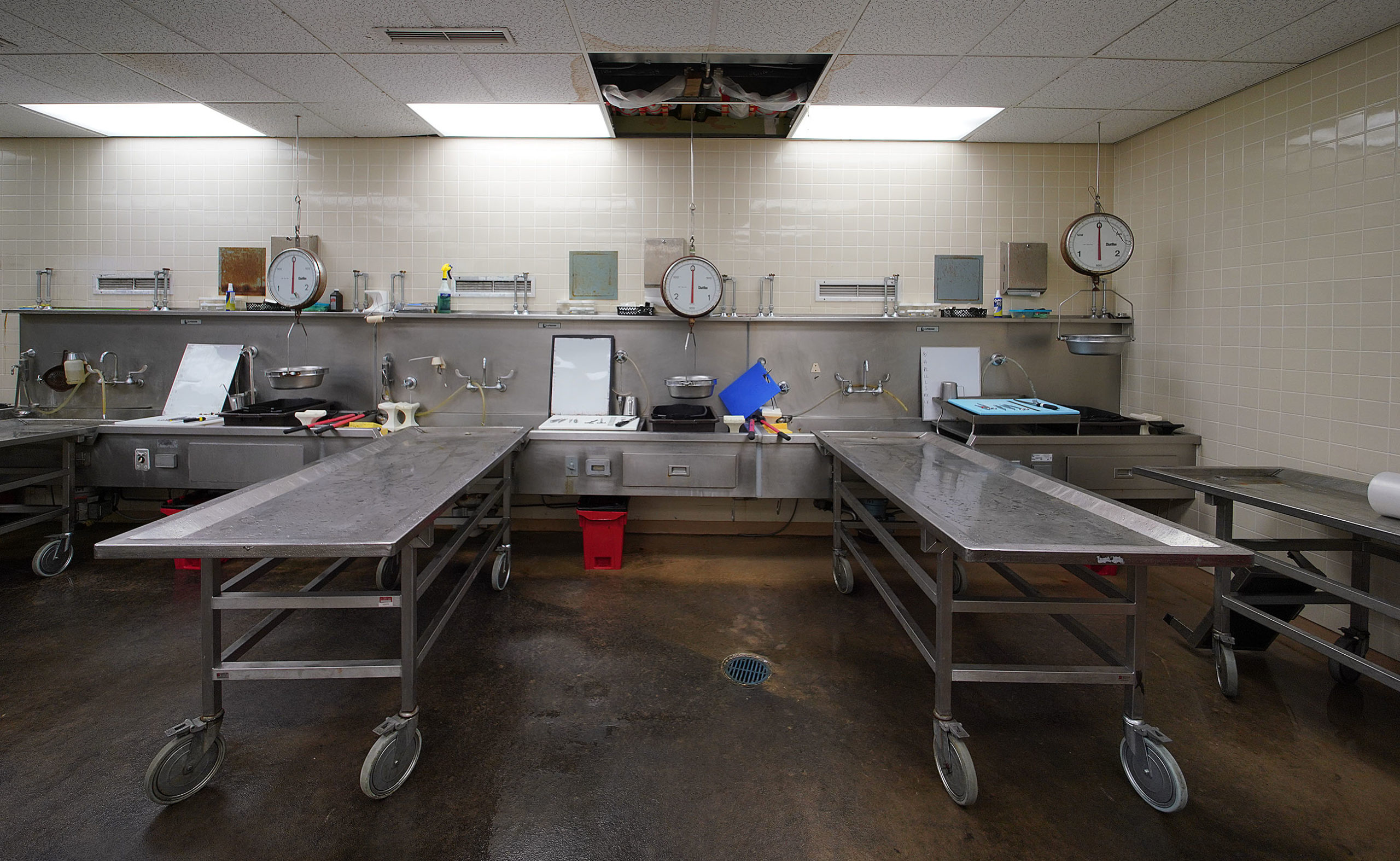
The room was cold and bright in the way of rooms that are not designed for comfort, only function. On the metal table in the center sat the coffin. Zinc, heavy, the lid sealed. An attendant in a mask stood near the wall, shifting his weight from foot to foot, clearly wanting to be somewhere else.
“I have to inform you,” he said, “that the coffin cannot be opened. There is an official order from the military. Given the nature of the infection—”
The mother was not listening to him. She was staring at the coffin.
“That is not my son,” she said.
The attendant paused. “I’m sorry?”
“I feel it.” Her voice was quiet but completely certain. “That is not him.”
The father looked at her. He was exhausted, hollowed out, the specific emptiness of two days spent not sleeping, not eating, not doing anything except waiting for this moment and dreading it.
“We were told the body is inside,” he said.
“I know what we were told.” The mother stepped closer to the coffin. “Open it.”
The attendant shook his head. “I cannot do that.”
The father looked at him. When he spoke, his voice was very quiet, which is sometimes more serious than shouting. “That is our son in there. We have the right to see him.”
“I would be in serious trouble if I—”
“Our son is in a coffin,” the father said. “Open it.”
The attendant stood there for a long moment, caught between an official order and two parents standing three feet away from him asking to see their child. Whatever calculation he was running, it eventually resolved. He picked up the tool. The metal of the locks was stiff, resistant, as if the coffin itself was reluctant.
One lock gave. Then another. The seals broke with a sound that seemed too small for what it meant.
The lid lifted.
The mother looked in first.
For a single second she was silent. Then she screamed.
The father stepped forward.
His son was there. The face he had known for twenty-three years, the face he had watched grow from infant to boy to young man, was there. But it was barely recognizable. A massive bruise darkened the entire left cheekbone. The lip was split and swollen. Both eyes showed the deep coloring of trauma, the kind that comes from blows, not illness.
One arm lay at the wrong angle.
Even without medical training, even without wanting to look too closely at any of it, the conclusion was impossible to avoid.
The attendant said softly, almost to himself, “This does not look like an infection.”
The father said nothing. He stood at the edge of the coffin looking at his son, and the color drained from his face so completely that the attendant took a step toward him, worried he might fall.
“They beat him,” the father said at last. His voice was flat. Empty.
The mother was gripping the edge of the metal table. “They killed him,” she said. “They killed our boy.”
In the days that followed, the truth came apart from the official story layer by layer.
There had been no infection. There had never been an infection.
What had happened on the base was a fight. Or more accurately, a beating. The son of a high-ranking general, a man whose position had insulated him throughout his life from the normal consequences of his behavior, had beaten their son to death. The circumstances of what started it, what words were exchanged, what chain of events led to that moment, were things that would take months to piece together. But the outcome was not in question. Their son had been killed by another soldier, on a base where he should have been safe, and the people responsible for investigating it had instead decided to bury it.
Literally.
The story of the dangerous infection had been constructed quickly and with the confidence of people who believed it would work. A sealed zinc coffin with official paperwork. A prohibition on opening it. Parents who were grieving and far away and, they assumed, in no position to challenge the military’s version of events.
They had not counted on a mother who stood in a cold room looking at a sealed box and said simply: that is not my son. Open it.
What happened after the coffin was opened became something the military had not planned for.
The parents did not go home and grieve in private. They hired a lawyer. They demanded an independent medical examination, which confirmed what was visible to any eye: their son had died from the injuries sustained in a physical assault. The bruising, the fractures, the specific patterns of trauma on his body told a story that had nothing to do with any illness.
They filed a formal complaint. And then another. They sat in offices and waiting rooms and gave statements to people who clearly wished they were not there, who shuffled papers and avoided eye contact and spoke in the careful language of institutions trying to protect themselves. The parents spoke in the language of people who had nothing left to lose.
Word spread the way these things spread: slowly at first, then all at once. Other families came forward. Not with identical stories, but with similar ones, stories about sons and daughters whose deaths on that base had been explained in ways that didn’t quite hold together, whose coffins had arrived sealed, whose families had been told to comply with safety protocols that, on closer examination, had no medical basis.
The general’s son was eventually charged. The process was long and contested, fought at every stage by lawyers whose fees made clear that his family still had resources and still intended to use them. But the testimony of the parents, the medical evidence from the independent examination, the accounts that began to surface from other soldiers who had been on the base that night, built something that could not be quietly dismantled.
The commanding officer who had made the midnight call, who had delivered the carefully prepared lie in the careful voice of someone who believed they were protected, was also investigated. The official story he had helped construct was documented and presented as evidence of a cover-up, which it was.
For the parents, none of this brought back what they had lost.
There is a specific kind of grief that comes from learning that the people who were supposed to protect your child not only failed but then actively worked to conceal that failure. It is not a cleaner grief than ordinary loss, not a more manageable one. It sits alongside the loss itself and compounds it. You grieve the child and then you grieve the betrayal, and the two of them together are a weight that does not lift.
The mother said something, in one of the interviews she gave later, that stayed with people.
She said that when she walked into the morgue and stood in front of that sealed coffin, something told her to look. Not hope. She was past hope by that point. Something older than hope, some deep and wordless knowledge that she still owed her son the truth, even if the truth was terrible, even if it broke her in a way she would never fully come back from.
She said the hardest thing she had ever done was ask them to open the lid.
And that not asking would have been worse.
The zinc coffin had been sealed with the assumption that love and grief would make parents compliant, that the weight of loss would be enough to keep people still and quiet and cooperative. That mothers and fathers standing in cold rooms would take the official story because it was the only story on offer and because fighting felt impossible when you were already broken.
They were wrong about that.
They had handed two parents a sealed box and told them not to look inside, and they had not understood what kind of people they were dealing with. They had not understood that some people, when given a choice between the comfort of not knowing and the pain of knowing the truth, will choose the truth every time. That some love does not allow itself the relief of looking away.
The father had said it in the morgue, standing over the table, in the quiet voice of a man saying something he would carry for the rest of his life.
That is our son. We have the right to see him.
He was right.
They saw him.
And because they saw him, the people who had counted on no one ever seeing the inside of that coffin were wrong about everything that came after.
The case moved through its proceedings over the following year. There were delays, as there always are when institutions are trying to protect themselves. There were moments when it seemed like the walls of procedure and bureaucracy would simply hold, that the weight of rank and money and the army’s institutional interest in closing the matter quietly would be enough.
It was not enough.
The general’s son was convicted. The sentence, when it came, was not the maximum available, which disappointed many people who had followed the case. But it was a conviction, and it was documented, and it established formally and publicly what had happened on that base and what had been done afterward to hide it.
The commanding officer who had made the midnight call received a separate set of consequences: removed from his position, his career ended, his name attached permanently to the official record of what he had helped cover up.
The parents attended both proceedings. They sat in the same seats for every session, and when the verdicts came they did not celebrate. They had not expected celebration. They had expected only this: the record corrected. The truth in writing. Their son’s name attached to what had actually happened to him rather than to a lie someone had invented at two in the morning to make a problem disappear.
It was not enough. Nothing was enough. But it was something, and they had fought for it from a cold room in a morgue where a man in a mask had told them the coffin could not be opened.
They had opened it anyway.
The mother kept a photograph of her son on the table beside her bed. Not the last photograph, not the one from his last leave before he went back to the base, though she kept that one too. The one she kept on the nightstand was older, from when he was maybe sixteen, standing in the backyard with his father, both of them laughing at something outside the frame.
She said she looked at it every morning before she got up.
She said it reminded her why she had walked into that room and asked them to open the lid.
Not for justice, though justice had eventually come in its partial, insufficient way. Not for the verdict or the conviction or the official correction of the record.
For him.
Because he deserved to be seen. Because the truth about what happened to him deserved to exist somewhere in the world, even if the people who had tried to prevent it from existing had the rank and the resources to make the fight long and hard and exhausting.
Because he was her son.
And she had the right to see him.

Specialty: Legal & Financial Drama
Michael Carter covers stories where money, power, and personal history collide. His writing often explores courtroom battles, business conflicts, and the subtle strategies people use when pushed into a corner. He focuses on grounded, realistic storytelling with attention to detail and believable motivations.