He arrived at the shore before most people had opened their eyes.
That was the point, really. The early hour was not a sacrifice but a reward, the thing he gave himself once a week when the rest of the world was still asleep and the water was still and the only sounds were the ones that had nothing to do with people. He had been coming to this stretch of coastline nearly every Saturday for eleven years, long enough that the regulars at the bait shop knew his name and his usual order, long enough that his boots had worn a particular path down the clay bank to his favorite spot near the old breakwater.
This Saturday was different from the moment he stepped out of the car.
The storm had come through overnight, one of those fast and violent systems that moves in from the water without much warning and spends a few hours reminding everyone who is actually in charge. By morning it was gone, leaving behind a sky that was almost aggressively clear, the kind of blue that only appears after weather, and a shoreline that looked like it had been turned upside down and shaken.
He stood at the top of the bank for a moment, taking stock.
The sea had been generous in its destruction. Broken planks lay scattered across the wet clay, stripped of their paint and worn to a pale gray. Clumps of seaweed had been deposited in long, dark ribbons across the beach. There were plastic bottles, a rusted length of chain, fragments of something that might once have been a crate, and various pieces of metal in shapes that were no longer identifiable as anything specific. The tide line was pushed much further up the bank than usual, leaving a border of debris that stretched in both directions as far as he could see.
He pulled on his gloves, picked up his gear, and started walking.
He liked to go far from the main stretch of beach, past the point where the occasional jogger or dog walker turned back, into the quieter section where the bank curved slightly inward and the water ran a little deeper close to shore. It took him about fifteen minutes to reach his usual spot. He was almost there, eyes on the ground as he navigated the wet clay, when something caught his attention.
A thin wire was sticking straight up out of the mud.
He almost walked past it. After a storm, this kind of thing was ordinary enough. The sea threw up all manner of debris and the mud swallowed parts of it and the rest stuck out at odd angles, waiting for someone to either step on it or notice it and think nothing of it and move on. He was a practical man. He had fished this shore for over a decade and he had learned not to be curious about every piece of rubbish the water left behind.
But there was something about this wire.
It was not lying flat the way thrown objects lie when they land. It was not tangled in the seaweed the way drifting debris gets tangled. It was standing almost perfectly vertical, as if it were not merely resting in the mud but attached to something below the surface, something that was holding it upright.
He stopped. Looked at it for a moment. Looked around, confirming that yes, he was alone, that no one was watching him crouch down in the mud to investigate a piece of wire like a man who had completely lost perspective on what constituted a reasonable use of his Saturday morning.
He crouched down and tried to pull it with his fingers.
It did not move.
He repositioned, got a better grip, and pulled harder. The mud around the base shifted slightly, a small depression forming where the ground was being asked to give something up. But whatever was attached to the wire was not giving up easily. It was deep in there, bedded in the thick clay that the storm had packed down and the tide had saturated, and it was holding.
He stood up, planted his boots wider for leverage, grabbed the wire with both hands, and pulled.
The process that followed was not dignified. The mud was the adhesive, sucking kind that forms after heavy rain soaks deep into clay-heavy ground, the kind that grabs your boots when you walk through it and seems to actively resist any attempt to remove anything from its grip. He rocked the wire back and forth, working it in short jerks, trying to break the seal between whatever was down there and the earth that had closed around it. Several times the wire cut into his palms through his gloves. Several times he stopped, straightened up, and strongly considered walking away and finding a different spot to fish and never thinking about this again.
He did not walk away.
He rocked it. He pulled. He shifted his angle and tried again. His boots sank deeper with every effort and he had to stop twice to work one foot free before he could continue. At some point he became aware that he had been at this for the better part of ten minutes, which was not the calm and meditative start to a fishing morning that he had envisioned when he left the house.
Then the mud made a sound.
It was a deep, wet, pulling sound, the specific sound of suction giving way, and the wire suddenly had give in it. He felt the resistance change, felt something begin to shift. He repositioned his hands and pulled steadily this time, not in jerks but with sustained effort, and slowly, reluctantly, something heavy began to rise out of the ground.
The final pull came free all at once.
He staggered back a step, catching the object before it could fall back into the hole it had come out of, and stood there breathing hard with something large and mud-covered in his arms.
He held it at arm’s length and looked at it.
He could not tell what it was.
The entire surface was coated in a thick layer of dark clay that had the consistency of wet cement, obscuring every feature and detail. The shape was confusing: rounded in some places, angular in others, with a general geometry that did not resolve into anything recognizable. It was heavy. Heavier than it should have been, or heavier than he had expected, which made him reconsider what materials might be underneath the mud.
He stood there holding it and his mind, doing what minds do when presented with unidentified heavy objects pulled from the ground in isolated locations, began working through possibilities.
None of them were good.
The shape was roughly the right size. The weight was roughly consistent. There was a roundness at one end that could be—
He stopped that line of thinking before it finished.
He carried the object to the water.
He waded in to his knees, where the waves were coming in steadily from the aftermath of the storm, and he began washing the mud away. He worked with both hands, rubbing the clay off in sections, letting the wave water do the rinsing while his hands did the scraping. It came off in layers, each pass of his hands revealing a surface that was lighter in color, smoother in texture, clearly not what he had been afraid of.
The material underneath was stone.
He kept washing.
A smooth curved surface appeared first, then a longer, flatter plane. He worked his way around the object systematically, and then a wave came in at exactly the right moment and took a sheet of remaining mud with it, and he found himself looking at a nose.
He stopped moving.
Another small wave. More mud lifted away.
Lips. The suggestion of an eye.
He straightened up slowly, the object still in both hands, water swirling around his boots. He looked at what he was holding.
It was a face. Stone, human scale, carved with the careful attention of someone who had been trying to capture a specific person rather than a general likeness. The features were particular, not generic: a strong nose, a firm set to the mouth, the particular architecture of the brow that belonged to someone and was meant to be recognized as belonging to that someone.
He looked at the stone curls.
He looked at the expression, that familiar combination of dignity and something more complicated underneath it, the look of a man who has seen a great deal and processed it into something lasting.
He stood in the shallows of a storm-washed coastline on a Saturday morning, holding the head of Alexander Pushkin.
For a long moment he did not move or speak. The waves continued their indifferent work around his boots. A gull somewhere behind him made its opinion known about something. The sky remained its implausible post-storm blue.
He thought about the last ten minutes. The wire sticking out of the mud. The decision to investigate it. The undignified struggle with the clay. The grim possibilities his imagination had been constructing as he carried the object to the water’s edge. The moment he had been genuinely, physically preparing himself for something that would require him to call someone and explain things in a serious voice.
And instead: Pushkin.
He looked at the stone face again. Pushkin looked back with the calm patience of a man who had spent an indeterminate amount of time in the mud and had opinions about it but was keeping them to himself for the moment.
The fisherman laughed.
It started as a short, surprised sound and became something longer and more genuine, the kind of laughter that comes from relief and absurdity arriving simultaneously. He stood there in the water laughing at a statue’s head, which was probably not something Alexander Sergeyevich Pushkin had imagined for his legacy, but here they both were.
He carried the head out of the water and set it carefully on a dry patch of sand above the tide line. He crouched down and looked at it properly now that most of the mud was gone.
The stone was old. Not ancient, but genuinely aged, with the patina of something that had been outside for decades, exposed to weather and salt air and the particular wear of time. The craftsmanship was good, the kind of careful, honorable work that went into public monuments in an era when public monuments were taken seriously as objects in the world. Whoever had made this had made it to last.
How it had ended up at the bottom of the mud in this particular stretch of coastline was a question he turned over for a while as he sat beside it.
The most obvious answer was that it had been thrown. Statues have complicated histories. They go up when the politics align and come down when the politics shift, and what happens to them after they come down is often undignified. Some go into storage. Some get relocated. Some get destroyed. And some, apparently, get thrown into the sea, which is a dramatic choice but not without precedent.
Whether this one had been thrown in anger, or disposed of for practical reasons by someone who did not know what else to do with a large stone head, or lost in some accident involving a boat or a vehicle and the particular bad luck of being near water when something went wrong, he could not know. The storm had simply returned it. The sea had decided, after however many years, that it was done holding onto this particular piece of the past and had sent it back to shore.
He sat beside it for a while longer, thinking about this.
There was something in it that felt like a story, though he was a practical man and not usually given to finding meaning in things. Objects were objects. The sea threw things up and took things away, and mostly this was weather and tide and physics, not significance. But a face looking up from the mud, a specific face that anyone who had grown up speaking the language would recognize immediately, the face of the man whose words were so embedded in the culture that whole generations had memorized his lines without being asked to, without effort, the way you memorize the words to songs you have heard since childhood — there was something in that. In the finding of it. In the wire sticking up straight as if it wanted to be found.
He took out his phone and photographed the head from several angles. He was not entirely sure who to call about something like this. A local museum, perhaps. The cultural heritage authorities. Someone who would know what to do with a Pushkin head that had come up from the sea. It seemed like the kind of thing that should belong somewhere, not left on a beach or taken home as a curiosity.
He would make the calls later.
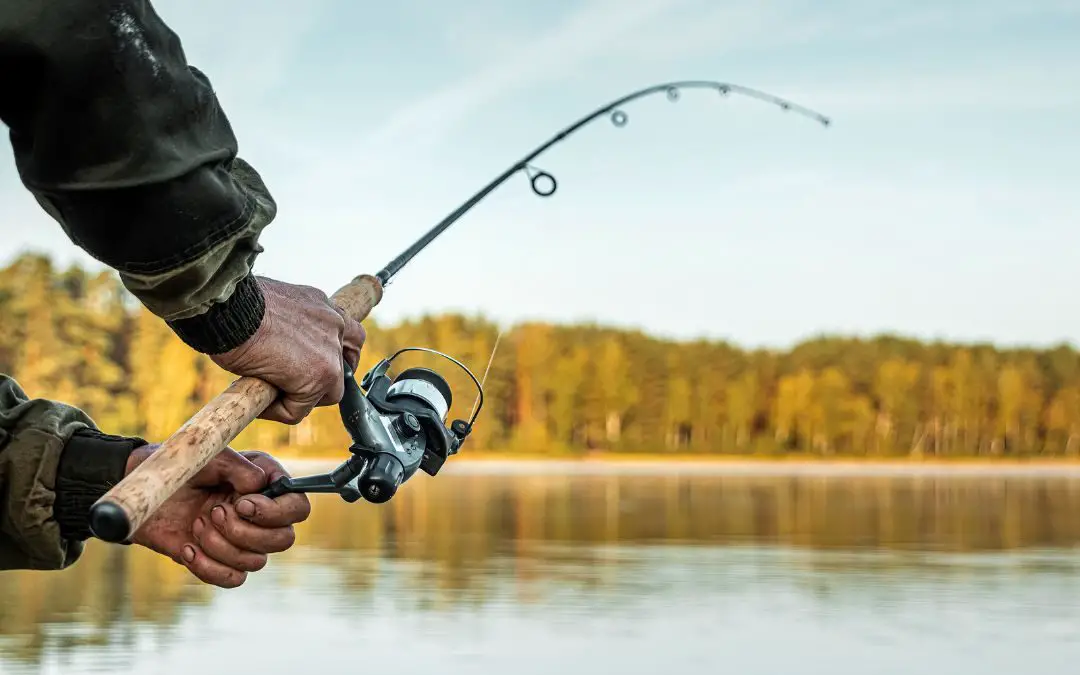
For now he positioned the head so it was facing the water, which seemed appropriate, and he set up his fishing rod a few meters away, and he spent the next two hours doing what he had come here to do.
The fish were not particularly cooperative, which was also usual. But the morning was quiet, and the sky held its impossible color, and occasionally he glanced over at the stone face looking out at the sea that had kept it for so long and returned it on a stormy night without explanation.
“You certainly scared me,” he said at one point, to no one in particular, and felt the mild embarrassment of a man who has just spoken aloud to a statue, and went back to his fishing.
The head was eventually collected by a regional cultural preservation office, after a short series of phone calls and a visit from a woman with a clipboard who photographed everything meticulously and asked him several times to confirm the exact location where he had found it and which direction the wire had been pointing. She told him they had records of several monuments that had gone missing from public spaces over the decades, some during periods of civic upheaval, some simply due to what she referred to as incomplete documentation, which he understood to mean that no one had written down what happened to them.
This one, she thought, might be traceable. The style was consistent with a particular period of monument production, and there were a few possibilities in the regional records. She would need to do more research.
He told her he hoped she found out where it belonged.
She said she hoped so too.
He drove home the same way he always drove home on Saturday mornings, stopping at the same bakery for the same order, pulling into his driveway at roughly the same time. His wife was in the kitchen when he came in, and she asked how the fishing was, and he said slow, and she asked if anything interesting happened, and he paused for a moment.
“I found something in the mud,” he said.
She looked up. “What kind of something?”
He thought about how to explain it. The wire sticking up straight. The ten minutes of struggling with the clay. The carrying the object to the water and the moment the mud fell away and what he saw underneath.
“Pushkin,” he said.
His wife looked at him for a long moment.
“Pushkin,” she repeated.
“His head,” he clarified. “A statue. Someone threw it in the sea at some point. The storm brought it back up.”
She considered this.
“Did you catch anything else?” she asked.
“No,” he said.
She turned back to what she was doing. “Well,” she said. “That’s something.”
He agreed that it was.
He hung up his coat and his gloves and sat down at the kitchen table with his coffee, and he thought about the stone face looking out at the water, patient and slightly amused, waiting for someone to come along and pull it out of the mud.
He was glad he had not walked past the wire.
He was glad, in the particular private way of a man who will not make a big thing of it, that he had been the one there on that specific morning, in that specific stretch of coastline, at the moment the sea decided it was time to give something back.
The rest of the morning was quiet.
He drank his coffee. The sun moved across the kitchen window. Outside, somewhere, the sea continued doing what it always does, indifferent and enormous and occasionally, without any explanation at all, generous.

Specialty: Emotional Turning Points
Rachel Monroe writes character-driven stories about betrayal, second chances, and unexpected resilience. Her work highlights the emotional side of family conflict — the silences, the misunderstandings, and the moments when someone quietly decides they’ve had enough.