The call came on a Tuesday evening, in the middle of the kind of day that leaves you feeling scraped clean by the time you get home. I was standing by my apartment window with my phone pressed to my ear, watching the city skyline cut its familiar geometry into a sky going orange and pink at the edges, when Victoria’s voice came through the line with that particular quality she reserved for moments she had been savoring in advance.
“You’re banned from the family beach house forever,” she said. “I’ve changed all the locks.”
I had learned, over many years of dealing with Victoria, that the worst thing you could do was let her hear the impact. She fed on it. She had been feeding on my reactions since the day she married my father, collecting them the way some people collect grievances, storing them for future use. So I stood at the window and watched a plane draw a slow white line across the pink sky and let the words arrive without flinching.
“I’ve changed all the locks,” she repeated, as if she wanted to make certain I had fully absorbed each one. “Don’t even think about trying to get in. You did this to yourself. You ruined Lily’s graduation party, and now you’re going to live with the consequences.”
The graduation party I had not been invited to. The one I had found out about through social media photographs three days after the fact, scrolling through images of balloons and streamers and my father and Victoria flanking Lily beneath a banner that read CONGRATS, LILY, WE’RE SO PROUD OF YOU, their faces arranged in the particular expression of people who are being photographed and know it.
“The party,” I said, “that you specifically didn’t invite me to?”
She scoffed. “Oh, please.”
“The one where you told everyone I was too busy to attend?”
“Don’t play the victim, Alexandra. It doesn’t suit you. Everyone knows you’re jealous of Lily’s success. And now you’ll never set foot in that beach house again. I’ve made sure of it.”
There it was: jealous. It had been her preferred label for me since the beginning, not because it was accurate, but because it was efficient. It explained away every complaint, every boundary, every instance of me simply wanting to be treated as though I existed. Jealousy was a story she could tell about me that required no further examination.
Behind my own reflection in the window, barely visible, I could almost see it: the wraparound porch, the white railing, the old rocking chair that had been there since before I was born, and beyond all of it the Atlantic, gray-green and infinite.
My mother’s voice came back to me the way it often did when the beach house entered my thoughts. We had been sitting on that porch, the two of us, the summer before she got sick, watching the sun go flat and molten on the water. She had been laughing about something, leaning back in the rocker with her feet tucked up, her hair loose and salt-rough from the afternoon. She had said, in the middle of the laughter: Alex, look at that wave. Bigger than you were at five, I swear.
“Thanks for letting me know about the locks,” I said.
There was a brief silence. “What does that even mean?”
I hung up before she could arrive at an answer.
The apartment felt quiet in the specific way that follows a loud thing. The city hummed outside, sirens somewhere distant, a car horn, the bass from the floor below. I stood in that quiet for a moment and then walked to my home office, the small room that was mostly bookshelves and a filing cabinet and a plant I kept meaning to water more consistently.
I got down on my knees and opened the bottom drawer of the cabinet.
The manila envelope was where it had always been. Thick, its edges worn soft with handling, the flap sealed with a strip of tape that had gone amber with age. My mother had pressed that tape down herself. On the front, in her handwriting, which still had the power to stop my breath: ALEXANDRA, BEACH HOUSE, IMPORTANT. The word IMPORTANT was underlined three times, which was very much in keeping with who she was.
I sat back on my heels and opened it carefully.
The smell of old paper rose up, warm and faintly sweet, and underneath it something that might have been the ghost of the lavender drawer sachets she had kept everywhere. Inside, clipped neatly together, was the trust document she had created three months before she died, and behind it the deed to the beach house. I traced one finger over her signature, the familiar loops of her name, and felt the usual complicated mix of grief and gratitude and the particular relief that comes from preparation.
She had known. She had always known.
I was twenty years old the afternoon she signed these papers, sitting beside her hospital bed while Margaret, her lawyer and longtime friend, explained the structure of the trust in the careful, unhurried way she had. The room smelled like antiseptic and recirculated air, but my mother had insisted the window be opened a crack because she wanted to pretend the breeze was ocean air. Her hands had felt light when she held mine, the bones close to the surface in a way that was new and frightening. But her eyes were exactly the same as they had always been, sharp and clear and completely focused.
“The beach house is our legacy,” she told me. “Your grandparents built it themselves. Your grandfather dug the foundation. Your grandmother painted every room. I spent my first summer there before I could walk. Your father and I got married on that porch.” She paused. “You came home there your first summer.”
I had said something about treatments, about not needing to talk about property right now, about there being plenty of time for all of this later. She had shaken her head with the gentle patience she used when I was being deliberately optimistic and she needed me to pay attention.
“Victoria has been trying to get her hands on that house since the day she came into our lives,” she said. “I can see the way she looks at it. It isn’t a home to her. It’s a score. I won’t let her have it. I won’t let her take everything.”
She squeezed my hand once, firmly, and then reached for the pen.
Now, sitting on my office floor with the documents in my lap, I heard my phone buzz against the desk above me. I climbed to my feet and looked at the screen.
Victoria again. I’ve already told the local police you’re not welcome there. Don’t embarrass yourself by trying to break in.
Don’t embarrass yourself. By entering my own house.
I forwarded the message to Margaret with a brief explanation. Her response came back almost immediately: Time to show our cards. I’ve got everything ready.
Before I had put the phone down, another message arrived. This one from Lily: Mom told me what you did. You deserve it. You’ve never really been part of this family anyway.
I stared at that one longer than I stared at Victoria’s. Lily had been nine years old when her mother married my father, a quiet, uncertain child who clutched a stuffed rabbit and moved through our house like she was waiting for permission to put her feet down. Somewhere in the intervening years, Victoria had shaped her into a precise echo: the same tilted skepticism, the same practiced contempt, the same hair-trigger accusation of jealousy whenever I took up space in a room. It was not Lily’s fault, not entirely, and I knew that. But it had made her a willing instrument for a long time.
My father called an hour later. He sounded tired in the specific way he had sounded for years, a tiredness that had nothing to do with sleep and everything to do with the ongoing work of not seeing clearly.
“Alexandra,” he began, “please don’t make this difficult.”
Not: is what Victoria said true? Not: are you all right? Just the familiar plea for me to absorb the situation quietly and allow the peace of the household to remain undisturbed, the peace being less about anyone’s actual wellbeing and more about Victoria’s comfort.
“She says she overreacted a little,” he went on, which meant Victoria had told him to say that. “But maybe it would be better if you just gave everyone some space for now. The beach house has been a point of tension for a while. She’s just trying to simplify things.”
“Simplify,” I said.
“She said you didn’t really care about the property anymore. That you were always too busy with your life in the city to come up and maintain it.”
I looked down at the trust documents, at the list of annual maintenance expenses the trust had covered, the invoices from the contractor I had coordinated with for the roof three years ago, the records from the painting job and the septic inspection and every other unglamorous task that keeping an old house functional actually requires. Victoria had never managed to get the utilities transferred into her name. Now I understood more clearly why she had kept telling my father I had abandoned the place. If he had known I was still actively caring for it, the fiction she had been constructing would not hold.
“Don’t worry, Dad,” I said. “I’ll handle this my way.”
He was still talking when I ended the call.
I booked a morning flight to coastal Massachusetts, packed a bag with the particular efficiency of someone who has spent years learning to move quickly when necessary, and tucked the manila envelope between two hardcover books in my bag. Before I zipped everything closed, I slid a photograph into the front pocket: my mother and me on the beach, she in her enormous floppy hat, me at about seven with my hair in tangled braids, both of us squinting against the sun and grinning at whoever was behind the camera as if they had just said the funniest thing in the world.
One more message from Victoria arrived while I was getting ready for bed: I’m having your mother’s roses removed from the garden tomorrow. Time to let go of the past.
I read it and set the phone face-down on the nightstand. The roses had been there since before I was born. My mother had planted some of them herself, over the years, and had treated them with the specific attention she gave to living things she cared about, talking to them while she worked, giving cuttings to neighbors so that, she said, a little piece of our home can bloom at yours. Victoria knew exactly what she was doing with that message. She was not informing me of a gardening decision. She was marking territory, erasing presence, demonstrating that the house was hers to alter.
I did not reply. There was nothing to say that Victoria was capable of receiving.
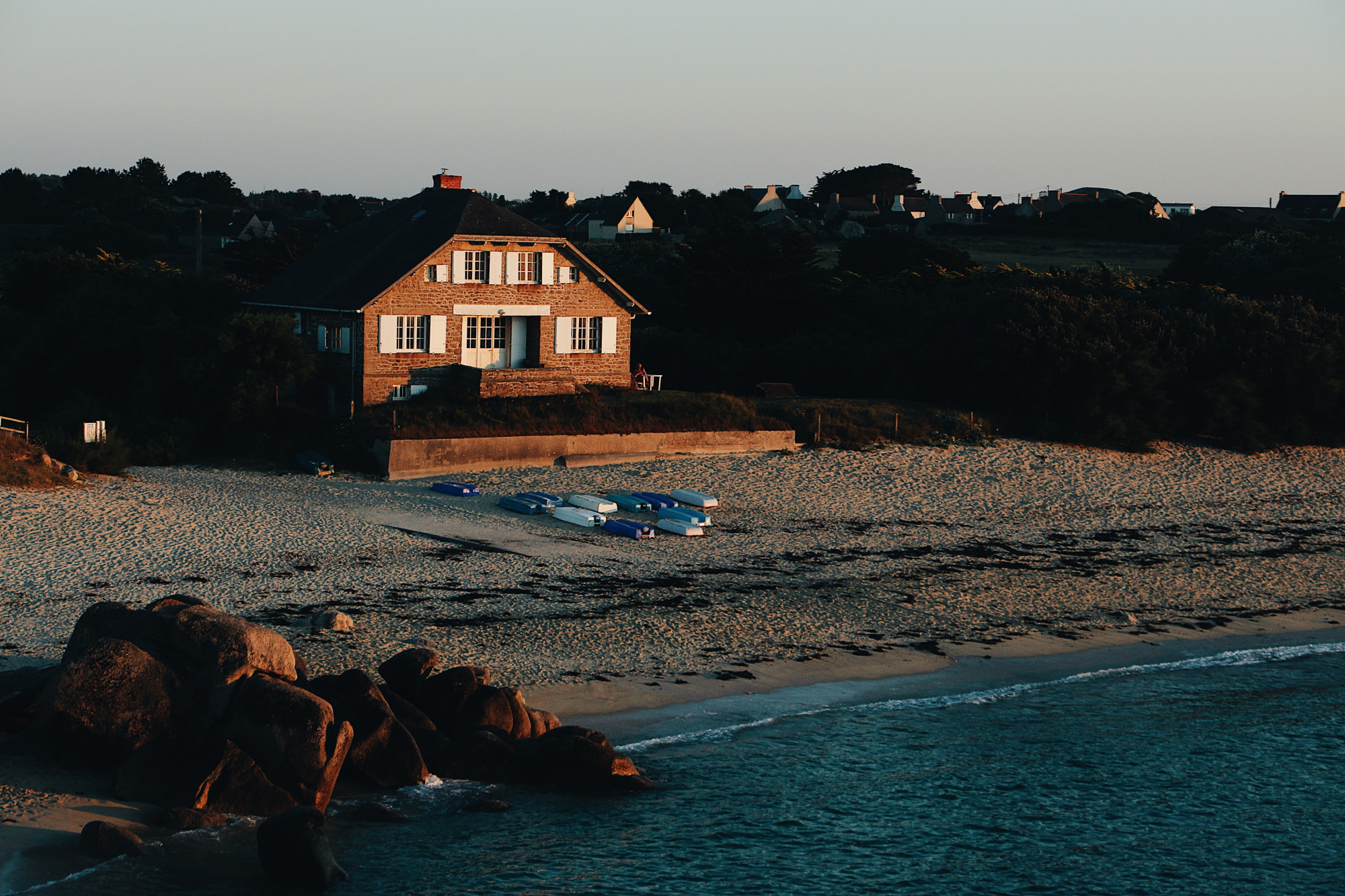
The fog in coastal Massachusetts was the thick, soft kind that moves through the low places and wraps itself around everything at ground level while the sky above stays clear. As the car turned off the main road onto the familiar coastal route, I pressed my forehead against the cool window and felt the particular compression of time that happens when you return to a place that holds a great deal of your history. The town gave way to dunes. The dunes gave way to open sky and the gunmetal glitter of the ocean. And then, through the dispersing fog, there was the house.
My first sight of it produced the complicated feeling I had been bracing for: recognition and wrongness at the same time. The bones were unchanged, the wraparound porch, the weathered shingles, the familiar angle of the roofline against the sky. But the shingles had been repainted in a shade too glossy and uniform, losing the gentle unevenness of weathered wood. The white railing had been replaced with something sleek and modern that belonged in a different kind of house entirely. New security cameras sat at the corners of the eaves. A large, professionally printed NO TRESPASSING sign in red and white had been driven into the ground near the driveway entrance, clashing violently with the dune grass and shells around it.
Victoria’s red Mercedes was parked where my mother’s garden shed used to stand.
The front door opened before I had finished getting out of the car. Victoria came down the shell path in designer workout gear, her blond ponytail pulled so tight it looked structural, her expression already arranged into the compressed fury she deployed when she had expected someone to have given up by now and had not.
Behind her, Lily emerged with her phone raised, camera aimed.
“I told you you’re not welcome here,” Victoria said, planting herself between me and the house. “Get back in that car right now. I’m calling the police.”
“Please do,” I said, pulling my suitcase from the trunk. “I already called them myself. They should be here shortly.”
She faltered. Just barely, just for a moment, but I saw it. Then her jaw set and her eyes went flat.
The sirens reached us before she could collect herself fully. Two patrol cars came through the fog with their lights turning quietly, pulled into the driveway, and parked with the practiced neatness of officers who have arrived at the right address and know it. One of them stepped out, a young officer with a professional bearing and an air of calm that did not appear to be affected.
“Mrs. Harrison,” Officer Martinez said, addressing Victoria by the name she had given when she called. “We received your complaint about a trespasser.”
Victoria thrust a hand in my direction. “That’s her. She has no right to be here. My husband signed this property over to me last month. It’s mine.”
Officer Martinez did not look where she was pointing. He reached into his jacket and removed a folder. “There seems to be a misunderstanding about the ownership of this property,” he said, opening it and glancing at the top document. He looked at me. “Miss Alexandra Parker?”
“That’s me,” I said.
“We reviewed the documents your attorney sent last night.” He tapped the folder lightly. “According to these records, you are the legal owner of this property.”
The silence that arrived then was thorough.
Lily’s phone lowered. Victoria blinked once, twice, as if the words had been delivered in a language she understood individually but could not make sense of in this arrangement.
“That’s impossible,” she said. “My husband had the deed notarized. I have documentation.”
I reached into my bag and removed the manila envelope, the paper warm from being carried close. “My father couldn’t transfer what wasn’t his to give,” I said. “My mother placed this house in an irrevocable trust three months before she died. I am the sole beneficiary. Whatever my father signed has no legal effect on the trust.”
Victoria’s lawyer arrived twenty minutes later, summoned by a call she had made in a low, urgent voice while standing near the porch. He came in a dark sedan carrying a briefcase, and Victoria moved toward him with the relief of someone who has been waiting for reinforcements. She talked rapidly, gesturing at me and at the officers and at the house. He listened, opened the folder Officer Martinez offered him, and began to read.
I watched his posture change as he read. His shoulders dropped. He turned pages, read further, turned back. He looked at Victoria with the careful expression of a professional delivering information his client is not going to want to receive.
She went pale. Then pink. Then pale again.
My father came out onto the porch during all of this. I had not seen him until that moment. He looked older than I had been preparing for, his hair mostly gray now, his posture carrying a new heaviness. He scanned the scene from the top of the steps, the patrol cars and the officers and Victoria vibrating in the driveway, and then his eyes found me.
“Alexandra?” he said, as if he were not entirely certain I was real.
“Dad,” I replied. “Did you read what you were signing when Victoria asked you to transfer the property?”
He looked at her, then back at me, his mouth moving slightly without sound. “She said it was a formality,” he said. “She said you didn’t care about the house anymore. That you never came up, that you were too busy. She said it would be easier if we just tidied things up legally.”
I reached into my bag for my phone and brought up the photos I had organized the night before. “This is from last year,” I said, walking up the porch steps so he could see the screen. “I came up to coordinate with the contractor about the roof.” I swiped. “The year before that, the exterior painting. The year before that, the septic inspection.” I looked at him directly. “Every year, Dad. The trust has been covering taxes and maintenance since Mom died. I have been managing it through Margaret. Victoria could never get the utilities into her name because she never had the authority to do it.”
He stared at the photos for a long moment. Then at the house behind him. Then at Victoria, who was in a rapid, quiet conversation with her lawyer that appeared to be going very badly for her.
“I didn’t know,” he said, in a voice so quiet I had to step closer to hear it. “She told me you’d walked away from it.”
“She needed you to believe that,” I said.
Officer Martinez wrapped up the situation with the measured efficiency of someone who has a clear legal picture and intends to communicate it without drama. Victoria had no claim to the property. The trust document was valid and unambiguous. Any attempt to bar me from the property constituted trespass against the owner. If there were further disputes about paperwork, those would need to be handled between lawyers. For today, the situation was clear.
Victoria looked at her lawyer one final time and received, apparently, confirmation that there was nothing left to try. She walked to her car without speaking, heels pressing hard into the crushed shells, and took one long look at the house from the driver’s door, the look of a person memorizing something, or perhaps of a person acknowledging that they have lost. Then she got in, and the Mercedes reversed out of the driveway fast enough to scatter shells, and was swallowed by the fog.
Lily looked between her mother’s departing car and me. Then she jogged after the Mercedes and got in, and they were both gone.
The fog was beginning to lift at the edges by the time the officers left, the light coming in silver and fresh from the east. My father was still on the porch. I climbed the steps and stood beside him and we both looked out at the garden for a while.
Some of the roses had been disturbed. I could see the dark turned soil around the roots, the evidence of someone who had begun digging them up and then stopped, perhaps interrupted, perhaps losing nerve. The roses themselves stood undefeated, blooms still open, the deep crimson of them vivid against the morning light.
“She was going to have them removed,” I said.
My father closed his eyes briefly. “I didn’t know,” he said again, and I believed him, which was its own complicated thing.
Inside, the house felt like a place that had been forced to wear a costume. The living room furniture was sleek and matched in the way of a showroom, nothing like the comfortable mismatched pieces my grandparents had collected over decades of yard sales and repainted tables. The kitchen had been completely redone, white marble and stainless steel, objectively beautiful, but the hand-painted tiles my mother and I had made together one summer were gone from the backsplash, replaced with clean white subway tile that looked like a blank where something had been. I found a few original tiles behind the toaster, tucked out of reach of the renovation, and I pressed my palm flat against one of them and felt something release in my chest.
I spent the first several days doing what needed doing. The property manager came and changed the locks. I walked every room with a notebook, making lists. I found the family photographs in cardboard boxes in the attic, carefully stacked, as if someone had put them away with the intention of not bringing them back out. My grandmother standing in front of the house with a paint roller. My mother pregnant, standing beside a bare wall that would later become her mural. Me at every age the house had witnessed, sandy-footed and squinting and entirely at home.
I rehung them.
By the end of the first week, the walls had started to feel like themselves again.
Lily came alone, about ten days after that first morning.
She arrived without her phone raised, without her mother’s borrowed vocabulary already assembled on her face. She was wearing jeans and an oversized sweatshirt, her hair pulled back messily, and she looked younger than I had seen her look in years, or perhaps simply more like herself, which amounted to the same thing. She stood at the bottom of the porch steps and asked if we could talk.
I set down the paintbrush I had been using on the railing, wiped my hands on a rag, and said yes.
We sat on the porch swing, the one my mother had insisted on installing when I was twelve because every porch in every movie had a swing and ours was an outlier. The chains creaked as we settled into it. The ocean was very blue that morning, and the air had the clean saltiness that I associated with everything good about this place.
Lily reached into her bag and took out a stack of papers, edges crumpled, fold lines pressed deep. She held them out to me with both hands.
“I found these in Victoria’s desk,” she said. “I’ve been going through her things. She and your dad have been fighting and I’ve been trying to understand what actually happened.” She paused. “They’re letters your mother wrote to you. Before she died.”
My hands went still.
I recognized the handwriting before I had even fully taken the papers from her. The envelopes had my name on them, written with the particular slant my mother gave the letter A, a slant I had seen on birthday cards and grocery lists and the margins of books for my entire childhood. Several of the envelopes had been opened and resealed, which meant Victoria had read them before hiding them.
“I’m starting to think,” Lily said carefully, looking out at the water, “that not everything I was told about you was true.”
I waited.
“Dad is talking about divorce. They fight a lot now, about the house, about you, about money. I’ve been hearing conversations I wasn’t supposed to hear.” She was quiet for a moment. “I watched you that morning with the police. You weren’t dramatic. You weren’t difficult. You were just calm and correct. And then I started thinking about all the times Victoria told me you were jealous, or that you were trying to make everything about yourself, or that when you didn’t show up to things it was because you were sulking.” She picked at a thread on her sweatshirt. “She told me you hadn’t been invited to my graduation party because you had said you were too busy. That you didn’t respond to the invitation.”
“There was no invitation,” I said.
She nodded slowly, as if confirming something she had already suspected. “I know. I looked.”
We sat with that for a while, the swing moving gently.
“I owe you an apology,” she said. “For a long time’s worth of things. I believed what I was told. I didn’t question it because she was my mother and it was easier not to question it, and also because I think some part of me knew that if I pulled at one thread the whole thing would unravel and I wasn’t sure I was ready for that.”
She was twenty-three years old and she had just done something genuinely difficult, and I was not going to diminish it by dismissing it.
“It matters,” I told her. “The apology matters.”
She exhaled, a long careful breath. “Those letters,” she said, nodding toward the stack in my hands. “Read them. She wrote about you a lot.”
That evening I sat on the porch swing alone with the letters in my lap while the sun went down over the water. They were dated across the final months of my mother’s life. Some were brief, written in the cramped handwriting of someone whose strength was limited. Others ran several pages in a looser hand, from the days when she had still been well enough to write at length. She wrote about her own childhood, about my grandparents building this house board by board, about the first summer she had spent here and what the ocean had meant to her. She wrote recipes, her handwritten versions of things we had cooked together, with parenthetical asides in the margins that were just like her: don’t skimp on the lemon, Alex, I mean it, and if anyone tells you to use dried herbs for this I will be very disappointed in you from beyond. She wrote about love and fear and the specific terror of leaving someone you loved without knowing they would be all right. And in every letter, across all of them, the same steady undercurrent: I know who you are. I know you will protect what matters. I am so proud of you.
The final letter was dated three days before she died. The handwriting was slow and deliberate, each letter formed with effort.
Remember, sweetheart, she had written, our strength isn’t in the walls of a house, but in the courage to protect what matters most. The house is just a symbol. You are the legacy.
I sat there until the sky went dark and the first stars appeared and the ocean became a sound rather than a sight, and I cried in the thorough, private way that grief sometimes requires when you have been keeping it compressed for a long time. Not just for my mother, though for her always. But also for the years of letters I had not received, for the things she had wanted me to know and that Victoria had kept from me, for all the versions of comfort and direction and company that had been sitting in a desk drawer somewhere while I navigated without them.
My father came to the house the following afternoon. He stood at the bottom of the porch steps for a moment, looking at the house with the expression of someone returning to a place they had spent a long time looking away from. His hands were in his jacket pockets. His hair was lifting slightly in the sea breeze.
“I’ve been a fool,” he said, before I had said anything. “For a long time. I let her tell me what was true and I let myself believe it because I was still trying to survive losing your mother and it was easier to let someone else be in charge of the story.”
I came down the steps and stood beside him in front of the roses, which were recovering well, the disturbed ones having been tamped back firmly, new growth already visible at the tips.
“She loved you very much,” I told him. “She was frustrated with you sometimes, and she saw clearly enough to know she needed to protect the house legally, but she loved you. I have the letters to prove it.”
He looked at me with the red-rimmed eyes of a man who has been crying in private for several days and is not quite done. “Can I read them someday?”
“Yes,” I said. “When you’re ready.”
We went inside and spent the afternoon with the photo albums I had found in the attic. He told me stories I had never heard: how my grandparents had slept on mattresses on the floor the first summer because they couldn’t yet afford beds, how my grandmother had painted every interior wall herself over the course of two summers, how my mother had once declared she would never marry a man who didn’t love the ocean and then met my father on a rainy Thursday afternoon in a bookstore a hundred miles from the coast and revised the policy almost immediately.
“She kept that story,” I said. “I remember her telling it.”
“She kept all the stories,” he said, and his voice broke on it a little.
Victoria made one final attempt about a week later, arriving with a real estate agent carrying a leather portfolio, announcing that she was having the property appraised, that the house was wasted on me, that she was only interested in the market value. The agent was visibly uncomfortable from the moment I appeared in the kitchen doorway, and when I handed her the trust summary Margaret had suggested I keep on hand, she read it quickly, closed her portfolio, apologized for the confusion, and left with the brisk relief of someone who has realized they have been placed in the middle of a legal situation they want no part of.
Victoria stood in the middle of my grandmother’s living room, the leather sofa behind her, the clean white backsplash where the hand-painted tiles used to be, and looked at me with all of her remaining ammunition spent.
“This place is wasted on you,” she said. “You don’t even care what it’s worth.”
“I care a great deal what it’s worth,” I told her. “Just not in the way you mean.”
She left. She closed the door quietly on her way out, which I think was its own kind of concession. The slamming had always been for my benefit.
The months that followed were quieter than I had expected. Victoria’s lawyer sent letters for a while, attempts to claim emotional harm and improper influence and various other legal angles, and Margaret handled each one with efficient contempt. None of them had a foundation. My mother had executed the trust cleanly and with full legal capacity, and Margaret had spent years documenting Victoria’s attempts to access and undermine it. The letters stopped coming after the third or fourth response.
My father filed for divorce.
Lily came to the house regularly, at first with the caution of someone who expects to be told to leave and is prepared for it, then with increasing ease. We walked the beach and talked about nothing in particular, then about things that mattered, then about the past with the kind of honesty that is only available once you have stopped having to protect anyone’s version of events. She told me things about her childhood that reframed moments I had misread for years. I told her things about mine that explained my absence from family occasions she had been told to interpret as abandonment.
One afternoon she stopped in the middle of telling me something and said, “Do you remember the summer you brought me up here? Just the two of us?”
I did. She had been fourteen, I had been seventeen. Victoria was away at a conference, my father occupied with work, and I had packed Lily into my old car and driven her to the beach house for a long weekend because it had seemed like the right thing to do. She had been difficult and uncertain and young in the way that fourteen often is, and I had taught her to body surf in the shallows and she had screamed every time a wave touched her until the water was only knee-deep.
“You told me to stop fighting it,” she said. “To just go with the wave. I thought that was the most aggravating advice I’d ever heard.”
“Did it eventually make sense?”
She smiled. “Eventually.”
The house settled back into itself over the course of that summer and fall. I kept my apartment in the city, my work and friends and the daily life I had built there. But whenever I had a weekend or a long stretch of free days, I came back. I stripped the sleek upholstery from the living room furniture and found, in several cases, the original pieces underneath, which only needed refinishing. The kitchen backsplash took longer: I spent weekends prying off the white subway tile carefully and searching beneath it for the hand-painted ones my mother and I had made, finding some intact, others lost. The ones I could not recover I replaced with new tiles painted in the same style, tiny seagulls and starfish and the family name surrounded by curling waves. It felt, somehow, like collaborating with her across the distance of time.
One evening near the end of summer, I was on the porch swing in the late light, the ocean turning gold in front of me and the air just beginning to carry the first cool breath of the coming season, when my fingers caught on something under the armrest. I reached down and felt the edge of an envelope taped to the underside of the wooden slat.
The tape crackled as I worked it free. The envelope was yellowed, the paper thinned, but the seal still held. My name was on the front in her handwriting.
My hands were not steady as I opened it.
My dearest Alexandra, she had written, if you’re reading this, it means you found your way back home. I knew you would. You’ve always been stronger than anyone gave you credit for, including yourself sometimes.
The house isn’t just wood and stone, she continued. It’s our history, our love, the story we built together. But it isn’t the legacy because it belongs to you. It belongs to you because of who you are. You are my greatest achievement, sweetheart. Not the garden, not the house, not any of it. You.
Fill this place with laughter and people who see you, not who they want you to be. And don’t let anyone tell you that protecting what matters makes you difficult. That isn’t difficulty. That’s courage.
All my love, Mom.
I sat there while the sky went from gold to rose to purple and the first stars emerged over the water. The waves kept coming in the way they always had, indifferent to everything and somehow comforting for it, the oldest possible sound. I held the letter against my chest and let myself feel the full weight of it, the grief and the gratitude and the years and the love, all of it at once, without trying to manage any of it into something smaller.
Victoria had tried to take this house from me. She had tried to erase my mother from it, room by room, rose bush by rose bush, photograph by photograph, until the only story it told was hers. She had tried to convince my father, my stepsister, the neighborhood, the local police, and anyone else who would listen that I was the interloper in my own inheritance, and for a while she had been persuasive enough that it had almost worked.
But my mother had known. She had seen Victoria clearly and had acted from that clarity with the practical, loving precision that characterized everything she did. She had put the house in trust. She had written the letters. She had taped one of them to the underside of a porch swing she had installed herself because her daughter had asked for one, knowing, perhaps, that someday her daughter would come back to sit on it and need to find what was hidden there.
The real legacy was not the deed on file with Margaret, though the deed mattered and I was grateful for it. It was this: the summer evenings and the storm-watching and the sea glass lined up on windowsills and the tiles painted with small careful scenes and the porch my grandfather had built with his own hands and the roses my mother had talked to while she pruned them and the swing that creaked in the salt air. It was my father rediscovering who he was when nobody was directing the story. It was Lily learning to ask the questions she had been trained not to ask. It was me understanding, finally and completely, that wanting to protect something real is not selfishness. It is simply love taking its most practical form.
My mother had understood that all along. She had been trying to tell me for years, in hospital rooms and on porches and in letters hidden for me to find when the time was right.
I folded the final letter carefully and held it in my lap while the stars came out over the water, and I listened to the waves, and I stayed.

Lila Hart is a dedicated Digital Archivist and Research Specialist with a keen eye for preserving and curating meaningful content. At TheArchivists, she specializes in organizing and managing digital archives, ensuring that valuable stories and historical moments are accessible for generations to come.
Lila earned her degree in History and Archival Studies from the University of Edinburgh, where she cultivated her passion for documenting the past and preserving cultural heritage. Her expertise lies in combining traditional archival techniques with modern digital tools, allowing her to create comprehensive and engaging collections that resonate with audiences worldwide.
At TheArchivists, Lila is known for her meticulous attention to detail and her ability to uncover hidden gems within extensive archives. Her work is praised for its depth, authenticity, and contribution to the preservation of knowledge in the digital age.
Driven by a commitment to preserving stories that matter, Lila is passionate about exploring the intersection of history and technology. Her goal is to ensure that every piece of content she handles reflects the richness of human experiences and remains a source of inspiration for years to come.