I remember the sting of antiseptic first.
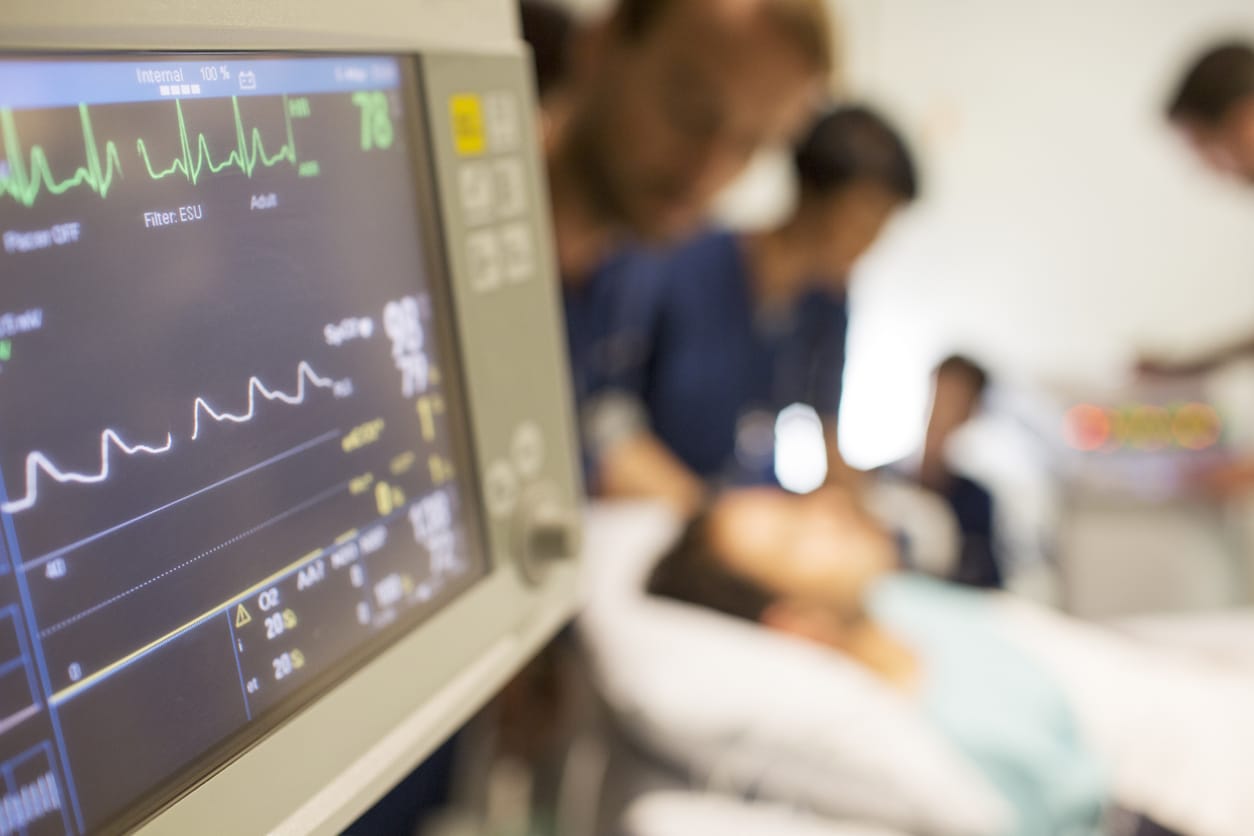
Not the pain. The pain came later, in waves that rose and crashed against me the way the ocean does when it has decided to be relentless. The sting was different. It moved up into my nose with every shallow breath, sharp and medicinal, like the world was trying to scrub me clean from the inside out. The fluorescent lights above my gurney hummed with a tired cruelty, bleaching the ceiling into something flat and endless. Somewhere nearby, a monitor beeped at a steady tempo that made my teeth ache with each note, as if my body had been reduced to numbers and pulses and alarms.
I tasted copper. Blood, pooling at the back of my throat no matter how many times I swallowed. My ribs felt like someone had replaced them with splintered glass. My right leg throbbed so hard it seemed to have its own heartbeat, separate and insistent, a second pulse I had not asked for.
I could not stop shaking. The nurse kept saying it was shock. That the body does strange things when it is trying to keep you alive.
My phone lay on the thin hospital blanket beside me, screen spiderwebbed with cracks. It looked like something that had survived a fall from a tall building.
It looked like me.
I stared at the contact name glowing at the top of the screen.
Dad.
My thumb hovered. The world narrowed down to that small trembling circle of flesh and the decision it carried. I should have called someone else. A friend, a coworker, anyone. But trauma drags you backward toward the most familiar pain, like some part of your body believes it can rewrite the ending if you just try hard enough. If you call the right person. If you say the right words. If you bleed in the right way.
So I pressed call.
It rang twice.
Then my father answered, and his voice was so calm it was almost worse than yelling.
“Stella?” he said. Like I had interrupted dinner.
The sound of his voice almost made me cry from relief. Not because I trusted him. Because some part of me still wanted to.
“I’m in the ER,” I managed. My voice came out thin, frayed at the edges. “I got into an accident. I’m hurt. Can you come?”
There was a pause. Not the kind where someone is processing fear. The kind where someone is weighing inconvenience.
Then his voice sharpened, cold and clipped. “Are you dying?”
I blinked. I thought I had misheard.
“What?”
“Are you dying,” he repeated, a little louder, as if volume could make cruelty more reasonable. “Because don’t call in a panic if you’re not dying. Clare needs me right now.”
I lay there with blood drying on my lip, ribs aching so badly I could barely breathe, leg swelling under a hastily wrapped brace, and listened to my father tell me not to call in a panic.
“Dad,” I whispered. “I might need surgery.”
Another pause. In the background I could hear Clare’s voice, faint and frantic, rising and falling. A sharp inhale. Something that sounded like a sob.
“She’s having a meltdown,” Dad said, as if that explained and justified everything. As if it were a trump card he had every right to play.
“I’m bleeding,” I said.
“You’ll be fine,” he snapped. “You always are. Don’t make this a whole thing. Clare needs support urgently.”
Then Clare’s voice cut in, closer to the phone now. “Why is she calling you? Oh my God, she’s so self-centered. I can’t breathe, Dad, I can’t—”
My father didn’t even shush her.
“Stella,” he said, and there was irritation in it now, like I was the disruption, the problem. “I’ll call you later.”
The line went dead.
For a moment I could not move. The dial tone filled the sudden empty space where his voice had been. It felt like getting shoved out of a warm room into snow. The fluorescent light above me seemed to brighten, like it had been waiting for this exact moment to show me what alone really looked like.
My hand loosened. The phone slid across the blanket and stopped near my hip, its cracked screen catching the light.
I stared at it. Whatever small, stubborn piece of faith in him had still been alive cracked along with it.
And the worst part was the thought that came next, quiet and automatic as breathing.
Of course.
Because it was not new. It had never been new. I had just been practicing denial so long it felt like loyalty.
That hospital bed was not just about the crash. It was proof. It was the final undeniable exhibit in a lifetime of evidence I had spent years trying to explain away.
The echo of every birthday that passed without ceremony.
Every graduation skipped.
Every milestone softened into silence because someone else had a need that sounded louder than mine.
Clare, always the fragile one. Clare, the golden child. Clare, the storm that everyone rearranged the furniture for.
When Clare cried, the world stopped. When Clare stumbled, my father rushed to her side with open arms and an open wallet. When I cried, I was told to breathe through it. When I stumbled, I was told to try harder. When I bled, apparently, I was told not to call in a panic.
As a child, you do not name what is happening to you. You adapt. You become the shape your family needs. And in our family, Clare needed to be rescued. So I became the one who did not need anything.
I can still see my tenth birthday like a photograph. The kitchen smelled like vanilla, but not because anyone had baked a cake for me. Clare had decided on a whim to make cupcakes, and my father had turned it into a whole production. He bought sprinkles shaped like stars and paper liners with cartoon kittens. He let her smear frosting across the counter like it was art. He laughed.
I stood in the doorway holding a book I had bought for myself with saved allowance money because no one else had.
Later that night, after a small dinner my mother had made, Dad said, “Oh, right. Your birthday.” He handed me a card he had clearly grabbed from the grocery store on his way home. The inside was blank except for a rushed, crooked signature.
Clare got backyard parties. String lights. Three-tiered cakes with her name in looping icing. She got friends and music and Dad grilling burgers like some television father, beaming as if he had won an award for parenting.
I got quiet dinners, and a father who treated acknowledging me like a box he had to tick before returning to what actually mattered.
When I was eighteen, I walked across the stage in a cap and gown. The gymnasium was loud with applause and camera flashes. Parents stood on bleachers, waving, calling out names. My classmates kept glancing up at the crowd, searching for faces that said, I’m proud of you.
I searched too.
My mother was there, clapping so hard her hands turned red. She had come early just to get a good seat and squeezed my hand in the parking lot like she was trying to transfer every ounce of courage she had.
My father’s seat stayed empty.
When I called him afterward, my voice trembling with confusion and humiliation, he sighed like I had inconvenienced him.
“Clare had a panic attack,” he said. “Over a B-minus. She thought she ruined her future.”
Then the phrase that had become a knife he kept sharpening: “You understand, right?”
I did understand. Or I told myself I did, because what was the alternative? Admitting my father did not prioritize me? Admitting my sister’s tears held more weight than my joy?
I became fluent in swallowing things.
In college I worked two jobs. Mornings at a coffee shop, afternoons shelving books at the library. I studied with exhaustion pressed into my bones. I learned how to stretch a bag of rice and a carton of eggs into a week’s worth of meals and how to calculate bus fare down to coins.
Clare, meanwhile, floated through her first semester like it was a dream. She called me to complain about the vibe of her roommate, about the stress of choosing a major, about the way her laptop fan made a noise that spiked her anxiety.
Dad sent her rent money. Bought her a new laptop. Bought her noise-canceling headphones for her mental health.
My laptop had missing keys and a screen that flickered like a dying star. When I mentioned it, Dad said, “Check Craigslist.”
When Clare backed Dad’s car into a neighbor’s fence, he called it a learning experience. Paid for the repairs without a word. When I forgot to refill the tank before returning his car once, he lectured me for an hour about responsibility, his voice dripping with disappointment like I had committed a crime.
Competence wasn’t celebrated in our family. It was exploited.
After the divorce, when our mother moved far enough away that visiting required money and planning and emotional energy, Dad leaned on me more. Not for love. For function. I became the one who covered utilities when he forgot. The one who picked up groceries when he was too busy. The one who answered calls at midnight because Clare was sobbing about a breakup or a failed exam or the unbearable cruelty of the universe not bending around her feelings.
I sent money to keep the peace. Over and over. Three hundred here. Six hundred there. A thousand labeled Clare’s therapy, Clare’s rent, Clare’s emergency, Clare’s groceries.
They called it family support. They called it love. But it wasn’t generosity. It was expectation.
Each time, Dad would say, “You understand, right?”
I understood that saying no meant conflict. Saying no meant being labeled selfish. Saying no meant being the villain in a family story where Clare was always the endangered princess and Dad was always the hero.
So I said yes.
And being strong became my identity the way scars become part of skin, so familiar you stop noticing until someone points them out.
Until that night in the ER, when my ribs were bruised and my side had stitches and I realized that being strong had not earned me care. It had convinced him I did not need any. Even when I was bleeding.
The nurse came back in, shoes squeaking softly against the linoleum. She adjusted the blanket and checked the IV line with the quiet efficiency of someone who had done this ten thousand times.
“Pain level?” she asked.
“Eight,” I said. “Maybe nine.”
She nodded, typed something, then paused. Her gaze moved to my phone. “Is anyone coming for you?”
It was not a nosy question. It was the question of someone who had seen too many people alone in rooms like this.
My mouth opened automatically to say yes. My father. My family. Someone.
Instead the truth slipped out.
“No,” I whispered.
The nurse didn’t pity me. She didn’t offer platitudes. She just squeezed my hand for a brief second, warm and real, and said, “Okay. We’ll take care of you.”
After she left, the room felt too quiet.
I reached for my phone again, but not to call Dad back. I scrolled past his name. Past Clare. Past the contacts that belonged to the life where I kept trying to earn my place.
My thumb stopped on a name I had not touched in years.
Eliza Grant.
We had worked together once on a contracts project, something involving compliance and legal language that made most people’s eyes glaze over. Eliza had been sharp and steady, someone who spoke with quiet authority. We had not been close, but she had been kind in a way that did not demand anything in return.
I hesitated. Then I called.
She answered on the second ring.
“Stella?” Her voice was alert immediately. No irritation. No sigh. Just attention.
“I’m sorry,” I said. “I know it’s late. Something happened.”
“Are you safe?” she asked.
That question cracked something open in me. The first question. Not are you dying, not why are you calling, not what do you need from me.
Are you safe.
“Physically, yes,” I breathed. “I’m in the hospital. But I need help.”
“Tell me,” she said.
And I did. I spilled all of it. The accident, the phone call, the years of money and expectation and the way I had let boundaries dissolve until there were none left. How I had signed a power of attorney form once because Dad had made it sound practical. How I had linked accounts and trusted access and made myself easy to reach in ways that left me exposed.
I heard myself speak like I had been waiting for someone to ask.
When I finished, voice raw, Eliza said, “What do you want to do?”
The words surprised me. No one had asked me that before. Not in a way that meant my answer actually mattered.
I stared at the ceiling lights and felt something harden inside me.
“I want to cut them off,” I said. “Everything. Bank accounts. Power of attorney. I don’t want them to have anything.”
It came out like a confession. Terrifying. Exhilarating.
Eliza didn’t question it. She didn’t ask if I was sure or suggest I might regret it. She said simply, “Do you have documentation?”
I did. Months of quiet accumulation. Screenshots, transfer records, emails, messages. Maybe some part of me had known, even when I was still playing the obedient daughter, that one day I would need proof I was not imagining things.
“I have everything,” I said.
“Good,” Eliza replied, calm as steel. “We’ll handle this. I’ll come by in the morning.”
When the call ended, the bruises still ached, the machines still beeped, the antiseptic still stung. But something inside me felt steadier than it had in years.
For once, I was not begging for love.
I was protecting myself from it.
The crash had not broken me. It had armed me.
Eliza arrived the next morning in a navy suit, briefcase in hand, looking like order in human form. She pulled a chair close to the bed and opened her laptop, and I handed her a flash drive with trembling fingers.
Months of my quiet accounting spilled across her screen.
Bank statements. Screenshots. PayPal transfers. Emails with subject lines like Need help ASAP and Please don’t tell Dad I asked and I’m spiraling.
Three hundred here. Six hundred there. A thousand labeled Clare’s therapy. Clare’s rent. Clare’s emergency.
Eliza’s eyes moved through it quickly, taking in the numbers like she was reading a story written in currency.
“This isn’t kindness,” she said quietly. “This is financial dependence.”
The words hit harder than my injuries because they were true. Every dollar I had sent had been a prayer. A hope that Dad might finally notice me. That Clare might thank me. That the family might treat me like I mattered. Instead they had learned only one thing: that I did not say no.
“We’re going to revoke the power of attorney immediately,” Eliza said, turning her laptop toward me. “We’ll also remove their access from any shared accounts and document the history of transfers. If they try to claim anything, we’ll have a record.”
I swallowed. “Can we change my will too?”
Eliza’s gaze softened. “Yes.”
She drafted papers on the spot and arranged for a notary to come to the hospital. Each signature felt like stitching myself back together. Painful, but necessary. Like closing wounds I had been ignoring for years because I thought they were normal.
By late afternoon my body was exhausted. My mind, strangely, was clear.
I knew Dad would come eventually. Not because he cared. Because appearances mattered to him.
At 4:47 in the afternoon, the door opened.
He entered first, tie slightly loose, concern pulled across his face like a mask he knew how to wear. For a heartbeat, that old reflex kicked in: relief, the child in me still desperate to believe he had come because he loved me.
Then Clare walked in behind him.
She wore sunglasses indoors, her posture carefully dramatic, shoulders tensed, mouth set in a trembling line as if bracing for tragedy. She had a talent for making any room revolve around her with nothing more than an expression.
The moment Dad saw Eliza, his mask faltered.
“Who is this?” he barked.
“Eliza Grant,” she said, calm and unhurried. “Stella’s attorney.”
Clare scoffed. “An attorney? Really?”
Pain shot through my side as I shifted upright. “Sit if you want to talk,” I said, “or walk out.”
Dad’s jaw flexed. His eyes moved between me and Eliza, calculating. “Is this about earlier?” he asked, keeping his tone carefully reasonable. “You can’t still be mad. You weren’t dying. Clare was in a bad place.”
“A bad place,” I repeated, and something cold moved through me. “You left me bleeding for a rejection email.”
Clare’s expression went offended, affronted by the sheer audacity of truth. “I was having a panic attack!”
“You were disappointed,” I said, sharper than I expected. “I was in surgery prep alone.”
Dad’s voice rose, asserting control the only way he knew how. “You’re being dramatic again. You always turn everything into a crisis.”
That line. Always turn everything into a crisis. He had used it every time I had dared to feel pain out loud.
But this time I did not fold.
“Eliza,” I said, and my voice did not shake. “Play the message.”
Eliza tapped her phone once. My father’s own voice filled the room, clear as glass.
Are you dying? Don’t call in a panic. Clare needs support urgently now.
Then Clare’s voice, faint but unmistakable: You’re so self-centered, Stella. Can’t you see I’m spiraling?
Silence followed. The kind that exposes everything it touches.
Dad’s face drained of color. Clare’s lips parted, searching for a script that no longer existed.
“Did you record us?” Dad snapped.
“Yes,” I said. “After you hung up. I knew you’d try to rewrite it.”
Dad’s face flushed red. “You’ve lost your mind.”
“No,” I replied, and the calm in my voice surprised even me. “I finally found it.”
Eliza stepped forward and placed a folder on the rolling table beside my bed. The papers were neat and official and undeniable.
“As of today,” Eliza said evenly, “Stella has revoked all financial access. This includes power of attorney, shared accounts, and any future authorizations. You have no entitlement here.”
Dad snatched the papers and scanned them with shaking hands, like he could un-read them by force. “You can’t do this.”
“She can,” Eliza said. “And she has.”
Clare lunged closer, sunglasses pushed up now, her eyes wide with something that looked less like panic and more like fear. “But I need help,” she said, her voice cracking into a practiced plea. “I’m looking for jobs. I can’t go back to Mom’s. I can’t—”
I shook my head slowly. “That’s not my problem anymore.”
Clare stared at me like I had spoken another language.
“I was the one bleeding,” I said, and my throat tightened around the memory. “And you still made it about you.”
Dad slammed the papers onto the bed. “After everything I did for you! Your braces, your camp, your childhood, and this is how you repay me?”
I stared at him, fury so calm it felt surgical. “You didn’t raise me to be responsible,” I said. “You raised me to fund your irresponsibility.”
He scoffed, but there was something unsteady in it now.
“You don’t get to call it parenting,” I continued, “when the only time you notice me is when you need something.”
Clare’s voice turned sharp, desperate to reclaim her throne. “You’ve always been jealous. You can’t stand that Dad loves me more.”
The word love hung in the air like a lie that had finally grown too heavy to hold up.
I leaned forward, ignoring the pain in my ribs. “If this is love,” I asked quietly, “why did it abandon me on a gurney while I waited for surgery?”
Neither of them answered.
Eliza closed her folder with a sharp click, the sound of a door locking. “This conversation is over. Stella has made her decision. You will respect her boundaries or face legal action.”
They froze. The authority in Eliza’s voice was something they could not bend with guilt or theatrics. For once, I was not the one cornered.
Dad’s shoulders sagged, but it was not remorse. It was the collapse of control.
Clare’s eyes darted around the room, searching for the version of me that would apologize, that would backtrack, that would say I’m sorry, you’re right, I understand.
That version of me was gone.
When Eliza opened the door, they walked out. No dramatic goodbye. No touching moment. Just anger and shame trailing behind them like smoke.
The door shut with a hollow thud.
In that sound, something broke free inside me. Not my heart. My heart had been bruised for years. Something else.
The need to beg. The need to explain. The need to bleed for approval.
The texts started that night.
Clare first: You blindsided us. You’ve always been jealous. Now you’re playing the victim for sympathy.
Then Dad: This is betrayal. After all I did for you. Your braces, your camp, your childhood, and this is how you repay me.
Each message was fingers trying to pry me back open, trying to pull me into the old shape.
I muted them both. Watched the phone buzz itself empty, like a dying insect trapped under glass.
Two days later, from my hospital bed, I opened Facebook and saw what I had expected. Dad had posted a vague status: Sometimes the ones you love most hurt you deepest.
Dozens of sympathetic comments flooded beneath it from people who had never known the full story. Loyalty is everything. Family first. Kids these days don’t appreciate sacrifice.
I felt my stomach twist. But I did not reply. Did not comment. Did not defend myself.
For years I had tried to explain my pain to people who benefited from not understanding it. I was done performing my wounds for their comfort.
In the silence that followed, my cousin Jules messaged me privately.
I saw the post, she wrote. I’m not commenting because I don’t want to fuel it. But I want you to know I saw how they treated you. Clare was the storm and you were forced to be the umbrella. That wasn’t fair.
I stared at the screen until my vision blurred. Then I cried, harder than I had in the ER, harder than I had when my father missed my graduation, harder than I had any time I had been told to be strong.
Because finally, someone saw me without me having to bleed to prove it.
Others showed up too.
Emily from work, who I had always kept at a polite distance because I did not want anyone to see the mess under my competence, texted: I heard you’re in the hospital. I’m coming by. No arguments. She arrived with groceries and clean sweatpants and a book she swore would make me feel like life was still gentle somewhere. She sat with me and talked about stupid office gossip and the guy who always microwaved fish in the break room, and that normalcy felt like medicine.
Norah, an old friend I had barely spoken to in months because I had been too busy being everyone else’s safety net, wrote: You don’t owe anyone your survival.
A neighbor I barely knew left flowers outside my apartment with a note that said simply: Get well. You’re not alone.
Small. Ordinary. Real.
The strangest part was how my body reacted to being cared for without conditions. I did not know how to receive it. My first instinct was to apologize, to say it was not necessary, to insist I was fine.
Fine had been my armor for so long I did not know who I was without it.
When I was discharged, I went home on crutches with my leg wrapped and my ribs taped, moving slowly through my apartment like I was relearning the layout of my own life. Everything hurt. Standing, sitting, breathing too deep. Every laugh turned into a wince.
But the physical pain was honest. It did not pretend to be love.
The quieter wound took longer.
At night I would wake up with my heart pounding, convinced I had missed a call from Dad. Convinced Clare had shown up at my door crying. Convinced something terrible would happen if I was not there to fix it.
My mind had been trained like a dog: respond to their distress, no matter what it cost me.
Sometimes in the dark I would remember being a child, hearing Clare sob through the walls, Dad’s footsteps rushing toward her room, his voice soft and warm through the closed door. I would remember lying in my own bed, telling myself he loved her because she needed him. That one day he would love me because I had earned it.
It took me a long time to say the truth plainly.
I had earned it a hundred times. It was never about earning. It was about who he chose. And he chose the person who made him feel needed. He chose Clare.
That realization did not come all at once. It came the way bruises bloom, slow and unavoidable.
Physical therapy became my routine. A therapist named Ron had kind eyes and zero patience for self-pity. One day, as I pushed through an exercise while my body shook, he said, “You’ve got a habit. You push until you break. That’s not strength. That’s survival mode.”
I did not answer. He was not just talking about my leg.
At home, I started doing something I had never done before. I let myself rest without justifying it.
It felt wrong at first, like laziness, like failing some invisible moral test. But then I would remember my father’s voice in the ER and think about how even near death had not earned me compassion.
So why was I still trying to deserve it?
Eliza checked in regularly, not as a lawyer billing hours but as someone who had witnessed my turning point and did not want me sliding back.
“They may escalate,” she warned. “Stay consistent.”
She was right. Dad tried calling from different numbers when he realized I had blocked him. He left voicemails that swung between fury and wounded innocence.
I don’t know who’s gotten into your head. But this isn’t you. We’re family. You’re overreacting.
In another: You think you can just cut us off and walk away? After everything? You’re ungrateful, Stella. You always have been.
Clare tried a different approach. Long messages about how she was struggling, how my betrayal had triggered her mental health, how she might do something drastic if I did not help.
That one almost worked. Not because I believed her, but because fear is a strong hook. My whole life I had been trained to respond to that exact threat: if you don’t fix this, something bad will happen and it will be your fault.
My hands shook when I read it. For a moment I was back in our childhood home, listening to Clare scream through the walls, Dad’s footsteps rushing toward her room, my own needs shrinking into silence.
Then I did what the old me never would have done.
I forwarded the message to Eliza.
Her reply came within minutes: Do not engage. If you believe she’s in immediate danger, call emergency services in her area. Her mental health is not your responsibility to manage alone.
So I called emergency services. Not Clare. Not Dad.
And then I put my phone down and cried, because it felt like ripping off a limb, refusing to be the hero in a story that had been designed to destroy me.
I heard later through Jules that Clare was furious. Furious that I had taken her threat seriously in the only way that did not involve giving her my money and my emotional labor. Furious that strangers had shown up who did not respond to her theatrics with indulgence.
That told me everything I needed to know.
Weeks turned into months.
My leg healed slowly. The cast came off, replaced by a brace, then a cane. Each stage felt like shedding a layer of the accident, but the deeper healing was quieter and harder to measure.
Some days I felt light, like freedom had made my lungs bigger. I would cook dinner and realize no one was going to call demanding I drop everything to rescue them. I would sit on my couch and read without guilt. I would laugh with Emily on the phone and notice how laughter did not have to be earned.
Other days grief slammed into me without warning, triggered by something small and ordinary. A father and daughter laughing in a grocery store aisle. A graduation photo on someone’s desk. A movie scene where a father shows up at the hospital with worry in his eyes.
I grieved the father I had wanted.
I grieved the sister relationship I had pretended existed.
I grieved the version of myself who had spent years believing love could be bought with sacrifice.
I started therapy, not because someone else demanded it but because I wanted to understand why I had accepted so little for so long. My therapist, Dr. Shah, had a calm voice and eyes that did not flinch when I said hard truths.
“You were taught that love was conditional,” she said after I told her about the ER call. “That being easy to love meant having no needs. That’s not love. That’s training.”
Training. The word made my skin prickle, because it was accurate. I had been trained to be useful. To be quiet. To be strong in a way that served everyone else.
“Do you still love them?” Dr. Shah asked gently one session.
I stared at my hands. “I think I love the idea of what they could have been.”
“That’s a common grief,” she said. “But love doesn’t require access. You can acknowledge your feelings without reopening the door.”
Love doesn’t require access.
Such a simple sentence. It changed something fundamental in me.
Because for years I had thought love meant enduring anything. Forgiving everything. Allowing yourself to be hurt indefinitely because blood ties were supposed to be sacred.
But sacred should not mean harmful. Sacred should not mean bleeding alone under fluorescent lights while the person who raised you tells you not to call in a panic.
As the months passed, Dad’s attempts dwindled. Not because he understood. Because I was no longer useful. Without my money, without my compliance, without my endless willingness to play second place, I was not worth the effort.
That realization hurt. But it also clarified everything.
One evening Jules invited me to a gathering on her side of the family. Just cousins. No Dad. No Clare. I almost did not go, my instinct being to avoid family spaces entirely, because they felt like landmines.
But I went.
We ate pasta and drank cheap wine and told stories. Someone played music softly in the background. Jules’s partner made stupid jokes. At one point Jules looked at me across the table and said, “I’m glad you’re here.”
Just that. No conditions. No debt.
And I understood with startling clarity: this is what it feels like to be chosen. Not for what you can provide. Not for how quiet you can be. Not for how much pain you can swallow. Just chosen.
Walking back to my car afterward, my leg still stiff but strong enough to carry me, I caught my reflection in a dark window. I looked older than I had before the accident, not in years but in expression. Like someone who had stopped pleading with the world to be gentle.
My phone buzzed. A message from Dad.
Clare is really struggling. You don’t have to be like this.
I stared at it for a long moment. Not because I was tempted to respond. Because I finally saw how perfectly it captured the entire dynamic.
Clare is struggling.
You don’t have to be like this.
As if my boundary was cruelty. As if my self-protection was punishment. As if my pain did not count unless it served their narrative.
I locked my phone and put it away.
Then I got in my car and drove home to my apartment, where the quiet did not feel like loneliness anymore.
It felt like peace.
The accident had been brutal. It had broken bone and skin and left marks that would not fully fade.
But it had done something else.
It had cracked the story I had been living in, this story where love was something I could earn by being strong enough not to need it.
Lying in that ER bed between beeping machines and antiseptic and the taste of blood, I had understood the truth that had been waiting my whole life.
This was not love. It was neglect dressed as expectation. Being strong had not made me worthy of care. It had made me easy to ignore.
So I stopped making myself easy.
I stopped bleeding to prove I deserved to be seen.
I filled the space they left with people who showed up. People who asked if I was safe before they asked anything else. People who brought groceries without keeping score. People who believed me without requiring receipts.
And slowly, so slowly I did not notice it until it was already happening, I began to feel like my life belonged to me.
Not to my father’s need to be a hero.
Not to my sister’s need to be rescued.
Not to the script that had demanded I be silent and grateful and endlessly understanding.
Sometimes I still remember that phone call in the ER with a kind of stunned disbelief, like I am watching a scene from someone else’s life. My father’s voice, cold and clipped, asking if I was dying as if that were the only threshold of worth.
And then the nurse asking, quietly and without judgment: “Is anyone coming for you?”
And me whispering, “No.”
Not because no one cared. Because the people who were supposed to care had chosen not to.
That no was the first honest boundary I ever spoke. The first time I acknowledged reality instead of bargaining with it.
I did not get an apology. Not from Dad. Not from Clare. They never owned their choice. They never came back with humility and said, we were wrong, we hurt you, we will do better.
But I stopped waiting.
And that is where the real healing began.
Because family is not just blood. Family is who stands when the lights go out. Who does not make you apologize for needing help. Who shows up when you call from a hospital bed and does not ask if you are dying before deciding whether you matter.
If you are still waiting to be chosen, still shrinking yourself into the shape someone else finds convenient, still bleeding quietly because you believe love is something you have to earn, hear this.
You are already enough.
You do not have to be stronger, or easier, or silent.
You do not have to bleed to deserve care.
And if walking away from the people who taught you otherwise feels like breaking your own heart, maybe that is because you are finally, for the first time, choosing to save it.

Lila Hart is a dedicated Digital Archivist and Research Specialist with a keen eye for preserving and curating meaningful content. At TheArchivists, she specializes in organizing and managing digital archives, ensuring that valuable stories and historical moments are accessible for generations to come.
Lila earned her degree in History and Archival Studies from the University of Edinburgh, where she cultivated her passion for documenting the past and preserving cultural heritage. Her expertise lies in combining traditional archival techniques with modern digital tools, allowing her to create comprehensive and engaging collections that resonate with audiences worldwide.
At TheArchivists, Lila is known for her meticulous attention to detail and her ability to uncover hidden gems within extensive archives. Her work is praised for its depth, authenticity, and contribution to the preservation of knowledge in the digital age.
Driven by a commitment to preserving stories that matter, Lila is passionate about exploring the intersection of history and technology. Her goal is to ensure that every piece of content she handles reflects the richness of human experiences and remains a source of inspiration for years to come.