I arrived before anyone else, which was deliberate.
The lobby of Snow Ridge Mountain Resort was already humming by the time I came through the main entrance, my old North Face jacket dusted with the snow that had started falling sometime in the early afternoon, soft and unhurried, the kind of snow that turns a mountain into a painting. Two Douglas firs flanked the doors, twenty feet tall, their branches loaded with gold and crystal ornaments that caught the light from the chandeliers and broke it into small drifting stars. Near the marble fireplace, a string quartet worked through something that might have been “O Holy Night” if “O Holy Night” were played with the easy elegance of people who had stopped needing to think about the notes. The room smelled of pine and woodsmoke and something warm and slightly sweet coming from the restaurant beyond the east corridor.
I stood near the tree with a paper cup of peppermint tea and let myself have a moment with the place before it became complicated.
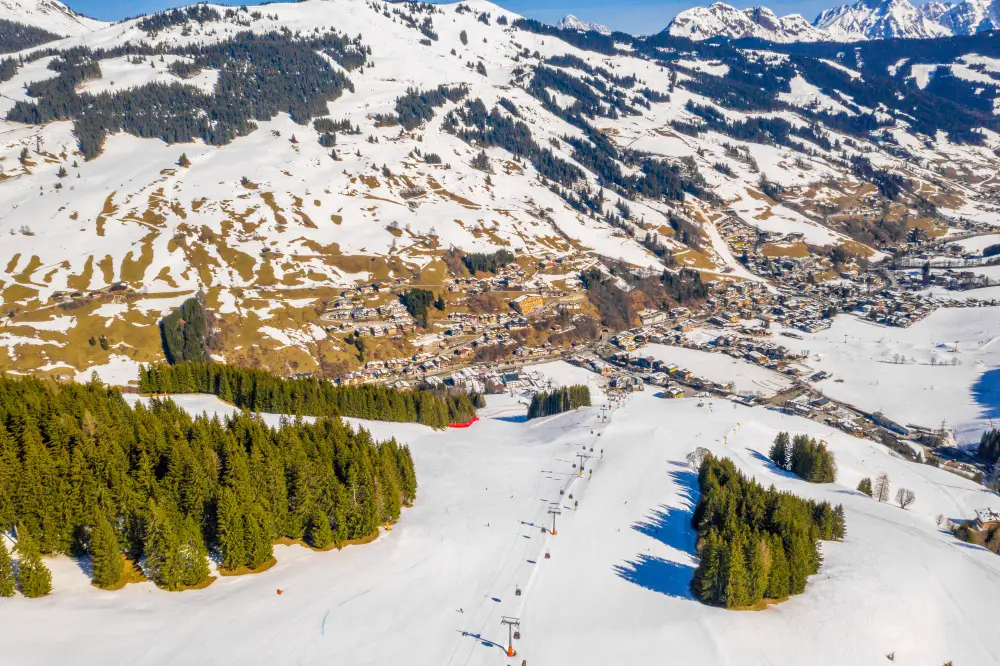
Outside the floor-to-ceiling windows, the Colorado peaks rose in their winter arrangement, white and clean and absolute, the runs visible as dark lines through the snow, already dotted with the bright moving jackets of skiers. I watched a family come off the main lift, the kids immediately falling sideways into the powder and laughing, and I thought about the first Christmas we’d had here, seven years ago, when the whole property had been a crumbling lodge with faded signage and a boiler that made sounds no boiler should make, and we had exactly ten guests, and one of them had left a note at the front desk that I kept on my refrigerator for three years after.
I heard my mother before I saw her.
“Pa!” She said it the way she always said it in public spaces, with a particular lift that was designed to sound casual and mostly achieved charming instead, and then she came through the revolving door in her white down coat with the fur-trimmed boots and my father immediately behind her in his camel-hair coat, the scarf tucked just so, and then Derek and Amanda with the kids, the kids already round-eyed at the chandeliers, and Vanessa last, phone already raised, already composing the visual record of her arrival.
The familiar feeling came with them, that specific mix of genuine love and bracing for impact that my family had always produced in me, a weather system I had learned to dress appropriately for.
Vanessa spotted me first.
“You actually came,” she said, crossing the lobby to air-kiss somewhere near my cheek, careful of her lipstick. “I told Mom you’d probably cancel. You know, with your schedule.”
“Surprise,” I said.
My schedule, as Vanessa understood it, consisted of two mornings a week teaching art to elementary school children and the vague remainder of some existence that did not resolve into anything impressive. What my schedule actually consisted of was those two mornings, which I loved unreservedly, and approximately forty other hours per week managing a hospitality portfolio that employed several hundred people across seven properties in three states. But the Vanessa model of reality did not have space for that version of me, and I had long since stopped trying to fit it in.
Dad was already at the reception desk, moving through the lobby with the confident ease of a man who assumed that spaces arranged themselves around him by natural law. “Reservation for Thompson,” he said, his voice carrying comfortably over the music and the check-in murmur. “We have the family suite.”
Lena was at the desk. I had hired her eighteen months ago and she was excellent, steady under pressure, good with difficult guests, slightly inclined to overcheck details when she was uncertain but not uncertain now. She smiled with the warm professionalism of someone who had been trained well and also happened to mean it.
“Of course, Mr. Thompson. Welcome to Snow Ridge. I should mention your reservation has been upgraded to the Presidential Lodge. Compliments of management.”
Dad’s posture adjusted the way it always did when life acknowledged his importance, a slight straightening, a fractional expansion.
“We are platinum members at several resort chains,” he said, settling his coat. “I imagine someone noticed.”
Vanessa drifted toward me while Mom joined Dad at the desk, already in the hostess mode she adopted whenever she entered a space that needed managing. My sister had her phone angled at the chandelier, then the tree, then the quartet, cataloguing the lobby in pieces.
“How long are you staying?” she asked, between shots.
“Through New Year’s,” I said.
Her eyebrows rose.
“That’s ten days,” she said. “You know what this place costs, right?”
“I’m aware.”
“Derek did the math. With the holiday premium, rooms are two thousand a night minimum. That’s twenty thousand dollars for your stay.” She looked at me the way she looked at things she was deciding whether to post about. “How are you affording this on a teacher’s salary?”
I had spent years imagining various versions of this conversation and had never settled on a satisfying answer, so I gave her the same one I always gave. “I manage,” I said.
“Maya.” She said my name with a fond exasperation that was its own kind of condescension. “You teach art at a public school. You drive a Subaru with a hundred thousand miles on it. There’s no way.”
Across the lobby, Amanda called her toward the gift shop, and Vanessa drifted away, still scrolling, already somewhere else in her attention.
Derek peeled away from Amanda to find me, pulling me into a brief one-armed hug that smelled like cedarwood cologne. He was the one in the family who made an effort, genuinely, but he made it in the wrong directions often enough that the effort landed sideways.
“Listen,” he said, lowering his voice in the way of someone about to do something they consider generous. “If you need help with the cost here, I can spot you some money. No judgment. Amanda and I had a record year. My bonus alone was three hundred and forty thousand.”
He squeezed my shoulder.
“Family helps family,” he said.
A hundred responses. I went with the simplest one. “I’m fine, Derek. Really.”
And then my father’s voice, much louder than the situation required: “This place costs two thousand dollars a night?”
The quartet faltered mid-phrase. Conversations slowed in a widening radius. Dad was staring across the lobby at me, his face moving through its stages quickly, confusion becoming alarm, alarm becoming the particular red of a man who has decided someone is being fiscally irresponsible in his presence.
He crossed the lobby toward me, Mom hurrying beside him with her hand on his arm, Derek falling into step, Vanessa abandoning the gift shop to join the procession. For a moment, watching them come, I had the image of a jury that has reached its verdict before hearing the evidence.
“Maya,” he said when he reached me, planting himself a foot away with the energy of someone about to be reasonable at significant volume. “Be honest with me. Did you use your credit card for this? Because if you’re going into debt trying to keep up with what other people are spending on vacation, I need you to understand—”
“I’m not in debt,” I said, keeping my voice level.
“Then how?” He gestured at the chandelier, at the trees, at the general expensiveness of everything surrounding us. “You’re a teacher. You live in that apartment in Denver. You told us you had student loans.”
“Had,” I said. “Past tense.”
Vanessa stepped in with the particular gentleness she used on her followers when she wanted to seem wise. “Maya, there’s no shame in admitting this is outside your budget. We can adjust the plans. Maybe just Christmas dinner instead of the full stay.”
“I appreciate it,” I said. “I’m fine.”
“You’re not fine,” Dad said, more firmly now. “You are clearly living beyond your means. You want to know what financial advisors say about people who—”
“Ahem. Miss Thompson?”
Gregory Sullivan’s voice moved through the lobby like a conductor’s downbeat, smooth and carrying and perfectly timed. He came toward us with the measured pace of a man who had spent thirty years in luxury hospitality and wore that experience the way other men wore a good suit, not displaying it so much as simply having it. Behind him, a younger staff member carried a silver ice bucket with a bottle of Dom Pérignon nested in the center.
Gregory was fifty-something, silver at his temples, in a jacket that fit him the way things only fit when you have worn them for years and they have learned the shape of you. He managed my flagship property so well that I slept soundly on the nights I thought about it, which was most of them.
“Miss Thompson,” he said again, this time with the warm precision of someone addressing the person they work for. “Welcome back. I didn’t realize you’d be joining us for the holidays.”
My father’s frown shifted from anger toward confusion. “I think there’s a mistake,” he said. “This is my daughter. Maya.”
“Maya Thompson,” Gregory said pleasantly. “Yes. We’ve exchanged quite a few emails, but this is the first time we’ve met in person.”
He extended his hand to me. I shifted my tea cup and shook it.
“Nice to finally meet you in person, Gregory,” I said.
“Compliments of the owner,” he said, nodding toward the champagne. “Your usual Dom Pérignon 2012. And I wanted to confirm whether you’d prefer the penthouse suite or one of the lodges, to be closer to your family during their stay.”
The silence that followed was so complete that I distinctly heard someone near the fireplace drop a glove.
My father’s color drained. My mother’s hand went to her throat. Derek made a short, disbelieving sound. Vanessa fumbled her phone and barely caught it.
“The penthouse is fine,” I said. “Thank you, Gregory.”
“Excellent.” He tapped something on his tablet and turned to include my family in the orbit of his professional warmth. “The Thompsons, I presume? Miss Thompson mentioned you’d be joining us. I’ve taken the liberty of upgrading your accommodations to the Presidential Lodge. Three bedrooms, full kitchen, private hot tub. Compliments of ownership.”
“Ownership,” my father said. The word came out hollow.
Gregory’s expression was composed, but I had worked with him long enough to catch the faintest suggestion of amusement in his eyes, the kind a person carries when they have seen every possible human reaction to wealth and have made peace with all of them.
“Yes, sir,” he said. “Miss Thompson owns Snow Ridge Resort. She also owns the other six properties in the Cascade Mountain Resort Collection. I report directly to her.”
The lobby continued around us, guests and luggage and the quartet and the children in their ski jackets, the whole warm machinery of the place moving through its rhythms while my family stood in the center of it recalibrating everything they had thought they knew.
“There must be some mistake,” my mother said, her voice thin. “Maya is a teacher. She teaches children.”
“I do teach,” I confirmed. “Two mornings a week at Lincoln Elementary. I volunteer.”
“Volunteer,” Vanessa breathed, as though the word had betrayed her personally.
Gregory consulted his tablet with the pleasant efficiency of a man who understands that the most useful thing he can do in a charged room is keep moving forward. “Miss Thompson, the architect sent the final renderings for the new spa complex. Should I forward them to your email or hold them for review during your stay?”
“Email is fine,” I said. “I’ll look at them after Christmas.”
“And the Jackson Hole property is requesting approval for the kitchen renovation. Four and a half million. The proposal is in your suite.”
“I’ll review it this week.”
“Perfect.” He nodded once. “Your usual staff preferences are on file. The chef has the vegetarian tasting menu prepared, and we’ve stocked the penthouse with the organic teas from that shop in Boulder you prefer.”
He excused himself with the quiet authority of someone who moves efficiently through complicated rooms, and the lobby gradually resumed its normal motion, the quartet finding their bar again, children returning to their orbits around the trees. My family did not resume their normal motion. They stood, each of them, in a version of stillness I had not seen from them before.
Dad found his voice first. “You own this resort,” he said, testing the sentence carefully. “You own this resort.”
“This one,” I said. “And six others across Colorado, Utah, and Montana. The Cascade Collection. We focus on luxury mountain experiences.”
“When?” Mom’s hand was still at her throat, fingers touching the pearls I had given her three Christmases ago, which she had assumed were good imitation and which I had not corrected her about. “How? Why didn’t you tell us?”
“I tried,” I said. “Three years ago at Thanksgiving. I mentioned I’d made an investment in a failing ski lodge in Summit County. Do you remember what you told me?”
The memory rose in the room between us, vivid and specific: the turkey and the good china and Vanessa explaining a sponsored trip to Cabo, Derek walking the family through market fundamentals, and my own attempt, tentative and genuine, to share the most frightening and exciting thing I had ever done.
“You told me to stop playing with money I didn’t have,” I said. “And to focus on getting a real career.”
No one spoke.
Derek had his phone out, thumbs moving. His face shifted from skepticism to something more complicated. “Maya. You’re listed as CEO and founder of Cascade Mountain Resorts. Forbes estimated the collection’s value at eight hundred and ninety million dollars.”
“Nine hundred and twenty as of last quarter,” I said. “We acquired the Telluride property in September.”
Amanda took Derek’s phone, reading quickly. “This says you started the company at twenty-four. You’ve been running a hospitality empire for seven years?”
“Eight in January,” I said.
Vanessa’s voice had lost its usual confidence. “You drive a Subaru,” she said. “You live in a tiny apartment. You dress like…” She stopped.
“Like a teacher,” I finished for her. “Because I am a teacher. I love working with kids. The resort business runs well with people like Gregory managing day to day. Two mornings a week, I do the thing I’m most passionate about. The rest of the time, I run the company.”
“The apartment,” Mom said faintly.
“Is near the school,” I said. “Convenient for teaching days. I also own a house in Aspen. That’s home.”
Dad sat down heavily in one of the lobby chairs, like something in him had decided the standing portion of this experience was complete. He looked at me from that lowered position with an expression I had never seen on him before, something stripped of its usual certainty.
“This whole time,” he said. “We thought you were struggling.”
“You thought I was struggling,” I said, “because I didn’t fit your definition of success. Investment banker, corporate lawyer, executive title in a recognizable firm. Those were the careers that registered. Teaching didn’t, not as anything more than a consolation for someone who hadn’t figured out the real version of her life. And building something from nothing didn’t count if you didn’t brag about it.”
I paused.
“I worked three jobs in college,” I said. “I saved fifty thousand dollars. I bought a failing ski lodge in Summit County, renovated most of it myself, and turned it profitable in eighteen months. I used those profits to acquire the second property. Then the third. Each one strategic, self-funded, and successful.”
As I said it, I was back in that lodge for a moment, the smell of old carpet and mildew, the flickering fluorescents in the kitchen, the cracked parking lot under snow. The bank manager who had reviewed my business plan with the politely skeptical expression of someone who expects to be wasting the next forty minutes. The contractor who had suggested I might want to run decisions by my dad, and whom I had asked to leave the property the same afternoon. The 2 a.m. painting sessions with music playing off a phone propped against the baseboard, my arms aching, my hair wrapped in a bandana, not because it was romantic but because the job needed doing and I was the only one there to do it.
I thought about the ten guests that first Christmas. The note on the refrigerator.
We walked through the resort together to reach the Presidential Lodge, a procession that felt slightly surreal, the bellman steering a cart of monogrammed luggage, my family moving in a kind of stunned quiet that was entirely unlike them. We passed the restaurant, the soft light and copper pendant fixtures and the wine display I had spent weeks selecting. We passed the spa, the trickling wall fountain, the glass doors. At the ski rental shop, a woman in a worn parka was at the counter, talking to the tech about the equipment program.
“We really appreciate this,” she was saying. “I don’t know how we’d get them on the slopes otherwise.”
“That’s what it’s for,” the tech said. “Free equipment for local kids who keep their grades up. Resort owner’s orders.”
He caught my eye as we passed and gave a small, respectful nod. I nodded back without stopping.
The Presidential Lodge sat at the end of a stone path, its windows full of the best view the property offered, the mountain filling the glass from floor to peak. Inside, the fire was already lit, the sectional piled with plaid throws, the Christmas tree I had arranged to be set up in the far corner glowing with white lights. My nephew and niece made sounds of pure, uncomplicated joy and ran for the stairs.
I stayed on the porch while everyone else went inside.
Gregory appeared at my elbow. “That went well,” he said quietly.
“We’ll see,” I said.
My father came back outside before I had expected him to. He closed the lodge door softly behind him and stood in the cold with his hands in his coat pockets, and for a moment we just existed together, snow dusting our shoulders, the mountain holding its silence in the way mountains do.
“The teaching,” he said finally, his voice lower than it ever was inside. “You really love it. More than anything?”
I thought about my classroom in Denver, the paint-stained tables, the crooked drying racks crowded with construction paper, the particular quality of a six-year-old’s face when they mix two colors together and discover that a third color has appeared from somewhere they didn’t expect.
“Those kids don’t care that I own resorts,” I said. “They care that I show them how to see the world differently.”
His eyes went bright in the way of a man who has never been comfortable with that kind of brightness and doesn’t know what to do about it at sixty-three.
“I’m sorry,” he said, and the word came out hoarse, as though it had been kept somewhere dark and needed air. “For assuming. For not asking. For making you feel like you had to earn a kind of success I could recognize before you deserved to be proud.”
“I didn’t hide it from you,” I said. “I stopped trying to prove myself to people who had already decided what I was worth. There’s a difference.”
Mom came out next, pulling her coat tight, and stood beside him. She looked through the lodge window at the Christmas tree for a moment, and then she looked at me.
“Douglas fir,” she said. “Twenty feet.”
“You always said a real Christmas tree had to be Douglas fir,” I said. “You told us about the one from your childhood so many times I could probably describe it from memory.”
She swallowed. Her eyes shone. “You remembered.”
“I remember everything, Mom,” I said. “I just stopped competing.”
Vanessa came last. She stood with her phone held to her chest instead of raised toward anything, which for her was a form of vulnerability.
“I need to apologize,” she said. “The things I said in the lobby. About the Subaru and the salary. That was unkind.”
“It was honest,” I said. “You all genuinely thought I was failing. That’s not entirely your fault. I could have corrected the picture sooner. I chose not to, because I needed to build something without the weight of everyone’s opinions about whether it was going to work.”
She looked at the snow.
“I post quotes about defining your own success every other week,” she said.
“I know,” I said. “You might try believing them.”
Derek joined us then, his kids tumbling out behind him, faces pink with the novelty of a bunk room and a hot tub visible from the window. My nephew bounced on his toes and asked if we could ski tomorrow. I told him nine o’clock, ski school, instructors would be waiting. He pumped his fist with a seriousness that made everyone laugh, including me, genuinely.
We stood together on the porch as the sky went from pink to violet, the mountain darkening at its edges, the first stars appearing above the ridgeline. My family was still figuring out what to do with the version of me that had just appeared, and I was still figuring out what it meant to have stopped keeping it from them. Neither of those things resolved in the time we stood there, but they began to.
The following morning came in on clean powder and bright sun.
I met them at the base of the main lift with my skis over one shoulder, and my niece barreled toward me across the snow in her rental boots, nearly taking out two adults and a snowboarder before I caught her. She wanted to know about the big slopes. I told her one step at a time, or one slide at a time, and she nodded with the complete seriousness of someone accepting a philosophical position.
Derek fell into line beside me while the kids were sorted into their lesson groups with Kayla and Ben, two of our best instructors, both of whom had the specific gift of making a frightened child feel capable rather than just encouraged.
“Tell me how you did it,” he said. “The real version.”
We shuffled forward in the lift line, skis scraping softly on the packed snow.
“I told you the real version,” I said.
“You gave me the compressed version,” he said. “I want the actual thing.”
I looked at him, this brother of mine, who had always been the successful one in our shared family mythology and was now recalibrating what that meant. There was something different in his face today. The investment banker surface was still there, but underneath it something less defended.
“Okay,” I said. “Long version.”
As the line moved forward, I talked. I told him about the spreadsheets I kept in my dorm room behind my art supplies, learning to read balance sheets in the campus library because I had decided that if I wanted to build something that brought people joy, I needed to understand numbers with the same fluency I understood color. I told him about driving up to that first lodge in my Civic, stepping out into the snow of a cracked parking lot, and seeing not the faded signage but the slope beyond it, the possibility encoded in the view.
I told him about sitting at the bar with the existing staff before I did anything else, asking what they loved about the place and what they’d change if they could. How their answers had shaped the renovation plan more than any consultant’s report. The contractor who suggested I run decisions by my dad, and how quickly that conversation ended. The local carpenters who took a chance on me. The YouTube videos about boilers. The Christmas with ten guests and a lopsided tree, and the note that stayed on my refrigerator.
By the time we reached the front of the line and slid onto the lift chair, Derek was quiet in a way I wasn’t used to seeing from him.
“You did all of that alone,” he said, as the chair lifted us above the treeline.
“With good people around me,” I said. “But yes. No family money. No introductions. Just work, and a willingness to look foolish while learning things.”
He was quiet for a while, watching the slope unreel below us.
“You know what’s absurd?” he said. “In my world, that’s the founding story everyone wants to hear. The bootstrap narrative. The lone founder who turned fifty thousand into nine hundred million. I would have been pushing you toward venture capital years ago if I’d known.”
“I didn’t want investors,” I said. “I wanted to answer to the guests, not to a quarterly return. I know that sounds impractical.”
“It sounds like someone who knew exactly what she wanted,” he said, “and built it without asking for permission.”
We skied the mountain the rest of the morning in the comfortable way of people who have said something real to each other and don’t need to fill the space after it. I stayed easy, let him set the pace, watched from the corner of my eye as his posture loosened over successive runs, the banker receding and the brother emerging.
Mom came out of the spa in the early afternoon with the expression of someone who has just discovered that tension they had accepted as permanent can be removed. She walked beside me across the terrace with her coat slightly open despite the cold, the way people walk when they feel more spacious inside than they did before.
“You thought about all of this,” she said. “The treatments, the details, the whole thing.”
“With good people,” I said. “But yes.”
She glanced sideways at me. “You thought about us.”
“I think about people who spend their whole lives taking care of everyone else,” I said. “People who need a place to exhale. That’s the whole idea.”
Her eyes filled and she didn’t try to prevent it. “I didn’t know you thought about me that way,” she said.
“Even when you’re driving me completely crazy,” I said.
She laughed, watery and real. “That’s fair,” she said. “That’s very fair.”
That evening, we did something that had not happened in my family for years. We sat around the fireplace in the lodge with no television, no one reliably present on their phones, and talked. The children built an architectural structure from the decorative wooden blocks by the hearth. The adults settled into the sectional with hot chocolate, feet folded under them, and the particular ease of people who have had an eventful enough day that performance no longer seems worth the energy.
“Do your employees know?” Vanessa asked, after a while. “That you own all this?”
“Some do,” I said. “Most know I’m senior management. I’ve never been interested in making grand entrances and demanding treatment. I’d rather see how people behave when they think the stakes are ordinary.”
She mulled this over.
“My followers would love this story,” she said, the familiar assessment coming into her voice. “The secret millionaire teacher CEO. It writes itself.”
“It’s my life,” I said. “Not content.”
She flushed. “I didn’t mean it like—”
“I know how you meant it,” I said. “But that’s exactly the thing, Ness. Sometimes it feels like you experience your life through the lens of how it will look to other people. You’re in a beautiful room with your family, and your first instinct is to photograph it for strangers.”
She looked down at her mug, tracing the rim.
“It’s easier to curate things than to sit with them,” she said quietly.
It was the most honest thing she had said to me in years. I let it be what it was.
“Don’t post about this,” I said. “At least not yet. Let this be something that belongs just to us for a little while. We don’t get many of those.”
She looked up, and I saw something in her expression I recognized from when we were young, before the followers and the brand deals and the glossy version of herself had become the primary project. “Okay,” she said. “Just for us.”
Later, the children put to bed and Amanda disappeared with a book, Derek sat by the fire with a glass of wine and the contemplative expression of a man doing arithmetic he had not expected to be doing on vacation.
“Eight hundred and ninety million,” he said.
“Nine hundred and twenty,” I said. “Last quarter.”
“On paper,” he said.
“Largely in property,” I agreed. “I’m not swimming in coins somewhere.”
He smiled, and then it faded into something more genuine. “I always thought I was the successful one,” he said. “The one who got it right. Ivy League, the firm, the bonuses. You were my sweet little sister who liked art.”
“Yes,” I said. “I got that impression.”
“I’m sorry,” he said. “I didn’t mean to make you small. I just genuinely never imagined you’d…” He searched for the word.
“Out-earn you?” I offered.
He laughed, a surprised sound, authentic in a way his laughter in performance mode never quite was. “Yeah,” he said. “Let’s be honest. That’s the part.”
“Funny thing about underestimating people,” I said. “They get a lot done while you’re busy not paying attention.”
We looked at each other across the firelight, and I saw not the investment banker but the boy who used to sneak into my room to borrow markers and draw spaceships in the margins of his homework.
“I’m proud of you,” he said. “Really. Even with the ego injury.”
“Your ego will survive,” I said. “It’s had excellent care.”
Christmas Day brought snow before sunrise and cinnamon from the kitchen by mid-morning, and by evening the restaurant had been transformed into something that managed to feel both celebratory and intimate, wreaths on every wall, candles on every table, a centerpiece of white roses and eucalyptus at the center of the private dining room we occupied with the double doors thrown open so the jazz trio in the lounge could reach us.
Luis, our chef, emerged from the kitchen to greet us and pulled me into a brief hug, dusted with flour.
“She remembers the chestnut soup,” he said to my family, clutching his heart with the theatrical flair he deployed on special occasions. “I live for this woman.”
The meal arrived in courses and each one did what the best food does, which is make the people eating it more present in the room than they were before. A winter salad that made Vanessa set her phone face down on the table. A barley risotto with wild mushrooms that had Derek asking, with complete sincerity, whether culinary investment was a viable asset class. A vegetarian Wellington that my father tried “by accident” after finishing his own.
Between courses I introduced them to staff as they came by, not as people who worked for me but as people who had chosen to be here, each with their own particular story. The sommelier who had grown up in a trailer park and discovered wine as a busboy. The pastry chef who had left a brutal city kitchen for the slower, more creative pace of a mountain property. The head of housekeeping who knew every repeat guest’s pillow preference without checking a spreadsheet.
I wanted them to see the people before they saw the ledger.
When dessert arrived, spiced pear in caramel with a scattering of edible gold, my father lifted his glass.
He had always been a man more comfortable with numbers than with words, and his toasts over the years had ranged from genuinely moving to accidentally competitive, but he held his glass with the particular steadiness of a man who has decided to say something true.
“I spent a long time believing I knew what success looked like,” he said. “Degrees, titles, salaries. I measured all of you against those rulers.” He looked at me. “I’m sorry. For every time I made you feel like what you loved wasn’t enough. For every time I dismissed your path because I couldn’t see where it was going. You were building something extraordinary right in front of me, and I was too busy worrying you’d fallen behind to notice you were already ahead.”
He paused.
“I’m proud of you,” he said. “Not because of the resorts, though they are genuinely impressive.” The table laughed, including me. “But because you knew who you were, and you built a life that matched that. I’m still learning how to do that.”
He raised his glass.
“To Maya,” he said. “Our teacher. Our CEO. Our daughter.”
Glasses rang together. I raised mine and held it there for a moment.
“To all of us,” I said. “To figuring it out eventually.”
Later, after the restaurant had emptied and the trio had packed their instruments and the children had fallen asleep on pushed-together chairs near the hearth, I went out to the terrace alone.
The snow had stopped. The sky was the specific darkness of high altitude on a clear December night, the stars not scattered but packed, the Milky Way visible as a density rather than individual points. The mountain stood silent above the property, the runs dark now, the ski lifts still.
Through the glass behind me, the restaurant glowed, Luis and Gregory at opposite ends of the room, apparently having a conversation that involved a significant amount of laughing.
I thought about the girl I had been at twenty-two, sitting in a lecture hall drawing ski slope geometry in the margins of her macroeconomics notes, certain there was a way to combine the things she loved, beauty and experience and human warmth, with the practical requirement of building a life that held together. Certain, and afraid, and not yet sure whether the certainty or the fear was more reliable.
I thought about the cracked parking lot and the boiler sounds and the 2 a.m. painting sessions and the ten Christmas guests and the note that stayed on my refrigerator until I finally found a frame that suited it.
I thought about Gregory’s face when I had first walked into this property eight years ago, and the question he had asked me during the interview, which was not about my business plan or my projections but simply: what do you want people to feel when they walk through this door? And my answer, which I gave without hesitating, which I had never doubted: welcome. Held. Like they arrived somewhere that was waiting for them.
I had built that. Seven times now, in seven different locations, with seven different staffs and seven different mountain views and seven different versions of the same core idea. And two mornings a week I drove a Subaru to a school in Denver and taught children to see color differently, because that was the other thing I had always known about myself, that the business was the means and the teaching was also the end, and both of them were necessary, and neither made sense without the other.
For years I had carried both parts separately, Maya the Teacher and Maya the CEO moving through their separate corridors of the same life, sealed from each other, sealed most completely from my family. I had told myself it was protection. I had told myself I did not need their understanding to do the work. Both of those things had been partially true, and also partially a way of avoiding the weight of being seen by people whose opinion, despite everything, I still felt somewhere in the center of my chest every time they spoke.
Tonight the corridors had opened into each other.
My family was inside, my father sleeping by now in a fireside chair, my mother reading something she had found on the lodge bookshelf, my brother working through a second glass of wine with the expression of a man engaged in genuinely productive thinking, my sister with her phone face-down on the table beside her, which for her was a form of meditation.
Gregory appeared in the doorway behind me.
“Your penthouse is ready whenever you’d like,” he said.
“Thank you,” I said. “Make sure the kitchen sends hot chocolate to the lodge tonight. Real whipped cream, the works. The kids will love it.”
“Already done,” he said. “With Christmas tree sugar cookies.”
“Of course it is,” I said.
I stood for another moment on the terrace, my coat gathered around me, the mountain cold on my face and the warm light of what I had built pressing against my back.
There was no single sentence that contained all of this. Not the nine hundred and twenty million dollars, which was real but also just numbers arranged on a screen. Not the two mornings a week in a paint-stained classroom, which mattered more to me than most people would believe. Not my father’s voice saying I’m proud of you with the hoarseness of someone releasing something that had been held too long, or my mother’s hands on mine in the cold, or Derek’s surprised and genuine laugh, or Vanessa’s phone face-down on the table.
What I knew, standing there with the stars above the Colorado peaks and my family through the glass behind me, was something simpler than any of it.
I had built spaces where people arrived feeling one way and left feeling another, where the cold was kept outside and the fire was kept in, where families sat together long enough to say the things they had been carrying. I had built that seven times, and I had built it because I believed in it, not because the numbers were compelling, though they had proved to be, but because the thing I had always wanted, since I was a girl drawing ski slopes in the margins of my notebook, was to make rooms where people could finally, gratefully, exhale.
And I had done that.
Including, on this particular Christmas, for the people who had not known enough about me to understand what they were walking into.
I turned away from the mountain and went back inside.

Laura Bennett writes about complicated family dynamics, difficult conversations, and the quiet moments that change everything. Her stories focus on real-life tensions — inheritance disputes, strained marriages, loyalty tests — and the strength people find when they finally speak up. She believes the smallest decisions often carry the biggest consequences.
Very good post.