The message arrived on a Tuesday morning while I was reviewing quarterly readiness reports.
“Come to my promotion,” it read. “I want you to see what success looks like now.”
Then, because subtlety was never his strength, he added: “Too bad you never even made Captain.”
I stared at my phone for a long moment, then set it down and returned to my work.
My name is Ila Reeves. I am a Colonel in the United States Air Force. I have served for twenty-six years, led two squadrons, deployed to three continents, and spent the better part of my adult life making decisions that kept people alive and missions running. I made Captain at twenty-nine. Major at thirty-five. Lieutenant Colonel at thirty-nine. Colonel at forty-one.
By the time Mason Hart sent me that message, I had been wearing eagles for three years.
He did not know that. He had never asked.
That was always his particular flaw. Not cruelty exactly, though he could be cruel. More a kind of aggressive incuriosity about anything that did not confirm the story he was already telling himself. And the story he had been telling himself about me, apparently, was that I had gone nowhere.
Mason and I dated eight years ago, back when I was a Major and he was still learning what leadership actually required. We met at a joint training exercise where he spent more time talking about his career trajectory than performing his duties. I made the mistake, one I would spend considerable time later analyzing, of confusing ambition with character. They are not the same thing, and the difference matters enormously in uniform.
He treated rank like a competition. Every promotion board was a personal referendum on his worth as a human being. Every colleague’s advancement was something to analyze and explain and, ultimately, diminish. When I made Lieutenant Colonel two years into our relationship, he smiled and said congratulations with his mouth while his eyes did something else entirely. For the next three days he built elaborate theories about why certain people got selected and others did not, spinning narratives about politics and favoritism with the energy of someone who could not tolerate a simpler explanation.
The simpler explanation was that some people earned it.
He never really considered that.
Our relationship ended quietly one autumn evening. We were having dinner, and he made another comment about my workaholic tendencies, the way he always framed dedication as pathology when it was mine but ambition when it was his. I looked at him across the table and understood, with the sudden clarity that sometimes arrives after years of slow accumulation, that I was exhausted. Not from the work. From making myself smaller so he could feel bigger.
I was done.
The breakup was civil, almost painfully so. We divided our few shared belongings, unfollowed each other everywhere, and went our separate ways. I threw myself into a challenging staff position at the Pentagon. I stopped thinking about Mason entirely. The way you stop thinking about a headache once it finally lifts: relief so complete that you forget what the pain was like until something reminds you.
The message was the reminder.
I read it twice, noting the assumptions baked into every word. He thought I had stalled at Captain. He thought he had somehow surpassed me. He thought inviting me to watch him succeed would sting in a specific, satisfying way.
The arrogance was almost impressive in its completeness.
I forwarded the message to my assistant, Captain Jordan Wells, with a simple question: do you know anything about a promotion ceremony this Friday at Bolling?
Jordan called back within the hour.
“Ma’am, that’s the one you’re presiding over. Brigadier General Price asked if you’d officiate since you’re in town. It’s a small ceremony, mostly junior officers getting first promotions.” A pause, papers shuffling. “Lieutenant Mason Hart is on the list. Second Lieutenant to First Lieutenant. Do you know him?”
“We’ve met,” I said.
“Should I ask General Price to reassign the duty to someone else?”
“No,” I said. “I’ll be there.”
I arrived at the venue ninety minutes early, as I do for any official function. The small auditorium at Bolling had been set up with neat rows of chairs, a simple stage, and an American flag positioned just right of center. Sergeant Talia Moreno, the admin NCO coordinating the event, met me at the entrance with a clipboard and the particular nervous energy of someone responsible for making sure nothing goes wrong.
“Colonel Reeves, thank you so much for coming early. General Price wanted everything perfect.”
“Walk me through the order of events, Sergeant.”
Six promotions total. Alphabetical by last name. Mason would be fourth.
“And the officers know who’s presiding?” I asked.
Sergeant Moreno checked her notes. “They were all notified last week, ma’am. Each received an email with your name and rank.”
Interesting. So Mason had known, or should have known, and invited me anyway. Either he had not read the notification carefully, or he had assumed there was a different Colonel Reeves somewhere in the Air Force. Some other woman with the same name who had, unlike me, failed to make Captain.
Both options told me everything I needed to know about his attention to detail.
I reviewed the medals and insignia laid out on the presentation table, confirmed the stage setup, and retreated to a small office behind the auditorium to change into my service dress uniform. The blue fabric held its crisp lines the way good fabric does when it’s been cared for. The silver eagles on my shoulders caught the light as I adjusted my cover in the mirror.
I had worn this uniform, in various configurations, for twenty-six years. It had become a second skin, something I put on the way other people put on their professional identity, because for me the two were inseparable. I was not a woman who happened to be a Colonel. I was someone who had been forged by the process of becoming one.
Through the office window, I watched families begin to arrive. Proud parents. Excited children. A few civilians holding flowers and cameras, slightly overdressed for a Friday afternoon. The officers themselves filtered in one by one, easy to spot in their service dress, their faces showing various combinations of nerves and genuine excitement. These were young people on the first rungs of something large, and most of them understood the weight of what they were stepping into.
Then I saw Mason.
He looked older, which made sense given eight years. His uniform was immaculate, his posture parade-ground perfect. He moved through the gathering crowd with that familiar mixture of confidence and performance, shaking hands, laughing too loudly at someone’s joke, working the room the way he always worked a room, as if presence itself was something you could earn through effort.
When he spotted me through the window, his expression shifted.
He excused himself from his conversation and made his way toward the entrance where I stood. The uniform is the same for all officers, and at a distance, eagles can be confused for any number of insignia. He did not know yet. He was coming to say something. I could see it in the set of his jaw.
“Ila,” he said, my name coming out the way you say the name of someone you’ve been preparing a speech for. Not hostility, exactly. Something more like arrival. “Didn’t expect you to actually come. Thought you’d feel weird about it.”
“Congratulations, Mason,” I said, keeping my expression neutral.
He grinned. And there it was, that edge of superiority I remembered from a hundred small moments across two years. The smile that was never quite about you.
“Crazy, right? Me outranking you now. Never thought I’d see the day.”
The certainty in his voice was staggering. He had built an entire architecture of belief around this moment and had not even bothered to verify the foundation. He had needed the story to be true, and so he had treated it as true, and now here he was, presenting it to me as a gift.
I excused myself, citing ceremony preparations. He nodded, still wearing that insufferable smile, and returned to his family. I watched him lean toward his mother, watched her pat his arm proudly, watched him glance back in my direction with the satisfied expression of a man who believes he has already won something.
Whatever story he was telling her about me, about my career, about what this afternoon represented, it was about to require significant revision.
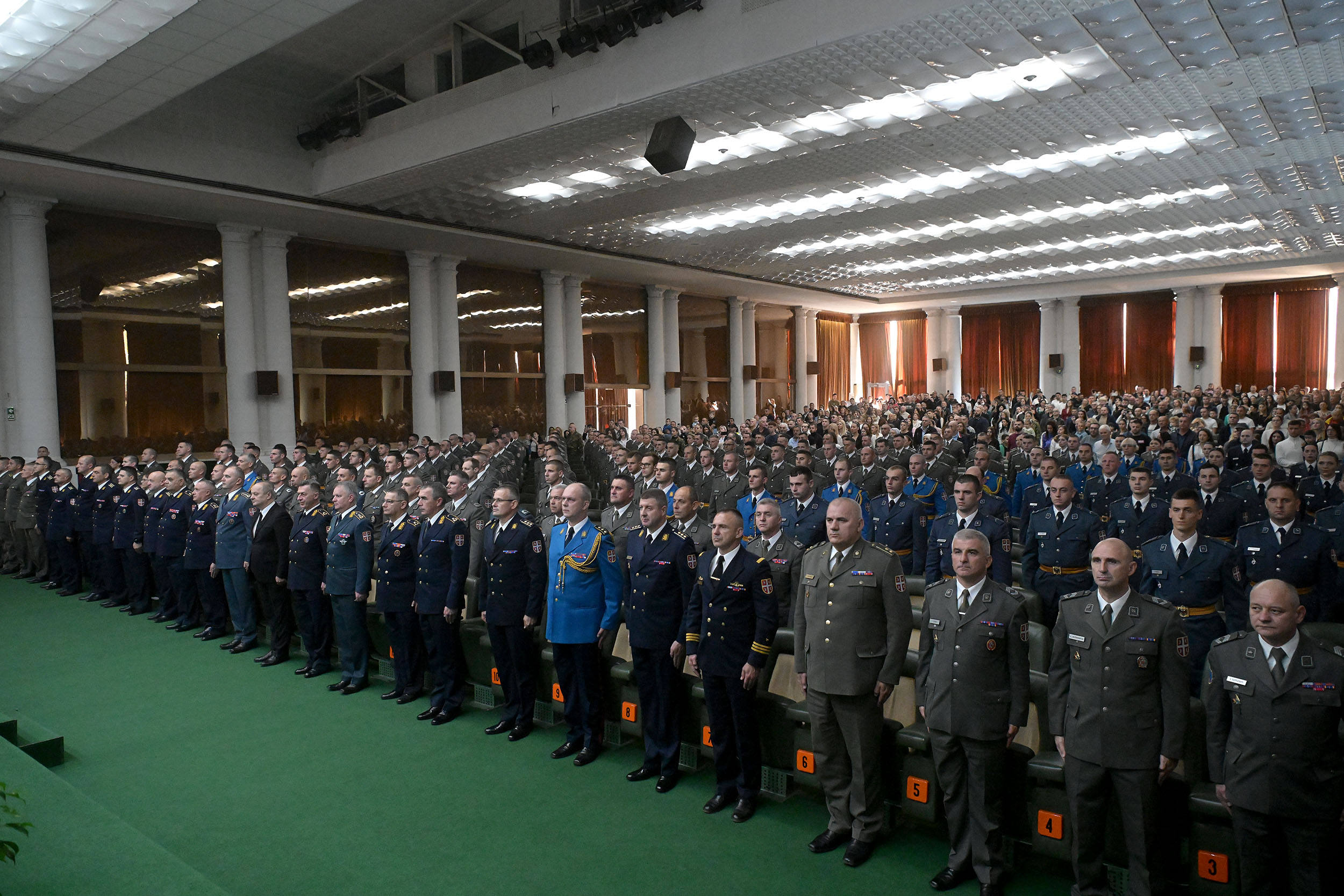
The auditorium filled gradually. Roughly eighty people in attendance, a decent turnout for a Friday ceremony. The promoting officers sat in the front row, Mason third from the left, his posture suggesting that good posture could substitute for actual leadership experience if you maintained it firmly enough.
At 1300 hours exactly, Sergeant Moreno gave me the signal.
The ceremony began with the national anthem. Everyone rising, hands over hearts, that particular stillness that comes over military audiences when the music starts, a reflex so deeply trained it becomes involuntary. Then General Price took the podium for brief opening remarks about service and responsibility. His speech was concise, maybe four minutes total. He was a man who had learned to say what needed saying and stop.
Then he smiled and gestured toward the stage entrance.
“Ladies and gentlemen, it is my privilege to introduce our presiding officer for today’s promotions. She brings twenty-six years of distinguished service, including deployments to three continents, command of two squadrons, and a reputation for excellence that has earned respect throughout our Air Force. Please welcome Colonel Ila Reeves.”
The reaction moved through the room like a wave.
I heard it before I fully processed it. The sharp intake of breath in the front row. The sudden whispers. The shuffle of people sitting up straighter, the collective recalibration that happens when a room realizes the person walking in is not who they expected.
I walked onto the stage in full service dress, my cover squared, my eagles visible under the auditorium lights.
I did not look at Mason immediately. I looked at the audience. At the flag. At General Price, who nodded his approval with the expression of a man who had not known about the history between us and was now beginning to sense it.
Then, naturally, inevitably, my gaze swept across the front row.
Mason had gone completely still.
His face had lost all color, the practiced confidence replaced by something rawer and more honest. His eyes were wide and unblinking. His mouth opened slightly, closed, opened again. The woman beside him, his mother, looked confused by his reaction, glancing between us and trying to understand the sudden change in her son’s posture, the way a person watches weather shift on a clear day without yet understanding why.
I accepted the promotion folders from Sergeant Moreno and took my position center stage.
“Thank you, General Price. It’s an honor to be here today.” My voice carried clearly through the auditorium sound system. “Promotion is not a reward for time served. It’s a recognition of potential, a statement of trust, and an assumption of greater responsibility. Each officer here today has demonstrated the qualities we value most: integrity, dedication, and a commitment to serving something larger than themselves. Let’s begin.”
The first three promotions proceeded exactly as they should. I called each name, they approached the stage, I presented their new rank insignia and offered congratulations, family members came forward for the pinning, photographs were taken. Each interaction was warm but professional. Each moment belonged to the officer being promoted, and I made sure it stayed that way.
Then: “Second Lieutenant Mason Hart.”
He stood mechanically, as if his body was operating on autopilot while his mind was somewhere else entirely, somewhere still trying to reconcile the name he had heard announced with the person he thought he knew. His movement was stiff and uncertain. The confidence had evaporated entirely. He walked to the stage like a man approaching consequences he had not anticipated, each step measured, each step reluctant.
When he reached me, he stopped at attention, his eyes fixed somewhere over my left shoulder. The classic position of someone trying to maintain military bearing while their entire understanding of a situation is being rewritten. Up close, I could see his hands trembling slightly at his sides.
I opened the presentation folder and removed the First Lieutenant bars.
“Lieutenant Hart,” I said, my voice even and clear, “you are hereby promoted to the rank of First Lieutenant in the United States Air Force, effective this date. Wear this rank with honor, integrity, and dedication to the service and the Airmen you’ll lead. Congratulations.”
I extended the insignia toward him.
He took them with shaking hands, barely managing to hold eye contact.
“Thank you, ma’am,” he whispered. The words barely made it out.
His mother came forward for the pinning, her expression still confused but trying to be proud, working her way through a moment she did not fully understand. She removed his old bars and replaced them with the new ones, then stepped back to take a photo. Mason stood frozen throughout, his face a careful mask that could not quite conceal what was happening underneath it.
The ceremony continued. Two more promotions, two more families celebrating moments that had nothing to do with the particular drama playing out in the front row. When the last officer had been pinned and photographed, General Price returned to the podium for closing remarks. I stood to the side, hands clasped behind my back, and watched the room with the particular attention of someone who has learned to read groups of people the way others read text.
Several attendees kept glancing at Mason, noting his unusual stillness, the way he seemed to be processing something difficult while trying to look like he was not. His mother had her hand on his arm. He was somewhere else.
After General Price dismissed everyone and the auditorium erupted into the particular noise of families celebrating, I remained on stage long enough to accept congratulations from several senior NCOs and answer a question from a Captain who wanted advice about squadron command. Jordan Wells found me after about twenty minutes with paperwork that needed my signature. Through all of it, I tracked Mason peripherally.
He stood slightly apart from his celebration, his new rank freshly pinned on his shoulders, his expression the expression of a man who had arrived somewhere expecting one thing and found another entirely.
Eventually he caught my eye across the room.
I led him to the small office behind the auditorium. I closed the door. Outside, through the wall, I could hear the muffled celebration continuing, the sounds of families and newly promoted officers, the ordinary joy of a milestone acknowledged.
In here, there was only the two of us and the distance between who he had assumed I was and who I actually was.
Mason stood for a moment, and then the words came out almost involuntarily.
“You outrank me.”
“Yes,” I said.
“By how much?”
“Four grades. I made Colonel three years ago.”
The numbers seemed to physically hurt him. He closed his eyes briefly, processing. Then opened them.
“When I invited you, when I sent that message about you never making Captain, you were already a Lieutenant Colonel.”
“I made Captain at twenty-nine, Major at thirty-five, Lieutenant Colonel at thirty-nine, Colonel at forty-one.”
“Why didn’t you tell me?”
“You didn’t ask,” I said simply. “You assumed. You built an entire narrative about my career without checking a single fact. You needed the story to be true, so you treated it as true.”
“I thought you’d stayed a Captain,” he said. “Or left the service. I don’t know. I thought…”
“You thought what made you feel superior,” I said, not unkindly but without softening it. “You needed to believe you had won something. That I had failed while you were succeeding. That the breakup had been correct because the trajectory confirmed it.”
The silence that followed was the honest kind. Not comfortable, but necessary.
“That’s fair,” he said finally. “I’m sorry. For the message. For all of it.”
“The message is the least of it,” I said. “Mason, you spent years measuring our entire relationship by rank. Every promotion board was a crisis. Every advancement was either a victory or a threat. You needed me to be lesser so you could feel like more. That is what you should be thinking about. Not the bars on your shoulder.”
“I thought if I could just make Lieutenant, then Captain, then Major, it would finally feel like enough.”
The admission arrived raw, like something that had been waiting a long time to be said.
“And now?” I asked.
“Now I’m a First Lieutenant who just got pinned by a Colonel he used to date and insulted by text message.” He paused. “I feel like the smallest person in this building.”
“Good,” I said.
He looked at me sharply.
“Not because I want you to suffer. Because humility might be the first honest thing you have felt about rank in years. You are responsible for Airmen now. They will look to you. If you spend your time worrying about whether you are impressive enough or senior enough or important enough, you will fail them. Every one of them. But if you focus on doing the actual job, on being someone worth following, the rest tends to take care of itself.”
“How do you do that?” he asked. “Focus on the job instead of all the rest of it?”
“You stop asking whether you’re important enough and start asking whether the work is getting done. Whether your people are taken care of. Whether the mission is succeeding. Those questions have answers. The other question doesn’t.”
He looked at me with something that might have been wonder. “When did you know you were actually ready for Colonel? Not just qualified on paper, but genuinely ready?”
“I didn’t,” I admitted. “I got the promotion, pinned on the eagles, and spent the first six months convinced I was going to catastrophically fail. But I did the work anyway, made decisions even when I was uncertain, and eventually realized that competence is not about never doubting yourself. It is about functioning clearly despite the doubt. The doubt does not go away. You just learn to work alongside it.”
He nodded slowly. Something in his posture had changed, some armoring he had been wearing so long he had stopped noticing it.
When he asked whether we might stay in touch, I told him no.
“Not because I wish you ill. Because you need to grow into your rank without me as a measuring stick. Find mentors in your unit who can guide you without the weight of our history. Learn to lead because the work matters, not because you are trying to prove something to me or to yourself. Clear?”
“Clear, ma’am,” he said. “Thank you. For doing the ceremony. For being professional even though I didn’t deserve it.”
“You earned the promotion, Mason. Whatever else is true, you met the requirements. Be proud of that. Just don’t let it be everything.”
I opened the door. He walked back into the auditorium and found his mother, who pulled him into a hug. Whatever he felt in that moment, at least it appeared to be real.
In the months that followed, the story continued in the way stories do, without drama, through ordinary accumulation.
Jordan Wells reported, without being asked, that Mason was changing. He was asking how to give constructive feedback to struggling Airmen. He had volunteered for a troubled section that no one else wanted and was turning it around. Less conversation about promotion timelines, more engagement with actual work. Jordan was not a man who offered observations casually. If he was noticing a change, there was a change to notice.
A month after the ceremony, Mason sent a brief professional email through official channels. It thanked me for presiding. It said the conversation had affected him deeply. It said he was trying to grow into his rank instead of just wearing it. The brevity suggested sincerity. Someone performing gratitude writes more. He wrote less.
I did not respond. Not out of cruelty but because some moments need to stand on their own, uncluttered by further communication. He had said what he needed to say. I had heard it. That was sufficient.
A year later, Mason emailed from a deployment in Romania. He had counseled a Second Lieutenant struggling with the same things he had once struggled with, using words I had given him in that small office behind the auditorium. He said he had tried to give the young officer the same gift I had given him: honest feedback delivered with enough respect that it could actually land.
I broke my pattern and responded briefly, acknowledging what he had written. It seemed warranted.
Two years after Mason’s promotion ceremony, I received a call.
Selection for Brigadier General. Twenty-seven years of service. Four percent of Colonels ever reach that rank.
That evening, I sat in my apartment and thought about the path. The Pentagon staff positions and the squadron commands and the late nights and the deployments and the thousand small decisions that had accumulated into something larger than any of them individually. I thought about the Major I had been when Mason and I were together, still in the middle of it all, not yet able to see the shape of what I was building.
Mason’s message had seemed significant when it arrived. Standing at the distance of two years and a flag officer selection, it felt like what it was: a small moment in a long story, significant only for what it revealed about the man who sent it and what it reminded me of in myself.
He had invited me to that ceremony hoping to show me what success looked like from a safe distance. He had not anticipated that success would walk onto the stage and pin his bars.
But that was not the story I carried away from it.
The story I carried was simpler. I had shown up, done my job, and let the truth speak for itself. I had given an honest assessment to a man who needed one and had not been given many. Whether he used it was never within my control, and it turned out he did use it, imperfectly and slowly and genuinely, the way most people grow.
And somewhere in the same Air Force, a young officer who had once mocked my career was leading Airmen, making mistakes and correcting them, learning the difference between rank as trophy and rank as responsibility.
That is what real leadership builds. Not monuments to itself. Not stories worth telling at ceremonies. Just better people than there would have been otherwise, moving forward in ways that ripple outward long after any single interaction is forgotten.
The rank was recognition of work already done. The eagles were not the point.
The point was the work itself. The people. The missions. The choices made correctly in rooms where no one would ever know how difficult they had been.
I had served for twenty-six years before anyone outside my command really understood what that meant.
I planned to serve for however many more years the Air Force could use me.
Not to prove anything. Not to anyone.
Because it was what I was built for, and because the work mattered, and because that had always been enough.

Specialty: Quiet Comebacks & Personal Justice
David Reynolds focuses on stories where underestimated individuals regain control of their lives. His writing centers on measured decisions rather than dramatic outbursts — emphasizing preparation, patience, and the long game. His characters don’t shout; they act.