The Machine That Doesn’t Know When to Quit
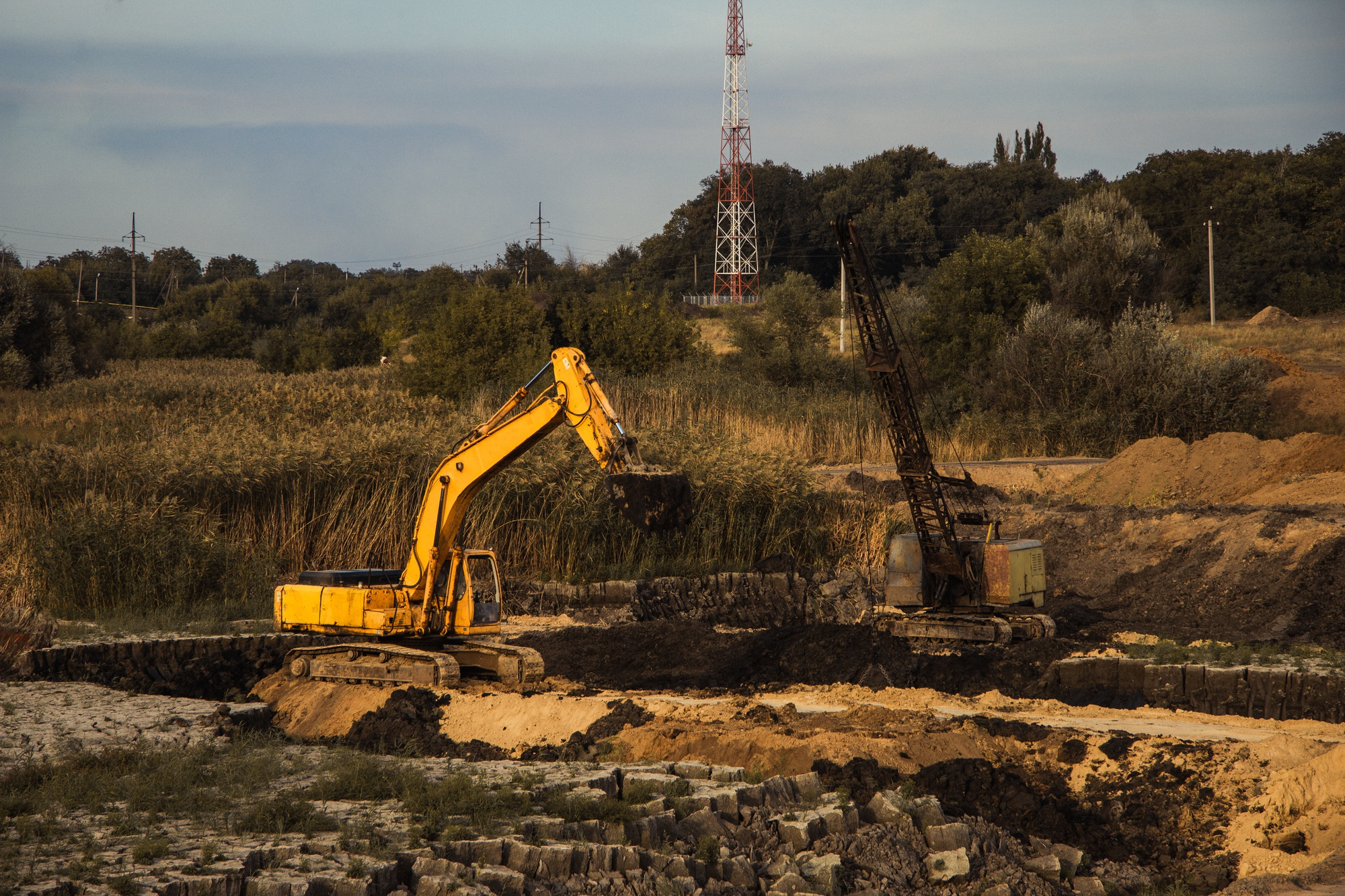
The surveyors had called it solid ground, which was the first mistake, and Frank Donnelly had believed them, which was the second. The third mistake was driving a sixty-ton excavator onto a crust of dried earth that was, beneath its convincing surface, nothing but a thin shell over bottomless black swamp muck, and the machine went through it the way a boot goes through thin ice, sudden and total and without any intermediate stage where you might have changed course. The Caterpillar 375 had cost six hundred thousand dollars and had been on the job for exactly eleven days when it dropped. By the time the engine stopped and the dust settled and the men on the bank understood what they were looking at, the excavator had already sunk to its belly, its yellow paint streaked with mud, its tracks completely swallowed by the surface of the swamp.
That had been three days ago. In those three days, Frank Donnelly had tried everything he knew how to try, and everything his engineers suggested, and one idea from a recovery specialist in Des Moines that had seemed promising until the anchor point ripped out of the ground and the excavator sank another six inches. He had brought two Caterpillar D8 bulldozers to the bank and chained them to the stuck machine, and they had pulled until their own tracks began to spin uselessly on the soft ground and one of the chains snapped with a report like a rifle shot, and the excavator had not moved. He had called a crane operator from the city, and the crane operator had stood at the edge of the swamp and shaken his head and said he would not put his machine within a hundred feet of that ground, because he preferred not to have two machines stuck instead of one. Frank had considered a helicopter, a sky crane, but the nearest one was in Minnesota and cost fifteen thousand dollars an hour and the excavator was already too deep to wait for it to arrive.
Now Frank stood at the edge of the swamp with his site engineer, a younger man named Bill who had run out of suggestions on the morning of the second day and had been producing careful, apologetic silences ever since, and they looked at the excavator together. Each hour it seemed to settle a little further into the muck. The cab was still visible, just, but the tracks were completely gone beneath the surface and the lower half of the machine’s body had disappeared into the swamp as though the earth were slowly, methodically eating it.
Frank Donnelly was forty-five years old and had built Donnelly Construction from a single backhoe and a pickup truck into the largest contractor in eastern Iowa, a company with a hundred and fifty employees and equipment worth more than most people accumulated in a lifetime. He had built bridges and highway interchanges and commercial developments and school buildings, had worked through winters that froze the ground solid and springs that turned every job site into a mud field, and he had not encountered a problem that did not eventually yield to money and machinery and the willingness to throw both at it until something gave. He was not, by nature or by practice, a man who accepted the word impossible as a final answer.
The excavator, however, appeared to have different ideas.
He was standing there, hands in his pockets, watching the machine settle another fraction of an inch, when he heard the John Deere tractor come through the gate at the far end of the site. He did not look up immediately. Tractors were common enough on a rural highway construction project. But the tractor stopped at the edge of the work zone and the man driving it climbed down, and something about the way he moved, the deliberate unhurried quality of it, made Frank look up.
The man walking toward him was seventy-three years old and showed it in the way that men who have worked outside for fifty years show their age, in the texture of the skin and the particular steadiness of movement that comes from a body that has been used hard and maintained carefully and has arrived at a kind of durable equilibrium with its own limits. He wore work pants and a cotton shirt and boots that had been resoled enough times that the leather above the soles was older than most of Frank’s heavy equipment. His name was Walter Brennan, and he farmed the four hundred acres on the other side of the tree line, land that his family had worked since before anyone on this construction crew was born.
Walter had watched the excavator go into the swamp from his field three days ago. He had watched the bulldozers fail and the recovery crew fail and the crane operator turn around and leave. He had been watching and thinking, which was what Walter Brennan did when he encountered a problem, and he had arrived at a conclusion that he was ready to share, because the construction company had clearly arrived at the end of its own ideas.
“Morning,” Walter said.
Frank barely looked at him. “Site’s closed to visitors. Insurance liability.”
“I’m not a visitor. I’m your neighbor. I own the land on the other side of that tree line.” Walter looked past Frank at the stuck excavator, his expression carrying the same quality of careful inventory that Chester Holloway had brought to the oak stump in Missouri, reading something that required reading before it could be addressed. “Saw your problem. Thought I might be able to help.”
Frank looked at him then, really looked, at the worn overalls and the mud-caked boots and the seventy-three-year-old face that had been weathered by half a century of Iowa weather into something that was neither young nor old exactly but simply permanent, the face of a man who had been doing the same thing for a long time and intended to go on doing it. Frank had spent twenty years building a company and accumulating the particular confidence that comes from repeated success, and part of what that confidence had taught him was to assess a person quickly and place them in a category. He placed Walter Brennan in a category in about four seconds.
“Help,” Frank said. “How?”
“I can pull that out.”
Frank waited for the rest of the sentence, the part that explained what equipment or method Walter had in mind, but Walter just looked at him, steady and patient. Bill, the site engineer, had gone very still in the way of someone who can see where a conversation is going and is not sure whether to be amused or embarrassed.
“With what?” Frank said.
“My steamer.”
“Your what?”
“Steam traction engine. Case, 1912 model. A hundred and ten horsepower. She’s been in my family since August Brennan bought her new.”
The laughter started in Frank’s chest and worked its way out before he could decide whether it was appropriate, which was, in Frank’s experience, usually how genuine laughter worked. He was not a man who laughed much at job sites because job sites were where money was made or lost and he took both seriously. But the image that Walter’s words produced, an eighty-year-old steam traction engine being brought to solve a problem that his six-hundred-thousand-dollar excavator had created, was so far outside the range of things Frank Donnelly considered realistic possibilities that his body responded to it the way bodies respond to the genuinely absurd.
“A steam tractor from 1912,” Frank said, wiping his eyes. “You want to pull my excavator out of a swamp with a steam tractor from 1912.”
“That’s right.”
“I’ve got bulldozers that make more horsepower than your whole farm. They couldn’t move that excavator an inch.”
Walter looked at the stuck excavator, then at the bulldozers sitting at the bank with their chains coiled uselessly beside them, then back at Frank. His expression had not changed. He did not appear to register the laughter as information about himself. He registered it as information about Frank.
“Your machines make horsepower,” Walter said. “Mine makes torque. There’s a difference.”
“Then enlighten me.”
“Horsepower is how fast you can do work. Torque is how much work you can do, regardless of speed. Your bulldozers are fast machines. They’re built to push material across solid ground with speed and precision. They spin fast, they move fast, but when you put them on soft ground and ask them to drag dead weight, their wheels spin because they’re not designed to grip in those conditions. They’re designed to push.” Walter paused, letting that distinction land. “My steamer was built to pull threshing machines through muddy Iowa fields from harvest to harvest. Six-foot drive wheels, steel cleats, twenty-two tons on the ground. She doesn’t spin. She grips.”
Frank had stopped laughing. He still had the expression of a man who considers what he is hearing to be unlikely, but the absolute certainty had gone slightly out of it, replaced by something more evaluative.
“Even so,” he said. “That machine is eighty years old. Even if it grips, it doesn’t have the raw output to move sixty tons of stuck excavator.”
“Horsepower and pulling force aren’t the same calculation when the machine is geared the way mine is,” Walter said. “And that excavator isn’t just held by its weight. It’s held by suction. Sixty tons of machine with a partial vacuum under it from three days of settling. The right kind of slow, steady pull will break that suction in a way that a burst of hydraulic force can’t, because a burst compresses the suction rather than releasing it. You’ve been fighting the mud. I’ll work with it.”
There was a silence. Bill, the site engineer, had taken a small step to the side, away from Frank, in the manner of someone creating a little professional distance from the decision that was about to be made.
“You’ve been at this for three days,” Walter continued, in the same level tone he had been using throughout. “You’ve tried your bulldozers, your winches, a crane that wouldn’t get close enough to try. You’re losing money every hour that machine sits in there.” He paused. “I’m not charging you anything. If it doesn’t work, you’ve lost an hour. If it does work, I’d ask you to make a donation to the Clayton County Historical Society. They helped me restore that engine, and they could use the support.”
Frank looked at his engineer, who offered the specific shrug of a man who has no better ideas to offer. Frank looked at the excavator, its cab reflecting the September sky, its body disappearing steadily into the swamp. He looked at Walter Brennan, who looked back at him with the patience of someone who has already decided that the outcome is going to be fine and is simply waiting for the other person to catch up.
“Fine,” Frank said. “Bring your museum piece. When it falls apart trying, you haul it off my site yourself.”
“It won’t fall apart,” Walter said, and turned and walked back to his tractor.
The Case steam traction engine that August Brennan had purchased new in the spring of 1912 was, by any reasonable measure, a machine that should not still exist in working condition in the year 1992. Steam tractors had been built in enormous numbers in the late nineteenth and early twentieth centuries, the workhorses of American agriculture in the era before gasoline engines became practical and affordable, and nearly all of them had ended up the same way: scrapped for metal during one of the two world wars, or simply worn out and abandoned in the fields where they had worked, left to rust into the earth they had once moved. The ones that survived to the modern era did so almost always in museums, static displays behind glass, their working lives long over.
August Brennan had been unable to scrap his. He had bought the engine in 1912 for thirty-two hundred dollars, which was more money than most Iowa farms cost at the time, and he had used it for twenty years, pulling threshing machines from farm to farm during harvest season, dragging stumps out of fields that were being cleared for planting, doing the heavy work that teams of horses could not manage and that the early gasoline tractors were not yet powerful enough to handle. When the gasoline engine finally won the argument in the 1930s, most steam tractor owners made the practical decision and sent the machines to the scrapyard. August Brennan parked his in the shed behind the barn and covered it with canvas and told himself he might need it again someday. He never did. He died in 1952, and the canvas stayed where it was for another thirty years.
Walter had been cleaning out the old shed in 1984, making room for a grain auger, when he pulled back the canvas and found it. He stood in the shed for a long time before he did anything else. The machine was rusty in the places where machines rust after thirty years of sitting, and dusty throughout, and there were birds’ nests in two places he had to clear out, but every part was present and accounted for. He tested the boiler by filling it slowly with water and watching for leaks. He turned the gears by hand, working through them one by one, feeling for damage or seizure. He found rust but no breakage, stiffness but no failure. The machine was, underneath everything, intact.
He spent three years restoring it. He found a retired machinist in Dubuque who had apprenticed on steam tractors in his youth and who spent several weekends at the Brennan farm talking Walter through the mechanical particulars and checking his work with the hands-on authority of someone who had done this before. Walter tracked original replacement parts from collectors and agricultural museums scattered across the Midwest, corresponding by mail with men he had never met who shared his interest in keeping these machines alive. He learned to operate the engine from old manuals that smelled of the decade they were printed in, supplemented by long conversations with men in their eighties and nineties who had actually worked steamers in their youth and could describe from memory the feel of the throttle and the sound the valves made when the pressure was right.
By 1987, the Case was running. Walter took it to county fairs and regional steam shows, demonstrated it for school groups, entered it in the occasional slow parade through small towns that still held agricultural festivals. He fired the boiler once a month regardless of season, just to keep everything moving, just to remind the machine that it was still expected to work. He had always known, in the abstract, that the engine was powerful in a way that modern machines were not quite powerful in the same way, that its design represented a different philosophy of force than the hydraulic and combustion systems that had replaced it. He had known this the way you know something you have read about but not yet tested.
On the morning he drove it to the Donnelly construction site, he was about to find out how well he had understood it.
You could not start a steam tractor the way you started a modern engine. There was no key, no ignition, no brief mechanical negotiation between operator and machine before the pistons began to fire. Building steam required building a fire first, heating the water in the boiler slowly and carefully until the pressure gauges showed you that the engine was ready, a process that took two hours when done correctly and could not be rushed without consequences. Walter had done it hundreds of times and he never rushed it, because steam under pressure was not a force to be casual with. His grandfather had taught him that before he taught him anything else about the machine, and it was the lesson Walter had absorbed most completely: respect what you are working with, and it will not hurt you.
By noon the boiler was ready. Walter drove the engine out of its shed and down the county road toward the construction site at the machine’s natural traveling speed, which was approximately five miles per hour. Black smoke rose from the stack. Steam hissed from the pressure valves. The steel cleats of the six-foot drive wheels struck the gravel road with a rhythmic ringing that carried a long way in the flat Iowa air. Drivers on the road pulled over and stared. Children ran to the edges of yards to watch. A machine like this had not traveled these roads in forty years, and the sight of it moving through the ordinary September afternoon had the quality of something from a different century appearing without warning in the present one, which was, in a literal sense, exactly what it was.
The construction crew heard the engine before they saw it. The sound it made was unlike any engine sound they were accustomed to, not the high-frequency whine of hydraulics or the steady combustion note of diesel, but something deeper and more rhythmic, a chuffing that had a physical quality to it, that moved through the chest rather than just the ears. Then the ground began to vibrate slightly with each rotation of the drive wheels, and then the steam whistle sounded as Walter announced his arrival, a shriek of released pressure that echoed flat across the Iowa landscape and turned every head on the site.
The engine crested the small rise at the edge of the construction zone and Frank Donnelly’s first clear view of it produced a reaction he did not entirely control. He had been expecting something small and quaint and obviously inadequate, a piece of agricultural nostalgia that would provide his crew with a brief diversion before failing and being removed. What came over the rise was enormous. The Case 110 dwarfed the John Deere that had brought Walter to the site earlier the way a draft horse dwarfs a pony. The boiler gleamed black, polished to a depth that caught the September sun. The brass fittings on the valves and gauges reflected light in pinpoints. The drive wheels, six feet tall and studded with steel cleats, turned with a slow, deliberate authority that had nothing in common with the speed-optimized rotation of modern machinery. The whole machine had the quality of something that had been built to last beyond any reasonable expectation of use and had simply done so.
“Jesus Christ,” one of Frank’s engineers said quietly.
“It’s an antique,” Frank said. But the certainty had gone out of his voice in a way that Bill noticed and filed away.
Walter drove the engine to the edge of the swamp two hundred feet from the stuck excavator and set the brake. He climbed down from the operator’s platform and began uncoiling a chain from the rear of the machine. Not the chains Frank’s crew had used, not the steel cable the recovery company had brought from Des Moines, but a chain with links the size of a man’s fist, forged steel that had been in the Brennan family as long as the engine itself, chain that had pulled threshing machines through mud that would have mired a team of horses.
“That chain won’t hold,” one of Frank’s engineers said. “We snapped a cable rated for fifty tons.”
“This chain is rated for eighty,” Walter said, without looking up from his work. “And it has give to it. Steel cable doesn’t stretch. When it reaches its limit it fails all at once, which is what you saw. Chain stretches before it breaks. Gives you time to read what’s happening and back off before it goes.” He shouldered the chain and started walking toward the excavator.
He walked through the swamp, the chain over his shoulder, his boots sinking into the surface muck with each step. The ground was soft but not bottomless, there was solid earth beneath it four or five feet down, and Walter could feel the difference between soft and void with each step, could tell the surface from the depth, which was information his grandfather had taught him to read in the same way he had been taught to read weather. By the time he reached the stuck excavator he was muddy to the chest. He hooked the chain to the machine’s frame at the strongest point he could find, tested the connection, and walked back to solid ground. He cleaned his hands on a rag without particular urgency, checked the chain’s line from the excavator to the engine, made one adjustment to the angle, and climbed back onto the operator’s platform.
Frank Donnelly had moved closer without quite deciding to. He was standing twenty feet from the steam engine now, close enough to feel the heat radiating from the boiler, close enough to read the pressure gauges over Walter’s shoulder. Some of his crew had gathered behind him. The site had gone quiet in the particular way it goes quiet when something is about to happen that everyone present understands will matter.
“You’re sure about this?” Frank called up.
Walter looked down at him from the platform. “If something goes wrong,” he said, “I’ll owe you an excavator. But nothing’s going to go wrong.” He put his hand on the throttle. “Move your men back from the chain line. If it does let go, you don’t want anyone in its path.”
Frank waved his crew back. Walter opened the throttle.
The sound the engine made when it engaged was not the sound of acceleration, not the surge of revving that modern machines produce when power is demanded. It was more deliberate than that, a deepening of the rhythm, a settling-in, the sound of something that has been asked to work and is working without drama or complaint. The pistons drove. The gears engaged. The massive drive wheels began to turn, and the steel cleats bit into the earth with a grip that was immediately, visibly different from what the bulldozers had produced. Each cleat found purchase in the soft ground, dug through the surface layer into the more solid material beneath, and held. The wheels did not spin. They pulled.
The chain came taut. In the cab of the stuck excavator, visible through the glass from where Frank stood, something rattled. The whole machine groaned at a frequency that was more felt than heard, the groan of sixty tons of steel and hydraulic equipment being asked to move after three days of progressive settlement into a swamp. The mud around the excavator’s base rippled slightly.
For ten or fifteen seconds, nothing visible happened. Walter held the throttle steady. He did not push harder, did not try to force more from the engine. He held the pressure constant and let the physics work, the slow steady pull of twenty-two tons of steam-powered iron delivering torque through six-foot wheels that were designed for exactly this situation, engineered by men who had spent decades thinking about how to move things that did not want to move through ground that did not want to cooperate.
Then the excavator moved.
It was an inch, perhaps two, a shift so small that Frank was not immediately certain he had seen it. Then it moved again, a foot this time, and the mud released it with a sound that was audible from the bank, a deep sucking exhalation as the seal that had been forming around the machine’s submerged body was broken. The crew, which had been watching with the controlled skepticism of men who had seen three days of failure and were not ready to be hopeful, made a collective sound that was somewhere between a breath and a shout.
Walter kept the throttle exactly where it was. The engine chuffed. The cleats turned. The chain hummed with tension so total it was almost visible, like a line drawn in the air between the two machines. The excavator moved three feet, then five, then it was moving continuously, the mud releasing it in stages as the suction broke and reformed and broke again, the tracks emerging from the swamp black and streaming. Ten feet from where it had been. Twenty. The construction crew was shouting now, not in the organized way of men celebrating a plan that worked but in the disorganized, slightly breathless way of men watching something they had not thought was possible happen in front of them.
Walter pulled the excavator a hundred feet from the edge of the swamp before he closed the throttle, because he wanted it on ground he could trust, and only then did he set the brake and let the engine return to its idling rhythm. He sat on the platform for a moment before climbing down, looking at the excavator sitting on solid ground in the September afternoon, muddy and battered but whole, its cab reflecting sky. Then he released the steam whistle.
The sound carried across the flat Iowa farmland in every direction, a long clear note that had announced the arrival of harvest crews on these same fields when Walter’s grandfather was a young man, when the machine that was making the sound was new and the countryside it moved through was organized around its presence. Everyone who heard it, on the construction site and in the farmhouses within a mile, stopped what they were doing. Some of them would remember where they were when they heard it.
Frank Donnelly stood at the edge of the excavator’s former position and looked into the hole where it had been, at the disturbed mud, at the chains that had failed over three days of trying lying coiled and useless on the bank, and then at the steam engine sitting sixty tons of modern equipment away on solid ground. His arms were at his sides. His face had the particular quality of a man who has been given information that requires him to reconsider something he has been certain about for a long time, and who is in the early stages of doing that reconsideration.
Walter cleaned the mud from his boots with a piece of rag and began coiling the chain.
Frank appeared at his shoulder. Neither man spoke for a moment. They both looked at the chain.
“I came to apologize,” Frank said the next morning. He had driven to the Brennan farm at seven, and Walter was in the barn cleaning mud from the drive wheel cleats, working with the methodical thoroughness of someone who maintains his equipment because he intends it to last another eighty years. Frank stood in the barn doorway and Walter kept working until he heard the words, and then he stopped and turned.
“Nothing to apologize for,” Walter said.
“I laughed at you. In front of my whole crew. I called your machine a museum piece. I called you grandpa.” Frank was quiet for a moment. “You still came and helped me.”
“I pulled a stuck excavator,” Walter said. “You happened to need one pulled.”
Frank looked at the steam engine in the barn, and it looked different in the morning light than it had looked yesterday afternoon in the drama of the rescue, different from the way it had looked when it crested the rise. In the barn, polished and quiet, it looked like what it was: a beautiful piece of engineering, built in a year when the Titanic was still under construction, still functional, still capable of work that the machines that came after it could not always do. The boiler’s black flanks reflected the light in a way that made the curve of the iron look almost alive.
“How did you know?” Frank asked. “How were you certain your machine could do what mine couldn’t?”
Walter set down his rag and leaned against the wheel.
“My grandfather bought this engine in 1912 for thirty-two hundred dollars,” he said. “That was more than most farms cost. He used it for twenty years, pulling threshers through fields that would have bogged down a team of horses, dragging stumps out of ground that had been growing trees for a century. He used to say that modern machines were built for speed, but his steamer was built for work. For the kind of work where speed doesn’t help you. Where you just have to keep pulling until the job is done.”
“But the technology,” Frank said. “My equipment is so much more advanced.”
“The technology in that engine is exactly the same as it was in 1912,” Walter said. “Steam pressure pushing pistons. Pistons turning gears. Gears turning wheels. No computer to tell it when to stop. No sensor to cut the power when the load gets too heavy. Just pressure and iron and a man who knows how to use them.” He patted the boiler with the flat of his hand. “Your bulldozers have more horsepower than this machine. But your bulldozers are designed to protect themselves. When the load exceeds the rated capacity, the hydraulics back off. When the wheels start to slip, the system reduces power to prevent damage. That is good engineering. It protects expensive equipment and extends its service life. But it also means there is a point beyond which those machines will not go. They will work up to their limit and then they will stop.”
“And yours doesn’t have a limit?”
“It has a limit. But the limit is different, and the way it approaches the limit is different. Mine doesn’t back off. It doesn’t reduce power to protect itself. It just keeps pulling until either the thing being pulled gives way or something in the machine fails. The only computer is me.” Walter looked at Frank. “I know this machine. I know the sound it makes when it is working hard and the different sound it makes when it is approaching what it can bear. I know when to push and when to hold and when to ease back. That knowledge is not in any sensor or any hydraulic circuit. It is in here.” He tapped his chest once, briefly, without theatrics. “That is what my grandfather gave me when he taught me to run this engine. And that is what his grandfather’s money paid for in 1912.”
Frank was quiet for a long time after that. He looked at the engine and then at the floor of the barn and then out the door at the Iowa farmland, flat and particular in the September light.
“I spent twenty years building my company,” he said. “I always believed that newer was better. That more technology meant more capability. That if you had the best modern equipment, you had the best tools for any job.” He paused. “Yesterday, a machine from 1912 did what my best modern equipment couldn’t do.”
“Your equipment is better for most things,” Walter said. “Faster, more precise, more consistent. For the kind of work you do every day, on ground that holds and with jobs that have clear parameters, it is better in almost every way. But there are some jobs where the old approach still works best. Where slow and steady and the specific kind of grip this machine has are exactly what the situation requires. The trick is knowing which jobs are which.”
“How much do I owe you?”
“What I said before. A donation to the Clayton County Historical Society.”
“How much?”
Walter thought about it with the same methodical consideration he brought to most questions. “What did three days of delays cost you?”
“Close to seventy thousand dollars.”
“Then give them ten thousand. That is more money than they have seen at one time in years. They can use it to preserve machines like this one. Machines that people laugh at until they need them.”
Frank reached into his jacket and wrote the check without hesitation and handed it over. Then he stood for another moment looking at the engine, the way you stand looking at something when you are not quite ready to leave it.
“You know what I realized yesterday?” he said. “I realized my great-grandfather was smarter than me. He didn’t have hydraulics or computers or any of the things I thought were essential to doing serious work. He just had machines like this one and the knowledge of how to use them.”
“He was smarter than both of us,” Walter said. “He built a world that worked. We just inherited it.”
Frank laughed, genuinely this time, the laugh of a man who has learned something and finds the learning, in retrospect, more valuable than the thing he had believed before it. He shook Walter’s hand and drove away, and Walter went back to cleaning the cleats.
The story moved through Clayton County the way stories move in places where people know each other by their family names and their farm histories, through feed stores and church parking lots and the particular informal network of a rural community that processes its events through conversation. A reporter from the Des Moines Register came out the following month, and a television crew from Cedar Rapids came after that, and by the end of October Walter Brennan and the 1912 Case steam engine had been written about in three newspapers and appeared in two television segments and a magazine piece about vintage technology and its occasional superiority over what had replaced it.
The phone started ringing. Construction companies, logging operations, grain farmers with combines settled into the same low spots that had been trapping equipment for decades. Most of the calls were from too far away for Walter to help, but the ones that were local he answered without hesitation, and over the next five years he and the steam engine pulled eleven pieces of modern equipment from situations that nothing else had been able to address: excavators, bulldozers, a cement truck that had gone off a muddy access road, and three combines from the same swamp-edged field on the same farm, one after another in three consecutive wet harvests. After the third combine, Walter observed to the farmer, with the particular restraint of someone who has already said what needed saying, that perhaps the field’s edge required a different approach to harvest routing. The farmer agreed and moved his entry point forty yards west and never lost a combine there again.
Walter never charged for the work. Every rescue concluded the same way, a conversation about a donation to the Clayton County Historical Society, whatever the equipment owner felt was appropriate. By 1997 the society had accumulated enough money to build a proper museum building dedicated to steam-era agricultural equipment, and the Case occupied the centerpiece display, not permanently because Walter kept the engine at the farm and fired it monthly and took it to shows, but through an arrangement that included an exhibit of photographs from the swamp rescue and written testimonials from the people Walter had helped. The plaque beside the display read: Case Steam Traction Engine, 1912. Owner: Walter Brennan. This machine was built before the First World War and is still working today. It has rescued over a million dollars in modern equipment from situations that modern technology could not resolve. Some things do not become obsolete. They simply wait for people to remember why they were built.
Walter Brennan died in 2001, on a September morning, sitting in the chair on his farmhouse porch with a cup of coffee that had gone cold beside him. His son Martin found him there, and the expression on Walter’s face was the expression of a man who had sat down for a moment and arrived somewhere peaceable. The steam engine was visible from the porch, in its shed behind the barn, the same shed where August Brennan had parked it in 1932 and covered it with canvas against the future. Martin stood on the porch for a long time before he did anything else.
The funeral was the largest Clayton County had seen in a generation. Frank Donnelly came, older now, his company larger, his hair gray, still running the biggest contracting operation in eastern Iowa. He told the story of the swamp rescue to anyone who would stand still long enough to hear it, and he told it honestly, including the part where he had laughed and the part where he had been wrong about every aspect of his initial assessment. “This man saved my business,” he said at the reception, holding a glass of iced tea and addressing no one in particular and everyone present. “Not just the excavator. The excavator was the equipment. What he saved was the contract, the schedule, the reputation that I had spent twenty years building and that three more days of that excavator in that swamp would have seriously damaged. And he did it with a machine that was eighty years old, that his grandfather had bought before the First World War, that I had laughed at.” He paused. “I stopped laughing at old things after that.”
Martin took over the farm and the engine both. He had grown up learning to operate the Case and to maintain it, had built steam alongside his father on monthly firing days and during harvest shows, and he had absorbed not just the mechanical knowledge but the patience that the machine required and rewarded, the specific way of working with something that moves at its own speed and cannot be hurried. The first time he fired the engine after Walter’s death, alone in the shed on a cold October morning, the whistle sounded across the flat Iowa landscape and Martin stood on the platform for a long moment before he climbed down, listening to the echo carry and fade. He thought he heard something in it that was not quite only steam. He knew this was not literally true. He allowed it to be true anyway.
In 2015, twenty-three years after the original swamp rescue, a young man named Daniel Donnelly was building a residential subdivision on the outskirts of Fulton when his excavator went into the same swamp that had taken his grandfather’s machine in 1992. He had brought better equipment than his grandfather had used, newer hydraulics, more sophisticated electronics, and he had tried everything his engineers suggested over three days of progressive failure, and the excavator had settled steadily deeper into the black Iowa muck, and he was standing at the edge of the swamp with his hands in his pockets and the specific expression of a man who has run out of ideas when Martin Brennan drove the Case through the gate.
Daniel looked at the engine the way his grandfather had looked at it in 1992, with the initial reaction of someone who cannot reconcile the age and size of what he is seeing with any plausible solution to his problem. Then something shifted in his expression, a recognition, as though a story he had heard and partially retained was coming back to him with sudden clarity.
“My grandfather warned me about this swamp,” he said. “He said the only thing that could get equipment out of here was your family’s machine.”
“What did you say when he told you that?” Martin asked.
“I said that was 1992. That we had better technology now.”
Martin looked at the stuck excavator, at the failed hydraulic lines, at the mud. “How did that work out?”
Daniel looked at the ground. “About like you’d expect.”
Martin pulled the excavator in two hours and forty minutes, and Daniel Donnelly stood and watched every part of it, watched the chain go taut and the cleats grip and the machine work with its slow, unstoppable patience until the suction broke and the tracks emerged and the excavator rolled free onto solid ground. When the steam whistle sounded at the end of it, Daniel stood very still and listened to the echo the same way, he suspected, his grandfather had stood and listened to it in 1992.
“How?” he said.
Martin gave him the answer that Walter had given Frank, in somewhat fewer words, because the answer had not changed and did not require elaboration.
“Some things,” Martin said, coiling the chain with the practiced efficiency of someone who has done this many times in many fields, “don’t need more power. They need a different kind.”
The 1912 Case steam traction engine is still in the shed behind the Brennan farmhouse in Clayton County, Iowa. Martin fires the boiler once a month, on a schedule that has not varied in thirty years, and the steam whistle still carries across the flat farmland in every direction when he sounds it, still reaches the houses a mile away and turns heads at kitchen windows. His daughter Emma learned to build steam on her fourteenth birthday and to drive the engine on her sixteenth, and she has the same quality of attention to the machine that Walter had, the kind that comes from understanding something deeply enough to trust it and being trusted by it in return.
The engine has been running for over a hundred and ten years. It was built in a year when the world was organized around different assumptions about power and work and the pace at which difficult things could be accomplished, and it embodies those assumptions in iron and steel and brass in a way that does not yield to changing fashion or improving technology. It does not spin when the ground is soft. It does not back off when the load is heavy. It does not have a sensor that tells it when to stop. It has a man on the platform who knows when to push and when to hold, and it has the particular kind of power that comes from slow and steady application of force by something that was built for exactly this kind of work and has been doing it for longer than anyone alive can remember.
Somewhere in Clayton County, in a shed behind a barn on four hundred acres of Iowa farmland, that engine is waiting. The boiler is ready. The cleats are sharp. The chain is coiled on its hook behind the platform, heavy and patient, rated for eighty tons.
Sooner or later, something will need pulling that nothing else can pull. It always does. And when that day comes, Emma Brennan will build her fire and wait for the pressure to build, because you cannot rush steam, and she will drive the engine down whatever road leads to where the work is, and the whistle will sound across the flat Iowa sky, and the thing that would not move will move.
Because some machines do not know when to quit.
And in the end, that turns out to be the most important thing a machine can know.

Laura Bennett writes about complicated family dynamics, difficult conversations, and the quiet moments that change everything. Her stories focus on real-life tensions — inheritance disputes, strained marriages, loyalty tests — and the strength people find when they finally speak up. She believes the smallest decisions often carry the biggest consequences.