Two Feet of Mine
The first thing I noticed when I stepped into my backyard that Sunday was the shadow. Not the balcony itself, not the posts, not the freshly cut branches scattered in the grass. The shadow. A long rectangular patch of shade cutting across my lawn where the late afternoon sun had always fallen through the maple, landing on the same strip of grass in the same warm way it had since the day I moved in. The shadow was wrong. The proportions were wrong. And when I looked up to find the source of it, the whole situation came into focus at once.
I had been gone for a week. Guard training out in Missouri, routine stuff, nothing I needed to think about beyond packing the right gear and making sure Dave across the street knew to keep an eye on the place. I had come back tired and ready for the particular quiet of my own house, and instead I was standing in my backyard looking at a structure hanging over my property line that had not existed when I left.
To explain why that hit me the way it did, I need to tell you about the yard itself, because the yard was the whole reason I bought the house in the first place.
I moved into the place in 2018. Small two-story on a residential street outside Columbus, beige siding, older roof, a deck that announced itself with a squeak every time you stepped on it. Nothing that would make anyone stop their car and look twice. But the lot ran deep in a way that most properties in the neighborhood did not, and right near the center of it stood a maple tree that had probably been there since before most of the houses on the block were built. In summer it threw a canopy of shade across the yard that made the temperature under it feel a full ten degrees cooler than the street. In October it turned orange in a way that actually made me go outside just to look at it, which is not something I had done with a tree before.
When I first walked the property with the realtor, she started her pitch with the kitchen and the updated bathroom. I remember following her through the rooms being politely attentive and mostly thinking about the backyard I had seen from the driveway. Three sides fenced. No windows from neighboring houses looking down into it at a useful angle. Quiet the way suburban yards rarely are, the kind of quiet that lets you hear what is actually there rather than just the absence of noise. When the realtor said most buyers see the house first, I told her I was more interested in the lot.
I had just come back from an overseas rotation with the Guard, and what I wanted more than anything was a place that felt like mine. Not impressive, not upgraded, just mine. A place where I could sit outside in the evening with a beer and not feel like I was performing leisure for an audience. That yard was exactly that, and I had been grateful for it every summer since.
The house behind mine had belonged to a retired couple when I bought the place. They kept a garden that looked like something from a catalog and moved through their days with the quiet self-sufficiency of people who had figured out what they needed and were content with it. We waved when we saw each other. Sometimes we talked about the weather. It was an ideal neighboring arrangement.
When they sold and moved away, the property sat empty for a couple of months. Then one morning a black pickup with a construction trailer pulled up and the work began, and not long after that I met Travis and Lindsay Carter.
Travis was in his late thirties with the kind of energy that makes you think he is always about to offer you something, always leading with a smile and talking just fast enough to make you feel like you need to keep up. Lindsay was more composed, the sort of person who is always put together in a way that looks effortless but clearly isn’t. They both seemed friendly enough in the early days. Travis introduced himself over the fence one afternoon while I was trimming the maple tree, leaning over the top rail like we were old friends.
“Just wanted to give you a heads up,” he said. “We’re going to tear the place down.”
I looked at the house. “Remodel?”
“Nope. Full rebuild. Forever home.” He said those two words with a particular weight, like they explained everything and settled everything simultaneously.
I told him good luck with it. And I meant it, genuinely. I was not thrilled about months of construction noise and contractor trucks and dumpsters appearing in the street, but rebuilding a house is a legal and legitimate thing to do with your property, and I had no standing to object to it. Construction doesn’t last forever. Things get loud for a while and then they go quiet again. I figured I would keep my head down and let it run its course.
The old house came down in one of those weeks where the activity is constant enough that you stop registering it as unusual. Crew showed up, equipment moved in, and by the time they were done, the lot behind mine was just a flat rectangle of churned dirt with a chain-link fence around the perimeter. Then the framing started. The nail guns started at seven every morning with a sound like a long string of small explosions, and from there the usual construction-site ecology established itself: trucks idling in the morning, workers calling measurements across the lot, a ladder leaning against my mailbox post because it was convenient, contractors using the patch of street in front of my house as informal parking. None of it technically illegal. All of it the low-grade friction of having a major construction project next door.
I kept my mouth shut through most of it because complaining about construction when someone is building their house would have been petty and I knew it. What I did pay attention to, as the structure started to take shape, was the back of the new house. It was being designed with enormous windows, floor-to-ceiling glass panels facing directly toward my yard. My neighbor Dave from across the street stopped by one evening while I was on the deck watching the framing go up and squinted at the back elevation for a long moment.
“That’s a lot of glass pointed right at you,” he said.
I laughed it off. I said I guessed they liked trees. But I was already aware of the feeling underneath the laugh, the awareness that privacy in suburbs is a delicate thing. Your lot is yours and theirs is theirs, but the angle of a window can turn your backyard from a private space into a fishbowl without a single inch of property line being crossed. I told myself that windows were windows and you could put up blinds, and I went back inside.
By late summer the house was nearly finished. Modern farmhouse aesthetic, white siding with black trim, the style that had been showing up in every renovation show for the past five years. The back of the house had a second-story living area with sliding glass doors looking out over the property. At that point, it was just doors. No deck, no balcony, nothing extending beyond the building’s footprint. When I left for Missouri in October, that’s what it was.
When I came back a week later and stepped into my yard and looked up at what was hanging there, I stood still for a long moment doing the simple arithmetic of disbelief, running through the obvious possibilities: the light was strange, I was tired from driving, I was looking at something from the wrong angle. None of those explanations held. The balcony was real. The support posts were real. And one of those posts, I could see clearly even from where I was standing, was not inside the Carter property. It was inside mine.
I walked toward it. The post was planted a couple feet inside my fence line, in the patch of ground where the maple’s canopy had always spread widest. The branches on that side of the tree had been cut back heavily, not trimmed in any horticultural sense but removed, whole sections gone to make clearance for the structure above. The cut ends were still pale and fresh, not yet weathered. This had happened recently, while I was away, while no one who had any say in the matter was present to have a say.
I walked over to the Carter gate and knocked. A moment later the sliding door upstairs opened and Travis stepped out onto the balcony. He leaned both elbows on the railing, comfortable and unhurried, wearing the same easy smile he had on the day he introduced himself over the fence.
“Hey, man. You just get back?”
“Just got in.”
He nodded, then tapped the railing with one hand. “What do you think?”
I looked at the post, then up at the overhang, then at him. “Why is your balcony over my backyard?”
His smile paused for a fraction of a second before it continued. “It’s just airspace,” he said, with the mild patience of someone explaining something obvious. “It’s not like we’re using your lawn or anything.”
There is a particular kind of cognitive disruption that happens when someone says something that sounds completely rational in structure but is actually absurd in content, and delivers it with the confidence of a person stating an established fact. Your brain stalls. You find yourself running through the sentence again trying to locate the part where it makes sense.
“That support beam is in my yard,” I said.
He glanced at the post without leaning over far enough to actually look at it. “Contractor handled all that.”
I had heard that phrase before in other contexts, and it had meant the same thing every time, which was that whatever was supposed to have been handled had in fact been handled in whatever way was most convenient for the person saying it.
“They cut my tree too,” I said.
He looked at the maple with the expression of someone noticing something for the first time that he had definitely seen before. “Oh, yeah. They had to clear some space for the deck line.”
“Did anyone ask me about that?”
He scratched the back of his neck. “I figured it’d be fine.”
That was the moment something settled into clarity for me. He was not being aggressive. He was not even being particularly evasive. He genuinely believed this was already resolved. He had made a calculation, probably months ago, that involved the following logic: the structure would go up while the neighbor was away, by the time they came back it would be finished and poured and fixed, and at that point the physical reality of the thing would discourage any serious objection. People accept accomplished facts. It is much harder to stop something that has already been built than to prevent something that is still in planning.
What he had not factored in was that I had a land survey, a tape measure, and the specific stubbornness of a person who does not like being managed.
I told him I would take a look at my survey. He said sure thing, man, in the easy tone of someone who considers the conversation finished. Then he went back inside. I went back to my house, found the folder where I kept all my closing paperwork, and pulled out the survey. Then I went back outside with a tape measure and worked my way along the property line from the corner marker I had set when I built the fence.
The balcony was not barely crossing the line. The overhang extended almost three feet into my airspace, and the support post was planted roughly two feet inside my property. I measured twice, photographed everything, measured again. Then I walked around to the maple and looked at the cut branches. They had not been trimmed in any way that reflected concern for the tree’s health. They had been removed because they were in the way of someone else’s construction, on my property, without my knowledge or permission.
Dave wandered over while I was still standing there. He looked up at the balcony with a slow exhale. “They built that while you were gone,” he said.
“Apparently.”
He walked under the overhang and squinted at the support post. “That’s bold.”
That night I sat at my kitchen table and worked through the city’s zoning regulations. I had never had reason to look at them before, and they were written in the way municipal codes are written, which is to say with the assumption that the reader already knows the vocabulary and is simply looking for confirmation of what they already understand. I spent a couple of hours with it, pulling up supplemental materials when terms were unclear, and by the end I had a reasonable grasp of the relevant framework. Setback requirements. Property line restrictions. The rules governing structures that project over adjacent properties. The picture they painted was not ambiguous.
In the morning I called the city building department. A woman named Carol answered with the calm, slightly measured tone of someone who has been taking these calls for a long time and has learned to gather information before reacting to it. I explained what I had found. She asked if I could send photos. I emailed them while we were still on the phone. About ten minutes later my phone rang. It was Carol.
“That looks like a structural encroachment,” she said.
She asked if I had the property survey. I sent that too. She told me they would send an inspector out.
Three days later a city truck pulled up behind the Carter house. The inspector’s name was Mike, a practical man in his mid-fifties with a clipboard and the no-drama manner of someone who has walked a lot of property lines. We went through the measurements together, the post, the overhang, the relationship of the structure to the surveyed boundary. He was thorough and took his time. When he was done he looked up at the balcony with the expression of someone whose suspicion has been confirmed rather than disappointed.
“Did they file a permit for this?” he asked.
“I have no idea,” I said.
“Well,” he said, “we’re about to find out.”
He walked next door and knocked. Travis answered. From my side of the fence I watched the exchange unfold in the body language of two people having very different conversations, Mike pointing toward the post and then up toward the overhang, Travis gesturing toward my yard with what looked like an explanatory wave, Mike shaking his head. At some point Mike took a bright orange notice out of his folder and taped it to the sliding door that led onto the balcony. Even from across the yard the words were visible. Violation notice. Work ordered halted.
Travis stared at the paper the way you stare at something you cannot quite make yourself believe. Then Mike packed up his clipboard, got in the city truck, and drove away.
That afternoon Travis knocked on my door. The easy confidence had been replaced by something tighter and more deliberate, the specific energy of a man who is trying to manage a situation that has gotten away from him.
“You called the city,” he said.
“I did.”
“You could have talked to me first.”
I looked at him for a moment. “I did. You told me it was just airspace.”
He started to say something and then didn’t. Lindsay appeared behind him, stepping forward with the smoother manner of someone who has decided that her approach will be more effective than his.
“Look,” she said, keeping her voice reasonable and open, “we’re neighbors. We don’t want this to become a big thing. I’m sure we can work something out.”
“Move the balcony back inside your property line,” I said.
Her expression held its composure, but just slightly less of it. “That would require redesigning the roofline.”
There it was. The structure had been built the way it was because the way it was was the easiest and cheapest way to build it, and rebuilding it to comply with the property line would cost time and money and require a contractor to undo work they had already done. The encroachment had not been an accident. It had been a design decision, made with the calculation that I would either not notice or not pursue it.
“Maybe we could maintain your tree for you,” Lindsay offered. “Professional trimming, whenever you need it.”
“You already trimmed it,” I said.
Travis jumped back in. “Listen, it’s just airspace. It’s not like we’re in your yard.”
I looked up at the balcony. From where I was standing I had a clear sightline from their deck directly into the second floor of my house, the bedroom window, the office, the interior of the enclosed porch I had added three years ago. The whole point of the yard was the privacy it provided, and the balcony had turned that privacy into a performance staged for a second-story audience.
“From up there,” I said, “you can see straight into my house.”
Travis shrugged. “So can half the neighborhood.”
“No,” I said, “they can’t. That’s specifically why I bought this lot.”
There was a long silence. Then Lindsay said, quietly and with the finality of someone who has just remembered they have a lawyer, “Let’s just see what the city says.”
“Yeah,” I said. “Let’s.”
The thirty days that followed had a strange suspended quality. The violation notice stayed on the Carter’s sliding door, bright orange against the white frame, visible from anywhere in my yard. Workers came by twice, measured things with levels and tape measures, left without doing anything visible. Travis and Lindsay stopped initiating conversations. When I saw them outside they would look in another direction or go back inside. The casual over-the-fence neighborliness of the early months was completely gone, replaced by the pointed absence of it.
One evening Travis came to the fence while I was raking leaves. He did not step onto my property this time, just stopped at the fence line and looked at the balcony with his hands in his pockets.
“You really going to make us tear it down?” he said.
I leaned on the rake. “I didn’t make that decision. You built on my property.”
“It’s two feet.”
“It’s my two feet.”
He shook his head with the expression of a man who considers himself reasonable and cannot understand why the world is not responding to his reasonableness. “You know what this is going to cost?”
“You should have thought about that before pouring concrete in my yard.”
He stared at the ground for a moment, then turned and walked back to his house. We did not speak again after that.
Three weeks after the inspector’s visit, Carol from the building department called. She had that particular careful neutrality in her voice that people use when they know how a situation is going to resolve and want to present the information without editorializing.
The review was complete. The balcony had been built without a permit as a projecting structure. The support posts were located twenty-eight inches inside my property line, confirmed against the survey. The Carters had been issued a structural encroachment violation and given thirty days to bring the structure into compliance, which meant either removing it entirely or redesigning it so that it sat within their own setback requirements.
I thanked her and hung up and walked out to the backyard and looked at the balcony for a long time. The shadow it threw was slightly longer now as the season turned, reaching further across the grass in the lower afternoon sun. I looked at the maple, at the cut ends of the branches where there should have been canopy, at the freshly turned soil around the post that did not belong where it was. And I felt the particular quality of calm that arrives not when a problem is solved but when the solution has been taken out of your hands and given to a process that will run regardless of how anyone feels about it.
Day thirty-two. Early Monday morning I heard the trucks before I saw them, the same diesel rumble that had been the soundtrack of the Carter construction for months. I got up, made coffee, and stood at the kitchen window watching.
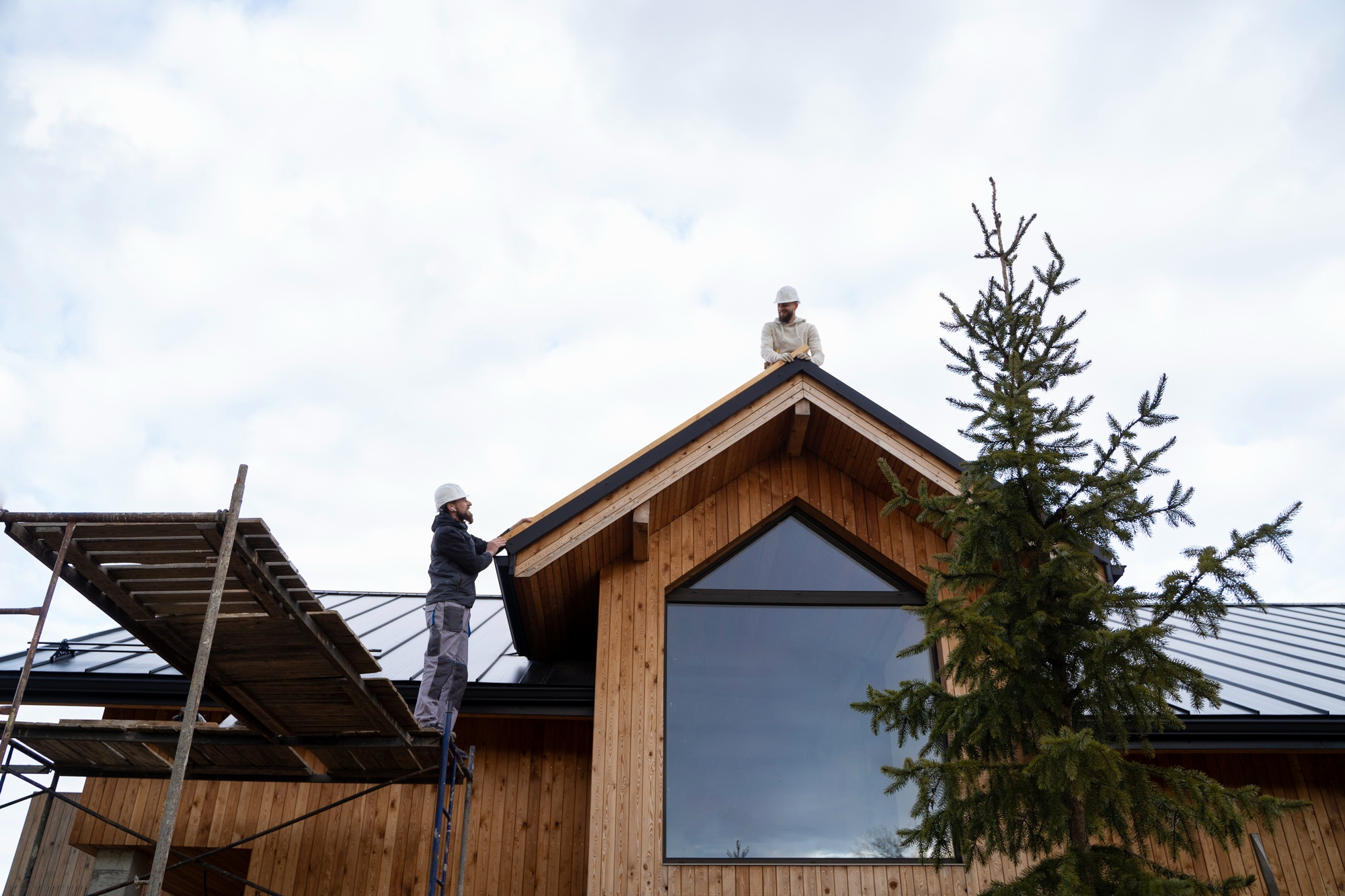
Three workers with crowbars and cordless drills climbed onto the balcony. They started with the railing, metal brackets coming loose one by one, then the deck boards, each plank pried up with that specific sharp crack of wood that has been fastened down hard and does not want to release. They worked efficiently and without conversation, the way people work when the job is simple and they would rather be somewhere else. By mid-afternoon half the platform was gone.
Travis stood in his yard watching the whole thing. Hands on his hips, jaw set, not saying anything to anyone. I went outside at some point and sat under the maple tree with a cup of coffee, not watching Travis, just sitting in my yard the way I had always sat in my yard, but aware of the sounds above me that meant the situation was resolving itself in the only way it was ever going to.
The second day they took the beams, the heavy wooden supports that had been carrying the structure out over my property. When the last one came down, the footprint of the balcony retreated back toward the Carter house, and the sky above my yard opened up again in a way that I had not fully registered was missing until it came back.
The posts were the hardest part. They had been set in concrete, the way any responsible structural post is set, which meant the crew had to dig around each one, break the base apart with a jackhammer, and haul the chunks out in buckets. The jackhammer made the kind of noise that reverberates in your chest from thirty feet away, and the work was slow and physical and clearly not pleasant. I did not feel good about watching other people do hard unpleasant work, but I felt clear about why it was necessary, and that distinction held.
When they pulled the final post from the ground and the foreman came over to tell me they were done, I looked at the hole it had left for a moment before looking at him. He was wiping his hands on his jeans with the businesslike air of someone ready to move on to the next job.
“Sorry you had to deal with that,” he said.
“Appreciate you getting it sorted,” I said.
He gave a small, dry smile. “Wasn’t our design.” Then he walked back to the truck.
One of his crew filled the hole with fresh topsoil that afternoon, leveling it out and scattering grass seed over the top. By evening it looked like a bare patch of lawn, the kind that shows up after you move a piece of outdoor furniture that had been sitting too long in one place. In a few weeks there would be grass, and in a season or two there would be nothing visible at all.
I stood there after they left, in the early evening quiet with the light going golden through the maple leaves, and I looked at the open sky above my yard, the full unobstructed sky, the way it had looked every evening since I moved in. Nothing hanging over it. No shadow where there shouldn’t have been one. Just the tree and the fence and the ground that was mine and the air above it that was also mine and which had always, despite what Travis had said, been something more than nothing.
Construction started again at the Carter house a few weeks later, but different this time. Smaller scale, less noise, the specific sound of finish work rather than framing. The new balcony they built was pulled entirely inside their property line, noticeably smaller than the original, and it faced at an angle that did not look toward my yard at all. Whoever redesigned it had been instructed, clearly, to solve the problem thoroughly rather than approximately. I could not see much of it from my side of the fence, which was the whole point.
I saw Travis out there once while the new structure was being finished. He was looking at the work in progress with his back to me, and when I came out into the yard he became aware of my presence in the peripheral way you become aware of someone you are no longer speaking to, the slight adjustment of posture that indicates you have registered them without turning. He did not turn. I went about what I was doing. We left each other alone.
The following summer I replanted the section of the yard around the maple’s north side, where the post had been and where the soil had been disturbed. I put in some shade-tolerant groundcover along the fence line and let the maple do the rest, which it did, sending new growth out from the cut branches over the following seasons in the slow, indifferent way that trees respond to being trimmed. They don’t hold it against you. They just grow toward the available light.
Dave and I had our usual beer out there on a warm evening in July, sitting under the tree the way we had the night he looked up at the balcony and said one word that described it perfectly. He was looking at the maple, at the new growth on the north side, at the unobstructed sky above the yard.
“You can actually hear the crickets out here,” he said.
“That’s the whole point,” I said.
He took a sip of his beer. “You ever talk to them anymore?”
“Travis and Lindsay? Not really. We’re civil. We don’t pretend it didn’t happen.”
He was quiet for a moment. “You think they knew they were over the line when they built it?”
I thought about Travis leaning on the railing that first day, the big relaxed smile, how comfortable he was. The way the word airspace came out as though it were a recognized legal category that settled the matter. The fact that they had built it while I was away rather than before I left. The way Lindsay had offered to maintain my tree, which they had already damaged without asking.
“Yeah,” I said. “I think they knew.”
Dave nodded slowly. “So they just figured you wouldn’t do anything about it.”
“People do that,” I said. “They figure if something is already built, the other person will just accept it. It’s harder to push back against a physical reality than it is to push back against a plan.” I looked at the fence line, at the smooth undisturbed grass where the post had been. “They miscalculated.”
We sat with that for a while. The crickets were doing exactly what they had always done in that yard, which was to fill the evening with a sound so ordinary and consistent that you only notice it when it’s the only thing you can hear. Which, in that yard, it was.
People ask me sometimes, when I tell this story, whether I regret not trying harder to negotiate before I called the city. Whether there was some version of the situation where Travis and I worked something out over the fence like neighbors are supposed to. I think about that occasionally. The honest answer is that I gave it a shot. I asked him directly, the first afternoon, why his balcony was over my property. He told me it was just airspace. He told me the contractor handled it. He told me the tree branches had to go. He came over later with Lindsay and offered me free tree trimming in exchange for keeping a structure that was two feet inside my property line. That is not a negotiation in good faith. That is someone attempting to trade a token gesture for a permanent encroachment.
The thing about building over someone else’s property and hoping they won’t notice is that it requires a fairly low estimate of the other person. It requires you to believe that they either don’t know their own boundaries or don’t value them enough to defend them. In Travis’s case, I think it was the latter. He had seen my yard. He knew I cared about it. He built the balcony anyway, while I was out of town, and then stood on it with his elbows on the railing and smiled down at me and said what do you think, as though I might be charmed by the thing that had been erected over my land without my knowledge or consent.
I was not charmed by it. But I did not yell about it, either, and I think that surprised him more than anything else. I went inside, got my survey, measured the encroachment, took photographs, called the city, and waited for the process to run its course. That process took about six weeks from the first call to the last post being pulled from the ground, and in those six weeks I did not once raise my voice, threaten anyone, or do anything beyond cooperating fully with the inspector and answering questions when asked.
You do not need to be louder than someone to be right about something. You just need to be correct and patient and have documentation.
The yard is exactly what it was when I bought the house. The maple throws the same shade across the same patch of grass in the same warm way it always did. The tree has mostly filled in where the branches were cut, not completely, but enough. In time there will be no visible evidence that any of it happened. The hole in the ground is gone. The shadow that didn’t belong there is gone. The orange notice has been gone for years.
What remains is the yard I moved here for, quiet and private and mine in the way it was always supposed to be. Three sides fenced. Open sky. The particular peace of a space that has been defended and knows it.
And every now and then on a summer evening, when I am sitting under the maple and the light is going low and everything is exactly where it should be, I think about Travis and his word for it. Airspace. Like the air above your property is a different category from the property itself, freely available, not really belonging to anyone, subject to whatever a confident person decides to do with it.
It isn’t. Every inch of it is on the survey.

Ethan Blake is a skilled Creative Content Specialist with a talent for crafting engaging and thought-provoking narratives. With a strong background in storytelling and digital content creation, Ethan brings a unique perspective to his role at TheArchivists, where he curates and produces captivating content for a global audience.
Ethan holds a degree in Communications from Zurich University, where he developed his expertise in storytelling, media strategy, and audience engagement. Known for his ability to blend creativity with analytical precision, he excels at creating content that not only entertains but also connects deeply with readers.
At TheArchivists, Ethan specializes in uncovering compelling stories that reflect a wide range of human experiences. His work is celebrated for its authenticity, creativity, and ability to spark meaningful conversations, earning him recognition among peers and readers alike.
Passionate about the art of storytelling, Ethan enjoys exploring themes of culture, history, and personal growth, aiming to inspire and inform with every piece he creates. Dedicated to making a lasting impact, Ethan continues to push boundaries in the ever-evolving world of digital content.