The lawyer’s office sat at the edge of that small mountain town the way a forgotten book sits at the edge of a shelf: quiet, slightly dusty, and somehow still certain it matters. Two streets down was the bakery my grandmother used to walk to every morning, her boots leaving neat half-moons in the winter slush, her scarf always tied the same way, her hands tucked into the pockets of an old wool coat that smelled faintly like cedar and lavender.
I arrived early because I didn’t know what else to do with myself.
The waiting room was narrow and warm, and it carried the soft, papery scent of old files and legal pads that had absorbed decades of other people’s endings. Through the window, the mountains looked quiet and gray, the color they turn before the first real snow decides whether it’s coming.
My grandmother had lived here for nearly forty years.
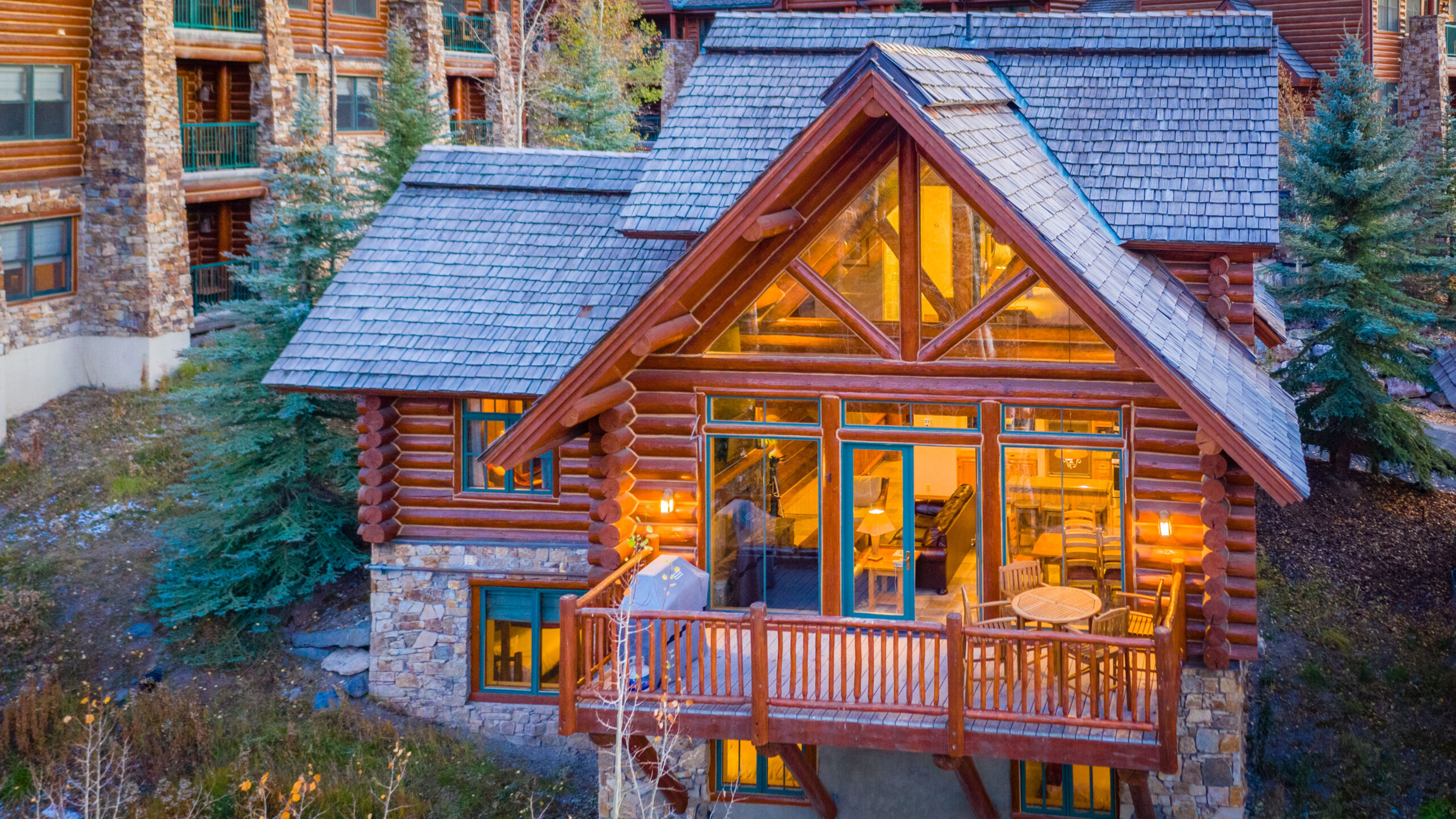
Her lodge sat fifteen minutes up the road, tucked into a slope of pine trees like it had grown out of the hillside instead of being built. It wasn’t flashy. It didn’t have a gate or a fountain or glossy photos online. But it had a reputation, the kind you can’t buy. Hikers found it when their legs were shaking and their water bottles were empty. Riders found it when the trails got too cold and their hands went numb around reins. Tired people escaping the city found it when the noise inside their heads finally got loud enough to chase them somewhere quieter.
And when I was nineteen, it became the only place I had left.
Most people imagine being disowned as a single dramatic explosion, voices echoing down a hallway, a door slammed so hard the house shakes. That wasn’t how it happened for me. It happened the way water erodes rock. Slowly. Repeatedly. With arguments that started small and ended with silence.
It began with my choices, or what my parents called my choices: what I wore, who I spent time with, what I planned to study, the kind of work I wanted to do, the kind of life I didn’t want to be trapped inside. At first it sounded like disagreement, like any family tugging at the same rope from different ends.
Then, gradually, the conversations stopped sounding like arguments and started sounding like verdicts.
My mother would sigh as if my existence had become an exhausting project. My father’s voice would turn calm in that way that was never calm at all, like he was practicing being reasonable while holding something sharp behind his back. Their disapproval came wrapped in politeness, in disappointment, in the kind of quiet certainty that makes you feel foolish for believing you could be loved without conditions.
And one night, no thunder, no dramatic music, no broken dishes, my father said something simple and final.
If I was going to live my life that way, I wouldn’t be doing it under their roof.
He didn’t say it with rage. He said it like he was reading a rule he’d always known. Like the sentence had been sitting inside him for years, waiting for the right moment to walk out.
I remember looking at my hands on the kitchen table. I remember thinking, absurdly, that the table looked the same as it always had, even though my entire world had just shifted. My mother didn’t protest. She just stared at the placemat as if she was trying to remember whether she’d bought it in blue or beige.
I packed a bag. Not my whole life. Just a bag. A few shirts, jeans, a hoodie, my toothbrush, and a notebook I’d been using to scribble plans I wasn’t sure I’d ever get to follow. I remember opening my closet and thinking about how many things I owned that suddenly weren’t mine anymore. How quickly home becomes their house.
I didn’t have a car. I didn’t have enough money to be brave. I had a bus ticket and the kind of numbness that makes you move like you’re watching someone else do it.
Three hours later, my grandmother picked me up at the bus station.
She was already there when the bus doors hissed open, her old pickup parked crookedly, the hood dusted with the beginning of snow. I stepped off with my bag, feeling too large for my own skin, and she got out and walked toward me like I was expected.
No interrogation. No what happened. No did you deserve it.
She just reached for my bag like it weighed nothing and said, “You must be freezing. Come on.”
The heater in her truck worked only when it felt like it, so she handed me a blanket off the passenger seat and turned the radio to a station that played soft old songs. As we drove up the road toward the lodge, the trees got thicker, the world turning darker and quieter, and I realized something that made my throat tighten. She wasn’t treating me like a problem to solve. She was treating me like someone who belonged.
At the lodge, she made tea. Strong and sweet, the way she always did, like comfort should be a little too much rather than not enough. She showed me the spare room upstairs, the one with a quilt folded at the foot of the bed and a small lamp on the nightstand.
“You can stay as long as you need,” she said, as casually as if she was offering me a second cup.
That first night, I lay there listening to the lodge settle around me. The faint creak of wood. The whisper of wind against the window. Somewhere downstairs I heard my grandmother moving, cleaning up the tea cups, locking doors, checking windows the way she always did. The lodge had its own heartbeat, and for the first time in months, mine started to match something steady.
I stayed there for almost a year.
My grandmother ran the place with an efficiency that looked effortless only because she’d been doing it for decades. She knew every loose board on the porch, every window that stuck when the air got too cold, every guest who talked too loudly at midnight and every guest who cried quietly into their pillow because the mountains make people honest in ways cities don’t.
At nineteen, with my parents’ rejection still fresh, I didn’t know what to do with myself except work. My grandmother didn’t push. She didn’t coddle. She simply included me.
She taught me how to fold sheets so tight they looked ironed. How to scrub a cast-iron pan without ruining it. How to greet a guest like you were genuinely glad they’d arrived, even if you were exhausted. How to make soup that tastes like warmth. And she taught me smaller things too, the ones that matter more: how to take up space without apologizing. How to make decisions and stand by them. How to let quiet be quiet, not something you have to fill with anxious explanations.
Some evenings, after the guests had settled and the kitchen was clean, we’d sit by the fire with our tea. She would knit, the needles clicking softly, and I would stare into the flames and try to understand how I could miss my parents even while knowing they’d thrown me away.
My grandmother never spoke badly about them. Not once.
Not because she didn’t see what they’d done. She saw everything. It was because she had a way of refusing to let bitterness poison the room. She would listen when I talked. She would nod when I got angry. She would say things like that must have hurt, and you didn’t deserve that, and sometimes people love the version of you they can control.
But she didn’t waste energy on cruelty. She saved her energy for building something real.
When the year ended, I left for the city. Not because I wanted to abandon the lodge, but because I needed to prove to myself that my life wasn’t limited to the corners of the room my parents had shoved me into. I found work, small at first. I shared apartments with strangers. I built a life slowly, like laying bricks one at a time.
And whenever I could, I went back to the lodge. Sometimes for a weekend, sometimes for a week. Sometimes just for a day to help stack firewood or fix something that had broken. She would act like my visits were normal, as if I’d never been exiled from anywhere, as if my presence was simply part of the place.
My parents never visited at all. Not once in all those years.
That’s why it felt so strange, so genuinely unreal, when the office door opened that morning and they walked in.
They looked older, of course. My father’s hair was thinner and lighter than I remembered. My mother carried herself more carefully, as if her bones had started negotiating with gravity. But the biggest change wasn’t in their bodies.
It was in the way they entered the room.
Comfortable. Certain. Like this meeting belonged to them.
My father spotted me first. His eyes flicked over me quickly, then his mouth tilted into a small smile that felt like a performance. “Well,” he said, as if we’d spoken last week. “Look who’s here.”
My mother nodded politely, a gesture so rehearsed it could’ve been practiced in a mirror. “We figured you’d come.”
I didn’t respond. I just watched them choose seats across the room, my stomach tightening with a feeling I couldn’t name. Not fear. Not anger. Something colder. Like watching people step into a story they hadn’t earned the right to be in.
A few minutes later, the lawyer called us inside.
My father glanced toward the lawyer’s folder and his voice turned light, casual. “That lodge of hers,” he said, as if my grandmother was a distant acquaintance. “Quite a place.”
My mother looked at me as if we were a team, as if time had stitched us back together without my consent. “It could be something really special,” she said. “Your father and I were just talking about it on the drive up.”
My father nodded, warming to the subject. “Tourism’s booming around here. With the right renovations, that property could be turned into a real family business.”
He said the word family like it had never been interrupted. Like it hadn’t been weaponized. Like they hadn’t snapped it in half and thrown it at my feet when I was nineteen.
I felt the oddest sensation listening to them. Like watching a conversation that had skipped over several missing years. Like the part where they cut me off had been edited out and they expected me to pretend the story still made sense.
The lawyer finally began reading.
My grandmother had been thorough. She left donations to the local library, the volunteer fire department, even the bakery owner who used to deliver bread to the lodge on snowy mornings. She left small sums to two women who had helped maintain the property over the years, one who cleaned the rooms when my grandmother’s knees started aching, another who shoveled paths after storms so guests wouldn’t slip.
My parents nodded along at first, impatiently polite, like these were minor details on the way to the main event.
Then the lawyer turned the page.
“The primary asset,” he said, and I felt the room tighten around the words, “the mountain lodge and surrounding property is to be transferred entirely to my grandchild.”
For a moment, no one spoke.
Then my father nodded slowly, fast enough to recover. “Well,” he said, smoothing his expression like he was smoothing a wrinkle in a suit. “That makes sense.”
My mother smiled politely. “Yes, of course. And we can all work together from there.”
The lawyer didn’t react. He just continued reading.
“There is, however, a final clause attached to this inheritance.”
The room went very quiet. Even the faint hum of the heater seemed to pause.
My father’s smile stayed in place, but something about it stiffened, like a mask that didn’t fit as well anymore. The lawyer’s voice slowed, careful with every word, as if he knew he was about to drop a stone into still water.
“The lodge may not be transferred, sold, or entered into shared ownership with any individual who has previously severed familial ties with the inheritor.”
For a second, the words didn’t fully register. They floated in the air like snowflakes until they touched something warm and melted into meaning.
My mother inhaled sharply. It was the first sound that broke the silence.
“What does that mean?” she asked, but her voice already knew.
The lawyer looked up, calm and professional. “It means the property must remain solely under the inheritor’s control if any relatives previously disowned or expelled them from the family.”
Silence poured into the room again, heavier this time.
My father’s expression changed first. The confidence drained away, replaced by something harder to define: shock, irritation, a flicker of panic he couldn’t quite hide. He blinked as if he could blink the sentence off the paper.
“That’s very specific,” he said, trying to sound amused, but the edge in his voice betrayed him.
“Yes,” the lawyer replied evenly. “Your mother was quite clear when she drafted it.”
My mother stared at the table. Her lips parted as if she wanted to argue, but the clause was ink. It didn’t care about her feelings.
“So we couldn’t,” she started, but the sentence collapsed before it finished.
“No shared business arrangements,” the lawyer confirmed. “No ownership partnerships.”
No loopholes, in other words. No way to slide their hands back onto something they had abandoned when it belonged to me.
The finality of it settled across the room like falling snow. Quiet. Inevitable. Unstoppable.
My father leaned back slowly, as if the chair had suddenly become unreliable. “She thought that far ahead,” he said under his breath.
I didn’t answer because the truth was: yes. She probably had.
My grandmother had never spoken badly about my parents, but she had always paid attention. She’d watched how quickly love turned into conditions, how easily a child could become disposable when she refused to follow a script. She’d watched me arrive at nineteen with a bag in my hand and nowhere else to go, and she’d filed that moment away like a document she might need later.
She didn’t fight my parents directly. She didn’t stage dramatic confrontations. She did something quieter and more powerful.
She prepared.
The meeting ended shortly after that. There was nothing left to negotiate, nothing left to threaten. My parents listened to the paperwork details with rigid faces, their earlier warmth gone, replaced by a tight politeness that felt like the moment before a storm.
Outside, the cold mountain air felt sharper than before.
My parents stood beside their car, unsure what to do with their hands now that they couldn’t use them to reach for the lodge. My father looked toward the mountains where the property sat somewhere beyond the trees.
“Well,” he said finally, forcing a tone that sounded like he was concluding a business meeting. “I suppose you’ve got a lot to think about.”
I nodded.
Then I started walking toward my own car. Not quickly, not dramatically. Just steadily, as if my feet had already decided where they were going.
Behind me, I heard my mother’s voice, soft, tentative, like she was testing the ground. “We should talk sometime.”
I didn’t turn around.
Because talk was what they offered now that they wanted something again. Talk was what they withheld when I needed it most.
The road that led up to the lodge curved through the forest, the same road my grandmother had driven down to pick me up years ago. I drove slowly, the tires crunching over gravel. The trees pressed in on both sides like tall, watchful witnesses.
As the town disappeared behind me, the silence in my car changed. It wasn’t the tense silence of that lawyer’s office. It was the kind of silence the mountains specialize in, the kind that doesn’t ask you to perform, doesn’t demand you explain yourself.
And for the first time since the meeting began, the inheritance didn’t feel like money.
It felt like something else entirely.
It felt like a boundary drawn by someone who loved me enough to protect me even after she was gone.
When the lodge finally came into view, my throat tightened. It looked the same as always: wooden beams darkened by weather, smoke curling from the chimney, the porch light glowing faintly against the gray day.
I parked and sat for a moment, hands on the steering wheel, letting the sight of it settle into me.
There are places that hold your memories the way a jar holds fireflies: contained, glowing, impossible to ignore. This was one of those places.
I stepped out into the cold. The air smelled like pine and distant snow. My boots sank slightly into the thin crust of frost on the ground.
The door opened before I even reached it.
Mara stood there, one of the women my grandmother had mentioned in the will, wearing a sweater that looked like it had survived a thousand winters and a look on her face that was both gentle and unyielding.
“I heard,” she said, as if news traveled faster up here than in the city.
“They came?” she asked.
I nodded.
Her mouth tightened with a familiar, disapproving line. “Of course they did.”
She stepped aside to let me in. Warmth hit my face immediately. The smell of wood smoke, the faint scent of soup simmering somewhere in the kitchen. The lodge wrapped around me like an old coat.
That night, I walked through the lodge room by room, turning on lamps, touching familiar surfaces. In my grandmother’s office, small and cluttered and smelling like paper and ink, I found a stack of envelopes on the desk, tied neatly with twine. My name was written on the top one in her handwriting.
Not the shaky handwriting of illness. Her handwriting was steady. Decisive. Like she’d written it when she still had time to choose her words carefully.
I opened the first envelope and unfolded the letter inside. The paper was thick, the kind she liked, and it smelled faintly like cedar and something floral.
She told me she loved me. She told me she was proud of me. She told me she had seen what happened with my parents, and she had never once believed I was the problem.
And then she addressed the clause.
She wrote that she didn’t want the lodge to become bait. She didn’t want it to be the reason people who had hurt me suddenly remembered how to be family. She didn’t want me pressured into handing pieces of myself away in exchange for conditional affection.
She said she knew my parents would show up when there was something to gain. She said she hoped she was wrong, but she had learned not to build plans on hope alone.
She ended with something that made my eyes burn.
Let this place be yours the way you deserve, without anyone holding your past against you.
I pressed the letter to my chest and sat down in her chair, the one she used to sit in while doing paperwork, her glasses perched on the end of her nose. For a moment, I could almost hear the scratch of her pen, the quiet hum of her competence.
The next morning, the calls started.
My mother, leaving a voicemail that sounded like politeness wrapped around desperation. She said things like misunderstanding and time heals and we should put the past behind us. She didn’t say the words I’m sorry. She didn’t say we were wrong. She said, “We’re your parents,” as if that alone should unlock everything they’d shut.
Then my father, more direct. When I finally answered, he spoke like a man negotiating a contract.
“We can make this work,” he said. “You don’t have to run it alone.”
“I’m not alone,” I said, thinking of Mara and Jessa, thinking of the community my grandmother had built.
He sighed like I was being difficult on purpose. “You know what I mean.”
I did know what he meant. He meant they wanted access. Control. A piece of the lodge because money has a way of making people rewrite history in their favor.
“The will is clear,” I said.
His voice sharpened. “You’re really going to let her do that? Divide the family?”
I almost laughed, but the sound would have come out too bitter. “You divided the family,” I said quietly. “When you told me to leave at nineteen.”
Silence crackled on the line.
Then he tried a different angle, softer, almost wounded. “We did what we thought was best.”
“For who?” I asked.
He didn’t answer.
After I hung up, my hands shook. Not because I was afraid of him, but because some part of me still carried the old reflex: the child’s instinct to earn approval, to smooth conflict, to keep the peace.
My grandmother had given me a boundary on paper. Now I had to learn how to hold it in my own voice.
Over the next weeks, I buried myself in practical tasks that grief always leaves behind. Meetings with the lawyer. Bank forms. Maintenance schedules. The lodge needed work: a roof section before next winter, a complaining boiler, a wobbling porch railing. But every time I wanted to panic, I remembered my grandmother handing me a blanket in her truck without asking questions.
I didn’t have to know everything today. I just had to keep going.
I started by hiring help where I needed it, local contractors who’d known my grandmother by name and showed up with respectful faces and honest prices. I kept Mara on and raised her pay. I asked Jessa to supervise winter prep and she accepted with a nod that meant finally.
Slowly, the lodge began to feel like it was exhaling again.
Guests started arriving for the season. Some recognized me from years ago when I’d been the quiet young person folding towels behind the desk. They offered condolences in soft voices. They told stories about my grandmother: how she’d driven them into town when their car broke down, how she’d packed extra sandwiches for a trail, how she’d stayed up late to talk to someone who looked like they were holding their life together by a thread.
Each story stitched another piece of her back into the place.
My parents didn’t stop trying.
They showed up once, unannounced, pulling into the driveway in their clean car that looked out of place among the pine needles and gravel. I saw them from the office window and felt my body go cold.
Mara appeared beside me. “Do you want me to handle it?”
I stared at my parents stepping out of their car, my father adjusting his coat, my mother glancing around as if she was inspecting a property she’d already mentally claimed.
“No,” I said. “I will.”
I walked out onto the porch. My parents looked up, and my mother’s face softened into that practiced expression again: concern, warmth, a version of tenderness that always arrived late.
“Sweetheart,” she said, as if the word hadn’t been missing for years.
I didn’t move closer. I didn’t invite them inside.
“We thought we should see the place,” my father said.
“This place isn’t yours to see,” I said.
My mother’s smile faltered. “We’re not trying to take anything. We just want to be part of your life again.”
I held my ground. “Then you should have wanted that when there was nothing to gain.”
My father’s jaw tightened. “So that’s it? You’re going to punish us forever?”
A familiar tactic: make me the cruel one, make their consequences look like my choice.
“I’m not punishing you,” I said. “I’m protecting myself.”
My mother’s eyes filled with tears, quick and convenient. “We made mistakes,” she whispered.
I waited. She looked at me like she expected me to rescue her from the discomfort of admitting it. When I didn’t, her voice hardened slightly. “Your grandmother wouldn’t have wanted this.”
The anger that rose in me was sharp, but it was clean. Not the messy rage of a teenager desperate to be heard. The clarity of an adult who had read a letter written with love and foresight.
“My grandmother wanted me safe,” I said. “She put it in writing.”
Mara stepped onto the porch behind me, not speaking, just standing there with a quiet strength that made it clear: I wasn’t alone.
My parents left. Their footsteps crunching over gravel, their pride too heavy to carry apologies with them.
I watched their car disappear down the road and felt something unexpected. Not triumph. Not satisfaction.
Relief.
Because in that moment, I understood what my grandmother had really given me.
Not a lodge. Not money. Not even independence, though those things mattered.
She had given me proof that I wasn’t imagining it. Proof that what happened at nineteen had been real and wrong. Proof that someone had seen me clearly and believed I deserved better. And she had given me a structure strong enough to lean on while I learned how to build my own backbone.
Months passed. Snow came, heavy and bright, turning the world outside into a hush. The lodge filled with guests escaping city noise, their cheeks pink from cold, their laughter spilling into the hallways. I learned the rhythms of running the place the way my grandmother had: part instinct, part stubborn persistence.
One afternoon, while sorting through old boxes in the storage room, I found a stack of photographs.
My grandmother had always taken pictures the way she did everything else: quietly, carefully, without needing to show off. Mostly candid shots: guests smiling on the porch with mugs of cocoa, the lodge buried in snow, my grandmother beside a Christmas tree with a crooked star on top.
Then I found one of me.
I must have been four or five. I was sitting on the lodge steps, my legs swinging, a piece of bread in my hand. My grandmother sat beside me, laughing at something I’d said. My parents were nowhere in the frame.
I stared at the photo until my eyes burned.
In my grandmother’s office, I found a spiral notebook with a faded cover. Not a journal exactly. More like notes: dates, names, details. I flipped through and my breath caught.
There were entries from years ago. Not insults. Not rants. Just observations, recorded with the same careful attention she gave everything else.
June 14: Her father called. Asked if she’s “come to her senses.” I said she’s doing fine. He said it’s not his problem.
August 2: She cried tonight. Tried to hide it. I made pie. We sat by the fire until her breathing slowed.
October 18: They didn’t send a birthday card. Not even a message.
She had been keeping track. Not because she wanted to punish them. Because she wanted to remember the truth.
At the back of the notebook, there was a section labeled simply: Will.
And under that, in clear, steady handwriting:
If they come back because of money, not love, she will need protection. She will blame herself. She always does. Don’t let her.
I stared at the words until my vision blurred.
My grandmother had known me. She had known the exact shape of my weakness, the part that wanted to believe my parents could change if I gave them enough chances. She had anticipated that, and she had tried to rescue me from my own hope.
The next weeks were a blur of paperwork and winter chores. And in the back rooms, in my grandmother’s office, I built a case against my own parents.
When my lawyer asked for witnesses to testify to my grandmother’s mental competence and her intent, the town showed up. The bakery owner offered her bread delivery log to prove my grandmother was signing invoices right up until the end. The fire chief offered to testify about safety meetings and permits my grandmother handled personally.
Mrs. Lott from the bakery sat in court wearing her best coat. The fire chief sat in the corner, his big hands folded calmly. A man named Theo, who had been a regular guest for years, remembered seeing me at nineteen. “She looked like she’d been dropped from a moving car,” he said. “I remember thinking, that’s not a kid who just went on vacation.”
The town had come.
The hearing was what hearings are: a performance of truth-telling in a fluorescent room while strangers decide who to believe.
My parents’ lawyer argued that the clause was unfair, that it punished parents for past disagreements, that my grandmother had been influenced by bitterness.
Then my mother took the stand and spoke about my grandmother with rehearsed praise, about how close they had been, how much she respected her. It was almost convincing, until you remembered she hadn’t visited the lodge in years. Until you remembered she hadn’t shown up at the bus station when her daughter had nowhere to go.
When my lawyer asked if she had told me I could no longer live under their roof, my mother hesitated and looked toward my father, seeking help.
Finally she whispered, “Yes.”
When he asked how many times they’d visited during the year I lived at the lodge, she said, “We didn’t visit.”
When he asked how many birthday cards they’d sent, her lips parted and closed.
Silence stretched.
When it was my turn, I walked to the stand with my legs feeling like they weren’t mine. I told the story of nineteen in my own words. I didn’t dramatize it. I told it simply. The arguments. The verdict-like conversations. The night my father told me to leave. The bag I packed. The bus station. My grandmother not asking for explanations. The spare room. The year of silence from my parents.
As I spoke, something steady formed inside me. The truth didn’t require decoration. It carried its own weight.
The judge upheld the will in full.
Including the clause.
When my lawyer called with the news, I sank into the nearest chair with legs that had suddenly gone soft. The relief that hit me was physical, like pressure releasing from a place I hadn’t known was compressed.
When I told Mara, she simply nodded once, as if she’d expected the world to choose the obvious truth.
“Good,” she said. “Now they’ll have to find another way to entertain themselves.”
But my parents didn’t accept defeat quietly.
A week later, a letter arrived from my father. Written in his stiff, formal handwriting. He wrote about betrayal. About disrespect. About what my grandmother would have wanted. At the bottom, one line:
You will regret this when you need us.
I folded the letter carefully and put it in my grandmother’s desk drawer beside her notebook. Not because I wanted to keep poison close. But because I wanted evidence of the pattern. Because my grandmother had taught me, without ever saying it, that truth matters, and recording it is a form of protection.
Then the sabotage started.
First came the inspectors: a county fire inspector claiming an anonymous complaint, then a health inspector, then a noise complaint despite the lodge going quiet by ten each night. Each time, the lodge passed. Each time, the officials left empty-handed. But each visit cost energy, disrupted the schedule, planted a seed of paranoia.
Mara slammed a towel on the counter after the third one. “They’re trying to bleed you,” she said. “Not money. Energy.”
She was right. They were hoping I’d get tired. That I’d panic. That I’d make a mistake.
Then one night my brother showed up.
I had not seen Eli since I was nineteen. He had been younger than me by three years. Back then, he’d watched everything happen with wide eyes and said nothing. He’d stayed in the house while I left. He’d never called.
The security cameras I’d installed caught him at 2:13 in the morning at the back door. Hood up. Hands gloved. He tried the latch, fiddled with it, then froze when the motion light clicked on. He looked straight at the camera for a second, an instinctive glance, and my breath caught.
He didn’t break in. He backed away and disappeared into the trees.
When Eli called the next day, his voice was angry at the situation if not at me. He admitted it: my father had sent him. He thought my grandmother had kept cash or documents somewhere inside, and he told Eli if the will clause was airtight, maybe there was another way.
“He said I could get in and look,” Eli admitted, and his voice sounded ashamed. “I froze. The light came on and I realized what I was doing.”
I stayed very still on the phone. “You can’t come here,” I said quietly. “Not like that. Not ever.”
After we hung up, something cold settled in my stomach. Not because my brother had tried. Because my father had asked him to.
I called the sheriff’s office. Filed a report. Submitted the footage.
Deputy Kern came up the next morning, his face familiar with a recognition that said he’d known my grandmother. When he finished reviewing the footage, he said simply, “Your grandmother was a smart woman. She knew what she was doing with that clause.”
He gave my parents a formal warning. If anything happened again, I would have options.
Nothing happened again.
That summer, I held a small memorial in the lodge’s garden. Not a funeral. A gathering for the people who had been part of my grandmother’s life here: staff, neighbors, regular guests, the bakery owner, the fire chief, Deputy Kern.
We set up folding chairs under the pine trees. Mara made a table of food because she believed grief should be fed. Someone brought wildflowers. Someone else brought a guitar.
I stood at the front with my grandmother’s photograph in my hands, the one of us on the lodge steps when I was little. My voice shook when I spoke, but it didn’t break.
“I used to think family was just who you were born to,” I said. “But my grandmother taught me something different. She taught me family is who shows up. Who makes tea. Who keeps a spare room ready. Who doesn’t ask you to earn your right to exist.”
When I finished, the wind moved through the trees like applause.
Later, as the sun dipped behind the ridge, Mara stood beside me. “She’d be proud,” she said.
I swallowed. “I hope so.”
Mara glanced at me. “You know she would,” she said firmly. “She wrote a whole will clause about it.”
I laughed, and the sound felt strange and good.
Spring arrived the following year in full, as if the mountains were tired of holding their breath. The lodge filled again. Hikers arrived with muddy boots and sunburnt noses. Families came for weekends, their laughter spilling onto the porch. Couples came to disappear into quiet for a while.
One afternoon, a woman checked in alone. Maybe in her sixties, her posture tense like she was bracing for impact. She looked around the lobby like she didn’t trust peace.
“You’re her grandchild,” she said.
“Yes,” I replied.
She nodded slowly. “She once let me stay here when my husband threw me out,” she said. “I had nowhere. She gave me soup and a room and didn’t ask questions.”
My throat tightened. “That sounds like her.”
The woman’s gaze softened. “I came back to tell you she mattered.”
After she went upstairs, I stood behind the desk feeling like the lodge was full of invisible threads, all leading back to my grandmother. She had saved more than just me. She’d saved people quietly, like it was normal. Like belonging was a fact, not a privilege.
That fall, I hosted the first Lodge Day: a small local event where townspeople could come up for apple cider and stories and a free meal if they needed it. Mara and Jessa teased me for being sentimental. Then they cooked like it was their own family gathering.
Mrs. Lott brought pies. The fire chief brought his grandkids. Deputy Kern stopped by and leaned against the porch railing, sipping coffee like he belonged there. Which, in a way, he did.
As the sun set, the mountains glowing gold and red, I stood on the porch and watched people laugh, watched kids chase each other through fallen leaves, watched strangers share food without asking what anyone deserved.
And I understood, finally, what my grandmother had given me.
Not just property.
A chance to build something that couldn’t be taken by people who only remembered me when it was convenient.
A chance to rewrite the meaning of home.
Later that night, after the last guests had left and the lodge was quiet again, I went into my grandmother’s office and opened her notebook one more time.
I flipped to the last page.
There was an entry I hadn’t noticed before, written in slightly darker ink.
If she reads this, it means I’m gone. I hate that. But I’m not afraid. She’ll be okay. She always was stronger than they saw. The lodge will keep her. And she will keep the lodge.
I closed the notebook slowly, my eyes burning.
Outside, the wind moved through the pines, and the lodge creaked softly, settling into the night like an old friend.
I walked to the front door, turned off the lobby lights, and stood for a moment in the dim glow of the porch lamp.
Down the mountain, my parents were somewhere in town, living with their consequences. Maybe learning. Maybe not. It no longer mattered the way it used to.
Because the most important truth had already been written: first in my grandmother’s will, and then in every day I chose to protect what she’d built.
I locked the door, checked the latch, and felt something settle in me like peace.
Not the fragile peace of pretending. The real kind. The kind you build, board by board, season by season, with your own hands.
They had disowned me at nineteen.
But my grandmother had left me more than a one-point-nine-million-dollar mountain lodge.
She had left me a life.

Sophia Rivers is an experienced News Content Editor with a sharp eye for detail and a passion for delivering accurate and engaging news stories. At TheArchivists, she specializes in curating, editing, and presenting news content that informs and resonates with a global audience.
Sophia holds a degree in Journalism from the University of Toronto, where she developed her skills in news reporting, media ethics, and digital journalism. Her expertise lies in identifying key stories, crafting compelling narratives, and ensuring journalistic integrity in every piece she edits.
Known for her precision and dedication to the truth, Sophia thrives in the fast-paced world of news editing. At TheArchivists, she focuses on producing high-quality news content that keeps readers informed while maintaining a balanced and insightful perspective.
With a commitment to delivering impactful journalism, Sophia is passionate about bringing clarity to complex issues and amplifying voices that matter. Her work reflects her belief in the power of news to shape conversations and inspire change.
I thought the post was well written & enjoyed reading it.