Build Your Own
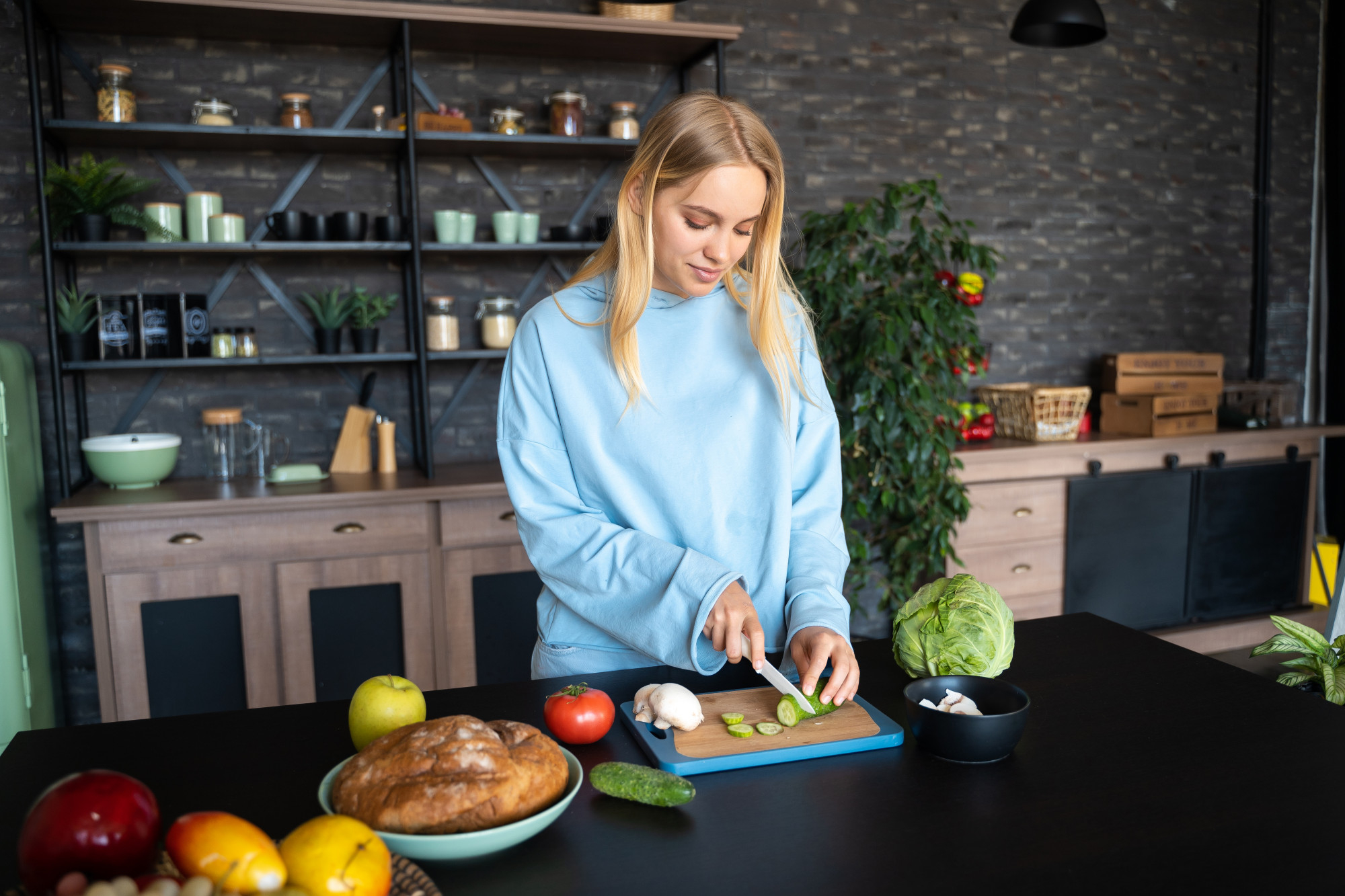
The video lived in that narrow, bruised space between memory and humiliation, the kind of thing that doesn’t just embarrass you but rearranges you. I wore my mother’s old apron because I always wore it, because the apron was a faded blue with tiny white flowers that had once been bright and a small tear near the pocket where she used to tuck a folded recipe card, and if I pressed my face into it when no one was watching I could still catch something of her, a ghost of her perfume or maybe just the memory of it, which was almost the same thing when you were desperate. I was setting the table the way I always did, moving with the instinct of practice: our dining room table was too big for the room, a long rectangle of scuffed wood that belonged to a house bigger than ours, and my mother had called it sturdy with a kind of tenderness, as if it were a person. Every year I dragged it from the wall and laid out the place settings that never matched because she had collected dishes the way other people collected postcards, one pretty plate here, one inherited bowl there, always making a meal look like a celebration even on an ordinary Wednesday.
The kitchen was warm enough to soften the butter left out on the counter. The oven exhaled heat each time someone opened it, and the smell of roasted turkey had settled into the curtains and on our sleeves like a persistent, comforting ghost. My brother’s voice rose in the next room telling a story no one had asked for. My sister was perched on a barstool with a glass of wine, wearing the expression she wore when she was relieved that whatever was happening was not happening to her.
I reached across the table to straighten the gravy boat. Someone had set it down crooked, and that would have bothered my mother. The gravy boat was porcelain, shaped like a little ship with a handle that curved like a question mark. As I nudged it into alignment with the salt and pepper shakers, my hair fell forward across my face. I didn’t brush it back. My hands were sticky from handling rolls.
Behind me, my father laughed.
At first I thought he was laughing at something someone else had said. He laughed loudest when he wasn’t part of the conversation, as if to remind everyone he was still the center even when he wasn’t the storyteller. I didn’t turn immediately. I was counting plates. Then I heard the small digital chirp of his phone switching modes, and something in me went tight before I understood why. I looked back. He stood in the doorway between the kitchen and the dining room, phone held at chest level, screen lit, his mouth open in the half-laugh that always looked slightly cruel even when he meant it kindly.
My sister leaned forward from her barstool to see what he was doing. She grinned. “Dad,” she said. “Oh my God, stop.” But she didn’t mean stop. She meant keep going.
I turned back to the table and told myself it was nothing. He liked to document everything now that my mother wasn’t around to tell him it was rude. He posted pictures of the dog with captions that sounded like the dog wrote them. He posted throwback photos of my mother with heart emojis, grief performed for applause. I told myself the filming would stop when I stopped being interesting, which in my family was usually quick.
It didn’t stop. I felt the camera follow me into the kitchen when I went for the water pitcher, felt it track across my back the way a finger traces a surface to find imperfections. I made eye contact with my brother as I passed him the napkins. His hands were empty. His hands had been empty for years, and somehow it never looked like laziness on him. It looked like leisure. It looked like something he had earned by virtue of being himself.
“Smile,” he said, like a joke.
I didn’t.
The meal happened in the usual blur of noise and obligation. People praised the turkey as if it had appeared by magic, as if I hadn’t been up at six in the morning to baste it and check the thermometer and keep the stuffing from drying out. My father made a toast that was half gratitude and half performance of grief, and my siblings nodded with their faces soft and solemn, and I watched them from the corner of my eye and felt something in me harden.
When my mother was alive, holidays were complicated but held together by her presence. She was the kind of person who could move through a room and make everyone feel accounted for. She remembered people’s allergies and favorite desserts and the exact way my father took his coffee even though he was fully capable of making it himself. She had the patience of someone who believed love was demonstrated through attention. When she got sick, that patience became a battleground, and I was the one who showed up for it because I was the youngest, because I was still in community college and hadn’t yet built the architecture of excuse that my siblings had spent years constructing. My brother had a job in another city. My sister had her apartment and a talent for being unavailable without seeming cruel. They had reasons. They always had reasons. I had a willingness that I had not yet understood was a personality trait I had been taught rather than born with.
I stayed through hospice, through the paperwork, through the awkward funeral home meeting where my father kept asking about the cheapest option. I stayed through the year after, when he wandered the house like a man who had lost his map and expected me to redraw it. I stayed while my siblings visited for three hours twice a year and brought flowers and asked if Dad was doing okay, as if his well-being were the only measure that mattered.
Somewhere in all of that staying, it became my role. Then my identity. Then something I couldn’t see past.
After dinner, people migrated to the living room. My sister’s boyfriend fell asleep on the couch. My brother turned on football. My father leaned back, satisfied and flushed, his cheeks the color of good wine and uncomplicated happiness. I began clearing plates because there was nowhere else for me to go. The dishwasher hummed. The house settled into that heavy post-meal lull where everyone is too full to be grateful.
My phone buzzed in my apron pocket. I didn’t check it. I was scraping mashed potatoes into the trash, listening to my family’s voices drift through the doorway like smoke. I told myself I could make it through the evening if I stayed busy enough.
Then my sister appeared in the kitchen doorway, holding her phone out toward me like a torch.
“Have you seen this?” she asked, not unkindly but not kindly either. Her eyes were bright with something complicated.
I looked at the screen without moving closer. My father’s Facebook. A thumbnail of me bent over the table, my mother’s apron visible, my hair falling forward. Posted an hour ago. The caption read: Look at this little helper. Always a servant.
The word servant landed in my chest like a stone dropped into still water. Not helper. Not daughter. Not caretaker. Servant. Something purchased, something owned. The post had thousands of views already. My siblings had commented laughing emojis and “LOL Dad” and “She’s so you, Mom!” as if my mother’s memory were currency that could be spent to make a cruelty feel like tenderness.
“It’s just Dad being Dad,” my sister said. “Don’t take it so seriously.”
Don’t take it so seriously. The phrase that has excused a thousand small cruelties, that turns pain into a joke you are obligated to laugh at if you want to stay part of the group.
I dried my hands on a towel. I walked past the living room without looking at my father. He called out: “Hey. Where you going?” His voice held genuine confusion. In his mind, he had done something funny. He had captured a truth he enjoyed: me in motion, me serving, me belonging to the role he had assigned. He expected the normal ending, which was that I would absorb it and stay.
“I’m tired,” I said.
I grabbed my coat and walked out. The door closed behind me with a quiet click, like a lock turning. Outside, the November air was sharp enough to make me inhale carefully. My breath appeared in white puffs. My hands shook as I unlocked my car.
I drove without seeing. I counted seconds at red lights because counting was something I could control. At home, I stood in the dark apartment and listened to the absence of noise. It should have felt lonely. Instead, it felt like exhaling.
I made tea because tea was what I did when I didn’t know what else to do. I held the mug in both hands and waited for the shaking to stop. I didn’t open Facebook. I didn’t watch the video. I didn’t want to give it the satisfaction of being witnessed by me, at least not that night.
The text arrived the next afternoon. From my sister, no greeting, no preamble: Why can’t I withdraw $2,000 from your account?
I read it once, then again, then a third time. My account. She meant our mother’s account, the one that held twelve thousand dollars, what remained of the life insurance and the small investments my mother had made over years from her part-time job, saving quietly and separately in the way that women who need an escape plan sometimes save without naming it that. My mother had once joked that it was her escape fund, said it with a wink that made my father laugh as if the idea of her ever needing escape was impossibly funny.
I had never touched it. It felt sacred, like an artifact, the last thing my mother had created with intention, something built not for the household but for herself, and maybe for me. Two years ago, when my sister needed a security deposit, I gave her the debit card and the PIN. She took four hundred dollars, then two hundred more three months later, then stopped paying it back, then stopped mentioning it. In the silence, the money had become not my mother’s legacy but my family’s resource, an emergency fund I merely guarded for them.
Now my sister was confused because her entitlement had encountered a boundary.
I sat with the phone in my hand for twenty minutes. I thought about the video. The word servant. My brother’s comment, Mom would agree, followed by a laughing emoji, deleted an hour later as if deletion could erase cruelty. I thought about every meal I had cooked, every plate I had cleared, every birthday I had organized, every crisis I had absorbed.
I opened the banking app and transferred the entire balance to a new account I had opened alone two days before, an account in only my name. Then I went into the family group chat and typed a message.
The account Mom left is in my name. I’m the only one on it. I’ve transferred the balance to a new account and no one else has access. She asked me to use it for nursing school. That’s what I’m doing.
I hit send before I could take it back. Then I put my phone face down on the table and made more tea, because my hands needed something ordinary.
Twenty minutes later, my phone rang. Not my sister. Not my father. The name on the screen made my chest tighten: Diane. My mother’s best friend. The woman who had sat beside me during the last week, who had brought soup and clean towels and a quality of calm that felt like oxygen. Who had held my hand while we watched my mother sleep, her body shrinking into the bed like a candle burning down.
“I saw your father’s post,” Diane said without preamble. Her voice was low and controlled in the way it got when she was managing fury. “I’m sorry.”
“It’s fine,” I said, because lying was easier than explaining pain.
“No,” she said, firm. “It’s not fine.”
I closed my eyes. In the darkness behind my eyelids I saw my father’s face, that half-laugh already congratulating itself.
“Your sister called me,” Diane continued. “She wanted me to talk sense into you. About the money.” A pause. “I told her I wouldn’t be doing that.” Another pause, weighted. “But I’m calling because there’s something you need to know. Your mother wrote you a letter. She tucked it in her Bible, in the pages somewhere. She showed me the day she wrote it. She asked me to make sure you knew it existed if you ever doubted yourself.”
I stopped breathing for a moment. “A letter?” I said. My voice came out thin.
“She wrote it before hospice started. She knew things were moving fast. She said she was afraid she wouldn’t find the right words out loud, that she’d spend her time reassuring everyone else and not leave you anything that was just yours.” Diane’s own voice thickened. “She said you’d given enough. She wanted you to have a life. Not just a role.”
The phrase landed the way certain phrases land when they are precisely true: like a hand steadying you from behind when you didn’t know you were falling.
“I never found it,” I whispered.
“Maybe it’s still there,” Diane said carefully. “I don’t know. I’m not calling to change your mind about anything. I’m calling to tell you that your mother would be proud of you for leaving the table.”
Leaving the table. The phrase settled over me gently, like a coat being placed on tired shoulders. The table had been everything: obligation, expectation, tradition, service. Leaving it was not just walking out of a house. It was stepping out of a story everyone else had been writing for me since I was old enough to hold a dish towel.
I went to my father’s house on a gray Saturday two weeks later. The neighborhood was the same as always, lawns trimmed, inflatable holiday decorations listing at odd angles. On the driveway, my mother’s chalk drawing from the last summer she’d been well enough to sit outside, a sun and a stick figure and a heart, still there in faded outline, stubborn. I sat in my car for a long time, then forced myself out.
My father opened the door in a flannel shirt that had seen better days. Relief flickered briefly on his face, as if my presence meant I had come to repair something. “There you are,” he said. “We need to talk.”
We need to talk, meaning: I need to tell you why you’re wrong.
He led me into the living room and settled into his cracked leather chair, the one that had been his since before I was born, the chair my mother had tried to replace three separate times and he had refused to give up. He told me I had caused trouble. He told me my sister was upset and my brother was upset and he was upset. He told me the video was a joke and I had no sense of humor, which my mother used to tell him too, only she said it more kindly.
“You wrote servant,” I said. “You posted it and everyone laughed.”
He waved a hand. “I meant you’re always helping.”
“Then why didn’t you write helper?” I asked.
He bristled. “Because it was funny.”
“And that’s the problem,” I said.
We sat in the kind of silence that only exists between people who have the same argument so many times they no longer need all the words. The clock on the wall ticked. My mother had chosen that clock because she liked the sound; she said it reminded her time was moving, that life was happening. Now it sounded like a countdown.
“I came for something,” I said. “Mom’s Bible. I want to look inside it.”
His face tightened. “Why?”
“Because she wrote me a letter,” I said.
He went very still. His eyes fixed on me in a way that made my skin prickle. “Who told you that?”
“Diane,” I said.
His throat bobbed as he swallowed. “There’s no letter,” he said too quickly. The speed of it told me everything.
“I want to see the Bible,” I said again.
“No,” he said, flat.
The refusal closed the room. “You found it,” I said. Not a question.
He stood up abruptly. “Get out.” His voice had gone hard and high the way it did when he was losing something. “If you’re going to come in here and accuse me—”
“You found it,” I said again, louder, steadier. “And you kept it.”
“It’s mine,” he said. “Everything of hers is mine. She was my wife.”
“She was my mother,” I said, and my voice cracked on the word.
He pointed toward the door. His face was red, his eyes hard, and for a moment he filled the space the way he had always filled spaces when he needed to remind someone of the order of things. My body reacted with its old instinct, a small flinch I hated myself for. Then something steadied inside me, something I had not known was there until it was required.
“No,” I said. The word felt like a new muscle being used for the first time. “You don’t get to do this anymore.”
He froze, surprised by my tone. He had expected me to fold. He had been expecting it so long it had become a certainty for him, the way gravity is a certainty, unremarkable and reliable.
I walked past him to the hallway where my mother’s gray wool coat still hung on its hook, frayed at the cuffs. I touched it briefly, then opened the closet beneath the stairs. A box sat on the floor behind umbrellas. Inside: a cookbook with flour smudges, a worn paperback romance, a prayer journal. And on top, wrapped in cloth, her Bible. The cover was cracked leather, soft from years of use, smelling of paper and her hands.
My father’s footsteps came fast behind me. “Put that down,” he barked.
I turned with the Bible held to my chest. “You hid it in a box like it was nothing,” I said. Fury and grief moved through me together, indistinguishable.
“It’s mine,” he insisted, and his voice had gone desperate in a way I recognized: this was the voice of a man who has realized he cannot simply demand his way back to feeling in control.
He grabbed for the Bible. I held it. For a moment we were pulling at the same object, a ridiculous, heartbreaking tug-of-war between a man and his daughter over a book that belonged to neither of them in any way that mattered. Then I let go. The Bible dropped to the hallway carpet with a heavy thud. Pages fluttered open, the thin paper whispering as it settled. A small cream-colored envelope slid out and landed on the carpet at my feet.
My name was written on it in my mother’s handwriting.
My father froze. I bent down slowly and picked up the envelope, holding it in both hands.
My name. In my mother’s hand. She had written it carefully, each letter given its full space, as if she understood this letter might be the last direct address she ever got to give me.
“You knew,” I said quietly. “She wrote this for me and you kept it.”
He looked away. His jaw worked. Then he said, as if this settled it: “She was sick. She didn’t know what she was doing.”
I stared at him. “She knew exactly what she was doing,” I said.
He shook his head. “So Diane puts ideas in your head and now your mother’s some kind of saint who wanted you to run away from your own family.”
“She wanted me to live,” I said. “That’s not running. That’s just living.”
He threw his hands up. “Fine. Take it. Take your letter. Take your money. Take whatever you want. But don’t come crying to me when you find out you can’t do it alone.”
The threat was familiar. The promise that independence would equal failure, that the world would punish me for stepping out of my role. Maybe it would be hard. But I had already done hard things. I had already carried death in my arms. I had already learned to survive without being held.
“I’m already doing it alone,” I said. “I’ve been doing it alone for years. I just didn’t have a word for it.”
I walked out. The door closed behind me. In the car, I sat for a long time with the envelope in my lap before I could bring myself to open it. Part of me was afraid that reading it would make my mother’s absence sharper, more final. Another part knew I needed it the way lungs need air, not because it would change what had happened, but because she had tried to reach me across the distance of dying and I had not yet let her.
I slid a finger under the flap. Inside was a folded piece of paper, the creases deliberate, her handwriting slightly shaky but still unmistakably hers.
My darling girl, she had written. I’m writing this because there are things I’ve tried to say out loud and I keep losing the words. Maybe I’m afraid if I say them, it will feel like I’m leaving. But I am leaving, and I hate that. I hate that I won’t see who you become when you finally stop carrying everyone else.
You have been so good. Too good. You have been the one who stays, the one who remembers, the one who notices what needs doing and does it before anyone can ask. You were like that even when you were small. I used to watch you pick up toys that weren’t yours, wipe spills you didn’t make, apologize for moods you didn’t cause. I’m sorry I let that become normal. I married your father because I thought love meant loyalty, and I was loyal to a fault. He has his good parts. But he has a way of making the world revolve around him, and it pulls everyone else into orbit until we forget we have our own gravity. I don’t want that for you.
There is money in that account. I kept it separate because it was mine, and I want it to be yours. Not for bills, not for other people’s emergencies. For you. For your schooling. For your future. Use it without guilt. If anyone tries to take it from you, tell them your mother said no.
I wish I could be there when you do the thing you’ve always wanted to do. You will be a wonderful nurse. Not because you know how to serve, but because you know how to care, and there is a difference. I love you. I am proud of you. Leave the table if you need to. Build your own.
Always, Mom.
I read it twice before the tears came, and when they did, they fell onto the paper and smudged the ink slightly. I panicked for a moment, afraid of ruining it, then understood that my tears were part of it now. My grief joining hers, which was the only real inheritance.
I folded the letter carefully and drove home with it on the passenger seat.
That night I made a list. I wrote nursing school at the top and underlined it hard enough to dent the page. Then I wrote steps: register for prerequisites, apply for financial aid, schedule the entrance exam, request transcripts. Under the list, I wrote a single additional line: Stop being the family’s emergency plan.
It felt dramatic and it was also true. I had been the plan that made everyone else’s lives easier for years, the backstop, the one who filled in gaps, who set the table and cleared it and pretended not to notice that no one else offered to help. My mother’s letter gave me permission to stop. Not to stop caring, but to stop caring at the expense of having no life of my own.
The voicemails arrived over the next week, three from my sister, two from my brother, one from my father. I listened to them in sequence like someone watching a storm approach from a safe distance. My sister’s first message was pure anger: selfish, stealing from the family, Mom would be disgusted. Her second was confused indignation. Her third was smaller, quieter, something rawer underneath: I don’t know what we’re supposed to do now. The money was just there. It was always just there.
Like me, I thought. Like my labor. Like the expectation that I would simply be available.
My father’s voicemail was the hardest. He sounded genuinely wounded, as if I had betrayed him without cause. He said I was too sensitive. He said my mother used to tell him the same thing, that I took things to heart, as if this were my failing rather than his confirmation. He said call me. He said don’t be like this. He meant: return to your role. He meant: this version of you is inconvenient.
I didn’t call back.
I enrolled in anatomy and physiology at the community college. I hadn’t been in a classroom in years, not since my mother’s illness had consumed everything. I bought textbooks new instead of used, a small luxury that felt like rebellion. I bought a stethoscope, even though I wasn’t a nurse yet, because holding it made the future feel something other than theoretical.
In the lab, I was paired with a woman named Marisol who was around my age and wore her hair in a tight bun and had eyes that looked like they’d seen things. When we introduced ourselves, she said: “I’m here because I’m starting over. Again.” I nodded before I could think. “Me too,” I said. We studied together in the library. We quizzed each other on bones and nerves over bad coffee and made jokes about the body’s particular combination of the miraculous and the absurd. One afternoon she asked casually if I had family support. I hesitated, then said: “Not really.” She nodded like she understood. “People think family is always safe,” she said. “But sometimes it’s the thing you have to survive.” I stared at her and something opened in my chest like a window. That was the first time I said it out loud to someone outside Diane. It felt like stepping into sunlight.
My sister tried different approaches as the weeks passed. Her anger cooled into manipulation, then into a kind of conditional sympathy. She sent a message that began: I’m sorry if you felt hurt. The if was the whole message, really. Then she wrote: Dad’s not eating right. He’s been really depressed. We need to figure out how to help him. We, meaning me. I stared at the message for a long time, feeling the old reflex rise, the compulsion to fix and soothe and return. Then I took my mother’s letter from the drawer where I kept it and read three lines. I typed back: I hope he gets help. I can’t be responsible for him anymore. My sister’s response was a single word: Wow. As if my refusal were cruelty, as if my boundary were an act of aggression rather than simply a statement of what I could no longer afford to give.
I put my phone down and opened my textbook and traced the diagrams of the heart with my finger. Left ventricle, right atrium, valves opening and closing, blood moving forward without permission or apology. The heart didn’t ask if it was selfish for beating. It beat to keep the body alive.
I started to think of myself that way. Not as a servant, not as a resource, not as the family’s extra set of hands, but as a life that deserved to keep moving forward. The insight was not dramatic when it arrived. It arrived slowly, the way healing arrives, in small increments that you only recognize in retrospect.
I submitted my nursing school application in October with hands that trembled the same way they had in the bank, but this time it was anticipation rather than fear. I wrote my personal statement about caregiving and resilience and wanting to care for people with dignity, because I knew what it looked like when a system failed to offer it. I wrote about my mother as a teacher rather than a tragedy.
Two weeks later, the acceptance email arrived. I read it three times to make sure the words were saying what I thought they were saying. Then I laughed. It startled me, the sound, pure and unguarded. I covered my mouth with my hand and laughed again and the tears came with it, joy and grief sharing the same channel the way they often do when something finally arrives that you had stopped allowing yourself to fully want.
I called Diane first. “Oh honey,” she cried. “Oh, your mother would be dancing.” The image of my mother dancing while doing dishes, her shoulders moving slightly, her hips swaying, my father rolling his eyes but sometimes smiling, made my throat close. After Diane I called Marisol, who screamed loud enough that I had to hold the phone away from my ear.
I thought about calling my sister. My brother. My father. The old part of me, the part that had spent years seeking their recognition, their applause, wanted it still. Then I pictured the video, the caption, the laughing emojis, the way no one had followed me out the door. I didn’t call.
Instead, I went to a thrift store and bought a small table for my apartment, a scratched but sturdy thing with solid legs. I carried it up three flights of stairs alone, sweating, laughing at my own stubbornness. That night I set it with one plate, one fork, one glass. I lit a candle for no reason except that I could. I made myself dinner, simple pasta and a salad with too much dressing, and ate slowly, tasting each bite. The table was quiet. There was no camera. No caption. No expectation that I would clear everyone else’s plates before attending to my own.
On Thanksgiving morning, nearly a year after the video, I woke early out of habit. My body still expected to be useful. But instead of driving to my father’s house, I made coffee, opened the apartment windows a crack to let in cold air, and played music softly. I took my mother’s apron from the cabinet and held it in my hands for a moment. Wearing it had always been my way of keeping her close. But I understood now that it had also become part of the role, the apron as uniform, the labor as love performed for an audience that called it servant and laughed.
I draped it over the back of a chair instead of tying it on. Then I cooked a simple meal, roasted chicken thighs, stuffing, green beans with garlic, a pie from the bakery because I didn’t need to prove anything by making crust from scratch. I set the small table with care. I placed a framed photograph of my mother beside the candle, a candid shot Diane had taken years ago. In it, my mother was laughing, her head tilted back, her eyes crinkled with the kind of joy that doesn’t care about being watched.
Marisol arrived at noon carrying a casserole dish wrapped in a dish towel. Behind her came two classmates with nowhere else to be, wine, cheap flowers, and stories from their own lives. We crowded around my small table, squeezing knees and elbows, laughing when someone spilled cranberry sauce. Halfway through dinner, one of my classmates raised his glass, a little awkwardly, and said: “To chosen family.” We clinked. I felt my throat tighten. Chosen family. The phrase sounded like permission.
After dinner we washed dishes together, music playing, voices overlapping. When I reached to straighten the gravy boat, Marisol nudged my shoulder. “Sit,” she said. “We’ve got it.” I hesitated with the habit of a lifetime, then sat. I watched someone else clear plates. I let myself rest. The discomfort of not being in motion was real and passing. I let it pass.
Later, after everyone left and the apartment was quiet and smelled of garlic and wine, I stood at the kitchen sink and rinsed dishes. The motion was gentle, ordinary, the kind of work that needs no audience. I dried my hands and took my mother’s letter from the drawer and read the last lines one more time. I love you. I am proud of you. Leave the table if you need to. Build your own.
I looked around the apartment. My table. My candle stub. My textbooks stacked on the counter. My stethoscope hanging on the hook by the door. My life, partial and in-progress and entirely, inarguably mine.
Outside, the November night settled in cold and quiet. Somewhere across town, my father’s dining room table sat under bright lights with someone else having cleared it and someone else being thanked for the food and someone else absorbing the weight of holding the whole thing together. I couldn’t control that anymore. For the first time, I didn’t feel that I had to.
The table was still set somewhere. So was mine. The difference, the whole difference, the difference that my mother had tried to leave me in an envelope hidden in a Bible in a closet under a flight of stairs, was that mine was the one I had chosen, built from my own hands, set for the people who had come of their own choosing. No one had filmed me doing it. No one had called it service. No one had laughed.
And in that small apartment on a cold November evening, with one plate and one candle and the echo of Marisol’s voice and the memory of my mother dancing in the kitchen while someone rolled their eyes but sometimes smiled, I was not a servant. I was not a function. I was not the family plan.
I was a person who had left the table and built her own, and was learning, one ordinary day at a time, what it felt like to sit at it without guilt.
Specialty: Emotional Turning Points
Rachel Monroe writes character-driven stories about betrayal, second chances, and unexpected resilience. Her work highlights the emotional side of family conflict — the silences, the misunderstandings, and the moments when someone quietly decides they’ve had enough.