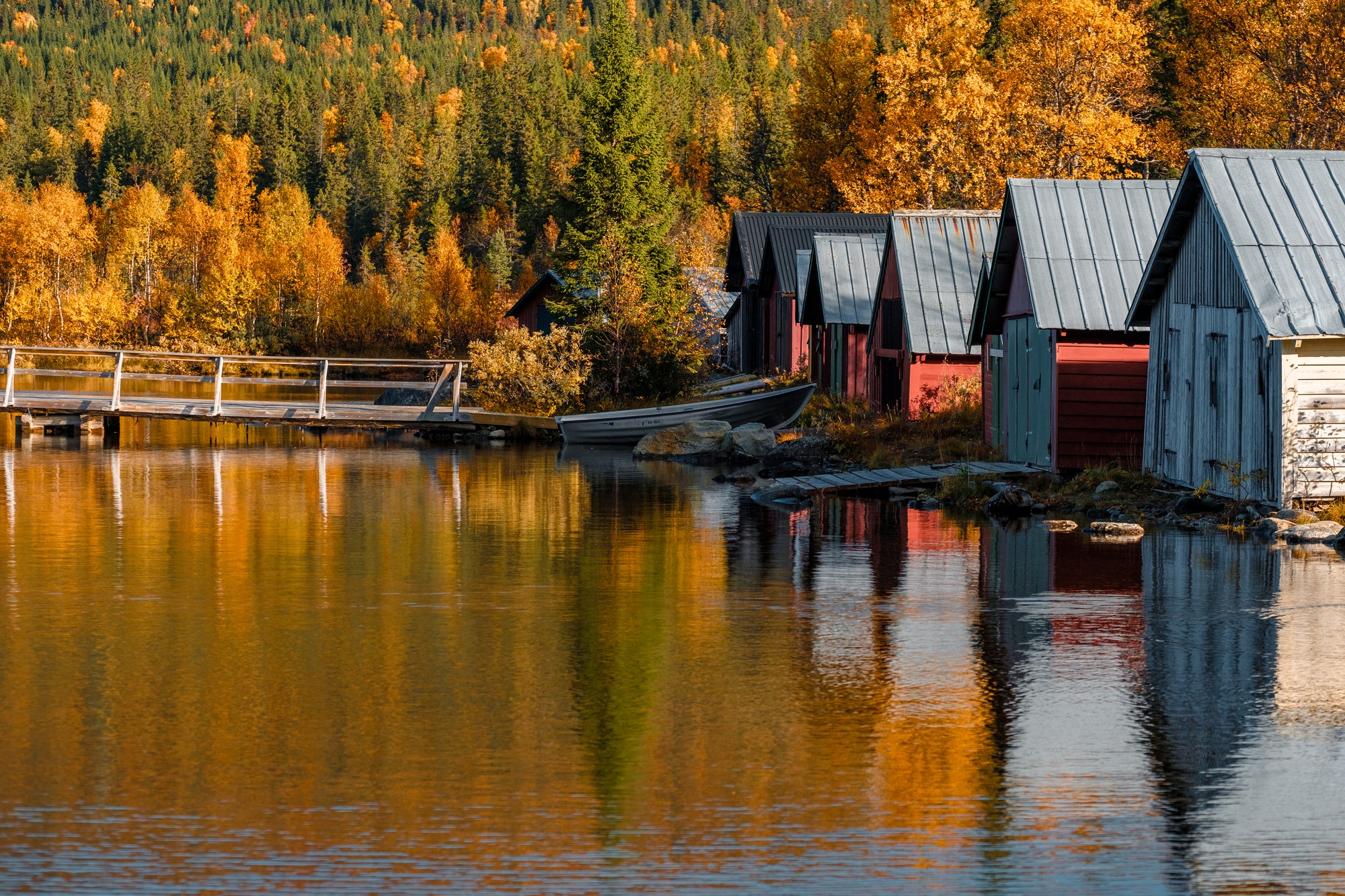
Gravity Doesn’t Take Sides
The glossy newsletter arrived on a Tuesday morning in an envelope I almost threw away, because I had never joined the Kestrel Ridge Homeowners Association and never intended to, and I assumed it was the kind of mailing that found its way to every address within a certain radius regardless of relevance. It was a full-color production printed on heavy paper, the kind of paper that costs money and is intended to convey institutional seriousness before you have even read a word. Across the top, in a cheerful font, it announced: Exciting Expansion: The Kestrel Ridge Community Recreation Area. The pages inside showed digital renderings of sandy beaches and volleyball courts and kayak racks and smiling families roasting marshmallows by calm water, all of it set against the unmistakable backdrop of my lake’s northern cove. My land. My title. My taxes. My lakebed, going back five generations. I stood at the mailbox for a long moment, looking at the images, and then I went inside and put a pot of coffee on and thought about what I was actually looking at.
My name is Evan McCrae. I am a civil engineer by training, a lake steward by inheritance, and a fifth-generation inhabitant of the land surrounding Lake Kestrel in western North Carolina. My family has been here long enough that our name appears in county records before the county itself had the administrative infrastructure to keep records properly. The old stone lodge that watches over the lake from the ridge is not a charming relic. It is a working building, a place where my great-grandfather’s engineering notebooks still sit on the shelf in the study alongside hydrological surveys and maintenance logs going back to the 1920s. My father brought me to the dam when I was eight years old and let me put my hands on the iron wheel and told me: this is how we keep the valley safe. The dam listens, but it never forgets. I have tried to be the kind of person who deserves that kind of trust.
Kestrel Dam was built by my great-grandfather Colin McCrae in 1928, out of fieldstone and careful calculation. It maintains the lake at an elevation of 1,838 feet, which is the number visitors see when they look at the gauges, which is comfortable and manageable and good for fishing. What Colin’s engineering notebooks also show, in his precise handwritten calculations, is that the valley topography allows the lake to rise safely to 1,845 feet. Seven feet higher. That is the natural high water mark, the level at which the lake would settle if nothing were holding it below that point, and the McCrae deed includes a flood easement to that elevation, filed with the county and confirmed by every subsequent hydrological inspection, because a responsible dam operator accounts for all possibilities. Colin had been thorough about everything. He had written in the margin beside his spillway gate calculations: maintain operating elevation at 1,838 ft for safety and aesthetics. Structural capacity confirmed at natural high water line: 1,845 ft.
I mention this because it is the number that eventually settled everything. But I am getting ahead of myself.
When the newsletter arrived, I did what I always do when something feels wrong: I checked the records. I pulled the county plat map and overlaid it against my own digital survey from two years prior, and what I found was not a design error or a drafting mistake. The property boundary that the HOA was treating as authoritative had shifted hundreds of feet into my land, cleanly and precisely, just far enough to claim approximately fifty acres of shoreline including the northern cove that my grandfather used to fish before the war. Land does not move. Lines do not drift. When a boundary migrates with that kind of surgical precision, someone has been paid to move it.
I called the engineering firm listed on the HOA’s survey, Grant and Howell Engineering, PLLC. The number rang until it dropped into a voicemail box that was not set up. I dug into public records, which is the kind of thing that engineers do for relaxation when we have nothing else to do, and within a day I had found what I needed to know. The licensed surveyor whose name and stamp anchored the HOA’s map had lost his professional license two years earlier for falsifying documents in a zoning dispute in Asheville. He was not legally permitted to submit survey work in North Carolina. His signature on that plat was not a credential. It was a gamble. A deliberate bet that no one would look closely enough to notice.
That is not an error. That is fraud.
I spent three days walking my property line with a Trimble rover, taking GPS data points every thirty feet, building a centimeter-accurate model of every inch of my boundary. Two blisters and one alarming copperhead encounter later, I had the data. When I overlaid the HOA’s forged map against my survey, the result looked like a magic trick exposed: a perfect, deliberate shift, subtle enough to escape casual notice, bold enough to steal fifty acres of lake frontage in a single filing. I compiled everything into a forty-page report, timestamps, coordinates, historical deeds going back to 1923, the 1976 sale records showing exactly how the estate had changed hands, cross-referenced county filings, the licensing board’s records on the surveyor. No editorializing. Just facts arranged so that they could not be argued with.
My attorney, Sam Whitaker, read through it twice in his office, the furrow in his brow deepening with every page. When he finally sat back, he let out a slow breath and said, mostly to himself: “Well, son. They drew a line through your living room and called it theirs.” We sent a cease and desist letter the next morning. Certified mail, signature required. It cited deed book 122, page 41. It named the parcel numbers. It used the word fraud with the specificity of a document that has been read by a lawyer and means exactly what it says. I thought it would end there. Most rational people, confronted with the kind of legal precision that forty pages of documented fraud represents, would stop. Sloan Whitfield was not most rational people.
I had encountered her before in the peripheral way that landowners encounter HOA presidents in the county, at the county clerk’s window, at the feed store, occasionally on the road. She was mid-forties, well-dressed in the self-conscious way of someone who associates a certain kind of appearance with authority, and she had the smooth, forward-leaning energy of a person who was used to her confidence being taken for competence. A week after the cease and desist arrived, I found myself invited, in terms that were technically a request but carried the texture of a summons, to the HOA board meeting to clarify community concerns. I showed up in jeans and boots that still had hydraulic oil on them from the morning’s maintenance work.
Their boardroom had the aspirational quality of a room that wanted to suggest a higher level of operation than it actually represented. Sloan sat at the head of the table with a developer’s representative beside her and five homeowners arranged around it who looked like people who had come for pool pass renewals and ended up in something considerably more consequential. When I laid the forty-page report on the table and explained that the map they were using had been produced by a man who was not legally licensed to produce it, the room went quiet in the specific way that rooms go quiet when something that was being treated as a real argument has just been revealed as a costume. One board member choked on her coffee. Sloan blinked twice and then smiled wider, the smile of someone buying time while recalculating.
She held up the HOA’s glossy map like a document of scripture. “This is the community’s lake,” she said. “It’s in our development plan and our marketing materials. Mr. McCrae’s claims are unfounded.” The homeowners clapped uncertainly, the way people applaud when they are not sure what they are supporting but feel the social pressure to participate. After the meeting, I overheard her telling the developer’s representative: “He’s just some hermit up the hill. By the time he sues, we’ll have it built.” That sentence told me everything I needed to know about her strategy. Delay, build, and then rely on the fact that no judge orders the demolition of completed multi-million dollar structures if the legal fight can be stretched long enough. She was betting I would run out of patience or money before she ran out of time.
She did not know what I had in the study at the stone lodge.
The bulldozers arrived within a week. They came through the old oaks my grandfather planted in 1948, flattening the slope with the indifferent efficiency of machines that do not know anything about the history of the ground they are moving. I filmed it from my porch, date-stamped and GPS-tagged, every hour of every working day. I called the sheriff. Deputy Carter came out, looked at my survey and the HOA’s version, and gave me the honest assessment: this was a civil matter, not something he could arrest anyone for. Sloan smiled her brittle smile at him. He left. She went back to her golf cart. I went back to filming.
Within eight weeks, one hundred and thirty-nine prefab luxury cabins stood in neat rows along the stolen shoreline. They had HVAC units and septic tanks and string lights and kayak racks and a main pier with an actual ribbon on it. At the ribbon cutting, Sloan held a microphone and told the assembled homeowners: “This is the crown jewel of our community. The lake that brings us together.” I watched through binoculars from my ridge. I whispered: enjoy it while it lasts.
I had spent those eight weeks in the study with Colin’s notebooks. I was not looking for a shortcut. I was looking for the kind of certainty that only comes from understanding a system from its foundations upward. What I confirmed, reading his engineering calculations in his careful hand, was this: every one of the hundred and thirty-nine cabins had been built at an elevation between 1,839 and 1,844 feet. Every single one of them sat inside the flood easement, inside the lake’s natural high water mark, inside the exact zone that the McCrae deed had reserved for hydrological purposes for nearly a century. They had not built beside the lake. They had built in it. They simply hadn’t let the water know yet.
Before I did anything, I verified every legal dimension of what I was considering. I pulled the dam maintenance manual, the trust deed specifying flood easements, and the hydrological inspection certificates renewed by my family at regular intervals for decades. I called the state’s Department of Environmental Quality, phrasing my questions hypothetically: if a private landowner controls both a dam and a lakebed and maintains documented riparian rights up to a natural high water mark, what is the liability if routine maintenance activities temporarily restore water levels and damage structures that have been built without permits inside the recorded easement? The clerk was careful in her phrasing. She said: if structures were built without permits inside a recorded flood easement, liability would fall entirely on the builders.
I sent one final written notice. Short, professional, sent by certified mail to the HOA office and to Sloan’s address directly. It informed them that in accordance with dam safety regulations and riparian maintenance rights, Lake Kestrel would be restored to its documented high water elevation of 1,845 feet for a routine structural inspection. All property owners were advised to remove movable property from the flood easement zone by nine a.m. two days from receipt. I imagined her opening it, glancing at it, and dropping it in the recycling bin. That was fine. She did not need to believe me. Gravity was not going to check her beliefs before proceeding.
On the morning of the deadline, with mist lying flat over the water and the cabins visible through my spotting scope like a scale model of someone’s ambition, I drove to the dam access road and called county dispatch at eight fifty-five. I identified myself as the registered operator of Kestrel Dam, permit number HA5-894C. I stated that I was commencing a scheduled maintenance slow-fill inspection to the natural water line. Not an emergency. Just noting for record. The dispatcher asked how long it would take. Twelve to twenty-four hours depending on inflow, I said, all downstream channels clear. She logged it. That timestamp was the last piece of the legal architecture I needed.
Inside the dam gallery, the air was cool and carried the particular smell of old stone and machine oil that I associated with my father’s presence even now, years after he was gone. The twin cast iron wheels connected to the sluice gates had been turned by my family for nearly a century, and they moved with the weight of something that has been properly maintained and trusted to perform. I laid my hand on the north gate wheel, cold and rough against my palm, and turned it. The gears engaged with the deep deliberate sound of mechanical certainty. I repeated the process on the south wheel. The indicator needles moved from the operational position toward maintenance. Outside, invisible to anyone watching the surface, the lake began to hold more than it released.
From the promontory behind the lodge, through the spotting scope, the effect was initially imperceptible. The water’s surface was calm. Workers moved between the cabins doing finishing work. A heron worked the shallows without apparent concern. By noon the lake had risen one inch by my gauge rod. By two in the afternoon, another half foot. Small puddles were forming at the edges of the newly laid sod the HOA had installed at the lowest cabins. Workers began to notice. I saw phones come out, people pointing at the ground, someone calling someone. Nobody panicked yet. Lakes fluctuate.
At three-fifteen, Sloan’s white SUV came down the access road and she stepped out in her usual crisp linen, phone already at her ear, gesturing toward the water with the confident urgency of someone who has identified a problem and intends to resolve it with authority. I watched her posture change as she got closer to the shoreline and understood what she was looking at. The gestures became sharper. The phone moved away from her ear and then back to it. I leaned on the railing of the promontory, drank my coffee, and watched the arithmetic of the situation work itself out at lake speed.
The rain started an hour later, light and steady, adding to the inflow. By four o’clock the lake had reached 1,842 feet. Water was lapping against the concrete slabs of the first row of cabins. Wooden stairs bobbed loose from their moorings. A portable generator sparked and went dark. People were running in the kind of organized panic that happens when professionals realize a situation has moved past the point where their authority means anything. By five, the first cabin took water through its sliding doors, curtains floating briefly before being swallowed by the rising lake. One down.
My phone rang around six-thirty. Sheriff Carter, voice carrying the weary patience of a man who had heard a lot of stories that day. I told him I had notified dispatch twelve hours ago, that everything was logged, that the water was still below the natural high water mark documented in the deed. He said he was coming out to take a look. He arrived an hour later with Sloan right behind him, rain dripping off her sunglasses, her composure finally and completely gone. She told him I had deliberately flooded her community. I handed Carter a folder containing the certified mail receipts, the dam maintenance log, the 1928 deed with the flood easement clearly noted, the engineering manual, and the signed delivery confirmation showing Sloan had received my notice at nine forty-two in the morning two days prior. Carter read through it, turned to Sloan, and asked if she had received the notice. She hesitated. He said: it was certified mail, signed for by you. He looked at the cabins, looked at my documentation, looked at her. “Ma’am,” he said, shifting his weight, “this looks like a civil matter. Nothing I can do here.” He tipped his hat and walked back to his cruiser. Sloan stood in the mud for a moment with her expensive shoes sinking, and then she drove away.
By nightfall the lake held steady at 1,845 feet. The last row of cabins was partially submerged. Porch lights flickered and went out. The sound of frogs returned, filling the space where string lights had been, as though the landscape had shrugged off something temporary and gone back to its long-standing arrangement with time. I stayed up until midnight with coffee, watching the reflections of the submerged cabins shimmer in the moonlight, and I thought about what I felt, which was not triumph. It was something closer to the feeling after a storm has passed, when the air is different and the ground is wet and everything is rearranged into a configuration that is, somehow, more honest than what came before.
The fallout moved at the speed of public records and bad press, which is to say very quickly. The Department of Environmental Quality sent inspectors within twenty-four hours, because multiple reports of unpermitted construction in a riparian buffer had flagged the site before I had raised a gate. When they walked the shoreline with me and reviewed my documentation, one of the inspectors said, almost to himself: this is going to be one hell of a report. The channel 7 news van arrived by noon, and the drone footage it captured, sweeping low over the drowned community with its rows of submerged rooftops and floating deck furniture, made it to a million views in three days. Comment sections supplied their own editorials. Someone said you can’t outvote gravity. It stayed in the top comments for a week.
Inside the HOA’s clubhouse, which was the only structure still above water, Sloan called an emergency meeting. A neighbor recorded it on their phone and it circulated through the community before morning. She told the assembled homeowners that she would be taking immediate legal action against the individual responsible for the deliberate sabotage of their community. A man in the back asked: you mean the landowner you ignored? The one who warned you in writing? She tried to maintain her platform. A woman stood up holding her phone: the DEQ just confirmed the surveyor who signed your map lost his license for forgery two years ago. We’re done, Sloan. The HOA board voted to suspend her pending investigation, which in HOA language means you’re fired, expressed as politely as the circumstances allowed. It did not seem very polite.
The developer, Summitgate Communities, issued a statement throwing Sloan under the bus with the cheerful precision of a corporation that had identified its escape route in advance. They declared the HOA president had acted independently and without proper authorization. Translation: we are not paying for this. Sam read it aloud in his office and laughed hard enough to spill his coffee.
The insurance adjusters arrived, assessed the situation, and denied the claims on the grounds of gross negligence, unpermitted construction in a documented flood plain, and failure to comply with state environmental codes. The certified letter I had sent two days before the water rose, which Sloan had signed for and apparently disregarded, was exhibit A in every denial. When the DEQ’s formal report landed, it listed violations in three categories: unauthorized construction within a protected flood plain, sediment control and buffer violations, and negligent disregard of existing hydrological easements. The fines against the HOA totaled close to nine hundred thousand dollars. The county referred the forged survey to the district attorney’s office. The surveyor had already left the state. The county clerk’s office opened an internal investigation into how the fraudulent document had cleared their review process, and a junior clerk resigned before the report was finalized.
The lawsuits that followed had the character of a many-car collision on a foggy road: homeowners sued the HOA, the HOA sued the developer, the developer sued the surveyor, and the surveyor was sued by the state in absentia. My name did not appear in a single complaint as a defendant. The notice, the documentation, the careful timing, the logged dispatch call, all of it had turned what might have looked like revenge into something the courts were unable to characterize as anything other than lawful dam maintenance performed by the authorized operator within the rights established by a century-old deed.
The last time I saw Sloan was in the parking lot of the county courthouse. She was walking to her car flanked by two attorneys who looked like they had been having a difficult month. Her usual composure was absent in the way that composure is absent when the thing it was built to protect has already been lost. She saw me across the lot. We held each other’s gaze for a moment. She did not speak. Neither did I. I nodded once, which was what the moment called for, and walked to my truck.
By autumn, the land had legally reverted to the McCrae Trust as restitution for unlawful encroachment. The county attorney called to inform me, using the word hydraologically in a sentence about my dam operation, which I found quietly satisfying. Sam came by that evening with good whiskey. He toasted: to the quiet man who weaponized paperwork and water pressure. I raised my glass to: the attorney who made sure nobody could call it a crime.
The cabins had to come down. The water had done structural damage that made them uninhabitable, and leaving them submerged was an environmental liability. I hired a salvage crew from Asheville, divers and cranes and people who knew how to pull apart waterlogged structures without making the surrounding damage worse. The work took months. When the last beam came out and the northern cove was bare again, bare the way land is bare when it has been cleared of something that did not belong there, I stood at the shoreline and looked at the slope that ran down to the water and thought about my grandfather fishing here before the war, the specific quality of the quiet that had existed before anyone decided it needed to be improved.
I called a college friend, Maya Torres, a landscape ecologist who had spent a decade restoring wetlands across the Carolinas. She came with her boots and her notebooks and walked the shoreline for hours, muttering to herself. She designed a restoration plan: native grasses and black willows along the lower banks, red maples on the slope, switchgrass along the former flood line, black-eyed susans in the exposed meadow above. She said: give it one good season and you won’t recognize it. She was right. By September, the cove was green and gold and alive with the specific busyness of an ecosystem that has been given back its conditions. Herons perched on the old snags. Wild turkeys moved through the willows in the mornings. A pair of bald eagles nested at the north end of the lake for the first time in decades. The local paper ran a headline: Lake Kestrel Welcomes Its Namesake.
There were ripples beyond the county. Sam told me the case had been cited in two separate environmental law courses by the following spring. A county in another part of the state adopted what the regional planning board called a hydrological review requirement, meaning no HOA or developer could modify land adjacent to water without an independent engineer’s flood-plain assessment and state environmental review sign-off. Informally, around here, people called it the Dalton-McCrae rule, after the retired Navy engineer who had proposed it and the person who had demonstrated its necessity. When the county adopted it formally at a civic meeting, the chair asked all in favor and the hands went up across the room.
A letter arrived one afternoon, handwritten on plain paper, from a woman named Grace Howeran who had owned one of the cabins. She wrote that she and her husband had lost their savings in the development, but that at least now the truth was out, and maybe next time they would ask better questions before following someone with a clipboard. I read it twice and put it in my journal beside Colin’s hydrological notes. Some things belong together.
That winter I walked down to the dam gallery on a cold clear evening and ran my flashlight across the machinery the way I had done since I was a child standing beside my father doing the same. The iron wheels gleamed with fresh oil. The brass gauges read steady at 1,838 feet. The spillway trickled down into the valley with the particular sound of water performing its function, patient and continuous and utterly indifferent to the events of the past year. I put my hand on the north gate wheel, cold and rough, worn smooth at the spokes by five generations of careful hands.
I thought about what the whole thing had actually been. Not a conflict over property, though it had been that. Not a legal case, though it had been that too. It had been a question of whether a system that my great-grandfather had built with intention and precision and the full understanding of what the land required would be overwritten by the confidence of someone who had decided that the existing reality was inconvenient and could simply be redrawn. The answer the lake gave was the answer my family had always known: you can file a new map, but you cannot file a new topography. The land is what it is. The water goes where physics tells it to go. You can work with that or you can work against it, and the second option has a very specific and predictable resolution.
I climbed back out of the gallery into the night air, cold and clear, stars in full deployment above the ridge. From up here the lake was invisible in the dark, but I could hear it, the quiet lapping of water against the restored shoreline, the frogs, the distant call of something moving through the willows Maya had planted in the fall. Somewhere over the cove a kestrel called, a sharp single note that echoed across the valley and dissolved into the dark.
I walked back to the lodge, and before I went inside I stopped at the stone bench my grandfather had built, overlooking the water. I sat for a while in the dark and thought about what had been lost and what had been found and what had been, finally, returned to its correct shape. The lake my family had tended for nearly a century had answered, in the only language physics knows, a question that no cease and desist letter and no courtroom argument had been able to resolve on its own. It had simply risen to its natural level and let the mathematics of the situation finish the conversation.
You can argue with people. You can argue with lawyers and county clerks and HOA presidents who have confused their confidence with authority. You cannot argue with gravity. You cannot file paperwork against a flood plain. You cannot re-map a watershed. And if you build inside someone else’s flood easement and ignore their written warning and assume that the person who controls the water is too passive or too polite to use what the law and the physics have always given them, you will eventually find out what the natural high water mark means at the precise moment it is no longer theoretical.
The dam stood behind me in the dark, solid and patient, exactly as designed, exactly as inherited. It listens, my father had said. But it never forgets. I went inside and put the coffee on and sat in the study with the journals and let the lake be quiet for the first time in months, which was all it had ever wanted to be.

Sophia Rivers is an experienced News Content Editor with a sharp eye for detail and a passion for delivering accurate and engaging news stories. At TheArchivists, she specializes in curating, editing, and presenting news content that informs and resonates with a global audience.
Sophia holds a degree in Journalism from the University of Toronto, where she developed her skills in news reporting, media ethics, and digital journalism. Her expertise lies in identifying key stories, crafting compelling narratives, and ensuring journalistic integrity in every piece she edits.
Known for her precision and dedication to the truth, Sophia thrives in the fast-paced world of news editing. At TheArchivists, she focuses on producing high-quality news content that keeps readers informed while maintaining a balanced and insightful perspective.
With a commitment to delivering impactful journalism, Sophia is passionate about bringing clarity to complex issues and amplifying voices that matter. Her work reflects her belief in the power of news to shape conversations and inspire change.