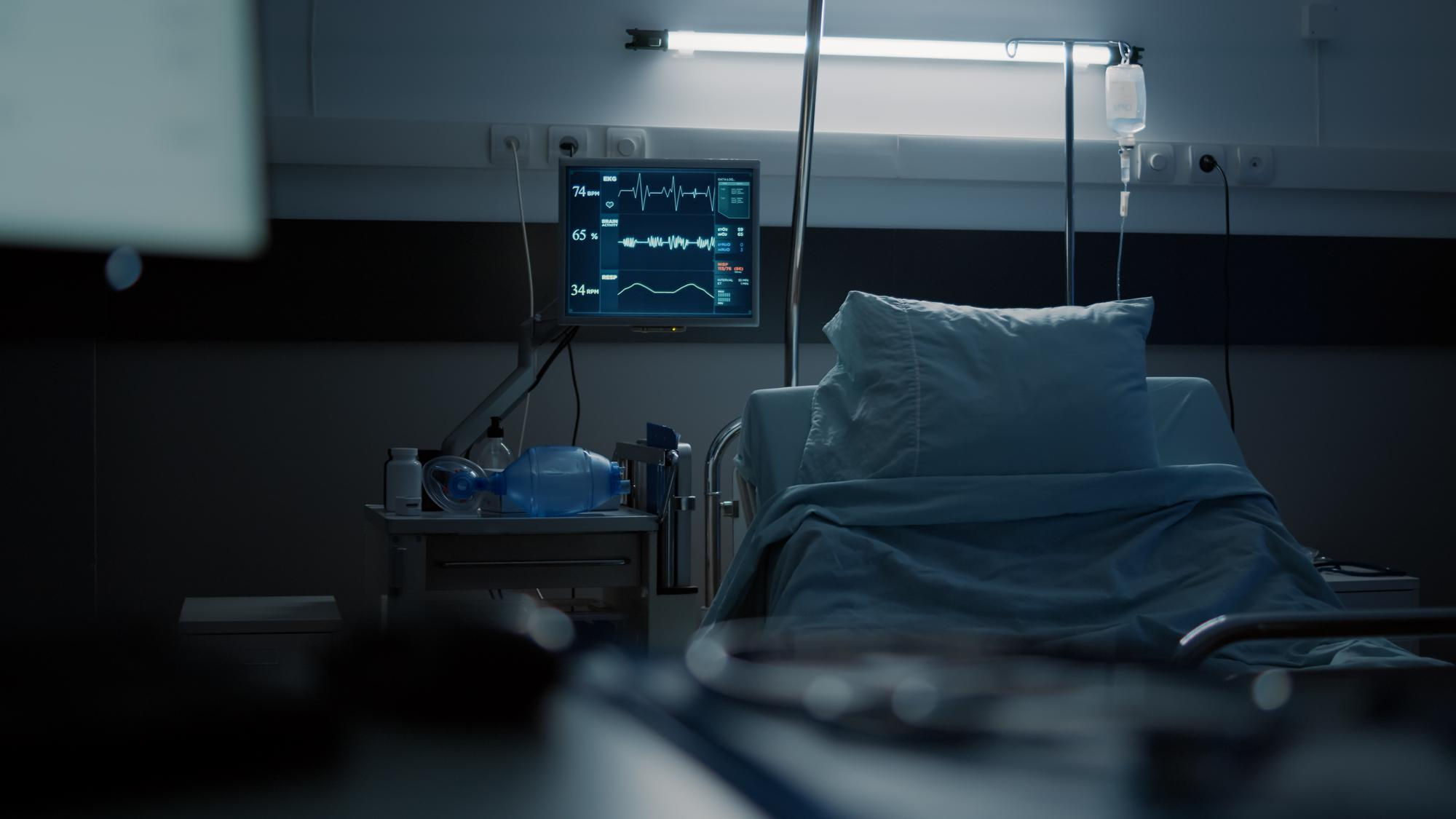
When I woke up in the ICU, the first thing I did was check the chair beside my bed.
Empty.
That single fact took longer to absorb than it should have. I lay there in the strange white quiet of the room, machines beeping at my bedside like small patient attendants, and I turned the emptiness over in my mind the way you turn a stone you expected to find something under. My chest ached in a way that felt structural rather than muscular, deep and dull, the ache of something that had been pushed past its limit and was now presenting its bill. My mouth tasted like metal and antiseptic. The ceiling above me was the specific shade of white that hospitals favor, the shade that suggests neutrality rather than color, an erasure of any tone that might feel personal.
I was a 911 dispatcher. I had spent six years learning to take inventory of a situation in seconds, to identify what was wrong before the person on the other end of the line could articulate it clearly. What was wrong here was obvious. My parents were not in the chair beside my bed. My brother was not in the chair beside my bed. No one had left a jacket thrown over the arm of it, no bag on the floor with my toothbrush and a change of clothes, no coffee cup cooling on the tray beside my water. There was only the water, and the machines, and a window showing a gray slice of San Diego sky.
A nurse came in while I was still taking this inventory. Her name was Dana. She had dark hair pulled back tight and the particular quality of tiredness in her eyes that belongs to people who spend their shifts touching strangers at the worst moments of their lives. Her hands were gentle. Her voice was the kind of careful that people develop after years of wrapping difficult news in something softer than the truth.
“You’re awake,” she said. “Welcome back. I’m Dana.”
My voice came out rougher than I expected, like something that had been disused. “My family.”
Dana paused. I had spent six years learning to hear what lived inside pauses, to read the half-second between a question and an answer as its own kind of information. This one said: what I am about to tell you is true and I wish it were not.
“They came by,” she said carefully.
I didn’t ask where they were. Where implied they might be nearby. “How long?” I asked instead.
Dana held my eyes. “About twenty minutes.”
The number landed like something dropped from a height. I heard myself repeat it, just the word, just to see how it sounded outside my head. Twenty. Dana’s mouth tightened slightly, a flicker of something she was working to keep professional. She told me they’d mentioned travel plans. Her voice was neutral when she said it, the neutrality of someone who has a great deal of feeling about a thing and has decided not to spend it here.
“They went to Cancun,” I said. It wasn’t a question.
“Yes,” Dana said.
My brother Logan had a surfing competition, one of those glossy international events that existed as much for sponsors and photographs and the performance of a golden future as for the sport itself. My mother had been talking about it for months in the tone she reserved for things that mattered, which was to say things that pertained to Logan. I had heard that tone my entire life. It was the tone of someone who had assigned the family’s hope to one child and organized everything around protecting that assignment, including, apparently, departing the hospital within twenty minutes of her other child being admitted to the ICU.
I understood this about my family. I had understood it for years in the way that people understand things they are not yet ready to say out loud. Our house had a hierarchy as clear and established as anything structural, and I occupied its lower floor. Logan was the golden one: easy smile, effortless charm, the kind of talent that translated well to photographs and sponsor deals, the kind of son my mother described as having so much potential that the phrase had become a kind of currency she spent on his behalf indefinitely. I was the responsible one. The steady one. The backup battery that got recharged only when someone needed power.
It had started with small things, the way all slow bleedings start. A copay here, an emergency there, a request framed so lightly it would have felt petty to question it. Your father’s prescription went up. Logan needs airfare for a competition, this one is important. The heating system needs work and we’re a little short this month. Each request came wrapped in praise: you’re so capable, you always figure it out, you’re the strong one in this family. As if my strength existed as a resource to be drawn from rather than a quality I had developed for my own survival. As if being capable meant I had agreed, somewhere in the fine print of childhood, to be capable on their behalf without limit.
Over five years I had given them more than ninety thousand dollars. I had counted once, late at night at my kitchen table with a cup of coffee going cold beside me and bank statements spread across the wood, and then I had stopped counting because the number had a quality to it that I was not ready to sit with. I had told myself it was temporary, that families go through hard patches, that I would stop when they found their footing. But their footing never quite arrived. The patch never quite ended. And I kept picking up extra shifts to cover the gap and eating badly and sleeping less and telling myself I would take better care of myself when things settled down.
On the night I collapsed, I was finishing my third consecutive night shift. Someone had called out sick and I had taken the hours because we were short-staffed and because taking the hours was what I did. The dispatch room was warm and too bright, the fluorescent lights overhead giving off that particular buzz that becomes part of the auditory wallpaper of a room you spend too many hours in. I had been running on four hours of sleep and vending machine crackers and a kind of momentum that is not the same thing as energy but can impersonate it for a while before the bill comes due.
A call lit up my screen. An older woman, her voice torn with panic, her husband unresponsive on the kitchen floor. I switched into dispatcher voice the way I always did, that immediate internal shift from whatever I was to the calm reliable presence on the other end of the line. I walked her through positioning him, through the sequence of chest compressions, counting with her, one and two and three and four, my voice steady in a way my body was no longer matching underneath.
Midway through the call, something happened to my vision. The screen swam. The light above me stretched into white blades. My tongue felt suddenly too large and unfamiliar in my mouth, like a word I had known my whole life and suddenly could not pronounce. I started to say stay with me and I did not finish the sentence. The floor came up fast. I heard my headset hit the console, a hollow plastic clatter that seemed too loud for how quickly everything else went quiet, and then someone was shouting my name in a voice raw with alarm, and then there was nothing at all.
Dana told me the details in pieces over the following days, rationing them the way you ration water to someone still learning how much they can hold. Extreme exhaustion. An arrhythmia brought on by electrolyte imbalances and chronic sleep deprivation and the kind of sustained stress that announces itself physically when the body has run out of other ways to get your attention. Hypoxic briefly before they stabilized me. Lucky, she said, and I nodded because nodding was the right response, even though lucky felt like the wrong word for waking up alone in an ICU while my family photographed beaches.
They had returned my phone on the second day. It buzzed the moment it touched my palm. My mother: call me. My father: don’t make this hard. Logan: a photograph of turquoise water with the letters lol appended to it, as if my cardiac event was a punchline he had caught the tail end of. I set the phone face down on the tray and looked at the ceiling and thought about the older woman I had been talking to when I collapsed, and whether someone else had gotten to her in time, and whether her husband had made it. I found out later that he had. A paramedic unit had arrived while the line was still open, my coworker having taken over the call after I went down. He survived. I found that out and felt something complicated about it, relief and grief tangled together in a way I couldn’t fully separate.
On the third night, Dana came in to check my monitors during what she had started to call the quiet hours, the window between two and four in the morning when the floor was still and the hallway lights dimmed to a pale strip under the door. I had been awake, the way I was awake most nights now, not with alertness but with a body that had forgotten how to rest completely.
“Do you get many visitors in the ICU?” I asked her, because my voice needed somewhere to go.
Dana adjusted the IV line without looking up. “For most patients, yes.”
“And for me?” I asked, and even saying it I could hear how much weight the question carried, how much I already knew the answer and was asking anyway because sometimes you need to hear things confirmed by someone else’s voice before they become fully real.
Dana was quiet for a moment. Then she said, “You do, actually.”
Something in my chest moved. “I do?”
She nodded toward the glass door, toward the dim corridor beyond it. “There’s been someone here every night. Since the first night after your family left.”
My skin prickled with something I didn’t have a name for. “Who?”
Dana set down what she was holding and looked at me directly. She had the eyes of someone who has developed the ability to deliver complicated news without flinching, not because it doesn’t affect her but because flinching doesn’t help anyone. “He came the first night and asked for room 314,” she said. “He didn’t go in. He stood by the glass for a long time, like he didn’t know if he was allowed to be here. Like he didn’t want to wake you.”
“He just stood there,” I said.
“For hours,” she said. “Then he sat in the chair outside your door. He’s been back every night since.”
I tried to hold the image: someone choosing a hospital corridor over wherever else they could be, choosing the smell of disinfectant and the fluorescent lights and the hard chair outside a room they were not sure they were permitted to enter. The image was so foreign to anything in my recent experience of being cared for that it felt almost fictional.
“His name?” I asked.
Dana studied me for a moment. “It’s in the visitor log,” she said.
That night I saw him for the first time. A figure at the far end of the corridor, moving with the careful quiet of someone who understood that this was a place of fragile things. He stopped at my door. He looked through the glass. I couldn’t see his face clearly from the bed, only the shape of him, the particular stillness of a person who has been carrying something heavy for a long time and has gotten very good at holding it without letting it show. I lifted my hand, just slightly, the way you signal presence across a distance when your body doesn’t have anything more than that available. He nodded once, a small private acknowledgment, and then he sat down in the chair outside my door and did not move for the rest of the night.
I slept better that night than I had since waking up.
The next day I asked Dana directly. She said the name without preamble this time, as if she had decided that the kindest thing was clarity.
Ethan Vale.
I had not heard that name in years. I had not heard it spoken aloud since I was a child, but it had lived somewhere in the lower registers of my memory, in the category of things I had absorbed without being given context for. My mother used it rarely and when she did her voice changed, went cold in a particular way, the way voices go cold around something they have decided to shut out. I had asked about it once as a teenager and been told it was none of my business in the tone that translated, in our household, to: this conversation is now over and reopening it will cost you.
I also learned, that afternoon, that my bill had been paid.
Dana told me quietly, choosing her words the way she always did, that the account had been settled, anonymous on paper, but that the staff had a reasonable idea of who was responsible. I stared at the water glass on my tray for a long time after she told me. I had been trying not to think about the bill, the way you try not to think about something enormous that is sitting in the corner of the room. ICU. Cardiac monitoring. Days of care. The number would be significant and I had no savings worth speaking of because I had been sending my savings to Cancun in increments for five years.
Someone I had never met, who had spent every night of my hospitalization in a chair outside my door, had paid it.
When you have spent years learning to buy love, to earn it through sacrifice and money and availability and the steady grinding down of your own needs in favor of other people’s comfort, you recognize real love by how entirely foreign it feels. It doesn’t announce itself with fanfare. It doesn’t come with conditions attached or praise designed to make the debt feel smaller. It just shows up in a chair outside your door at two in the morning and stays there.
On the eighth day, he came into the room.
He stood near the door the way he had stood by the glass, careful with the space, as if he had decided that taking up too much of it would be a kind of imposition he wasn’t entitled to. He was taller than I had expected, older than whatever impression I had of him, which was nothing really, just a name and the cold tone my mother used around it. His hair was dark with gray at the temples and his eyes held the particular quality of tiredness that comes not from one bad night but from accumulated weight, years of carrying something you don’t set down.
“Rowan,” he said, and the way he said it, like the name had significance rather than just function, made something in my throat tighten.
“Why are you here?” I asked. My voice was still rough from days of disuse, but it was steadier than I felt.
He swallowed. “I didn’t want you to be alone.”
The simplicity of it was almost hard to absorb. No qualification, no explanation of his own sacrifice, no implicit request for gratitude. Just the straightforward statement of an intention that required no justification beyond itself.
“You knew my mother,” I said, because the name he carried told me that much.
“A long time ago,” he said.
My heart monitor beeped faster, and I could feel the quickening in my chest that my cardiologist had told me to treat as information rather than alarm. “What are you to me?” I asked, because I had learned, in six years of dispatching, that dancing around the direct question almost always made things worse rather than better.
He looked at his hands, then back at me. The expression on his face was the expression of a man choosing honesty over comfort. “I’m someone who should have been here sooner,” he said. “Much sooner.”
We talked for a long time that morning. He told me things carefully, in the measured way of someone who has thought many times about how to say them and still is not entirely sure he is doing it correctly. He told me that he and my mother had been together for a period before she met my father, that the ending of that relationship had been complicated and painful and had involved things he had spent years being responsible for in his own account of events. He told me that he had known about me for years, had watched from a distance that my mother had made very clear he was required to maintain, and that the distance had cost him things he enumerated without self-pity, simply as facts.
He told me that a friend of his worked in the dispatch network, not my station but adjacent to it, and that word had traveled the way word travels between people who work the same kind of invisible and essential job, and that when he heard I had collapsed he had gotten in his car and driven to San Diego from Sacramento in just under eight hours without entirely deciding to, the way you move toward certain things before your conscious mind has processed the instruction.
I listened to all of it. I didn’t cry, which surprised me, because crying had felt close to the surface for days. Instead I felt something settle inside me, some turbulence going still, the way a body of water settles after something large has moved through it. I was not angry at him. I found, somewhat to my surprise, that I was not even angry at my mother in the way I had expected to be. What I felt was more like the sensation of a long and complicated equation finally resolving, the variables finding their correct values, the answer turning out to be something you could work with.
He left that afternoon and came back in the evening and sat in the chair outside my door the way he had been doing, and this time, when Dana passed him in the corridor and raised her eyebrows, he nodded and she nodded back, and there was a brief wordless exchange of information between them that I could see through the glass but could not hear, and I thought that this was probably what it looked like when people who cared about someone coordinated their caring without needing to be asked.
My mother arrived on the tenth morning.
I heard her voice in the hallway before I saw her, bright and offended and carrying itself with the confidence of a woman who believed her arrival resolved whatever situation had been allowed to develop in her absence. She was telling someone at the nurses’ station that she was here for her daughter, that she needed the discharge paperwork, that she had been unavoidably delayed by a prior commitment which was one of several things she said that morning that I would have found darkly funny if my chest hadn’t still been tender.
Dana appeared at my door a minute before my mother did. Her expression was the controlled neutral of someone performing a professional function while having quite definite personal opinions about the situation. “Your mother’s here,” she said. “We gave her the visitor log at the front desk. Hospital policy when there are discrepancies between the emergency contacts and the actual visit record.”
“How did she take it?” I asked.
Dana’s mouth twitched almost invisibly. “She went pale in a way the tan couldn’t cover,” she said, and then she stepped aside because my mother was already coming through the door.
She looked well. Glossy hair and sun-warmed skin and the bright efficiency of someone who has had a good ten days and is now ready to organize the next set of circumstances into something manageable. She spread her arms when she saw me, the gesture of someone expecting to be welcomed, and when I didn’t move toward her, her arms dropped and her expression recalibrated into something sharper.
“There you are,” she said, and looked around the room the way she looked at hotel rooms she was checking out of, inventorying for damage or missing items. Then her eyes landed on the visitor log printout that the nurse had placed on my tray table, and something in her face changed.
I had not planned this. I want to be clear about that, because I think it matters. I had not orchestrated anything or arranged a confrontation or prepared remarks. I had simply been in a hospital bed for ten days with more time to think than I had permitted myself in years, and what I had arrived at, without drama or performance, was a quiet and specific clarity about what I was and was not willing to carry forward from this point.
“Why was I handed this at the front desk?” she said, and her voice had the tight controlled quality of someone who already knows the answer to their own question and is using the question as a delay tactic.
“Hospital policy,” I said. “Especially when the emergency contact and the actual visitor record don’t match.”
Her jaw tightened. “Don’t be clever, Rowan.”
“I’m not being clever,” I said. “I’m being accurate.”
She set the log down on the tray with a click and turned away from it the way she turned away from things she wanted to stop existing. “I’m here to take you home. We can talk about all of this once you’re out of here.”
“Take me home,” I said. “Like something you left in storage.”
Her eyes flashed. “I don’t need your attitude. I’ve had a very difficult week.”
I looked at her for a moment. I was aware of the monitor beside me, of my own heartbeat coming through it as a steady measured sound, and I was aware that dispatcher voice was available to me the way it was always available, that collected professional calm, and I decided to use it not as a shield this time but simply as a mode of speaking truth without heat, because heat had never gotten me anywhere with her and I had finally stopped expecting it to.
“Where were you?” I said. “When I woke up in here.”
She waved a hand, the gesture she used for things she considered settled. “You were stable. Logan needed to be there. This was important for his future.”
“You stayed twenty minutes,” I said. “I was admitted to intensive care and you stayed twenty minutes and flew to Cancun.”
“You were stabilized,” she said again, as if repetition would change the weight of it. “We couldn’t throw away Logan’s competition. Do you know how much—”
“I know how much you’ve spent on Logan’s competitions,” I said. “I paid for several of them.”
That stopped her.
The room was very quiet for a moment. Outside the glass door, I could see the hallway, and I could see the edge of the chair where Ethan had been sitting. He was not in the chair. He was standing slightly to the side of the doorway, just outside my sightline but not entirely outside it, and I understood that he had heard her arrive and had moved to a place where he could be present without forcing the situation before I was ready.
My mother followed my gaze. She looked toward the door. She did not see him yet, only the empty chair, but the visitor log was still on the tray between us, and she looked down at it with the expression of someone who has been avoiding a specific thing and has just run out of room to keep avoiding it.
“The same name,” she said, her voice dropping to something low and tight. “Every night.”
“Every night,” I confirmed.
Her face did something complicated that I had never seen it do before, a sequence of expressions moving through it too fast to name individually, something that was not quite grief and not quite shame but contained elements of both. She pressed her lips together. “That can’t be,” she said, almost to herself. “He has no right to be here.”
“He has no right,” I repeated. “He who paid my hospital bill while you were ordering margaritas. He who has been here every single night. He who drove eight hours from Sacramento the day he found out what happened.”
Her head came up. “He told you.”
“He told me a lot of things,” I said. “Things you decided I didn’t need to know.”
She opened her mouth. Before she could speak, there was a slight movement at the door.
Ethan stepped into the doorway.
He stood there with the particular quality of stillness he seemed to carry everywhere, not aggressive, not demanding, just present in a way that was very difficult to dismiss or pretend away. He looked at my mother the way you look at something you have spent a long time preparing to look at, and my mother looked at him the way you look at something you hoped had simply stopped existing while you weren’t paying attention.
“I stayed,” he said.
Two words. But they contained a universe of antecedent. They said: you didn’t, and I did. They said: I have been here, every night, in the chair outside her door, in the hallway when she needed someone on the other side of the glass. They said: whatever you decided I was not allowed to be, I was here anyway.
My mother’s mouth opened and closed. Some of the tanned confidence had left her face, replaced by something older and more uncertain. She looked between him and me and back at him, and I watched her try to find the version of this situation that she could manage, the angle from which she could exert control, and I watched her fail to find it.
“Rowan,” she said finally, turning back to me, her voice adjusted to the register she used when she wanted to pull me back into the private language of the family, the shorthand of obligation and guilt and love that had always been difficult for me to separate from each other. “You don’t understand the history here. This is complicated. He’s not who you think.”
“You’ve been telling me that my whole life,” I said. “About things you decided I didn’t need to know. About money I gave you that was supposed to come back. About Logan’s potential and your emergencies and how I was the strong one, which turned out to mean I was the one whose strength you could spend.”
Her eyes sharpened with the beginning of defense. I raised my hand slightly, the same gesture I used on calls when someone was about to spiral, the gesture that said: I need you to stop so we can get through this.
“I’m not angry,” I said, and the strange thing was that it was true. The anger had burned through me in the first days of lying in this bed, had moved through me the way fever moves, hot and necessary, and now what was left was something cooler and more resolved. “I’m done. Not with you, not forever, not with all of it. But I’m done with the version of this where I run myself into an ICU and you go to Cancun and we don’t name what that is.”
My mother was quiet. It was not a comfortable quiet. It was the quiet of a woman who had always been able to find words for things and had temporarily run out of them.
“There are things we need to talk about,” I continued. “Real things, not the kind you manage around the edge of. About money and about Ethan and about the fact that I have been operating as this family’s shock absorber for five years and my heart actually stopped about it. We can talk about all of those things. But not today, and not with you here as the person who’s come to collect me like I’m an errand.”
I looked at her for a long moment.
“Go home, Mom. I’ll call you when I’m ready.”
She stood there at the foot of my bed, and she was still for a moment that seemed to stretch, and then something in her posture shifted, a degree or two, an almost imperceptible softening, like a structure accepting a load it had been trying to reject. She looked at Ethan one more time, a look that carried thirty years of complicated history in it, grief and anger and something underneath both of those that I did not entirely have access to yet and suspected I would need time to understand.
Then she picked up her bag, smoothed her jacket once with the flat of her hand, and walked out of the room without speaking. Her footsteps receded down the corridor, and then the hallway was quiet, and then it was just me and Ethan and the steady beeping of the monitor and the gray San Diego sky in the window.
He came fully into the room and sat in the chair beside my bed, the chair that had been empty when I woke up ten days ago, and he sat in it the way someone sits in a place they have decided they are allowed to occupy.
“Are you okay?” he asked.
“I don’t know,” I said honestly. “But I think I will be.”
He nodded. He didn’t rush to fill the silence, which was one of the things I had come to appreciate about him in the limited but significant time I had known him. He understood that some spaces were not meant to be filled, that quiet between two people who trust each other is its own kind of conversation.
“What do you want to know?” he asked, after a while. “About all of it. You can ask anything.”
I thought about it. There were many questions. There would be many more in the weeks and months ahead, questions that would need time and patience and more than a hospital room to work through properly. But there was one that had been sitting at the center of everything since Dana had first said his name.
“Did you know?” I asked. “About me, growing up. Were you aware of what things were like?”
He held my gaze. “I knew some of it,” he said. “Not all of it. Not enough. I told myself for a long time that respecting her wishes meant staying away, that the most responsible thing I could do was accept the distance she wanted.” He paused. “I’ve spent a lot of years understanding that was wrong. That responsibility and convenience can look exactly the same from the inside when you’re scared enough.”
It was the most honest thing anyone had said to me in as long as I could remember. Not the useful honesty of a supervisor’s feedback or the practiced honesty of a therapist’s reframe, but the raw and personal honesty of someone naming their own failure clearly and without decoration.
“I’m not looking for a father,” I said, because I thought it was important to say it, to establish the actual terms of whatever this was rather than leaving them undefined and vulnerable to the weight of expectation. “I’m twenty-nine. I don’t need you to fill something retroactively. I’m not sure what I need, to be honest.”
“That’s fair,” he said.
“But I want to know you,” I said. “If that’s something that’s available. Not as a reparation and not as a story I tell about where I came from. Just as a person.”
He was quiet for a moment. His hands, resting on his knees, were still. “Yes,” he said finally. “That’s available. That’s what I would want too.”
I was discharged on day twelve, a Thursday morning in early November when the San Diego air had the particular cool clarity of autumn arriving in a place that never fully commits to seasons. Dana was on shift. She checked my final vitals with the thoroughness she brought to everything, wrote something in my chart, and then stood at the door of my room and looked at me with the expression of someone who has been quietly rooting for a patient and has reached the point in the story where she gets to see it go in a direction that doesn’t break her heart.
“Take the lifestyle changes seriously,” she said.
“I know,” I said.
“Sleep,” she said. “Actual sleep. And eat something that isn’t from a vending machine.”
“I know.”
“And stop giving your money to people who fly away when you need them,” she said, and there was warmth in it but also a directness that I recognized as the directness of someone who has watched a pattern from a professional distance and has decided, just this once, to name it.
“I’m working on that,” I said.
She handed me a discharge folder. Inside it was a list of follow-up appointments, a cardiology referral, instructions about activity and rest and the particular warning signs I should treat as immediate emergencies, and at the back, tucked between two sheets of printed instructions, a handwritten note that said: you were never just a patient. Good luck, Rowan. Dana.
I kept that note. I still have it.
Ethan drove me home. I sat in the passenger seat of his car with the window cracked, watching the city move past, and I felt something that took me a while to identify because it was unfamiliar in a specific way, the way things are unfamiliar when you have been without them long enough to forget what they feel like. It was the feeling of being in a car with someone who was not calculating what they needed from you. Who was just driving you home because you needed to get home and he was there.
My apartment was the same as I had left it twelve days earlier, which was a stupid thought but a real one, the small surprise of a space that has continued existing in your absence without requiring anything of you. There was a dish in my sink from the morning before I collapsed. There was a jacket thrown over the back of the kitchen chair. Everything was exactly where I had left it when I went to work that night thinking I would be home in eight hours.
Ethan helped me in, made sure I had water and the medications I had been discharged with, and then sat in my kitchen while I sat on my couch and we talked for a few hours about ordinary things, his drive down from Sacramento, the stretch of highway past Bakersfield that he said was genuinely the most desolate road in California, a restaurant near his apartment that made a specific kind of noodle dish he had been eating once a week for three years. Ordinary things. The kind of conversation that two people have when they are beginning the slow process of becoming known to each other, when there is no urgency and no agenda and the space between sentences is something neither of them needs to fill.
Before he left, he stood at my door with his keys in his hand and said, “I’ll be back on Saturday. Unless you’d rather I wasn’t.”
“I’d rather you were,” I said.
He nodded. He looked, for a moment, like a man who had been holding something carefully for a long time and had been handed a place to set it down.
My mother called three days after I got home. I let it ring through to voicemail and then I sat and listened to what she left: a message that was, for her, a considerable departure from the usual register. She said she had been thinking. She said she knew that what she had done when I collapsed was not what a mother should do, and that knowing it and having the right words for it were not yet the same thing for her, but that she was trying to find the words. She said she did not expect me to move toward her before I was ready. She said Logan had won his competition, which was, I thought, a very characteristic inclusion, but which I also thought she could not entirely help, the same way people cannot entirely help the habits of a lifetime in the space of three days.
I called her back the following week. Not to fix anything or forgive anything or pretend that a conversation could undo five years of slow bleeding. Just to begin. To establish that there was a possibility of something different, that I was willing to put in the work of working toward it if she was willing to put in the actual work of changing rather than the performance of intending to change. She listened. She said she heard me. She did not cry, because my mother did not cry, but her voice had a quality in it that I had not heard before, something that resembled the beginning of accountability even if it wasn’t there yet.
I went back to work in January, cleared by my cardiologist with specific conditions attached. I came back to a dispatch room that applauded when I walked in, which embarrassed me in the warm and genuine way that things embarrass you when you do not feel you deserve them. My supervisor, a woman named Adrienne who had always managed the impossible balance of caring about her people without making it feel like surveillance, pulled me into her office before my first shift and told me that the woman I had been talking to when I collapsed, the one with the unresponsive husband, had asked about me. She’d wanted to know the name of the dispatcher. Adrienne had called her back. The woman’s husband was recovering. He had asked his wife to tell the dispatcher, whoever she was, thank you for staying calm enough for all three of them.
I held that for a long time.
Ethan comes down from Sacramento once or twice a month. We meet at a restaurant halfway between my apartment and the waterfront and we eat dinner and talk about our weeks and occasionally about the larger and more complicated things, the history and the years and the shape of what might have been if things had gone differently, and we have learned to hold that conversation without needing it to resolve into something tidy. Some things do not resolve. They just become familiar enough to carry without effort.
I no longer send money home unless it is my choice, genuinely my choice, untangled from guilt or the old arithmetic of approval. I sleep eight hours when I can. I keep food in my refrigerator that I bought for myself. These sound like small things. They are not small things. They are, in my experience, exactly the size of the life you build when you finally stop spending it on someone else’s needs.
The visitor log from my hospital stay is still in the discharge folder in my desk drawer. I have looked at it a few times since coming home, not out of pain but out of something that feels more like orientation, the way you look at a map not because you are lost but because you want to understand the shape of where you have been.
The same name, every night.
Ethan Vale.
I think about Dana sometimes, telling me in that careful voice that there had been someone there, every night, as if she wasn’t sure whether it would be a comfort or a complication. I think about the moment I lifted my hand toward the glass and he nodded back, the small wordless exchange of two people finding each other across a corridor in the middle of the night.
I know now that being cared for is not the same as being managed. That presence is not the same as obligation. That a person can choose to stay in a chair outside your door for twelve consecutive nights, without being asked and without expecting anything in return, for no reason except that they did not want you to be alone.
I know it because it happened to me.
And I know now, in the way you know things that have been confirmed by the actual experience of them rather than just the idea, that the version of me who had been running on four hours of sleep and vending machine crackers and the relentless fuel of other people’s needs was not the strong one. She was the depleted one. The strong one is the version who woke up in an ICU and made different choices about what she was worth.
Some mornings I open my kitchen window and let in the November air and drink coffee that I made for myself, slowly, without a phone ringing or a shift to get to, and I think about what Dana said when she discharged me. Sleep. Eat something real. Stop giving your money to people who fly away when you need them.
I am working on all three. I am getting better at all three. The third one, especially, which turns out to be less about money than about time, less about time than about attention, and less about attention than about understanding, finally and without the need to keep testing it, what it feels like when someone chooses to stay.

Lila Hart is a dedicated Digital Archivist and Research Specialist with a keen eye for preserving and curating meaningful content. At TheArchivists, she specializes in organizing and managing digital archives, ensuring that valuable stories and historical moments are accessible for generations to come.
Lila earned her degree in History and Archival Studies from the University of Edinburgh, where she cultivated her passion for documenting the past and preserving cultural heritage. Her expertise lies in combining traditional archival techniques with modern digital tools, allowing her to create comprehensive and engaging collections that resonate with audiences worldwide.
At TheArchivists, Lila is known for her meticulous attention to detail and her ability to uncover hidden gems within extensive archives. Her work is praised for its depth, authenticity, and contribution to the preservation of knowledge in the digital age.
Driven by a commitment to preserving stories that matter, Lila is passionate about exploring the intersection of history and technology. Her goal is to ensure that every piece of content she handles reflects the richness of human experiences and remains a source of inspiration for years to come.