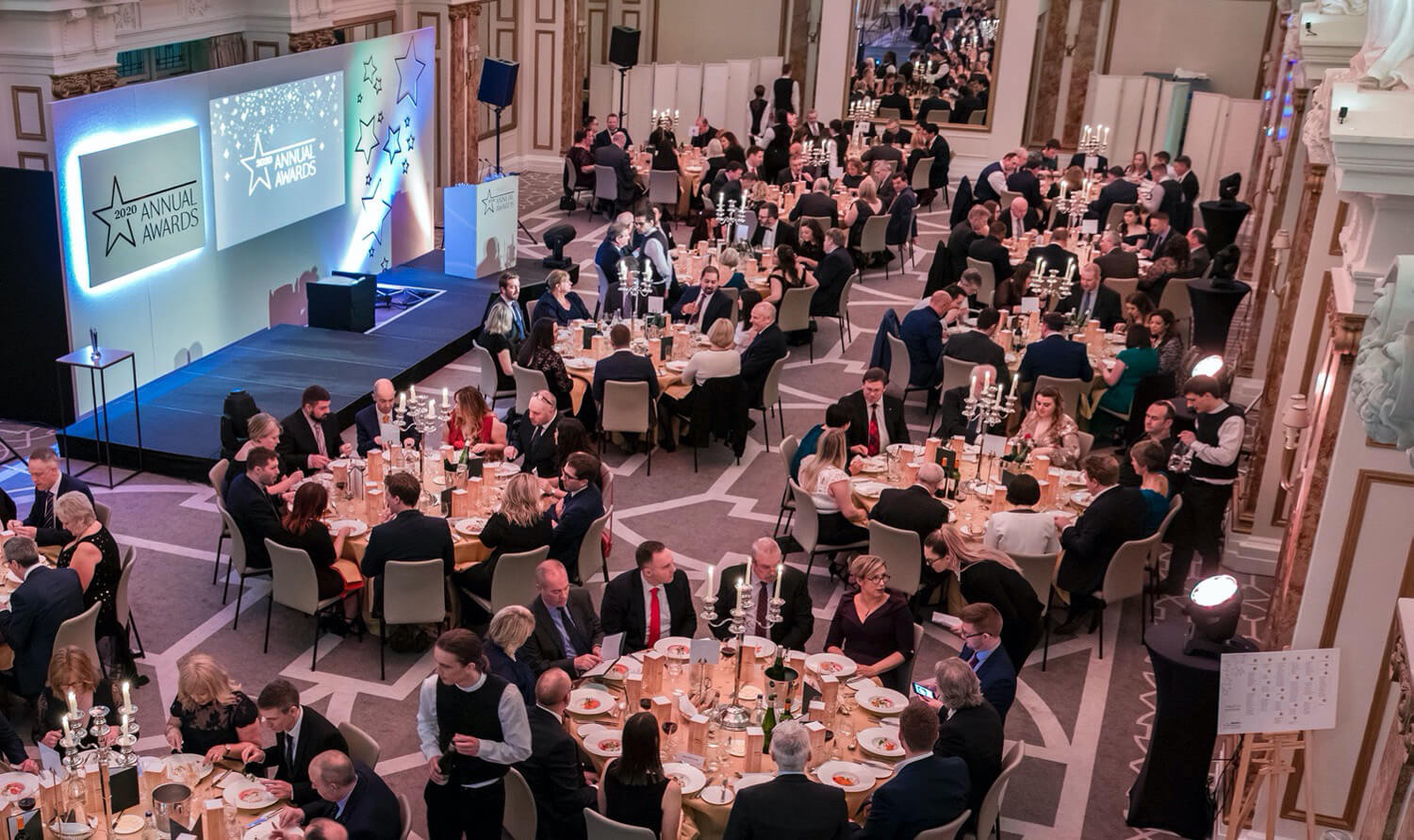
The applause was still in the room when my sister fired me.
It did not taper off first. It did not politely die in the corners of the ballroom or soften under the clink of champagne glasses. It was there, bright and swelling, ricocheting off crystal and brass and polished marble, when Vanessa lifted her chin, looked straight at me, and said into a microphone that was supposed to be used for gratitude, “You’re fired. Security will escort you out.”
For one suspended second, no one moved.
Not because they were shocked enough to defend me. Not because anyone was about to say she had gone too far. They froze because public cruelty, when it arrives wrapped in formality, always stuns people into stillness before it turns them into witnesses.
I was standing near the side of the room, not even at the center of anything, holding a champagne flute I had not yet raised. The stem was cool between my fingers. Around me, men in tuxedos and women in satin dresses turned in a slow wave, chairs half-shifted, silverware paused above dessert plates, conversations broke mid-sentence. Two hundred pairs of eyes landed on me at once.
No one stepped forward.
Not my mother, who had spent half the evening adjusting the cuff of Vanessa’s white tailored blazer like she was dressing royalty. Not my father, seated near the stage, his mouth still bent in the ghost of a proud smile that had moments earlier been meant for the daughter he always thought looked best in photographs. Not my brother Aiden, who had been standing close enough to hear Vanessa mutter the line to herself first, as if she had been rehearsing it and enjoying the taste of it before speaking it aloud.
No one said my name.
I did not give them the scene they were waiting for. That was perhaps the only thing I denied them in that first minute.
I simply looked at Vanessa. She stood under the soft wash of stage lighting, her features sharp and perfect, the new CEO basking in the kind of curated glow she had always believed was proof of merit. There was triumph in her face, but underneath it, something else: relief. The kind people feel when they think they have finally gotten rid of the one person in the room who remembers how everything actually happened.
Then I lowered my eyes to the badge hanging around my neck.
Guest.
Not family. Not partner. Not founder. Not shareholder. Not the person who had spent sixteen years building contingencies into the bones of the company so it could survive every reckless decision the rest of them mistook for leadership.
Guest.
I slid the lanyard over my head, placed it carefully beside the untouched champagne on the nearest cocktail table, and walked toward the ballroom doors.
The silence behind me folded in layers. It was heavy with the pleasure of spectatorship, with people relieved that humiliation was happening to someone else, with the private thrill of watching a family collapse in formalwear. Somewhere behind me, a violin resumed its place in the quartet’s arrangement because musicians, more than anyone, understand how to keep playing while a room pretends not to bleed.
The doors opened before I touched them.
Only when they sealed shut behind me did the noise become muffled, as though someone had lowered a sheet of thick glass between me and the celebration. My hands were steady. My breathing was steady. There was no dramatic break in me, no shattering. Just clarity. Clean, sharp, almost cold.
They thought the humiliation ended there.
It didn’t.
That was only the first minute of the countdown.
I was nineteen the first time I understood how power moved in my family.
Not the obvious kind. Not the kind written into titles or announced at dinners. The quieter kind that slips sideways through a room and chooses its favorites before anyone notices. The kind that forgives some people in advance and burdens others before they have even spoken.
Back then, the company was little more than a warehouse in North Kansas City and a series of invoices that felt larger than our future. The building sat in an industrial strip where winter wind got into everything. Concrete floors. Metal shelving. Dock doors that groaned open before dawn. Fluorescent lights overhead that hummed so constantly you stopped hearing them until they flickered.
My father loved to describe those years as humble beginnings. Investors loved that phrase too. It made the story sound noble, disciplined, inevitable. But humble beginnings are usually just chaos remembered kindly by the people who survived it with their pride intact.
And I remember Vanessa, always framed as the future.
She was twenty-one then. Beautiful in the effortless way that gets called charisma when it appears in the right family. Loud, quick with laughter, quick with blame. She could walk through a room and make people feel like something was already happening just because she was in it. Men wanted to photograph her for brochures. Clients remembered her face before they remembered product lines. She knew how to stand beside our father and look like continuity.
That morning, the first morning that matters in memory, my father stood beside a folding table with a contract in his hand and said, “Take it.”
The contract offered a salary far beyond what most of my friends would have imagined at nineteen. Stable money. Predictable money. The kind parents use to prove they are being generous.
I looked at the number. Then I looked at the margins.
“I want equity instead,” I said.
That made him stop, but only for a beat.
Vanessa was standing behind him, twirling a new ring of office keys around one finger. I can still hear the metal clicking softly against itself. She smiled when she saw my face, not warmly. That smile said here we go. It said I was about to make one more simple thing difficult.
“Take the salary, Cheryl. It’s stable.”
Stability had never impressed me the way ownership did. Maybe because even then, before I had the language for it, I understood the difference between being compensated and being counted. Salary could always be framed as generosity. Equity was acknowledgment, and acknowledgment becomes dangerous when it has to be written down.
I had come prepared. That is another thing people never notice about quiet girls in loud families: we prepare because it is the only way to survive rooms where other people improvise power. I reached into my folder and slid across a half-page agreement I had typed the night before. Simple, plain, no branding. Just terms. Small ownership increments in exchange for reduced compensation. A structure that would grow if the company did.
My father exhaled as though I had asked him to move mountains. In the corner of the room, a television perched on a dented filing cabinet was playing a football game with the volume up too high. He glanced at the screen, then back at me, then at the screen again.
“Why do you always make things complicated?” Vanessa murmured, loud enough for me to hear and soft enough for others to pretend not to.
I watched my father grab a pen.
He did not read the page.
That detail matters more than people understand. Neglect has a way of looking harmless while it is still happening. A signature thrown carelessly onto paper does not sound like the opening note of a future collapse. It sounds like impatience. It sounds like confidence. It sounds like someone too important to be delayed by terms.
On the television, the crowd roared. His team had gotten close to scoring. He signed while looking at the screen, his name slanting harder at the end because he was already elsewhere in his mind.
I took the paper back, slid it into my folder, and felt something shift into place inside me. Not triumph. Not even satisfaction. Just the faint outline of a path becoming visible, narrow and solitary and mine.
A year later, the warehouse was fuller.
Success, even small success, changes the acoustics of a place. There were more people, more trucks, more phones ringing from mismatched desks crammed into what used to be storage space. My father walked louder. My mother wore nicer coats. Vanessa had discovered blazers in jewel tones and learned how to stand with one hand on her hip whenever investors visited.
Bonuses were handed out that winter in white envelopes.
My father liked gestures when they made him feel magnanimous, so he called people up one by one. Vanessa’s envelope was thick enough to make a real sound when she dropped it onto the table. Mine was a single sheet.
“Equity instead,” I said again.
By then, my father barely argued. Perhaps he was relieved not to part with cash. Perhaps he still assumed paper was less real than money. He signed another transfer with the same distracted hand. Another sliver. Another piece no one else thought mattered.
Aiden had joined the business by then too, still young enough to make mistakes without consequence and old enough to wear confidence like inheritance. If he misplaced inventory reports, someone else would fix it. If he forgot a client call, there was always an excuse ready for him before the embarrassment had even settled in.
I know because that someone else was usually me.
When Aiden lost an entire week of warehouse count reconciliations, my father did not ask how it had happened. He looked at me and said, “Fix it.”
When Vanessa forgot to follow up with a regional distributor and we lost the first draft of a contract because the window expired, my mother pressed her fingers to her temple and sighed, “She’s under a lot of pressure.”
I learned early that in my family, my mistakes became character while theirs remained circumstance. If I missed something, it meant I had failed. If they missed something, it meant the week had been difficult, the timing was unfair, the expectations were too high. My family had a word for this. Pressure excused them. Responsibility defined me.
Years passed like that. Increment by increment. Slight by slight. Signature by signature.
My mother praised Vanessa for ideas I had drafted in midnight emails. I would hear my own language come back to me at Sunday dinners dressed in my sister’s voice, polished with more confidence and less caution, and everyone would nod like brilliance had finally entered the room.
Aiden got congratulated for deals I had negotiated because he was the one sent to shake hands at the end. He had a gift for appearing in photographs beside outcomes he did not understand. More than once, I sat at the far end of the conference table while he repeated summaries I had written him the night before, and men twice his age clapped him on the shoulder for instincts he did not possess.
The turning point came in 2013, in the living room of our old house, with rain tapping the windows and a video call flickering across a television screen too large for the room.
Vanessa had attached herself to a partnership proposal that looked glamorous from a distance and catastrophic up close. Multi-year commitments. Inflated projections. Penalties buried in the back pages. The kind of deal people sign when they want to be seen doing something bold and don’t intend to be around long enough to manage the consequences.
Board members appeared in small boxes on the screen. My father was in his recliner with one eye on the muted football game. Vanessa sat upright on the sofa in a cream suit, pen poised above the signature page, smiling the smile she used whenever she believed she was about to enter a room called history.
I had read the numbers three times.
They did not work.
Not in year one. Not in year three. Not once the interest escalators kicked in or the guaranteed shipment minimums began chewing through margin. It was vanity disguised as strategy, and everyone in that room except Vanessa seemed to feel it without fully naming it.
My father muted the call for a moment and looked over at me. “Is this good or not?”
I could have argued. I had spreadsheets to prove the exposure, the downside, the projected drag. But argument had never been my family’s language. They didn’t reward the person who was right. They rewarded the person who made being right feel least inconvenient to the narrative already in motion.
So instead, I opened the folder I had brought with me and slid a single paragraph into the back of the signing packet. An amendment I had worked on quietly for weeks after first seeing the proposal. Not a rejection. Not a challenge. A safeguard clause. Narrow. Specific. Almost invisible if you were not looking for the fault lines in governance. A precursor to what would later become Section 14C.
“Sign this too,” I said.
Vanessa’s smile vanished for a fraction of a second. “Why?”
“Administrative protection,” I replied.
She made a face. “You always have to be involved.”
Always. That word stayed with me long after the moment passed. Always like an accusation. Always like I was not a daughter or a sister or even a colleague, but a recurring inconvenience the family had to work around. Always like the person holding up the ceiling should apologize for being visible when beams begin to crack.
My father reached for the packet. On the screen, a replay of a touchdown sent the stadium crowd into another frenzy. He signed while looking up at it.
He did not read the clause.
He never did.
I watched the ink settle into the paper fibers and felt the peculiar sensation of protecting something from people who would never thank me for it.
By my thirties I had stopped expecting recognition. That sounds sadder than it was. There is a peculiar freedom in no longer auditioning for fairness from people who have already shown you the terms of your role in their lives.
Every year I converted bonuses to additional equity. Every time my father wanted to move quickly, I made sure the documents moved in ways that preserved structural truth beneath the family mythology layered over it. I sat in meetings others forgot I attended. I corrected bylaws no one read. I drafted continuity systems because disasters, unlike families, do not care who the favorite child is.
And I kept copies.
Of everything.
Not because I was planning revenge. That would flatter them too much. Revenge is emotional. What I built was administrative. Continuity. Insurance against chaos. Proof, yes, but more than proof: architecture. If people with titles misused power, there would be routes by which the company could outlive them.
There is a difference between preparing for betrayal and understanding that one day the people around you will finally become dangerous enough to require procedure.
The gala, when it came, should not have surprised me. And yet there are some humiliations that still strike the body before the mind can sort them.
I arrived early that evening. The ballroom staff were still placing centerpieces, adjusting table numbers, polishing silver. On the display screens looping the program, Vanessa’s face appeared again and again: Vanessa at a charity breakfast, Vanessa in a hard hat at the warehouse, Vanessa under the caption OUR NEW CEO.
In one slide, Aiden stood beside her beneath the title VP OF SALES.
Under their names, in bold white letters: Founding Family Representatives.
There was no mention of me.
Not partner. Not co-founder. Not board. Not shareholder. Not even the vague executive title they sometimes used when donors or press asked questions no one wanted answered precisely. It was as if I had drifted in from nowhere, as if the company had risen out of air and charisma and a good family portrait.
A tech coordinator with a clipboard approached and asked, “Are you with catering?”
He did not say it cruelly. That almost made it worse.
Near the bar, the seating chart was mounted on an easel in a gilded frame. Table Three: my parents. Table One: Vanessa and Aiden with the board chair and key investors. Table Twelve: my name, set in a row beneath people I had never met. Beside the category label, one word.
Guest.
I stared at that word and felt something inside me become very still. Not because it was new. Because it was final. Because at last they had taken what had always been implicit and made it public, decorative, printed in serif font on cream cardstock for the whole room to see.
“Sit wherever,” Aiden said behind me.
I turned. He was adjusting his cuff links, looking at his own reflection rather than at me. “Tonight’s not really about you.”
He said it lightly, almost kindly, the way people speak when they think a small cruelty delivered with enough casualness will not count as cruelty at all.
But the words landed precisely because they were true in more ways than he intended.
I had not been newly pushed out that night. I had been erased a long time ago. The gala was simply the public version.
Aiden waited for a reaction. A flinch, maybe. A bitter laugh. A protest he could later describe as emotional. I gave him none of it. I touched the badge at my collarbone, felt the cool laminate under my fingers, and smiled a small, almost pleasant smile that unsettled him more than anger would have.
Then the ballroom filled, the speeches began, Vanessa ascended to the stage, and three hours later she said, “You’re fired.”
By the time I reached my car, the rain had started.
I opened the door, slid behind the wheel, and shut the world out. For several seconds I did not start the engine. I sat in the dark with my hands resting at ten and two, my reflection hovering faintly in the windshield.
I felt no urge to cry. No urge to scream. Those responses would have belonged to the version of me they still thought existed, the one who believed fairness was one confrontation away.
Three hours. That was all I needed.
I pulled into my garage just after ten. My motion sensor clicked on overhead. On the far side, a laptop sat plugged in exactly where I had left it charging since dawn.
I did not go inside the house. I did not change out of the black dress or take off my earrings. I walked straight to the workbench, unplugged the laptop, and set it on the hood of the car.
When I opened the screen, my folders appeared.
Everything was already arranged exactly where it needed to be.
That is what people misunderstand when they later call women like me ruthless. They imagine an emotional snap, a sudden shift, some dramatic moment in which hurt becomes action. But systems like the one I triggered that night are not born in anger. They are built over years by people who learned long ago that being right is useless unless it is documented.
The top folder was labeled Continuity.
Inside were sixteen years of governance records, signed transfers, archived emails, draft bylaws, board meeting summaries, shareholder percentages, legal memoranda, scanned amendments, side letters, emergency authority provisions, and every version of every clause I had ever quietly installed while the rest of them were busy performing leadership for rooms they hoped would applaud.
I opened the secure mailing list first.
Board members. Counsel. Audit oversight. Chair. Independent directors. The ones who still knew how to pay attention when numbers started moving in ways public relations could not explain.
The subject line was simple: Emergency Governance Notice, Section 14C Activation.
I attached the triggering documents.
The original governance amendment, later absorbed into formal bylaws. The current cap table. The termination event. Witnessed public action by a non-equity executive against the majority shareholder without unanimous board approval. The clause was narrow and devastating by design. If such an event occurred, control reverted automatically pending emergency ratification, executive appointments became reviewable immediately, and a voting meeting could be triggered without standard delay requirements.
They had given me the trigger themselves.
On stage.
In front of two hundred witnesses.
I sent the email.
Then I opened the courier queue. Stamped packets containing certified copies were already prepared. At the time that morning, I had not known with certainty the gala would produce the exact triggering event. But I had known enough. Known the seating chart omission. Known the program slides. Known, above all, Vanessa’s appetite for symbolic cruelty. People like her never stop at administrative sidelining when they think they can turn an audience into a weapon.
The courier request required one click.
Estimated arrival: fourteen minutes.
A blue circle appeared on the screen and began its slow tightening countdown.
My phone, face-down on the workbench, buzzed.
Aiden. Then Vanessa. Then my mother.
I let the calls die. All their numbers had been blocked before sunrise that morning. Part instinct, part caution, part final boundary.
I opened the internal voting portal next. That portal was one of the first truly elegant systems I ever built for the company. Years earlier, during an ugly stretch when disaster recovery protocols kept failing, I had written it almost as a side project. Clean interface. Minimal colors. Multi-factor secured. Immutable logs. At the top of the admin dashboard sat the cap table percentages.
My percentage was there, exactly where it had always been.
Silent. Unadvertised. Intact.
Majority.
The word itself did not appear onscreen. Numbers rarely bother with drama. But there it was all the same, accumulated over years through every salary I declined, every bonus I converted, every paper transfer signed by men who thought documents were background noise.
I moved steadily, not fast. Speed is for panic. Precision is for winning.
In the second hour, counsel replied.
Grant: Confirmed. Trigger valid on facts presented. Emergency ratification motion draft attached.
Then Cole: Reviewing now. Expect support.
Then Rivera: Knew this day would come.
That last line sat on the screen longer than the others. Not because it surprised me, but because it named what no one in my family ever had: this wasn’t unforeseeable. People outside the mythology had seen the fracture for years. They had simply been waiting to see whether I would let the company drown in it or finally move.
The gala was still glowing when I returned.
From outside, the hotel looked unchanged. Warm light poured through tall windows. Music drifted faintly through the rain-soft air. If you had arrived at that exact moment, you would have seen nothing unusual: just wealth and celebration and the well-dressed confidence of people gathering to congratulate power.
Inside, dessert had begun.
But security had changed posture. It was subtle unless you knew how procedure looks when it has replaced hospitality. One guard now stood at the west corridor instead of near the ballroom entrance. Another had taken position by the side doors. Their faces remained neutral, but the room’s perimeter had tightened.
Mr. Whitman, the board chair, was rising from his seat.
He was a man who never wasted motion. White hair trimmed to exactness. Navy suit. The kind of stillness around him that made noisy people reveal themselves faster because they rushed to fill silence he did not fear.
One by one, the doors closed.
Not slammed. Not dramatically. Just shut and held.
The murmur began almost immediately. Light at first. A question here, a laugh there, the low-frequency sound of people sensing a shift before understanding it. Phones came out. Screens lit faces blue beneath the ballroom chandeliers.
I stepped inside.
No one announced me. No music stopped for my entrance. Yet a path opened all the same, because attention has its own weather, and by then the pressure in the room had changed direction.
At Table One, Vanessa’s smile faltered.
She had been leaning toward an investor’s wife in the posture of charming confidentiality. As she straightened, her gaze locked onto mine and something in her face hardened before the surprise could fully reach it.
Aiden looked down at his phone, frowned, refreshed, frowned again. I watched the color leave his face in increments.
My father had the stunned, underwater look of a man discovering that all the papers he had signed while watching games were still legally real after all. My mother’s fingers rose automatically to her necklace, pressing against the chain at her throat like she could hold the evening together by touching something expensive.
The lights dimmed by one level.
That cue came from the system I had built years earlier, one of the event-integrated control routines still tied to emergency governance settings because I had written them that way and no one ever bothered to understand the infrastructure they took for granted. The projector hummed alive.
Across the sixty-foot screen behind the stage, in stark white over a dark background, appeared the words:
Emergency Shareholder Meeting Section 14C Activated
The room inhaled as one.
Vanessa took a step toward the stage. “What is this?”
No one answered her immediately. That was the first crack. People who usually rushed to reassure her were now looking at their screens instead.
I walked the center aisle slowly, the carpet swallowing the sound of my heels. No entourage. No theatrics. No smile. Just the exact same composure with which I had placed my guest badge beside untouched champagne three hours earlier.
At the podium, I set down my laptop and opened it. The portal interface expanded across the giant screen behind me: clean, white, minimal, impossible to misread.
“Good evening,” I said.
The microphone carried my voice to every corner of the ballroom without distortion.
“Pursuant to Section 14C of the bylaws, control reverts to the majority shareholder upon unauthorized termination by a non-equity executive. Notice has been filed. Supporting documents have been circulated. This emergency meeting is now in session.”
Vanessa laughed once, too sharply. “No. No, you cannot just hijack—”
“Miss Lawson,” Mr. Whitman said, stepping beside the podium. “Please remain seated until the motion is stated.”
The room changed again at that. Authority is often recognized fastest when it shifts away from the person who assumed she owned it.
Whitman looked at the board table, then up at the screen.
“Motion to rescind the appointments of Vanessa Lawson as Chief Executive Officer and Aiden Lawson as Vice President of Sales, effective immediately pending ratified governance review and transition under majority shareholder control. Do I have a second?”
“Yes,” said Cole from Table Four.
“Second,” said Rivera.
Then another voice. Then another.
No hesitation. That part mattered. People had been ready long before the evening admitted it.
The voting portal opened.
The first numbers moved almost instantly.
58%.
A murmur rolled through the room.
61%.
Phones rose higher. Guests leaned toward one another, whispering behind manicured fingers. A woman near the back gasped openly and then covered her mouth too late.
65%.
Vanessa was pale now, jaw taut, every line of her body pulling against disbelief.
“This is absurd,” she snapped. “You can’t hold a vote during my ceremony.”
Whitman did not look at her. “This is a legal meeting.”
69%.
Somewhere near the center tables, a spoon fell against china with a small silver crack. The string quartet, uncertain whether they were still expected to play, let one note die unfinished. Bows hovered midair.
Aiden suddenly found his voice. “Cheryl, come on. This is family.”
I turned my head slightly toward him.
“No,” I said. “This is structure.”
Grant, our attorney, lifted his phone from near Table Four without rising. “And it is binding.”
71%.
The bar turned solid green across the screen.
The room went silent in the absolute sense, the kind in which even fabric sounds loud. You could hear someone set down a glass two tables over. You could hear a breath catch.
Whitman spoke first.
“Motion carries. Effective immediately.”
Vanessa stared at the screen as if enough refusal might rearrange pixels into obedience. Her hand tightened around the stem of her glass. “This is a mistake,” she said, but the word mistake sounded small suddenly, almost childish in that room full of documents.
I clicked to the next slide.
The pre-signed transition addendum appeared, date-stamped and certified. Then the relevant bylaw language. Then the cap table summary confirming control percentages. Then the legal acknowledgment from counsel that emergency ratification conditions had been satisfied.
No editorializing. No speech. Just facts.
Gasps rose here and there as people realized this was not some dramatic sibling quarrel escalating in public. This was governance. Paper. Procedure. All the invisible bones beneath the flesh of a family company finally pushing through the skin.
Aiden’s phone slipped from his hand and hit the floor with a flat crack.
My father looked older in that moment than I had ever seen him. He blinked as though reading every ignored page of the last decade at once, finally meeting the accumulated consequence of his own disinterest. My mother swayed slightly and reached for the back of her chair without sitting down.
Vanessa turned to them. “Say something.”
Neither did.
What could they say? That they had not known? That would only reveal negligence. That they had known? That would expose complicity. Silence was the only thing left that still looked remotely respectable.
Whitman continued through the formalities. Interim control acknowledged. Executive access suspended pending transition. Security directed to assist with badge retrieval and restricted-area compliance. Standard language, almost boring in its precision.
Boring things are often the most devastating. People like Vanessa understand humiliation only when it is loud. They are least prepared for the kind delivered by protocol.
She tried once more to step forward, but the security team moved, not aggressively, not theatrically, simply into position the way trained people do when process has replaced personality.
Vanessa stopped.
There is a particular expression that crosses the faces of people who have spent their lives mistaking visibility for control when they realize, too late, that someone else has been holding the actual levers all along. It is not merely anger. It is betrayal mixed with confusion, as though the universe has violated an agreement they never bothered to write down because they assumed it lived naturally in other people’s obedience.
Vanessa looked at me with that expression.
“You set this up,” she whispered, though the microphone picked it up and carried it wider than she intended.
“No,” I said. “I documented what you ignored.”
I closed the laptop.
That sound, the soft click of it shutting beneath chandelier light, felt louder than the vote had.
Not because it ended anything dramatic. Because it ended something exhausting.
For sixteen years, I had fixed what they broke because the company needed someone to. I had covered their mistakes, rebuilt the numbers, tightened the contracts, re-explained the same principles, stabilized the same messes. I had done it not because they deserved saving, but because hundreds of employees, clients, and livelihoods were tied to a business that could not afford to be run like family theater.
But that night, with the final set of documents synced and the emergency vote complete, I realized something with the kind of clarity that leaves no room for return.
This time, I would not fix what they had broken by absorbing the damage in silence.
This time, the structure would answer them directly.
I stepped away from the podium. People moved aside.
As I passed my parents’ table, my mother half-rose as if to stop me, to say my name, to gather all the years into some plea that might spare her from having to sit in the truth she helped build. Whatever she meant to say never formed. My father lowered his eyes.
Aiden looked not angry now but frightened in the ordinary way of men who have always assumed a cushion would appear beneath every fall.
Vanessa remained standing, still beautiful under the lights, still dressed for triumph, still unable to understand that the room no longer belonged to performance.
I walked out the same doors I had walked out of three hours earlier.
Only this time, no one thought I was leaving diminished.
Four months later, the building felt different before I even stepped fully inside.
Not louder. Not more impressive. Just aligned. The kind of steadiness a structure has when no one is yanking at it for applause. Morning light entered through the eastern lobby windows in one clean band. The company logo had been redesigned since the vote: nothing flashy, just cleaner lines, less vanity.
The first month after the gala was operationally brutal. Vanessa had left behind a network of promises made for effect and not backed by planning. Aiden’s sales pipeline was padded with optimism and holes large enough to drive trucks through. Vendor relationships had to be untangled from side arrangements nobody had properly logged. Reporting lines had to be rebuilt so managers knew whose direction actually mattered.
I moved faster than anyone expected.
Because I had already been doing half the job for years.
That was the hidden advantage of being underestimated: when the spotlight finally turns, your readiness looks miraculous to people who never noticed the labor accumulating in the dark.
We restructured debt. Tightened procurement. Closed vanity initiatives that existed only to produce nice presentation slides. Promoted two operations leads who had spent years being overlooked in favor of louder men with better golf stories. Simplified executive reporting. Cut a disastrous expansion memo Vanessa had been circulating as vision without basis. Created transparent compensation bands. Installed sign-off thresholds no one could bypass by charm alone.
We also changed smaller things, the kinds of details that tell people whether power has truly shifted or merely changed costumes.
Meetings started on time.
Credit was attached to names accurately.
If an analyst built the model, the analyst presented the model.
If someone said they did not know, the room treated that as honesty rather than weakness.
You cannot imagine what that does to a company starved of truth.
On my office door, a brushed steel plate bore my name and the title the board had ratified: Cheryl Lawson, Chief Executive Officer.
The first time I ran my finger across the plate, I did not feel triumph. I felt accuracy.
Vanessa listed her lake house within six weeks of the vote. Aiden tried the job market next, bouncing from “consulting opportunities” to “strategic conversations” to months of silence punctuated by LinkedIn updates no one took seriously. My parents went to Florida, calling it slowing down, calling it finally choosing peace, families being astonishingly creative when renaming retreat.
They all reached out eventually.
Apologies, each with its own texture. Vanessa’s were sharp and self-justifying, spending more time on how the evening had made her feel than on what she had done. Aiden’s were thinner, full of phrases like misunderstanding and things got out of hand. My mother’s were soaked in revision, memory rearranged into something softer than history. My father’s attempts were the briefest of all, two-line messages that sounded less like regret than a man discovering too late that silence can become permanent.
I had set filters long before any of them wrote.
None of their messages landed where I had to see them.
People find that cold when they hear it. Maybe it is. But warmth is not always virtue. Sometimes it is just the old reflex to make room for those who never made room for you. I had spent too many years confusing endurance with grace.
One evening in late autumn, I stayed at the office after most people had gone. The building settles differently after six o’clock. Printers quiet. Hallway motion lights dim in sections. Conversations become isolated pockets instead of an ongoing fabric.
A knock sounded lightly on my open door.
It was Melissa from operations, forty-three, practical, brilliant, with the kind of competence companies too often describe as steady support because they do not know what to do with women who keep everything from collapsing without demanding theatrics.
“You still here?” she asked.
“So are you,” I said.
She smiled. “Only because I wanted to drop these off.” She set a folder on the corner of my desk. “Also, I never said thank you.”
“For what?”
She looked mildly surprised by the question. “For fixing this place.”
I almost corrected her. I almost said I did not fix it or the work belonged to a lot of people or systems matter more than individuals. All of which would have been partly true. But something in her expression, straightforward and tired and sincere, made me let the sentence stand.
“How’s your team doing?” I asked instead.
“Better,” she said immediately. “Because they’re not afraid anymore.”
Not afraid anymore.
Fear had been so ambient in the old structure that people barely named it. Fear of saying no to Vanessa when she wanted a flashy rollout with no backend. Fear of challenging Aiden’s projections and being labeled negative. Fear of being associated with me too visibly, because the family had spent years teaching the organization that my competence was useful but not socially safe.
The company had not just needed governance. It had needed emotional oxygen.
And that, perhaps more than the vote, was what healed something in me. Not title. Not vindication. Not even public reversal. It was walking through the halls and noticing that people no longer lowered their voices before telling the truth.
Not long ago, an industry magazine ran a profile on our company’s remarkable governance turnaround. They photographed me in my office with the city blurred behind me through glass. The article talked about strategic discipline, internal realignment, operational trust. It quoted a board member who said, “What looked sudden from the outside was actually the visible emergence of years of invisible leadership.”
I read that sentence twice.
Invisible leadership.
Yes. That was the phrase. Not because leadership should be invisible forever, but because some of the most consequential forms of it happen long before anyone puts your name on a program.
My family taught me many things, most of them unintentionally. They taught me how easily charm can colonize truth. They taught me that some parents would rather preserve a flattering hierarchy than confront the child who quietly deserves more. They taught me that siblings raised on favoritism often mistake access for ability. They taught me what erasure feels like when it happens slowly enough to masquerade as normal.
But they also taught me something they never meant to.
They taught me to read everything.
To notice what people reveal when they think no one is keeping score. To value the line in the contract more than the smile in the room. To understand that titles are costume until matched by structure. To trust paper over performance, systems over speeches, and evidence over family mythology.
Most of all, they taught me that silence is not the opposite of power.
Noise is easy. Noise fills rooms. Noise gets quoted. My sister had noise in abundance. My brother had swagger, which is just noise with better tailoring. My father had volume. My mother had the social hush that sanctifies bad arrangements by refusing to name them.
What I had was quieter. I had memory. I had discipline. I had paper. I had the patience to keep building under conditions that would have turned louder people into martyrs before they became effective. I had the ability to sit in rooms where I was being erased and still notice where the signatures went.
That turned out to matter more than applause.
People are uncomfortable with prepared women. Especially quiet prepared women. They would rather believe in cunning than discipline, in secret malice than obvious pattern, because discipline threatens them. Discipline means the consequences were there all along, visible to anyone willing to read far enough. Discipline means the downfall was not a dramatic theft, but an invoice finally delivered.
Did I suspect that night might become pivotal? Yes.
Did I prepare for the possibility that Vanessa would overreach in public? Of course.
Did I force her to say the words? No.
I simply knew my sister well enough to understand what she does when given a microphone and an audience and the illusion that no one in the room can stop her.
That is not manipulation. That is literacy.
Some nights, when the office is empty and the city beyond the glass has thinned to headlights and distance, I stay a little later than necessary. Not because I have to. Because I can. Because there is something sacred in remaining by choice in a place where you once survived by making yourself smaller.
I walk the quiet hallway. I check that lights have dimmed in the conference rooms. I pass the boardroom where Vanessa once sat at the head of the table rehearsing authority she had not earned. I pause sometimes outside the server room that houses systems nobody glamorous ever thanked me for building. I listen to the hum of the building.
Steady. Aligned. Mine.
Not in the possessive way people mean when they accuse women of taking too much. Mine in the sense that I belong to the life I built, and it finally belongs back to me.
When I leave, the elevator mirrors reflect a woman many people still describe as quiet. They say it like a contradiction to power. I let them.
Quiet women understand thresholds. We understand how much pressure a structure can take before it must either redistribute force or crack. We understand that not every answer needs to arrive as sound. We understand that entire futures can hinge on a clause added while someone else is watching television. We understand that patience is not passivity when it is attached to preparation.
And when the moment comes: when a ballroom full of witnesses is staring, when your sister’s voice is still hanging in the air, when everyone assumes humiliation is the end of the story, we also understand something else.
The countdown may have started for you in their minds.
But the clock they never noticed was always running for them.

Specialty: Emotional Turning Points
Rachel Monroe writes character-driven stories about betrayal, second chances, and unexpected resilience. Her work highlights the emotional side of family conflict — the silences, the misunderstandings, and the moments when someone quietly decides they’ve had enough.