The sky over the Sonoran Desert that morning was the specific bright blue that exists almost nowhere else, the kind that makes chrome flash like a signal mirror and turns heat shimmer on the blacktop into something almost beautiful. Malcolm Reed had been watching that sky since he crossed the state line, window down a quarter inch, the big V8 settling into its long easy note at highway speed. He was running about twenty minutes behind where he wanted to be, which meant he had forty minutes of margin before the ceremony, which meant he was fine, which he had been telling himself since Tucson.
The car was a 1969 Dodge Charger, black so deep it absorbed color from everything around it, polished to a level that took a full Sunday every month to maintain. Malcolm had bought it fifteen years earlier as a project and spent the better part of two years getting it right, sourcing the correct parts, consulting people who had more patience than he did for the finer points of period-accurate restoration. It had become a kind of discipline, the same impulse that made him fold things neatly when he could have left them loose, that made him arrive early to everything, that made him iron his shirts on the mornings he could have simply worn a jacket. He was fifty-five years old, retired from a long Army career in special operations, and he believed that how you kept things said something about who you were when no one was watching.
He noticed the patrol car in his mirror before the lights came on. It had been following for a mile and a half, close enough to make a point, too far back to be obviously tailing. When the lights finally activated, Malcolm checked his speed, which was two miles below the limit, and pulled over immediately onto the clean shoulder. He turned off the engine, placed both hands on the wheel, and waited.
The man who walked up to his window had a particular quality of authority that Malcolm had encountered before, the authority of someone who has not been seriously questioned in a long time and has slowly come to mistake that absence of challenge for the presence of correctness. Sheriff Wade Grayson was heavyset, early sixties, with the pale complexion of a man who spent more time indoors than his uniform suggested. He looked at the car first, then at Malcolm, and the sequence and quality of those two looks contained everything that would follow.
“License and registration,” Grayson said.
Malcolm provided them without speaking.
Grayson studied the license for considerably longer than its contents required. He walked a slow circuit around the car the way a person walks around something in a showroom, appraising rather than inspecting, taking his time. When he came back to the window he asked whether the vehicle was registered to Malcolm, which the registration in his hand already answered. He asked how long Malcolm had owned it. He asked, in the particular inflected way of someone not quite asking a direct question, how a person came to have a machine like this.
Malcolm had spent the better part of three decades in environments where patience was not a preference but a tactical requirement. He knew the difference between an officer with a reason and an officer performing one. He answered each question in the flat factual tone he had used in briefing rooms and forward operating bases, giving nothing beyond what was asked.
“I’m attending my daughter’s wedding in Phoenix,” he said. “I’d like to arrive before she walks down the aisle.”
Grayson smiled without warmth. “Step out of the vehicle.”
What happened next had no legal scaffolding. Grayson had not stated a reason for the stop and had still not provided one. He had not indicated a traffic violation, had not mentioned a warrant, had not suggested any specific suspicion. He simply opened Malcolm’s door and waited, with the ease of a man who expected to be obeyed and had rarely been disappointed. Malcolm stepped out. He had made a quick and specific calculation: the cost of physical resistance was too high, and he had other tools.
The search was thorough in the way searches are when they are not looking for anything specific, when the looking itself is the point. Grayson went through the interior, opened compartments, tossed a garment bag onto the seat with the carelessness of someone handling luggage at a lost-and-found. He dropped a polished shoe box into the roadside dirt, picked it up, set it on the hood without dusting it. A deputy named Mercer stood fifteen feet back doing a careful impression of someone who was not watching.
In the trunk, among the neat and organized items of a man who had packed for a formal occasion, there was a hard leather case. Grayson opened it without asking. Inside, bedded in dark blue satin, were military decorations: a Silver Star, a Bronze Star, a Purple Heart, the physical record of specific moments under fire that Malcolm did not talk about at dinner parties. They lay in the open case under the Arizona sun, and even the deputy went still for a moment when he saw them.
Grayson recovered first. He picked up the Purple Heart with two fingers, examined it briefly, and set it back. “Medals don’t give you special treatment out here.”
“No,” Malcolm said. “But an unlawful search might give you consequences you hadn’t planned for.”
He said it quietly and without heat, which was the part that seemed to genuinely irritate Grayson. Controlled people are harder to manage than angry ones. Anger gives you something to work with.
When Malcolm, standing on the roadside in the morning heat beside his polished Charger, asked for Grayson’s full name and badge number, the sheriff moved fast. He took Malcolm by the arm, turned him with force against the side of the car, and informed him he was being detained for resisting an officer and obstruction. The actual charge would be worked out later. The mechanism was what mattered now: handcuffs, the back of the patrol car, and the momentum of official paperwork.
While the patrol car pulled out onto the highway, Malcolm sat in the back with his hands cuffed behind him and his suit jacket still on the roadside shoulder where it had fallen. He was not panicking. He was observing, the way he had been trained to observe, noting the absence of a dashcam indicator light, noting the mileage at departure, noting the deputy’s visible discomfort in the passenger seat, noting the time. He lowered his cuffed wrists as far as the position allowed and pressed a small recessed button on the side of his watch, a feature he had had fitted years earlier at the suggestion of a security consultant who had pointed out that retired personnel sometimes ended up in situations where the conventional means of requesting help were not immediately available.
The signal was silent.
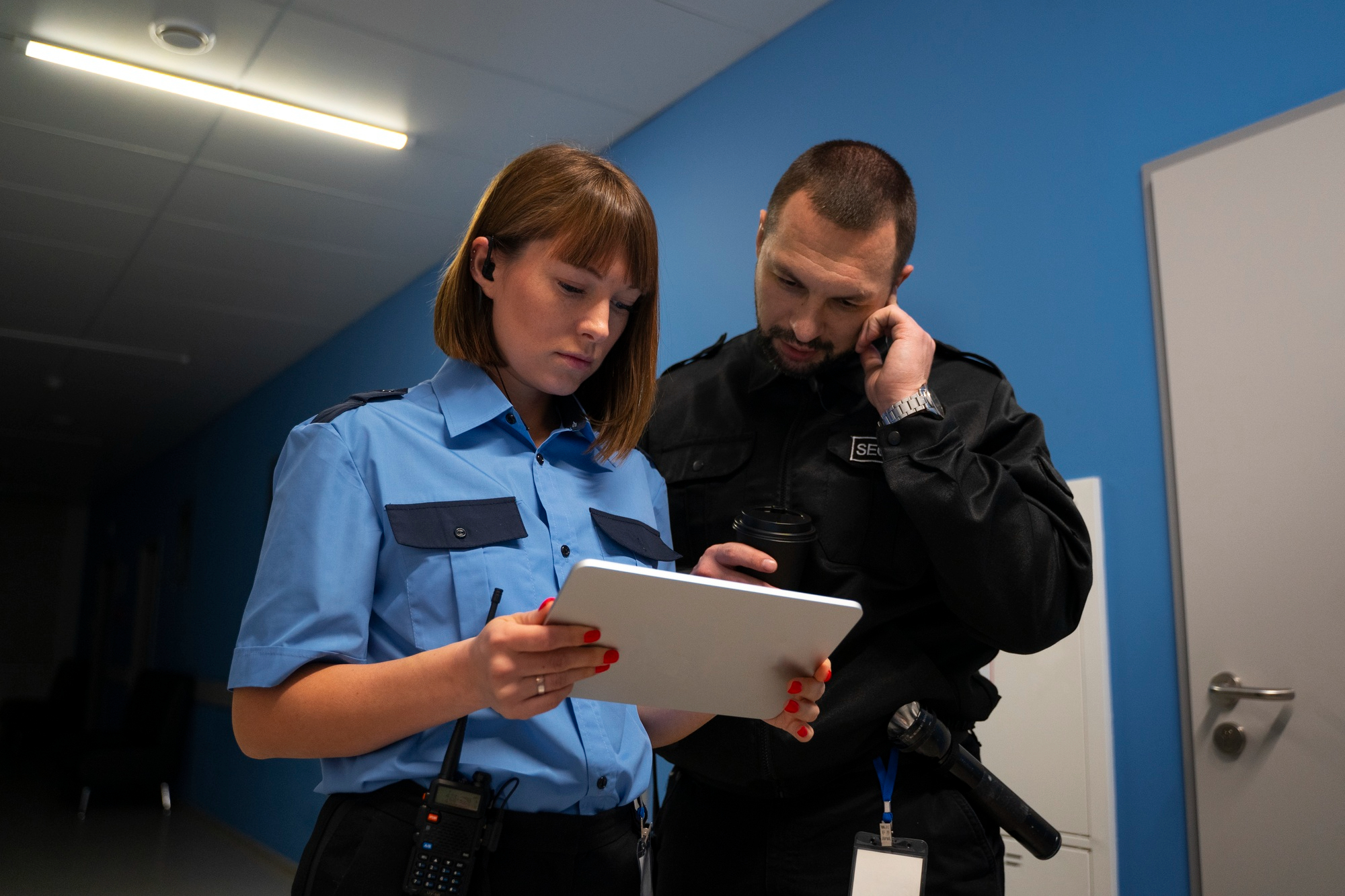
The county station was small and utilitarian, the booking room lit by fluorescent panels that gave everything the faintly greenish cast of long shifts and bad lighting decisions. Malcolm’s belongings were spread across a steel table. The medal case was opened again under the lights, which felt like a deliberate choice rather than incidental. Grayson was in the corridor talking in a low voice to another officer. The deputy, Mercer, was going through the log with the stiff movements of someone performing a task they have decided they do not want to think about too carefully.
The phone on the desk rang.
The dispatcher answered it with the automatic professionalism of someone who has picked up hundreds of calls, and then her posture changed, the way posture changes when the voice on the other end is not what was expected. She said something quietly to the officer beside her, who walked quickly to the corridor where Grayson was standing.
A moment later Grayson came to the desk and picked up the receiver with the expression of a man who expects to manage something and has not yet received the information that management is not an option. The voice that met him belonged to a four-star general who had served alongside Malcolm at various points over two decades and who was not calling to negotiate. He identified himself. He stated clearly that Malcolm Reed was being held without lawful basis. He stated what he expected to happen in the next ten minutes and what would follow if it did not.
Grayson said yes sir twice and hung up.
He stood by the desk for a moment with the studied blankness of a man processing information that requires him to revise a situation faster than he would prefer. Then he looked across the room at Malcolm, who was sitting on the booking bench with his wrists still cuffed and his expression unchanged.
“You think a phone call changes anything?” Grayson said.
“Not the phone call,” Malcolm replied. “The evidence.”
It was the right word to use because it was precise, and precision, Malcolm had learned, is more unsettling to certain kinds of people than volume or emotion. Evidence meant something had been captured. Evidence meant there was a record that existed independently of what anyone said about it.
Grayson told Mercer to start the release paperwork. But he moved toward the corridor that led to the impound lot with the particular speed of someone who has thought of one last thing they might still be able to control.
Mercer watched him go. He stood at the desk with the release forms in his hand for a moment, then made a decision. He was twenty-eight years old, three years into a job that had been considerably less complicated in the interview than it had turned out to be in practice. He had seen things he had persuaded himself were edge cases, anomalies, the acceptable irregularities of a system that was mostly functional. He had been persuading himself of this for long enough that the persuasion had started to feel like a full-time job.
He slid the watch back across the desk to Malcolm. Then he quietly handed him the desk phone.
“He’s going to your car,” Mercer said in a voice barely above a murmur. “I don’t know how much time you have.”
Malcolm picked up the phone and dialed from memory. Daniel Whitaker answered on the second ring. He was a former federal prosecutor who had moved into private practice handling civil rights and veterans’ cases, and he had the particular quality of someone who can receive urgent information at irregular hours and convert it immediately into action without requiring it to be repeated.
“I need you at the Mesa County impound lot,” Malcolm said. “Bring counsel and contact the Bureau.”
He said it the way he had given coordinates in the field, with the flatness and economy of someone for whom urgency and calm are not opposites.
In the impound lot, the floodlights threw hard shadows across the rows of seized vehicles. Grayson reached the Charger and stood beside it with an evidence pouch in his hand, the kind of pouch that contains things which have been taken from one situation for use in another. He had done some version of this before. He had done versions of many things that did not appear in official logs, and the habit of doing them had compounded over years into something that felt less like misconduct than like professional adjustment. You found ways to make situations come out the way they needed to come out. If evidence was inconvenient, evidence was managed. If a person had resources that were going to make a stop complicated, you gave the stop a different story before anyone had time to read the original.
The headlights arrived before he had time to do anything with the pouch.
Not one vehicle. Three. The first sedan stopped at the lot entrance and two people got out, one in a gray suit with a folder under his arm and one in a federal windbreaker with the specific alert posture of someone on a scene they have prepared for. Two more agents followed from the second car. The third vehicle belonged to a county supervisor whose name had been on Malcolm’s call list since before the stop, a backup contact Malcolm maintained with the same logic with which he maintained everything: not because he expected to need it, but because the cost of not having it was too high.
Special Agent Lena Torres approached Grayson directly and looked at his right hand.
“Take your hand out of your pocket,” she said.
Grayson tried to establish that this was county property and that the arrival of federal agents without coordination was irregular. Whitaker did not argue the point. He handed Torres the signed authorization and read from the cover letter in the flat voice of someone reading a document rather than making an argument, which is considerably more effective.
The evidence pouch was removed from Grayson’s possession. Methamphetamine, tagged from a prior seizure, not logged out for authorized transport, not documented for field use. Every person present understood immediately what it meant and what it would have meant if Whitaker and Torres had arrived two minutes later.
Mercer, who had followed from the booking room, looked at the pouch on the hood of the patrol unit and seemed to arrive somewhere he had been approaching for a long time.
The next six hours were methodical in the specific way federal investigations are methodical, which is to say they were thorough in all the ways that local irregularities had not been. Technicians secured the dashcam from Grayson’s cruiser before the deletion command that had been entered could complete. Metadata from the booking room terminal showed access to recording systems at a time that corresponded to Malcolm’s arrival at the station. The bodycam, which should have documented the entire stop, was missing. The absence of it was explained, briefly and inadequately, by Grayson’s deputy. The explanation was noted and its inadequacy noted alongside it.
The patrol radio log showed no traffic violation call, no bulletin, no basis for the stop. The stop existed in the record only as the moment the lights came on, with nothing preceding it to justify them.
The search warrant executed before dawn covered Grayson’s office, his personal storage unit, and the administrative filing room of the county station. What it found was not a single incident of misconduct but a practice, documented across years in the kind of detail that only emerges when someone has been careless enough to keep records of things that should not exist as records. Unlogged cash in evidence envelopes. Narcotics not entered into the system. Property receipts for seizures that had produced no arrests and no convictions. A handwritten notebook containing dates, plate numbers, and brief notations in a private shorthand that took the forensic accountants several days to fully decode but that told a coherent story once decoded.
Some dates in the notebook matched citizen complaints that had been filed and subsequently resolved in ways that satisfied the county but not the complainants. One matched the account of a contractor who had passed through the county with cash for a job payment and arrived at his destination short by almost six thousand dollars. Another matched the timeline of a woman who had been told, through an intermediary, that questioning the seizure of her son’s truck would result in additional scrutiny of her son.
By sunrise, the case had expanded beyond its original parameters. The methamphetamine Grayson had been carrying connected, through lab analysis and chain-of-custody records, to a distribution pattern that the DEA had been tracking independently. What had begun as a traffic stop and a wrongful detention had opened onto something considerably larger, a system in which evidence seizures funded activity that did not appear in any budget and in which the authority of a badge had been used, over a long period and with practiced confidence, to intimidate the people least able to push back.
Two deputies were suspended that morning. A third resigned before noon. Mercer was placed under protective review and agreed to cooperate fully with the investigation, which, in the estimation of the prosecutors who later reviewed his testimony, contributed materially to their ability to establish the pattern rather than just the incident.
Malcolm gave his statement in the same station where he had been booked, now a different kind of room under a different kind of authority. He answered every question with the precision of someone who had been noticing details his entire adult life and had developed the habit of storing them in a form he could retrieve. Time of stop. Specific statements made by the officer at each stage. The sequence of the search. The point and nature of physical contact. The moment he activated the watch signal. His account was so clean and so internally consistent that one of the agents, reviewing it later, compared it to a contemporaneous written report rather than a verbal recollection from a person who had been through a genuinely stressful experience.
When Daniel Whitaker finally drove him toward Phoenix late that afternoon, the ceremony had been delayed by nearly three hours. The families had been told there was a situation. Malcolm’s daughter Simone had been told somewhat more than that, because she was not someone who accepted incomplete information gracefully and because the people around her were not capable of convincing performances of calm when they were not calm.
Malcolm changed in the church office, borrowing a fresh shirt from one of the groomsmen while a very patient makeup artist did what she could with the marks the cuffs had left on his wrists. He looked at himself in the mirror for a moment before going out, the way you look at yourself when you are taking stock of what the day has actually been and deciding how to carry it into the next room.
Simone was standing near the entrance in her dress, holding her bouquet with both hands, and when she saw him she closed her eyes briefly before she opened them again.
“I knew you’d make it,” she said.
Malcolm let out a breath that had been held, in some form, since the moment the patrol lights appeared in his mirror. “I’m sorry for the delay.”
She shook her head. “You’re here. That’s all.”
He walked her down the aisle three hours behind schedule, in a borrowed shirt, with his daughter’s hand on his arm and the knowledge that the day had come very close to being something else entirely. The guests rose. The cameras clicked. The light through the church windows was the particular warm amber of late afternoon, and it caught the silver of his tie pin and the white of her dress, and if anyone in that room understood what it had taken to arrive at this moment, they understood it quietly and let the ceremony be what it was supposed to be.
The case became national news in the weeks that followed, when the dashcam footage was recovered and released in the course of legal proceedings. Americans watched the stop play out in the flat documentary grammar of law enforcement video: the circuit around the car, the questions that had nothing to do with traffic, the warrantless search, the moment Malcolm asked for a badge number and the moment everything that came after was set in motion. Civil rights organizations responded. Veterans’ advocacy groups responded. The combination carried a specific weight because Malcolm’s story was not primarily about the medals, which Grayson had handled with contempt, but about the rights that applied regardless of them, the rights that applied to every person in that car on every road in the country, rights that required no decoration to be real.
Grayson’s defense tried several angles. Overzealousness in the line of duty. Political targeting by federal authorities. The argument that roadside discretion is a legitimate exercise of law enforcement judgment. None of it held against the documentary record, which was not composed of impressions or interpretations but of dates and serial numbers and handwriting that had been identified and decoded and matched to incidents with names attached to them. The jury deliberated for less than a day.
The conviction covered all major charges: unlawful arrest, evidence tampering, drug distribution, extortion, and conspiracy. The sentence was twenty-five years. When the judge read it, Grayson sat in the way of a man who has spent years occupying rooms from a position of size and has just discovered that size is not the same thing as standing.
Malcolm attended the sentencing. Not for the specific pleasure of watching the verdict read, but for a reason he described later to Whitaker as something closer to obligation. Men in Grayson’s position, he said, counted on exhaustion. They counted on people eventually deciding that peace was worth more than precision, that letting something go was a form of wisdom rather than a form of surrender. Malcolm had watched that dynamic play out in other contexts and other systems for three decades, the way institutions protect themselves by making accountability feel more costly than the original harm. He had not been willing to pay that price. He was not willing to let the sentencing happen in a room he had chosen not to enter.
The civil settlement came several months later. The amount was significant. Malcolm deposited enough of it to ensure he would not have to think about money again in the years remaining to him, and then he used the rest to start something.
The Reed Justice Initiative was a legal defense fund, seeded with settlement money and organized around a simple premise: that the people most likely to be targeted by abuses of authority were also the people least likely to have access to the legal resources needed to challenge them. Veterans, working families, people moving through highway corridors in counties where oversight was thin and habits were old. The fund covered legal fees, provided access to attorneys with relevant expertise, and maintained a network of contacts in federal and state law enforcement for cases that crossed jurisdictional lines.
Whitaker joined the board. Two retired federal judges followed. Colin Mercer, who had left law enforcement after the investigation concluded, eventually joined as well, working in community outreach and speaking publicly, at conferences and law enforcement training seminars, about the specific internal pressure that makes institutional silence feel like the reasonable choice and about what it costs when that silence holds.
The first case the fund took involved an Army medic whose vehicle had been seized under civil forfeiture rules that were not applied with the consistency the law required. The second involved a veteran in his seventies who had been threatened with arrest during a traffic stop after politely questioning the basis for a requested search. Then more came in, from places like the county outside Mesa, small jurisdictions where enforcement authority had accumulated unchecked for long enough that it had started to function less like a public institution and more like a private arrangement.
At the one-year anniversary gala for the foundation, held in Phoenix at a venue that had been booked without quite enough lead time and was therefore slightly too small for the number of people who showed up, Simone stood at the podium to introduce her father. She had prepared remarks and delivered them for about forty seconds before she set the paper down.
“He was supposed to walk me down the aisle,” she said. “And he did. That’s all I’m going to say about that.”
Malcolm stood at the podium for a moment before speaking, the way he stood anywhere before doing something that mattered, gathering himself without appearing to gather himself.
“They tried to humiliate me on a road in broad daylight,” he said. “What they actually did was reveal themselves. The question is never whether authority can be abused. It can, and it will be, wherever it operates without accountability. The question is whether the people who witness it treat that abuse like weather, something that happens and passes and leaves no obligation behind, or like a fire that has to be put out.”
The line traveled, as lines do when they are both precise and true. It appeared in coverage of the case, in training materials, in the written decisions of at least two federal cases that cited the Reed Initiative’s advocacy work in subsequent years.
The Charger was still his. He had it detailed the week after the trial concluded, returning it to the condition it had been in before the roadside search, before the deputy’s boot had caught the rear quarter panel, before the trunk had been gone through with the haste of a man looking for something to use rather than something that was actually there. The body shop that did the detailing did it at no charge. The owner had read about the case and wanted to do something specific with that knowledge.
Malcolm drove it to court hearings and to foundation events and occasionally to things that had nothing to do with any of it, just the pleasure of a long road with the engine at its note and the sky doing whatever it was going to do. It had never represented wealth to him, not really. It represented the kind of care you put into something because the act of caring about it is worth something independent of what it costs or what it signals to anyone watching. He was not interested in signaling. He was interested in the thing itself.
On the second anniversary of Simone’s wedding, she gave him a framed photograph taken in the church corridor, just before they walked out together. He looked tired in it, and undeniably present, the look of a man who has been through something real that day and has not had time to process it and has decided that the processing can wait because this moment will not. She had written on the back in her careful handwriting: They stopped your car. They did not stop your worth.
He kept the frame on his desk at the foundation office, beside the velvet box of medals that had once made a man with a badge pause for half a second before deciding they did not matter. The pause had been long enough, in the end. Long enough for Malcolm to understand exactly what kind of situation he was in. Long enough to press a button on a watch. Long enough for the right people to move.
Justice, when it arrived, had not arrived because of the medals or the general or the press coverage or any single point of intervention. It had arrived because a deputy had found a line he was not willing to cross. Because a dashcam deletion had not completed in time. Because an attorney had picked up on the second ring. Because a system of accountability, however imperfect and however unevenly applied, contained enough functional parts that when they were engaged correctly and persistently they could still do what they were designed to do.
Malcolm understood all of that. He had understood it before the patrol lights appeared in his mirror, which was part of why he had remained calm when they did. He knew the tools existed. He had spent enough time around systems, military and civilian and legal, to understand that the difference between a system that works and a system that fails is usually not the design but the willingness of the people inside it to hold the line when holding it becomes inconvenient.
He thought about that often, in the years that followed, when the foundation received a new case and he sat across from a person who had been through something similar and who looked at him with the combination of hope and exhaustion that people carry when they are not sure they have enough left to fight with. He told each of them the same thing, not as a speech but as a fact he had verified personally.
The tools are there, he said. You don’t have to be extraordinary to use them. You just have to refuse to accept the version of events that someone else wrote for you.
Then he sat with them and they figured out, together, where to start.

Adrian Hawthorne is a celebrated author and dedicated archivist who finds inspiration in the hidden stories of the past. Educated at Oxford, he now works at the National Archives, where preserving history fuels his evocative writing. Balancing archival precision with creative storytelling, Adrian founded the Hawthorne Institute of Literary Arts to mentor emerging writers and honor the timeless art of narrative.