I learned the most important thing about humiliation long before I ever put on a black robe: it cuts deepest when delivered with perfect manners.
My brother Miles provided the definitive proof of this exactly three days before the dinner, in a text message that arrived while I was still sitting at my desk in chambers, the city lights just beginning to press against the evening windows. At a casual glance the message looked like a logistical note, the kind of minor adjustment our family had been making around the edges of my existence for as long as I could remember. Then I read the actual substance of it, and the casual glance became something else entirely.
Miles informed me that I was permitted to attend the engagement dinner. However, I was under no circumstances to disclose to anyone that I was his biological sister. Her father, the text explained with a reverence that bordered on desperate, was a prominent federal judge. My presence as his sibling would be, and this was his word, embarrassing.
Before I had fully metabolized the audacity of the first message, my phone vibrated with a call from my mother. Evelyn had the gift of deploying warmth as a restraining device, and she used it now in the particular measured cadence she reserved for moments when she needed me to swallow something difficult without making a sound about it.
“Audra, darling,” she said. “We’ve arranged a lovely spot for you near the back of the room, away from the main table. Just near the service doors. It’s only one evening, sweetheart. Much quieter back there.”
Quieter. The word was doing significant work. It meant invisible, and we both understood that, and neither of us said so, because the defining characteristic of the Cole family’s particular pathology was that they never had to raise their voices to make you feel erased. The erasure was architectural. It was built into the seating arrangement and the introductions and the way my parents’ faces animated differently when they talked about Miles than when they talked about me, which was a distinction I had been cataloging since approximately the age of seven with the precise, dispassionate attention of someone who has learned that the data is more useful than the grief.
I told her I would be there. I promised to arrive on time and sit where instructed and say nothing they had not approved.
What they had failed to calculate, what the entire elegant construction of the evening had failed to account for, was that the formidable man they were performing for would know exactly who I was the moment he saw my face. He would know not from a directory or a name badge or a mutual acquaintance’s introduction, but because he had spent the previous week requiring his clerks to read my most recent dissenting opinion as a model of how to dismantle a flawed argument without wasting a syllable.
But I am getting ahead of myself.
My name is Audra Cole. I am thirty-nine years old. I have spent the last decade as a federal judge, and before that a decade prosecuting public corruption cases that made men in six-thousand-dollar suits understand for the first time what it felt like to be genuinely afraid of the consequences of their choices. My mentor is Miriam Caldwell, who served on the First Circuit Court of Appeals for twenty-two years and who is the first person in my life who ever looked at me and assessed what I was capable of carrying rather than what I appeared to lack.
None of this was a secret. None of it was hidden. It simply existed in a register my family had decided not to tune into, because tuning into it would have required them to revise a story they had been telling for three decades, the story in which Miles was the achievement and I was the administrative category, competent and useful and essentially interchangeable with the furniture.
When I relayed the terms of the dinner invitation to Miriam the following morning, I expected righteous indignation. I expected the particular cutting quality she brought to moral failures, the way she could strip a bad argument to its skeleton in two sentences and leave it displayed for anyone in the room to examine. Instead she went very still in her chair behind her desk, and the stillness had a listening quality to it that I had learned to recognize as more dangerous than any outburst.
“What is the name of his fiancée’s father?” she asked.
“Theodore Ward.”
Miriam closed her eyes for half a second. When she opened them there was something in her expression I can only describe as the particular alertness of someone who has just recognized the shape of a very interesting problem.
“Audra,” she said. “Theodore Ward has cited your opinions in his public remarks on three separate occasions. He doesn’t merely know of you. He knows you.”
I sat with that information for a moment while its implications rearranged the entire structure of what I had imagined the evening would be. I had prepared myself for a night of managed invisibility, of swallowing the familiar humiliation with the practiced composure of someone who has had decades to develop the skill. What Miriam was telling me was that the evening had a different architecture than any of us had anticipated. The man my family was performing for had already formed his opinion of me from my work, from the quality of my reasoning under pressure, from the precision of my language in situations where language was the only instrument available.
Miles had set a stage he did not understand. And the person he had assigned to the back corner by the kitchen doors was the one the audience had already come to see.
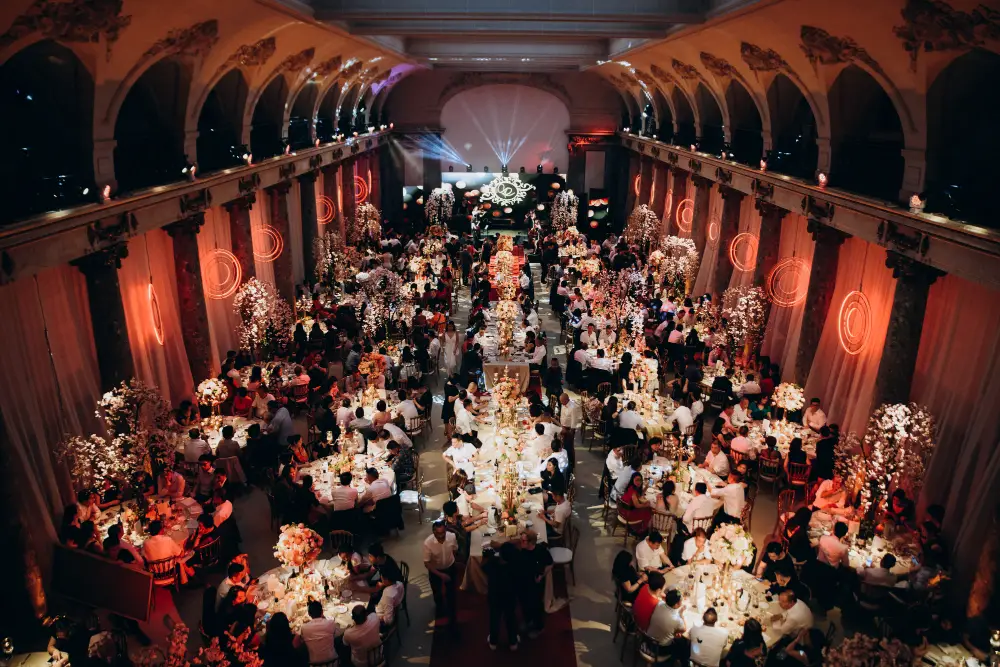
The Union Club on a Friday evening in November was exactly the kind of room Miles found intoxicating. It smelled of old wood and pressed linen and the particular variety of affluence that presents itself as restraint while being anything but. The private dining room on the upper floor had floor-to-ceiling windows overlooking the city, and every surface, every stem of every glass, every crease in every napkin, was arranged to communicate importance without making the announcement directly, which is always the most expensive way to make any announcement.
Miriam’s town car dropped us at the entrance at three minutes before seven. I wore a black midi dress that I had chosen with the same criteria I applied to courtroom dress: nothing that would become the subject of the conversation, everything that would ensure I was taken seriously from the moment I entered the room. Miriam looked at me in the car with the assessing quiet she brought to final preparations.
“Let them underestimate you,” she said, and turned back to the window.
I spotted my family immediately. My parents were working the room with the desperate sociability of people auditioning for a part they were terrified they had not yet secured. Miles was near the center, his hand on the small of Genevieve Ward’s back with the proprietary ease of a man who has decided possession is sufficient to replace deserving. He wore the expression of someone who believes he has finally found the room he was always meant to occupy. Genevieve was genuinely elegant, the kind of ease that comes from having never been required to perform confidence because it was simply always available.
The moment Miles saw me, every milliliter of color left his face.
He detached himself from Genevieve and crossed the room in my direction with a speed that bordered on undignified, his face assembled into something that was attempting to be a grin and landing closer to a grimace. “You’re late,” he said, though I was early.
His eyes moved to Miriam with a flicker of confusion. He didn’t recognize her immediately, which was not surprising since people rarely place a First Circuit judge outside the context of her bench, but something in the way she carried herself registered as important, and I could see him filing that away for later, a problem he would return to after he had managed the more immediate one.
Genevieve materialized at his elbow, warm and gracious, extending a hand.
Miles stepped smoothly between us.
“Genevieve,” he said, his voice dropping into the register of casual dismissiveness that he had spent a lifetime perfecting, “this is Audra. She does administrative work at the courthouse.”
Administrative work.
I watched the sentence leave his mouth. My pulse did not change. I had been in rooms where the truth was being handled far more roughly than this, and the discipline required was the same: you observe, you document, you wait. I offered Genevieve a polite nod and said nothing to correct him. I could see the relief move through Miles’s shoulders like a physical release of pressure, the relief of a man who has issued a test and received what he believes is confirmation that the subject will comply.
He thought the silence was submission. He had spent thirty-nine years confusing my composure with defeat, and he was doing it again now, and I let him, because the architecture of what was about to happen required him to be precisely where he was.
My mother appeared next, executing an air-kiss that landed a few inches to the left of my cheek, and directed me with practiced warmth toward the back of the room, where a small two-top table had been positioned adjacent to the swinging service doors. The maitre d’ escorted me there with the professional indifference of someone who has been given instructions and is simply following them. Miriam settled at a slightly larger table nearby, close enough to see everything, far enough to allow events to develop without her intervention reshaping them prematurely.
From my corner I had a clear sightline to the head table. Miles sat between Genevieve and her father with the expression of a man who believes he is one dinner away from a life he has always felt he deserved. Theodore Ward anchored the room without appearing to try. He did not dominate the conversation. He simply occupied his position with the density of someone who has spent decades making consequential decisions, and the room organized itself around him accordingly. I watched my father nod vigorously at everything Ward said. I watched Miles laugh a beat too late at a mild observation, the laugh of a man monitoring his own performance from the outside.
As the first course was cleared, Ward stood and collected champagne flutes from a nearby tray, beginning the table-by-table circuit of the room that I had heard he favored at private dinners, the personal greeting that he had apparently made a habit of as a way of honoring every guest rather than only the ones who occupied the prominent positions. He moved through the room methodically, exchanging brief, genuine words at each table, and I watched him work his way through the crowd from my corner by the service doors.
I folded my hands in my lap. I waited.
When Theodore Ward turned the last corner and stepped into the dimmer light near my table, I saw the precise moment of recognition on his face, and it was nothing like the vague squinting of a man trying to place a familiar face at a party. It was the specific jolt of someone encountering something impossible in a place where it should not be. His forward momentum halted so abruptly that the champagne flutes on the tray collided with a ring of crystal that carried over the jazz quartet’s soft background music and briefly claimed the attention of every person in the room.
He stared at me for three full seconds.
Then he set the tray down on the edge of my tiny table without looking at where he was placing it, straightened, and addressed me in a voice that had no interest in remaining private.
“Judge Cole. I had no idea you were here tonight.”
The Union Club went completely silent.
It was the specific silence of a room full of practiced social professionals who have all simultaneously understood that the tectonic structure of the evening has ruptured. I heard rather than saw my mother’s wine glass stop moving. I heard the quality of Miles’s breathing change from ten feet away.
I rose from my chair, a reflex from years of courtroom protocol, and before I could extend my hand Ward had taken it in both of his, the handshake of a peer, substantial and unhesitating.
“I was rereading your dissent on the Holloway privacy injunction last week,” he said, still not troubling himself with the issue of volume. “I assigned it to my entire clerk staff. I told them if they wanted to understand how to expose a flawed argument without wasting a word, that opinion was where to start.”
The room was watching us from the head table with the collective fixity of people who have understood that they are witnessing something that will be discussed for a long time.
I looked at Miles. He had the appearance of a man watching a wave he cannot outrun. Genevieve’s expression had traveled rapidly through polite confusion and arrived somewhere that contained the first serious crack of suspicion. My mother was already in motion, crossing the carpet toward us with the bright, manic energy of someone attempting to overtake a catastrophe she has belatedly recognized.
“Theodore!” she said, inserting herself between Ward and me with the practiced ease of decades of social deflection. “You know Audra! She is so modest, she practically begged to sit back here in the quiet, she absolutely hates the spotlight.”
Ward did not look at her. His attention remained on my face, and I could see his formidable reasoning assembling the pieces in real time, the administrative work, the back table, the service doors, the absence of any introduction from the fiancé whose family dinner this supposedly was.
From the adjacent table, Miriam Caldwell rose.
She moved through the room with the unhurried authority of someone who has never needed to demonstrate urgency to convey importance. The guests within her radius adjusted their positions slightly without appearing to notice they were doing it.
Ward turned. The shock of finding one federal judge beside the kitchen was significant. Finding two was something else entirely.
“Miriam,” he said. The word contained an entire question.
“I had a suspicion the evening might hold some surprises,” Miriam replied, her voice carrying the smooth warmth of someone who is genuinely enjoying herself. “Though I confess I was still taking bets with myself about how long it would take anyone in this establishment to notice who had been seated in the back.”
Ward looked from Miriam to me, and then his gaze traveled slowly across the room to the head table, where Miles was standing beside the woman he hoped to marry, his hands at his sides, his face the color of old paper.
Ward lowered his voice somewhat, though the acoustics of the room ensured it still carried. “Miles. Why is Judge Cole at a table by the service door?”
Miles’s jaw moved. The words that eventually emerged were small and terrible in their inadequacy. “There was a mix-up with the seating chart. And Audra doesn’t really mind where she sits.”
He said it with the absolute certainty of someone who has spent a lifetime being confirmed in his assumptions about a particular person, and who has therefore lost the capacity to question whether those assumptions remain accurate. He said it as if he knew me, when in fact he had never once asked what I thought about anything that mattered.
Ward’s eyes went dark.
Genevieve was looking at her fiancé the way you look at something that has just revealed itself to be a different shape than you believed it to be.
Ward pulled out the chair across from me and sat down at my tiny table. He did not return to the head table. He did not qualify the gesture or soften it with an explanation. He simply relocated his authority, weaponizing his presence in the most efficient way available: by making it unmistakably clear, to every person in the room, where his respect resided and where it did not.
My mother made another attempt, her voice scaling upward through several registers. Miriam did not raise her voice to reply. She simply produced her phone, looked at me once with a question in her eyes, and when I gave a small, clear shake of my head, she turned the screen outward and read my brother’s text message to the room.
You can come to the dinner, but don’t tell anyone you’re my sister. Her father is a federal judge and it would be embarrassing.
The silence that followed was not the anticipatory silence of before. It was the silence of a room that has absorbed a fact and is in the process of calculating what it means. Every person present had heard the same words at the same time, and there was no version of the words that could be arranged into something innocent.
Genevieve stared at Miles and waited. She was waiting for the prank reveal, for the explanation that would restore the sense she had made of the last several months, for some account that would allow the story she had believed to remain intact. Miles opened his mouth and nothing useful came out.
Ward extended a hand. Miriam placed the phone in it. He read the screen once, then again, and when he looked up his face had the particular stillness of a man who has completed his evaluation and does not anticipate revising it.
“Is this real?” he asked Miles.
“It looks bad without context,” Miles said.
Without context. Even with everything collapsing around him, my brother’s fundamental architecture held. He was not ashamed of the content. He was aggrieved by the lighting.
Genevieve let out a sound that was half-breath, half-something-breaking. She had assembled three months of a relationship from the materials she had been given, and the materials had just been revealed as largely fabricated. “You told me she did data entry,” she said. Her voice was very controlled, which made it more alarming, not less. “You told me she was a recluse. You told me you barely spoke because she was difficult.”
Miles attempted to address all three simultaneously and succeeded only in making it worse. He said something about wanting the evening to be about them, about not wanting the focus to shift, about how he had been trying to protect the night from unnecessary complication.
Ward raised one hand and Miles stopped.
“No,” Ward said. “What you feared was comparison.”
He set Miriam’s phone on the table with the soft finality of a gavel. “You didn’t hide your sister to protect this dinner. You hid her because you knew, at some level, that the reality of who she is would make the version of yourself you’ve been selling look considerably smaller than advertised.”
Nobody argued. There was no available counter because the statement had the quality Ward’s best rulings always had: it named the actual thing precisely, without excess, and left no interpretive room.
Genevieve stepped away from Miles. The physical movement was small, less than a foot, but in the geometry of that room it was enormous. She asked the question that had been building since the text was read aloud. “How many times have you done this? Did your parents know?”
My father studied the tablecloth. My mother’s face was doing something complicated and losing. Their hesitation was complete, and silence in that context is not ambiguous.
Miriam spoke once more, to the room rather than to any individual in it. She noted, in the measured tone of someone entering a fact into evidence, that I had spent years prosecuting the kind of corruption that sent arrogant men to federal prison, that my work was considered a model of rigor in legal circles, and that anyone in the room who claimed to hold the law in respect should have known my name before the appetizers arrived.
Ward nodded. He looked at his daughter with a brief, complicated grief, and then he looked at Miles.
Miles came toward me. He came with the wild-eyed urgency of a man who has run out of every other option and has arrived, finally and too late, at the person he should have considered first. He leaned over my small table and asked in a desperate whisper whether we could step into the hallway for two minutes, just to talk.
He asked it as if I owed him privacy. He asked it as if my discretion was a resource he had a right to draw on even after he had spent the last thirty-nine years demonstrating that he did not consider my existence worth acknowledging. I understood clearly, looking up at him, that he was not asking for a conversation. He was asking me to help him contain the damage. He was asking me to perform, one more time, the role he had assigned me: the quiet one, the useful one, the one who absorbs so that the golden child can continue to shine.
“No, Miles,” I said. My voice carried. I did not lower it to protect him. “You were comfortable attempting to embarrass me in front of this room. You can hear my answer in it.”
He flinched. Not from the words, I think, but from the realization that the tone he was hearing, calm, complete, uninterested in his comfort, was one he should have heard from me years ago and had mistaken my composure for compliance for so long that the real thing, when it arrived, sounded like a foreign language.
Genevieve removed her engagement ring from her left hand and placed it on the table beside her water glass. She did it without ceremony, without tears, without the theatrical flourish the moment might have invited. The small clink of metal against the mahogany was the quietest possible conclusion to the evening.
Ward stood. “Genevieve, get your coat.” He turned to Miles. “The wedding is canceled. There is nothing further to discuss. Good night.”
My mother wailed something about overreacting and one text message and families having disagreements. Miriam looked at her with the particular compassion of someone who understands a person’s limitations without respecting their choices. “This was not one text message,” Miriam said. “This was a pattern of behavior that had the misfortune, for the first time, of being witnessed by credible observers.”
My father opened his mouth. The words did not come. He had spent thirty-nine years staying quiet while I was diminished so that Miles could feel large, and the accumulated cost of that silence had come due all at once in a room full of people who did not share his interest in the outcome.
Genevieve came back from the cloakroom with her coat and walked directly to my small table in the corner. I watched her cross the room and thought about the strangeness of it, the irony that the most sincere gesture of the entire evening was being made from one woman to another at the table that had been designed as a punishment.
She said she was sorry. She said she should have asked harder questions.
“You knew the fiction you were given,” I said. “Take care of yourself.”
She left with her father. The doors of the private dining room closed, and the sound of them closing had a finality to it that was different from the silence before. The dinner was over, though the food had barely been touched.
Miles stood alone in the center of the room. He had shed everyone who had been propping up his atmosphere, and without that support he looked precisely as he was: a man of ordinary dimensions who had spent his life borrowing other people’s altitude. He said my name in the voice he had used when we were children and he needed me to solve a problem he had created, the voice that used to work. “Audra…”
“There’s nothing to discuss tonight,” I said. I pushed in my chair and picked up my bag. “I’m no longer available to be pruned so you can bloom.”
Miriam rose beside me and we walked out together, our heels marking the floor in a rhythm that sounded, to my ear, like something measured and certain and entirely my own.
Outside, the November air was brutal and clarifying. Miriam paused at the curb and looked at me with the quiet assessment she brought to every important question.
“Are you all right?” she asked.
I looked back through the frosted glass at the shape of my brother still standing where I had left him, stranded in the center of his own wreckage. For a long moment I held the complicated weight of it: thirty-nine years, the birthday cakes with the wrong kind of attention, the achievements filed under the wrong category, the accumulated mathematics of being treated as a resource rather than a person. I held it and I did not put it down, because pretending it was weightless would have been its own kind of falseness.
Then I turned back to the cold dark street.
“I am now,” I said.
The consequences that followed were not dramatic. They were structural, which is always the more lasting kind. The legal community in Boston is smaller than it appears from the outside, and its capacity for information transfer operates with the efficiency of a well-maintained network. By Monday, the story had moved through the relevant corridors in the form that made it most meaningful: not as gossip, but as a character assessment.
A senior partner at Miles’s firm was a longtime associate of Theodore Ward. Miles was called to a meeting that did not appear on the official calendar, in a room on the fortieth floor, and the subject was not malpractice or legal failure. It was judgment. In a profession where judgment is the entire product, the question of whether a man possesses it is not a secondary matter. What my brother had done at that dinner was not an interpersonal failure that could be quarantined from his professional identity. It was evidence of the man’s fundamental architecture: his willingness to deceive people he believed he needed, his calculation of human beings in terms of utility, his assumption that other people existed to serve his story rather than to have their own.
He was removed from a client development initiative. The internal partnership track he had spent years cultivating evaporated. Six weeks after the dinner, the firm requested his resignation in language designed to ensure the process looked civilized, which is the most expensive kind of ending in corporate law because it provides no drama to generate sympathy.
The luxury penthouse lease he had signed in anticipation of the Ward family connection was broken. The car followed. By February he was calling contacts he had previously dismissed, leaving messages that went unreturned, navigating the specific humiliation of a person who has spent years treating the network as a backdrop for his performance and now needs it to actually function.
My parents made several attempts to reestablish contact, each one revealing a different layer of what they actually wanted. The first wave was direct: they asked me to intervene, to speak to Ward, to use whatever I had to restore Miles’s trajectory. The second wave was emotional: my mother sent long messages about the sanctity of blood, about family being family, about not letting an outsider destroy what they had built together. The third wave was tactical: my father left voicemails noting that Miles was struggling under significant stress, that the family needed me, that I had always been the stronger one and strength implied a responsibility to forgive.
That last voicemail was clarifying in the way that a single image can suddenly make a whole pattern comprehensible. What they wanted was not reconciliation. They wanted the old configuration restored: me in the role of designated absorber, processing whatever the family required me to process, asking nothing in return, allowing the structure to function as it always had. They had mistaken my lifelong composure for unlimited supply, and now that the supply had been withdrawn they were not asking me to be seen. They were asking me to become invisible again.
I changed my phone number. I put aggressive filters on the remaining contact channels. I instructed courthouse security to flag unverified personal deliveries. None of this was performed in anger, because anger implies that the people who caused the injury still hold your attention in an active way, and they did not. It was performed in the clean, administrative spirit of someone closing accounts that have never yielded a positive return.
A letter arrived from Genevieve a month later, handwritten on heavy paper, devoid of self-pity. She said that watching the ease with which Miles had managed her perception of me, the confidence with which he had assigned me a diminished identity and expected everyone around him to accept it, had forced her to recognize a pattern in herself, a tendency to receive the version of people she was handed rather than asking who they actually were. She said the dinner was the most humiliating night of her life, but that it had also been, in ways she was still untangling, an education. She thanked me for simply having existed in a way that made the truth eventually unavoidable.
I put the letter in my desk drawer. Earned truth deserves a place.
The vacancy on the First Circuit opened eleven months later, and I did not navigate the nomination process alone. Miriam’s support was complete and unambiguous. Theodore Ward, who owed me nothing, provided a public endorsement of my work and character that carried weight precisely because it came from someone who had arrived at his opinion independently, through the quality of my reasoning over years of published work, rather than through loyalty or obligation. He did not frame it as a favor. He framed it as an empirical assessment.
The confirmation hearings were the kind of extended pressure that reveals what a person is made of at a level that social performance cannot sustain, and I was grateful for that. I wanted the process to be rigorous. I wanted the scrutiny. I had spent enough of my life being underestimated to understand that the most durable form of recognition is the kind that survives examination, and mine did.
When the vote came through I did not celebrate in any fashion that would have looked, from the outside, commensurate with the moment. I sat in my office in the early evening, looking at the city through the same window I had been looking through for a decade, and thought about the small table by the service doors. I thought about the amount of energy my brother had devoted to the project of my erasure, the planning, the text message, the introduction, the seating arrangement, all that careful, sustained effort directed at making sure I did not exist in the room in any way that could complicate his performance.
The most efficient thing he ever did, in his entire career, was make sure I was in that room at all.
My swearing-in ceremony was held in a packed federal courtroom on a morning in early December when the light came through the tall windows at an angle that made the mahogany glow. Miriam was in the front row. Ward was in the second. My clerks were there, and former colleagues, and the people who had known me through the years when the work was difficult and the recognition was not proportionate to the effort, which is most years, for most people who do serious work.
My parents were not invited. My brother did not have the security clearance to enter the building.
I anticipated this observation being made, by people who found it harsh. I anticipated being asked whether I had taken it too far, whether the exclusion was disproportionate, whether family deserved a consideration that superseded the circumstances. I had thought carefully about those questions over the preceding months, and my answer was consistent: family is not a category that operates independently of conduct. It is not an automatic credit extended to people who share your genetics regardless of what they have done with the access that relationship provides. Family is something proven by behavior over time, by the willingness to claim a person when claiming them is inconvenient, by the decision to introduce someone fully and honestly in rooms where a dishonest introduction would have served you better.
By that measure, the people in the courtroom on that December morning were my family. They had chosen me in full knowledge of who I was, with nothing to gain from the association except the association itself, which is the only kind of choosing that means anything.
The people who had spent thirty-nine years managing my presence so that it would not interfere with someone else’s image had not demonstrated family. They had demonstrated the opposite of it, a willingness to use the language of family as a mechanism for extraction.
The most expensive lesson Miles Cole paid his entire future to learn was not about loyalty or gratitude or the sacred bonds of blood. It was considerably simpler. It was the lesson that a person’s actual dimensions will eventually become visible, regardless of how carefully the lighting has been arranged. You can seat a federal judge by the kitchen doors and introduce her as an administrative assistant, but the effort required to maintain that fiction is unsustainable, because the world is full of Theodore Wards who have read her work and formed their own opinions, and eventually one of them is going to walk around the corner and see her sitting there.
The most lethal thing you can do to the people who try to minimize you is not to plan against them. It is not to scheme, or to engineer their downfall, or to spend your energy mapping the perimeter of their damage.
It is to keep working. To keep building. To keep producing the kind of work that allows a man like Theodore Ward to walk around a corner and recognize you immediately, to recognize the quality of your mind from the quality of your sentences, to understand in an instant that the woman by the kitchen doors is not where she belongs, and to say so in a voice that carries the length of the room.
They tried to build their future on my ghost. What they discovered, too late, was that the ghost had a bench.

Laura Bennett writes about complicated family dynamics, difficult conversations, and the quiet moments that change everything. Her stories focus on real-life tensions — inheritance disputes, strained marriages, loyalty tests — and the strength people find when they finally speak up. She believes the smallest decisions often carry the biggest consequences.
Very good