Everything I have is my daughter, Lila.
I had her at eighteen. My parents had money, polished manners, and a deep love of appearances. When I got pregnant, they looked at me like I had dragged dirt into a museum. My mother said, “You ruined your life.” My father said, “You will not do the same to this family.” I stood there with one hand over my stomach and said, “This is your grandchild.”
My father laughed.
“No,” he said. “This is your consequence.”
That was the last night I lived in their house.
What followed was cheap apartments, double shifts, thrift stores, and babysitters I could barely afford. I worked mornings at a diner and nights cleaning offices and came home smelling like coffee and bleach. I did what I had to do, and I did not ask anyone for help, because help had come with conditions and I had learned what those conditions cost.
Lila grew up in all of that and somehow came out softer than I ever was.
She is fourteen now. Smart and funny and too generous for her own good. One week she was collecting blankets for the animal shelter. The next she was asking if we had extra canned goods because Mrs. Vera next door had said she was fine, but “Mom, she isn’t fine.” She noticed things I taught her to notice and some things I don’t think I taught her at all, things that seem to have arrived in her already, factory settings I cannot take credit for.
Last weekend she came home quiet. Not sad. Just thinking in that deep way she has, the way that means something is getting worked out in her head and she will eventually bring it to me when it is ready.
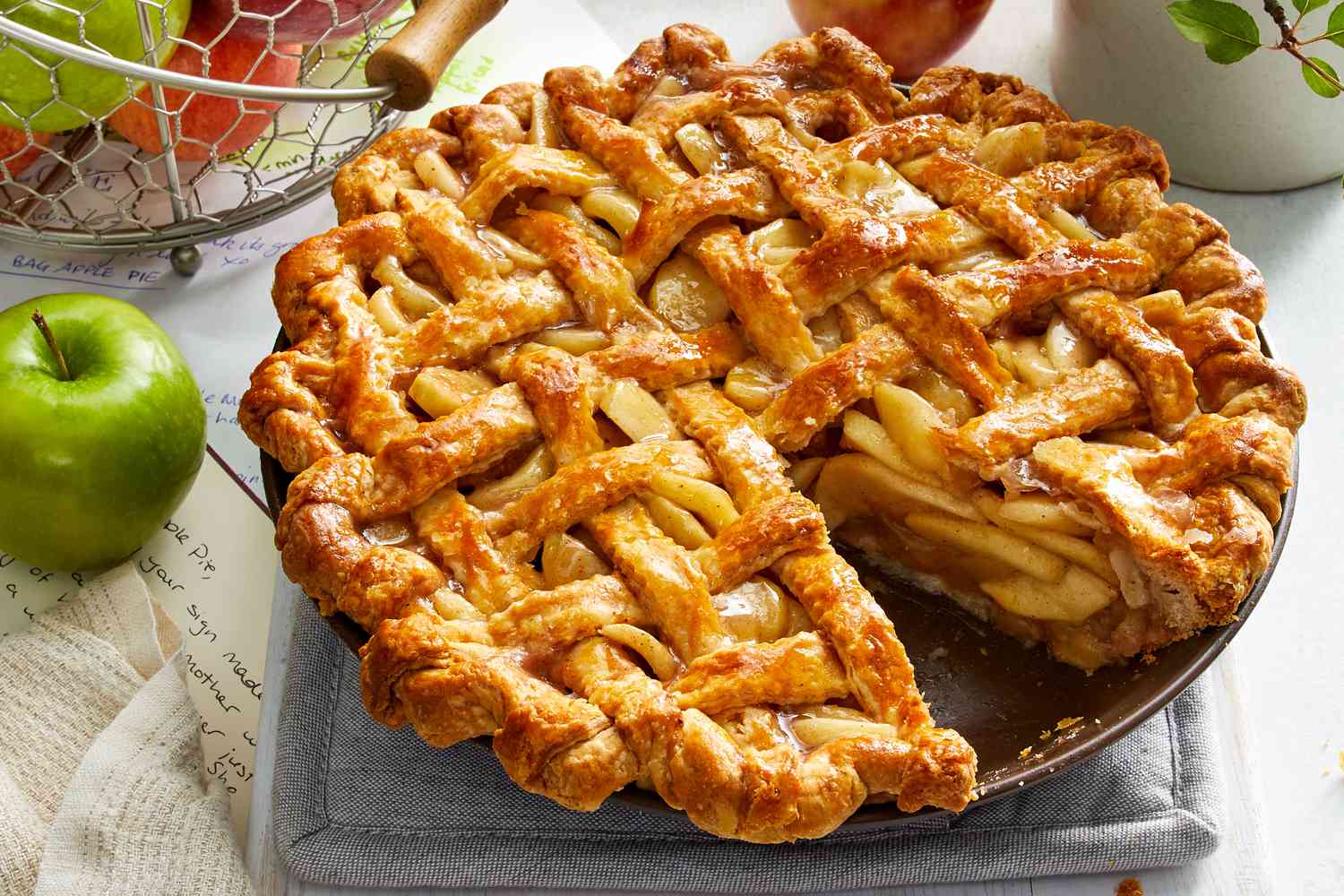
She dropped her backpack by the door and said, “Mom, I want to bake.”
I smiled. “That’s not exactly new.”
“A lot.”
“How much is a lot?”
“Forty pies.”
I turned around. She was not smiling in the playful way she smiles when she is testing me. She was completely serious.
“You’re serious,” I said.
She nodded. “One of the women at the nursing home said they haven’t had homemade dessert in years. And one man said his wife used to make apple pie every Sunday.”
“Forty pies.”
“Thirty-eight,” she said. “But forty sounds better.”
I should have said no immediately. We were not a family with a lot of spare resources or spare time, and forty pies is not a casual weekend project. It is a production line. It is a commitment. It is a person who has thought this through far more thoroughly than she was letting on.
She brightened. “I checked the store app. If we buy the cheap flour and the apples on sale, and if I use my babysitting money—”
“You already planned this?”
She paused just a moment too long.
“Maybe.”
I sighed. “We don’t have enough pie tins.”
She grinned. “Mrs. Vera said we can borrow hers.”
“You already asked Mrs. Vera?”
“Maybe.”
I pointed at her. “You are exhausting.”
She hugged me. “Please.”
I held out for about three seconds.
Then I said, “Fine. But when this kitchen becomes a disaster, I want it noted that I had concerns.”
She kissed my cheek. “You’re the best.”
“No,” I said. “Just weak.”
Saturday morning looked like a flour bomb had gone off in our apartment. Apples everywhere. Cinnamon in the air. Dough on the counter, dough on the floor, dough somehow on the cookie jar in a way that defied any logical explanation. Lila had flour in her hair and on her nose and on her forehead, which she discovered only when she tried to wipe her cheek.
“Is there flour on my face?” she asked.
“Yes.”
“Where?”
“Everywhere.”
By pie number twenty-six I was peeling apples in the mechanical, glazed way of a person who has fully accepted their situation and stopped fighting it. By pie number thirty-two, the apartment had taken on a smell so warm and heavy with cinnamon and brown sugar that it felt less like a home and more like a memory.
At one point Lila got quiet. Not distracted quiet. Thinking quiet. She was rolling crust with that particular expression she gets when something is sitting too large in her chest to say right away.
I asked, “What’s going on in that head?”
She kept working. “Do you ever worry people feel invisible?”
I stopped peeling apples.
“What do you mean?”
She shrugged without stopping. “Everybody says kids need attention, and they do. But old people do too. Sometimes I think people stop looking at them like they’re still themselves. Like they used to be a whole person and somewhere along the way everyone just stopped remembering that.”
I looked at her for a second. Just looked at her.
“Yeah,” I said quietly. “I think that happens.”
She nodded. “I don’t want that to happen around me.”
When we finally loaded the pies into Mrs. Vera’s hatchback, the whole car smelled like butter and cinnamon. Mrs. Vera cried a little when she saw them stacked in her trunk, which set Lila off, which almost set me off, and we stood in the parking lot of our building in the late afternoon light with red eyes and flour still on our clothes and I thought, this is the most alive I have felt in months.
At the nursing home, the woman at the front desk blinked when she saw us coming through the door.
“Good Lord,” she said.
Lila smiled. “We brought dessert.”
“All of this?”
“If that’s okay.”
The woman looked at the stacked pies and then back at Lila and said, “Honey, okay is not the word.”
They took us into the common room. Some residents were playing cards. Some were watching television without really watching it, the way people watch something when they’re not so much interested as they are simply occupying a chair. The room had the particular quiet of a place that runs on schedule and routine, where days feel similar to one another in ways that can be comfort or loss depending on the day.
Then the smell hit.
Heads turned.
It happened so gradually and then all at once, the way a room changes when something catches people in the deepest part of their memory. A man in a navy cardigan stood up from his chair.
“Is that apple?” he asked.
Lila said, “Yes, sir.”
He put a hand over his mouth and didn’t say anything for a moment.
A tiny woman near the window said, “I smelled cinnamon before I saw you.”
Lila set the first pie down on a table and started cutting slices. I stood back and watched her kneel beside chairs to be at eye level, watched her ask names and then use them, watched her listen with the specific attentiveness that most adults lose somewhere in early adulthood and she seemed to have kept.
The man in the navy cardigan took one bite of apple pie and closed his eyes.
Then he reached out and found Lila’s hand.
“I haven’t had pie like this since my Martha died,” he said.
Lila squeezed his fingers. “Then I’m glad you had it today.”
He swallowed hard. “What’s your name, sweetheart?”
“Lila.”
“I’m Arthur.”
“Nice to meet you, Arthur.”
He looked at her for a long moment, the way older people look at younger ones when they are seeing something they had half stopped believing still existed in the world.
“You’re somebody’s answered prayer,” he said.
I turned away for a moment because I did not want to be the woman crying in the corner of a nursing home common room, though I came very close.
That night, while we were cleaning the last pie pan, Lila came up behind me and hugged me around the waist the way she used to when she was small.
“You never gave up on me,” she said quietly.
I turned around. “Never.”
She had flour on her nose again, somehow. I did not point it out.
At 5:12 the next morning, someone started pounding on my door.
Not knocking. Pounding. The kind of sound that does not leave room for it being anything ordinary.
I woke up with my heart already slamming. Lila sat upright on the couch where she had fallen asleep during a movie, her face confused and frightened in the half-dark.
“Mom?”
I was already moving to the window. I pulled back the curtain an inch and looked out.
Two police officers. Uniformed. Armed.
Every muscle in my body locked.
My mind, which has spent sixteen years running disaster scenarios as a basic form of self-protection, went immediately to every bad place it knew. Food poisoning. Someone had choked. A resident had gotten sick. Something Lila had done without knowing she had done it, something that had seemed kind and had gone wrong in some way I could not yet understand. Or someone accusing her of something. Someone deciding that a fourteen-year-old showing up with pie was somehow suspicious.
Lila was behind me in seconds, gripping the back of my shirt.
“Mom,” she whispered, “what’s happening?”
I had no answer. I opened the door three inches.
“Yes?”
One of the officers, a woman perhaps in her forties, said, “Are you Rowan?”
“Yes.”
“And your daughter Lila is here?”
“She’s here,” I said, and my voice came out steadier than I felt. “What is this about?”
The officer looked directly at me and said, “Ma’am, we need to talk to you about what your daughter did yesterday.”
My whole body went cold. I looked back at Lila. She looked terrified in the small, quiet way of someone who cannot identify what they did wrong but assumes, instinctively, that they must have done something.
“Come in,” I said.
The officers stepped inside. The male officer glanced at the stacked cooling racks by the sink. The woman officer took one look at my face and said, immediately, “Nobody is in trouble.”
I stared at her. “What?”
“Nobody is in trouble,” she repeated.
I laughed once, sharp and breathless, the laugh that comes when your body does not know what to do with relief that has arrived before it has finished preparing for the worst. “Then why are there police at my door before sunrise?”
She exchanged a glance with her partner.
“Because this got bigger than anyone expected.”
Lila frowned. “What got bigger?”
The male officer smiled. “You, apparently.”
The woman officer took out her phone. “The nursing home staff posted photographs yesterday. Residents’ families shared them. One man called his granddaughter crying because your pies reminded him of his wife. She works with a local community foundation.”
Lila blinked. “Because of pie?”
“Because of forty pies,” he said. “The story spread overnight. The foundation wants to honor you at tonight’s town event. The mayor’s office is involved. A local bakery owner wants to offer you a scholarship for weekend classes if you’re interested.”
Lila just stared.
Then the woman officer said, “Arthur insisted someone tell you in person before the story spread further. He said, and I am quoting directly, ‘That girl did not bring dessert. She brought people back to life for ten minutes.'”
And that was it.
I broke. Not the quiet kind of crying that can be managed and held together. The full kind, the shaking kind, the kind with one hand pressed over my mouth because the terror had been so complete and so physical and now it had nowhere to go.
Lila rushed to me. “Mom? What happened? What’s wrong?”
I held her face in both hands. “Nothing bad. Baby, I just thought—”
I could not finish the sentence. I did not need to.
The woman officer said quietly, “You expected the worst.”
I laughed through the tears. “That has usually been a safe bet.”
Lila hugged me and said, “I’m sorry.”
“For what?”
“For scaring you.”
I kissed her forehead. “You made pie. This one is not on you.”
That evening we went to the town event.
I did not want to. Crowds make me tense. Public praise makes me suspicious in a specific way that is connected to growing up around people who only valued things they could show to other people. But Lila stood in our hallway in the only nice dress she had and said, “Will you come up there with me if I get scared?”
So I said yes.
The room was packed. Nursing home residents in wheelchairs and folding chairs. Their families behind them. Volunteers, neighbors, people from all over town who had seen the photographs and felt something they could not entirely explain and had shown up to stand near it.
Arthur was there in his navy cardigan.
When they called Lila up to the front of the room, she froze beside me.
“Go on,” I whispered.
“I hate this,” she whispered back.
“I know. Keep walking.”
Arthur took the microphone with both hands. He was not a large man, but there was something in the way he held himself that made the room go quiet before he had said a single word.
“When you get old,” he said, “people can get very efficient with you. They move you, feed you, check your chart, and mean well while forgetting you were a whole person before they met you. You had a whole life. You had a person you loved. You had a Sunday ritual and a favorite chair and a smell in your house that meant safety. And people mean well. But efficiency is not the same as being seen.”
The room was very quiet.
“This girl came in with flour on her shirt and treated us like we still belonged to the world. The pie was wonderful. But that is not the point. The point is she stayed. She listened. She remembered my wife’s name after I said it once.”
He paused. Then he turned and looked at me directly, the way people look at you when they want to make sure you hear something.
“And whoever raised her,” he said, “did not just raise a good daughter. She raised a person who makes other people feel seen.”
I could not breathe for a second.
And that was when I noticed two people standing at the back of the room.
My parents.
Of course the story had reached them. Of course they had come now, when kindness had become public and visible and safe to stand near. My mother looked older. My father looked smaller than I remembered him. I felt no anger exactly, just a kind of careful distance, the distance of someone who has spent a long time building a life outside of a place and has no interest in being pulled back toward it.
After the ceremony, they made their way through the crowd toward us. My mother said my name.
I said nothing.
My father looked at Lila and said, “We’re very proud.”
Lila looked at him for a moment. She was calm in a way that fourteen-year-olds are not usually calm when confronting the weight of a moment they do not fully have context for. Then she said, quietly and without cruelty, “You don’t get to be proud of us only when other people are watching.”
The silence that followed had a particular quality to it.
My mother flinched. My father opened his mouth and then closed it.
I put my hand on Lila’s back and said, “We’re leaving.”
And we did.
In the car, Lila covered her face with both hands and groaned. “I cannot believe I said that.”
I started laughing. Real laughing, the kind that comes from somewhere deeper than the moment.
She peeked through her fingers. “What?”
“Nothing,” I said. “I’m just admiring my work.”
She laughed too. Then she got quiet in that thoughtful way. “Was I too harsh?”
I started the car. “No. You were honest.”
We drove home through the dark streets with the windows up and the heater on, and I thought about Arthur standing at that microphone and saying whoever raised her did not just raise a good daughter. I thought about my father saying this is your consequence, and how that sentence had felt like a door closing, and how everything I had built had been built on the other side of that closed door.
When we got home, the apartment still smelled faintly like cinnamon. There was flour near the stove. A rolling pin in the dish rack. Our ordinary life waiting for us right where we had left it.
Lila dropped into a chair and said, “It was just pie.”
I looked at her.
“No,” I said. “It was love. People know the difference.”
She smiled at that, the slow warm smile that has been the best thing in my life since the night she was born and I sat alone in a hospital room and looked at her face and understood for the first time what all the double shifts and the cheap apartments and the long cold nights had been for.
Then she said, “So, next weekend. Fifty pies?”
I stared at her.
She raised her eyebrows expectantly.
“Let’s start with twenty,” I said.
She was already reaching for her phone to check the store app.

Specialty: Emotional Turning Points
Rachel Monroe writes character-driven stories about betrayal, second chances, and unexpected resilience. Her work highlights the emotional side of family conflict — the silences, the misunderstandings, and the moments when someone quietly decides they’ve had enough.