The Empty Seats
My name is Nancy Austin. I am thirty-five years old, and I have spent most of my adult life doing the math. Not because I am especially good with numbers, but because numbers were the only honest language my family ever used around me, even when they were trying to hide something.
Here is a number to start with: three and a half hours. That is how long my parents flew, business class, from Cedar Rapids to Phoenix in October 2025 to attend my sister Madison’s housewarming party for a vacation condo she and her husband had just purchased in Scottsdale. They stayed ten days. They documented the whole trip on Facebook, forty-seven photographs across ten days of desert sunsets and patio furniture and proud-mom captions.
Here is another number: thirty minutes. That is how long the drive from Cedar Rapids to Iowa City takes on a Saturday afternoon, with no traffic, on flat Midwestern highway. My wedding was in Iowa City on November 22nd, 2025. My parents did not come.
My mother’s explanation, delivered by phone four days before the ceremony, was that the drive was too hard on her sciatica.
I had stopped being surprised by my family a long time before that phone call. But I had not yet stopped being hurt by them, and those are two different things that people sometimes confuse.
To understand any of this properly, you have to go back to the beginning, which is the day Madison came home from the hospital. I was five years old. I remember my mother holding her and looking at her with an expression I had never seen directed at me, something lit from within, something that said here is the thing I was looking for. I remember thinking that if I was very quiet and very good, she might eventually look at me that way too. I spent the next thirty years being quiet and being good. She never did.
The first Christmas I remember clearly, I was six. I had asked for a dollhouse, the kind with the small furniture and the working lights, and Christmas morning it was there under the tree, pink roof and green shutters, exactly as I had imagined it. My mother carried it to Madison’s nursery. Madison was one year old. She could not walk yet. My mother turned to me with a practical expression and told me I was such a big girl and that Santa had a budget and babies needed more.
I received a twelve-dollar coloring book.
The dollhouse sat in Madison’s room for eight years. I never touched it. I told myself it was fine the way children do when they have not yet been given the language for what is happening to them.
High school was when the arithmetic became official. Madison enrolled at Holy Trinity Preparatory, a private Catholic school at eighteen thousand dollars a year. I went to Washington High, which was public and free. My mother’s explanation was that Madison needed smaller class sizes because she was more sensitive, and that I was smart and would thrive anywhere. I filed that sentence away carefully. It contained more information than she intended.
I thrived because I had to. I worked twenty hours a week at Target through my junior and senior years, saving every paycheck, while Madison got driven to school in a car my parents bought her. Four years at Holy Trinity cost seventy-two thousand dollars. I kept track even then, in the private ledger I maintained in my head, the one I never showed anyone because I did not yet understand what I was documenting.
College clarified everything further. I got into the University of Iowa with a fifteen-thousand-dollar scholarship, which left the remainder to be covered by federal student loans. Fifty-two thousand dollars borrowed for my bachelor’s degree. Madison enrolled at the same university two years later and graduated four years after that with no debt at all, a year abroad in Florence, and a three-thousand-dollar graduation gift. My parents attended my graduation ceremony but could not stay for dinner because they had promised to help Madison move into her new apartment. I stood in the parking lot in my cap and gown and watched their car leave. Then I drove home and put on regular clothes and made myself something to eat.
By the time I finished my master’s degree in higher education, I was carrying eighty-nine thousand dollars in student loans and celebrating my own milestones alone, which I had become very efficient at. I started working in admissions at the University of Iowa in 2014, entry-level, thirty-eight thousand dollars a year. I helped first-generation students navigate financial aid. I understood them in a particular and specific way.
In 2015, I began sending my parents four hundred dollars every month. They called it help with bills. I understood it as something closer to a tithe, the regular payment a child makes for the privilege of having made it without her parents and needing them to forgive her for it. I never missed a payment, not even in the winter of 2018 when my heat was shut off because I could not afford both the utilities and my loan payment in the same month. The four hundred dollars left my account on the first of every month for ten years. They never said thank you. It was simply expected, the way certain obligations become invisible when they are never acknowledged.
I met Jaime in the fall of 2022 at a community book club. He taught English at the local high school and had forty-five thousand dollars in student loans and a dry wit about the kinds of books people claimed to have read. By our third date I had already decided I was going to marry him, though it took him longer to understand that. He met my parents early, and afterward he said, with the careful neutrality of a man choosing his words, that they seemed distant.
I told him they were busy with Madison.
He pointed out that Madison lived in Des Moines and we were literally sitting at dinner with them right now.
I said I knew.
He did not push it. But Jaime noticed things. He noticed that my mother called Madison three times during a single dinner and did not call me once. He noticed that when I mentioned my promotion to senior admissions counselor, my father said “that’s nice” and returned to his soup. He noticed that when our engagement announcement went into the family group text, my mother responded six hours later with a single word. Congratulations. No exclamation point. No follow-up call.
Madison’s wedding the previous April had received a different response. My parents contributed twelve thousand dollars to the celebration and wore formal photographs taken in two separate outfits. My mother posted eighty-three photographs on Facebook. My father gave a toast that made people cry.
Jaime was the first person who ever told me I did not owe my parents the monthly four hundred dollars.
“It’s what family does,” I said.
“Family goes both ways,” he said.
I was not ready to hear it yet.
The trip to Scottsdale happened in October 2025, five weeks after our wedding invitations went out. My mother announced it to the entire extended family via group text. She booked economy seats with exit-row upgrades for extra legroom. She documented every day of the ten-day stay. Day one, proud of Madison’s gorgeous new place. Day three, helping decorate, family time is the best time. Day five, sunset from the balcony, blessed beyond measure. They brought Madison a West Elm furniture set and thirty-two hundred dollars in cash. Five thousand dollars total, for a vacation home belonging to a woman whose husband earned a quarter of a million dollars a year.
I was in that group text. I had received no group text about my wedding.
I watched all forty-seven photographs appear in my feed and I did not say anything, because I had thirty years of practice at not saying anything.
The phone call came on November 10th, twelve days before the ceremony. My mother asked what time the wedding started and where it was, information I had sent her multiple times, and then she said it was a bit of a drive, wasn’t it.
Thirty minutes, I told her.
It feels longer at our age, she said.
You just flew to Arizona, I said.
That was different, she said. We were sitting.
I knew right then. I knew the way you know something you have always known and have simply been refusing to say out loud. I told her I would see her on the twenty-second and ended the call before she could hear my voice crack.
Four days later my father called me at my office, which he had never done before. The drive was hard on your mother’s sciatica, he said. The doctor said she shouldn’t sit in a car. It’s more like forty-five minutes with traffic.
There is no traffic between Cedar Rapids and Iowa City on a Saturday afternoon, I told him. I have driven it a hundred times.
He told me not to be difficult. He told me I was being selfish. He said I had always been the independent one and that I would have plenty of people there and that Madison’s situation was different because she needed them more.
You have always been the independent one. That sentence again, dressed up in different words, meaning the same thing it had always meant: you learned to need less, so we gave you less, and these two facts are connected in a way we will never admit.
I told him I understood perfectly. I hung up and sat at my desk for three minutes. Then I opened my wedding seating chart, deleted their names from the front row, and left the two chairs empty. I had spent my whole life looking at the space where my parents should have been. I was going to do it honestly this time, in a room full of witnesses.
Uncle George called the next day. He is my father’s older brother, a blunt and decent man who has always been more of a parent to me than either of my actual parents. He said my father was a coward and that he was coming, and he was sitting in their seats. He lived ninety minutes away and would be there without complaint.
Jaime’s mother called on the twentieth and told me they were my family now and they would fill that chapel with love. I believed her completely.
The morning of November 22nd I woke up at Jaime’s parents’ house, where his sister was doing my hair and periodically catching me checking my phone. She asked why I kept checking it. I told her I was still their daughter even if they had forgotten. At noon I turned the phone off. My dress was off the rack, eight hundred dollars with alterations, and I had paid for it myself.
Jaime’s father knocked on the door at one-thirty and told me it would be the honor of his life to walk me down that aisle. He had already said yes months earlier, but he meant it more now and we both knew it.
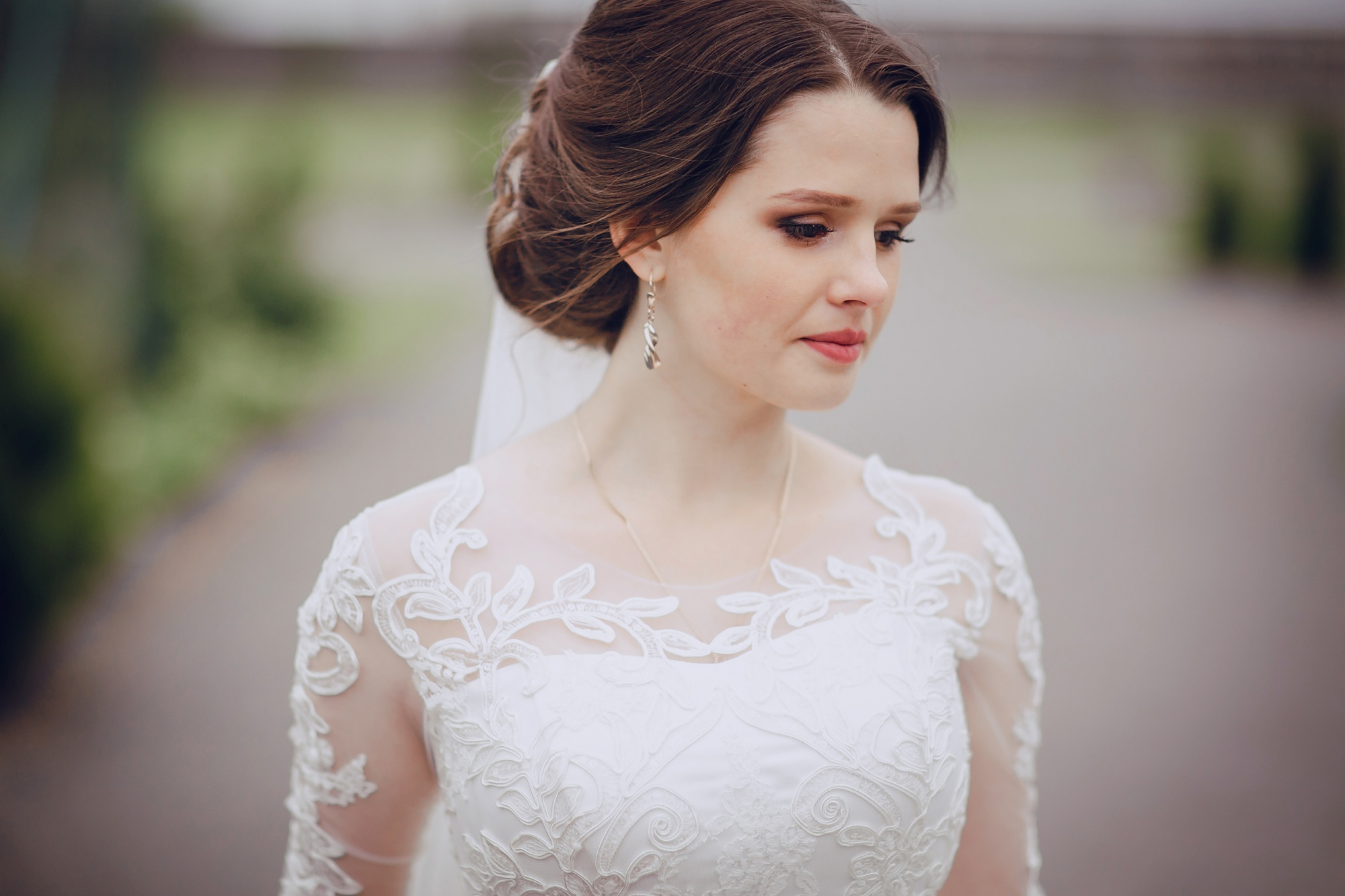
Seventy-six people filled a chapel built for seventy-eight seats. The two chairs in the front row, aisle side, most visible, stayed empty. I walked past them on Jaime’s father’s arm and I did not look away. I wanted everyone in that room to see clearly what my parents had chosen, because I was done participating in the story that said everything was fine.
Jaime was crying at the altar. Uncle George had moved himself to the front row without being asked. The ceremony was twenty-eight minutes and beautiful in the plainest and most honest sense of that word, which is that it was real, conducted by a judge who had known Jaime’s family for years, surrounded by people who had gotten in their cars and come. When I said my vows my voice cracked once and Jaime held my hands tighter and I kept going.
Owen, my oldest friend, gave the reception toast. He said: to Nancy and Jaime, and to chosen family, the people who show up when it counts, who stay when it’s hard, who love without keeping score. Seventy-six glasses lifted. Two chairs remained empty. Everyone noticed and no one said it out loud, which was its own kind of kindness.
No card ever came. No gift. No phone call.
The three weeks that followed were the quietest of my life. I did not call them. On December 1st, I did not send the monthly four hundred dollars for the first time in ten years. Four days later, my father left a voicemail. He had noticed the usual hadn’t come through, he said. Could I call him back. He had not called about the wedding. He had not called to apologize. He called because the payment was late.
I listened to the voicemail three times and deleted it and did not call back.
Then, on December 15th at two forty-seven in the afternoon, my receptionist Dolores’s voice came through my intercom and told me my father was in the lobby. He had not called ahead. He had not asked. He was simply there, and he was holding a brown accordion folder thick with papers, and his hands were shaking.
I went downstairs.
He looked smaller than I remembered, or maybe I was just looking at him differently. Gray hair thinner than before, his good khakis and polo shirt, the outfit he wore to Madison’s events. He thanked me for seeing him. I told him I hadn’t known I had a choice and showed him to the glass-walled conference room.
He said he knew I was upset about the wedding. I asked whether that was what he had come to discuss. He said no. He had come about my grandmother’s estate.
My grandmother Rose had died in 2003, when I was thirteen. I asked him why we were discussing her estate now. He told me my great-aunt Helen had passed in October and that the estate attorney had sent a letter requesting an accounting of something called a UTMA custodial trust established in 1999.
He slid the letter across the table. Crawford and Associates letterhead. I read it twice. The attorney was requesting a full accounting of Rose Mitchell’s 1999 custodial trust for beneficiary Nancy Austin.
I did not know my grandmother had left me a trust.
I looked at my father. He was not meeting my eyes, and that told me everything before he said another word.
He slid a second set of papers across the table. The trust documents. Uniform Transfers to Minors Act, State of Iowa. Custodial education account, established June 14th, 1999. Beneficiary: Nancy Marie Austin. Initial deposit: one hundred and fifty thousand dollars. Custodians: Vernon James Austin and Carol Anne Austin.
I read it twice. The numbers would not arrange themselves into sense.
“Your grandmother wanted you to have money for college,” my father said.
I took out $89,000 in student loans, I told him.
He said he knew.
I asked him where the money went.
He pulled out bank statements, five years of them, 2008 through 2014. I read the withdrawal records while he sat across from me in silence. August 2008, twelve thousand dollars, qualified education expense. I picked up my phone and looked up Holy Trinity Preparatory tuition for 2008. Eighteen thousand dollars a year. Madison’s private school. I kept scrolling. January 2009, fifteen thousand. August 2009, eighteen thousand. January 2011, twenty-seven thousand, qualified education expense. I looked up study abroad programs in Florence, Italy. Madison’s year in Tuscany. Then four consecutive annual withdrawals of fifteen thousand each through 2014, the years that matched Madison’s university enrollment.
Every withdrawal in an account with my name on it had paid for my sister’s education.
Meanwhile I had been working twenty hours a week and taking out federal loans and eating ramen four nights a week and telling myself I was fine because I had to be fine.
My father’s voice, when he finally spoke, was the voice of a man who had rehearsed what he was going to say and found it insufficient when the moment arrived. We made difficult choices, he said. Both daughters needed education. Family resources are family resources. You were always so independent. You got scholarships. You were going to be fine.
I told him I was fine because I worked forty hours a week while taking eighteen credit hours, because I made myself fine, because no one was going to make me fine if I didn’t do it myself.
He said I was twisting things.
I told him I was reading his bank statements.
He slid one more document across the table. Freshly printed. A beneficiary release form. I, Nancy Austin, acknowledge receipt of the full one-hundred-and-fifty-thousand-dollar distribution, confirm all funds were used for my educational expenses, release the estate from further obligation.
I looked up at him.
You want me to sign a document saying you did nothing wrong, I said. So Madison can collect her share of Aunt Helen’s estate without the attorney asking more questions.
He said it wasn’t like that.
I told him to get out.
He started toward the door and then remembered the folder and left it on the table in his panic. All of it, every bank statement, every document, every piece of evidence, left behind by a man so frightened he walked out without the one thing that could have helped him.
At the very bottom of the folder, beneath everything else, was a sealed envelope. Cream-colored, aged slightly, addressed in handwriting I recognized from birthday cards I had kept in a shoebox under my bed for twenty years. For Nancy, to be opened when you start college. With love, Grandma Rose.
My hands were shaking when I opened it.
The letter was dated June 14th, 1999. I was nine years old that summer. She wrote that she had watched my face at my birthday party when I talked about Madison’s bicycle, the one with the streamers and the bell, the one I had asked for. She wrote that she saw things the adults around me missed or chose not to see. She wrote that my mother had always favored Madison, and this was not my fault, and I was not less worthy or less loved, only less visible to the people who should have seen me most. She wrote that she was putting away one hundred and fifty thousand dollars for my college education, not for family expenses, not for my sister, not for emergencies that mysteriously benefited everyone but me. She wrote that she was making my parents the custodians because legally she had to, and that she was trusting them, and that if they failed that trust she wanted me to fight for what was mine. She told me I was brilliant and kind and capable of extraordinary things. She said she saw me every time I stayed quiet when Madison got praised, every time I smiled through another disappointment, every time I made myself small to make others comfortable. She said she loved me and wanted to protect me.
At the bottom she had added a postscript in smaller handwriting. Don’t let anyone tell you that independence is the same as not needing love. You can be strong and still deserve to be held.
I put my head on the conference table and sobbed, not in the careful, manageable way I had cried for most of my adult life, but fully and without management, because my grandmother had seen me at nine years old with the clear eyes of someone who was not invested in the pretense, and she had tried to give me the thing that would protect me, and they had taken it anyway, and she had known they might, and she had told me to fight.
Dolores knocked on the glass twenty minutes later and asked if I was okay.
I looked up and told her I was not, but I would be.
I called Jaime and asked him to come home early.
Charlotte Price was a trust litigation attorney with sharp eyes and a calm, direct manner that made me feel immediately that I was talking to someone who had heard hard things before and was not going to be overwhelmed by mine. She read every document, asked precise questions, and then told me what I already suspected but needed to hear from someone who knew the law.
This is textbook breach of fiduciary duty, she said. Under Iowa code, custodians of UTMA accounts have a legal obligation to use the funds for the named beneficiary only. They cannot reallocate to another child. What your parents did is theft.
I asked what my options were.
She laid them out the way good attorneys do, without embellishment. A demand letter, a request for full accounting and restitution, civil litigation if they refused. I would be entitled to the original one hundred and fifty thousand, interest from the time of misuse, my legal fees, potentially punitive damages.
Send the letter, I said.
I called Uncle George that evening. He was quiet for a moment after I told him, and then he said he had been waiting years for me to figure it out. He told me my father had told him in 2009 that he was reallocating Rose’s money for both girls. George had told him it was wrong, that the money was mine, and they had not spoken for two years after that.
Will you tell that to my attorney, I asked.
He said he would tell it to a judge if I needed him to.
Father Timothy at the church confirmed what George had said. My grandmother had made him a witness when she signed the trust documents. She was worried about me, he said. She was afraid of what might happen to the money.
He was afraid of that, he said quietly when I told him what had happened.
Charlotte sent the demand letter on December 23rd. Full restitution of one hundred and fifty thousand dollars, plus thirty-eight thousand in accrued interest, plus the student loan interest I had paid on debt I should never have needed to take out. Total demand: two hundred and twenty-two thousand four hundred dollars. Fourteen days to respond before civil litigation.
My mother called three days later. How could I do this to my own family, she said. They could lose their house. I was being selfish after everything they had done for me.
I asked her to tell me specifically what they had done for me.
She said they had raised me. Fed me.
I told her they had flown to Arizona for Madison’s housewarming party and would not drive thirty minutes to my wedding. I told her Grandma Rose had left me money for college and they had spent it on Madison. I told her I was not tearing anything apart, because it had never been whole. I told her to talk to my lawyer.
I blocked her number and felt, to my own surprise, not guilt but the particular lightness that comes when you finally set down something very heavy you have been carrying so long you stopped noticing the weight.
Madison called two days later. She said she had not known about the trust, which I believed, and that it was not her fault our parents had made that choice, which was also true. Then she said, after I explained that I was not dropping the lawsuit: this is why they like me better.
I paused.
I know, I said.
I hung up.
My sister had said the quiet part aloud, the thing that had been true since I was six years old watching a dollhouse get carried into someone else’s room. And I found, sitting with that sentence, that I did not need her to take it back. It had always been true. Hearing it plainly, stripped of all the performances that usually surrounded it, was almost a relief.
Charlotte called on January 3rd. Their attorney wanted to settle. Full restitution, one hundred and fifty thousand plus interest, no court, confidential. They were asking us to waive the student loan interest claim and legal fees. Charlotte recommended I take it. They were admitting wrongdoing in writing. The extra amount was not worth the additional months.
I accepted.
The settlement was signed on January 10th. To pay it, my parents sold the house they had owned since 1992. They moved to a two-bedroom rental condo. Madison received nothing from Aunt Helen’s estate because the settlement had clarified the full scope of the prior trust matter, and the estate attorney had adjusted accordingly. I received the complete forty-five thousand dollars from Aunt Helen’s bequest.
The first check arrived by courier on January 15th at ten forty-five in the morning. One hundred thousand dollars. Memo line: Settlement payment one of two. Jaime was standing next to me when I opened it and I held it for a moment before either of us said anything.
At the bank that afternoon the teller smiled and said congratulations on your inheritance.
I didn’t correct her.
We drove home and I opened my laptop and logged into my student loan account. Current balance, fifty-two thousand one hundred eighty-four dollars and thirty-seven cents. I clicked make a payment. I typed in the full amount. The confirmation screen asked if I was sure.
Do it, Jaime said.
Payment successful. Your balance is now zero.
I sat with that number for a while. Ten years, one hundred twenty payments, eighty-six thousand four hundred dollars paid out of my own salary, and now zero. I was thirty-five years old and for the first time in my adult life I did not owe anyone anything.
Then I paid off Jaime’s loans too. Forty-four thousand eight hundred and ninety-one dollars. Total paid that day: just over ninety-seven thousand dollars in debt, gone.
We ordered pizza and sat on the couch and did not talk much, just held each other, which was the right response to a day that was too large for words.
The second check arrived on February 15th, eighty-eight thousand dollars, with a small box. No note, just my father’s handwriting on the label. Nancy Austin. Inside was a silver ring set with a deep purple amethyst, simple and old, the ring my grandmother had mentioned in her letter. The one she wore on her wedding day. The one my mother had wanted.
I put it on my right hand. It fit perfectly.
In February I established the Rose Mitchell Education Scholarship, a one hundred and twenty-five thousand dollar endowment administered by the University of Iowa Foundation, generating roughly ten thousand dollars annually in perpetuity for Iowa students pursuing higher education without family financial support.
The first recipient was Emma Rodriguez, nineteen years old, working two jobs, studying journalism, estranged from parents who had told her that her chosen major was not practical. I met her in my office and told her that my grandmother had left me money to go to school, that my parents had taken it, that I had gotten it back, and that I wanted to make sure she did not have to struggle the way I had. She did not know what to say. I told her she didn’t have to say anything. Just use it wisely and build your future.
I could not give my younger self the protection she needed. I could give it to someone else.
By March we had closed on a 1940s bungalow at 847 Sunset Street in Iowa City. Hardwood floors, fireplace, front porch with a swing, two bedrooms, eight hundred and forty-seven square feet of something that was entirely ours. We drove past it every week between offer and closing. I stood on the sidewalk outside it and felt the simple weight of the fact that no one else’s name was on this. Not my parents’. Not Madison’s. Not any version of a family that had treated my future as a resource to be allocated away from me. Just ours.
I have not spoken to my parents since the settlement was signed. I have not spoken to Madison since she said what she said. I will not pretend this does not hurt, because it does, in the specific way that old injuries hurt, not sharply but with a dull and weather-related persistence, the kind you learn to carry without letting it determine your pace.
What I mourn is not the family I lost. What I mourn is the family I should have had. The mother who should have shown up. The father who should have been a custodian of something other than his own convenience. The sister who was given so much that she never developed the particular kind of clarity that comes from having to build things yourself.
But I do not mourn the version of myself who kept waiting for them to change. She is gone, and I am not sad about it.
In her place is a woman who wears her grandmother’s ring and knows what it represents. Who built a scholarship from the money that was supposed to be hers and used it to see her grandmother’s intentions carried forward in a stranger who needed them. Who married a good man who noticed from the beginning that something was wrong and waited patiently while she found her way to understanding it too. Who owns a house with a front porch swing and no debt and a bank account that belongs entirely to her.
On the last Sunday of February, we had dinner at Jaime’s parents’ house. His mother and father, his sister and her husband, Uncle George, Father Timothy, Owen, Bryce. Pot roast and mashed potatoes and the warm noise of people who had gotten in their cars and come, not because they were obligated but because they wanted to be there. I stood at the table wearing Rose’s ring and said that six months ago I had gotten married with two empty seats in the front row, and three months ago my father had come to my office asking me to sign away something that was mine, and two months ago I had found a letter from a woman who had been gone for twenty years telling me she saw me, and that I was standing now in a room full of people who had chosen to show up, and that this was what family actually was.
Uncle George raised his glass and said, to Rose. She would have loved this.
Father Timothy raised his and said, to Nancy. She would have been so proud of you.
Jaime’s mother said, to family. The kind you choose.
Everyone answered: to family.
I drove home that night past our house on Sunset Street. The lights were off, but it was there, solid and waiting, and it was ours.
My grandmother left me money so I could build a free life. My parents took the money and spent thirty years assuming I would not figure out what they had done, or that even if I did, I would protect them from the consequences of it. They had always counted on me being the independent one, the one who would be fine, the one who did not need to be held.
But there is a difference between being strong enough to carry something alone and agreeing that you should have to.
My grandmother understood that difference. She wrote it down in a letter she sealed in 1999 and left at the bottom of a folder she trusted would find its way to me eventually, because she knew me, and she knew that the women in our family who learned to need less were not women who needed less, they were simply women who had been given no other option.
I built the life she wanted for me. Not the way she planned it, and not without cost, and not without thirty years of carrying a weight that was not mine to carry.
But I built it.
And it is mine.
And that is everything.

Lila Hart is a dedicated Digital Archivist and Research Specialist with a keen eye for preserving and curating meaningful content. At TheArchivists, she specializes in organizing and managing digital archives, ensuring that valuable stories and historical moments are accessible for generations to come.
Lila earned her degree in History and Archival Studies from the University of Edinburgh, where she cultivated her passion for documenting the past and preserving cultural heritage. Her expertise lies in combining traditional archival techniques with modern digital tools, allowing her to create comprehensive and engaging collections that resonate with audiences worldwide.
At TheArchivists, Lila is known for her meticulous attention to detail and her ability to uncover hidden gems within extensive archives. Her work is praised for its depth, authenticity, and contribution to the preservation of knowledge in the digital age.
Driven by a commitment to preserving stories that matter, Lila is passionate about exploring the intersection of history and technology. Her goal is to ensure that every piece of content she handles reflects the richness of human experiences and remains a source of inspiration for years to come.