The sound came before the sight of him, the way it always had.
That rattling, coughing engine that everyone in the village recognized even before the motorcycle crested the rise in the dusty road from the highway. People heard it and came to their gates without quite knowing why. Old Nina set her bucket down by the well. Grandpa Kolya shaded his eyes and looked down the road. A few children stopped what they were doing.
It was Stepan.
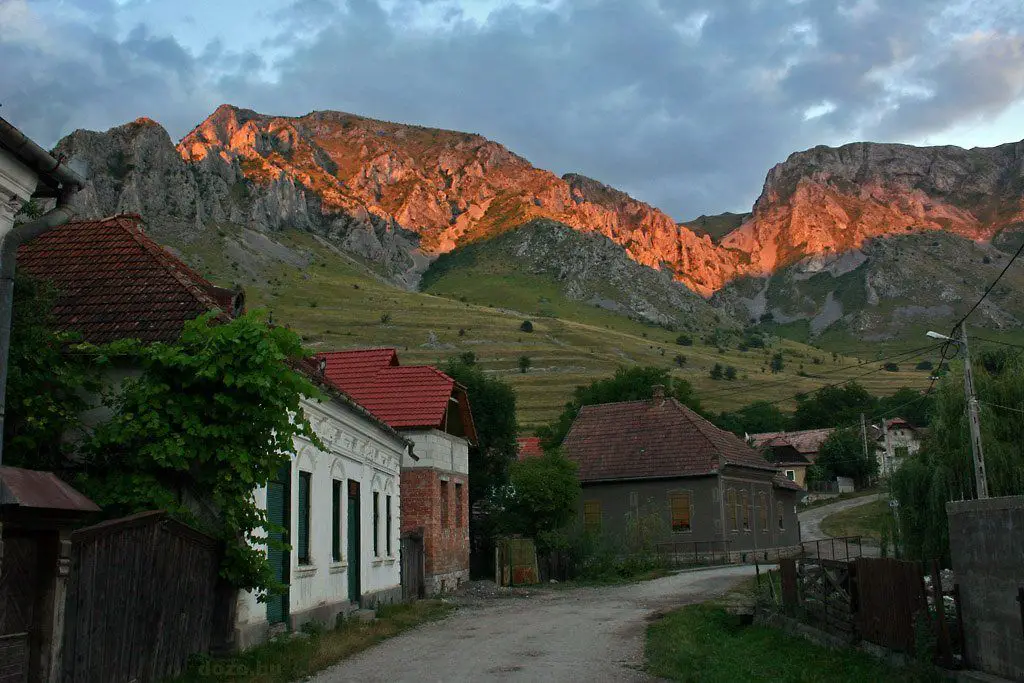
Nobody had seen him ride that motorcycle in years. After his wife Galya passed, the motorcycle had sat beside the shed under a piece of canvas, slowly disappearing under dust and disuse, becoming part of the general stillness that had settled over his yard and his life. The fence had tilted. The roof had developed a relationship with rain that grew more intimate every spring. The garden had returned to something wild. And Stepan himself had bent a little more each season, wearing the same old jacket, postponing everything, speaking less, as though the days had stopped requiring much from him and he had accepted that arrangement without protest.
So when the motorcycle sound rose from the road that afternoon, people came to look simply because it was unexpected.
And then they saw.
There was a woman sitting behind him.
She looked about thirty years old, wearing a blue dress printed with small daisies, holding onto Stepan’s jacket with the easy, natural confidence of someone who had ridden behind this particular man before and expected to do so again. The motorcycle moved slowly, sputtering at intervals, and there were moments when they had to push with their feet because the engine seemed to be weighing its options about whether to continue. But they kept moving, the old man and the young woman in the daisy dress, down the village road past all the gates and fences and watchful eyes.
By the time they stopped in front of Stepan’s yard, a proper crowd had gathered.
Stepan took off his helmet with the unhurried deliberateness of a man who is aware he has an audience and has decided to take his time anyway. He helped the woman down from the motorcycle. He stood there for a moment looking at his neighbors with an expression that was not defensive or embarrassed or apologetic.
Then he said, simply and clearly: “Everyone, meet Lena. My wife.”
The silence that followed lasted several full seconds. Long enough for the nearest rooster to reconsider his life choices. Long enough for people to process the sentence and try it again from a different angle to see if it came out differently.
It did not.
The whispering started at the edges first, then worked its way toward the center.
She’s forty years younger than him. Look at her. She must be after something. His house, maybe, such as it is. What does a woman like that want with an old man in a house with a leaking roof and a tilted fence? Let’s see how long she lasts before she’s back in the city where she came from.
Old Nina whispered to nobody in particular that after Galya’s death, the old man had finally lost his mind completely.
Grandpa Kolya asked if it might be a granddaughter and immediately knew it was not.
Lena heard all of it. The village was not large and the voices were not quiet. She stood beside Stepan’s old motorcycle in her daisy dress and smiled at everyone with the unhurried calm of a woman who had expected exactly this reception and had decided in advance not to mind it. She greeted people by name when she knew them and by nod when she did not, and then she and Stepan went inside and closed the door, and the village was left standing at its fences with a great deal to discuss.
For the first two days, everyone waited for the drama they were certain was coming.
It did not come.
On the third morning, a neighbor noticed smoke rising from Stepan’s chimney earlier than usual. Then the smell reached the road, bread smell, warm and yeasty and serious, the kind of smell that means someone has been awake since before the light and has been doing real work. Someone was in the yard hanging laundry on the line, sheets and work clothes moving in the morning air.
It was Lena.
She did not appear to sit still. The windows, which had accumulated a remarkable record of seasons without cleaning, were done by midmorning. The old shed was cleared of the accumulated detritus of years by afternoon. The storage room gave up half its contents to an organized purge that left it actually navigable.
None of this was what the village had expected.
They had expected a young woman from the city to arrive in a village house and find it wanting, to make demands or make scenes or simply look decorative while waiting for something more interesting than rural life to present itself. They had not expected someone who woke before dawn and found the windows unacceptable and did something about it.
On the fifth day came the moment that truly stopped traffic.
Lena walked out into the yard in the morning, looked up at the roof for a long considering moment, and said to Stepan, who was sitting in a chair drinking his tea with the peaceful air of a man who has made his peace with his roof: “This can’t go on. When it rains, your house is almost like being outside.”
Stepan muttered something about having been meaning to fix it.
“Then start meaning it faster,” Lena said. “We begin today.”
What the village saw that afternoon was something that required a second look and then a third.
Stepan was on his roof.
Not metaphorically on his roof. Literally on his roof, with a hammer and nails and a stack of boards, replacing rotten sections and fastening down metal sheeting and grumbling in the comfortable, ongoing way of a man who is grumbling because the work is real and the work matters and not because he wants to stop. He had not been on a roof in years. He had not been on anything higher than his own front steps in years. And yet there he was, moving carefully but moving, his old hands finding their way back to tasks they had known for decades.
Lena stood below, handing up tools and materials, occasionally offering observations about which section needed the most attention, occasionally receiving back arguments that she did not appear to find discouraging.
At one point, Stepan laughed.
It was an involuntary laugh, the kind that arrives without announcement, triggered by something Lena said that nobody else was close enough to hear. But the neighbors heard the laugh. And several of them, standing at their fences watching this scene, felt something shift in them that they could not immediately name.
That was the same Stepan who had spent three years saying he had no strength for anything. The same man who had let the garden go to weeds and the fence go sideways and the roof go to heaven. He was on his own roof, laughing.
A week after the roof came the fence. Two weeks later the garden had been turned and planted, and the plowed rows ran straight in the late afternoon light in the way that plowed rows only run when someone who cares about the result has done the work. The smell of baking came from the house at regular intervals, actual baking and not the occasional grudging effort but the steady, reliable output of someone who bakes because it is part of how they move through a day. And in the evenings, something began to happen at Stepan’s house that had not happened in years.
People started staying.
Not out of obligation or politeness or the village duty to check in on an elderly neighbor. They stayed because Lena had a way of talking that made staying feel natural, that made an evening at a table feel like something you had been looking for all week without knowing it. She asked questions and then listened to the answers with her full attention. She remembered what people had said the last time and asked how things had turned out. She laughed easily and made the people around her feel as though what they had to say was worth saying.
Grandpa Kolya came first, then the Petrov family, then several others who had initially been the loudest about the improbability of the whole situation.
Old Nina was the last to come around, which was consistent with her general policy on everything.
But one evening she sat at Stepan’s table and ate Lena’s pie and stayed longer than she had intended, and on the walk home she said quietly to Grandpa Kolya, “You know, at first I thought our neighbor had gone crazy.”
“And now?” Kolya asked.
Nina looked back at Stepan’s yard, where Stepan was crouched beside his motorcycle in the evening light, doing something to the engine, and Lena was beside him telling him something that was making him shake his head with the particular expression of a man who disagrees but is enjoying the disagreement.
“And now,” Nina said, “I think she simply gave him his life back.”
They walked the rest of the way in silence, which was the village’s way of agreeing that something true had been said and did not require elaboration.
What had happened to Stepan in the years after Galya died was not unusual, which was the saddest thing about it. It was the most common thing in the world. A man who had organized his life around another person suddenly found himself without the shape that the other person had given everything. Not just the practical shape, not just who cooked and who fixed things and who remembered appointments, but the deeper shape, the reason to get up at a particular time, the reason to fix the fence before winter, the reason to care whether the roof held.
Without Galya, Stepan had still gotten up. He had still eaten and slept and moved through his days. But he had stopped maintaining things, and not because he lacked the physical ability, not at first, but because maintenance requires a belief that the future is worth preparing for. And for a while, that belief had simply left him.
What Lena had done, without announcing it as a project or a mission, was to fill the house with futurity again. There was bread that would need baking again tomorrow. There was a garden that would need tending through the whole season. There was a fence that would need painting come spring, and a motorcycle that would need work before it could carry two people through autumn. There were evenings that would have guests arriving who would need to be fed and listened to.
She had handed Stepan back a future that had things in it.
The village, which had spent the first week cataloguing the reasons why this arrangement made no sense and would not last, eventually ran out of arguments. Not because anyone sat down and formally changed their minds, but because the evidence kept arriving and it kept being the same: the house was sound, the garden was growing, the old man was laughing on his roof.
Stepan, for his part, did not explain himself to anyone. He had not asked for the village’s approval when he rode down that road with Lena behind him, and he did not seek it now. He fixed his fence and tended his garden and sat at his own table in the evenings with his neighbors around him, and he was, by every measure anyone could apply, a man who had somewhere to be and people who expected him there.
Where Lena had come from, and how she and Stepan had found each other, was a story the village pieced together slowly over many evenings. She was not from the city, as some had assumed, but from a town two regions over where she had worked for years in a small clinic, a practical woman trained in practical care, who had come to understand that the most common ailment she treated was not physical at all but something more like the gradual extinction of purpose. She had met Stepan through a distant mutual connection at a time when he was at his lowest and she was, for reasons of her own that she did not volunteer and the village did not press for, looking for a different kind of life than the one she had.
What they had recognized in each other, nobody could say precisely. The village was wise enough to know that the things that actually hold people together are rarely the things that make sense from the outside looking in.
What the village could say, and did say, at gates and wells and tables through that autumn and the winter that followed and the spring that came after that, was this:
Old Stepan, who had been lonely and nearly broken, who had let his house go and his garden go and something essential inside himself go quiet, had become the happiest man on the street. Not because his circumstances had changed in any obvious or dramatic way, not because he had become young again or wealthy or freed from all the difficulties of a life that had accumulated its share of sorrow.
But because someone had climbed off the back of his old motorcycle in a daisy dress and looked at his leaking roof and said, simply and without any particular fuss: this can’t go on. We begin today.
And he had said yes.

Specialty: Legal & Financial Drama
Michael Carter covers stories where money, power, and personal history collide. His writing often explores courtroom battles, business conflicts, and the subtle strategies people use when pushed into a corner. He focuses on grounded, realistic storytelling with attention to detail and believable motivations.