Built Different
I never intended to make a scene at my own wedding.
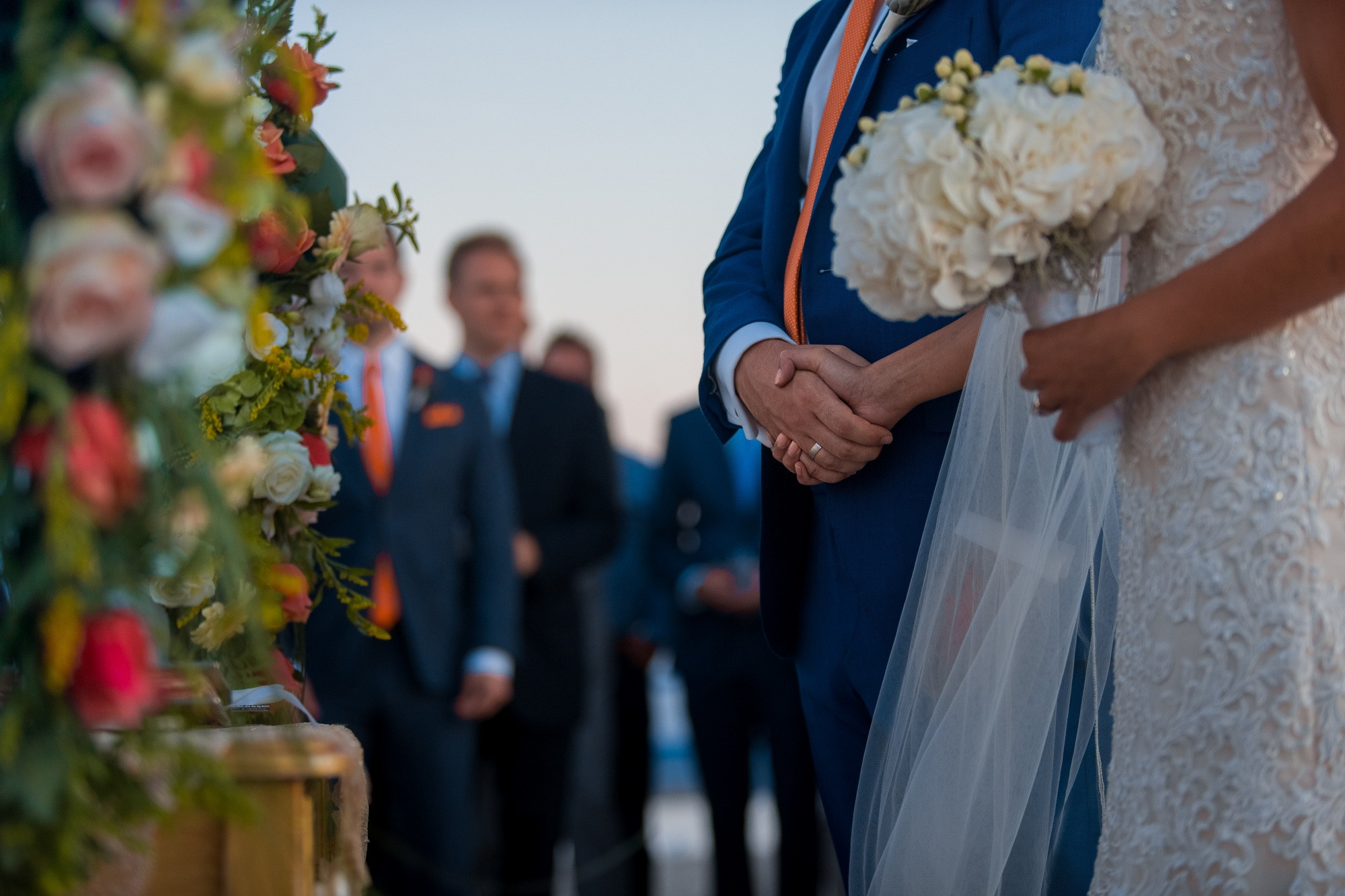
I had planned the day with the same instinct I brought to everything: efficient, deliberate, nothing wasted. A vineyard outside Fayetteville in late October, the light falling at that particular angle that photographers chase and soldiers never get to plan for. Marcus at the altar in his tuxedo, grinning the way he grins when he is happiest, which is often and without apology. My dress blues, pressed and exact, every decoration in its right place. Two hundred guests, a borrowed chaplain, and vows we had written ourselves over two weekends and a lot of bad coffee.
What I had not planned was my mother.
I should have known better. I had known her for thirty-seven years.
She was seated in the third row on the left when I turned the corner at the far end of the aisle and saw her for the first time that day. She was not crying. She was not smiling with her hand pressed to her heart. She was leaning toward my aunt Diane, one hand raised to cover her mouth, and she was laughing. Not the polite, suppress-it laugh of someone caught off guard by something small. The real thing, fully expressed, complete with the slight backward lean that meant she found whatever she was looking at genuinely absurd.
I read her lips from across the vineyard. I had always been good at reading her.
God, she really showed up in costume.
Diane looked mortified. Two of Marcus’s cousins turned to follow her gaze. The woman beside me in the procession, Captain Reyes, kept her eyes forward and her face still in the way that military people learn to do when they are choosing not to react to something they absolutely noticed.
I kept walking.
Thirty-seven years of practice made it possible to keep walking when every molecule of you wants to stop.
I want to explain who my mother is, because she is not a cartoon villain, and understanding her matters to understanding what happened that afternoon in North Carolina. Eleanor Turner was a private school administrator in Asheford, Connecticut, the kind of woman who could make a PTA committee feel underqualified just by walking into the room. She was intelligent, particular, and genuinely gifted at the performance of high standards. She threw dinner parties where every element arrived in sequence. She had opinions about how things should be done that were difficult to argue with because they were often correct in the small, measurable ways she cared about.
She simply had no framework for a daughter like me.
My brother Jason was her native language. He was varsity everything, Ivy League bound by junior year, the kind of child who made parenting look like a proof of concept. Violin. Debate team. A face that photographed well. When my mother talked about Jason, her voice had a quality of ease in it, like a musician playing in their natural key.
When she talked about me, she transposed constantly. She was always describing a version of me that fit the story she preferred to tell. I wasn’t interested in planes. I was exploring aerospace science. I wasn’t practicing jiu-jitsu. I was developing discipline through martial arts. When I broke my collarbone playing football with the neighbor boys at eleven years old and did not cry, she did not look proud of my toughness. She looked at me as though I had malfunctioned.
She called me her project. Not her daughter. Her project.
By the time I was sixteen, I had stopped correcting her versions of me in public. What was the point? She did not want a daughter who was real. She wanted a résumé with a face that photographed acceptably.
The military came into focus for me during a Veterans Day ceremony at school my junior year. I cannot fully explain why it landed the way it did, except to say that something in the precision and the unity and the absolute absence of performance felt like the opposite of every dinner party my mother had ever hosted. In my family’s world, everything was curated. Everything was arranged to produce an impression. At that ceremony, watching the veterans in formation, I felt something that I would later recognize as recognition. These were people who had agreed to be exactly what they were, without apology, and to be judged on whether they could do what they said they could do.
I wanted that.
When I put the acceptance letter to West Point on the refrigerator, my mother peeled it off and set it on the counter without comment, the way you move a piece of mail that isn’t yours. My father, a cardiologist with a six-minute rule about tardiness and almost no capacity for conversations that did not have clear conclusions, said nothing. Jason, home for spring break, told me I was doing it to spite her.
I told him I was doing it so I did not become her.
That was the last dinner we had as a complete family.
After I left for the Academy, I became an inconvenience in the story my mother told about herself. I was uninvited from holiday gatherings under logistical pretexts that everyone understood were not logistical. I was introduced to her friends in vague terms that obscured my rank, my command, my deployments. When I called from overseas during my first assignment in Germany, she said I sounded tired and asked whether I was eating properly and had I met anyone interesting, by which she meant someone eligible and settled. When I told her I was leading a unit through a training rotation and that my team trusted me and that I was exactly where I was supposed to be, she said, “Don’t get bulky.”
I hung up midsentence.
I want to be clear about the years between that phone call and the wedding, because they were not a long low note of suffering. They were also the years in which I became myself, and that was not a small thing.
Afghanistan twice. Korea. Germany twice again. Promotions that came early because I was good, not because I was accommodating. A Bronze Star earned under circumstances that still occasionally reappear in my sleep, though less often now. A leadership record that my commanding officers described in language I was not modest enough to disagree with. Soldiers I would trust with my life who trusted me with theirs.
And throughout all of it, my mother described Afghanistan as me taking time off for travel.
She made me a footnote in a story about herself. She told her church friends she had raised a strong-willed daughter, that it had not been easy, that she had supported me even when my choices were difficult to understand. She positioned herself as the steadfast parent of a complicated child, and fifty-some people clicked like on Facebook, and nobody asked what I was actually doing when she said all of this.
I found out about the posts from my aunt. I did not respond. I had learned that silence was sometimes the cleanest form of refusal.
So when she laughed at me walking down my own wedding aisle in my dress blues, I kept walking, because I had had thirty-seven years of practice at absorbing the thing she did and continuing forward. I found Marcus’s eyes at the altar and he squeezed my hands the way he always did when he knew something was working on me from the inside, that small pulse of pressure that said, I see you, you are not alone in this, keep going.
The ceremony was twenty-eight minutes. We had written vows with specific language, no floating abstractions, just the actual things we were promising to do. Marcus had humor in his. Mine had the rhythm of a mission briefing, which he loved and which made the chaplain smile. I was present for all of it in a way that surprised me, given that I was also aware, with the low-level monitoring of a person trained in situational awareness, of my mother two rows back on the left.
I could feel her boredom like weather.
We were perhaps fifteen minutes in when I heard the first sound behind her.
A chair. Metal, scraping slowly across the floor, the way chairs scrape when someone stands deliberately and is not worried about making noise.
I did not turn around. Not yet.
But I knew that sound. I had heard it ten thousand times in formations and briefings and ceremonies across three continents. It is the sound a person makes when they are coming to attention.
Then another chair.
Then another.
I felt the room change the way a room changes when something is happening that was not on the schedule. A collective shift of breath. A quality of attention different from wedding attention, which is warm and slightly soft. This was something more focused.
Marcus’s eyes found mine over the chaplain’s shoulder, and I saw in them that he was feeling it too, whatever was moving through the room, and that he did not entirely know what it was yet, and that he was not afraid of it.
I turned around.
I have been in enough significant moments in my life to know that the ones that matter do not always look the way you expect them to look. They do not always arrive with music or clear lighting. Sometimes they arrive as a room full of people standing up in the middle of a vineyard in North Carolina on a Tuesday afternoon in October, quietly and without being asked.
There were nearly two hundred of them on their feet.
I knew most of their faces. I had served with many of them or alongside them or under their command or with them reporting to mine. I recognized soldiers from Germany and from Fort Bragg and from training rotations in Korea. I recognized officers I had not seen in years who had apparently heard about the wedding through the network that military families maintain with an efficiency that genuinely rivals intelligence agencies. Some of them wore dress uniforms. Some wore suits. A few were in civilian clothes with their posture giving them away the same way it always does, because you cannot fully remove twelve or fifteen or twenty years of military bearing from the way a person holds their spine.
Staff Sergeant McCall was nearest. I recognized him immediately, built like a fire hydrant, eyes forward, fists at his sides, the picture of parade rest except standing rather than seated. We had served together in Germany during Operation Atlantic Resolve. He had once kept an entire heated argument going with me across an entire winter deployment about the relative quality of his wife’s chili versus mine. He never lost an argument. He had apparently decided to show up at my wedding without telling me, which was completely in character.
Nobody had told them to stand. I was certain of that. No one had given a command or passed a signal or coordinated anything in the traditional sense. They simply rose, one after another, in the unhurried way of people who have decided together to do something and do not require a formal instruction to begin.
My mother had been flipping through the wedding program when the first chairs scraped. She looked up when the second row stood. By the time a third and fourth wave were on their feet, she had gone very still, her program in her lap, her wine glass not quite raised and not quite lowered, caught in the suspended moment of someone who has just realized that the atmosphere around them has shifted in a way they do not control and cannot redirect.
She was not at the center of the room anymore.
She was simply in it, like anyone else.
I did not say anything. I did not nod at McCall or raise my chin or make any gesture that would have transformed the moment into something I was performing. I just looked at them, all of them, every face I recognized and the ones I didn’t, and felt something break open inside me in a place that had been sealed for a very long time.
It was not triumph. I want to be precise about that because I have thought about it many times since and I think precision matters. It was not revenge or vindication or the satisfaction of a point being made. It was something quieter and older, closer to the feeling of putting down a heavy thing you have been carrying for so long you forgot it was heavy.
These were people who had seen me covered in dust and blood and exhaustion. They had seen me make wrong calls and own them and make better ones the next time. They had given me MREs when I was too tired to think about food and argued with me about route selection and trusted me in the moments when trust was the only currency available. They knew me in the way that you can only know someone when you have been genuinely at risk together.
And they were on their feet.
Not because of my rank. Because of the road I had walked to earn it.
I turned back to Marcus. He squeezed my hands again, and his eyes were wet in a way I had seen only a few times before, and the ceremony continued.
The reception was in the vineyard’s main hall, warm and simply arranged, nothing ostentatious, everything in its right place. My mother had recovered herself by then, or had reassembled the performance of recovery, and she moved through the early hour of cocktails with the practiced grace of a woman who has never attended an event at which she was not comfortable. She spoke to Marcus’s parents. She spoke to my aunt Diane. She straightened her earrings in the reflection of a window and looked exactly like herself.
I watched her without intending to watch her.
Three minutes into the toasts, she stood up.
Nobody had asked her to speak. The toastmaster had not called her name. She simply tapped her glass and rose, and the room deferred in the automatic way rooms defer to a certain kind of confident woman, and she looked around with the air of someone taking her place at the front of an event she had been preparing for.
She talked about my childhood. She talked about my strong will, my seriousness, the way I had rarely smiled. She said she had wondered for years if I would grow out of what she called my military attitude. She said at least I had found someone who could make me smile, even if I wore the pants and the boots.
People tried polite laughter. Most did not quite manage it.
Then she arrived at the punchline.
“I guess when you can’t find a man to outrank you,” she said, “you marry one who salutes you at home instead.”
The room went quiet in the specific way that rooms go quiet when something has been said that cannot be taken back.
I stood up.
Not in anger. Not in the hot, reactive way that she would have been able to dismiss later as emotional. I stood slowly and calmly, the way I stood in briefings when I was about to say something that needed to be heard, and I raised my glass.
“To my mother,” I said, and my voice was steady and clear in the silence. “For always showing me exactly who I did not want to become.”
The pause that followed lasted perhaps three seconds.
Then McCall stood and said, in his dry, carrying voice: “Colonel on deck.”
And the room rose again.
Not all at once this time. One by one, starting with the nearest table and moving outward, every service member in that hall came to their feet. Marines. Army. Air Force. A retired Navy commander near the back who I had met twice and who apparently felt the occasion warranted the trip. Some of them were in dress uniform still. Some were in suits. They stood straight and still, the way people stand when they are doing something they mean.
Marcus stood last.
He was not military. He had no obligation to the gesture and no framework requiring it. He simply stood, slowly, because he wanted to be counted among them, and he looked at me with the eyes of a man who has decided, deliberately and without reservation, to be on your side.
My mother sat down.
She did not say another word for the rest of the evening.
I did not gloat. I did not look at her with anything I would characterize as satisfaction. What I felt was something quieter: a settling, a confirmation of something I had known for years but had never seen made visible in a room full of witnesses. That the family I had built was real. That the respect I had earned was real. That the life I had chosen against every discouragement she had ever offered was real, and present, and standing on its own feet.
In the weeks that followed, my father called to tell me she was describing the salute as a staged publicity stunt. He called to say she felt humiliated, that her church friends were asking questions, that she needed me to call her.
I listened to everything he said.
Then I asked him whether he had said a single word to her at the wedding when she laughed at me walking down the aisle.
He was quiet for a moment.
He said he had frozen. That he had spent decades not rocking the boat with her. That this was not an excuse but it was the truth.
It was the most honest thing he had said to me in years. I told him so.
We sat in silence for a while, the kind that feels earned. Then he said something I was not prepared for. He said he had watched me walk down that aisle in my uniform with my head up, and he had thought: what did we do to make her have to be that strong alone? He said the salute was not just about my rank. It was about everything I had survived to get there. He said he was sorry he had not seen it before.
I thanked him. Not because the apology resolved anything, but because it was real, and in my experience real things, even small ones, deserve acknowledgment.
My mother emailed eventually. The subject line read Let’s talk. The message was not warm, but it was not dishonest either. She said she had not realized people would see her the way they apparently had. She said she was proud of me, had been proud, but had not known how to say it without making everything about herself, and she could see now that she had failed at that. She said if I wanted to talk, she would listen. No corrections.
I did not respond immediately. I sat with the email for several days and showed it to Marcus, who said it was something, that she had blinked first, and that something was not nothing.
When I finally replied, I kept it short. I told her I was not angry anymore but I was tired, and that I needed space, and that I wanted it to be real if we ever talked again, no edits and no rewrites.
She did not reply.
The silence was not comfortable, but it was honest, and honest silence is easier to live in than performed peace.
That spring I was asked to speak at a panel on women in command at my alma mater. I almost declined. Then I remembered something a lieutenant had told me years earlier: the stories we don’t tell become the lies people fill in for us.
I said yes.
The auditorium was full. I looked out at the audience from the stage and did not talk about awards or career milestones. I talked about growing up in a house where my value was conditional. About the specific loneliness of being the child who does not fit the story her parents are telling. About finding, in the structure and the directness and the mutual accountability of military service, a framework for being known that had nothing to do with whether you looked right or came from the right family or wanted the right things.
When I said that respect is not begged for, it is built, I saw heads nodding in the particular way of people recognizing something they have always known but have not had words for until just now.
Afterward, a young cadet approached me. She could not have been older than twenty. She did not say much. She handed me a folded piece of paper and walked away before I could respond.
In the car, I opened it.
My mom’s like yours, she had written. I thought I was broken. Now I think I’m just built different. Thank you.
I folded the note and put it behind my military ID. I carried it there for months.
At home, Marcus and I had settled into the particular quiet of two people who have chosen each other deliberately and are not surprised to still be choosing each other. He poured bourbon on the nights I needed to decompress. He asked questions that were actually interested rather than questions that were politely waiting for their turn. He found Jasper, an ancient rescue dog with a grudge against the vacuum cleaner and a passion for sleeping on my boots, and brought him home on a Tuesday without prior discussion, which was the correct decision.
I was promoted to full colonel that autumn. The ceremony was small and clean, a few words, a new insignia, people clapping because they meant it. Marcus toasted to survival. I told him I preferred to toast to presence, because survival was about getting through, and I was done just getting through.
We clinked glasses on the back porch while Jasper twitched through some dream on the steps below us.
Months later, running into a former cadet at the base gym, I was told that my name had become shorthand in officer training. She said they used the phrase Turnering a room to mean making people respect you without demanding it. She said it like she was reporting a fact, not giving a compliment, which was exactly how I preferred to receive it.
I thought about what I would have said to the sixteen-year-old girl who put a West Point acceptance letter on her mother’s refrigerator and watched it get set aside without ceremony. I would have told her that the approval she was waiting for was never going to arrive in the form she was hoping for, and that this was not a wound but a direction. That the family you find, the one assembled from shared difficulty and mutual choice, would be more real and more sustaining than the one she was born into and was trying so hard to deserve.
I would have told her to stop shrinking.
She eventually figured it out on her own, the way most things worth knowing get learned, through time and cost and the particular instruction of being thrown into situations that required more of her than she thought she had.
The note from the cadet stayed behind my military ID. Some nights I would take it out and read it.
Built different.
Yes. I had spent years understanding that as a verdict. A sentence passed by people who wanted me to be something I was not. I had carried it like a wound.
Then I understood what it actually was.
Not broken. Not wrong. Not less.
Just built for something they had not imagined for me, something I had built for myself out of gravel and discipline and the profound gift of being seen clearly by people who had no reason to flatter me.
Outside, the cicadas ran their usual noise against the Carolina evening. Jasper was somewhere in the yard. Marcus was inside with the television on low. I sat on the porch steps with my boots off and my wine going warm in my hand, not thinking about my mother or the wedding or the salute or any of it in particular, just sitting in the ordinary quiet of a life I had assembled from scratch.
I was not waiting to be understood anymore.
I was not waiting for permission.
I was just here.
And here, it turned out, was exactly enough.

Adrian Hawthorne is a celebrated author and dedicated archivist who finds inspiration in the hidden stories of the past. Educated at Oxford, he now works at the National Archives, where preserving history fuels his evocative writing. Balancing archival precision with creative storytelling, Adrian founded the Hawthorne Institute of Literary Arts to mentor emerging writers and honor the timeless art of narrative.