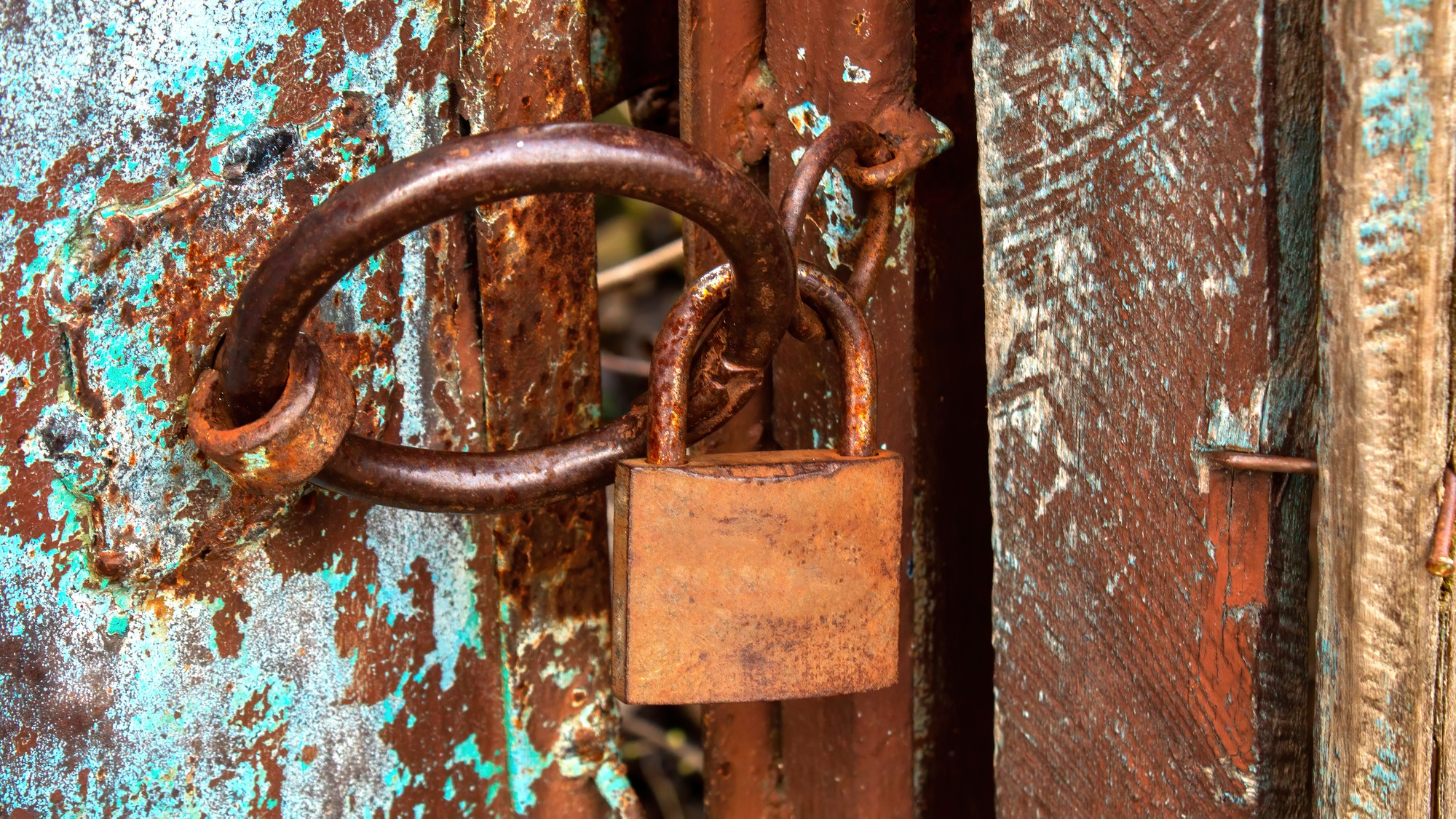
The Rusty Key
The key my grandmother left me was so corroded it stained my palm orange. I stood in the attorney’s conference room holding it while my cousin Brittany held a velvet box containing a sapphire necklace worth more than my car. More than two of my cars.
Nobody looked at me. That was fine.
“Probably empty,” Aunt Carol said, not quite under her breath. “Maggie always did have a strange sense of humor.”
I put the key in my coat pocket, wrapped my fingers around it, and drove home.
My grandmother was Margaret Hollister. She had been dying for two years before she actually died, which gave everyone plenty of time to position themselves. When you watch your family circle someone’s deathbed like planes waiting to land, you stop pretending you don’t see it.
Grandma Maggie lived in a Craftsman house in Hadley, a town two hours upstate where Main Street still has a hardware store and a diner that serves pie on actual plates. She’d lived there for forty-three years, raised two sons, buried a husband, and accumulated the kind of quiet wealth that comes from owning the right property at the right time. My grandfather started a construction supply business in the 1970s. By the time he died, the warehouse alone was worth more than most people’s retirement.
I was the only grandchild who visited her regularly after he passed. This isn’t me painting myself as saintly. I happened to live closer, and I happened to like her. Brittany was in San Diego. My other cousins Marcus and Drew were in Boston and Atlanta. My parents lived forty minutes from Grandma, but somehow that forty minutes was always too far.
“She’s fine,” my mother would say whenever I mentioned visiting. “I called her Tuesday.”
My mother called everyone. It was her substitute for seeing them. She could maintain relationships entirely through brief, informational phone calls, ticking names off an internal list. Margaret Hollister: still alive, still in the house, still refusing to move somewhere more practical. Check.
I drove up every other weekend, then more. Grandma and I would sit on her back porch watching birds fight over the feeder she’d hung in the oak tree. She’d tell me stories about growing up in Ohio, about meeting Grandpa at a dance in 1971, about the years when my father and Uncle Richard were young and the business was just a rented storefront with a phone that rang twice a day.
The rift between my father Doug and Uncle Richard was so old it had become furniture. Always present, never examined. Richard and Aunt Carol had moved to Vermont fifteen years ago. They had three kids, Brittany, Marcus, and Drew, and a careful distance from our branch of the family that I’d accepted as simply the shape of things.
What I knew from years of overheard conversation was that Uncle Richard had started an import business about twenty years ago. My grandparents had been going to invest in it, help him get started, and then something happened. The investment fell through. Richard’s business failed within the year. The brothers stopped speaking properly after that, and the reason was always classified as old history that didn’t concern me.
Grandma started declining the spring I turned twenty-eight. By summer she couldn’t drive. By fall she needed help with the stairs. I moved in three weeks after her hospital stay, when it became clear someone had to.
Living with her wasn’t what I’d braced for. Decline was there, but so was she, stubborn and present.
“I can still make my own tea,” she told me the first morning. “I’m not dead yet.”
“Nobody said you were.”
“Your mother looks at me like I’m already embalmed.”
She noticed everything. She noticed when I stopped mentioning the man I’d been dating. She noticed when my parents came up and spent most of the visit asking pointed questions about the house. Would she consider selling? Wouldn’t something smaller be more practical? Had she spoken to a realtor about current values?
“It’s not morbid to plan ahead,” my mother said. “It’s practical.”
Grandma smiled and offered her more pie.
One night, late, when she was tired enough to let her guard down, I asked about the rift. About what had happened between my father and Uncle Richard twenty years ago.
She put her book down and looked at me with eyes that were sharp despite everything.
“What do they tell you?” she asked.
“That Richard blames Dad for something. Old history. That’s all.”
She nodded slowly. “That’s all they’d say, isn’t it.”
“Grandma—”
“Not tonight.” She picked up her book again. “But you should know, Nora, eventually it’s your family too.”
She died seven weeks later, on a Tuesday in late January, before she could tell me anything else.
Three nights before she died, she called me from her bedroom while I was in the kitchen. Her voice was perfectly clear, which is how I knew something was different.
“The key is in the drawer,” she said. “Don’t let your father find it first.”
I thought she was confused. People say strange things at the end. I thanked her and went back to what I was doing.
Now, standing in the attorney’s office with orange rust on my palm, I was less sure.
The will reading took place in the office of Howard Fitch, who had been Grandma’s attorney for thirty-five years. We gathered in his conference room like a jury awaiting a verdict. My parents on one side, stiff and formal. Uncle Richard and Aunt Carol on the other with Brittany between them. Marcus and Drew had flown in from Boston and Atlanta, their first time in this part of New York in years.
Howard Fitch read.
The house would be divided equally between her two sons, with neither able to sell without the other’s consent. My father’s jaw tightened. Uncle Richard briefly closed his eyes. The jewelry went to the grandchildren: the sapphire necklace to Brittany, diamond earrings to Marcus, a vintage Cartier watch to Drew.
“What does Nora get?” my mother asked.
Howard Fitch consulted his papers. “Mrs. Hollister left her granddaughter Nora Elena Hastings the contents of safe deposit box 714 at Hadley Savings Bank, to be opened only by Nora herself.”
He handed me the key across the table. Corroded, tarnished, teeth barely visible anymore. It left orange on my fingers.
“That’s it?” Brittany said. “She gets a key and we get the jewelry?”
“The will is what it is,” Howard Fitch said quietly. “Mrs. Hollister was very specific.”
I put the key in my pocket. Everyone looked at me. My parents with something hard in their eyes. Aunt Carol with that small smug smile. Brittany with what might have been pity.
I kept my face still and wrapped my fingers around the key.
I didn’t go to the bank that day or the next. On the third morning, my mother called to say they would stop by that weekend. My father wanted to talk about the house.
I went to the bank the following morning.
Hadley Savings Bank was a stone building on Main Street, the kind of place with teller windows and carpeting unchanged since 1978. The woman who helped me, Linda, had known my grandmother for years.
“Such a loss,” she said, leading me to the vault. “She was always so sharp, right up until the end.”
The safe deposit box was in a dim corner, one of the smaller ones. Linda fitted my corroded key into the lock. It turned with a grinding sound that made us both wince. She set the box on a table in a small private room.
I opened it.
No gold, no jewelry, no property deeds. A manila envelope yellowed with age, and a smaller envelope with my name in Grandma’s handwriting.
I read her letter first.
She began by saying she was gone, and I’d done what she asked, come alone, not let my father find the box first. Good girl.
Then she told me the truth.
Twenty years earlier, my parents had come to her with a story about an emergency. My father had made a bad investment. He owed money to dangerous people. They needed three hundred thousand dollars immediately or there would be consequences. She had believed them. He was her son. Why would he lie?
She gave them the money. All of it. Every dollar she’d set aside for Uncle Richard’s business, the investment she and my grandfather had promised him. Richard never knew what happened to it. She told him the market had turned, that they’d lost the money in a bad investment. He believed her because she was his mother and he loved her and couldn’t imagine she would lie.
His business failed within the year. He blamed himself, blamed my father in the vague way of someone who senses more beneath the surface, blamed everyone except her because he loved her.
She found out the truth six years later. The emergency had been invented. There were no dangerous people, no bad investment. My parents had fabricated a crisis using forged documents, and she’d given them everything she’d promised Richard. They’d used it to buy a house, to build a life, to fund a future they hadn’t earned.
She could have exposed them. Instead, she chose silence, and she’d lived with that choice for twenty years. But she hadn’t forgotten, and she hadn’t let them get everything.
The jewelry they were all fighting over had been replaced, piece by piece, over the past decade. Brittany’s sapphires were lab-grown. Marcus’s diamonds were cubic zirconia. The settings were silver, not platinum. She’d sold the real ones.
With the money, she’d bought a small house by the ocean, registered under a trust in the name Elena Haven. That was me. My middle name, the one I got from my great-grandmother. The house was mine. It had been maintained by a property management company for three years, waiting.
The paperwork was with a lawyer named Sandra Cho in Burlington, not Howard Fitch, who handled too much family business.
She’d sent some of the remaining money to Richard anonymously, as an inheritance from a distant cousin. He’d never questioned it.
My parents knew none of this. They didn’t know about the fake jewelry. They didn’t know about the house. She’d spent twenty years watching and waiting, and now she was gone, and I was holding the evidence, and she trusted me to decide what to do with it.
She closed by saying she was sorry for leaving me with the burden, but I was the only one strong enough to carry it. Don’t let them take what’s yours.
I read the letter three times in that small room with the buzzing overhead light. Then I opened the manila envelope: bank transfer records, photocopies of checks, and copies of loan applications with fabricated figures, invented debts, manufactured emergencies. My parents had forged their own disaster.
I sat there a long time.
I thought about the house where I grew up. The private schools. The car on my sixteenth birthday. All of it built on money stolen from Uncle Richard, paid for with a lie told to a woman who loved them.
I put everything in my bag and drove home without stopping.
My parents arrived Saturday with a casserole dish and my father’s careful smile. He wandered the house touching surfaces, commenting on how well I’d kept it up. My mother set her dish on the counter and mentioned twice that the guest room would make a lovely home office.
“Richard and I have been talking,” my father said, settling into Grandma’s chair. “The house needs to be sold. We’ve agreed on it.”
“Uncle Richard agreed to that?”
“He will.” He waved his hand. “He’s being difficult, but he’ll come around.”
“The safe deposit box,” my mother said, her voice tilting toward casual in a way she’d always deployed when she wanted something. “We’ve been thinking about it. If there’s anything related to the estate in there, anything financial, Howard Fitch would need to know about it.”
“There’s nothing like that.”
“You said old documents.”
“Old bank statements. Nothing important.”
“We should still see them.” My father leaned forward. “I’m your father, and she was my mother. If she left something that affects what happens to this family—”
“She left it to me specifically. With a key that had my name attached to it.”
“Nora.” His voice shifted, the one he used when he was done being patient. “If there’s something in that box that involves this estate or this family’s finances, I have a right to see it.”
I looked at this man in my grandmother’s chair, his hands on her armrests, his feet on her floor.
“There’s nothing in that box that’s yours,” I said.
We had dinner. It was strained. My parents asked questions I deflected, and I asked questions they pretended not to hear. When they left, I stood on the porch and watched their taillights fade. Then I went inside, confirmed the safe deposit box was still hidden where I’d put it, and called the number from Grandma’s letter.
Sandra Cho answered on the third ring.
The house was in Maine.
Sandra showed me photographs on her screen. A small cedar-shingled cottage with a wraparound porch facing the ocean. Two bedrooms, one bathroom, a kitchen with windows looking out at nothing but water and sky. It had been empty three years, maintained and waiting.
“She never saw it in person,” Sandra told me. “Found it online. Made all the arrangements remotely.” She paused. “I don’t think she ever intended to live there herself.”
“Then why buy it for me?”
Sandra’s expression was careful. “She was very specific. The trust transfers on her death directly into your name. No probate, no family involvement.”
I asked whether she knew about the rest of it. The money. What had happened twenty years ago.
“Margaret told me some things,” she said. “Not everything. She wasn’t a client who volunteered information.” A pause. “But I know she thought carefully. Whatever she left you, whatever she wanted you to know, she had reasons.”
“She wanted me to tell my uncle the truth.”
“Then maybe you should.”
I drove home with a deed in my name and a weight in my chest that felt like it might settle there permanently.
The cousins were already fighting. I heard about it through my second cousin Catherine, who’d received the pearl bracelet and immediately tried to sell it. The appraiser told her the pearls were freshwater, not saltwater, worth perhaps two hundred dollars. She called Brittany. Brittany took her sapphires to a jeweler. The jeweler said lab-grown, silver settings, maybe five thousand total. Brittany called Marcus. Marcus had the diamond earrings checked. Cubic zirconia. Drew discovered the Cartier watch was genuine, which only made Brittany more furious.
Aunt Carol called my mother. My mother called me.
“Did you know about this?”
“Why would I know about jewelry?” I said.
I called Uncle Richard that evening.
He answered on the second ring, his voice cautious. He probably had caller ID and knew it was the Hadley house.
I told him I had something from Grandma that she wanted him to see. Something that would explain things he’d wondered about for twenty years.
The silence that followed was long enough that I thought the call had dropped.
“What kind of things?” he asked finally.
“The kind you’ve been waiting twenty years to understand.”
I drove to Vermont the next day.
Uncle Richard met me at the door. He was grayer than I remembered, more weathered, but his eyes were the same sharp blue as Grandma’s. He led me to the kitchen. Aunt Carol made coffee and made herself scarce, which I appreciated.
He read everything at the kitchen table. The letter, the bank records, the forged documents. His face didn’t change as he read, but his hands did. They started trembling somewhere around the second page.
When he put everything down, he said, “She knew. For fourteen years. And she never told me.”
“She said she chose silence for the family.”
He laughed, a harsh sound. “The family that was already broken.”
I didn’t say anything. I just waited while my uncle sat with the truth his mother had kept for fourteen years.
“He took it,” Richard said finally. “Doug just took it. Lied to his own mother and took the money she’d promised me, and let me spend the next decade thinking I’d failed. Thinking I didn’t have what it took.”
“I know.”
“Do you know what that does to a person? To believe that you failed when actually someone just took the floor out from under you?”
I didn’t have an answer for that. I sat with him in his kitchen while he processed twenty years of revised history. Eventually Carol came back with more coffee, and she touched her husband’s shoulder, and he covered her hand with his, and the three of us sat there in the warm kitchen while the afternoon light shifted.
Before I left, Uncle Richard walked me to my car.
“What are you going to do?” he asked.
“I’m going to Maine. Grandma left me a house there.”
He nodded, absorbing this. “And your parents?”
“I told them what I found. Not all of it. But enough.”
“They’ll come after you.”
“Probably.”
“Let me help you.” He looked at me steadily. “I know trusts. I know what litigation looks like when a family decides to get ugly. I learned, rebuilding from what they took from me. Let me use that.”
“You don’t have to.”
“Your grandmother sent me money,” he said. “I didn’t know where it came from, but it was enough to start over. She gave me that, even while keeping her silence, even while carrying the guilt. The least I can do is protect what she left for you.”
I drove back to Maine.
My parents came. They threatened. They sent lawyers’ letters. They drove to Hadley to search the house while I was away and found the safe deposit box I’d left there deliberately, emptied of everything that mattered. They drove to Vermont and offered Uncle Richard half of whatever they could recover from my trust if he’d testify about Grandma’s mental state. He declined, and told me about it afterward with a satisfaction he didn’t bother to conceal.
And then, on a cold afternoon in November, they drove to Maine.
I saw their car from the porch. I let them come up. I let them sit. My father looked older than he’d ever looked, and my mother had the expression of someone who has been managing something very heavy for a long time and is running out of strength.
“We’re dropping the case,” my mother said. “The trust. We’re not contesting it.”
I looked at her, then at my father.
“Why?”
“Because we can’t win,” my father said. The words came out flat, factual, stripped of everything he usually wrapped his speech in. “We never could have won. We were just hoping to wear you down.”
We sat with that for a moment.
“There’s something else,” my mother said. She glanced at my father, who was staring at the water.
“Switzerland,” he said.
He told me. A key had been sent to them through a lawyer, with an address and a note that said Margaret Hollister had left something for them in a safety deposit box in Zurich. Real treasures, the note implied. The things she’d really valued.
They’d flown over. Business class, a nice hotel, an appointment at the bank. They’d been so certain.
Inside the box was a single letter. A copy of the bank transfer records from twenty years ago. And a note in my grandmother’s handwriting that said: I see you flew halfway around the world for money, but couldn’t drive two hours to visit me. The cost of your trip is a small installment on what you owe.
My father’s mouth twisted when he described it. He’d expected treasure. He’d found an invoice.
“That was Uncle Richard,” I said. “Setting the trap. Grandma wrote the note years ago, and he made sure it ended up where it needed to go.”
My father didn’t say anything. Outside, the ocean kept moving.
“I’m not apologizing for what we did,” he said finally, which was the most honest thing I’d heard from him in my life. “What we did, we did because we needed to. I’ve told myself that for twenty years and I’m going to keep telling myself that because the alternative is something I can’t live with. But I’m telling you now that we’re done. We’ll leave you alone. We’ll leave Richard alone.”
“You need to tell him you’re sorry.”
“He won’t accept it.”
“That’s his choice. You still have to say it.”
My father looked at me for a long moment. Something moved across his face that I couldn’t name and didn’t particularly want to try.
“Maybe,” he said.
They left. I watched the car pull away and then sat on the porch until the last light left the water.
Three weeks later, I unpacked the final box I’d brought from Hadley. Inside, underneath photo albums and pressed flowers and letters from people I didn’t recognize, at the very bottom, was a small velvet box I’d never seen before.
A ring. A thin gold band with a single small diamond, old-fashioned and quietly beautiful. A note was tucked underneath it.
For Nora, to wear or sell or throw in the ocean. It was my mother’s and her mother’s before that, the only jewelry that was ever really mine. I love you. M.
I slipped it on my finger. It fit perfectly.
Outside the kitchen window, the ocean stretched out flat and gray and enormous under a late afternoon sky. The bird feeder I’d hung in the yard was already occupied, a small brown sparrow working through the seeds with focused intensity.
I stood there watching it for a while, the ring catching what was left of the light, and thought about my grandmother choosing this house for me years before she died. Planning it all out in the particular way she did everything: quietly, precisely, with patience that most people would have mistaken for passivity and that was actually something much more deliberate.
She had spent twenty years watching people take what they wanted from her, and she had stayed silent, and she had grieved, and she had also been working. Making her own plans. Replacing sapphires with glass, setting aside a house at the edge of the ocean, writing letters she trusted would reach the right people at the right moment.
She had not been a woman waiting for things to end. She had been a woman deciding how they would.
I went outside to fill the feeder, because it was the kind of thing she would have done, and because the sparrow was still there, patient and undeterred, waiting for whatever came next.

Specialty: Quiet Comebacks & Personal Justice
David Reynolds focuses on stories where underestimated individuals regain control of their lives. His writing centers on measured decisions rather than dramatic outbursts — emphasizing preparation, patience, and the long game. His characters don’t shout; they act.