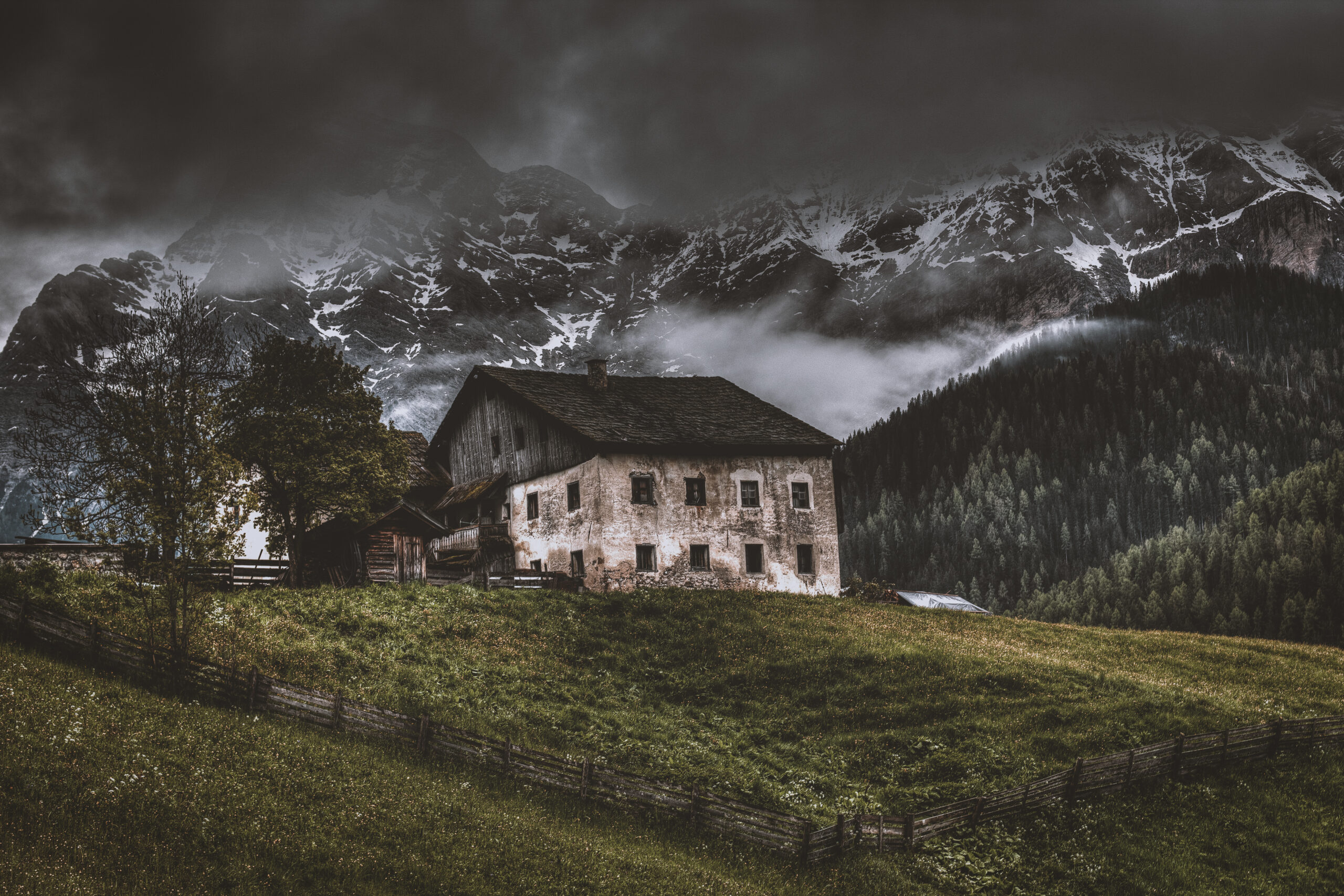
Tuesday evening, I drive to Colorado Springs and park outside a quiet coffee shop with warm lights and the low hum of other people’s conversations. I’m forty-five minutes from Eagle Ridge Estates, close enough to still feel the mountain air in my imagination, far enough to breathe without the rage tightening my throat.
Across from me sits a woman in her early sixties with silver streaks in her hair and reading glasses perched on her nose. She doesn’t waste time on small talk. Her eyes are sharp in the way that tells you she learned a long time ago that politeness is often used to stall.
“Daniel Howard?” she asks.
I nod.
She exhales like she’s been holding breath for years. “It’s about time someone else started asking questions.”
Her name is Stephanie Patel. Former board member, Eagle Ridge Estates. When I called her, she didn’t ask how I got her number. She just told me where and when to meet.
She slides a manila folder across the table.
Inside are photocopies of meeting minutes, financial statements, handwritten notes, and printed emails, everything labeled neatly with dates. It is the kind of documentation only someone patient and furious would keep.
“I kept everything,” she says, watching my face. “After they pushed me off the board, I knew someday it would matter.”
She tells me what happened three years ago. She had noticed discrepancies in the reserve fund, money allocated for road maintenance that never appeared in contractor invoices, special assessments collected for projects that never broke ground. She raised concerns at a board meeting. Donald Mendoza thanked her publicly for her diligence.
Two months later she received a letter stating homeowners had complained about her hostile behavior. She was removed by a vote held on a date she was never notified about.
“I filed a complaint with the county,” she says. “They asked for documentation. I gave them what I had. It wasn’t enough by itself.” She taps the folder. “But I kept collecting.”
I reach a page showing the reserve account balance at $47,000 two years ago. Then I find a recent HOA newsletter listing the current balance at $12,000.
Thirty-five thousand dollars gone in twenty-four months.
“Any major repairs? Capital projects?” I ask.
Stephanie shakes her head. “Tree removals. Some signage. Maybe five thousand total if you’re generous.”
She pulls out a handwritten sheet, a log of violations issued and fines collected. Among the fifty-five resident owners, two formal enforcement actions in the same period. Among the twelve absentee owners, five. Almost half.
I stare at those ratios and wait for innocent explanations. There are none.
Stephanie slides one more document across the table. County court records, seven years old. Donald Mendoza had filed for Chapter 7 bankruptcy, personal debt exceeding $300,000, his primary residence listed with negative equity. Two years later he ran for HOA president. Three years after that, he was driving a new truck and his wife was posting vacation photos from a cabin that appeared in no property records under his name.
A cabin not in his name.
Stephanie pulls out a property record for a cabin at the north end of Eagle Ridge. Owner listed as Eleanor Vance, seventy-eight years old, primary address in Florida. Two years ago her property had been flagged for abandoned status. Violation notices. Emergency preservation. Board authorization.
She points to a date on the document. The HOA board voted to authorize access to Eleanor’s property on March 15th. But according to Stephanie’s attendance log, the March board meeting was held on March 22nd.
A week after the vote supposedly happened.
The resolution was backdated.
Eleanor Vance passed away last spring. Her family discovered tenants in the cabin when they tried to settle the estate. They hired a lawyer. It dragged on for months. Eventually they settled and walked away.
“They were exhausted,” Stephanie says softly. “They wanted it over.”
I close the folder and sit with what I now understand clearly.
This is not a conspiracy with secret handshakes. It is simpler than that. Opportunity meeting indifference. A man with debt and access. Owners who don’t show up. A system designed to trust the people running it. Mendoza didn’t need to be a genius. He just needed to pay attention to who wasn’t paying attention.
Stephanie grips my forearm across the table. “Be careful. Donald has people who owe him. If you go loud, he’ll hear about it before you’re ready.”
Charging in won’t work. A lawsuit starts a clock, and once the clock starts, Mendoza prepares and deflects and spins. Right now I have something better than noise.
I just don’t know exactly what it is yet.
Thursday afternoon I sit in a conference room in downtown Denver across from Judith Watson, a real estate attorney who specializes in HOA disputes. A former colleague recommended her plainly: she doesn’t waste time and she doesn’t lose cases she takes on.
For an hour I walk her through everything. The violation notices and the missing certified mail. The altered tax mailing address. Eighteen months of property taxes paid by someone else. The lockbox on my porch. Stephanie Patel’s documents. The missing reserve funds. Eleanor Vance’s backdated board resolution.
Judith listens without interrupting. When I finish, she sets her pen down and looks at me directly.
“You have grounds,” she says. “Criminal and civil.”
Criminal possibilities: trespass, potential theft, fraud. Civil: conversion, breach of fiduciary duty, intentional infliction of emotional distress.
Then she leans back slightly. “The question is how you want to move.”
She outlines two paths. Call the sheriff now, get Mendoza confronted, possibly arrested, start the legal fight immediately. But spend the next year in courtroom combat while he crafts a good-faith defense, paints me as absent and negligent, buries everything in procedure.
Or build the case quietly. Lock down every piece of evidence. Move when there is nothing left for him to spin.
“Option two,” I say without hesitation.
“Then we stay quiet,” Judith says. “No confrontation. No public accusations. We document, verify, and wait for the right moment.”
Saturday morning I drive back up the mountain, but this time I park a quarter mile from the cabin and walk in through the treeline. I am not here to confront anyone. I am here to observe.
The Camry is still in my driveway. Smoke still rises from my chimney. Movement flickers behind the kitchen window.
I photograph everything from a distance. The car, the license plate, the mailbox label, the porch lockbox. Timestamped. Every frame another piece of evidence that Donald Mendoza is living openly, continuously, in a house that belongs to me.
Then I walk to the access road and pull out the property survey I had downloaded from county records.
I had reviewed it before, checking lot lines. Now I look closer at the access road itself.
The lines are faint on my screen but unmistakable.
The road doesn’t lead to my property. It sits within my property boundaries. The dirt track from the county road up to the cabin runs across land deeded to me. No public right of way. No HOA common area designation.
If that road is mine, then every time Mendoza drives in or out, he crosses land I never permitted him to use.
I call Judith from the car.
She goes quiet when I explain it. Then: “That changes things. If the road is your private property, you have the legal right to control who uses it. You can post no-trespassing signs. Install a gate. Restrict access to anyone without permission.”
“Including Mendoza?”
“Especially Mendoza. He might argue whatever he wants about the cabin, but there’s no recorded easement in his favor. HOA authority doesn’t extend to your private land.”
Installing a gate isn’t aggression. It’s boundary enforcement.
I search for contractors that afternoon. A company in Colorado Springs has availability the following week. Steel-frame gate, electronic lock, solar-powered camera with cloud backup. I request installation for the following Saturday.
Seven days.
Seven days to finalize documentation with Judith. Seven days before the gate goes up.
I return to the mountain twice that week, but I don’t approach the cabin. I park down the road and walk in through the trees. From a distance I photograph everything: the Camry in my driveway, the laminated name on my mailbox, the curtains I never bought, the lockbox on my porch, smoke from my chimney, lights moving behind the windows at night. Each photo timestamped. Each one goes into the file.
This week is not dramatic. It is repetitive and tedious and controlled. But every day I stay quiet, Mendoza stays comfortable. And every day he stays comfortable, he makes more mistakes.
Saturday morning, two contractors from Colorado Springs pull up in a white work truck. I show them the survey and the deed. Metal meets earth. Steel posts go into packed soil. Concrete gets poured. The frame rises and settles into place like a decision you cannot undo.
By noon, the gate is real.
I leave it closed but unlocked. I want Mendoza to see it first. I want his reaction recorded before he has time to rewrite the story in his head.
Forty-eight hours later, the email arrives.
Subject line: UNAUTHORIZED STRUCTURE, IMMEDIATE ACTION REQUIRED.
He claims I have installed an unapproved structure on community common area in violation of section 3.2.2 of the CC&Rs. I must remove it within 72 hours or face fines of $150 per day.
He is trying to do what he always does: make paper feel like law.
But his argument has a fatal flaw. The road is not common area. It is my property.
I reply exactly the way Judith coached me. Professional. Cold. Precise. I cite the deed record. I attach the survey. I state plainly that the HOA has no authority over private property not designated as common area and that further correspondence should go through legal counsel. I CC Judith. Then I screenshot the entire exchange and drop it into the file.
Two days later a physical letter arrives. Same letterhead. Same signature. Different accusation. Now the gate violates community aesthetics and visual standards.
Still no certified mail. For a man who claims to follow procedure, he avoids the one method that creates proof. He wants intimidation without accountability.
Day five after installation, my phone pings at 9:03 a.m.: Motion detected.
I open the live feed.
The silver Camry appears around the bend, slowing as it approaches the gate. It stops. Mendoza steps out. Even through a lens his posture looks the same as the day he blocked my doorway: deliberate, composed, practiced.
He walks straight to the sign. He reads it. He stands there for almost two full minutes doing nothing. Then he pulls out his phone and photographs the sign, the gate, the lock, the camera. He glances up once directly at the lens.
Not confused. Calculating.
Then he gets back into the Camry, turns around, and drives away without trying the gate.
When I replay the footage later, I notice the smallest detail: the tightening of his shoulders when he reads the words PRIVATE ROAD.
That is the moment he realizes his script might not work here.
Wednesday morning, 7:00 a.m., I drive up the mountain in darkness and arrive at the gate just as dawn breaks over the ridge. The steel frame catches the first light like a blade. The camera blinks its steady red pulse.
I step out, open the app, and lock the gate.
Not for drama. Not for revenge. For the first time since this began, I am securing my property on my terms.
At 10:30 a.m., Judith and I sit inside the El Paso County Sheriff’s substation across from Deputy Raymond Ortiz, mid-forties, calm, methodical, the kind of officer who doesn’t need to raise his voice to control a situation. Judith presents the file in the order it is meant to be understood. The deed and survey showing the cabin and road are mine. The HOA notices. The missing certified mail. The altered tax mailing address. The third-party property tax payments. The camera footage of Mendoza using my private road. Stephanie’s documents showing the missing reserves and backdated resolutions.
When Judith finishes, Ortiz closes his notebook and looks at me.
“What you’ve described appears to meet the threshold for criminal trespass,” he says. “Possibly more depending on what we find.”
“We’d like you to accompany us to the property,” Judith says.
Ortiz stands. “Let’s go speak with him.”
We leave in three vehicles: my car, Judith’s car, and the cruiser. When we reach the gate, I unlock it with my phone. The mechanism clicks, a small sound with enormous meaning. We roll through slowly, tires crunching gravel on the road my father always called a one-way choice.
The Camry is in the driveway again, like a flag planted where it never should have been. Smoke rises from my chimney, thin and steady.
Deputy Ortiz walks up first. Judith stays slightly to the side. I stand a half step behind Ortiz, close enough that my ownership is obvious without me having to say a word.
Ortiz knocks.
Mendoza appears in the doorway wearing pressed slacks and a crisp shirt, as if he dressed for a meeting, as if presentation could still substitute for legitimacy.
His expression is neutral until his eyes land on the deputy. Then I see it, the micro-shift, a man recalculating.
“I’m the HOA president,” Mendoza says, voice careful. “This property was declared abandoned under our bylaws. I’ve been overseeing its preservation.”
Ortiz nods slowly. “Do you have documentation that grants you the legal right to occupy this property? A deed, a lease, or a court order?”
Mendoza’s eyes flick for a fraction of a second toward the hallway behind him.
“The HOA has internal procedures,” he says. “This is a community matter, not a criminal one.”
“Sir,” Ortiz says, “I’m asking a simple question. Do you have any legal document that authorizes you to live here?”
Silence.
Then movement behind Mendoza. Diana appears in the hallway, face tight, mouth slightly open, watching.
“I’ve been maintaining this property in good faith,” Mendoza says. “The owner abandoned it. I acted to protect community standards.”
Ortiz glances at me once, then back to Mendoza.
“Mr. Howard is the owner,” Ortiz says, and those words feel like the first clean breath I have taken in months. “He’s standing right here. He never authorized your presence. County records show no lien, no foreclosure, and no transfer of interest filed against this property.”
Mendoza’s composure cracks slightly, a hairline fracture in glass.
“This is a misunderstanding,” he says quickly. “I’m sure we can resolve it through proper channels.”
Ortiz shakes his head once. “Based on the evidence presented, I’m placing you under arrest for criminal trespass.”
Diana gasps.
Mendoza doesn’t resist, but his face drains of color. His eyes snap to mine. Not anger. Disbelief. As if he genuinely believed this moment could not happen to him, because for years, it hadn’t.
Ortiz turns him, cuffs him, reads him his rights.
As Ortiz guides Mendoza down the porch steps, he looks back at the cabin, my cabin, like a man watching a door close on a life he stole.
I don’t speak. The handcuffs say everything I have spent months trying to prove.
By evening, the Eagle Ridge community message board is burning.
Diana posts that Donald was wrongfully detained, that I am harassing them, that the HOA acted in the community’s best interest. But the comments are not sympathetic. They are curious.
And curiosity is the beginning of accountability.
People ask why the Mendozas were living in that cabin, how long they had been there, what abandoned even means if the deed is still in my name. Then the stories start coming. Violation notices with no photos and no inspections. Board meetings announced after they had already happened. A special assessment for road repairs that never occurred.
The thread grows. The tone shifts from confusion to anger to something sharper: pattern recognition.
Homeowners circulate a petition for an emergency meeting. At the meeting, Donald sits in the front row with Diana beside him, posture stiff, trying to rebuild authority through sheer will. He claims good faith. He claims he was protecting community property.
A woman in the second row cuts him off. “You protected it by living in it rent-free?”
Three motions go to a vote. Removal of Donald Mendoza from the HOA board: unanimous. Authorization of an independent financial audit: passed. Full cooperation with law enforcement: passed.
Donald stands when the final vote is announced. He doesn’t argue. He doesn’t shout. He walks out. Diana follows. No one stops them. No one says goodbye.
It is not dramatic the way television would make it. It is colder than that. A community quietly deciding he no longer exists as an authority.
When the room empties, Stephanie finds me near the door.
“You did it,” she says.
I shake my head. “They did it. I just gave them a reason to look.”
She smiles, but her eyes are tired. “Most people don’t look,” she says. “That’s why guys like him last so long.”
Six weeks later, the independent audit confirms what Stephanie suspected. Forty-seven thousand dollars missing from the reserve fund. Twenty-three thousand paid to a maintenance company owned by Donald’s brother, no competitive bids, no documentation of work performed. Meeting minutes appear forged to justify the expenditures.
The new board files its own civil suit.
Three months after the arrest, Donald’s attorney approaches Judith with a plea offer. Donald pleads guilty to reduced charges, criminal trespass and fraud, and receives supervised probation, community service, and restitution. Diana pleads to a misdemeanor accessory count and receives a fine and probation.
When Judith tells me, my first reaction is not relief.
“No prison,” I say.
Judith nods like she expected that sentence. “Prison isn’t the only consequence,” she says quietly. “Look at what he’s lost.”
She is right. Donald lost the board seat he treated like a throne. He lost the community’s fear. He lost the illusion that procedure makes a person untouchable. His name is now attached to court records, audit reports, and a public story that will not disappear when people search it. For a man addicted to control, that is a life sentence of a different kind.
The civil case settles quickly before trial. The settlement is $127,000 covering replacement value of missing belongings, eighteen months of fair-market rent, legal fees, travel costs, and the cost of the gate and security system. I add one more term: a written apology signed by both of them, posted on the HOA website for twelve months.
Judith tells me they might refuse. I tell her then we go to court. They don’t refuse. They sign. The apology appears online a week later, formal language, admission of wrongdoing, my name acknowledged.
It does not feel satisfying. It feels like a hollow sound made by someone forced to speak. But it is public. Permanent. A record.
One year later, I stand in the cabin as late afternoon sunlight pours through the windows.
New floors. Fresh paint. A remodeled kitchen my mother would have loved. Most of my parents’ things were gone by the time I got the house back, but some pieces survived. My father’s leather armchair, reupholstered but recognizable, sits beside the fireplace. Family photographs hang above the mantel again.
The cabin doesn’t feel exactly like it did when I was a child. It can’t. But it feels like mine again.
In early September, Stephanie comes up for a barbecue with two homeowners I met during the emergency meeting. We sit on the back deck watching the sunset spill over the peaks.
Stephanie lifts her glass.
“I spent two years trying to get someone to listen,” she says. “Complaints. Documents. Nothing changed. Then you show up and three months later the whole thing collapses.”
“You did the work,” I tell her. “I just had something you didn’t.”
She tilts her head. “What?”
I look down the dirt road winding away from the cabin.
“The road,” I say.
If I had not owned that easement, Mendoza would still be here. Sometimes the difference between justice and frustration is one detail nobody thought to check.
The gate still stands at the entrance.
I thought about taking it down after everything ended. But I keep it.
Not because I expect another Mendoza.
Because every time I pass through it, I remember the lesson.
Document everything. Trust evidence over anger. And never assume the person holding authority has the right to it.
The mountain air turns cold as the light fades, and for the first time in a long time, the cabin is quiet in the right way.
Not stolen quiet.
Home quiet.

Specialty: Emotional Turning Points
Rachel Monroe writes character-driven stories about betrayal, second chances, and unexpected resilience. Her work highlights the emotional side of family conflict — the silences, the misunderstandings, and the moments when someone quietly decides they’ve had enough.