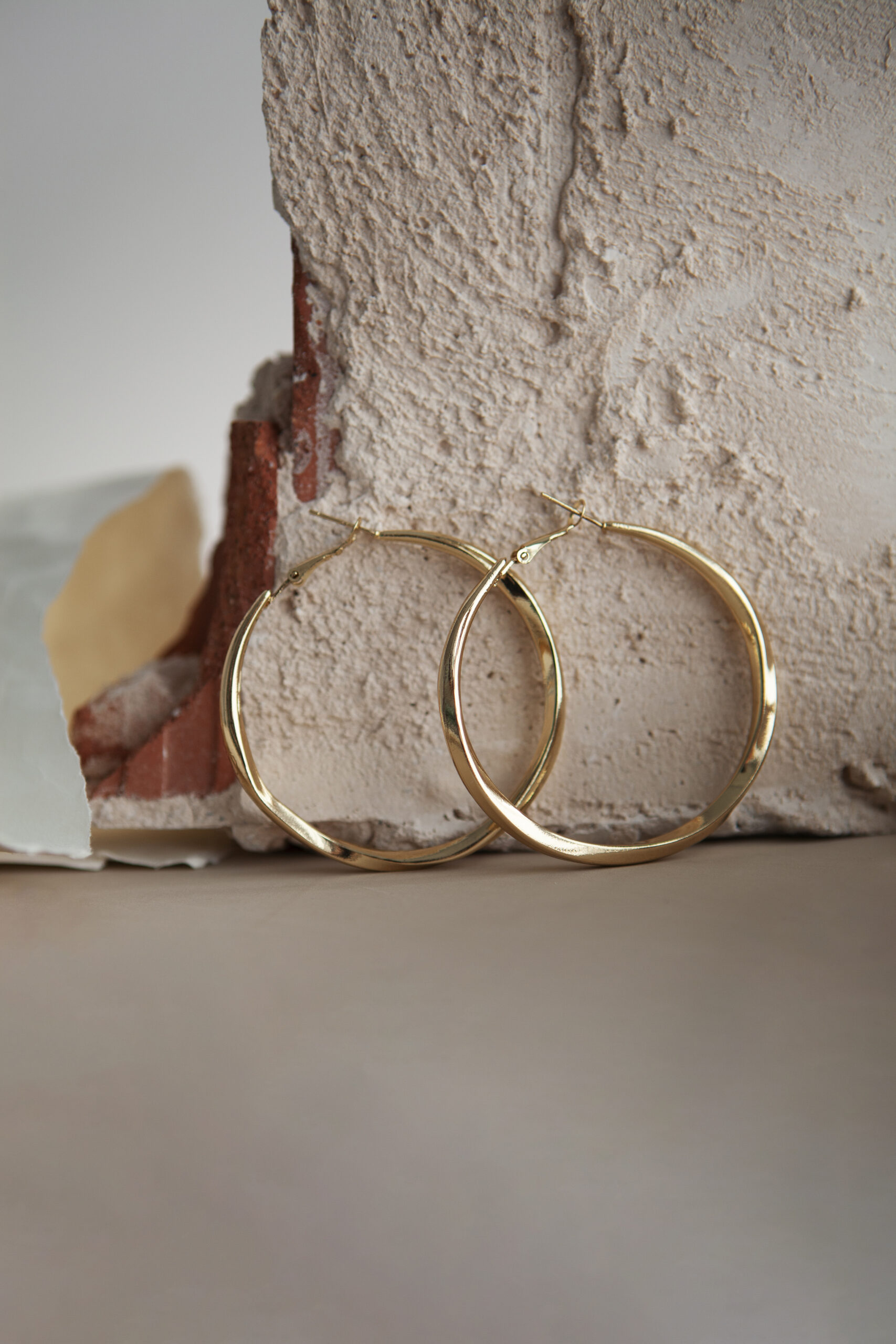
I never thought I would end up in a pawn shop trying to sell my grandmother’s earrings.
I am twenty-nine years old. I have three kids. My husband left two years ago and moved into a clean new life with someone who did not have to watch him disappoint anybody first. He left on a Sunday afternoon, and by Monday morning the silence in the apartment had already rearranged itself around the shape of someone missing. I told the kids he had to go somewhere for work, which bought me about two weeks before my oldest stopped believing it and started watching my face instead.
I told myself we would be fine.
For a while, fine was something I could manufacture through sheer force of exhaustion and routine. I picked up extra shifts at the insurance office where I worked data entry. I learned which grocery stores marked down their meat on Thursdays. I became the kind of person who checks her bank balance at eleven at night while sitting on the bathroom floor so the kids cannot see her face.
Then my youngest got sick.
Not a minor illness, not something that resolved in two weeks with antibiotics and popsicles. The kind of sick that requires specialists and imaging and a revolving door of appointments where someone is always cheerful in a way that is clearly trained. The kind of sick that generates paperwork faster than you can file it and bills that arrive in envelopes so thick they feel like small books.
I took out one loan to cover the first round of treatment. Then another to cover the gap when insurance denied two claims I did not even know were in dispute until they showed up as past due. I told myself I was buying time. I told myself this was temporary, that we were managing the crisis and in three months everything would stabilize and I would start paying it back systematically.
Then last month I got laid off over the phone.
My manager said they were downsizing. She said it smoothly, with the particular practiced gentleness of someone who has had to do this enough times to stop feeling it fully. She said she was sorry. She said I had been an asset to the team. She said if there was anything she could do to help with the transition, to let her know.
I sat in my car in the parking lot of the grocery store where I had just spent forty-three dollars I could not replace, and I stared at a cart someone had left in the middle of the lot, and I thought about my grandmother.
Specifically about the velvet box at the back of my dresser drawer.
Nana gave me the earrings when I was nineteen, the summer after I graduated high school. She called me into her bedroom on a Sunday afternoon when the rest of the family was watching something loud in the living room, and she took the box out of the top drawer of her nightstand like she had been keeping it ready.
She closed my fingers around it with both hands. Her hands were small and dry and warm, the hands of someone who had worked hard for a long time and stopped apologizing for what the work had done to them.
She looked at me with an expression I did not fully understand at the time. Something deeper than sentiment. Something that felt like information she was trying to pass through her palms, a message her mouth had not found the words for yet.
“These will take care of you one day,” she said.
I thought she meant as an inheritance. I thought she meant the gold itself, the practical safety of a precious thing you could turn into money if the world got hard enough. I thanked her and put the box in my drawer and did not open it again for ten years.
I did not think she meant this.
The pawn shop on Decatur Street smelled like old leather and machine oil and something faintly sweet I could not identify. The kind of smell that comes from a space that has held a thousand different people’s valuable things and absorbed a little of each one. Glass display cases ran along both walls, watches and rings and chains arranged under low lighting that made everything look like it was waiting to be chosen.
The man behind the counter was in his seventies, heavyset, with a broad unhurried face and reading glasses pushed up on his forehead. He had the careful, practiced hands of someone who had spent a lifetime handling small and valuable things, and he looked up when the bell over the door rang with the focused attention of a person who is never actually not paying attention.
I put the velvet box on the glass counter.
“I need to sell these,” I said.
He opened the box.
For a moment his expression was professional and neutral, the face of someone doing an assessment. Then he reached for his jeweler’s loupe and lifted one earring into the light, and his face changed.
His hands started shaking.
Not dropping things shaking, not the tremor of old age. A tremor of recognition. The kind that happens when memory arrives without warning, when something you buried years ago surfaces so suddenly your body reacts before your mind has finished processing.
He went completely still.
I watched his face do something I had no framework for understanding. Whatever had moved through him was large and private and not something he had expected to feel today.
“What?” I said. My stomach had already dropped before the word was out of my mouth.
He shut his eyes for one full second, the way people do when they need a moment before they can speak.
Then he opened them and looked at me directly.
“Where did you get these?”
“My grandmother gave them to me.”
He set the earring down very carefully on a small cloth square on the counter.
“What was her name?” he asked.
His voice had changed. It was quieter now, and rougher, like something in his throat had tightened.
I told him her name.
He swallowed hard. He looked at me for a moment like he was verifying something, checking my face against a memory. Then he stooped beneath the counter without a word and came back up holding an old photograph. He set it in front of me and let go of it like he was releasing something.
It was my grandmother.
She looked young, maybe early twenties, and she was smiling in a way I had never seen in any of the family photographs I grew up with. Not the composed Sunday-dinner smile, not the warm and careful smile of a woman who had learned to be pleasant in public. Something rawer and more open, the smile of a person who does not yet know they will later learn to guard themselves. Her whole face was in it.
Standing beside her was the man behind the counter. Younger, but unmistakably him.
She was wearing the earrings.
I looked up at him and could not find a sentence anywhere in my head. I opened my mouth and closed it again.
“Who are you?” I finally managed.
His voice came out rough, like he had not used it for anything this heavy in a long time.
“Someone who has been waiting a long time for one of her people to walk through that door.”
He took off the loupe and set it on the glass.
“My name is Walter.”
He turned one earring over and pointed to a tiny mark near the clasp. I leaned forward. A stamped W, so small I had run my fingers over those earrings a dozen times without ever registering it.
“I made those,” Walter said. “By hand. I was apprenticing under a jeweler when I was young. I did not have much money, but I knew how to work with gold, and I knew how to be patient with small things. I made them for her.”
He paused.
“Before I understood that life would separate us.”
I said, quietly, “My grandmother was married.”
“Not to me.”
He gestured toward an old wooden chair positioned at the side of the counter, the kind of chair a shop keeps for customers who have been there a long time or need a moment before they can continue.
“Sit down, honey. You look like you’re about to fall over.”
My knees had already made that decision. I sat.
Walter settled onto the stool behind the counter and was quiet for a moment, choosing his words with the care of someone who has been carrying a story for a long time and finally has the right person to tell it to.
“We were in love,” he said. “Serious. We were young and we were serious in the way young people are when they have not yet learned how many things can interrupt a plan. We thought we had a future. Her family thought otherwise.”
He looked at the photograph for a moment, then back at me.
“She married someone her family approved of. She built a life.” He was quiet. “I do not say that with bitterness. Life is complicated. People make the choices they think they can survive.”
I swallowed. “She never told us about you. Not once. I grew up in that family and I never heard your name.”
“I know,” he said.
“Then why are you acting like you were waiting for me?”
Walter opened a drawer behind the counter and pulled out a folded piece of paper so old the edges had gone soft and slightly brown, the paper of something that has been handled many times and put away carefully many more.
He set it in front of me but kept his fingers near it, the way you keep your fingers near something that has weight.
“Years after she married,” he said, “she came to see me one last time. She wore those earrings. She told me she had kept them all those years.” He looked at the window for a moment, where the afternoon light was coming through dusty glass. “Then she said something I have never forgotten. She said that if anyone from her family ever came to me in real need, I was to help if I could.”
He slid the paper across the counter.
It had my grandmother’s handwriting on it. Her careful, even cursive, the same handwriting that had signed my birthday cards and left notes on the refrigerator when I stayed with her as a child. Her married name. An address from decades ago.
And underneath, one line.
If one of mine ever comes to you hurting, do not send them away.
My eyes filled so fast it embarrassed me. I pressed my fingers against them and breathed and tried not to make a scene in a stranger’s shop over a note written by a woman who had been dead for seven years.
Walter looked at my face and said quietly, “How bad is it?”
I pressed my lips together and looked at the ceiling for a moment.
“I came here to sell those earrings,” I said. “I need money. I did not come here for a dramatic family secret.”
“I know that,” Walter said.
“Then why are you pushing the box back at me?”
“Because those are yours,” he said simply. “And because selling them is not your only option.”
Something hot and exhausted rose up in me, the particular frustration of someone who has been doing everything alone for two years and cannot quite afford to believe that help might be real.
“With respect,” I said, “you don’t know what my options are.”
Walter nodded once. “Fair enough.”
Then he said, “I have some savings. And a lawyer I trust. The money is not endless. But it is enough to stop the immediate bleeding while we figure out the rest.”
I stared at him. “Why would you do that? You don’t know me. You haven’t seen my grandmother in decades. Why would you hand money to a stranger who walked into your shop?”
He held my stare without flinching.
“Because I loved your grandmother,” he said. “And because she asked me to help if one of hers ever needed it. I made her a promise in this very room, and I keep my promises.”
He waited a moment. Then he said, “You needing help is not a moral failure.”
That line broke something open in me that I had been holding shut for two years.
I started crying so hard I had to cover my face with both hands, the ugly kind, the kind that comes from somewhere underneath dignity and does not care about being seen. Walter handed me a clean handkerchief from his pocket without comment, like a man who has seen people break open before and understands that the appropriate response is a handkerchief and silence.
“Go ahead,” he said quietly. “Get it out.”
I laughed through the tears before I could stop myself. He almost smiled.
“Let me make a few calls,” he said, “before you decide what you can and can’t take.”
That afternoon became hours. Hours of paperwork spread across the back table of his shop, hours of phone calls with a woman named Denise who was Walter’s lawyer and who got on speaker and asked questions in a voice like a scalpel, sharp and precise and completely uninterested in softening anything.
“How behind are you on the mortgage?”
“Two months.”
“Medical debt separate from that?”
“Yes.”
“Any payday loans?”
I hesitated. “One.”
She exhaled through her nose. “All right. That one first.”
Walter made tea while I dug through my bag for crumpled notices and hospital statements, the paper archaeology of a financial disaster in slow motion. He looked at each page with the focused attention of someone who actually wanted to understand the problem, not perform empathy from a safe distance.
At one point he said, without looking up, “This charge is wrong.”
I laughed weakly. “You can tell that from looking at it?”
“I can tell because they billed you twice for the same lab panel. Different invoice numbers, same date, same test.”
He slid the page to Denise. “Am I reading this correctly?”
“You are,” Denise said.
I sat back in the old wooden chair and looked at the two of them and thought, with a kind of disoriented wonder: my grandmother planned this. Not the details. She could not have planned the details. But she knew Walter well enough to know that if she gave him a note and asked him a favor, he would keep it for as long as it took.
She had always known things about people. It was one of the most consistent things I remembered about her.
By the end of the night, Denise had a plan. She would file a hardship request with the bank to delay foreclosure proceedings, challenge the payday loan terms under state usury law, and force the hospital billing department to review the duplicate charges before any collections action could proceed.
Walter wrote a check to cover the most urgent amount needed to stop the foreclosure from advancing further.
I looked at the check for a long time.
“I will pay you back,” I said. “I don’t know when. But I will.”
He shrugged in the way of someone who is not particularly worried about it. “Then pay me back if life ever lets you. For now, go feed your children.”
The next few weeks were brutal but different from the brutality I had been living with. The previous kind of brutal was formless, a weight pressing from all directions with nowhere to push back. This was difficult and directed. There were forms to fill out and calls to return and documents to locate and send. There was something to do instead of just something to survive.
Denise called with updates. Walter called to check in. I worked the bookkeeping job he had connected me with, three days a week with a woman named Patricia who ran a small landscaping company and whose accounting was held together, as far as I could tell, entirely by optimism.
The lowest point came on a Thursday night three weeks in, when the bank sent another letter that looked final enough to make my hands go numb when I picked it up from the mailbox. I drove to Walter’s shop after closing and stood in the parking lot for five minutes before I went in.
He was at his workbench in the back, doing something small and precise with a ring and a tiny screwdriver, and he looked up when I came through the door.
“Sit down,” he said.
“I can’t keep doing this,” I said. “I am so tired of being one phone call away from losing everything. I am tired of pretending my kids don’t notice. I am tired of acting like I am holding it together because I don’t have anyone to fall apart in front of.”
Walter set down the screwdriver.
He was quiet for a moment, and then he said something he had apparently been deciding whether to say.
“Your grandmother came back here once after she married. Did I tell you she cried? Right over there, in that chair where you’re standing.”
I did not sit down but I stopped moving.
“She said she had made the life expected of her, and it was not a bad life, but she had learned something hard along the way.” He looked at his hands. “She said that survival becomes cruelty when people are forced to do it alone. That one of the worst things we do to each other is pretend that needing help is a character flaw.”
I wiped my face with the back of my hand. “That sounds exactly like her.”
“She made me promise,” Walter said, “that if one of hers ever showed up hurting, I would not let pride or procedure or anything else send them away.”
He picked up the screwdriver again and looked at the ring.
“You keeping yourself upright for those kids is not nothing,” he said. “You just need one or two things to stop going wrong at once. That’s all. And those things are in motion now. You can breathe for a minute.”
The next morning I signed every form Denise had sent and stopped waiting for something to fall apart before I acted on the things she had laid out. I told my older two kids, plainly, that money was tight and their brother was still sick and I was scared sometimes, but that we were handling it together and I needed them to know the truth instead of a softer version of it.
My oldest looked at me with eyes that were steadier than mine.
“Are we losing the house?” she asked.
I said, “Not if I can help it.”
She nodded like that was enough information to work with.
A week later Denise called and said, “The foreclosure is delayed pending review.” I sat down on the kitchen floor and did not get up for a while. Two days after that, the hospital reduced several charges after Denise flagged the billing irregularities. The hardship assistance came through. The payday loan was renegotiated into something survivable.
The house stayed ours.
It was not a miracle. I was still broke. I was still tired. My son was still in treatment, still had appointments every two weeks, still needed things that cost money. But the immediate freefall had stopped, and stopping the freefall turned out to be the thing I had needed more than anything else. Not rescue. Just ground.
A few months later I went back to Walter’s shop on a Saturday morning with coffee and a bag of muffins, the good ones from the bakery two streets over that I had never let myself buy before.
He looked up when I came in and said, “You here to sell anything?”
“Only my gratitude,” I said, “and honestly it is worth a lot.”
He laughed, a real laugh, the kind that takes up space.
My kids adored him. My daughter brought him a broken watch she had found at a garage sale and he fixed it without being asked and handed it back like it was nothing. He taught my middle one how to tell fake silver from real, which my son treated as a superpower. He gave my youngest an old foreign coin from a drawer and said it was for luck, and my youngest has carried it in his pocket every day since without fail.
On quiet Saturdays, Walter would show me photographs. Not the dramatic ones, not the single photograph that had floored me the first day, but the ordinary ones. Nana at a county fair, laughing at something off-camera. Nana standing in front of a car that was not yet old, squinting into the sun. Nana at twenty-six, looking like she was still figuring out who she was going to become.
She had entire chapters I had never been given access to. A whole history of becoming herself that preceded every version of her I had ever known. She had been young and uncertain and in love with someone her family disapproved of and brave enough to keep an old photograph and write a note that would outlast her by decades.
It did not make her smaller. It made her larger and more true.
One night after the kids were asleep, I took the velvet box out of my nightstand and opened it at the kitchen table. The earrings caught the light the way old gold always does, warm and unhurried, like something that has been somewhere and is not in a hurry to prove it.
I ran my thumb along the clasp until I felt the tiny W pressed into the metal.
I heard her voice in my head as clearly as I had heard it at nineteen, handing me the box with both her small dry hands.
These will take care of you one day.
I had thought she meant the gold. The weight of it, the market value, the practical safety of something precious you could convert to cash if the world got hard enough. I had imagined her being practical, being pragmatic, giving me a resource.
She had not meant the gold.
She had meant love put away in a safe place. Love that had survived decades and changed addresses and held its shape in a folded piece of paper in a drawer. Love that kept a promise made in a pawn shop on a Sunday afternoon because a woman with careful hands had looked at a man who would have done anything for her and asked him to do one thing instead.
She had meant the W stamped into the clasp.
She had meant all of it.
For the first time in a long time, sitting at my kitchen table with the box open in front of me and the house quiet around me and my children asleep in rooms that were still ours, I did not feel like I was one more thing from the edge.
I felt held.
Specialty: Emotional Turning Points
Rachel Monroe writes character-driven stories about betrayal, second chances, and unexpected resilience. Her work highlights the emotional side of family conflict — the silences, the misunderstandings, and the moments when someone quietly decides they’ve had enough.