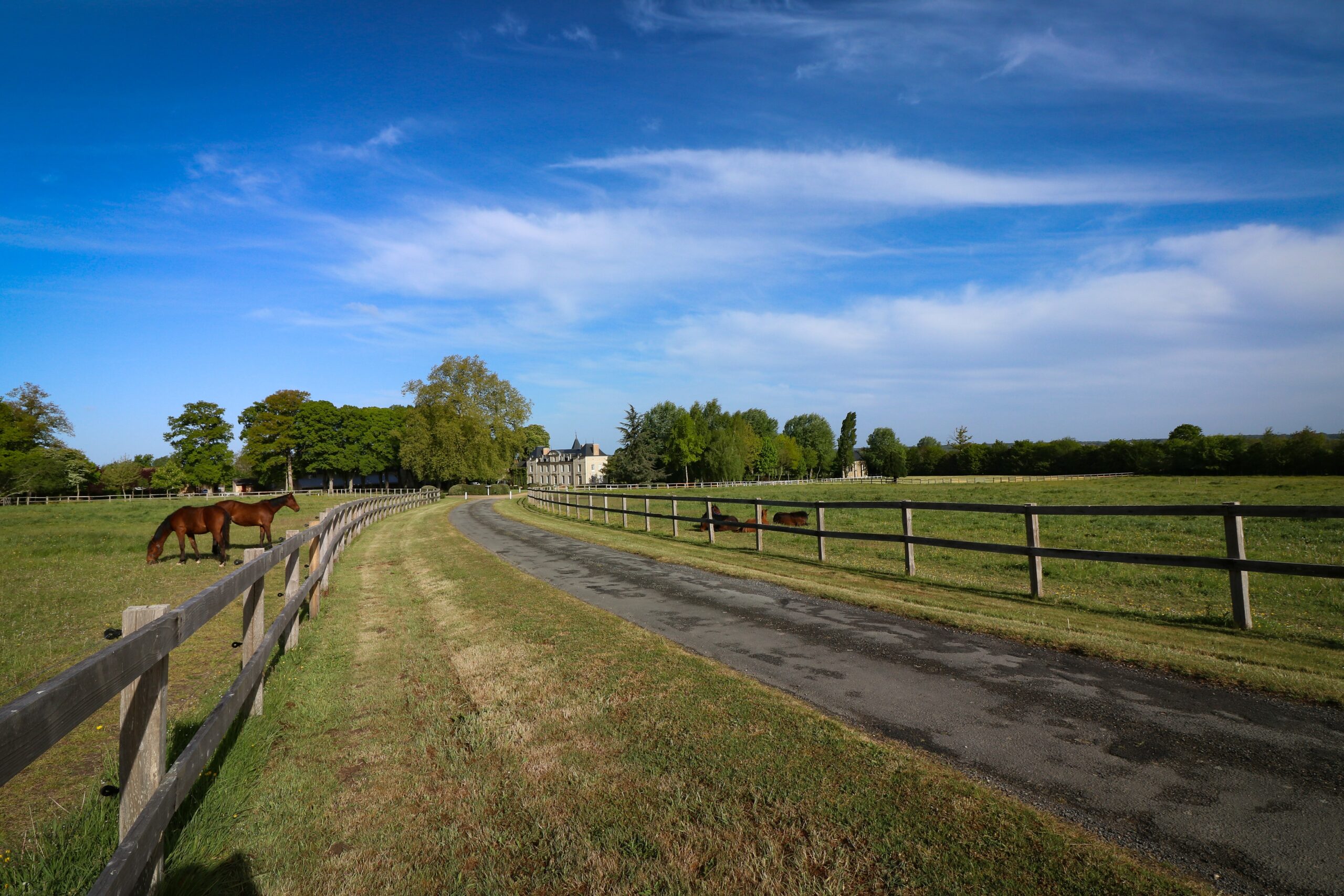
I drove out to Oklahoma expecting the kind of silence that feels like a clean sheet pulled tight over the world. Wind through corn, cattle somewhere beyond the rise, the soft clack of a screen door the way my dad’s place always sounded at dusk.
What I did not picture was the metallic roar of bulldozers tearing into soil that still remembered my father’s hands.
The sound hit me before I even turned onto the long dirt drive: engines revving, trucks reversing, men shouting over machinery like they were building a highway instead of standing in the middle of a cornfield. The air smelled wrong before I could see anything. Not just dust and sun-baked grass. Hot diesel and fresh-cut earth, raw and offended.
When my tires crunched onto the driveway, I could already see the orange stakes dotted across the ground in long, straight lines. Too perfectly spaced. Then I saw the white spray paint, bright arrogant streaks marking out something that made the skin on the back of my neck tighten.
A runway.
Not a road. Not a trail. Not a community improvement. A runway.
I parked near the barn where the old tin rooster still wobbled on the fence post. The mailbox still had my dad’s name half-faded on the side. Everything familiar was still there, the leaning barn, the sagging gate, the oak tree that had been my shade when I was ten, but the air felt crowded and taken.
A woman stood near the center of the chaos like she had been planted there to be admired. Arms crossed. Sunglasses catching the sun like a challenge. Her posture screamed ownership even though nothing about her belonged on my land.
Linda Harris.
I hadn’t seen her since the new subdivision started blooming at the edge of our property like a rash, but I recognized that stance immediately: the HOA president stance, the stance of someone who believed rules were a weapon, not a guide.
Behind her, men in neon vests pounded stakes and rolled measuring wheels with the seriousness of architects. Another worker was literally painting thick white lines across my cornfield. Long, bold stripes, like they were christening a strip of land for planes.
I walked a few steps forward, slow, reading the ground the way I had as a kid. The pasture here used to be soft underfoot. Now it was packed, flattened, roughed up by tires that had never asked permission.
“Morning, Linda,” I said, keeping my voice even.
She strutted closer, heels clicking on gravel somebody had dumped where my corn used to grow. “We’ve been making improvements while you were away.”
“Improvements,” I echoed, letting the word hang. “Funny. I don’t remember requesting them.”
She tilted her sunglasses down just enough to look me dead in the eye. “Progress doesn’t wait for anyone, John. If you want to be stuck in the past, that’s your choice. But don’t get in our way.”
I glanced past her at the painted lines stretching across my field and played dumb, because sometimes the best way to win is to let the other person talk themselves into a corner.
“Progress, huh? What are we talking? A new playground? Bigger pool?”
Linda laughed like I had told the funniest joke in America. “Let’s just say this neighborhood is about to become very exclusive.”
She turned away, barking orders at workers, waving her hands like she was conducting an orchestra. And that’s when I noticed something that bothered me more than her smugness: the workers weren’t treating her like a random HOA busybody. They were moving fast and efficient, like they had a schedule and real money behind it.
I stood there long enough to trace the length of the strip with my eyes. At least three thousand feet, maybe more. Enough for small aircraft. Enough to be dangerous if done wrong. Enough to get people killed if someone tried to land on half-cured asphalt in a crosswind with no proper markings, no clearance, no safety zone.
Perfectly illegal.
I didn’t confront her again right there. I turned, walked back to the farmhouse, and let the anger settle into a colder shape.
That afternoon in town, old man Jenkins behind the counter of the general store looked at me over his newspaper with the half-welcome, half-curious expression of someone who has lived in a small town long enough to know everything before it happens.
“Rumor is she’s been talking about making this neighborhood fly-in ready,” he said, leaning back. “You know, like those fancy communities in Florida. Rich folks land their planes right next to their houses.”
I stared at him. “You’re telling me she’s building an airstrip.”
He spit his toothpick into a cup and shook his head with the pity reserved for people who walk into a storm wearing sunglasses. “I’m telling you, if you wanted peace and quiet, you picked the wrong farm to come home to.”
I didn’t reveal who I was to Linda that day, or the next, or for quite a while after that. Because there’s a particular satisfaction in letting someone dig their own grave while they laugh at you.
My name is John Miller. I had come home for rest, for fishing and homegrown tomatoes and maybe one good nap under the oak tree. Running the Federal Aviation Administration wasn’t a job you clocked out of. My phone rang at two in the morning when someone forgot to file a flight plan and panicked midair. My days were filled with hearings, emergency orders, safety briefings, airline executives smiling like sharks.
Linda Harris had tried to build an unauthorized runway inside my jurisdiction. She had simply not known it was my jurisdiction.
The next morning they were already laying asphalt.
Trucks lined up like they were pouring a parking lot for a Walmart. Heavy rollers pressed earth flat with the slow confidence of machines that don’t care what they crush. Fresh black asphalt steamed under the rising sun, and the smell of tar mixed with cut corn so sharply it made my eyes water.
Linda stood dead center in a hard hat she didn’t need, smiling like she had invented flight itself.
Linda’s letters started arriving like clockwork. The first was a Notice of Violation tucked under my door claiming I was obstructing community development by parking farm equipment too close to the project site. I had parked my tractor in my own field.
Then fines. Five hundred dollars for failure to comply with development guidelines. On my father’s land.
Then cones appeared one morning blocking my driveway. HOA Safety Measures, the notice said. I moved them aside with my truck bumper.
She drove past in her shiny SUV every afternoon, window down just enough to smirk. “Still resisting, John?” She even hammered a sign into the edge of my property: FUTURE HOA RUNWAY. PRIVATE USE. OPENING SOON. EXCLUSIVE ACCESS.
That night I sat at my father’s kitchen table, the one with old scratches from decades of family meals, and spread out deeds, photos, copies of letters, and the videos I had already started taking on my phone. I could almost hear my dad: Don’t let them push you, son.
Then something landed like a gift wrapped in arrogance.
I opened my laptop and logged into my FAA account. Buried in my inbox was a formal inquiry, a request for expedited approval for a private runway project in Oklahoma.
Linda.
She had actually tried to go through official channels, not knowing that her request could route straight into my world.
Her application was a disaster. No environmental assessment. No safety plan. No community consultation. No actual property documentation proving she had the right to build anything. Just a glossy paragraph about increasing neighborhood prestige and creating a premier fly-in community.
I flagged the request, logged the details, and pushed it toward enforcement channels the way you do when someone is toying with federal law. Linda’s dream hit the wall of reality that night. She just didn’t know it yet.
The next day she cornered me near the barn again. “This runway is happening,” she said.
I leaned closer, voice low. “Nothing takes off in this country without the FAA knowing about it.”
Her eyes narrowed. “You think you can stop progress with paperwork?”
“No,” I said softly. “I can stop it with the law.”
For the first time, her smile wavered. Just a tiny crack. I walked away before she could recover.
That evening I started building my case the way I had built a hundred cases in Washington: methodically, cleanly, with evidence that spoke louder than anger. Photos of construction. Videos of workers. Copies of letters. Dates, times, locations. Property documents highlighted. Every instance of harassment, every act of trespass recorded.
I planted trail cameras around the farm. One near the cattle gate, one by the pond, one tucked into the oak tree overlooking the strip. By the end of the week I had hours of footage: bulldozers ripping up pasture, workers hammering signs into the ground reading PRIVATE AIRSTRIP and MEMBERS ONLY.
Then I collected witness statements. Mrs. Thompson, whose house sat less than half a mile from the strip, signed first, hands shaking with anger. “My windows rattled so bad I thought a tornado was coming,” she said. Mark, a young father, described his kids waking at two in the morning from the noise. One by one, frustration turned into documented impact.
Meanwhile Linda rehearsed her victory lap. She held meetings on the site, clipboard in hand, bragging to investors that in two weeks this would be the premier fly-in community in Oklahoma. That was when I understood the full shape of her madness. This wasn’t just ego. She was selling a fantasy built on theft.
I attended one gathering with my phone recording quietly. Linda promised exclusive landing rights, operational deadlines, membership fees covering maintenance. Every word became evidence.
Then the final piece arrived. I found membership agreements promising priority hangar space to anyone willing to pay. Hangar space. On my land. For a runway that wasn’t legal. I photographed every page.
My file no longer looked like a complaint. It looked like an indictment.
A glossy flyer appeared in mailboxes: GRAND OPENING. HOA PRIVATE RUNWAY. RIBBON CUTTING. CHAMPAGNE RECEPTION. LIVE DEMONSTRATION FLIGHT.
I laughed until my sides hurt. Then I stapled the flyer into my folder and made one more call.
“She’s hosting an opening,” I told my legal contact.
He chuckled. “You’re really going to let her throw a party before you shut it down?”
“Oh, absolutely,” I said. “The bigger the stage, the harder the fall.”
The morning of the grand opening dawned hot and sticky. From my porch I watched a parade of SUVs snake toward the strip. Banners fluttered between poles. A red ribbon stretched across the asphalt. A table of champagne flutes sweated in the sun.
I dressed plain: jeans, boots, a faded cap. I tucked my FAA badge into my jacket pocket and felt the weight of it like a quiet thunderstorm.
When I arrived, it looked like a county fair had married a corporate scam. Neighbors milled around, some excited, some uneasy. Investors in suits fanned themselves with glossy brochures. And there was Linda on the stage in a crisp white blazer, sunglasses reflecting the crowd. Behind her hung a banner that made my jaw clench: HOA PRIVATE RUNWAY. OPENING DAY.
She lifted a champagne flute. “Imagine the convenience. Friends and family flying in directly. No crowded airports. No hassle. Just prestige.”
Then she gestured dramatically toward the sky. “And now, to christen our new runway, we welcome our first demonstration flight.”
A small twin-engine plane circled above. The crowd oohed. Cameras lifted. Linda spread her arms wide.
“History is landing here today,” she declared.
The plane lined up.
That was my cue.
I stepped forward through the crowd, boots crunching on gravel, brim of my cap shading my eyes. Whispers spread. By the time I reached the ribbon, all eyes were on me.
“Linda,” I called out, voice steady. “You might want to hold off on the champagne.”
Her head snapped toward me. “John, this isn’t the time.”
“Actually,” I said, and pulled the badge from my pocket.
The FAA emblem caught the sun like a blade.
“This is the perfect time.”
A ripple of gasps rolled through the crowd.
“My name is John Miller. I am the Director of the Federal Aviation Administration. And as of this moment, this runway is shut down.”
Chaos erupted like a struck hornet’s nest. Investors started shouting. Neighbors gasped. Linda’s skin went pale under her makeup.
“You can’t do this,” she stammered.
I smiled calmly. “Linda, I’m literally the person who can.”
The plane dipped lower, still lining up. I raised my hand and signaled the sheriff’s deputies I had briefed earlier. They stepped into view and waved the pilot off. Radios crackled. The plane banked hard, engines roaring, and pulled up, aborting the landing in a gust of wind that made the banners snap and chairs wobble.
The crowd gasped again.
That aborted landing was the sweetest sound I had heard in weeks.
Linda scrambled for control. “We have approvals! We filed paperwork!”
I stepped closer, voice almost kind. “No, Linda. You attempted to file paperwork. And it was denied.”
Deputies moved in, collecting documents, securing the site. The local news crew Linda had invited for her triumph captured every second.
Then something happened that Linda never planned for.
Neighbors started clapping.
At first just a few. Then more. Then a wave of applause rolled across the field, loud and sustained, like thunder. Years of resentment toward Linda’s petty tyrannies poured out through palms and cheers. The sound wasn’t just celebration. It was relief.
Investors surged toward Linda, contracts in hand. Microphones shoved toward her face.
“Did you know this was illegal?”
“How much money did you collect?”
Linda yanked off her sunglasses, eyes darting like a cornered animal. “This is all a misunderstanding.”
“Correction,” I said smoothly. “This is illegal construction, federal violation, and fraud.”
I unfolded the cease-and-desist order stamped with the FAA seal and handed it to Linda. Her hands shook as she read the first line. The paper slipped from her fingers and fluttered to the ground like a surrender flag.
For those who had been misled, I announced that the FAA would be opening a formal investigation into fraudulent claims made by the HOA board, and that any contracts promising hangar space or runway access were null and void.
The investors’ anger snapped fully toward Linda.
“You told us this was approved!” a man in a suit jabbed at her.
As the sheriff stepped forward to escort Linda for questioning, someone in the crowd shouted, “About time!” Another called, “Check her books! She’s been pocketing fees for years!”
Linda twisted desperately. “This was for all of us! For progress!”
I shook my head slowly. “No, Linda. This was for you. Your ego. Your pride.”
In the days that followed, the farm began to breathe again. No engines at dawn. No beeping trucks. Just wind through corn, cattle grazing, cicadas reclaiming the soundtrack of the land.
The investigations moved fast. Unauthorized construction. Environmental violations. Fraudulent claims. Misuse of HOA funds. And something I had not expected: the layout of the runway was too precise for Linda to have designed alone. Someone with aviation knowledge had drawn it.
I had my legal contact run a vendor search. The contractor was registered to a man named Chad Rourke. And Chad Rourke had once held a pilot certificate, until it was revoked.
Linda had teamed up with someone who had already been humbled by the FAA once. Together they had built something just believable enough to trick amateurs. And that meant the fallout would spread wider than the HOA.
Environmental regulators wanted to know if fuel had been stored illegally. State authorities wanted to know how many residents had been solicited under false pretenses. When my team confirmed that fuel had in fact been staged near the strip in improper containers, I felt something colder than anger.
One spill, one careless spark, could have ignited half my pasture. One pilot touching down on half-finished asphalt, veering into a fence line or hitting a drainage ditch, could have killed people.
Linda had not just been arrogant. She had been reckless with lives.
That realization tightened the net.
The new HOA board authorized an independent audit. What they found beneath the glossy promises was not sloppy bookkeeping but something uglier: funds moved between accounts, dues paid for landscaping that never happened, fees collected under vague labels timed to the runway project, payments to SkyPath Development Solutions with inflated invoices and no documentation of work performed.
The investors filed suits. Some got partial restitution through frozen accounts. The HOA restructured under oversight. The insurer agreed to cover limited remediation costs while pursuing Linda and her partners for repayment.
Demolition crews arrived within a week of the shutdown. They tore up the asphalt in chunks, hauled it away, and filled the scar with fresh soil. When they were done, the land looked almost normal, except for faint dark stains peeking through the dirt like a ghost, Linda’s ambition refusing to fully disappear.
My neighbors came back to help rebuild.
Mark arrived with his truck and tools. Mrs. Thompson’s nephew showed up without being asked. A man who had once told me to just sell the land and move showed up awkwardly near the gate holding a roll of wire.
“I didn’t know,” he said. “I should have listened.”
I looked at him for a long moment. Then I took the wire.
“Grab a post driver,” I said. “And try not to talk about prestige.”
We replanted together. Hands pressed corn seed into soil that had been compacted and scarred and then tended. Kids laughed. Mrs. Thompson sat under the oak tree watching with damp eyes and a small smile. No microphones, no banners, no champagne. Just people trying to undo something ugly with something honest.
The last time I saw Linda in person was outside the courthouse months later.
She walked out with her attorney, shoulders hunched, sunglasses gone, hair pulled back without flair. For a second she looked like any tired person leaving a hard meeting. Then she saw me.
Old anger tried to rise in her face. But it didn’t have strength anymore.
We stared at each other across the courthouse steps.
Finally, quietly, she said: “I didn’t think you’d really stop it.”
I held her gaze. “That’s because you never thought rules were real. You thought they were decorations.”
Her eyes flickered.
Then she looked away, and in that moment I saw what I had wanted her to feel from the beginning: not humiliation, not rage, but the simple understanding that the world doesn’t bend just because you shout.
She walked down the steps and into the parking lot like a person leaving a life she couldn’t control anymore.
I turned toward my truck, because my work was never watching her fall.
My work was rebuilding what she had tried to take.
Back on the farm, summer returned in full. The replanted rows sprouted green through soil that had been scarred and then tended. The fence line stood straight. The cattle grazed without flinching at every distant sound. The pond reflected sky like nothing bad had ever happened.
One evening, I finally took that nap under the oak tree. Not the exhausted collapse after stress, but the kind of sleep that feels like permission. The wind moved through corn like a lullaby, and my phone didn’t ring.
I thought about my father, who had rebuilt fences after storms and chased coyotes from calves and patched roofs after hail and never once imagined a homeowners association would try to turn his cornfield into an airport. He had needed rain and time and respect for the land. Linda had needed an audience. And she had gotten one, just not the one she planned.
The real victory wasn’t shutting down a runway.
The real victory was watching the community remember what mattered.
Quiet. Boundaries. Truth. The land.
And if you ever forget those things, life has a way of issuing its own cease-and-desist.
Stamped, signed, and enforced by the land itself, by the law, and by the people you underestimated.

Specialty: Emotional Turning Points
Rachel Monroe writes character-driven stories about betrayal, second chances, and unexpected resilience. Her work highlights the emotional side of family conflict — the silences, the misunderstandings, and the moments when someone quietly decides they’ve had enough.